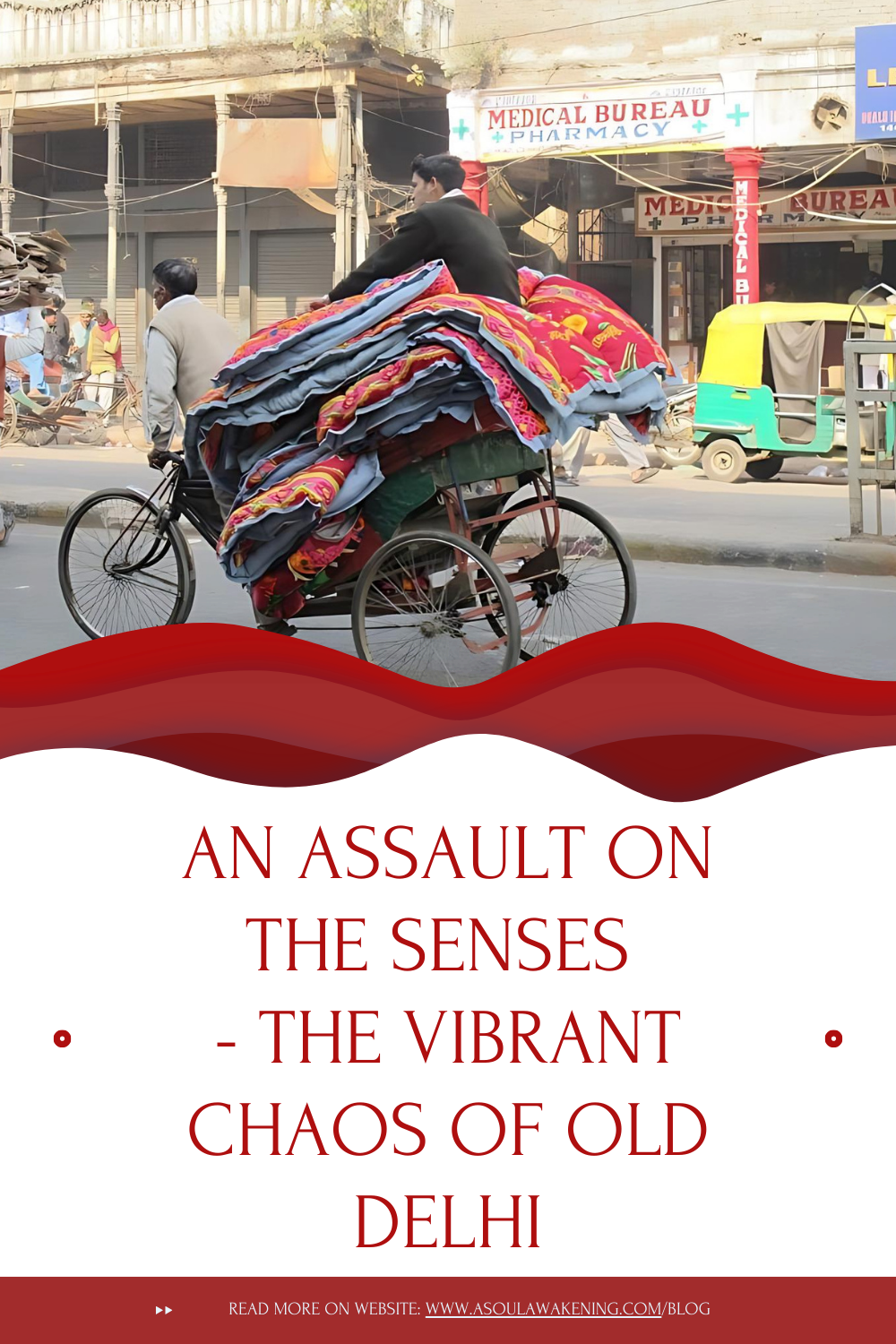
An Assault on the Senses | The Vibrant Chaos of Old Delhi
Whenever an opportunity presents to spend two weeks somewhere else in the world, the decision is always straightforward for me. A little research is all it takes, and soon enough, I’m on my way to the enchanting state of Rajasthan in northern India, renowned for its historical forts and the lavish splendour of its Maharajahs’ palaces. It’s a great opportunity to immerse myself in the local culture and soak up the vibrant colours of daily life.
Namaste! Welcome to India.
Delhi, the capital of India, has a deep and complex history, with evidence of settlements dating as far back as the 6th century BC. The region saw its early habitation around 1000 BC near what is now Purana Qila, situated along the banks of the Yamuna River. According to Hindu mythology, the area was settled even earlier, with the ancient city of Indraprastha, believed to have been established several centuries prior on the Yamuna's banks.
Old Delhi, a historic district within the broader metropolitan area of Delhi, emerged in 1052 from the plains of northern region of India and was initially known as Lal Kot, later renamed Qila Rai Pithora. This fortified city was constructed during the reign of the Tomara ruler, King Anangpal Tomar. It was the earliest of seven successive cities in the region, each built closely following the previous one. As each new city arose, palaces, temples, and mosques were constructed over the remnants of similar structures from the city that preceded it.
In the 17th century, Mughal Emperor Shah Jahan moved his capital from Agra to the area now known as Old Delhi. He named this new capital Shahjahanabad. Designed as the empire's hub, it flourished as a major cultural and political centre until the Mughal era's decline. Today, Old Delhi is one of the most vibrant parts of the larger Delhi metropolis. Characterised by its narrow, winding lanes and bustling markets, it presents a dazzling array of sights, smells, and sounds, all set against the backdrop of architectural remnants from the Mughal period.
From 1757, during the British colonial era, control of India was seized by the British through the East India Company to manage the lucrative spice trade, a dominance that lasted until 1857. After the events of the 1857 Rebellion, direct rule by the British Empire began, lasting until 1947 and marking the era known as the British Raj. Governance transitioned in 1858 when the East India Company’s rule was replaced by the Crown's authority, and in 1877, Queen Victoria was declared the Empress of India. This extended period significantly influenced India’s population and its socio-political landscape. Finally, in 1947, after decades under British rule, India gained independence, emerging as a sovereign nation.
It's a coolish morning, and I wake up early to head downstairs for breakfast. There, I meet two of my fellow travellers who also arrived a day early, just like me. Over a light breakfast, we decide to spend the day exploring some the many sights of Delhi and Old Delhi, before the planned meet up with the rest of our Intrepid travel group later in the evening, marking the beginning of our fourteen-day adventure together.
We headed to the nearby Delhi Metro station close to our hotel and took a train to Chandi Chowk, located in the heart of Old Delhi. It was interesting to learn that we had to have our small backpacks scanned at the station before we could access the platform. Additionally, we noticed that the last carriage of the train is designated as women-only; a thoughtful provision for safety.
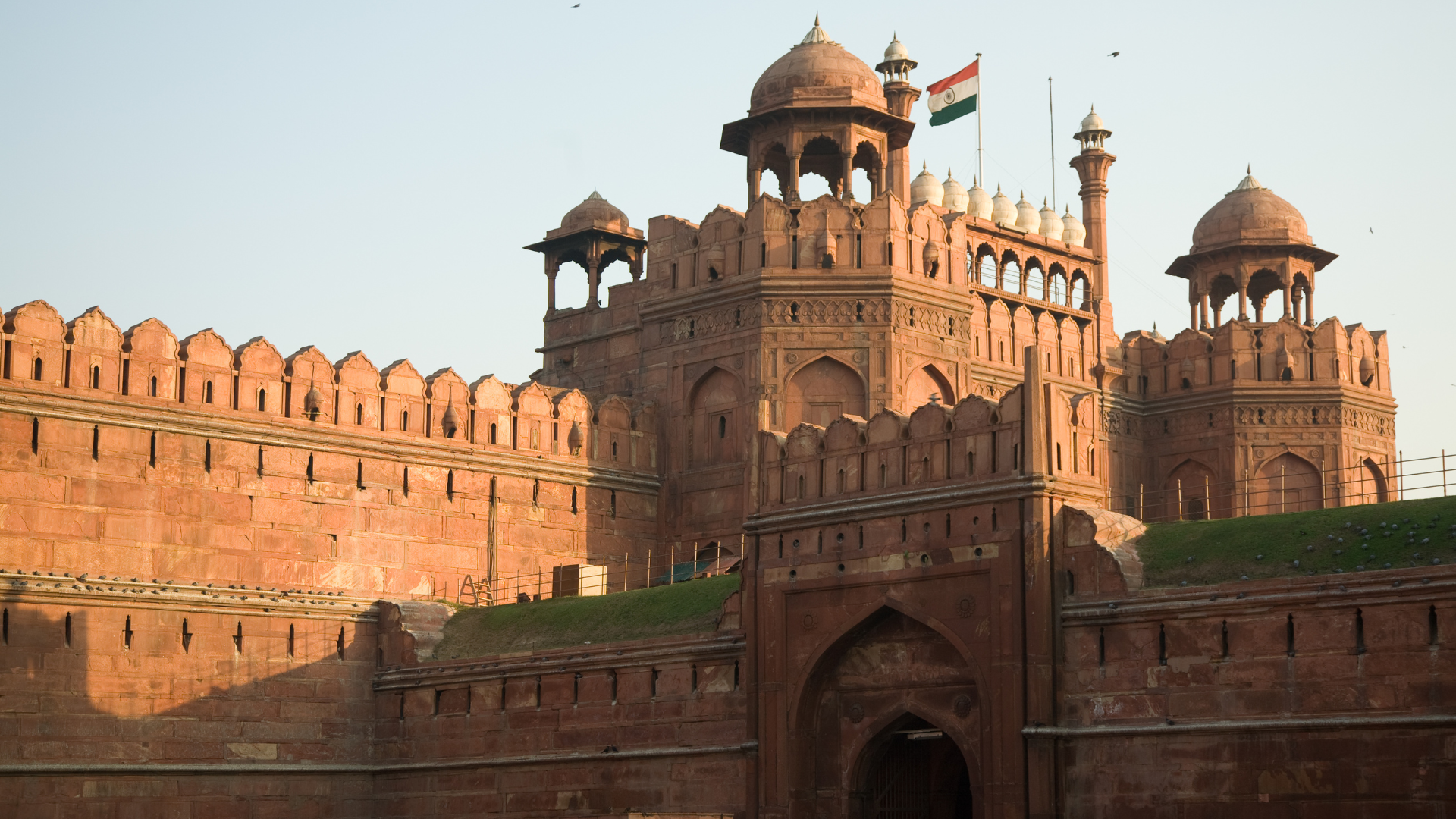
Making our way to the famous Lal Qila in Hindi, also known as the Red Fort, an historic fortification that marks a pivotal point in the architectural and political history of India. The Red Fort Complex was established as the palace fortification of Shahjahanabad, the new capital city founded in 1638 by Shah Jahan, the fifth Mughal Emperor of India when he decided to move his capital from Agra to Delhi. Characterised by its expansive walls made of red sandstone, the complex is situated alongside the older Salimgarh Fort, built by Islam Shah Suri in 1546, and together they form the complete Red Fort Complex.
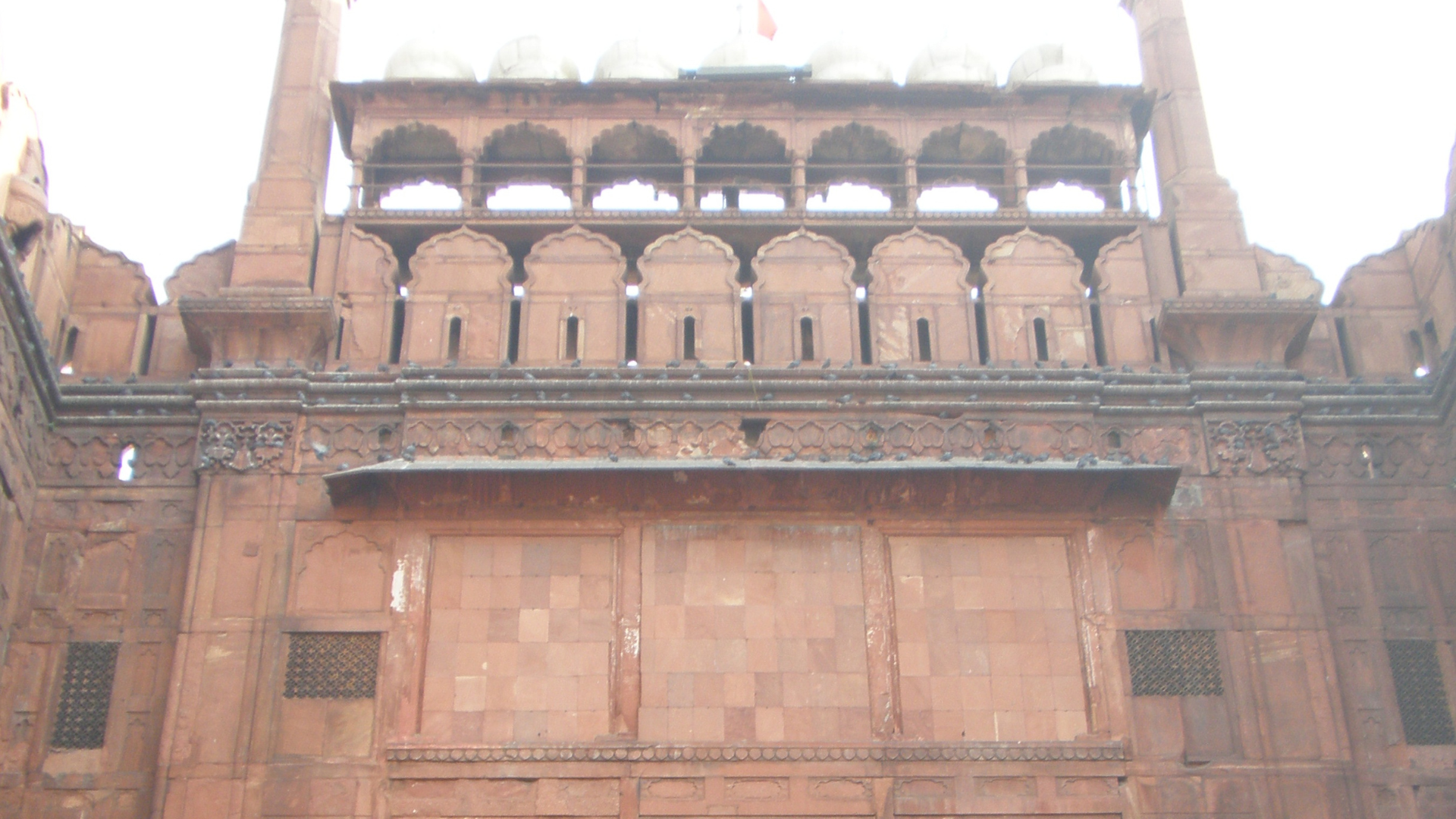
Construction was completed in 1648, and showcases the zenith of Mughal architecture combining Persian, Timurid, and Indian elements. The main entrance through Lahore Gate to the expansive complex, surrounded by massive red sandstone walls stretching approx. 2.5 kms, was both a royal residence and a ceremonial and administrative center.
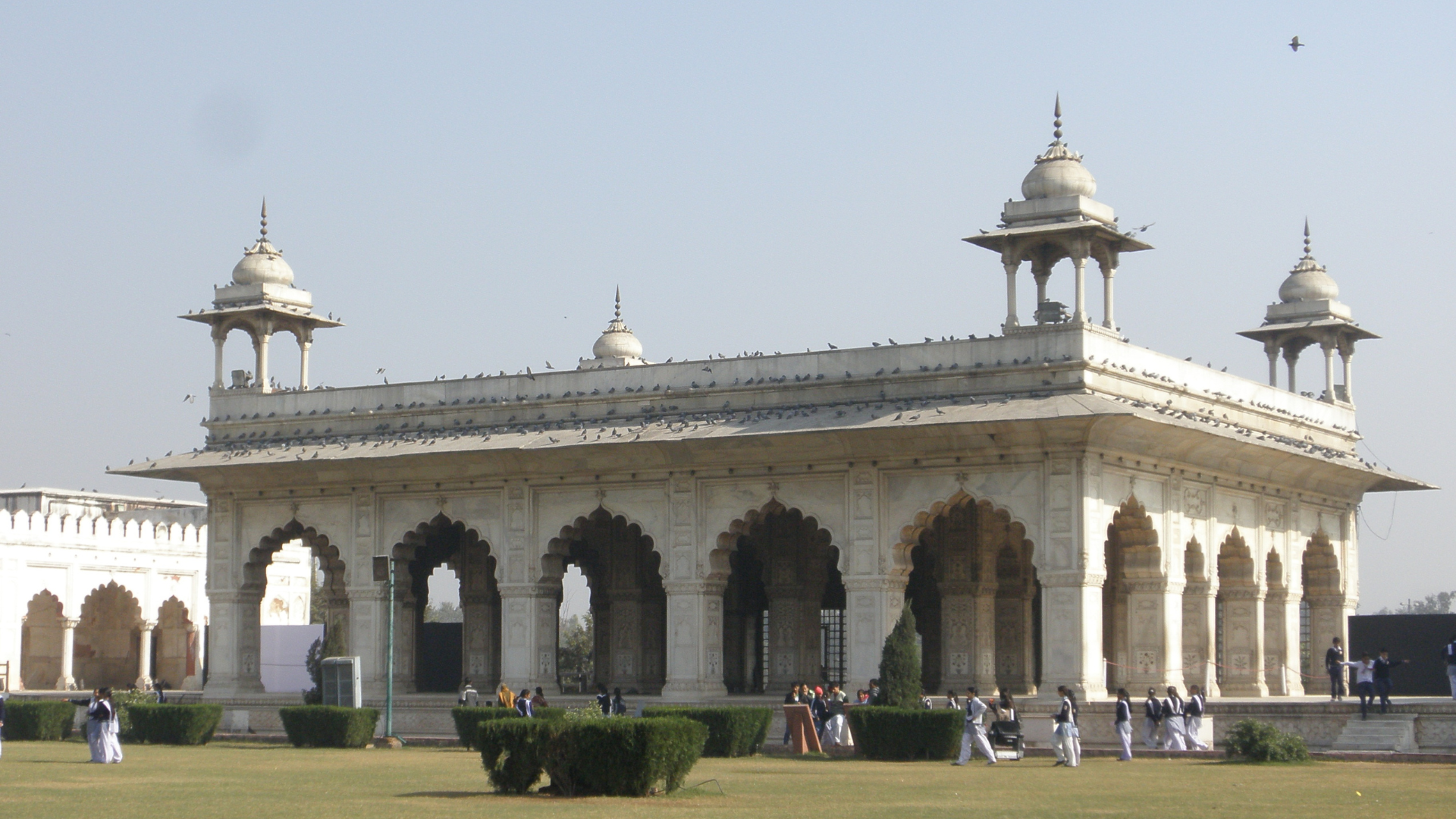
Within the fort's grounds are a number of significant buildings such as the Diwan-i-Aam, or Hall of Audience, was the venue where the Mughal emperor Akbar, along with his successors, met with the general public to address their concerns and grievances.
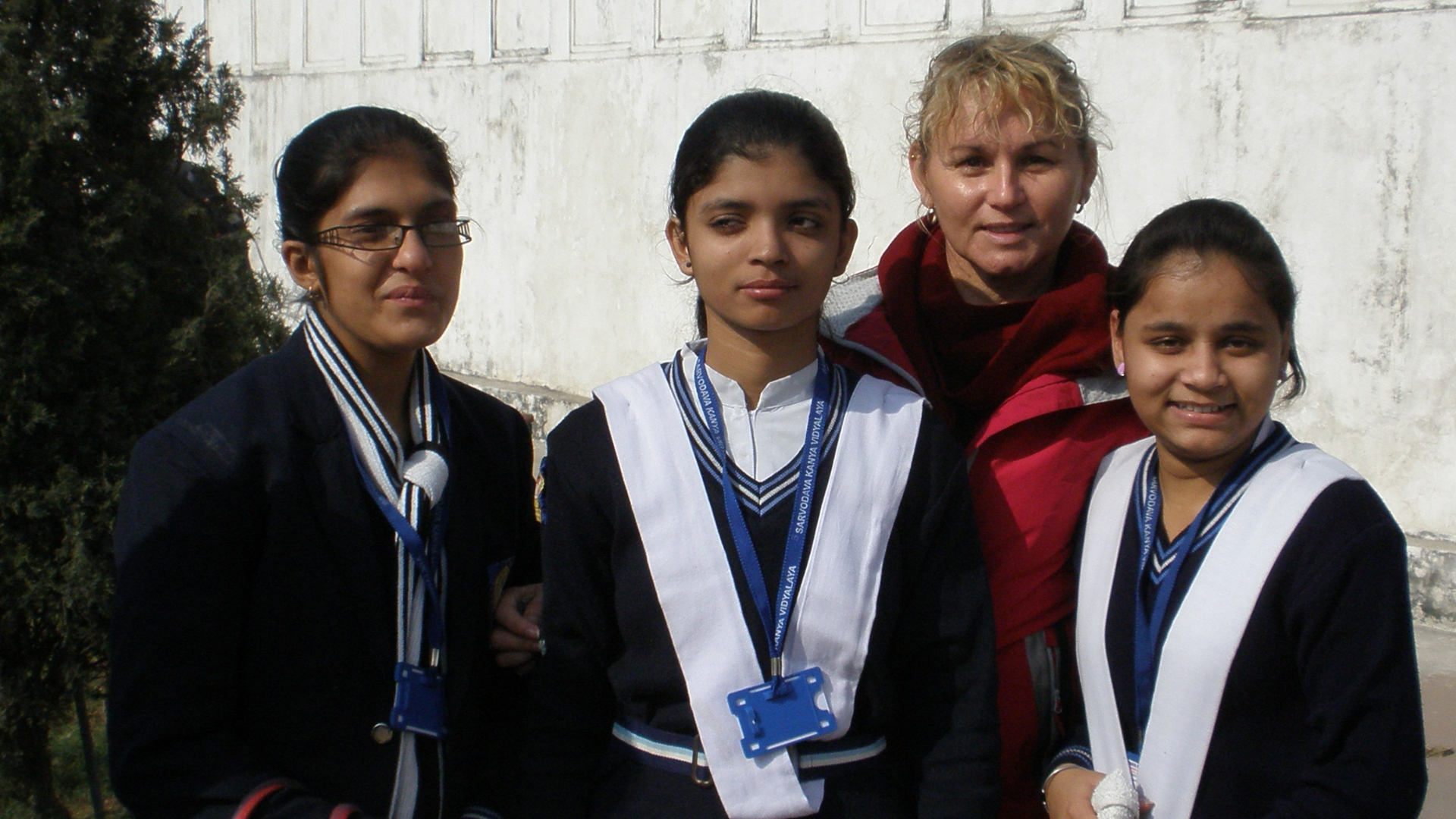
I came across three schoolchildren who were not only knowledgeable in their country's history and eager to share, but were also, like me, enjoying their first visit to the Red Fort.
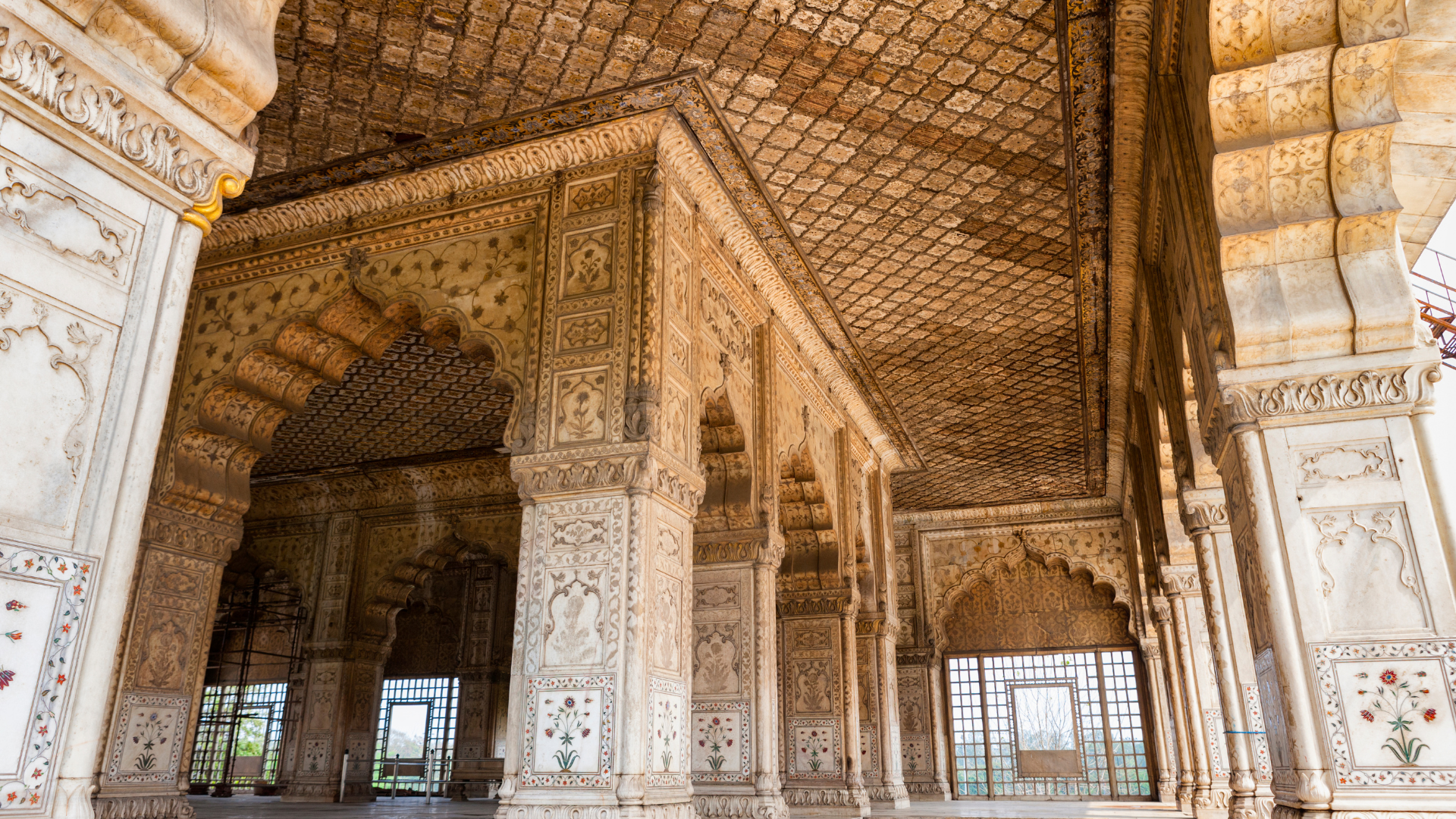
The Diwan-i-Khas, or Hall of Private Audiences, was used by the Mughal emperors for private meetings, consultations, and ceremonial gatherings with courtiers, dignitaries, and special guests. This hall was distinct from the Diwan-i-Am, which was used for public audiences and is renowned for its lavish architectural style, featuring intricate marble inlays and rich decorations, underscoring its use for more exclusive and intimate imperial engagements.
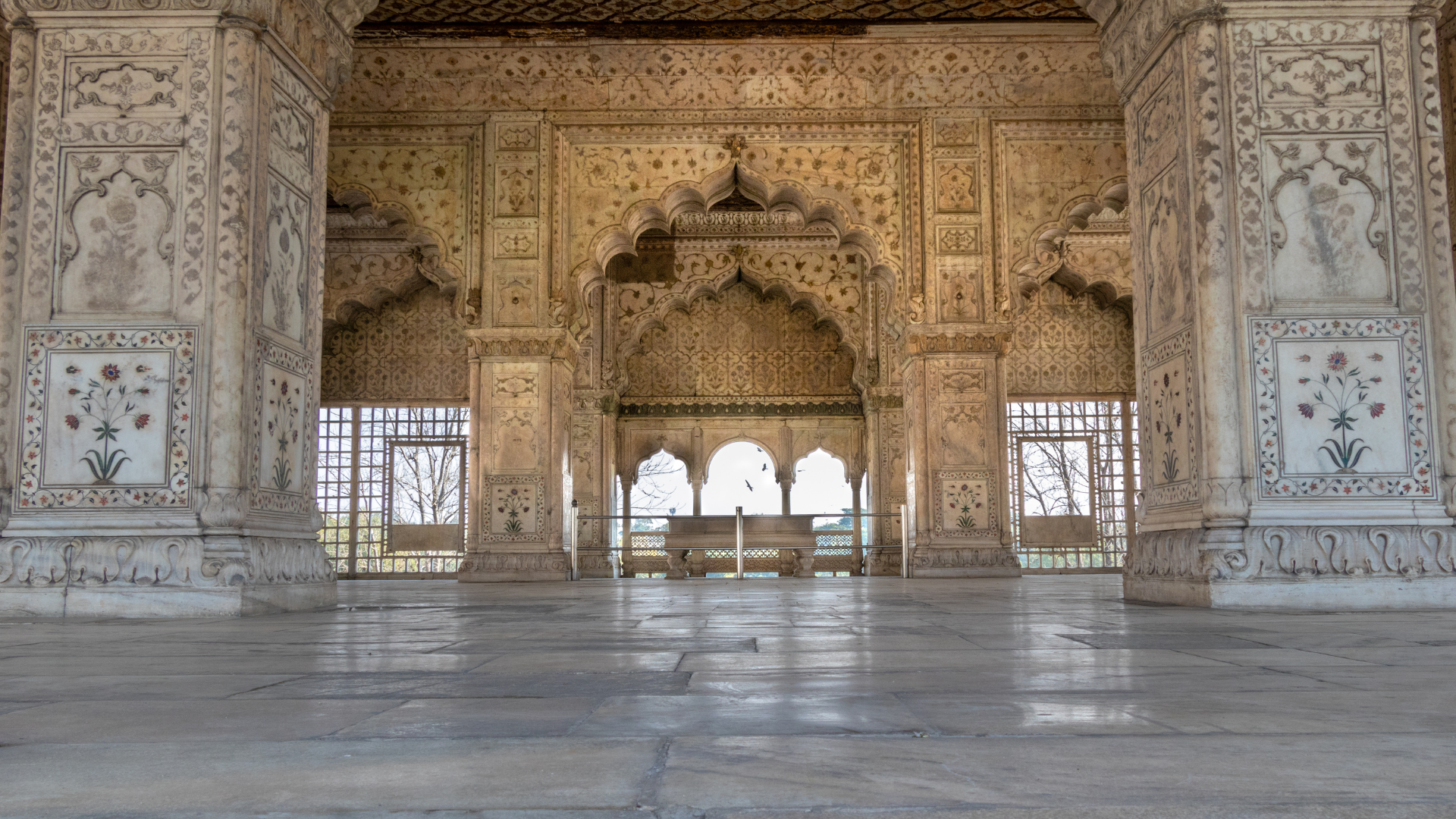
Also within the grounds of the Red Fort, is the Rang Mahal, or the Palace of Colours, that was primarily used as the residence for the emperor's wives and mistresses. Its name, which translates to "Palace of Colours," derives from its original elaborate interior decorations, including painted and embellished walls and ceilings. The Rang Mahal also featured a central marble pool that was fed by the Nahr-i-Bihisht, a canal that ran through the fort, enhancing the lavish living quarters with its beauty and cooling effect.
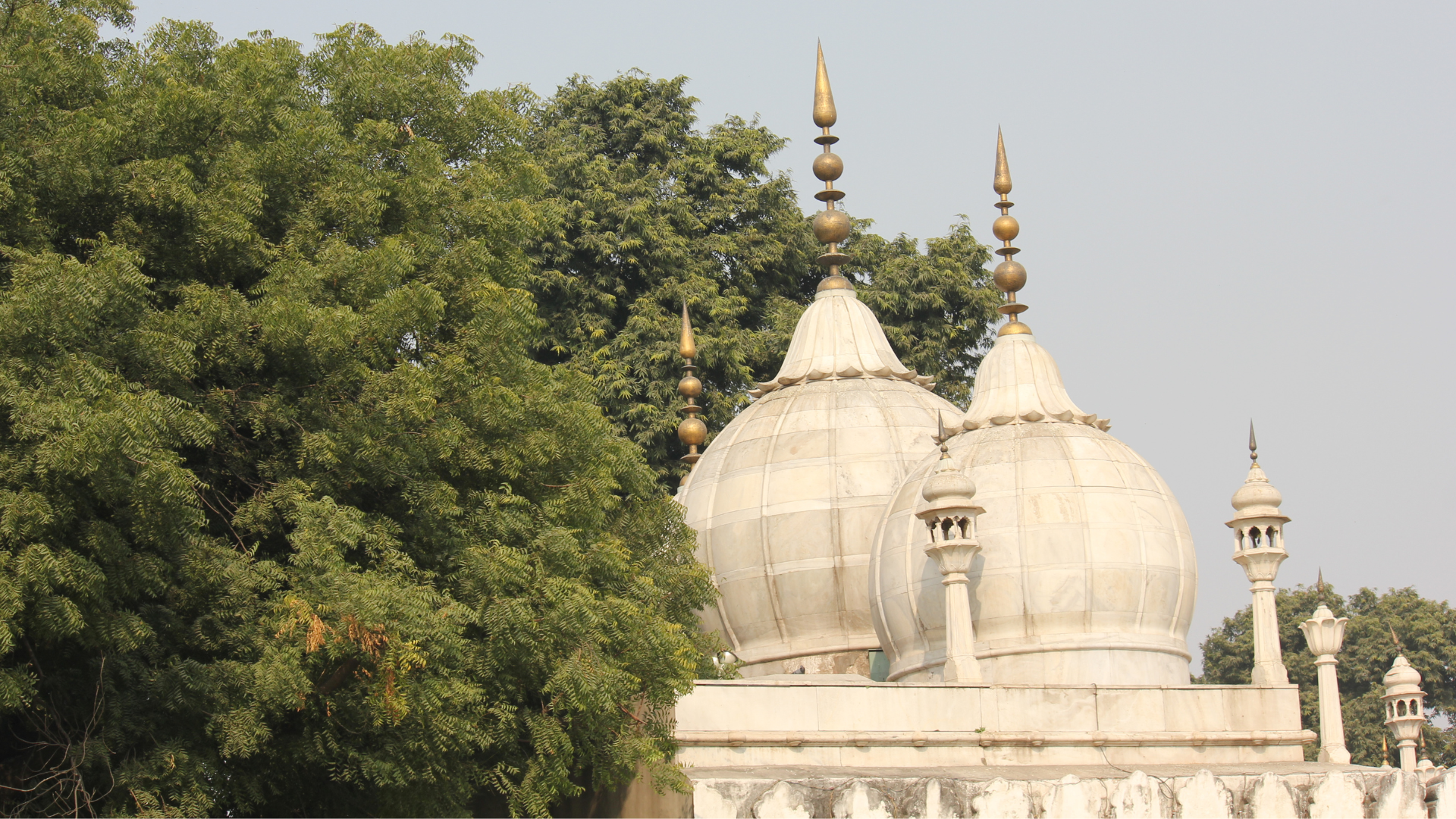
The three domed Moti Masjid crown the prayer hall inside the Red Fort and was used as a private mosque by the Mughal emperors and their families. Built by Emperor Aurangzeb, the mosque's name, "Moti Masjid," translates to "Pearl Mosque," reflecting its pristine white marble structure that resembles a pearl. It served as a place of worship where the emperor and members of the royal family could engage in prayer away from the public eye, emphasizing the personal and sacred nature of the space within the palace complex.
Throughout its history, the Red Fort has been at the centre of significant events. Post the decline of the Mughal Empire, it was captured by the Marathas and later by the British after the Indian Rebellion of 1857. Under British rule, parts of the fort were demolished to build military installations. Since India's independence in 1947, the fort has gained monumental national significance as the site where the Prime Minister hoists the national flag and delivers a speech every Independence Day.
Recognised for its historical and cultural importance, the Red Fort was declared a UNESCO World Heritage Site in 2007, drawing visitors and scholars interested in its rich legacy and architectural magnificence.
Leaving the Red Fort, we made away across the busy road to the historical crammed lanes and busy streets of Chandi Chowk. As we were joining with the rest of our travel group to venture into the labyrinth of tiny lanes crowded with rickshaws the next day, we took a very brief walk down the main street of Chandi Chowk.
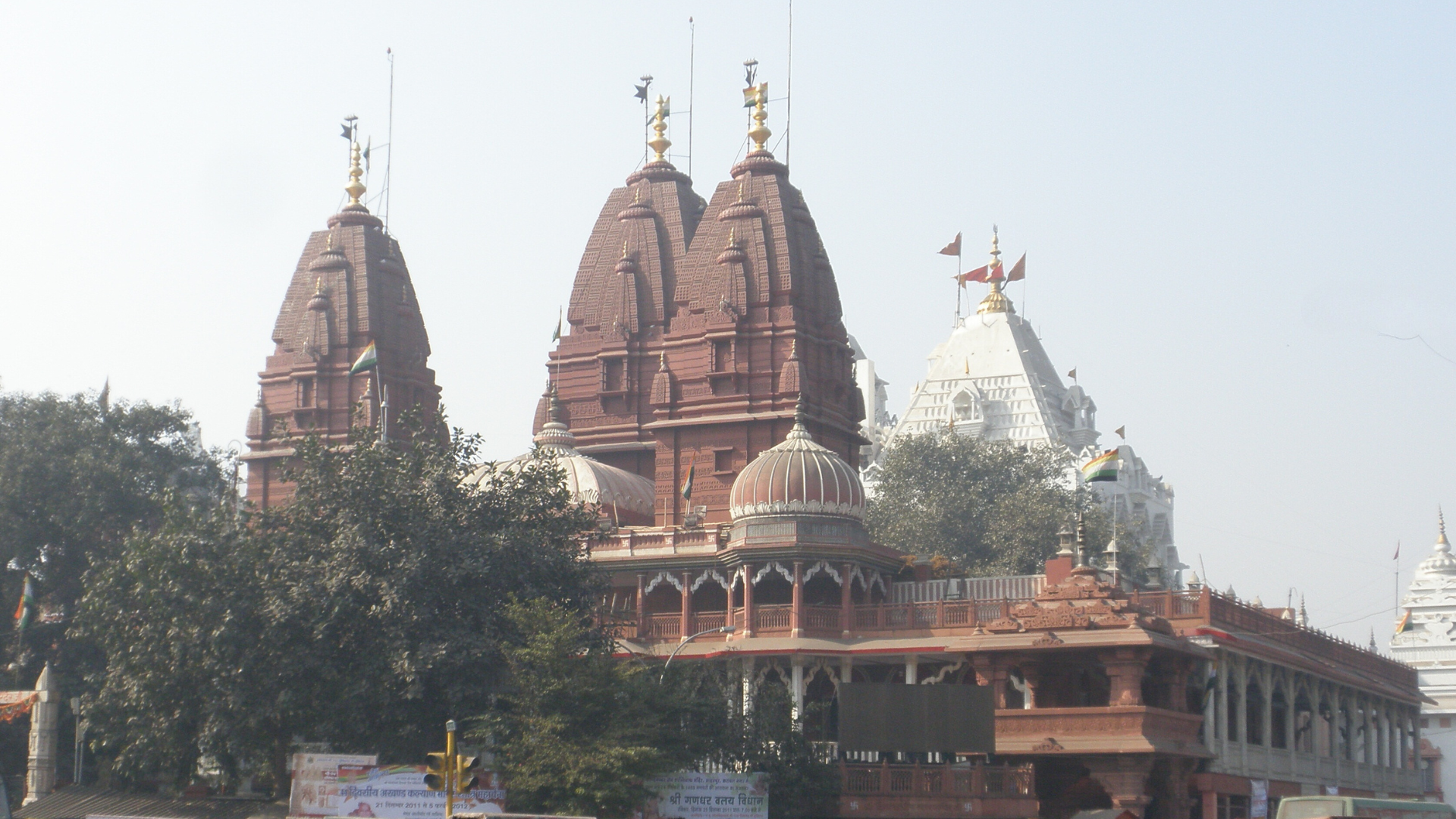
Directly across from the Red Fort in the historical Chandni Chowk area we pass by Śrī Digambar Jain Lāl Mandir, the oldest and best-known Jain temple in Delhi, built in 1656.
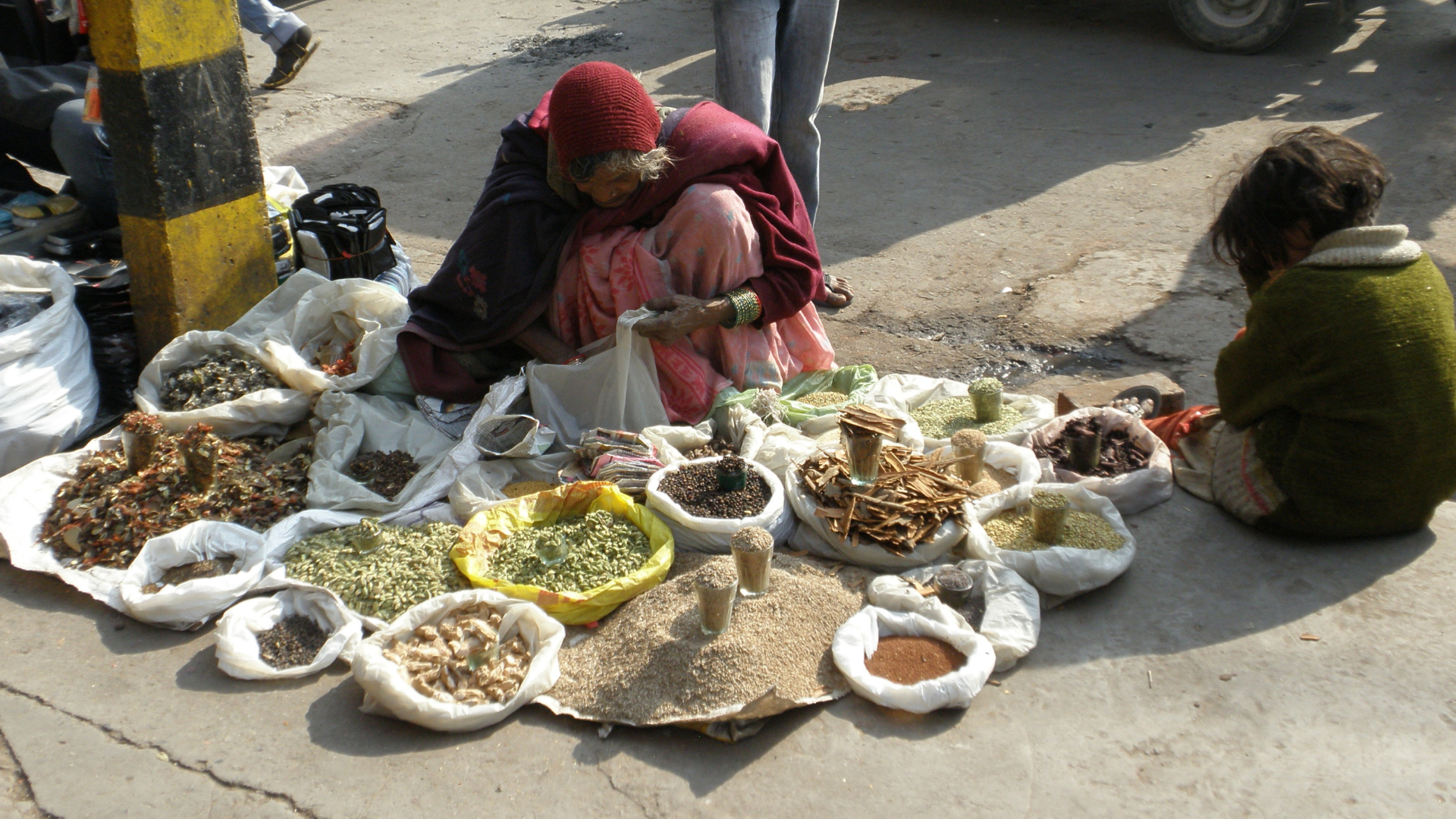
And, a colourful street seller selling local home grown produce.
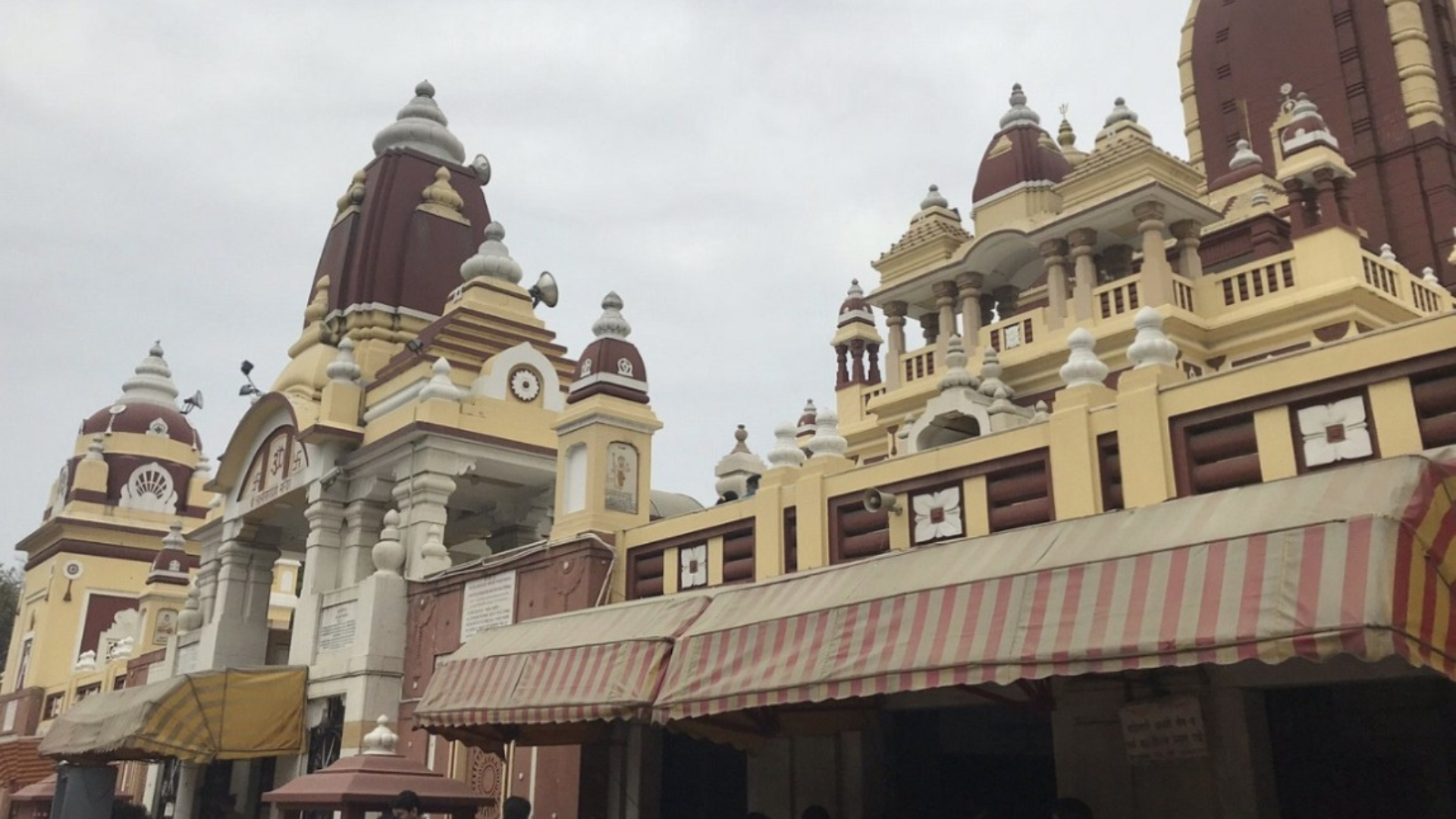
Finding a rickshaw and rider, we took the short ride through the madding streets, passing the Birla Mandir, also known as Laxmi Narayam Temple; Lord Vishnu and his consort Laxmi, dedicated to Lord Shiva on our way to Humayun’s tomb.
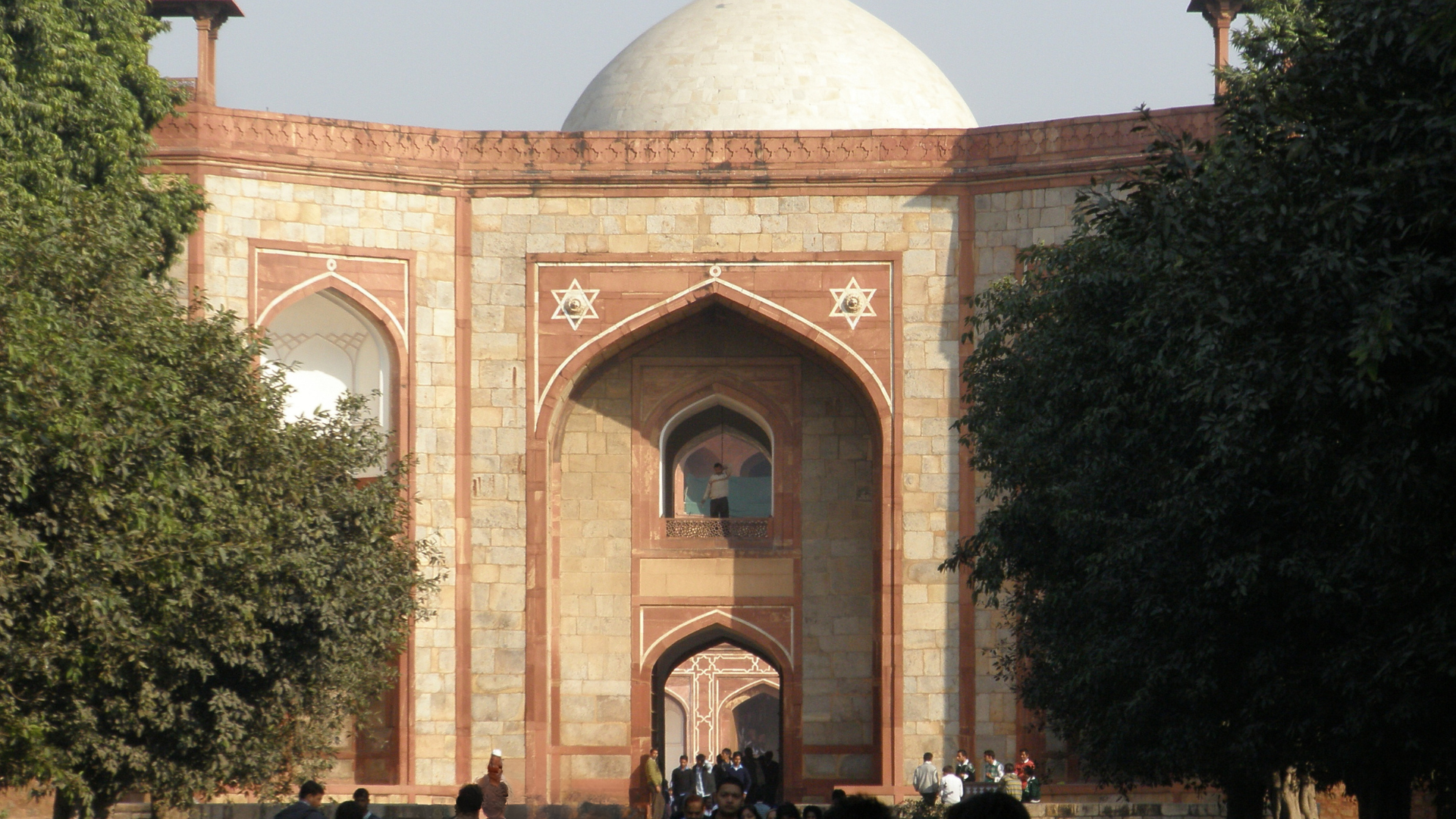
Humayun's Tomb, also known as Humayun ka Maqbara, where "Maqbara" is derived from the Arabic word "Qabr," meaning grave, is the mausoleum of the Mughal Emperor Humayun.
Commissioned by his first wife, Bega Begum, in 1569, it took several years to complete.
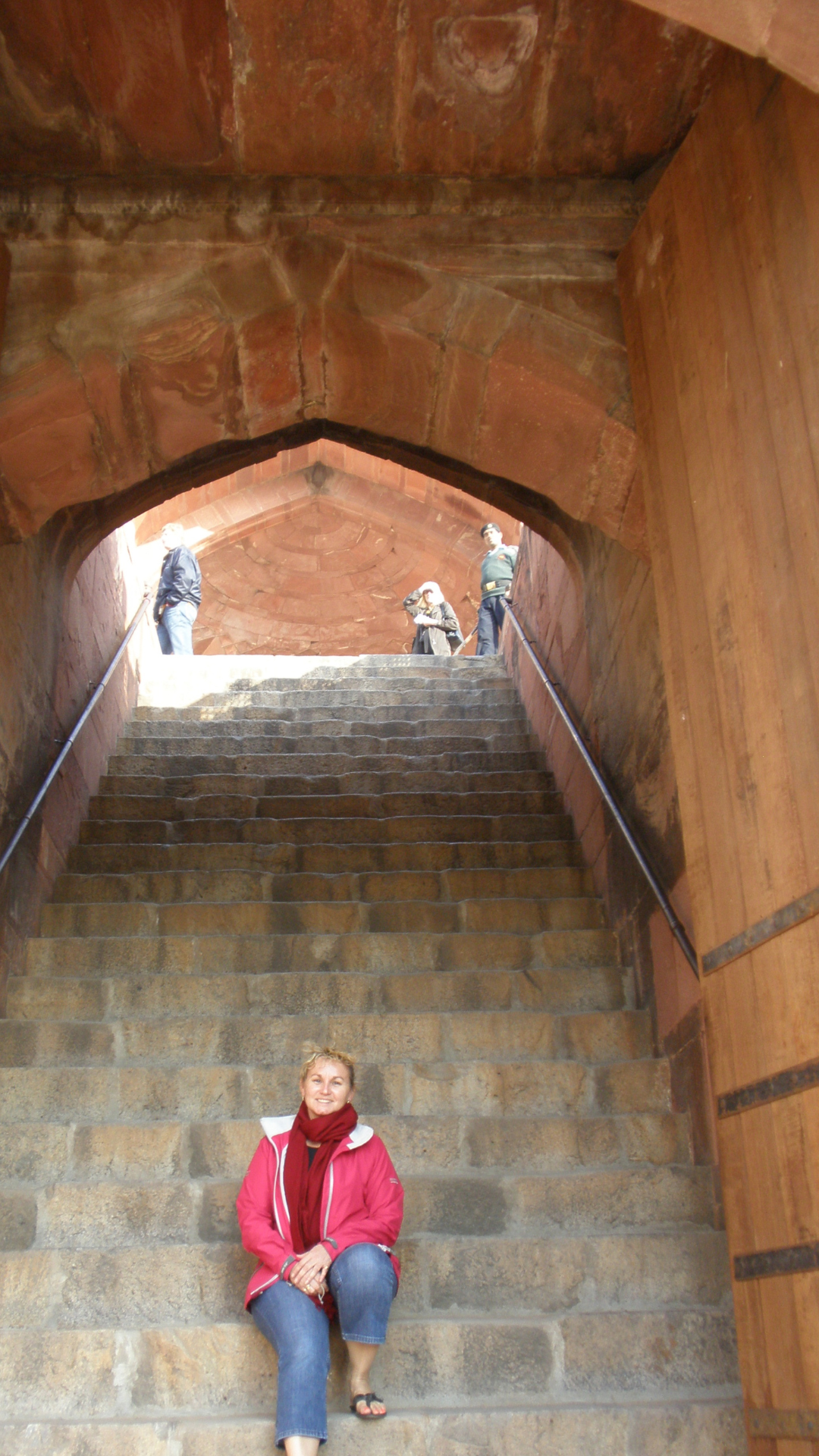
Enjoying a moment in the grandeur of the entrance before ascending the stairs to the upper level that houses the main burial chamber, which contains the cenotaph (empty tomb) of Emperor Humayun.
Distinguished by its robust entrance walls and a towering timber door that stands approx. 6 meters (around 20 feet) high, Humayun’s Tomb is set with an expansive 30 acres.
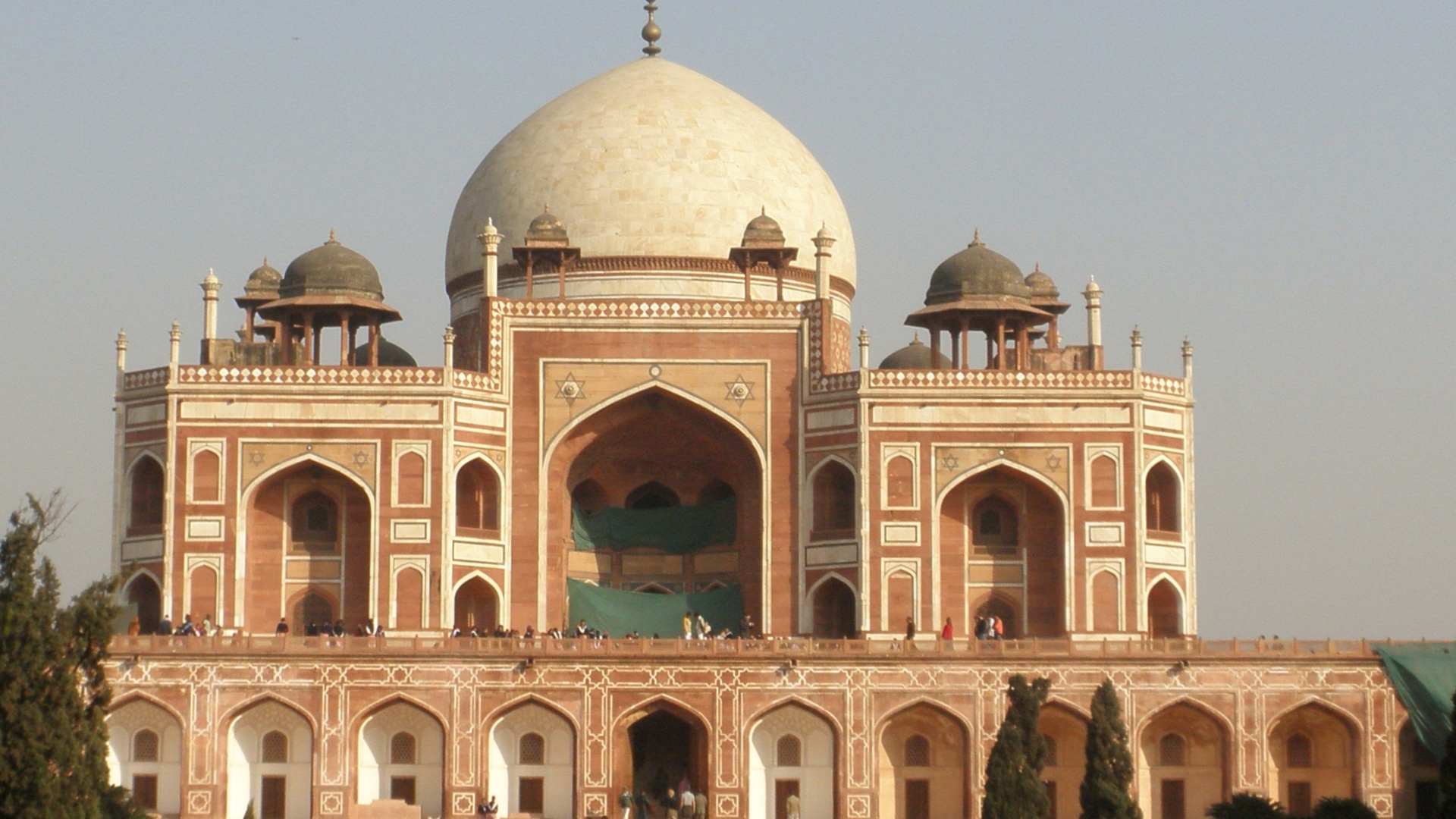
This expansive area encompasses the main tomb building, that pre-dates the main tomb by twenty years, constructed in 1547; the octangle tomb of Isa Khan Nivasi, an Afgan noble in Sher Shah Suri’s court of the Suri dynasty who fought against the Munhals. Several other smaller monuments, and beautifully landscaped gardens, arranged in the charbagh (four-part garden) style which is characteristic of Mughal Garden tombs.
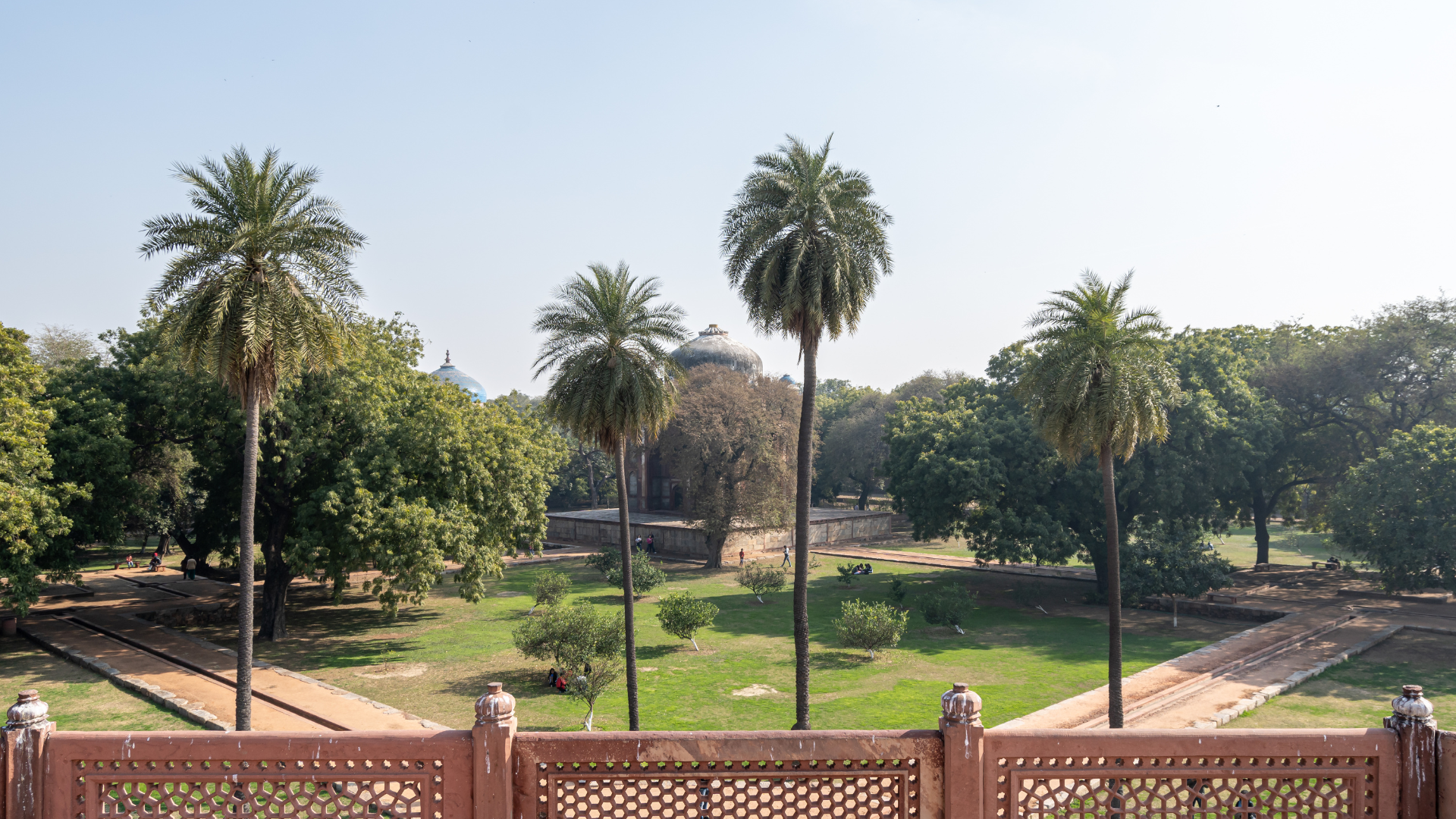
The gardens are divided into squares, interlaced with pathways and water channels, emphasising the Persian influence on Mughal architecture and landscaping. Additionally, this monument is notable as the first garden tomb in India, and was declared a UNESCO World Heritage Site in 1993.
By now it was late afternoon, and we returned to the hotel in time to meet our tour leader and the rest of our group for the 14-day Classic Rajasthan Experience tour.
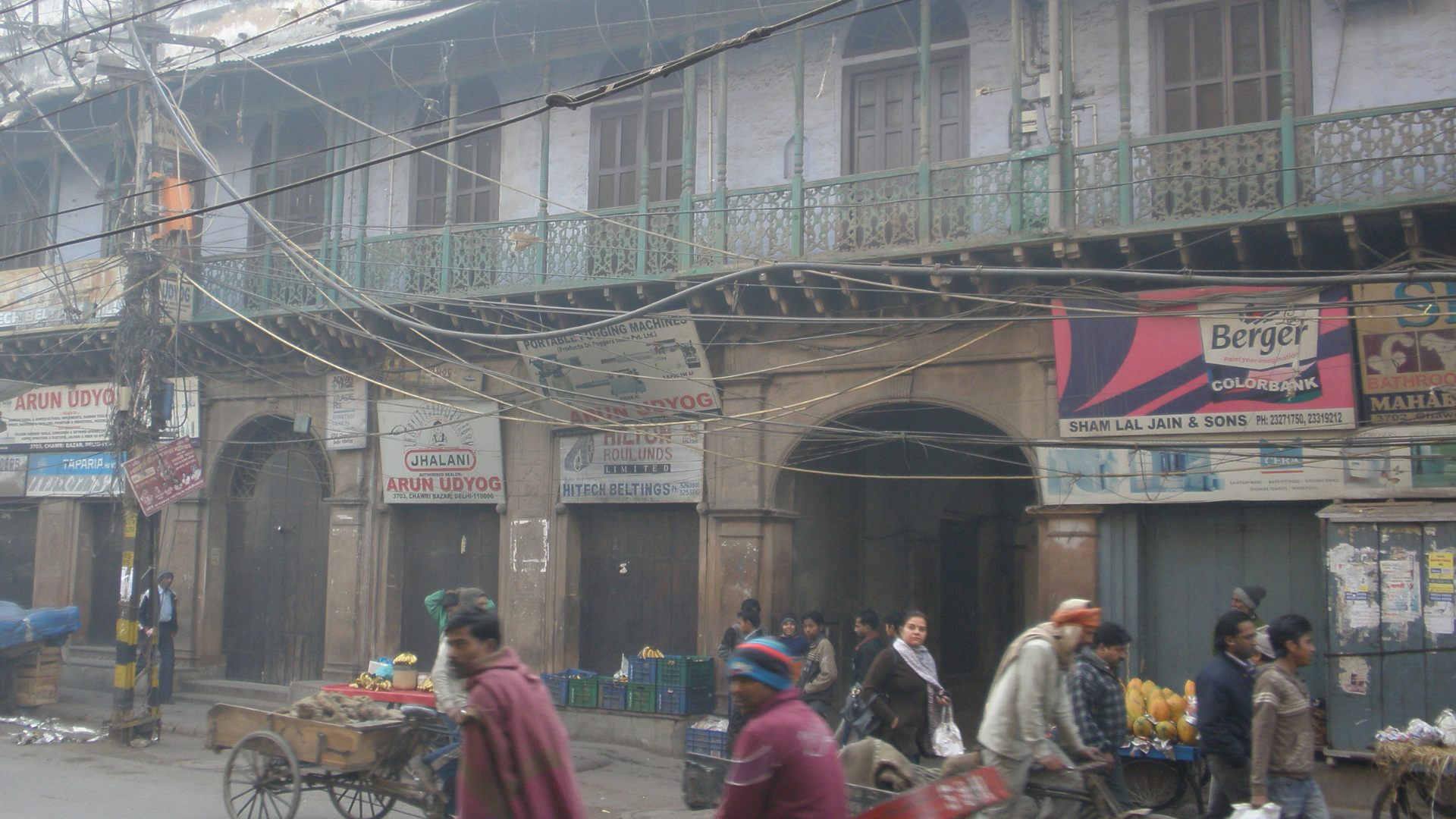
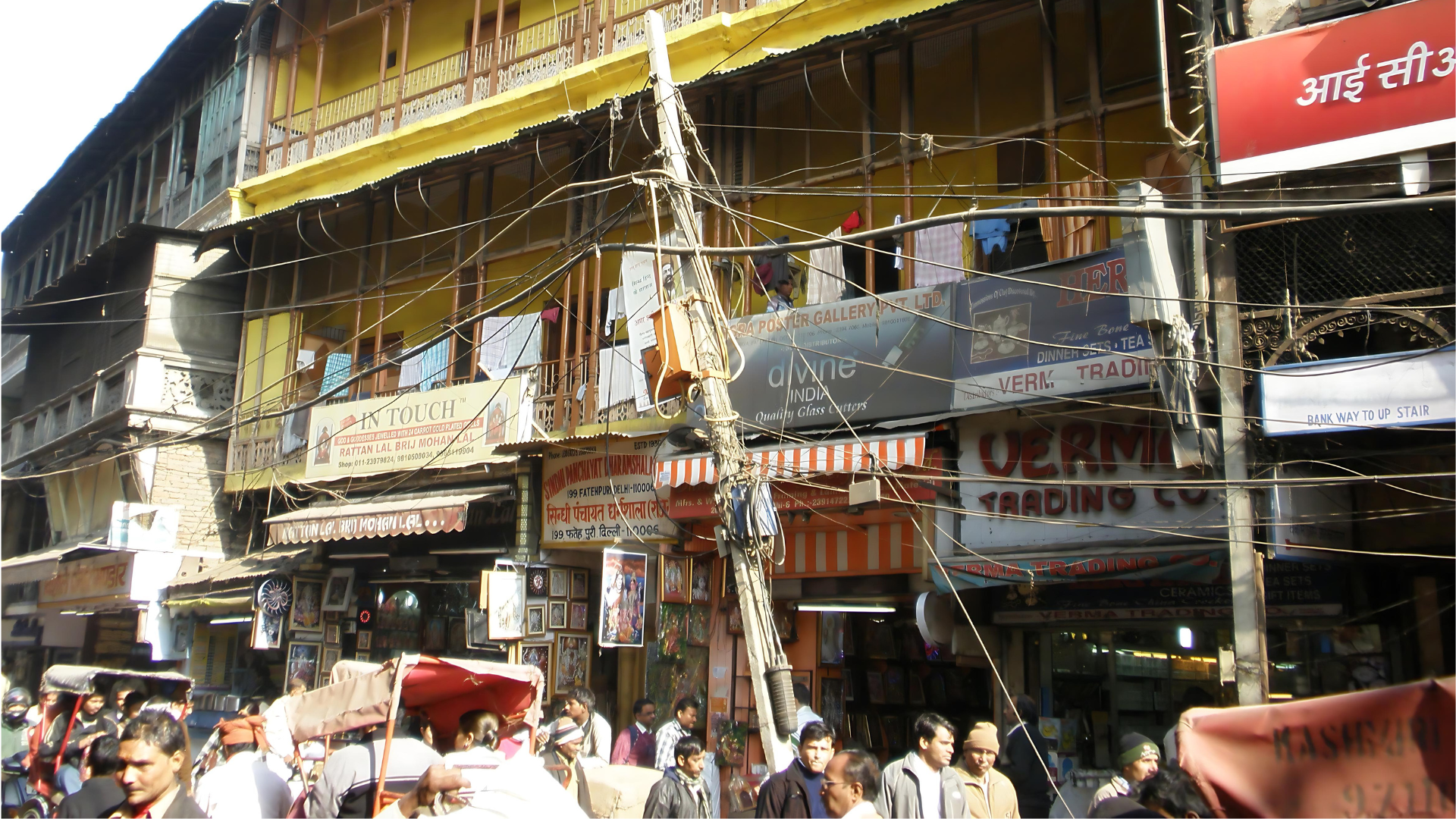
Back to the Metro the following day and the short train ride to Chandi Chowk to experience more of the labyrinth of tiny lanes crowded with rickshaws and lined with 17th century havelis (Indian mansions), with their balustrades broken and the once ornate facades defaced with rusted signs and sprouting satellite dishes.
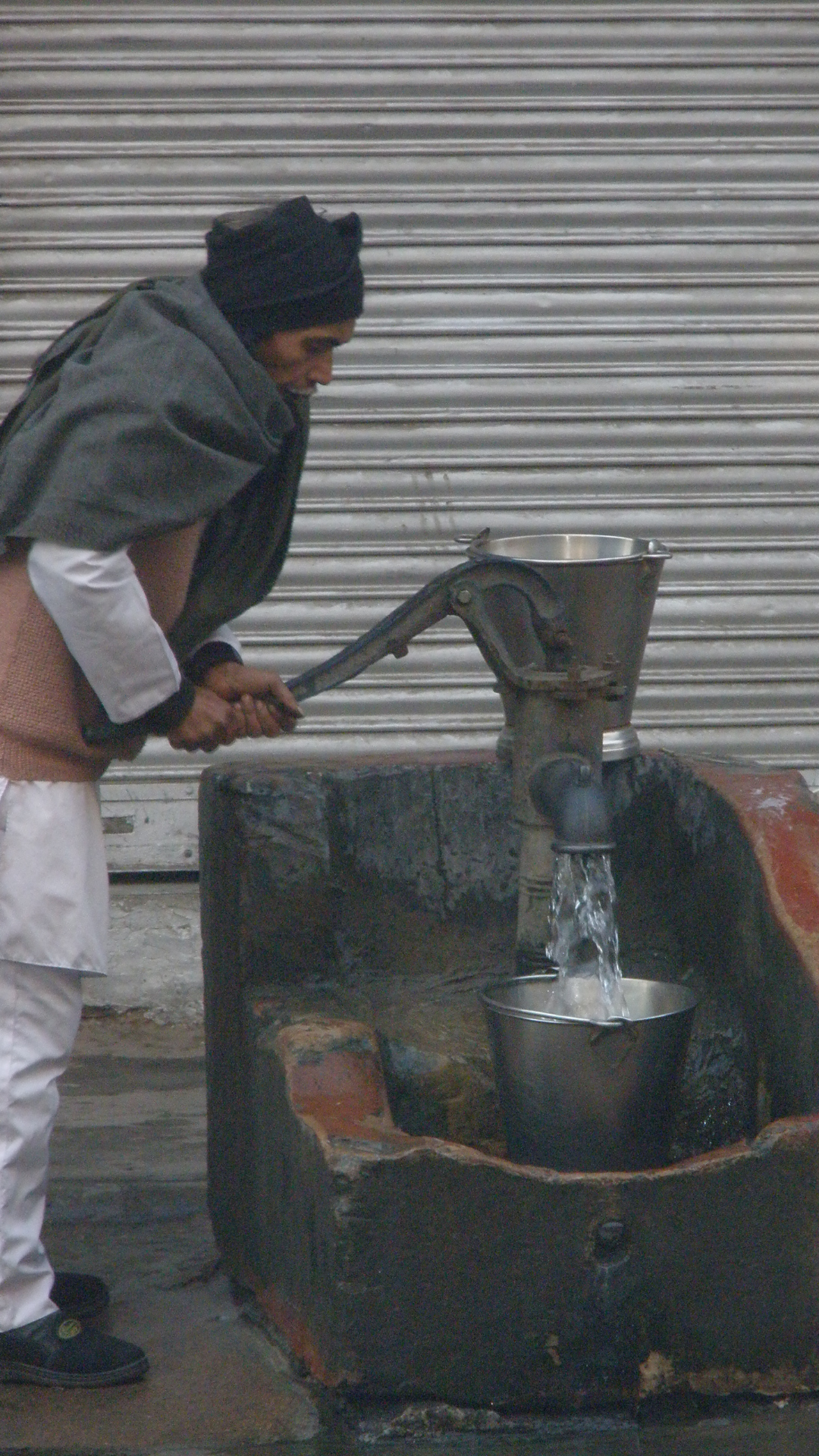
In this predominantly Muslim area of Old Delhi, where daily life has changed little over the last century.
The winding lanes of Chandi Chowk, are an assault on the senses; before visiting the Masjid-i Jahān-Numā.
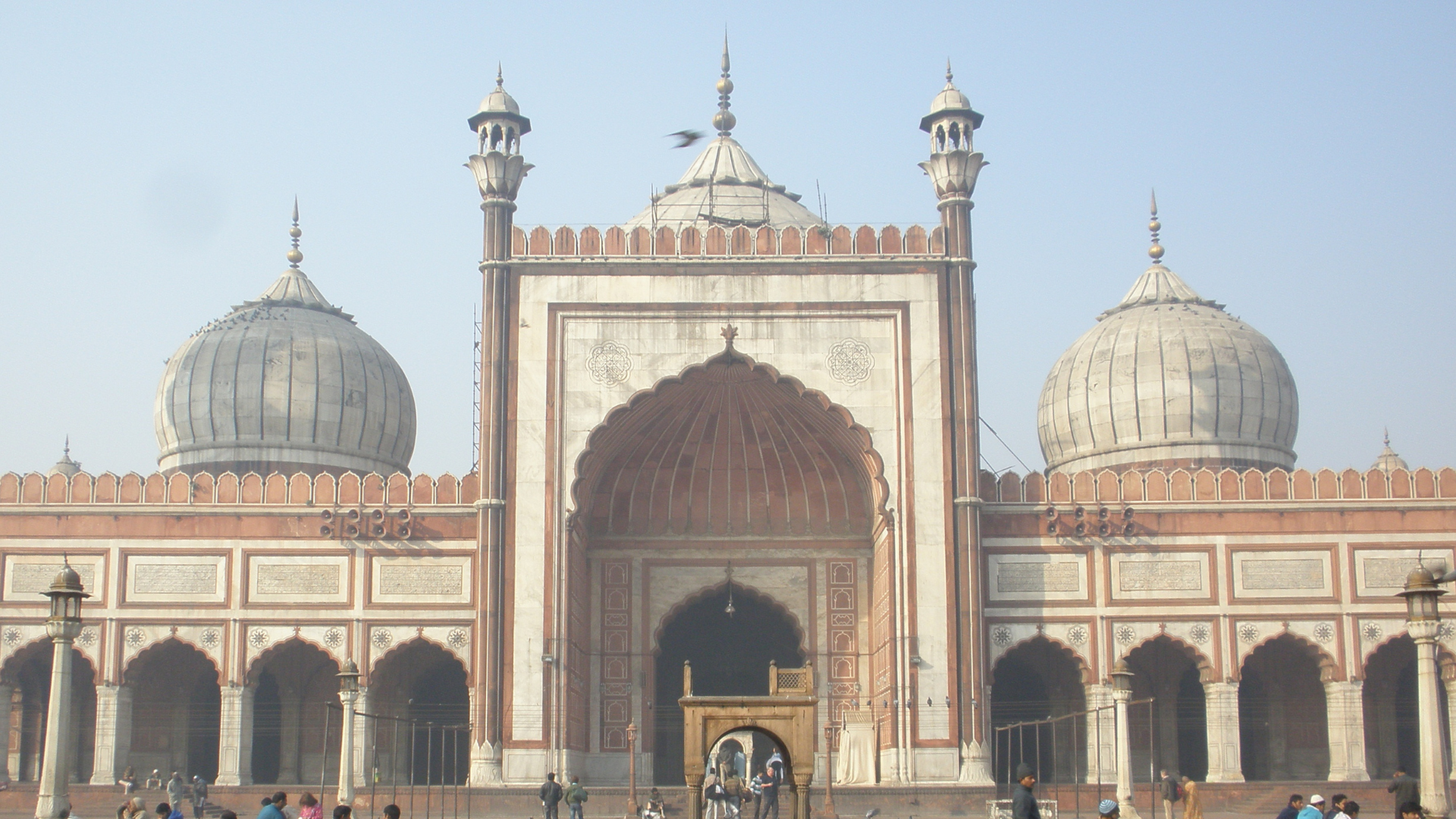
Jama Masjid, known locally as the Friday Mosque. It's the largest mosque in Delhi and ranks third in the top five largest mosques in India. It’s former officially known name, Masjid-i-Jehān-Numā, meaning "mosque commanding a view of the world," is reflective of the period when this area was named Shahjahanabad, the flourishing capital of the Mughal Empire from 1638 to 1857. Commissioned by Shah Jahan and constructed in 1644, the mosque served as the main place of worship for Mughal emperors and was constructed between 1650 and 1656, occupying the highest point in the ancient capital.
Entry to Jama Masjid is free, however at the time of writing tourists were required to pay a photography fee of INR 300, which can be paid on-site.
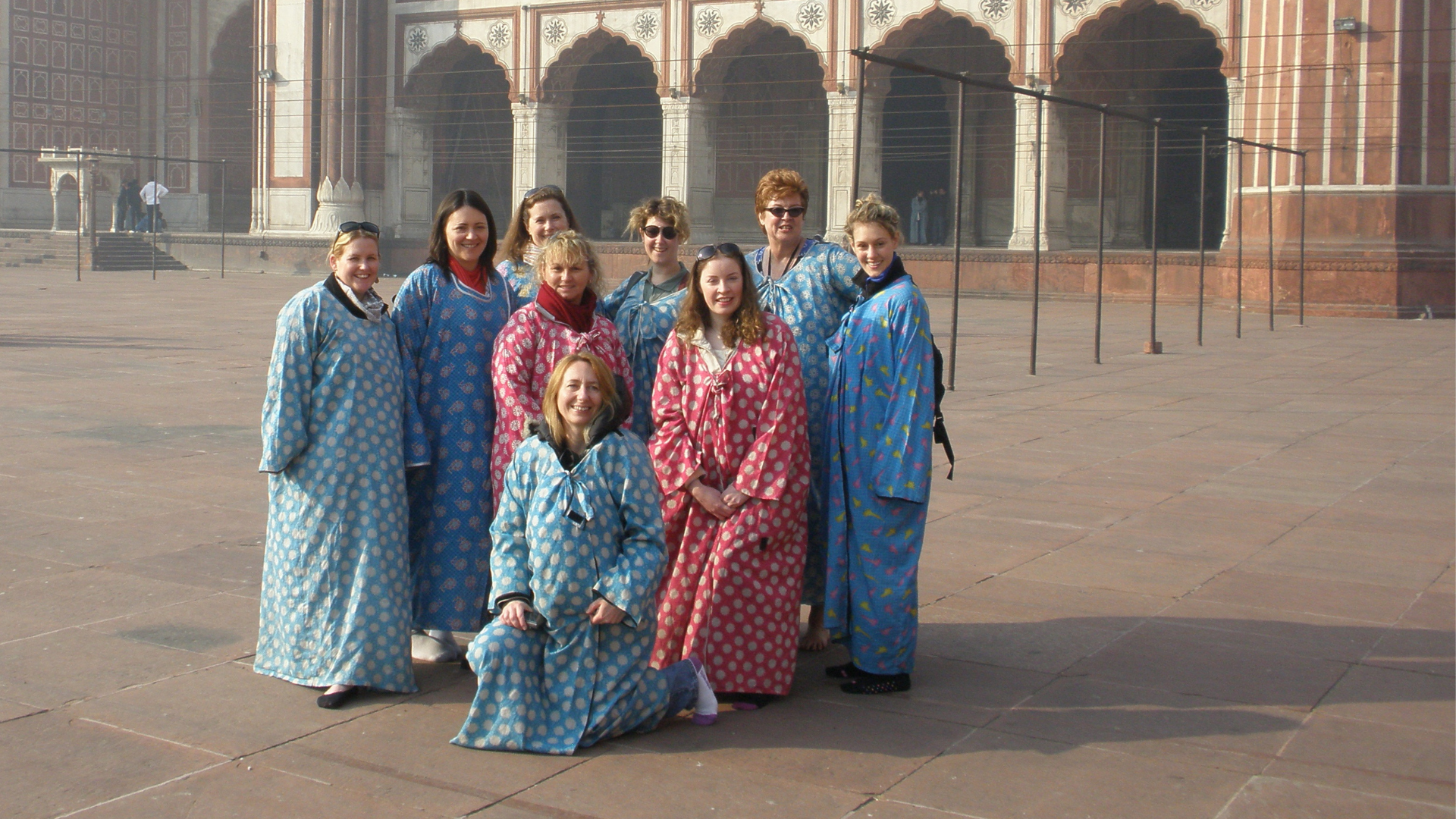
When visiting Jama Masjid, it is essential to follow a modest dress code out of respect for cultural and religious traditions. All visitors should wear garments that cover their shoulders, arms, and legs. This generally requires women to wear long pants or skirts along with long-sleeved shirts, and men to refrain from wearing shorts and sleeveless tops. If you find yourself inadequately dressed, full-length gowns can be rented at the mosque entrance for Rs. 50 per person. Additionally, shoes must be removed before entering the mosque to honour local customs of the sacred space.
Our travel group entered through the northern gate and at the time of my visit, travellers were required to hire robes.
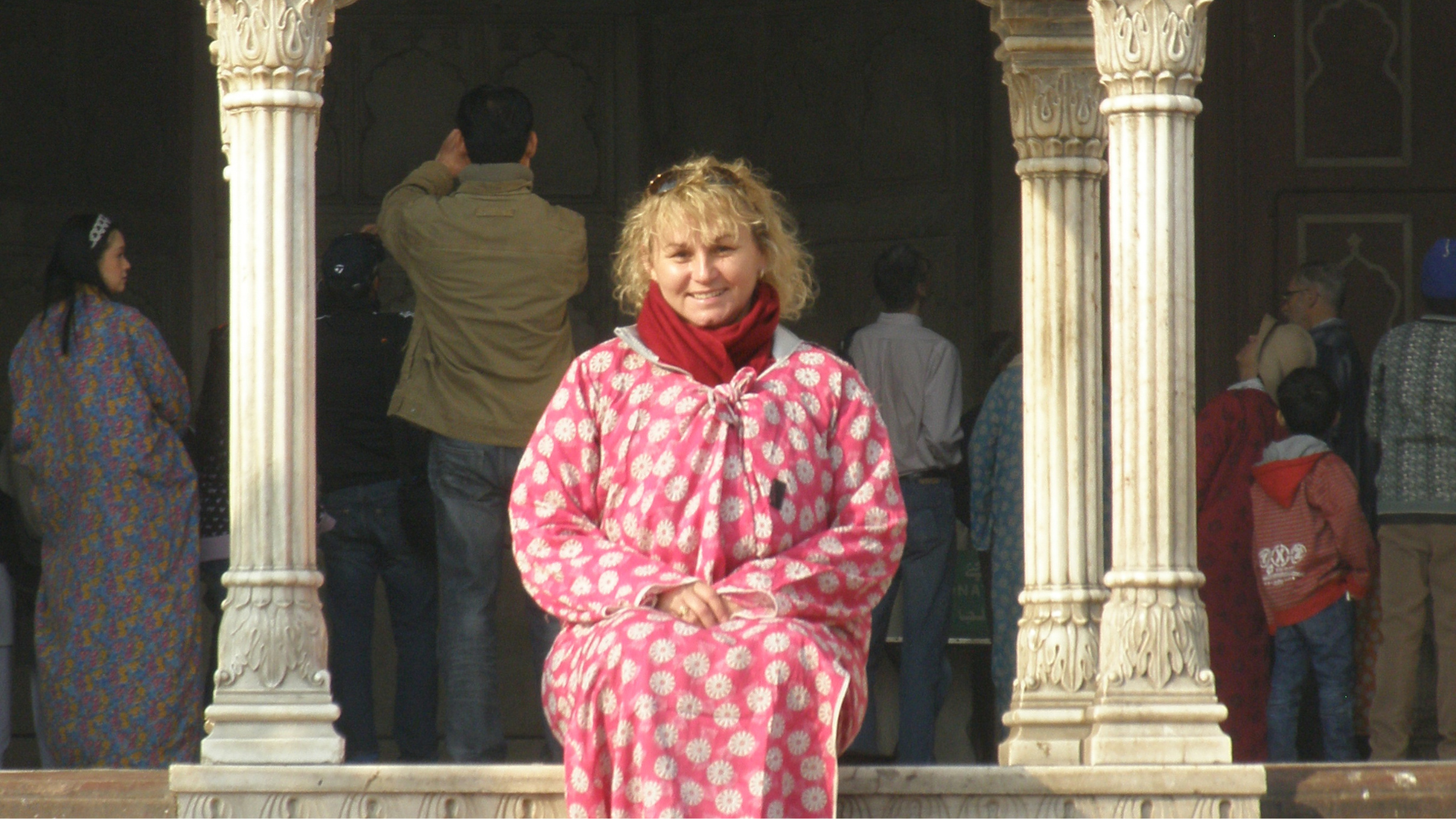
The grand mosque consists of two main levels, housing the main courtyard and the prayer hall.
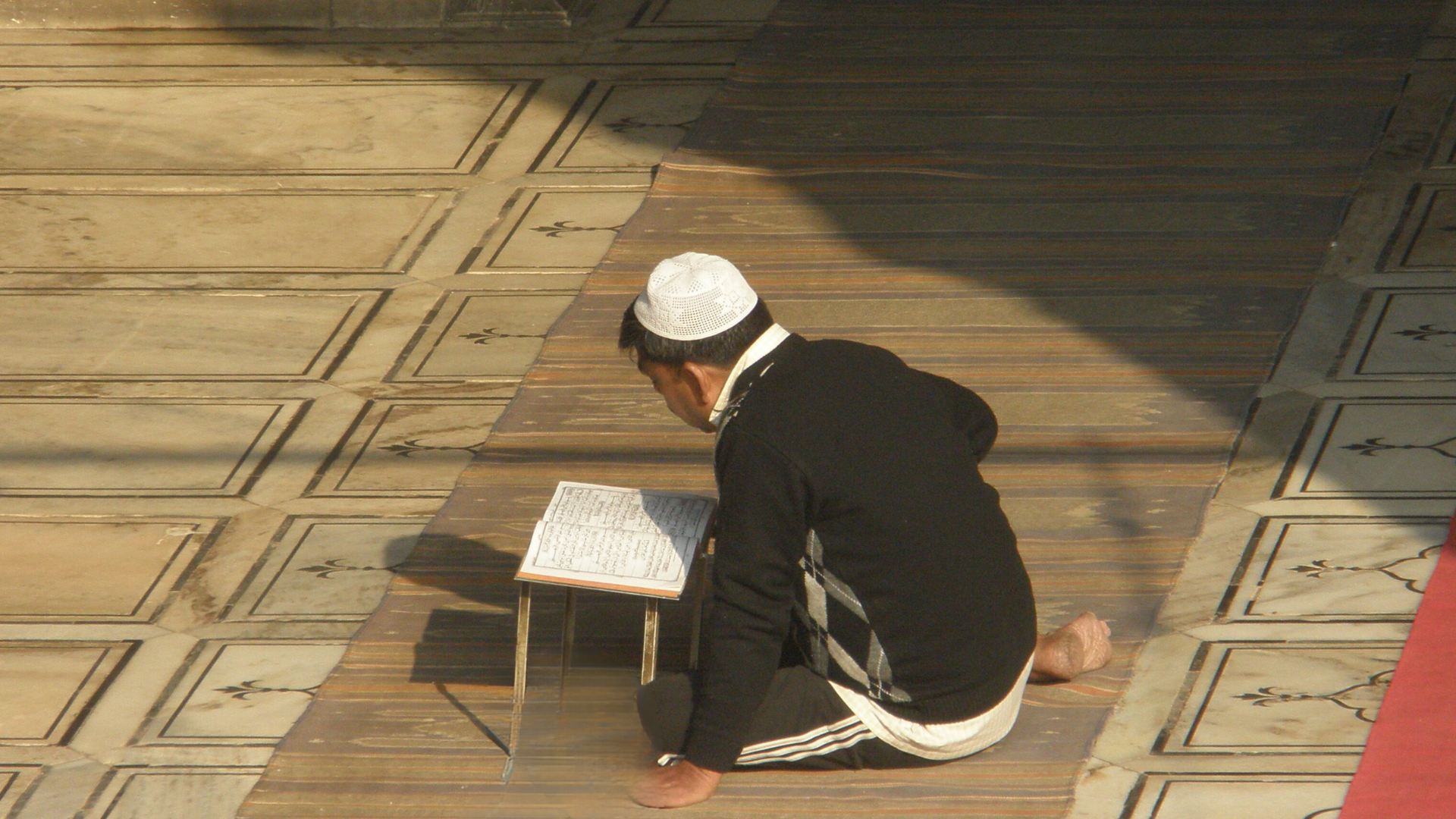
A quite time for prayer in the prayer hall amidst the chaos outside the walls of Jama Masjid.
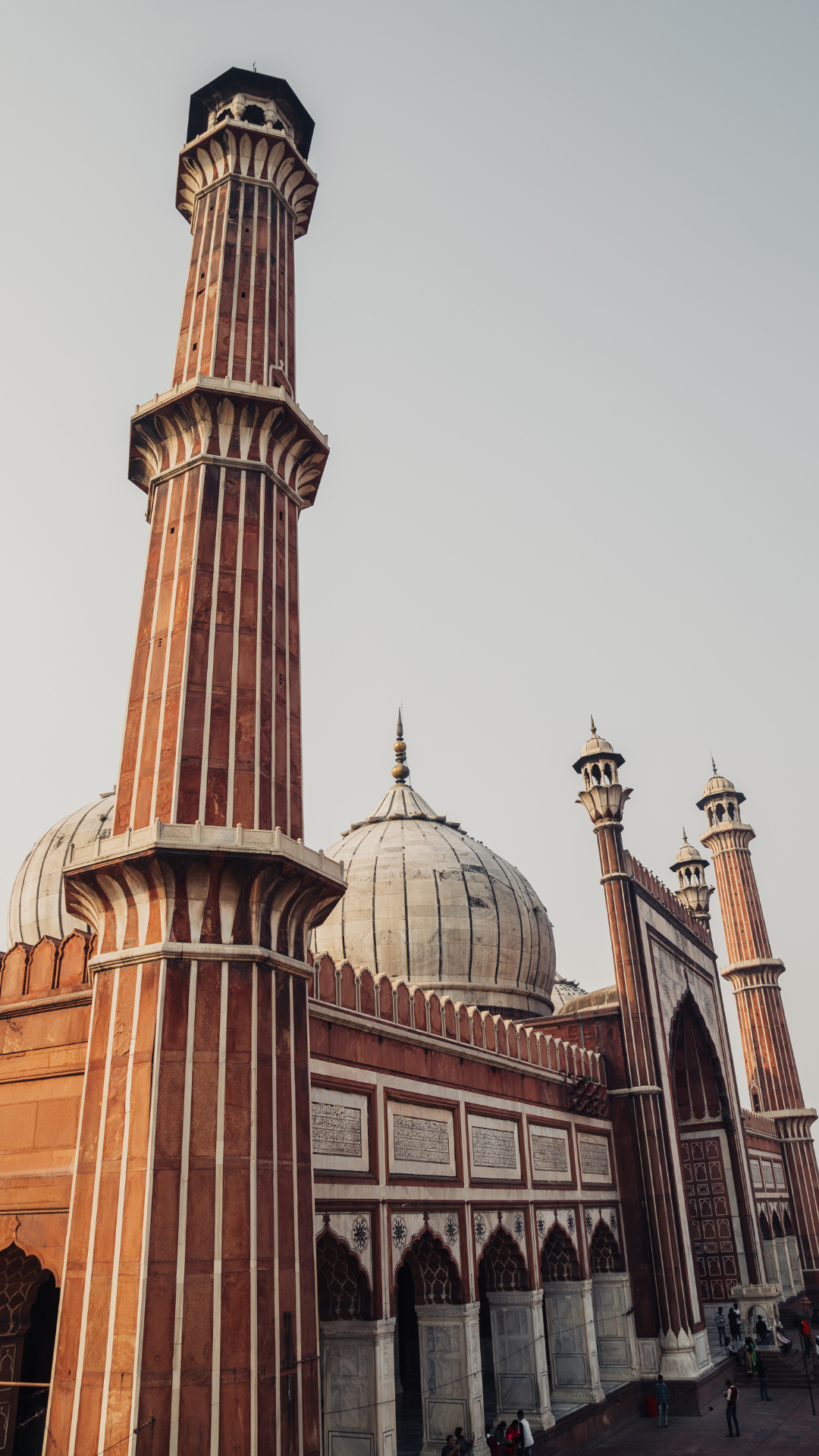
This highly decorative mosque has three great gateways, four towers, and two 40mtr high minarets constructed of interlays of red sandstone and white marble.
Covering an area of approx. 1,200 square metres that is designed to accommodate over 30,000 worshippers at any given time, reflects its vast scale and significance.
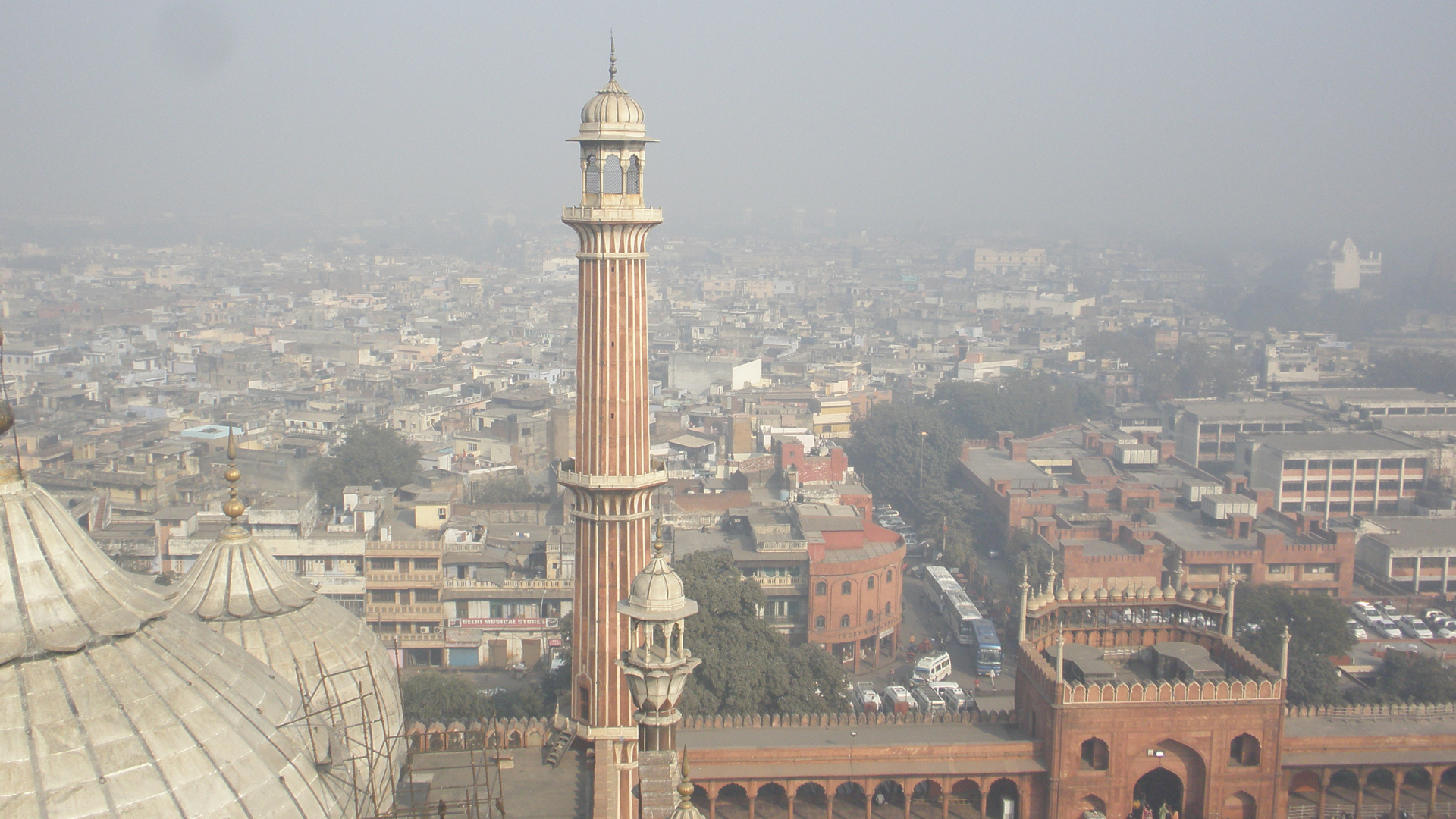
There’s an additional charge to reach the viewing balcony of the 40-meter-high minarets of Jama Masjid, and you need to climb approx. 130 steps.
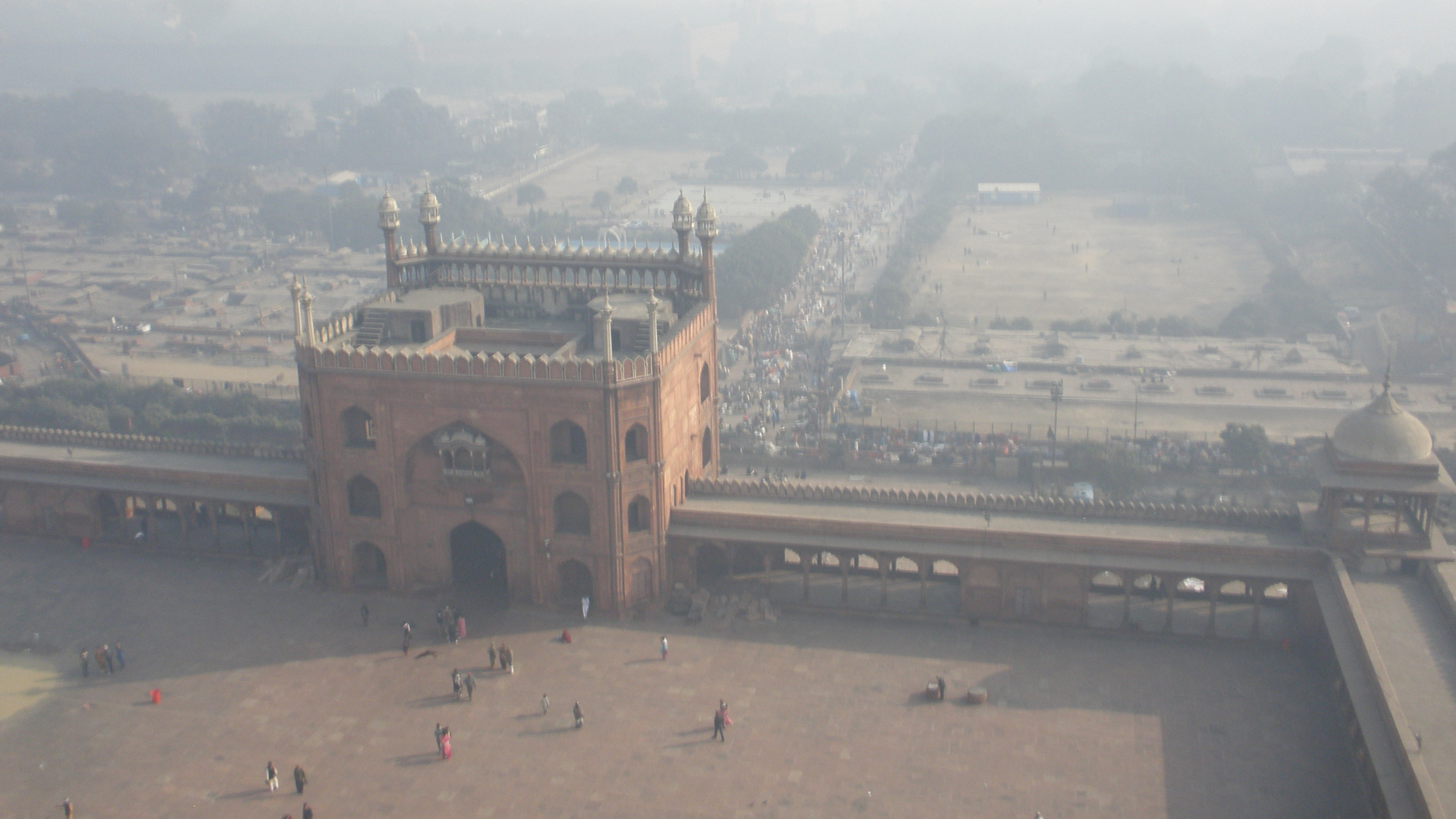
The steps wind up inside the minaret, leading to a platform that offers panoramic views amidst the smog filled sky of Old Delhi.
Leaving Jama Masjid, we’re back in the chaotic and vibrant streets, with countless bazaars of Chandni Chowk, one of the oldest and busiest markets in India.
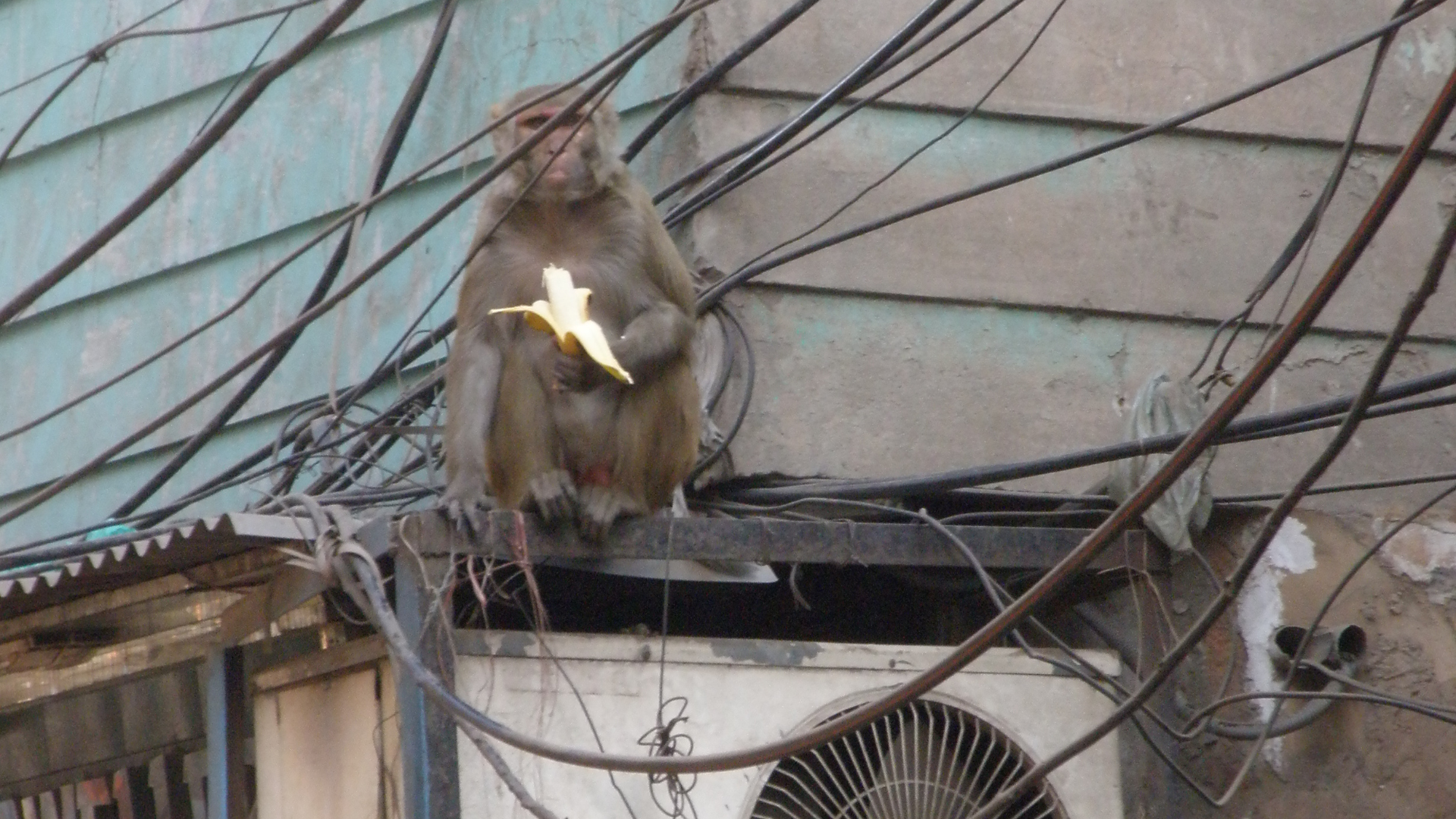
And, more interesting sights through the chaotic winding back lanes with overhang wires hanging like tree branches….
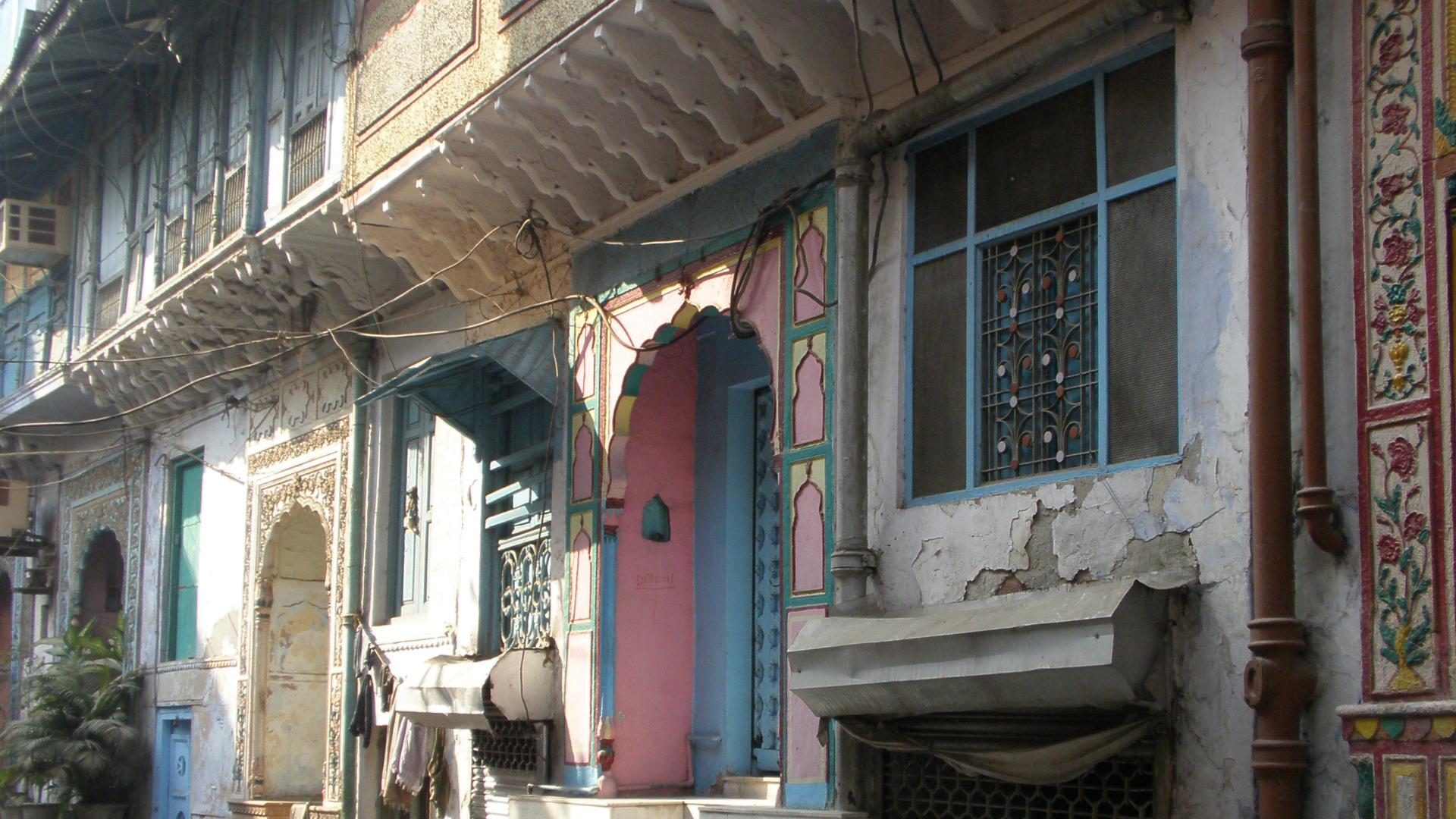
…. peppered with ornately designed entrances to homes and colourful balconies of a bygone era.
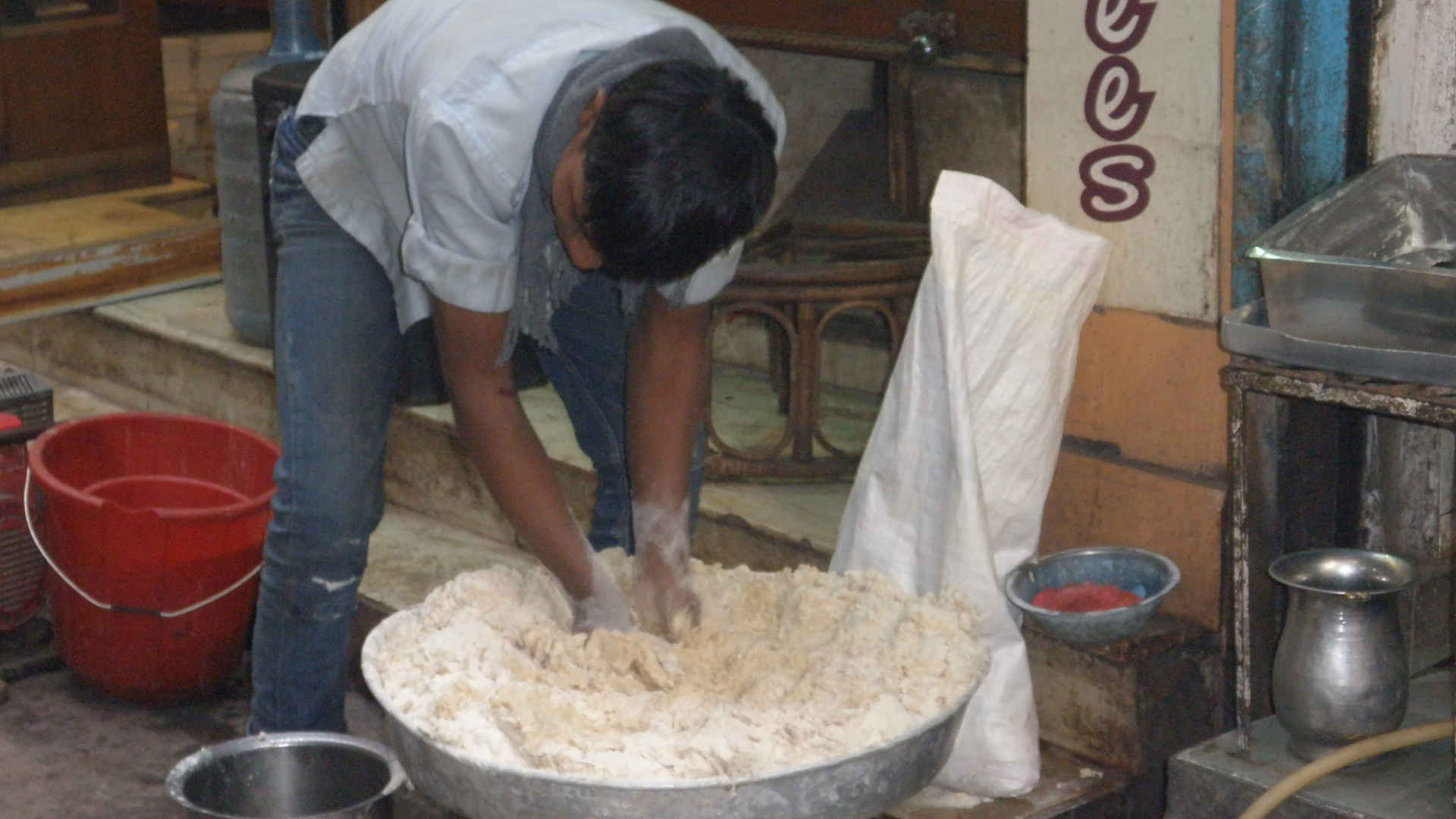
Joining the crowds going about the daily doings, whilst another is kneading flour to make roti bread for the lunch trade at “A Tradition of Five Generation” take away eatery.
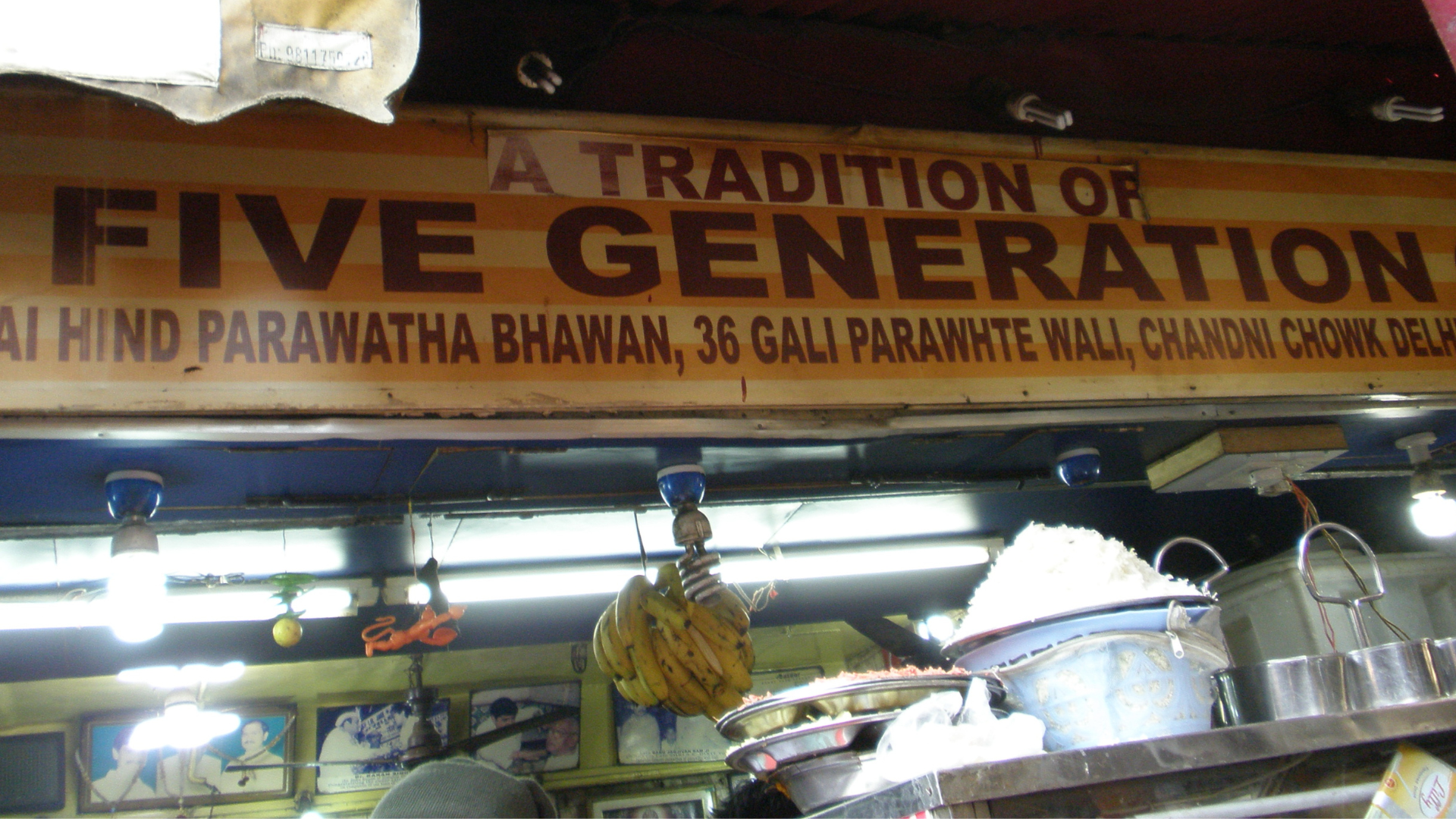
One of the many eateries found in Paratha Wali Gali, that is devoted to specialising in parathas (Indian-style flat bread). The aloo (potato) paratha is a traditional favourite, or for something a little different try the paratha stuffed with crushed almonds.
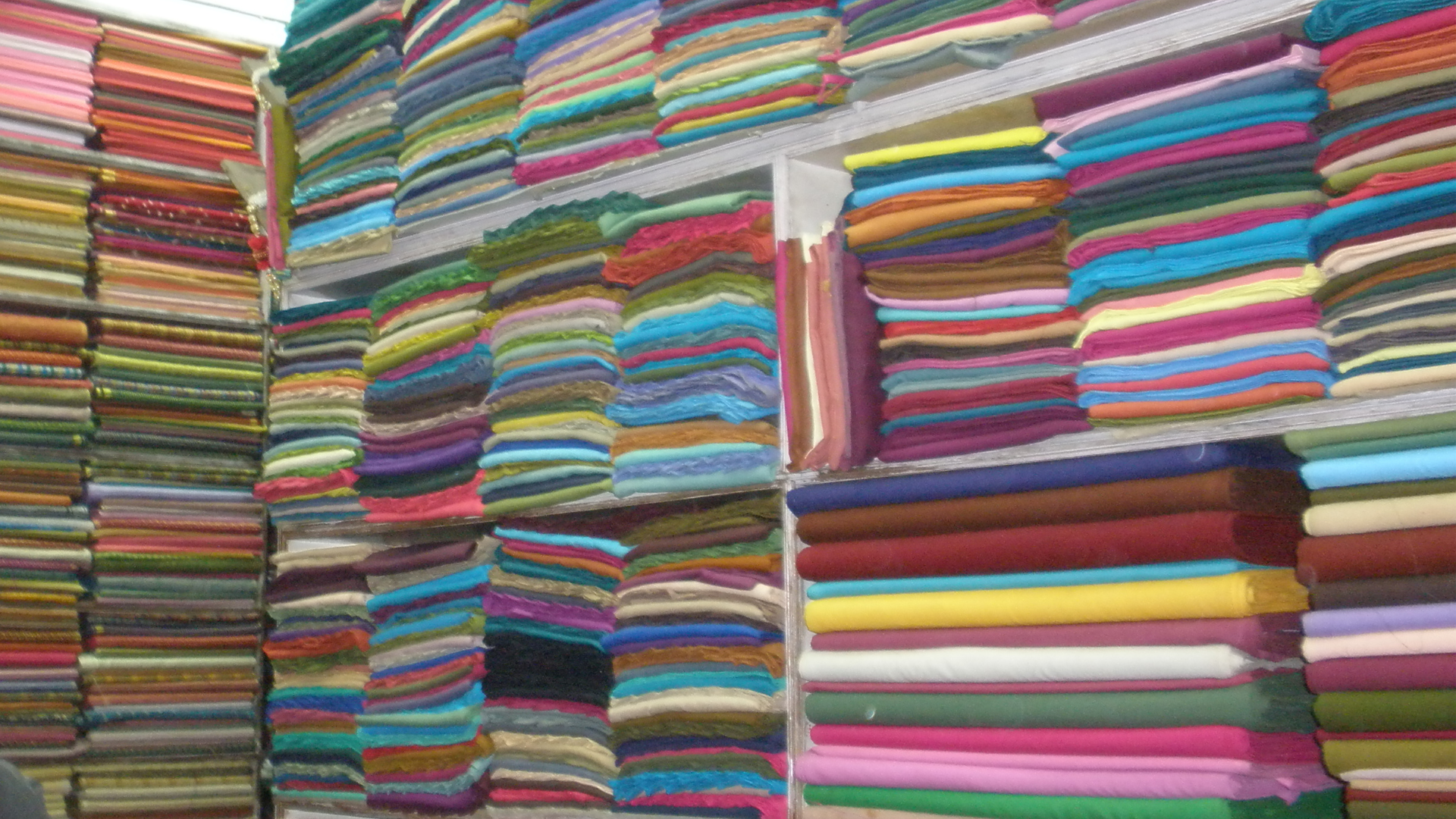
Everything is for sale here from fabrics, fireworks and food, to copper, cosmetics and traditional clothing.
Whilst walking through the back lanes Chandi Chowk, I was offered to buy a boy for the afternoon…I declined.
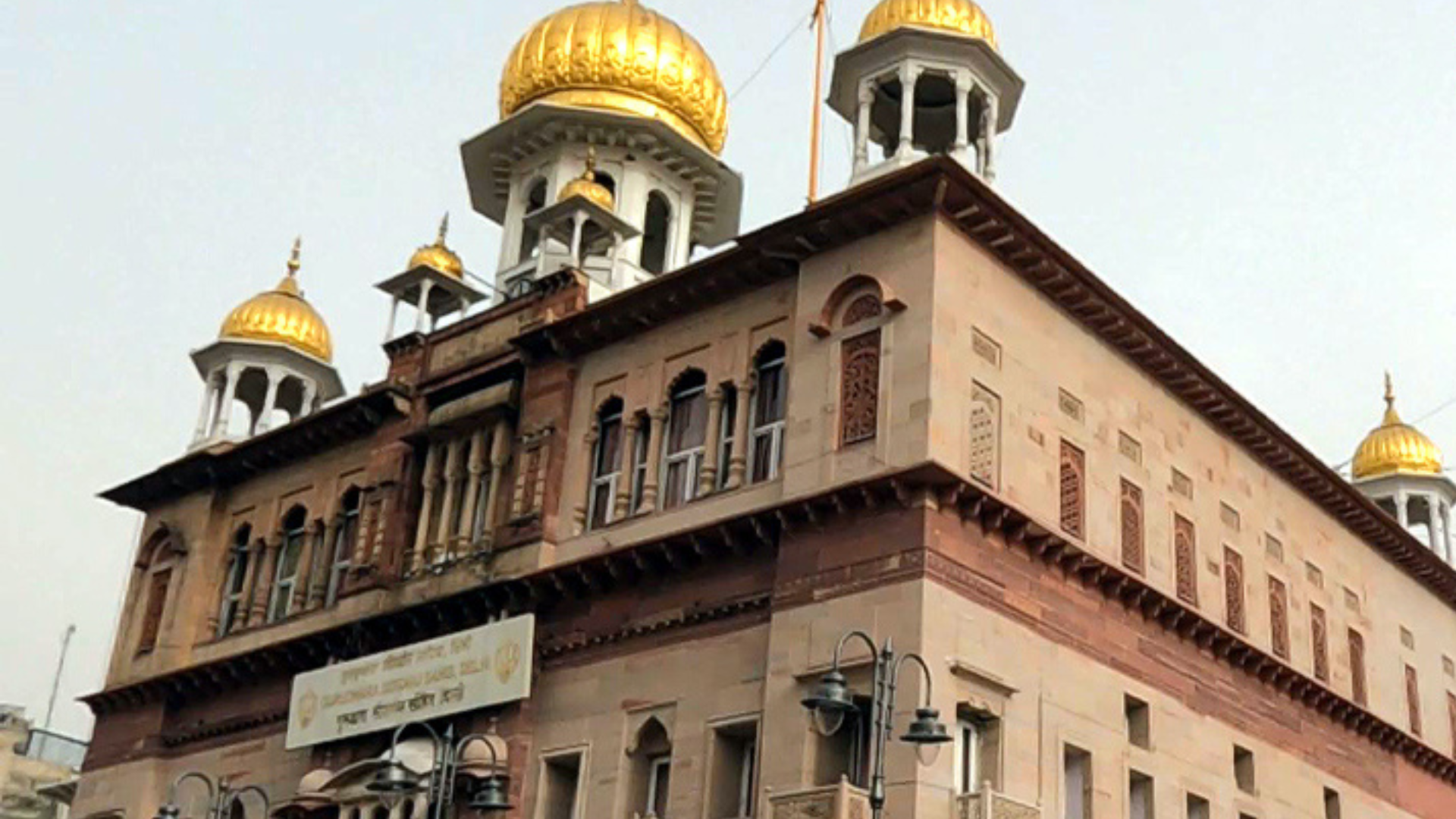
Navigating the winding side lanes of Chandi Chowk can be challenging, but with our knowledgeable guide, Uttam, we easily found our way on foot to Gurdwara Sis Ganj Sahib, a well-regarded Sikh temple.
The Gurdwara Sis Ganj Sahib holds immense historical and religious significance as it commemorates the martyrdom site of Guru Tegh Bahadur, the ninth Sikh Guru who was beheaded in 1675 by order of Mungal emperor Aurangzeb for refusing to convert to Islam and defending the religious freedom of Hindus who were being forcibly converted.
Despite the threats, his disciples stealthily retrieved his remains; his head was taken to Anandpur Sahib for his son, Guru Gobind Singh, and his body was cremated at what is now Gurdwara Rakab Ganj Sahib. The gurdwara was established in 1783 by Baghel Singh Dhaliwal, a prominent Sikh leader, and given the name, "Sis Ganj " meaning "place of the severed head." The gurdwara also preserves the tree under which the Guru was executed and the well he used, maintaining the sacredness and historical integrity of the site.
Upon arrival at Gurdwara Sis Ganj Sahib, visitors are required to remove their shoes and cleanse their feet and hands before entering. Visitors are also required to cover their head. If you don’t have a scarf with you, there is a huge box just near the entrance where you can borrow a scarf. This site is one of nine historic gurdwaras in Delhi, each serving as a "Gateway to the Guru." Open to all faiths, the gurdwara hosts a Langar, a communal kitchen that serves free vegetarian meals to everyone, regardless of their religion or dietary needs, promoting equality among all who visit.
During my visit to Gurdwara Sis Ganj Sahib on Christmas Eve afternoon, devotees were assembling in the Darbar Sahib - Prayer Hall for readings from the Guru Granth Sahib.
The hall is elegantly adorned with glass chandeliers and high ceilings, and at the front, in a prominent central position, sits the Guru's takhat (throne), ornately decorated in gold.
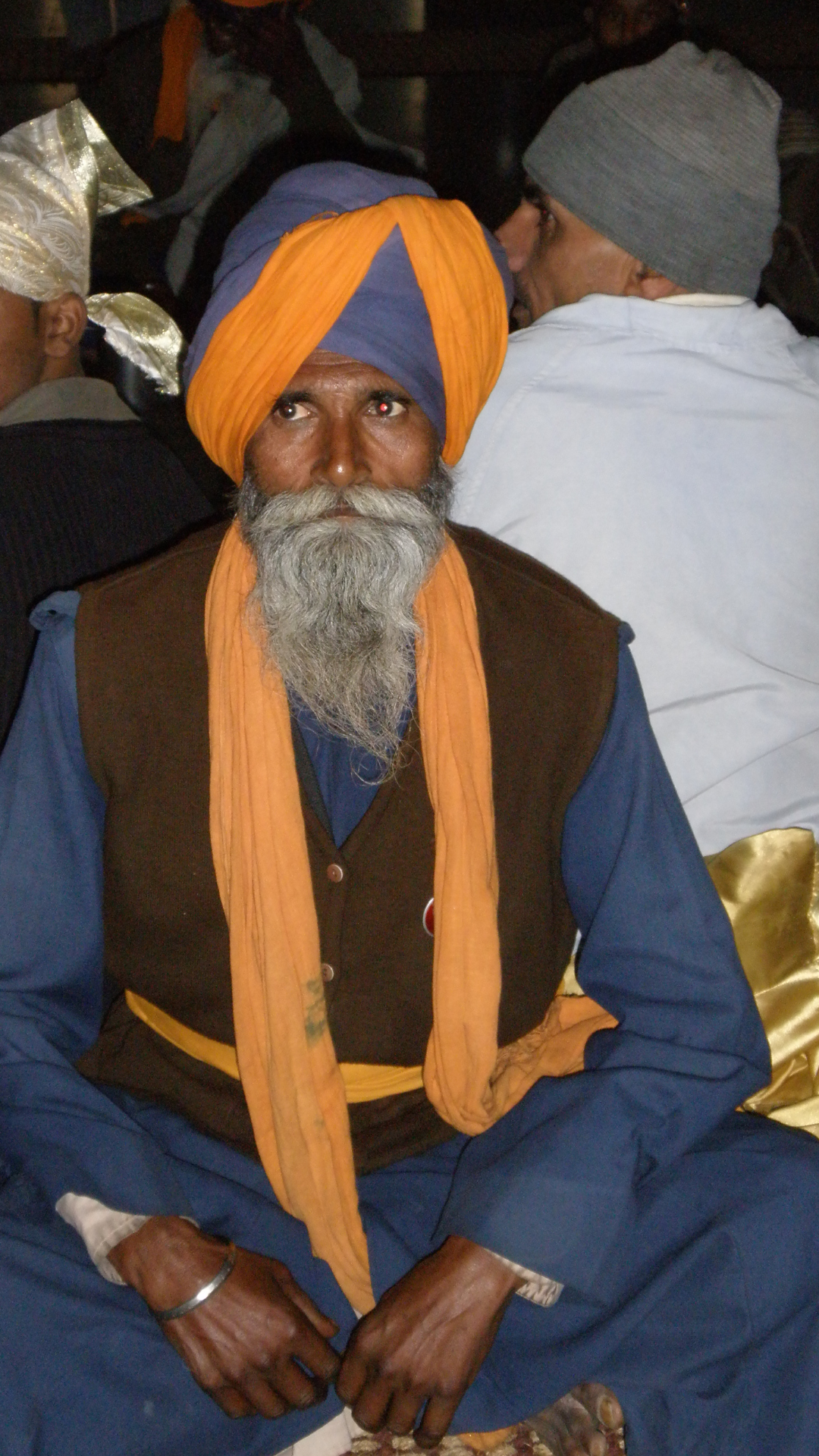
Here, attendees can immerse themselves in the recitation of holy texts and participate in bhajan kirtans, which are devotional songs that include the singing of mantras by the congregation. Followers also gather in the prayer hall before a meal is served. A Sikh chief nodes his head in acknowledgement when I asked may I take his photo.
Music, prayer and meditation are an integral part of Sikh philosophy and practice.
Whilst, in the Langar Hall, or outside on the upstairs balconies, both men and women come together to prepare the shared meals, reflecting the community's spirit of service and equality, as stated in the Guru Granth Sahib, the sacred scripture of Sikhism; that men and women are equal.
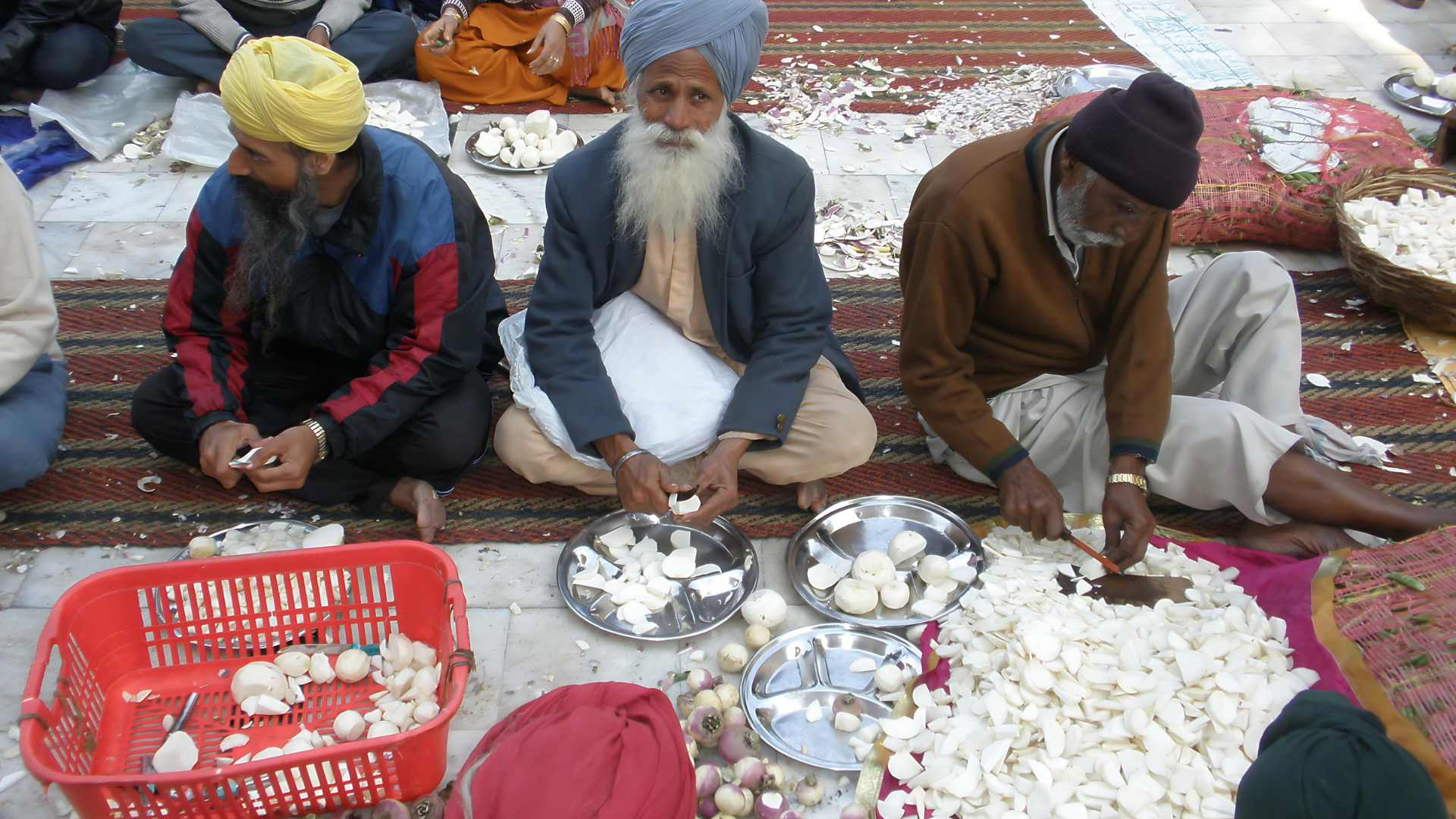
On the upper balconies, men are actively peeling and cutting potatoes.
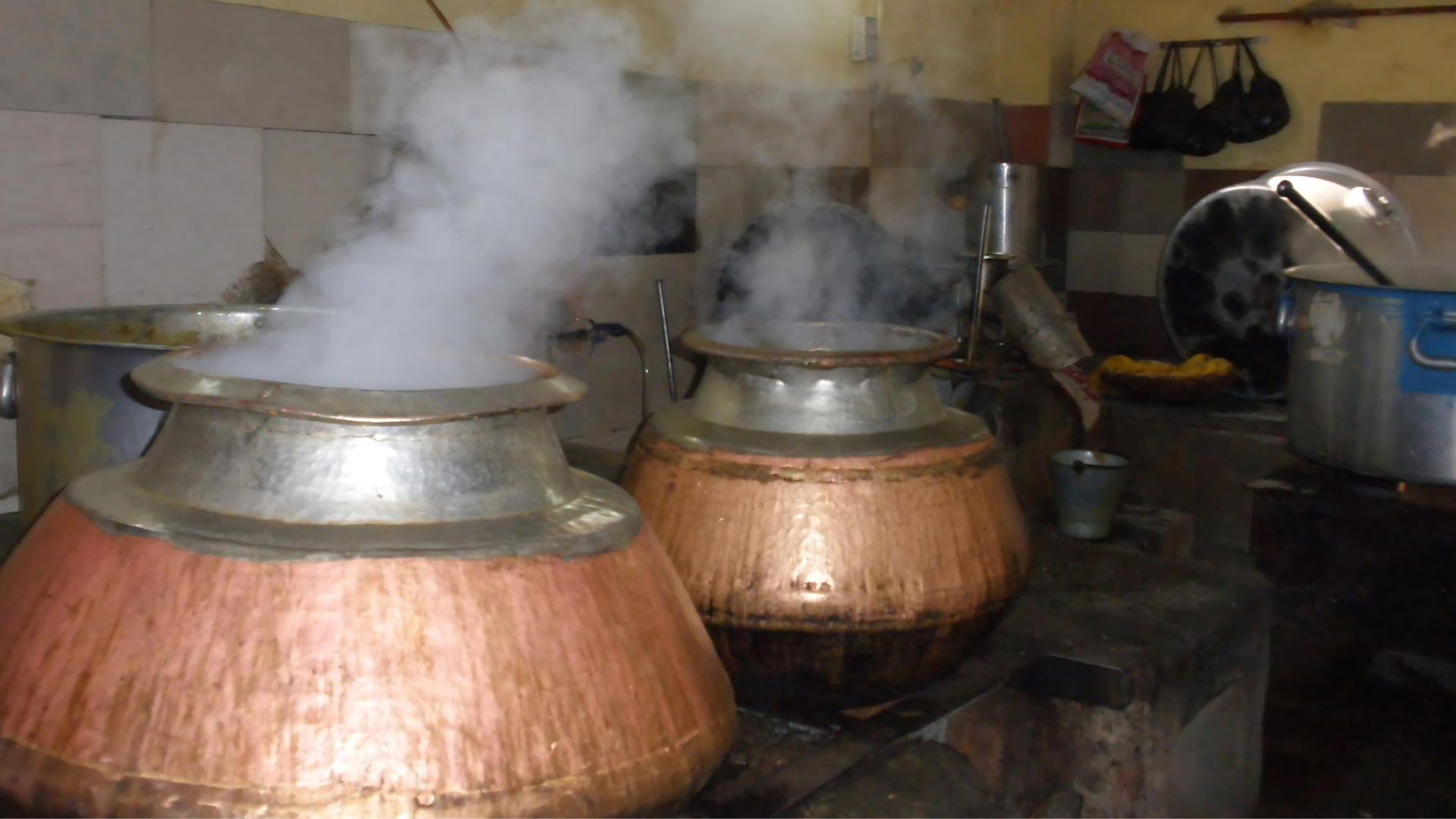
In the Langar Hall, large pots are used to prepare the vast quantities of fresh vegetables and rice needed for the daily communal meals.
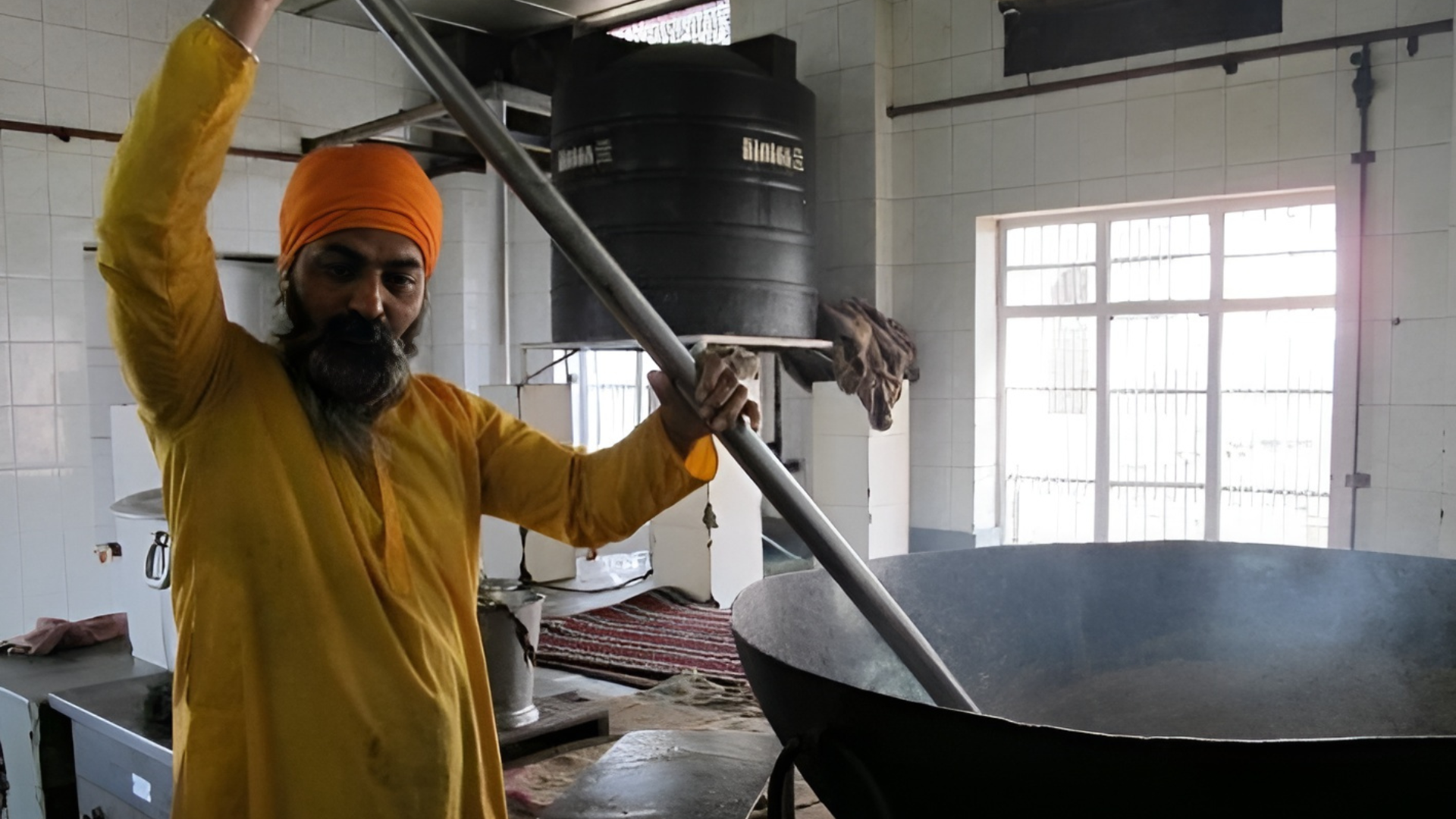
It’s hot work in the Langar Hall, where large wok-style cookware is used to continuously stir and prepare dahl.
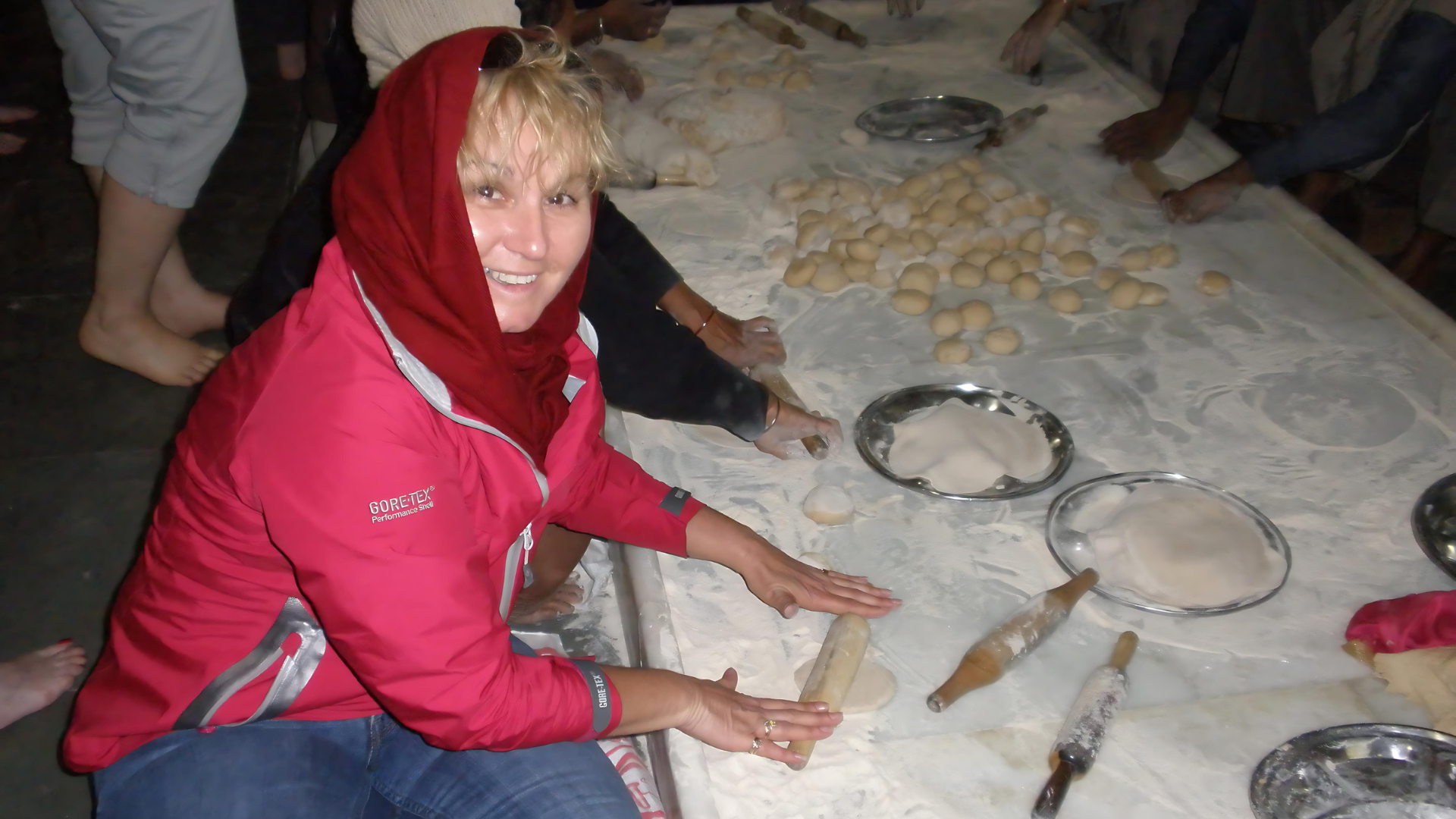
In the Langar Hall, preparing chapati (roti) dough, is an essential task, almost resembling a production line, given its importance as a staple in Sikh diet. Dough is portioned and rolled into balls before being rolled out using a small wooden style rolling pin. Visitors are welcome to participate in this communal service, and during my visit, I took the opportunity to join the local volunteers and learned how to make chapati.
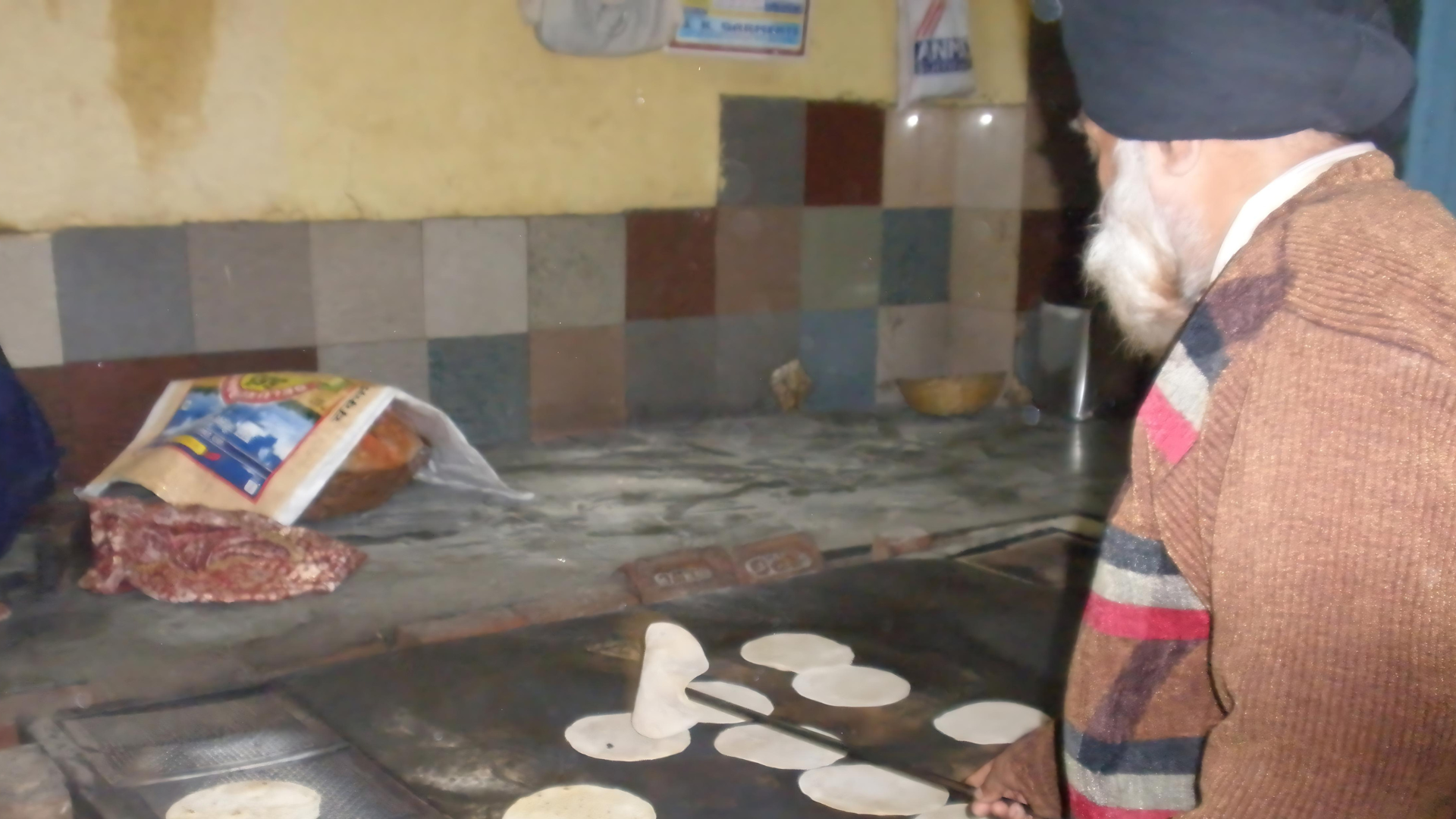
The flattened chapati dough is first fried on a large BBQ-style hot plate, then finished over a grill with hot coals beneath to complete the process.
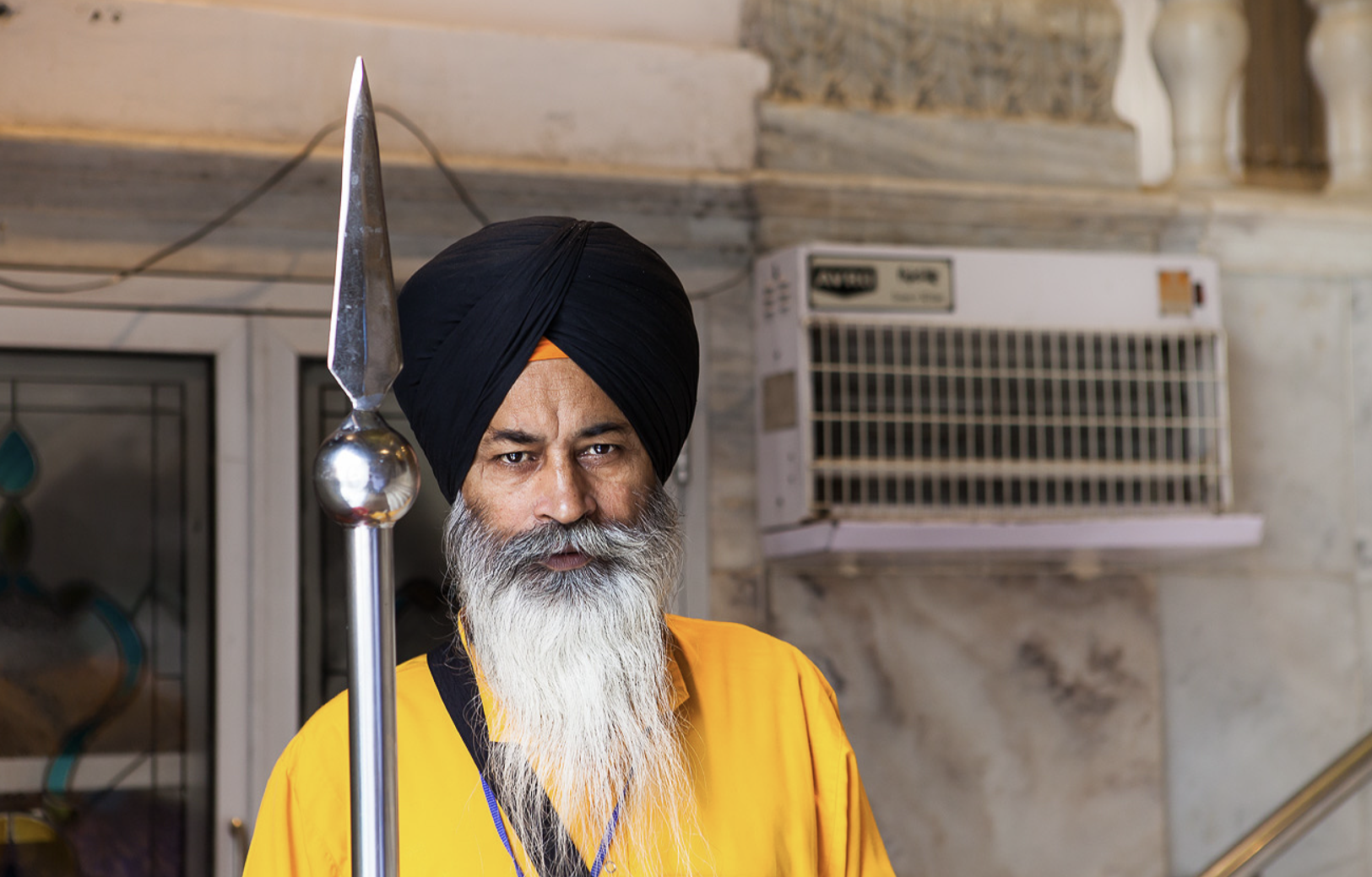
As we collected our shoes and thanked the Sikh guard at the entrance, I reflected on my first visit to Gurdwara Sis Ganj Sahib. It was a deeply humbling experience to witness the commitment of the volunteers - both women and men - who dedicate their time to support and uplift others, living out their beliefs in kindness and respect daily. Gurdwara Sis Ganj Sahib, is more than just a place of worship, it stands as a symbol of resistance against oppression and a beacon of religious freedom, and plays a vital role in the cultural and spiritual life of the city.
Today, anyone can visit a Sikh langar hall, regardless of gender, religion, ethnicity, age, or status. Just remember to remove your shoes, cover your head, and maintain respectful behaviour. Between midday and midnight, you are welcome to enjoy a nourishing meal.
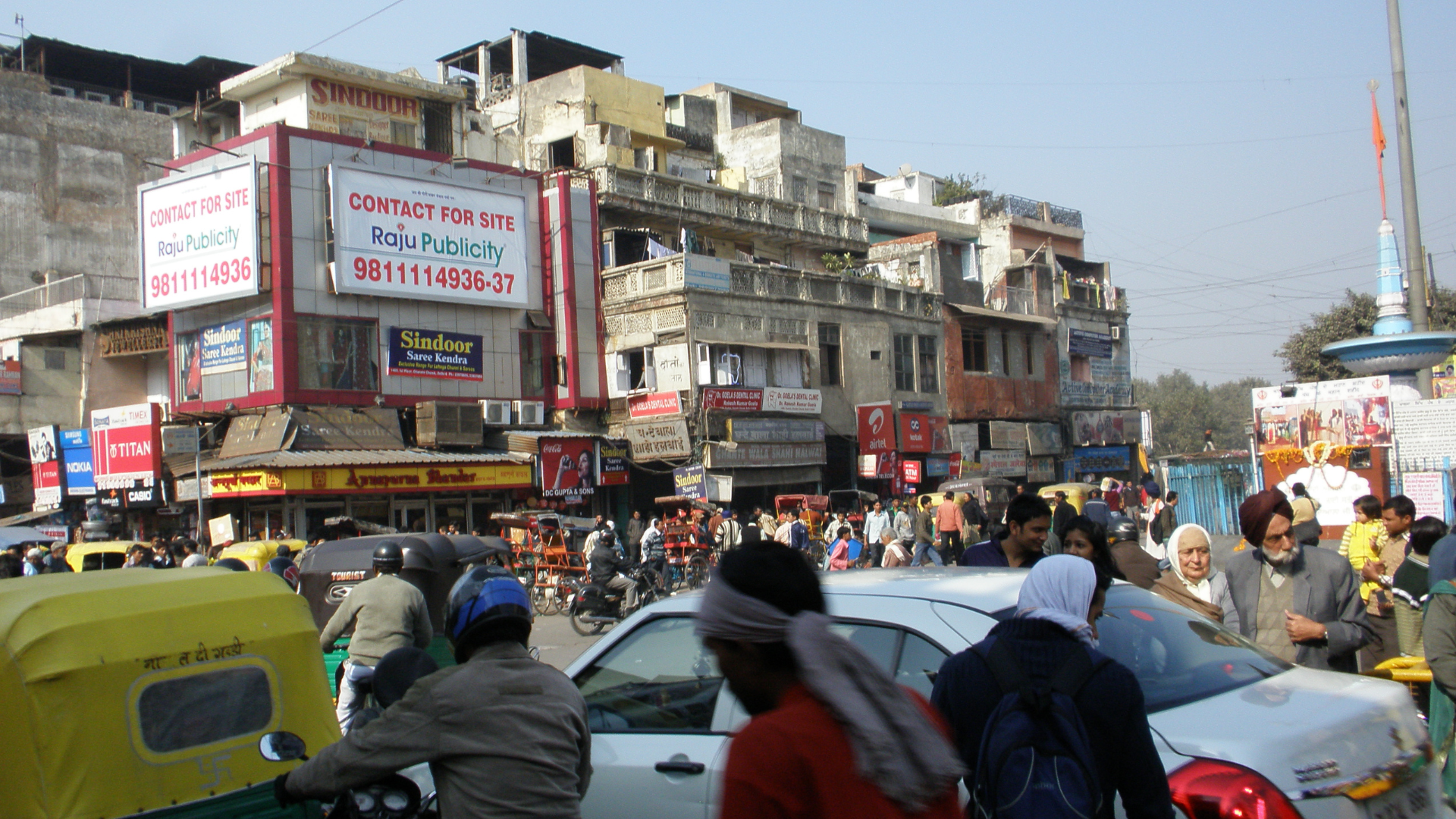
Once back on the street, we're immediately immersed in the hustle and bustle, along with the distinctive smells and sounds of Old Delhi.

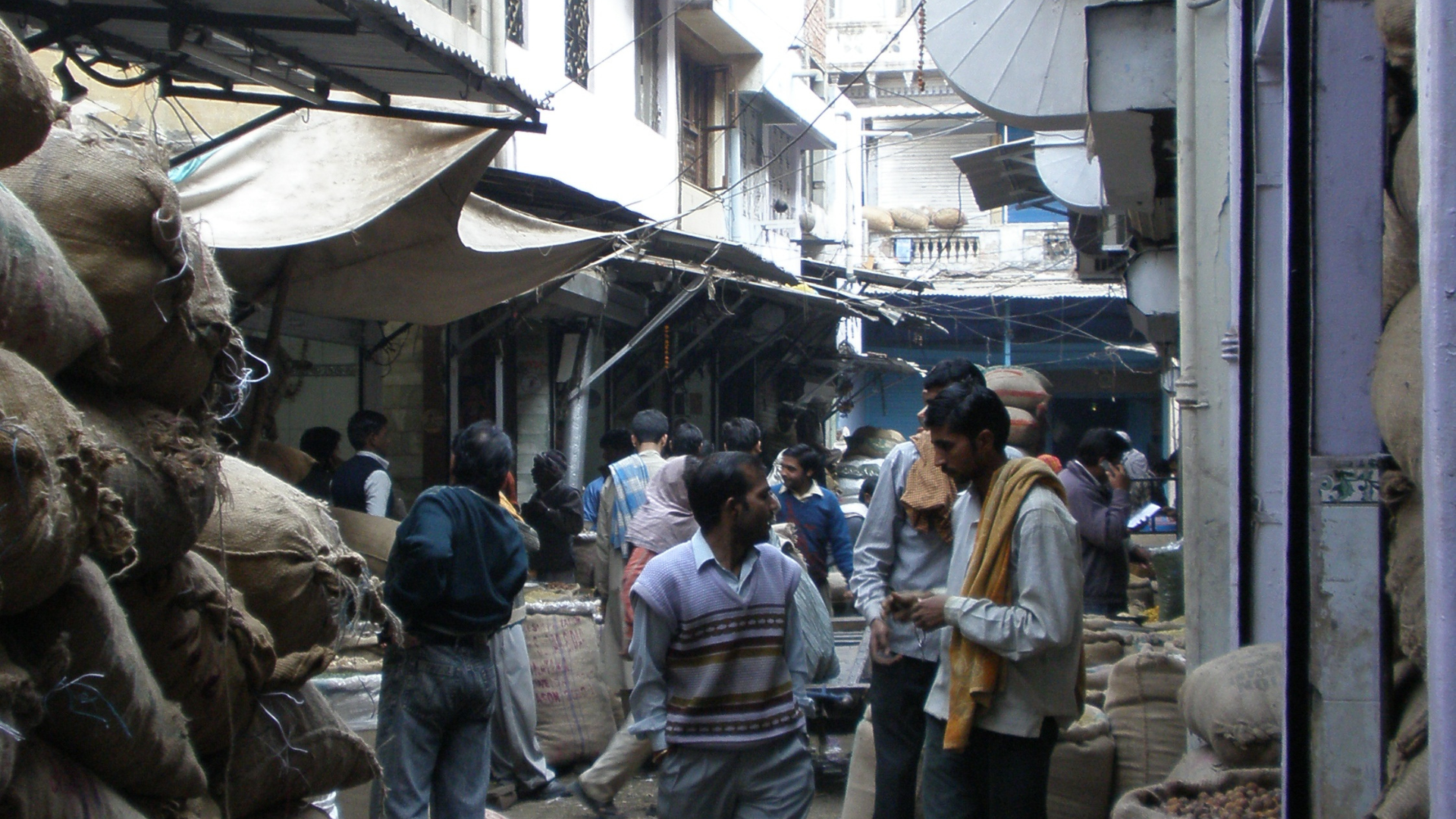
We took a packed bus to Khari Baoli, a vibrant street in Old Delhi, renowned for its sprawling and one of the world's largest wholesale spice markets, and considered the biggest in Asia.
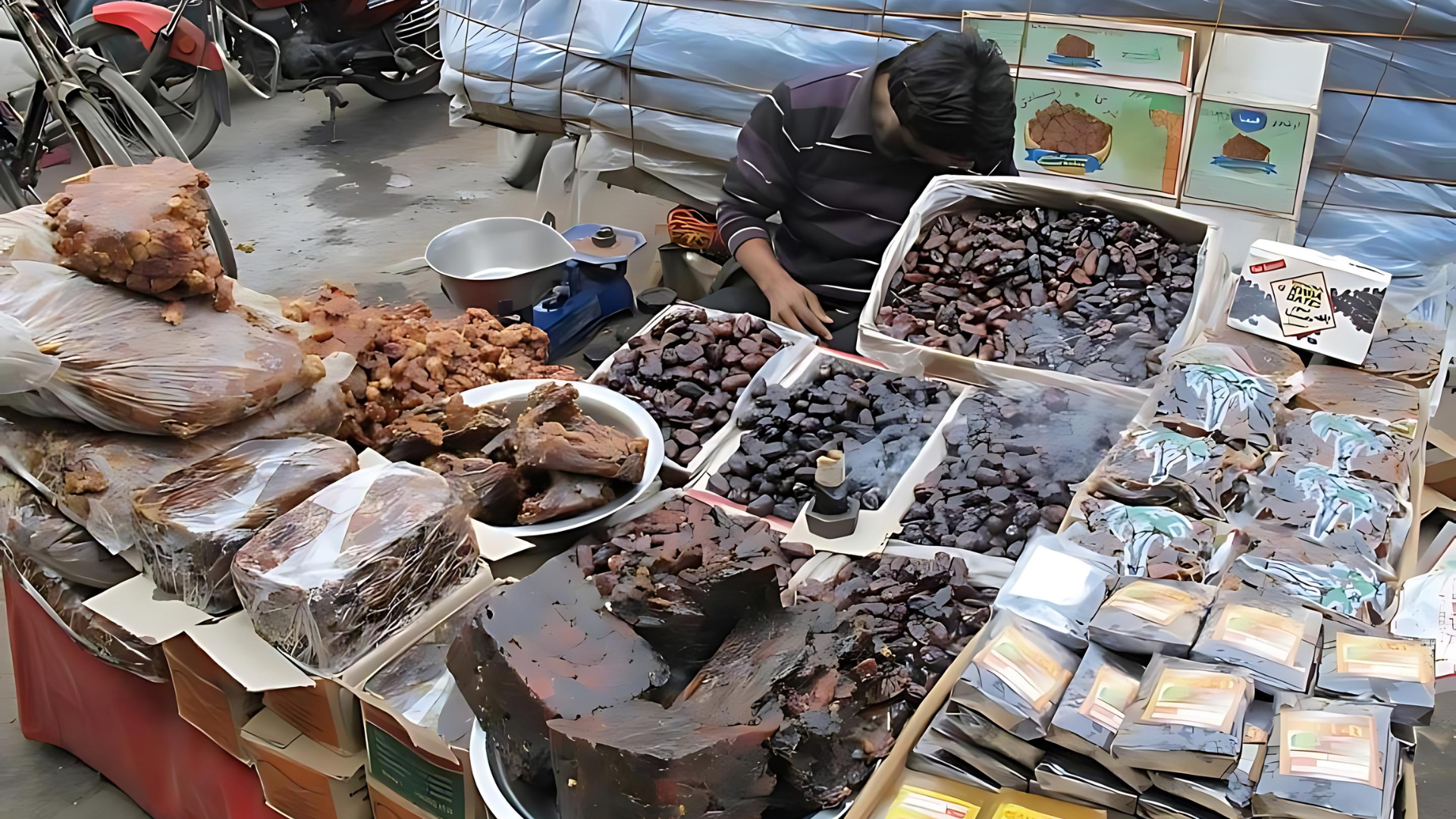
The market is an assault on the senses, marked by pungent aromas and the vivid colours of spices, such as chili, cardamom, turmeric, and dates and fragrant teas.
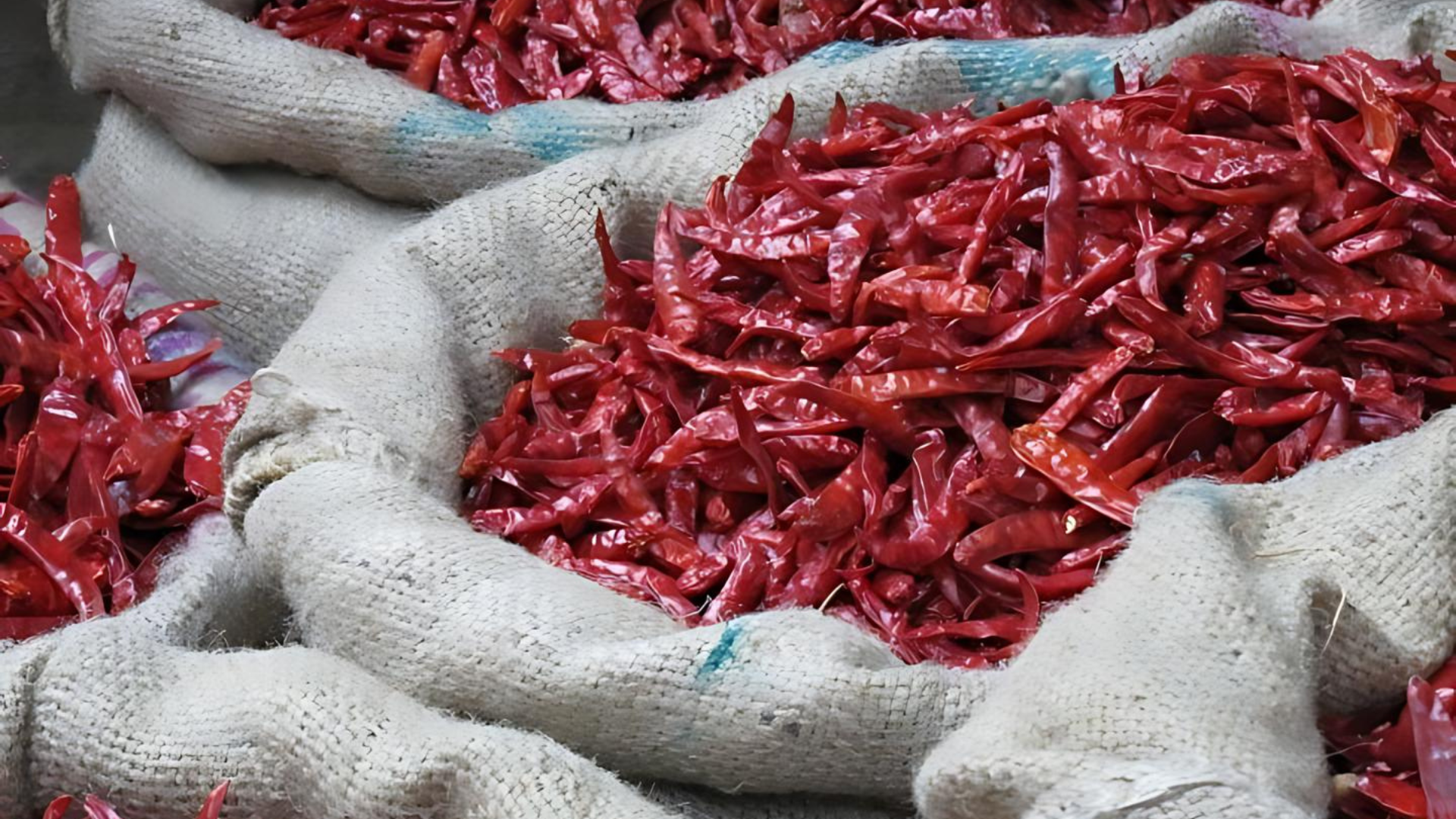
The essentials of Indian cuisine are piled high and sold in large sacks.
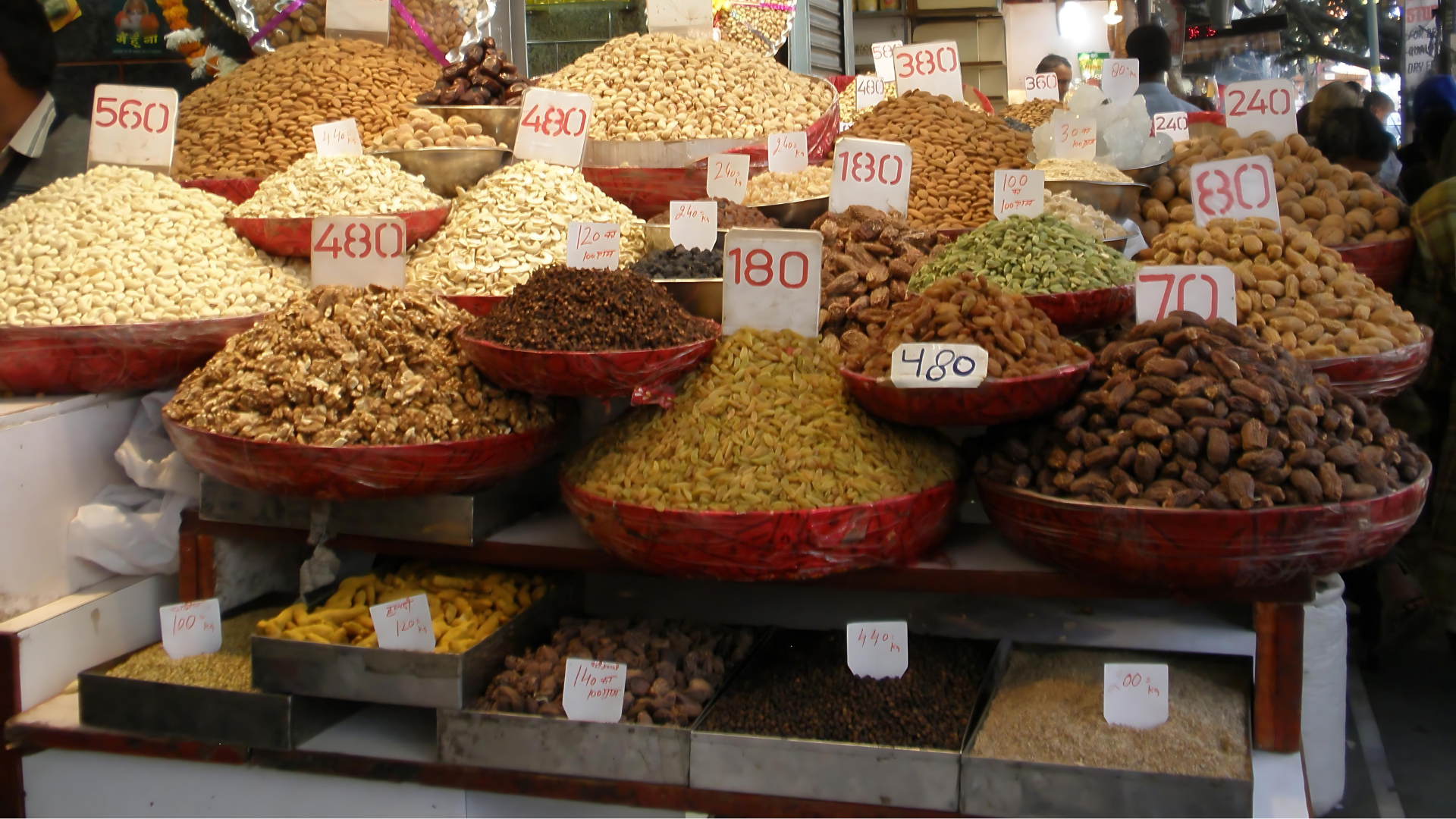
And presented in colourful displays that catch the senses.
The hustle of the bustling Khari Baoli spice markets has played a significant role in the Silk Roads, ancient trade routes established around 130 BC during the Han Dynasty in China, that included Delhi (under the former city name of Shahjahanabad) as a significant centre.
The city became a prominent part of these trade networks with the rise of the Sultanate in the 12th century, due to the city’s strategic location, an served as a vital trading hub, distributing goods from the Indian hinterland through the Khyber Pass, in present-day Pakistan.
This pass was a vital link for traders entering from Afghanistan, facilitating the transport of spices and other goods from India to Central Asia and further to Europe, the Middle East, and North Africa. beyond.
This made the city and the Khari Baoli spice market a crucial component in distributing spices across India and into the Silk Road’s extensive trade network, that facilitated economic and cultural exchanges between the East and the West.
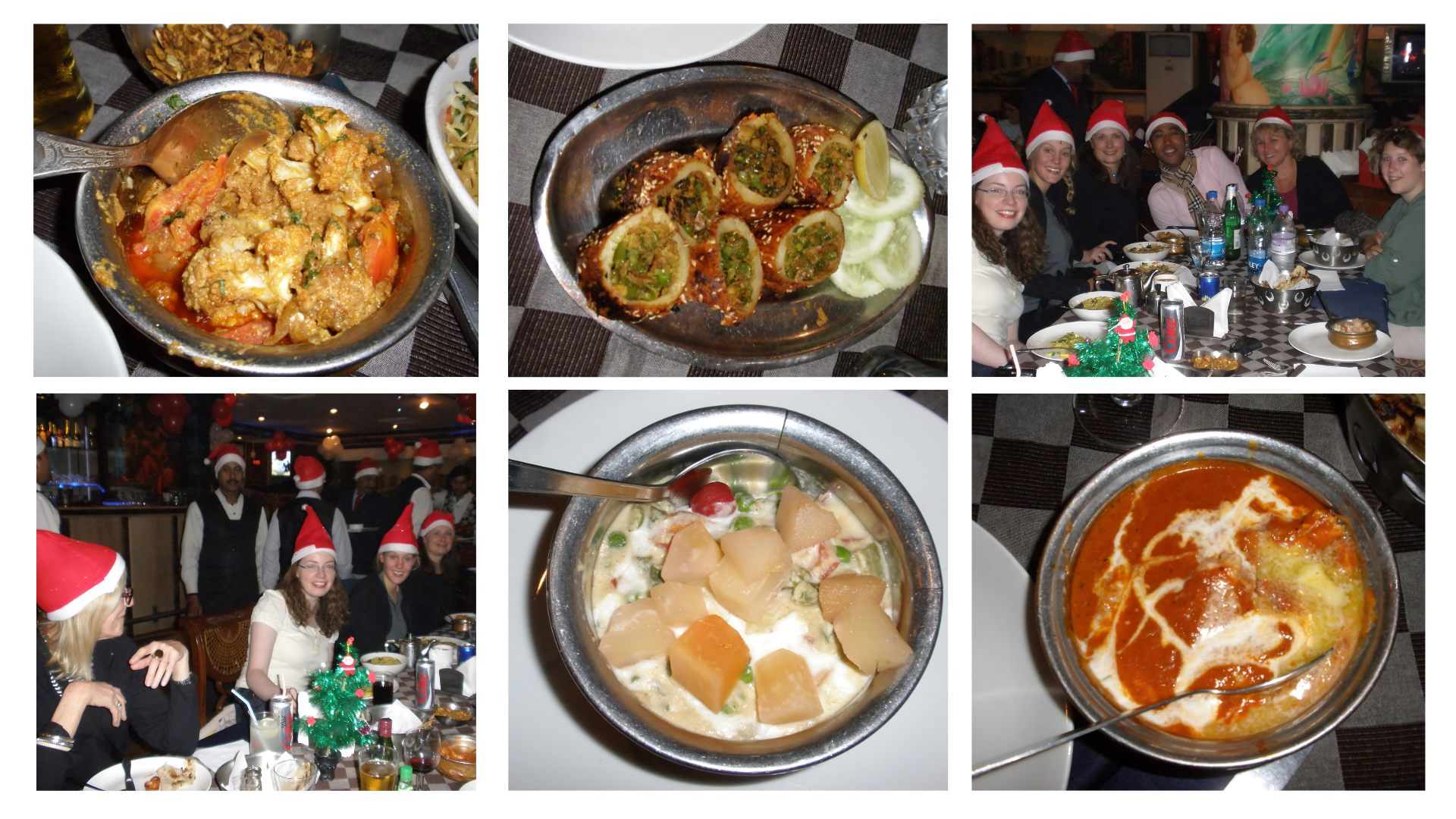
After departing from the vibrant Khari Baoli spice markets, we rejoined the bustling crowds, seizing our final chance to absorb the rich sights, sounds, and scents of Old Delhi. With these final impressions, we headed back to our hotel to prepare for a festive Christmas Eve dinner with an Indian twist.
Delhi, with its intricate tapestry of history, serves as a grand stage where ancient traditions and modernism converge. This city, once a pivotal hub on the ancient Silk Roads, facilitated the exchange of spices and ideas, shaping its rich cultural and architectural heritage. From the majestic Red Fort to the ornate Jama Masjid, every corner of Delhi narrates stories of empires, trade, and multicultural influences. The fragrant spice markets of Khari Baoli, continuing their centuries-old legacy, still lure locals and travellers alike with their colourful mounds of spices that once travelled along those historic routes. while its diverse cultural fabric showcases a melting pot of religions and traditions, showcasing its ongoing connects between the past and the present.
Embracing the vibrant external landscape of Delhi and Old Delhi, I found myself captivated by the sights, sounds, and scents that painted the city with life and energy. Amidst this dynamic backdrop, I became subtly aware of an internal shift that was in motion, a shift that accompanied my spontaneous decision to visit Delhi and the greater region of Rajasthan, India. What began as a simple desire to explore a historic and culturally rich region evolved into a enriching experience, unknowingly influenced by planetary placements that I deeply felt but only later came to understand.
At the time, I was navigating a fulfilling twenty-year career as an HR professional. Yet, by the time I arrived in India, I had also dedicated fifteen years to studying and learning astrology, a passion that had quietly shaped my perspective on life, often revealing layers of meaning beyond the surface.
Following my visit to Delhi, I came to understand the celestial energies at play during my time there. Saturn, the planet of responsibilities and structure, was strongly positioned in Delhi, gently but firmly creating an inner push toward change and the reimagining of my life’s path. Uranus, meanwhile, amplified my sense of excitement and discovery, opening me into the rich history and culture of this dynamic city. Yet, this same Uranian influence stirred something deeper within me, a sense of liberation, inviting me to shed old constraints, embrace my authentic self, and welcome the unexpected.
Meanwhile, Pluto’s transformative energy rested on my IC (Immum Coeli), reaching deep into the core of my roots, family, and inner self. Known as the planet of death and rebirth, Pluto’s presence brought profound and lasting shifts, initiating an inner transformation that would unfold over time. Sharing a Paran line with Mars, the planet of motivation and drive, this potent combination of energies catalysed a powerful energy of change, urging me to align my actions with my inner calling. Paran lines, are where two planets become angular together, and are areas of heightened influence within a one-degree orb, marking regions of extraordinary impact.
As these celestial energies aligned, they brought me clarity and a deep call to action. Approximately three and a half years after my visit to India, I left my twenty year HR career, finalised formal studies to become an astrologer, and began specialising in astrocartography and relocation astrology, blending my love of travel with my passion for astrology. Now, as my journey takes me deeper into Rajasthan, I look forward to exploring the planetary energies that shift and evolve during my time in India’s greater region.
In this Soul Travel blogs, my journey begins in Delhi, where the buzz of the city blended seamlessly with the anticipation of what lay ahead. Little did I know how much this experience would not only broaden my horizons but also deepen my connection with myself, the places I visited, and the subtle energies of this ancient land. Rajasthan was waiting, and its treasures were about to unfold.
See you soon,
Consider signing up to receive new Soul Travel blogs, travel reflections, and astrocartography insights as new destinations are shared.

✨ If this story resonated with you, you are warmly invited to continue the journey in a way that feels aligned with you.

✨Explore personalised insights through consultations
✨ Begin with ‘The Journey’ Orientation
✨ Listen to Destined Places podcast stories
✨ Save and share Soul Travel inspiration on Pinterest
4 comments

It's funny, I visited Old Dehli a looong time ago (25 years) so I was expecting to see some really big changes... but honestly, so much of this looks similar to when I visited! That is slightly mad!
I really loved all the smells of the spices and the food in those narrow backstreets - it is fab to see that is still the same. The old architecture is also fabulous. I guess I just expected there to be more modern aspects as well. I guess Old Dehli will resist change for a bit longer!
Thanks for the trip down memory lane.
You're very welcome for the trip down memory lane Josy. Good to know, somethings don't change to much.

Loved the information and history of this place. If I ever get the chance to spend some time here i will wander the streets and eat some yummy food. I love the spices of this area. As for an astrocartography reading. I think that would be pretty special too.
I hope the opportunity presents at some stage to visit Old Delhi, it's truly one of those very unique city's in the world. The food, everything with spice will sure to dazzle your tastebuds.