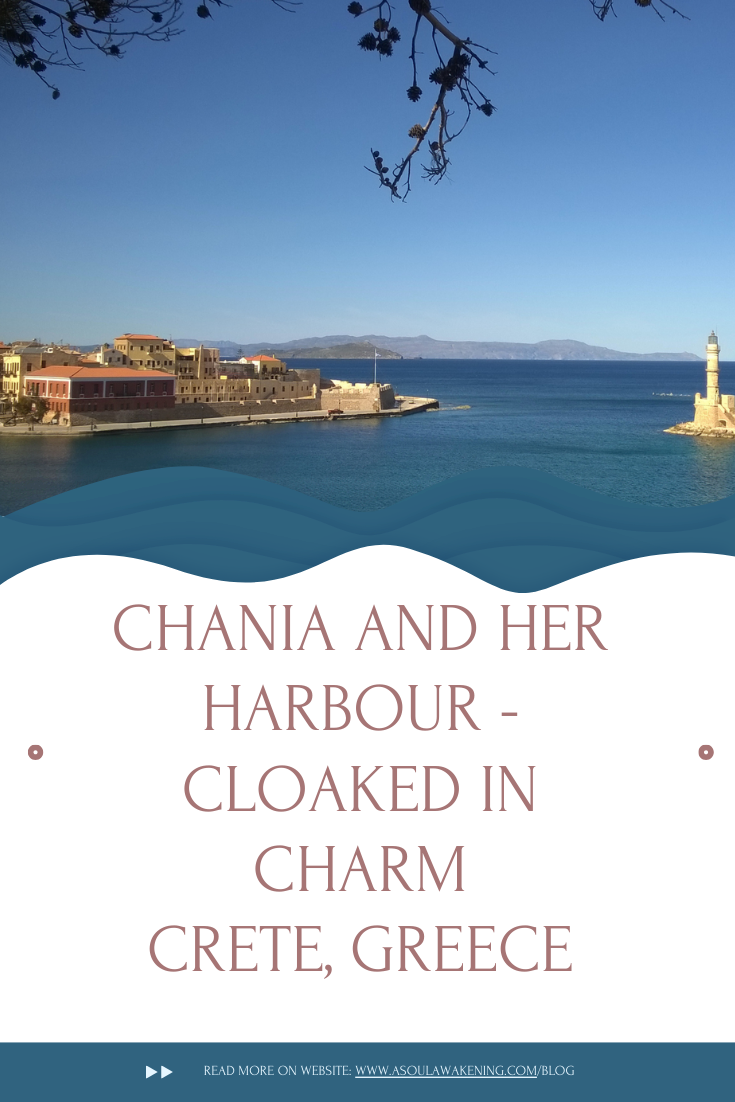
Chania (Crete) and Her Harbour | Cloaked in Charm
Whether you arrive by cruise ship for a day, a plane, or a ferry for a longer stay, the beautiful Venetian harbour city of Chania will cloak you with its charm. I arrived in Chania by ferry, for what was an initial four months stay. Chania, also spelt as Hania, is the western capital of the Chania prefecture on the Greek island of Crete.
There is so much to see and experience on the island of Crete, and I had thought that four months would be enough time to take it all in… little did I know! I began by dedicating at least one day a week to exploring Chania and her Venetian harbour, cloaked in charm and history.
Morning café conversations in the small village kafenio where I was staying became an unexpected highlight of my initial stay in Crete. Over strong Greek coffee, locals would share stories and insights, bringing the places I had visited to life in ways no guidebook ever could. Their words, being translated with patience and warmth by the barista, added a depth to my journey, revealing layers of history, tradition, and personal memories woven into the city’s lanes and landmarks.
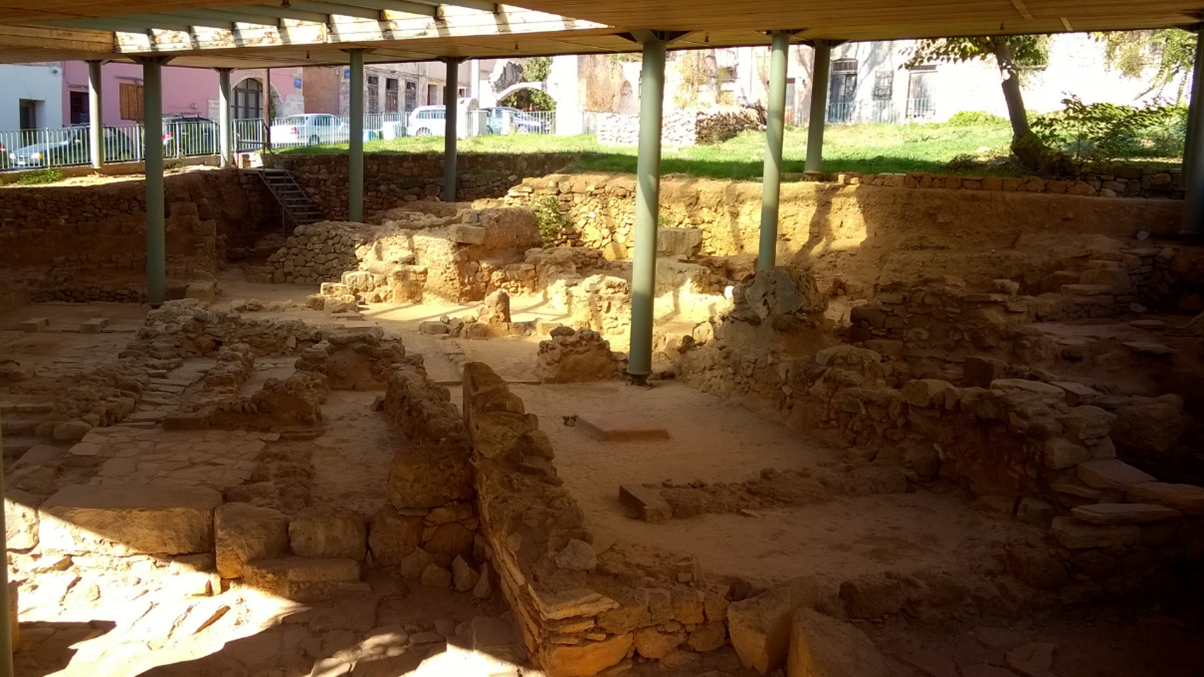
Crete was home to Europe’s first advanced civilisation, the Minoans, between 2700 and 1420 BC. Excavations of Minoan Kydonia, the original harbour city site, can still be seen in modern day Chania Old Town. The ancient city extended beyond the area known as Kastelli Hill, as evidenced by excavations in Odos Sifaka.
The decline of the Minoan civilisation remains a subject of debate, though a widely accepted theory is that the catastrophic volcanic eruption of Thera (modern day Santorini), 120 kms to the north, contributed to its downfall around 1500 BC. The eruption's ash and toxic fumes devastated Kydonia, a once prosperous city thriving through agriculture and maritime trade.
Following this decline, the Mycenaeans from mainland Greece arrived around 1400 BC, rebuilding the city atop the ruins of Kydonia. Crete gained prominence, with Homer even citing in his epic works, the Odyssey with most historians agree was composed around 750-650 BC.
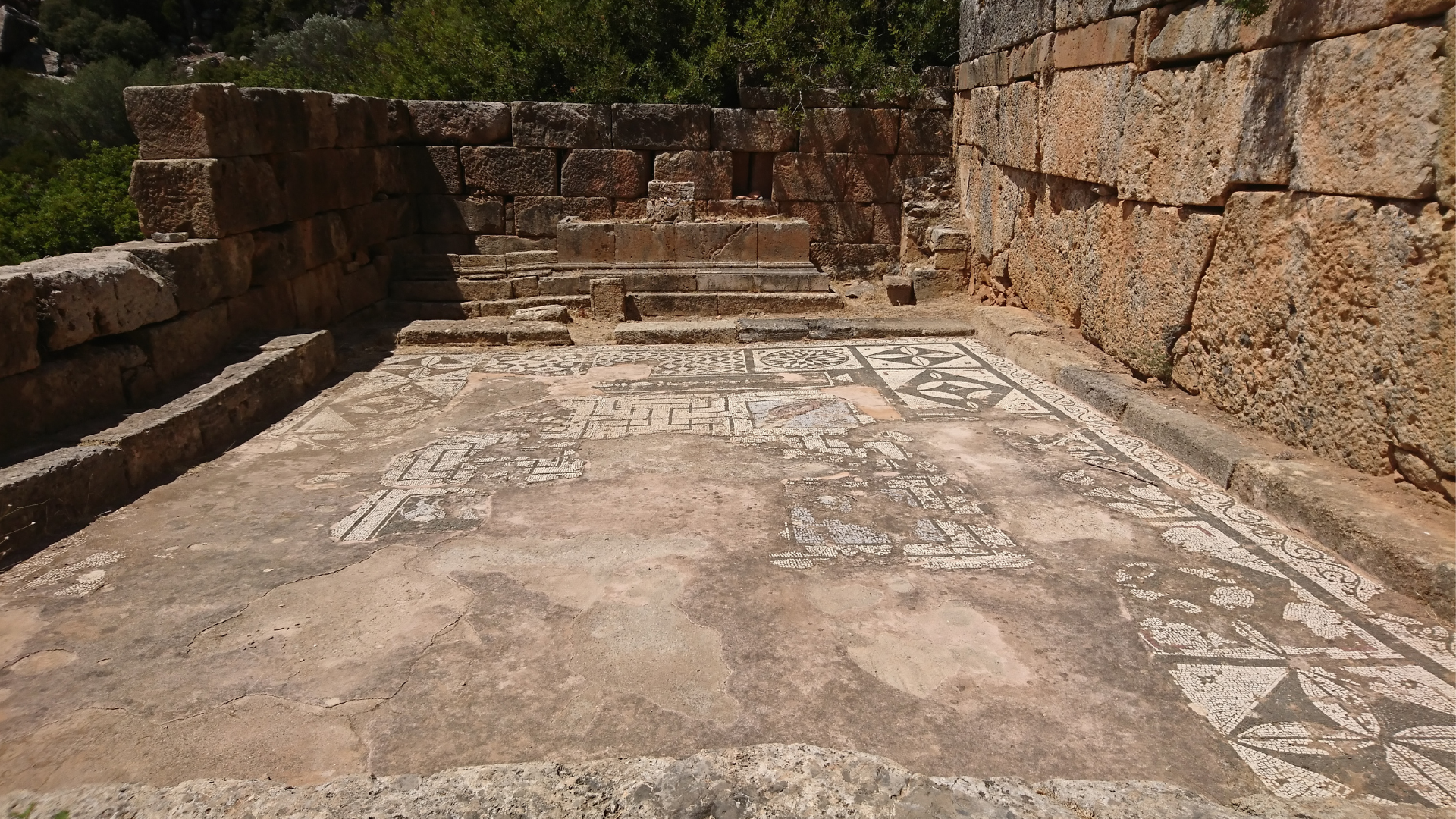
In the post Mycenaean period, the Samians established classical Kydonia, erecting numerous temples in the Chania wider region, the most noteworthy being the temple of Asclepius in Lissos.
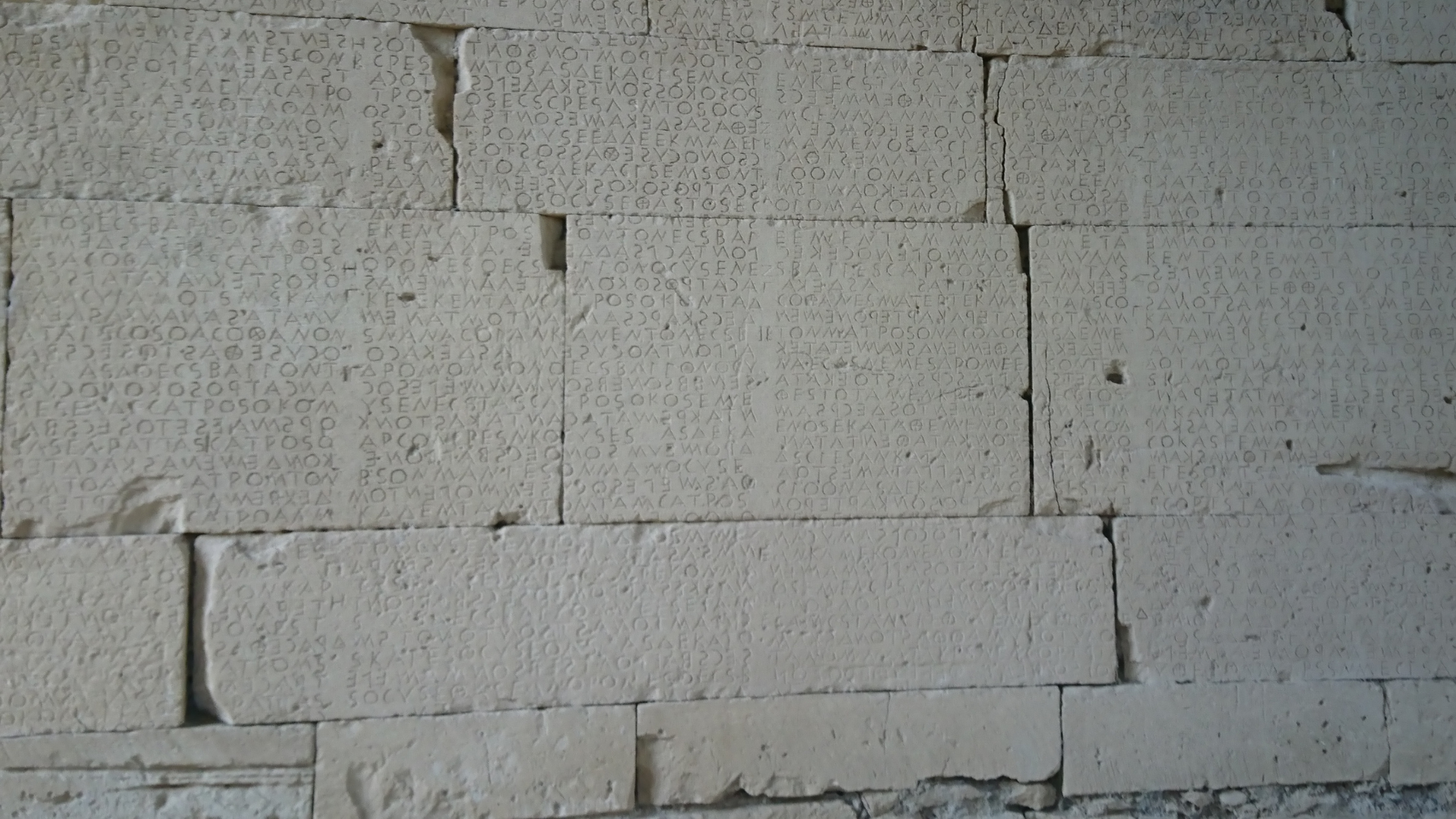
Crete’s ancient history is also reflected in the Gortyn Code, an ancient legal code from the city state of Gortyn, located inland from Heraklion, the island’s modern day capital. This codification of civil law, inscribed on stone tablets that still stand today, showcases Crete’s early legal advancements.
Throughout history, Crete came under the influence of various powers. During the 3rd century BC, the island was contested by several prominent city states, including Gortyn, Kydonia (modern day Chania), Lyttos (inland from Heraklion), and Polyrrhenia (inland from Kissamos). These city states rivalled the influence of ancient Knossos, each leaving its mark on the island’s cultural and historical landscape.
Crete was then conquered by the Roman Republic in 69 BC, integrating the island into the vast Roman Empire. The arrival of Christianity in the 1st century saw the establishment of the first church on the island, and Crete remaining a province of the Eastern Roman Empire, later known as the Byzantine Empire, until the 820s, when it was seized by Andalusian Muslims, with Chania then being known as El Hamin.
The Byzantines reclaimed the city of Chania in 961 and constructed a large castle approx. 6.5km south of Chania on a high hill above the monastery of Agia Kyriaki east of the modern village Varypetro. Little remains today of the Castle of Varyptero, also known as the Castelos of Agia Kyriaki.
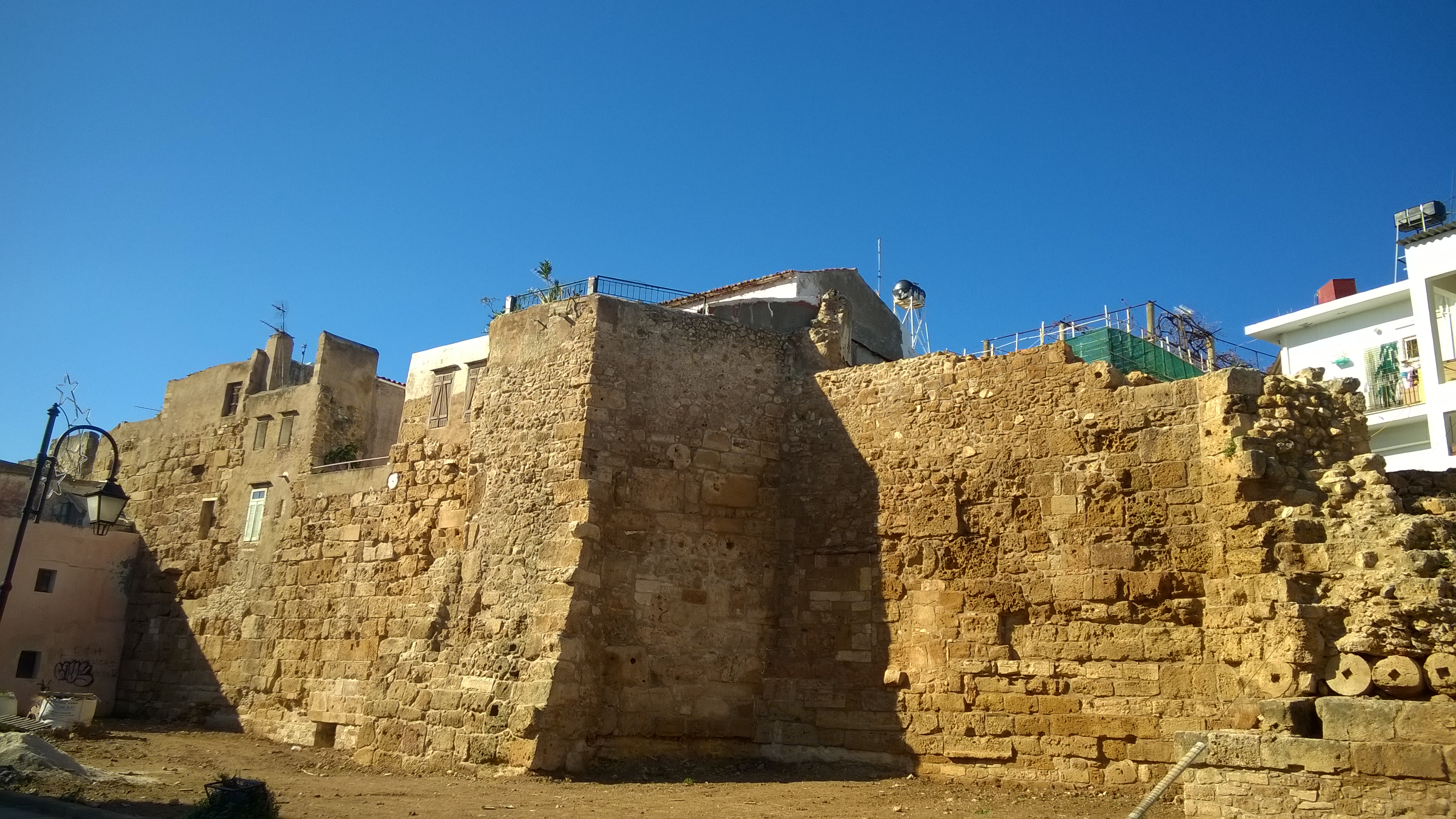
To further protect the city, they built the inner walls surrounding the hill of Kastelli in the 10th century, to prevent further Arab attacks, establishing a stronghold that would shape the city's future. The Byzantines retained control until 1204, after which the island came under Venetian rule in 1212.
During the 400 years of Venetian rule, the city, then known as La Canea, experienced significant architectural and cultural transformations. The Venetians constructed a Catholic church within the fortified inner walls, alongside many luxurious mansions. One of the most notable structures from this period is the Church of St. Nicholas, located in Splantzia Square, officially known as 1821 Square following the Greek Revolution, however locals refer to it as Splantzia. The Church of St. Nicholas was originally built as a Dominican monastery, and held great religious and civic importance for the city.
Despite these developments, Venetian rule faced persistent resistance from the native Cretan population, who frequently revolted against foreign control. Though ultimately suppressed, these uprisings underscored the enduring struggle of the Cretans to reclaim their land. The Venetians, despite their efforts to fortify their hold, maintained control until 1645, when the Ottoman Empire invaded and successfully seized the city of Chania, and eventually, the entire island.
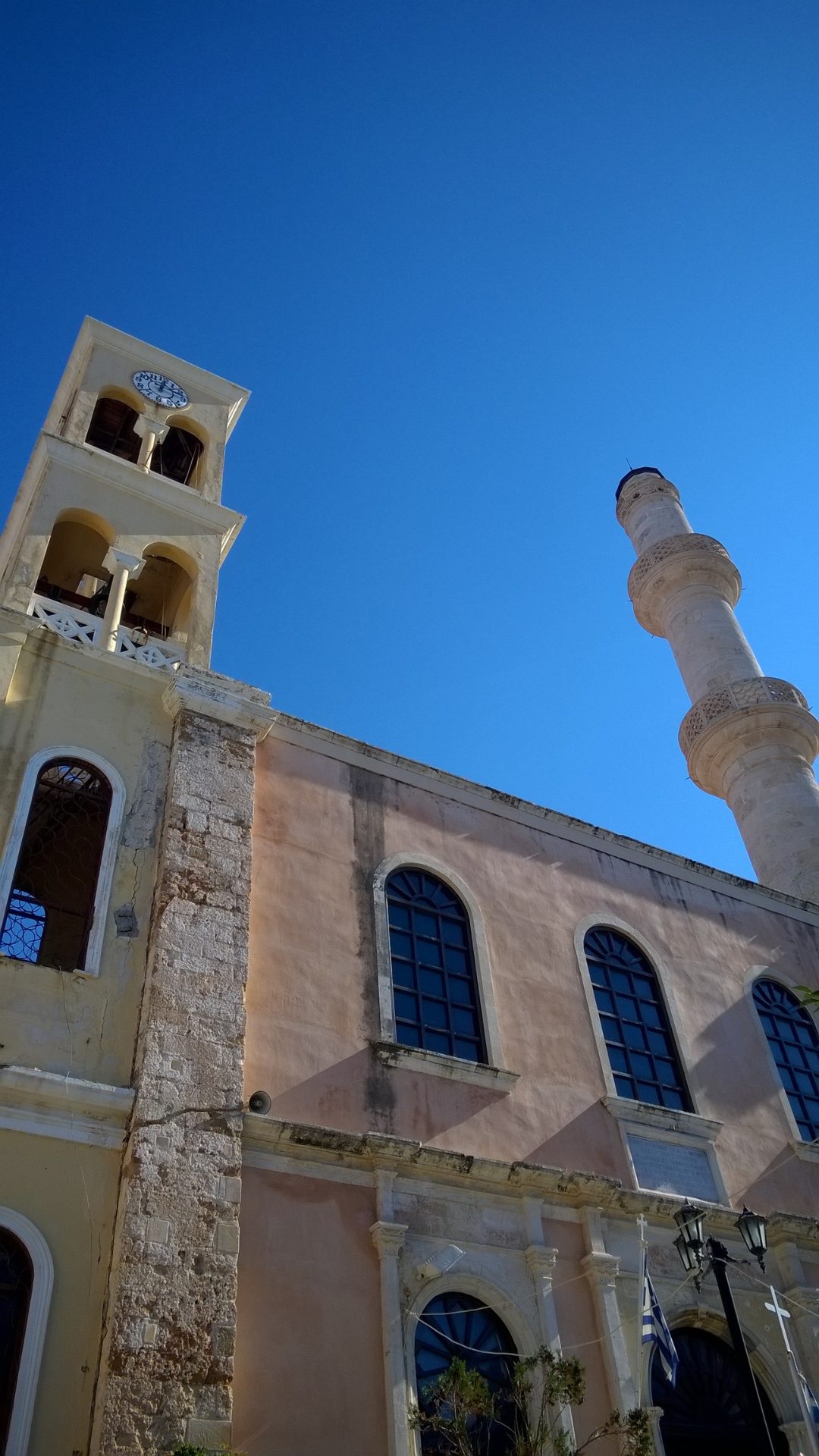
With the Ottoman Empire taking control of Chania, the city, underwent more significant changes. Many Catholic churches were converted into mosques, including St. Nicholas. St. Nicholas was renamed Hiougkar Tzamisi (Mosque of the Emperor) in honour of Sultan Ibrahim of the Ottoman Empire. Its prominence was marked by the addition of a minaret with two balconies, an architectural feature rarely seen in Chania.
The Ottomans also constructed new mosques, fountains, bathhouses, hospitals, and military stations, leaving a lasting imprint on the city's landscape. Ottoman rule lasted for 253 years, ending on 6 November 1898, when the last Ottoman troops withdrew and the city reclaiming its name, Chania. By this time, the people of Crete had long aspired to unite with Greece, gaining independence as the Cretan State in 1898 and officially joining Greece in December 1913, under the initiative of its governor and later prime minister of Greece, Eleftherios Venizelos, who himself came from Chania.
In 1928, following the departure of the Muslim population and the city's shift back to Christian Orthodox influence, the former mosque was reconsecrated as a Christian church, once again dedicated to St. Nicholas. Today, it stands as a unique testament to Chania’s layered history, blending Venetian, Ottoman, and Greek influences in one remarkable structure.
During WWII, Chania also became home to German occupied forces and the bombing and destruction that comes with war. In 1965, Chania’s Old Town was declared a heritage monument, therefore restricting developments ensuring the preservation of the Venetian Harbour.
Today, Chania reflects the layered history of Crete, with remnants of Minoan, Roman, Byzantine, Venetian, and Ottoman influences woven into its architecture, culture, and atmosphere. Whether wandering through the narrow alleys of the old town, admiring Venetian mansions, or soaking in the lively harbour front, visitors are surrounded by echoes of the past, making Chania a timeless destination.
From café conversations with the locals, I set out to explore the historical sites, museums, churches, and local beaches, all within walking distance of Chania city, along with the flavours and experiences that bring this captivating city, cloaked in charm, to life. From the sands of Nea Chora Beach to the shores of Koum Kapi Beach and the storied tanneries of Tabakaria, Chania invites discovery at every turn.
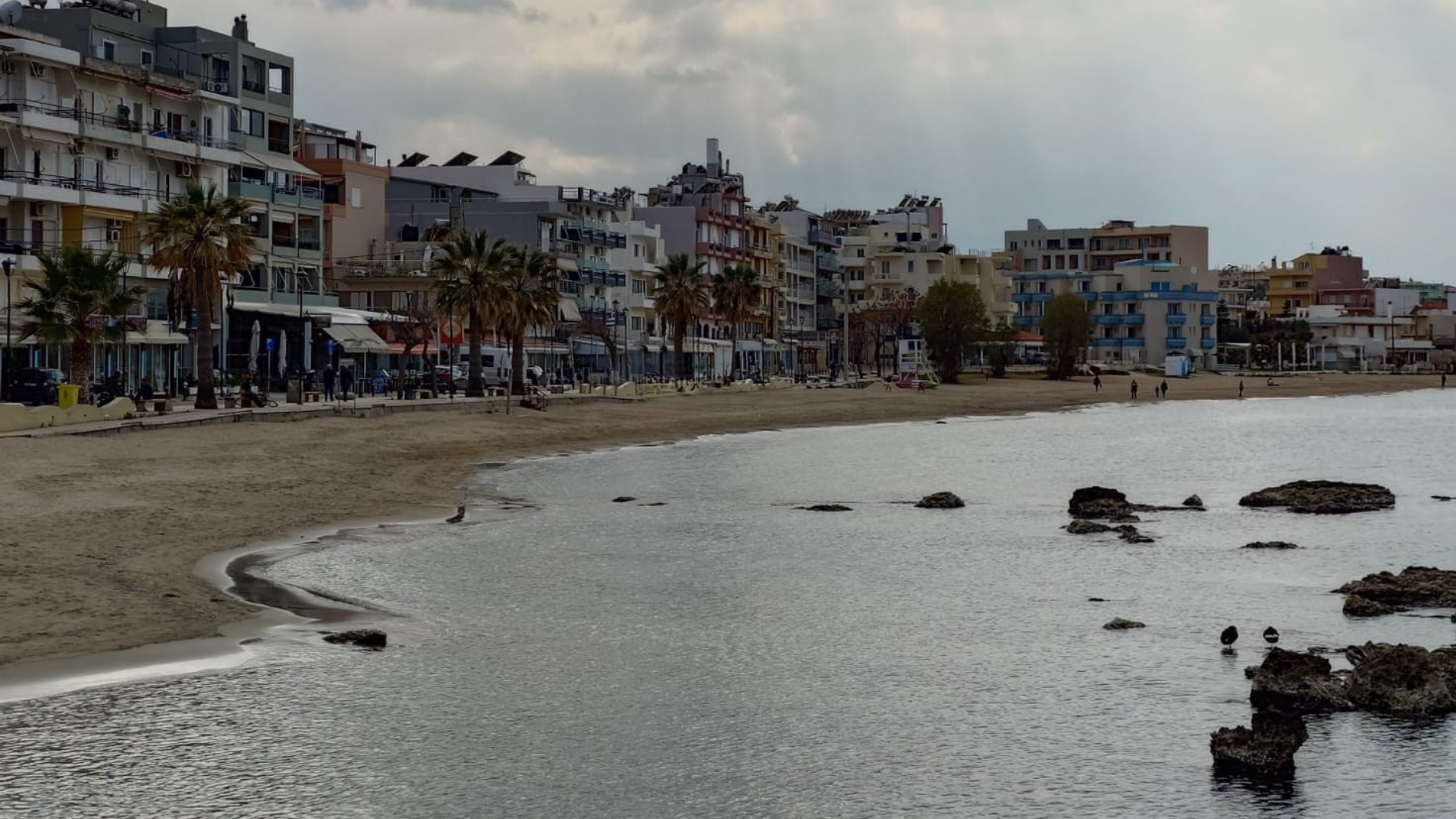
Nea Chora, meaning "New Town," was established just outside the western Venetian Harbour walls of Chania’s Old Town, approximately 20 mins walk away. A favourite spot for me to relax with friends at one of the many seafront cafés. It’s also home to several well known and much loved seafood tavernas. The small fishing harbour nearby supplies the daily catch, and during the summer months it’s not uncommon to see octopus hanging to dry in the sun, making this seaside location a favourite among both locals and visitors. With its sandy beach and clear turquoise waters, Nea Chora offers the perfect place for a refreshing swim and place to escape the summer heat.
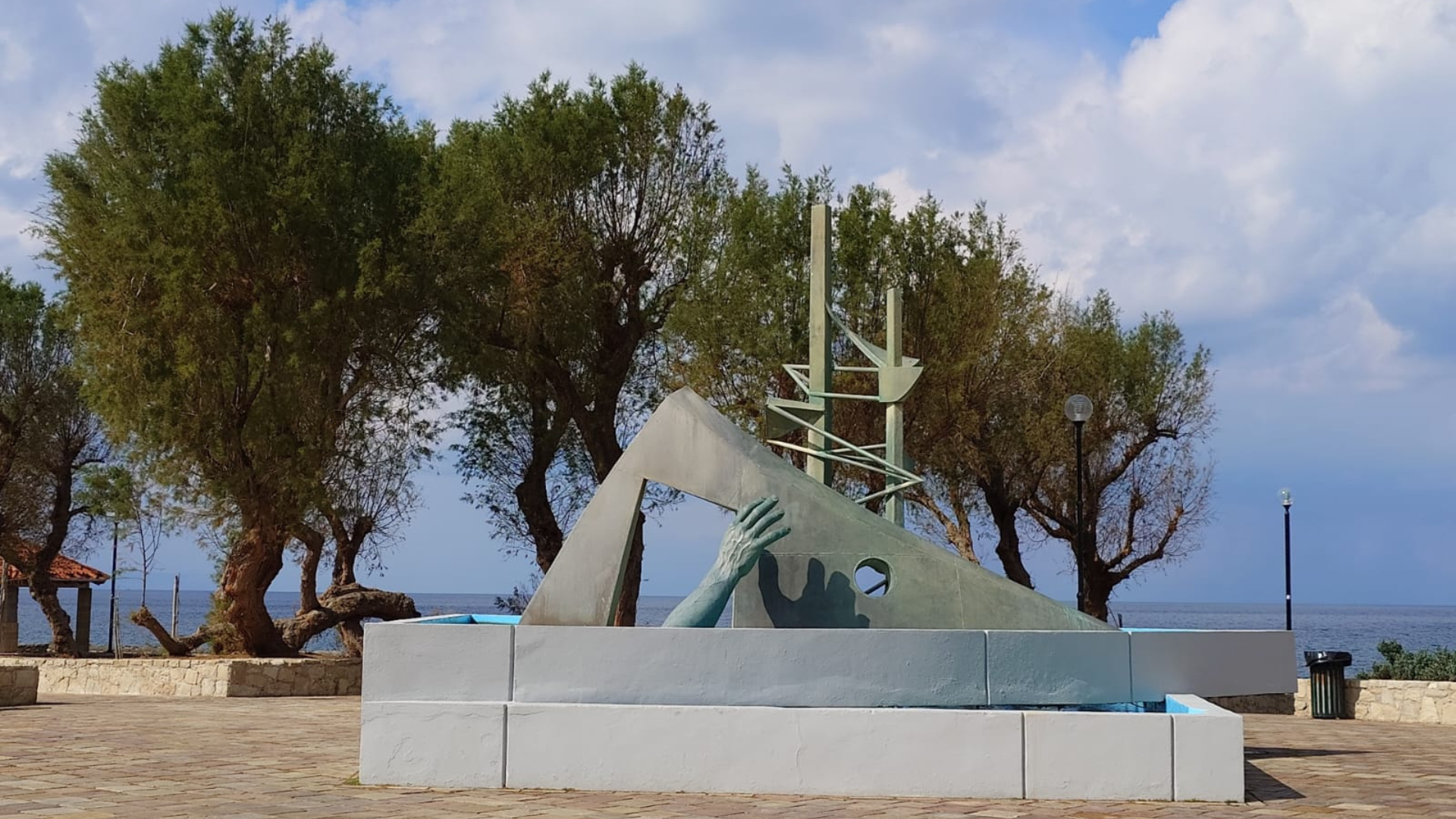
From Nea Chora, it’s an enjoyable walk along the seafront footpath towards Chania Old Town, with the sea on your left. Along the way, passing 'The Hand' monument at the bottom of Odos Theotokopoulou, a solemn tribute to the 1966 ferry disaster. The Heraklion passenger ferry sank during a storm enroute from Souda to Piraeus on a cold December night, claiming the lives of over 230 people, mostly Cretans. With only 47 survivors, it remains one of Greece’s most tragic maritime disasters.
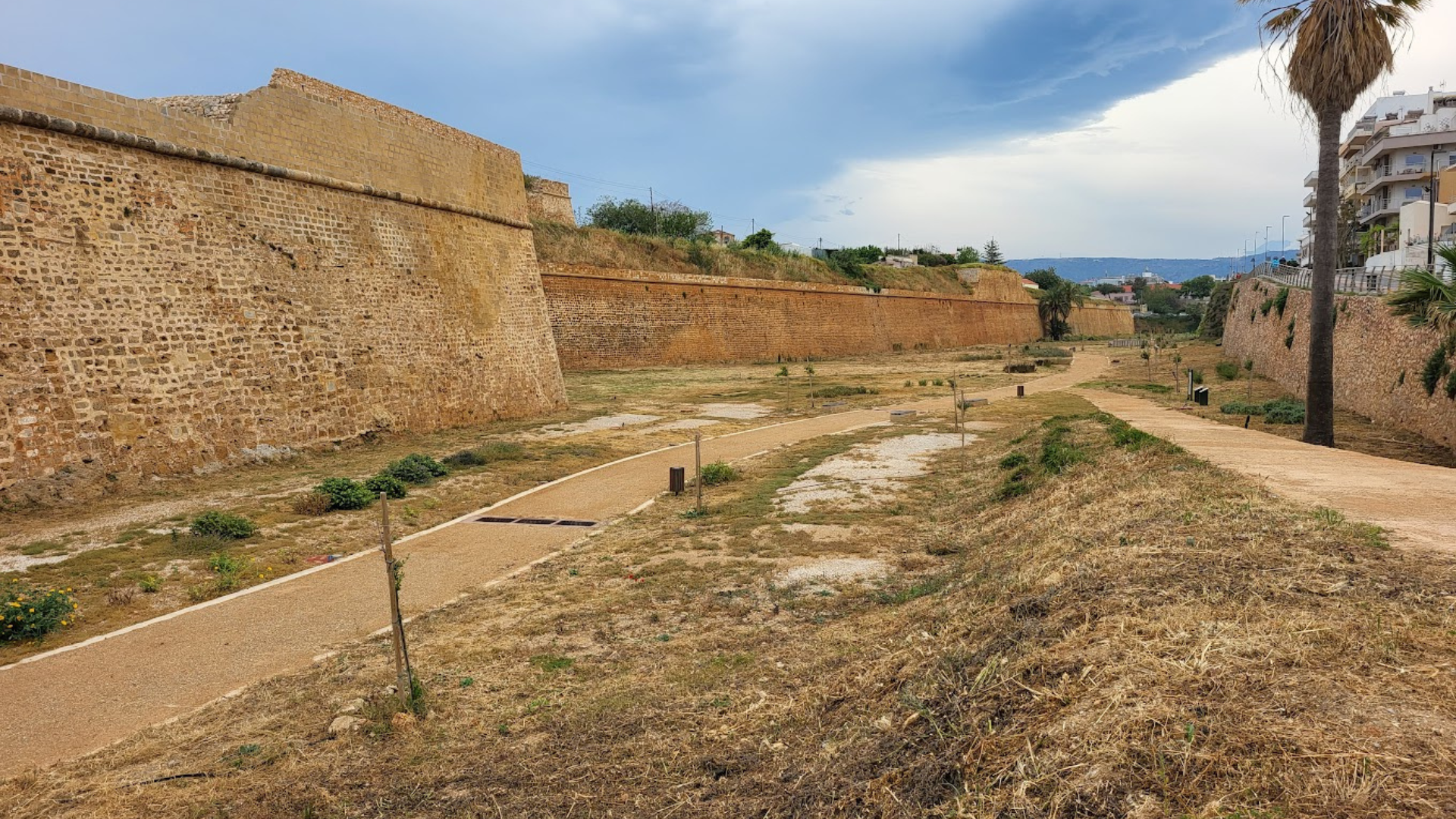
From across the street, there's an excellent view of the western Venetian city walls, stretching from the Bastion of San Salvatore in the northwestern corner, facing the sea, to the Bastion of Schiavo in the southwestern corner.
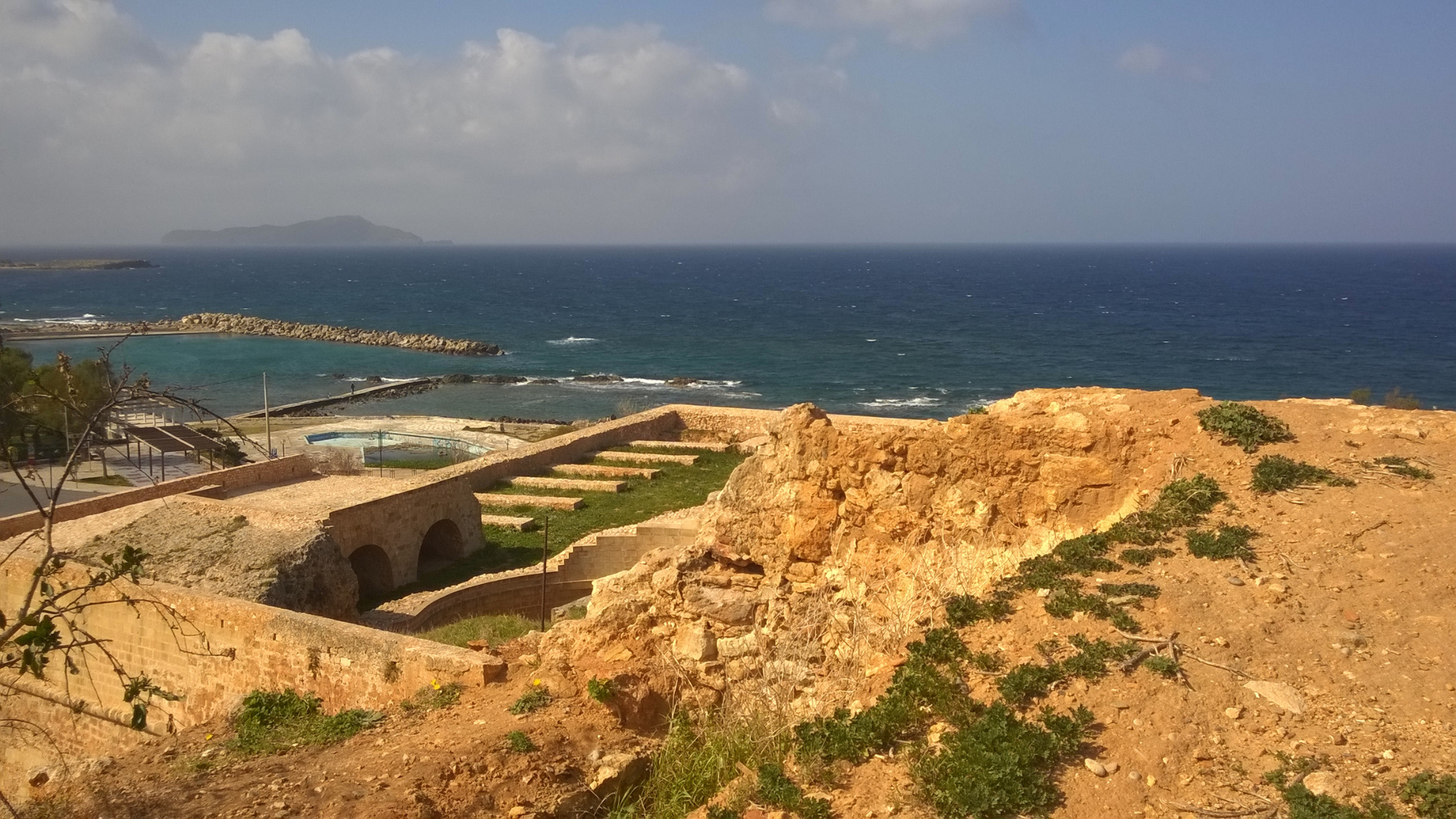
The following week, I returned to Chania, once again drawn to the city’s western walls and the historic Jewish neighbourhood of Evraiki, the quiet guardians of history and heritage. Soul blog: Chania’s Western Walls: Guardians of History and Heritage).
From more café conversations with the locals in the village where I stayed, I continued to explore, uncovering more of the layered past of the lanes in Chania’s Old Town, and immersing myself in the atmosphere that continues to shape this old yet ever evolving part of the city.
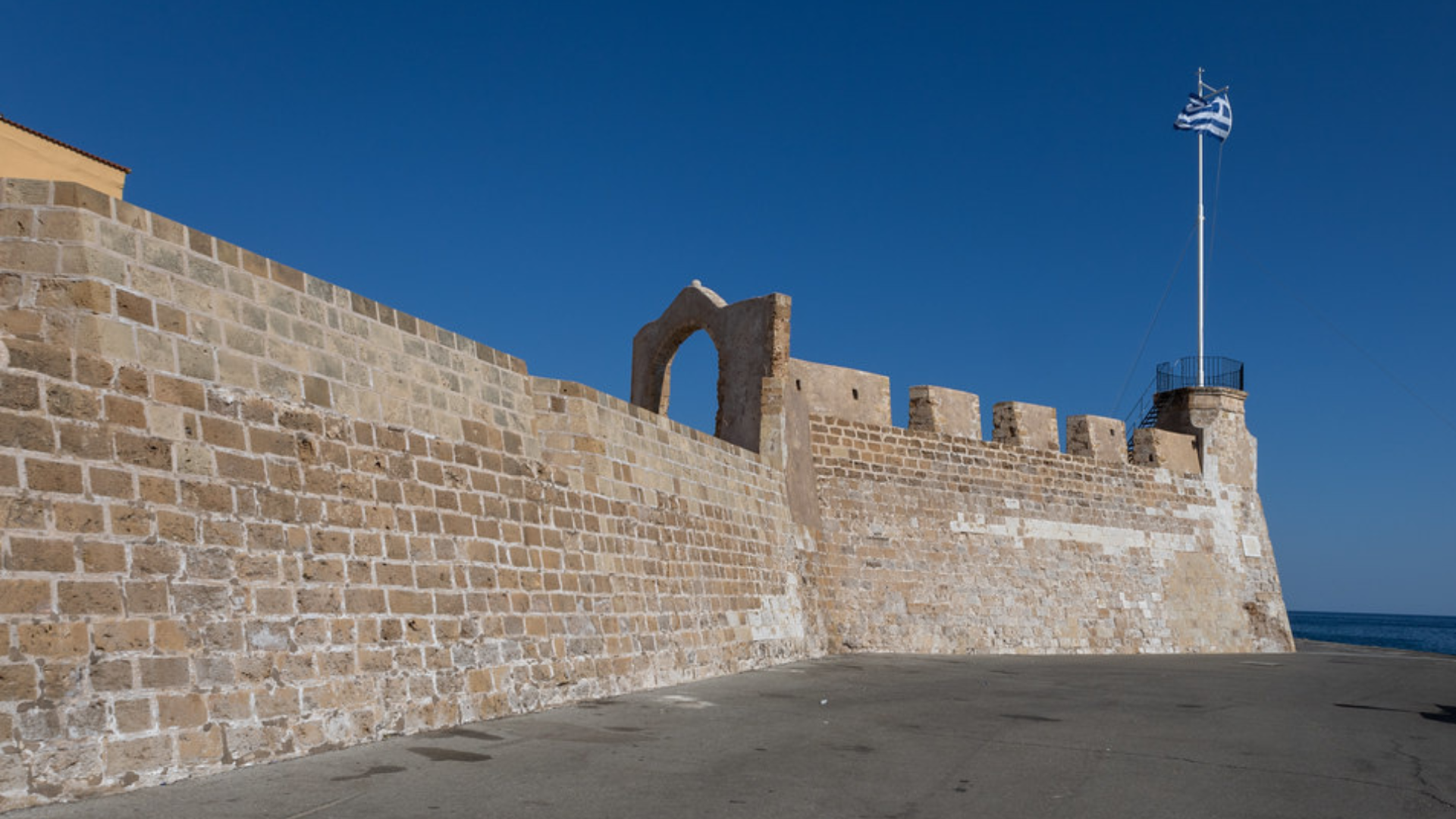
Walking down Odos Pireos, I passed the San Salvatore Bastion and crossed the end of Odos Theotokopoulou, where part of the wall was demolished in the late 19th century to create an opening. Continuing along the remaining fortifications, I followed the path leading to Firka Fortress.
Standing firm at the entrance to Chania’s Venetian Harbour, the fortress has long been a silent witness to the city’s shifting rulers, battles, and maritime history. Its weathered stone walls, a lasting reminder of the harbour’s once critical strategic importance.
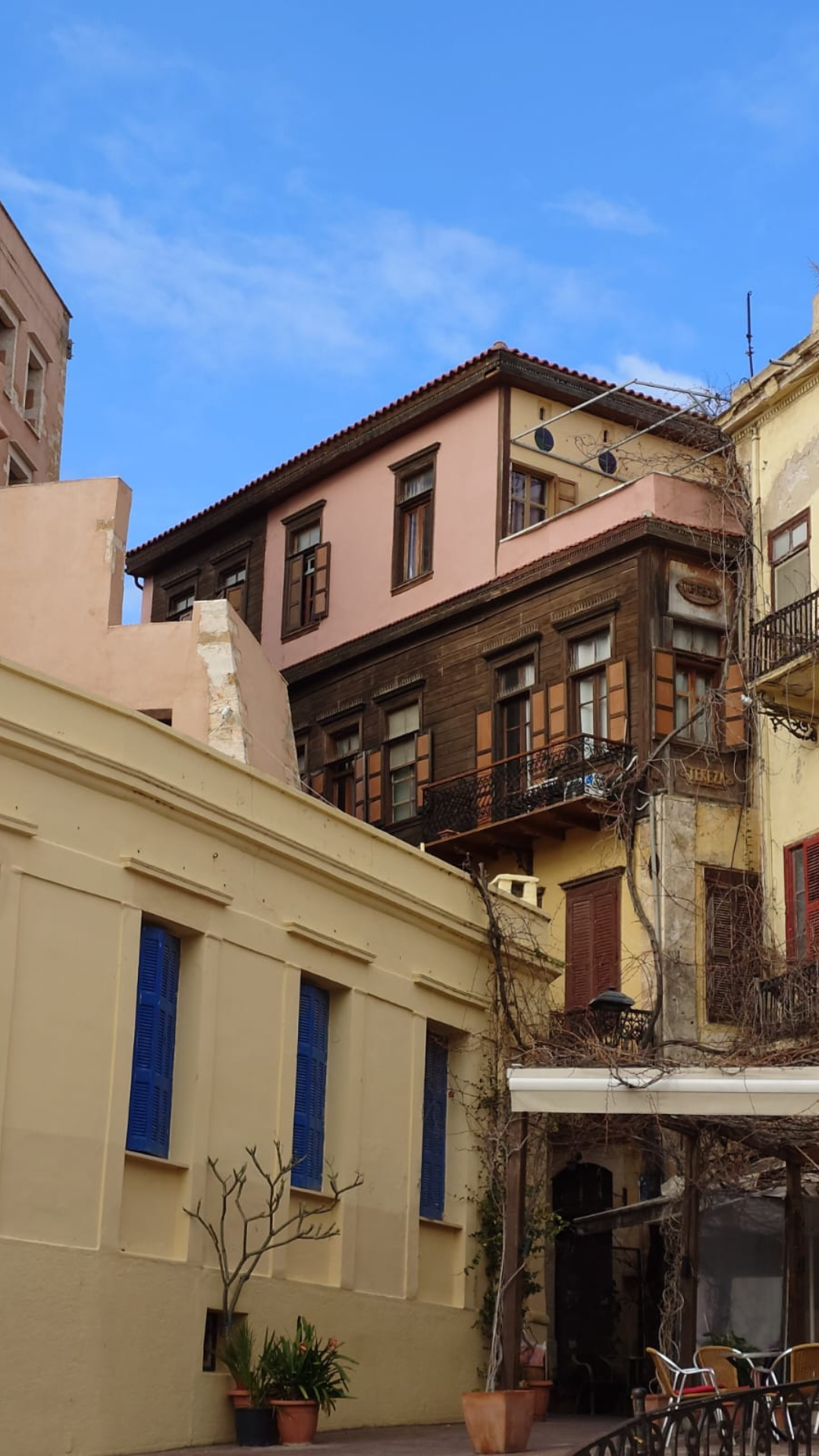
From the café setting near the entrance of the Maritime Museum, also the entryway to the Firka Fortress. I took a moment to soak in the surroundings.
The fortress stood in silence, undisturbed and empty of people at the time of my visit. The absence of others only deepened the eerie stillness.
Once known as Rivellino del Porto or San Salvatore, being linked to the nearby bastion of the same name. Construction began in 1580 under Venetian rule, reaching completion in the 17th century to house the local garrison and ammunition storage areas.
When the Ottomans seized control, they maintained its military function but renamed it Firka, meaning barracks, a name that has endured through the centuries and still used today.
Later, during the German occupation, the fortress took on a darker role as a prison, adding yet another chapter and a stark reminder of the fortress’s evolving role in Chania’s history.
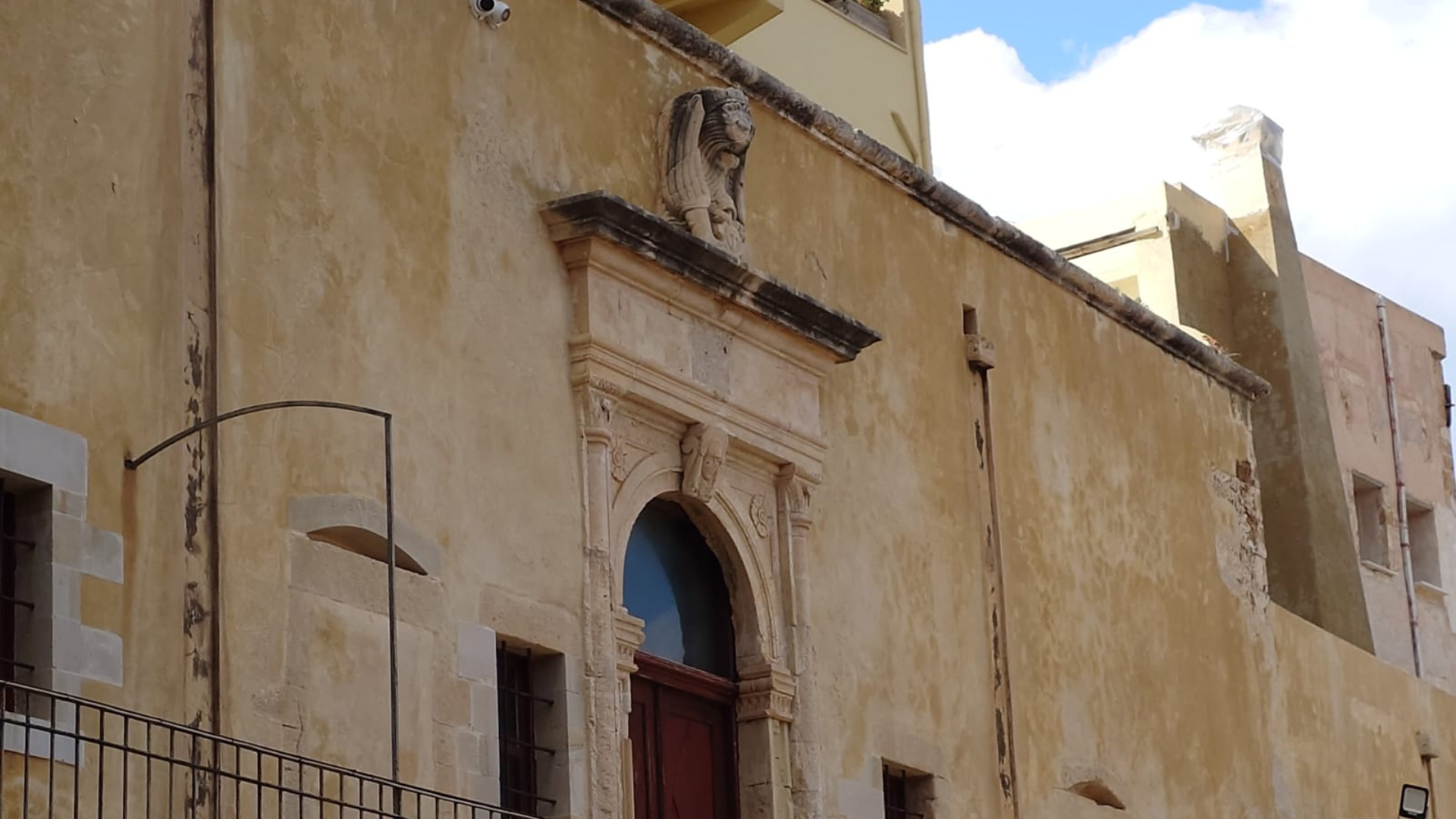
Stepping into the open courtyard, I took in the sight of the long, two storey structure that stood with quiet resilience. My gaze quickly landed on a familiar symbol of Venetian rule, a lion head carving, a relic of the period when the Venetians sought to leave their mark on the old city. It was a small but powerful detail, a silent testament to the past amidst the fortress’s ever changing purpose.
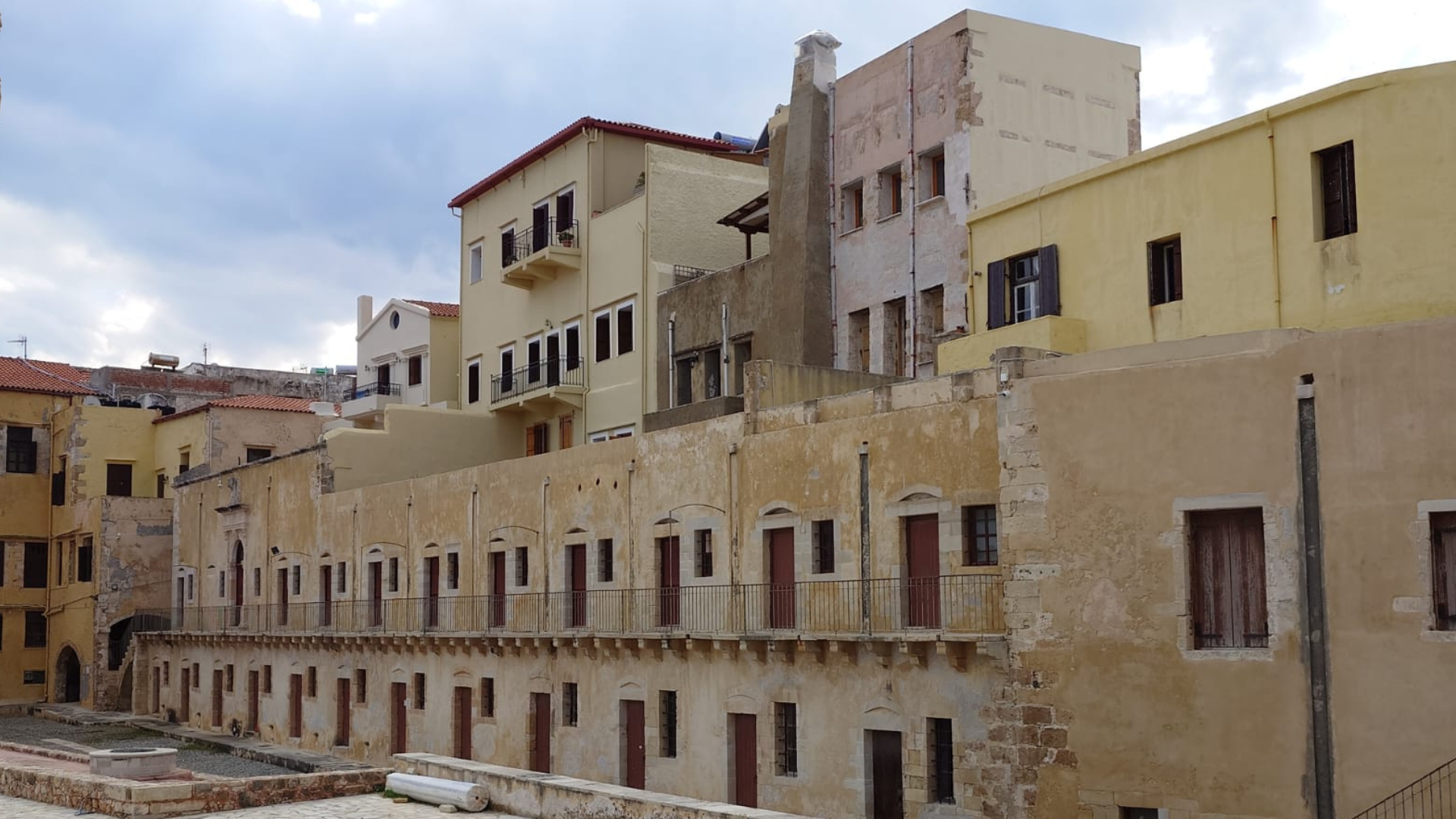
The barracks, turned prison building remains closely entwined with the surrounding residential buildings, where modern life unfolds against a backdrop of history. The close proximity of these homes to the fortress walls highlights the city’s ever evolving landscape where past and present exist side by side, shaping Chania’s unique character.
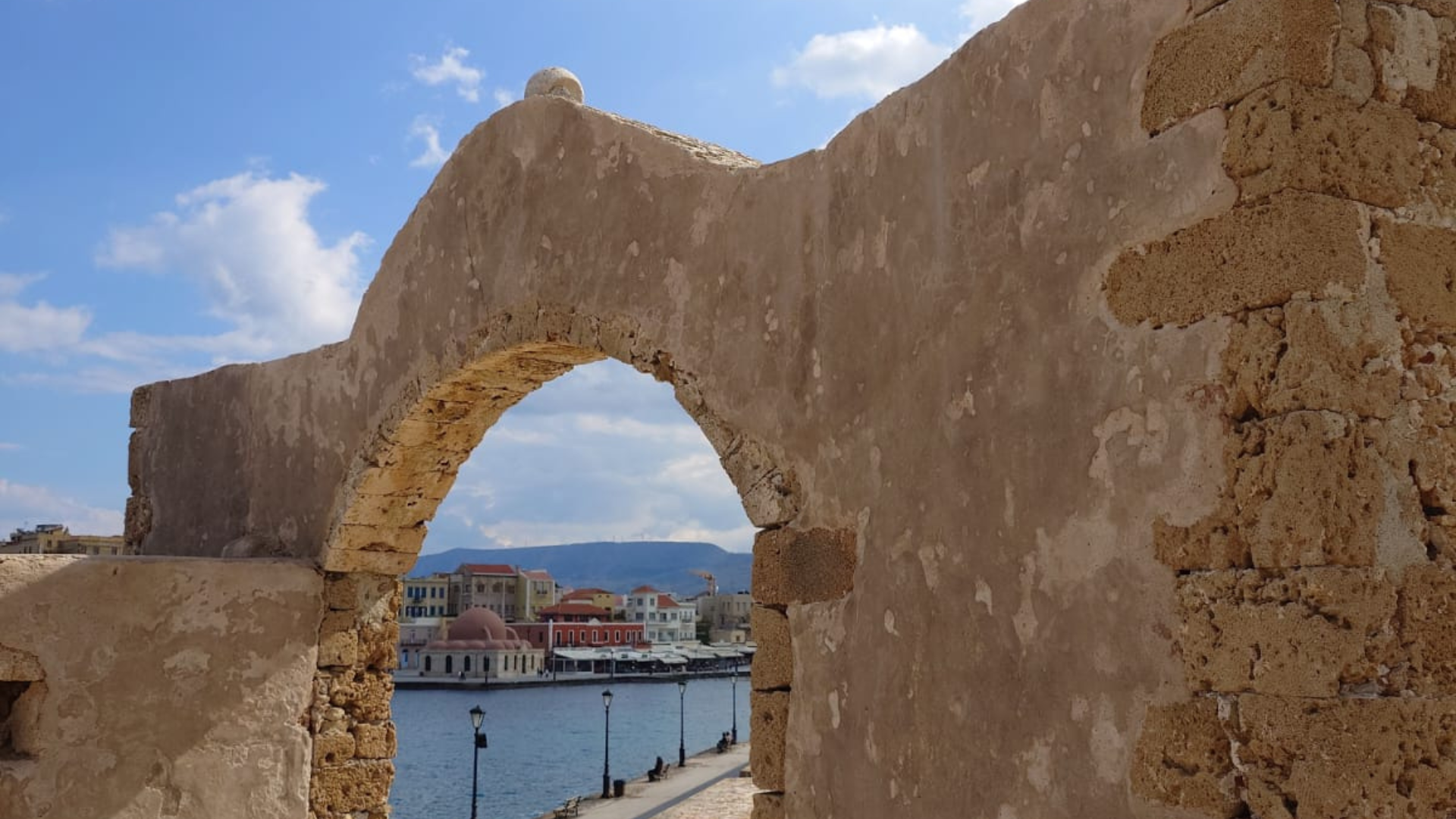
Looking back from the small corner watchtower, my gaze stretched across the old Venetian harbour, where the Küçük Hasan Pasha Mosque stands with its distinctive domed roof, another reminder of Chania’s layered history and the changing hands that have shaped its shores.
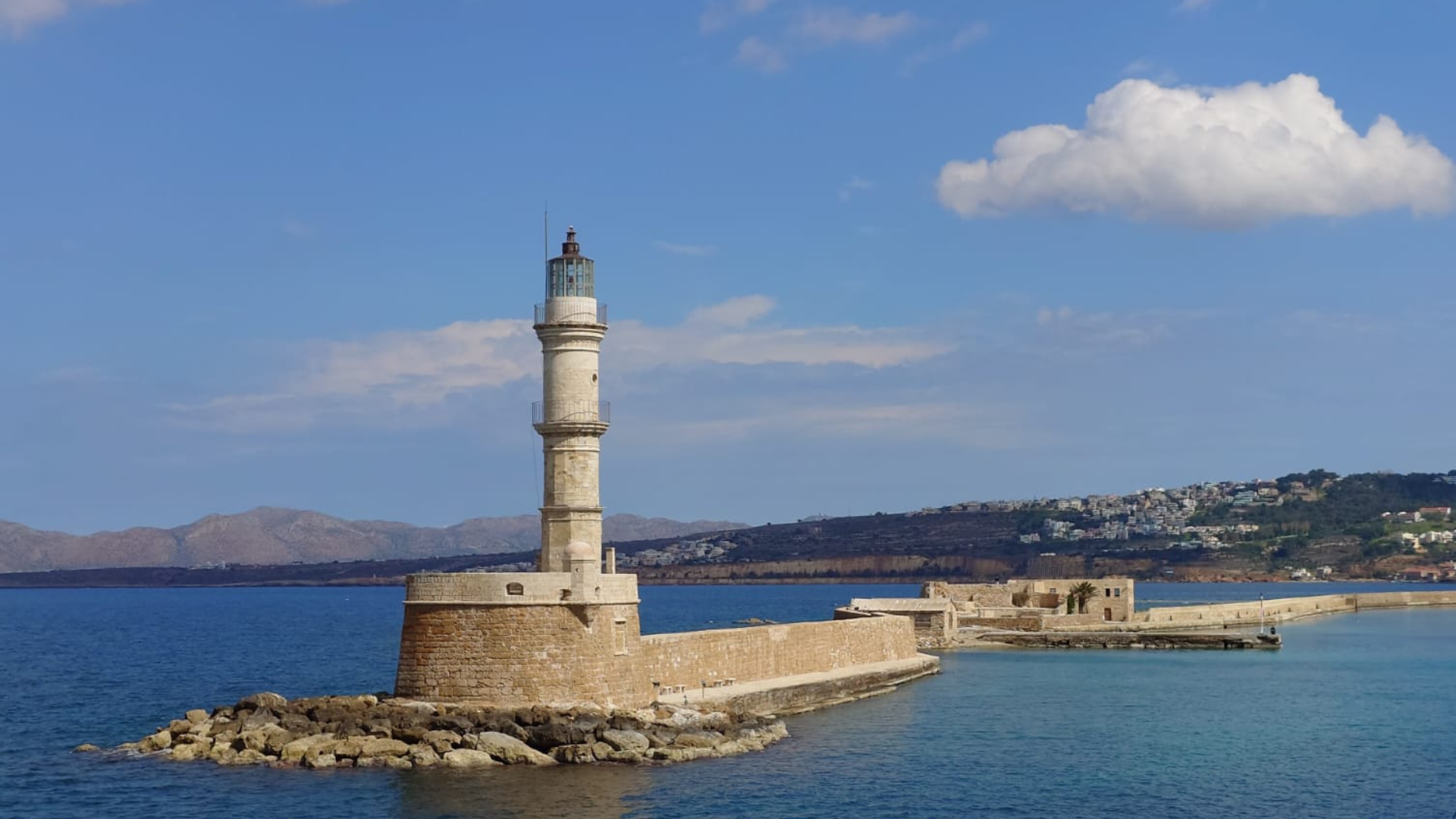
Before leaving the fortress, I took a moment to gaze out at the Chania Lighthouse, standing sentinel at the entrance of the harbour. Originally built by the Venetians in the 16th century and later reconstructed by the Egyptians in the 19th century, its distinctive form has guided sailors for centuries. Extending from the lighthouse, the breakwater wall stretched across the entrance of the harbour, a protective barrier against the open sea.
Beyond it, the Akrotiri Peninsula rises in the distance, its rugged cliffs witness to the countless ships and stories that have passed through these waters.
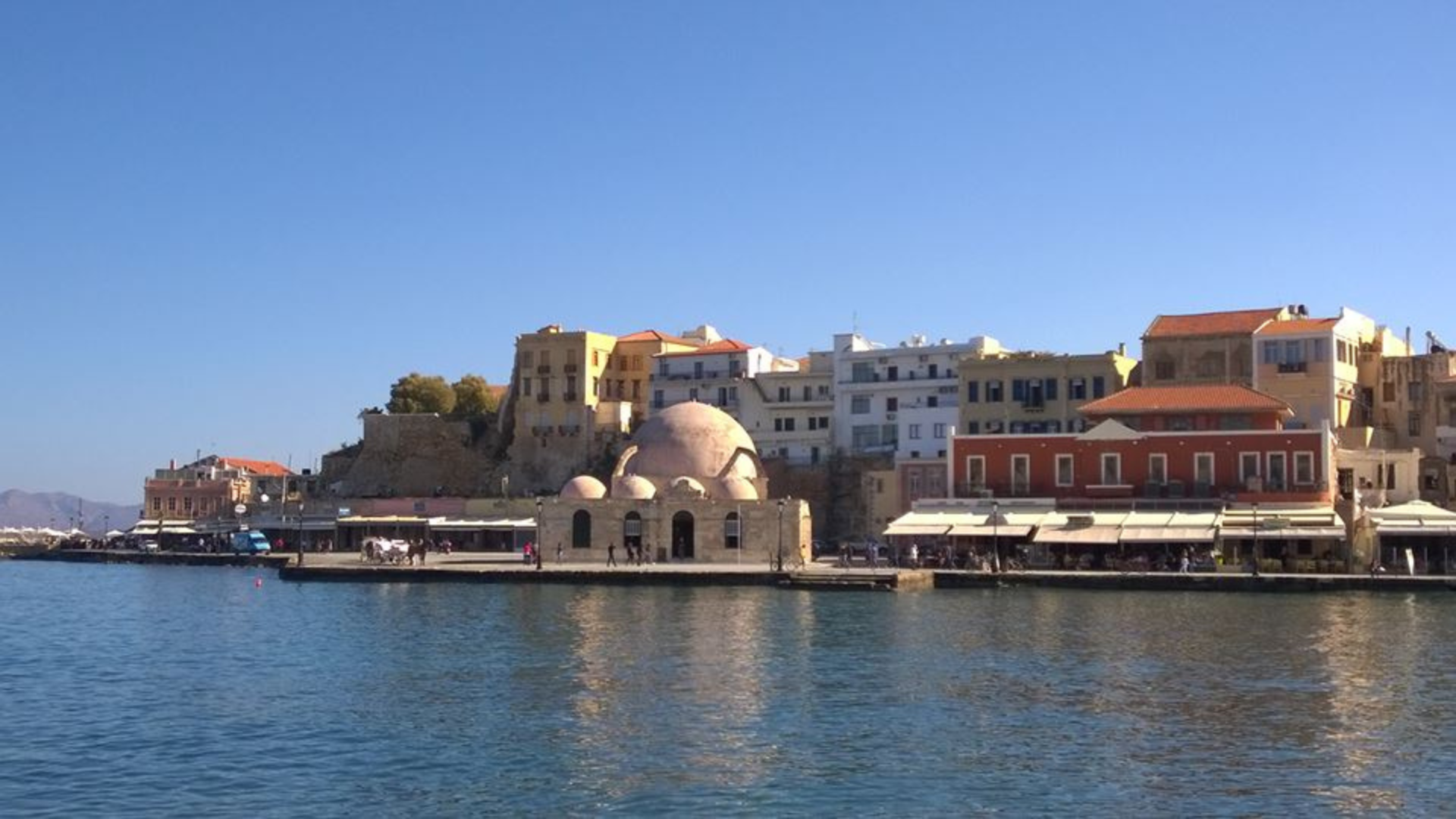
Leaving the Firka Fortress and the Maritime Museum, which opened in 1973 to preserve and showcase Greece’s and Crete’s maritime traditions, I made my way around the harbour. Here, horse drawn carriages stood in wait, ready to take tourists on a scenic journey through the winding streets of the old town, a charming nod to a bygone era amidst the ever present hum of modern exploration.
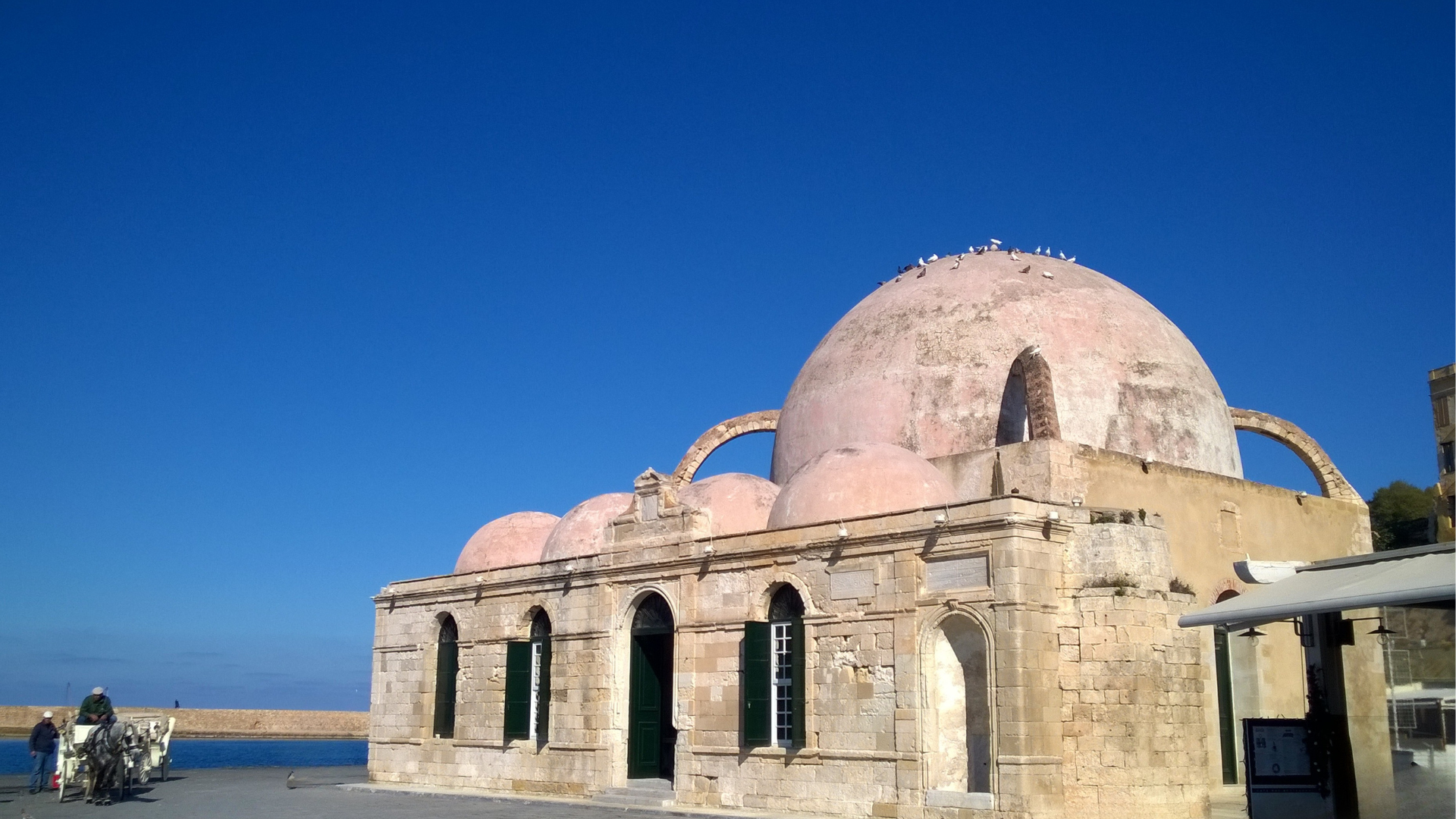
Within, just four short years of Ottoman rule, in 1649, the Küçük Hasan Pasha Mosque, also known as Yalı Mosque or the Seaside Mosque (Γιαλί Τζαμί), was erected at the edge of the Venetian Harbour. It was named in honour of Küçük Hasan Pasha, the first Ottoman governor of Crete, his name translating to ‘Little Hasan,’ while ‘Pasha’ signifies ‘ruler.’
Built on the site of a pre existing Christian temple, the mosque was the only newly constructed religious edifice permitted by the Ottomans in Chania at the time. Serving as an active place of worship for nearly 300 years, it remained central to the city's Muslim community until 1923, when the Greco-Turkish War led to a population exchange between Greece and Turkey.
With the departure of Chania’s Muslim population, the mosque ceased religious functions, and its minaret, once a defining feature, was demolished in 1939. Over the years, this iconic structure has taken on various roles, including a warehouse, folk museum, tourist information centre, and exhibition centre. Today, it stands as a striking reminder of Chania’s historical past, its domed silhouette blending with the Venetian and Ottoman influences that have shaped the city's architectural and cultural identity.
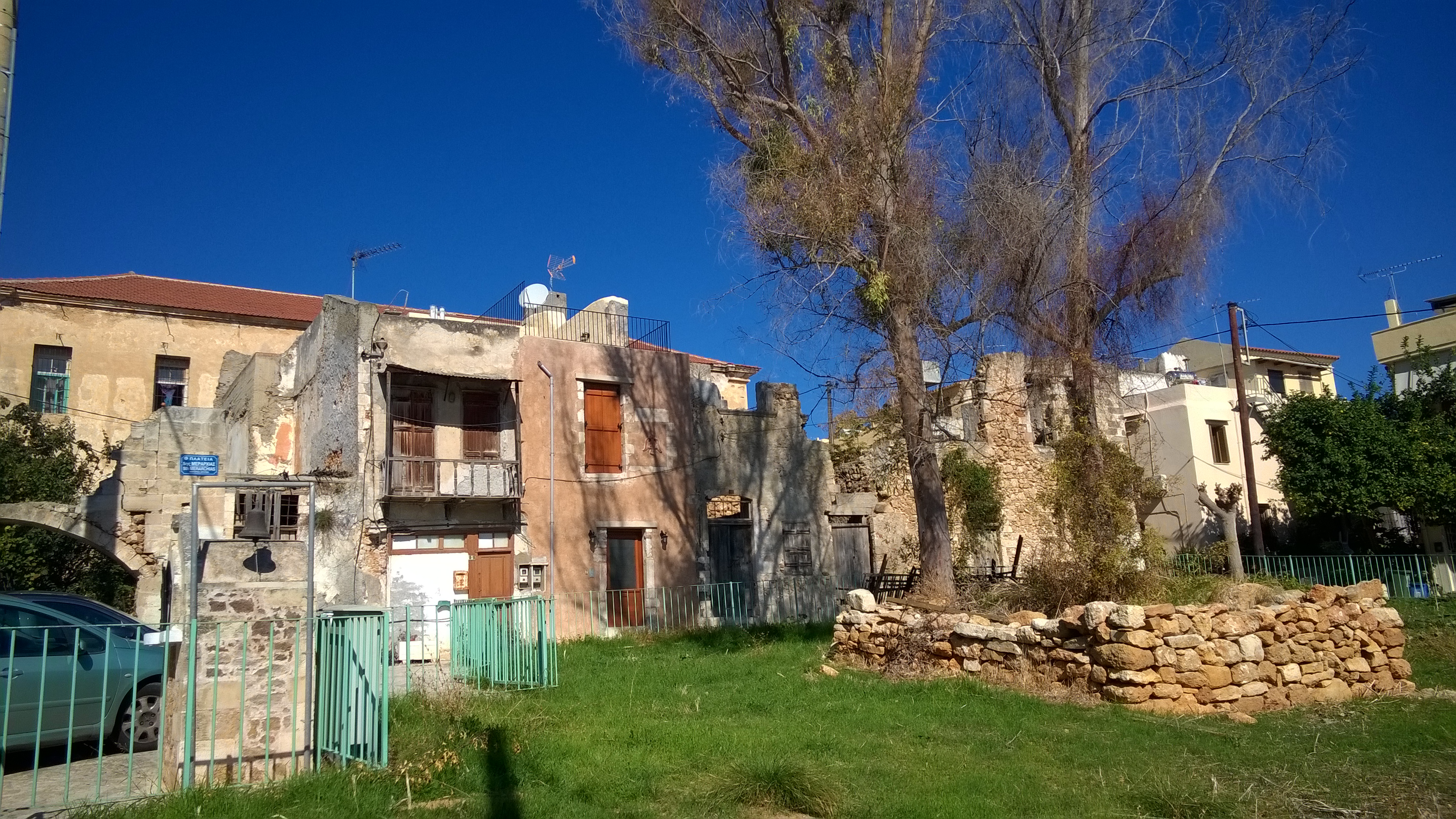
From the the Küçük Hasan Pasha Mosque, my path led me away from the harbour and onto Odos Kanevarou an interesting pedestrian street where history and modern life intertwine. While it’s a pleasant walk, a word of caution: motorbikes often zip by.
Along this stretch, remnants of the old inner Byzantine wall emerge between the buildings, some sections still standing strong, while other sections blend into the newer harbour front structures.
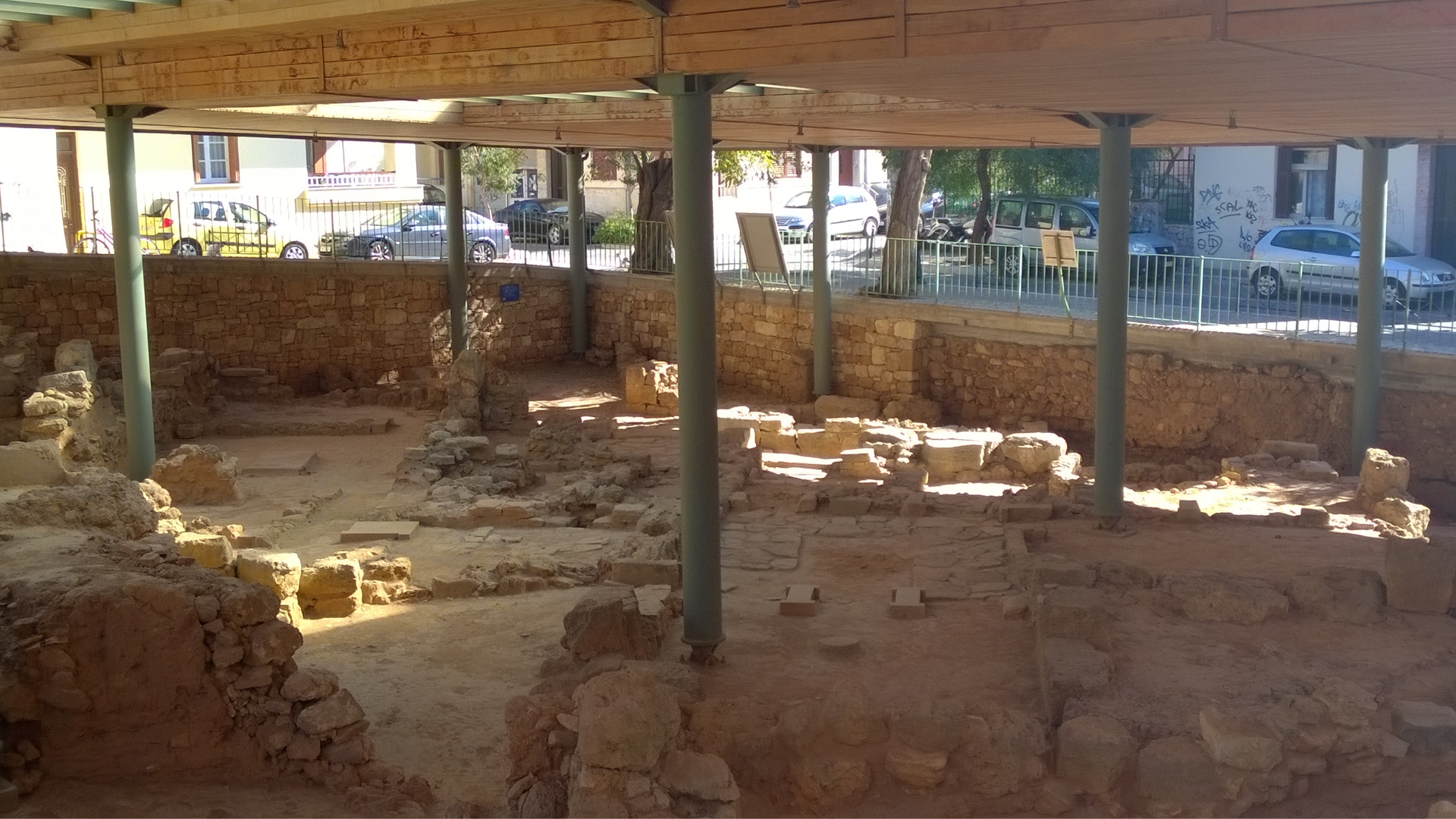
I take my time reading the information plaques and wandering around the exterior of the enclosed ancient site of Minoan Kydonia, a glimpse into Chania’s deep past. Even from the outside, the significance of this site is undeniable, and it’s certainly worth a visit.
Many of the artefacts unearthed here are now housed in the Archaeological Museum of Chania, offering further insight into the city’s rich Minoan heritage. For those eager to explore more, the Chania Tourism website provides additional details: Chania Tourism – Ancient Kydonia.
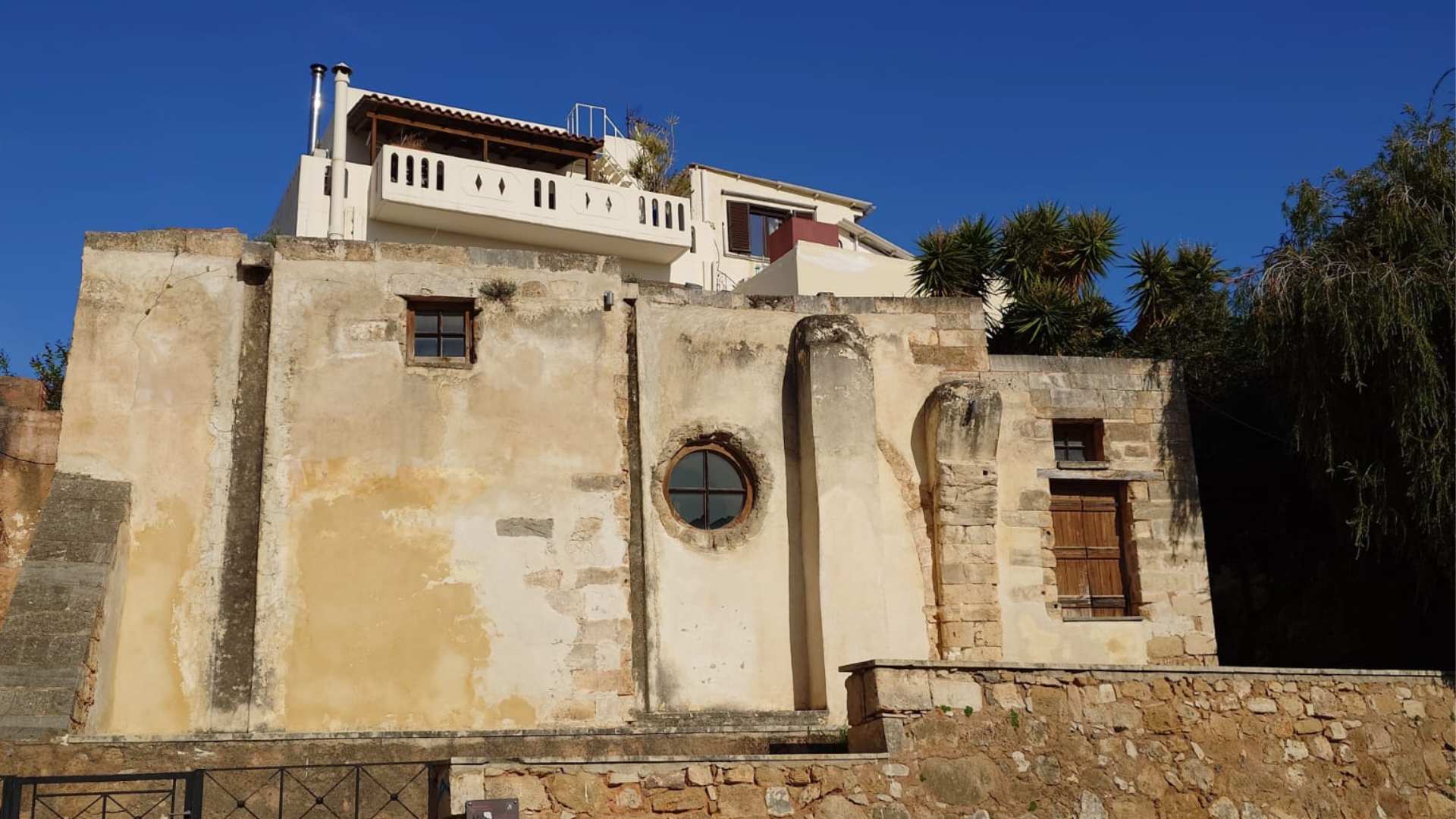
The wonderful locals from the kafenio in the village where I was staying suggested I retrace my steps along Odos Kanevarou, then turn onto Odos Katre to see the Turkish Hamman tucked away on the same street before continuing onto Odos Sifaka.
The Turkish hammam on Odos Katre is one of the public baths built by the Ottomans during their occupation of Chania. Located in the old aristocratic district and ancient settlement of Kasteli Hill, it stands as a reminder of the city’s Ottoman heritage, where such baths played a central role in daily life and social gatherings.
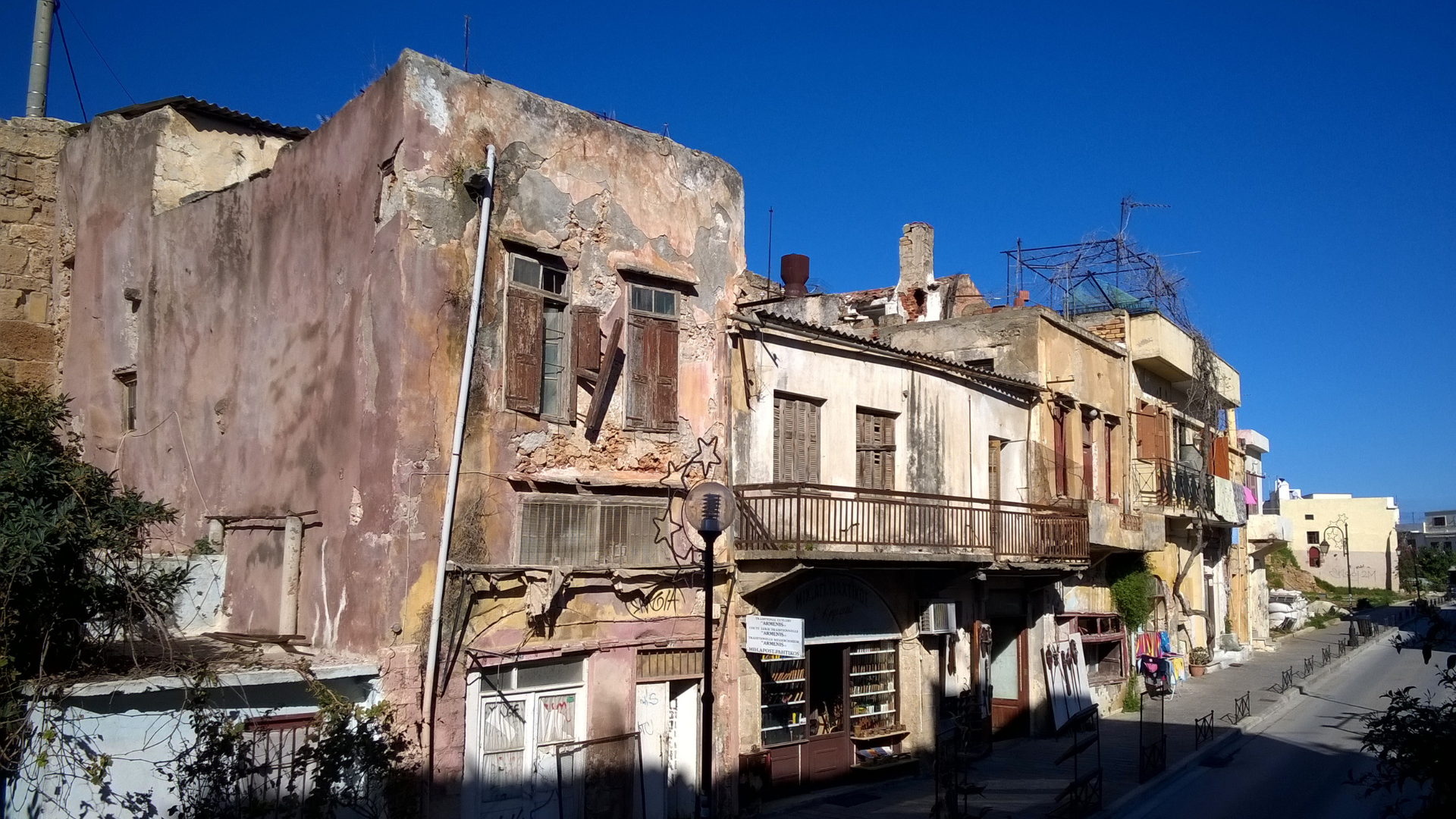
Walking down Odos Sifaka, I could see why the locals suggested this route. The street offers a glimpse into more of Chania’s layered past, where sections of the old Byzantine inner city walls still stand, marking the boundaries of ancient Kydonia. But there’s more to this street than just its historical ruins, it holds a deep connection to Crete’s traditional craftsmanship.
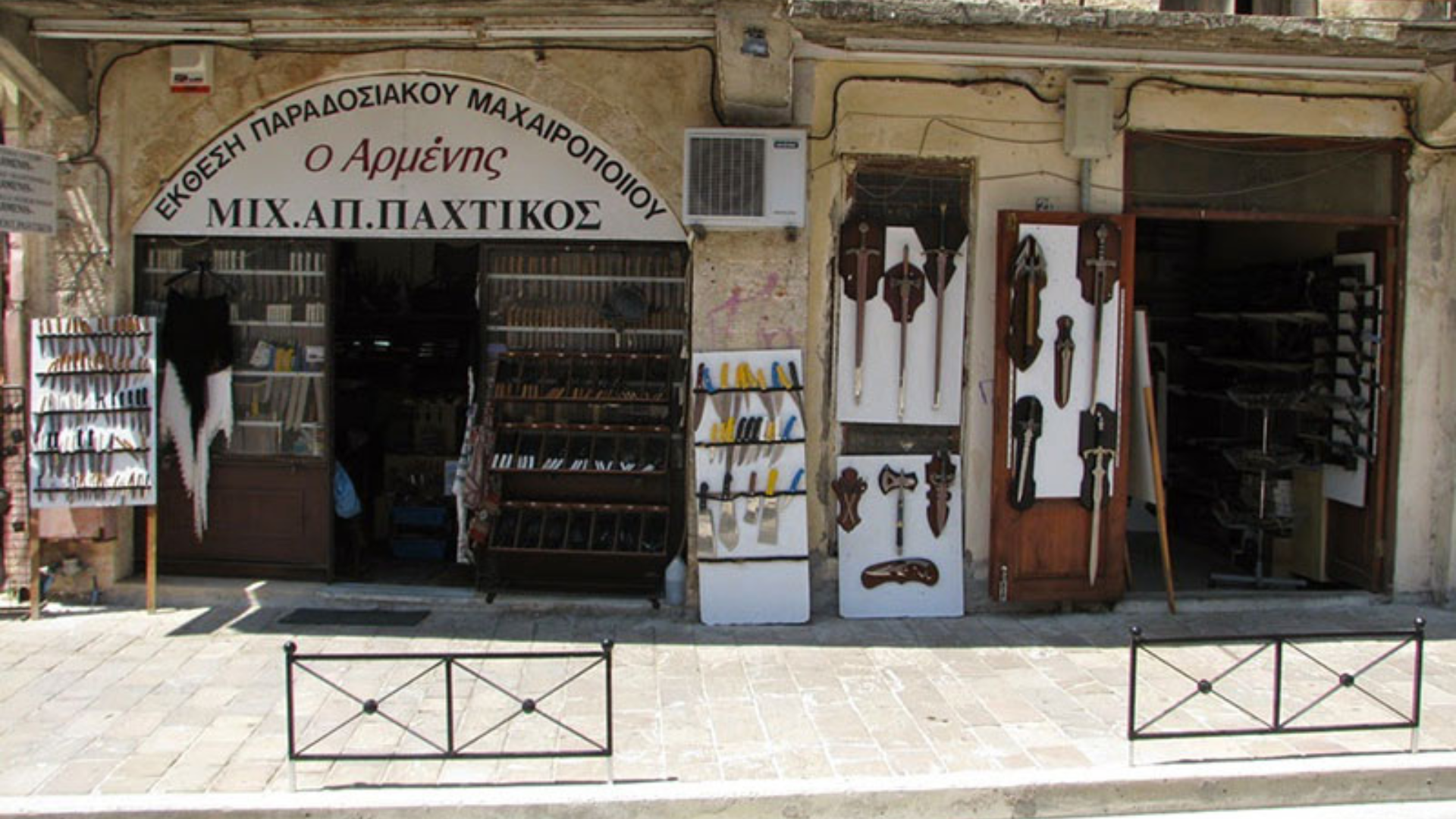
Tucked among the buildings is one of the last remaining traditional knife making stores, Macheradika a reminder of a craft that has shaped Cretan identity for centuries. Since Minoan times, the Cretan knife was not just a tool but a symbol of survival and protection. Its importance grew during the Venetian era, especially during the 14th century, with the Psaromiligi noble family revolt, against the Venetian, and becoming an essential weapon for Cretan resistance.
However, it was during the Ottoman occupation of Crete in 1669 that knife craftsmanship truly flourished. In those early years, Turkish and Armenian artisans set up the first workshops along Odos Sifaka. Over time, Cretan craftsmen mastered the trade, refining the art of knife making into a respected local tradition. These handcrafted knives became more than just weapons, they were symbols of prestige, passed down through generations. In fact, up until World War II, a well made knife was a prized possession, with many Cretan women carrying slender versions for protection.
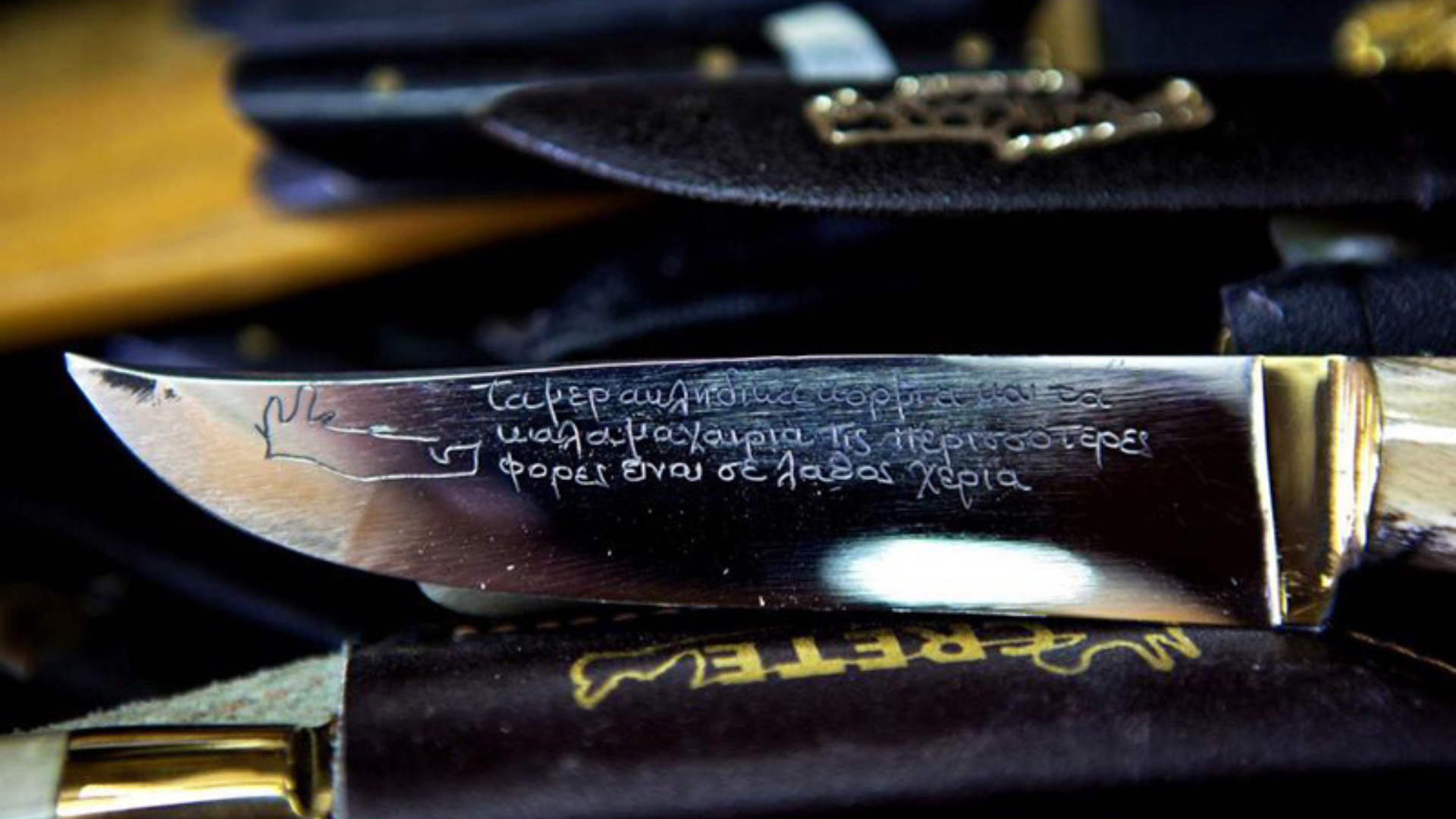
Although few traditional knife makers remain in Chania today, stepping into one of these workshops is pretty amazing, a connection to the warriors, artisans, everyday people, and the pride of men in traditional clothing who carried, and carry these blades through Crete’s long and storied past.
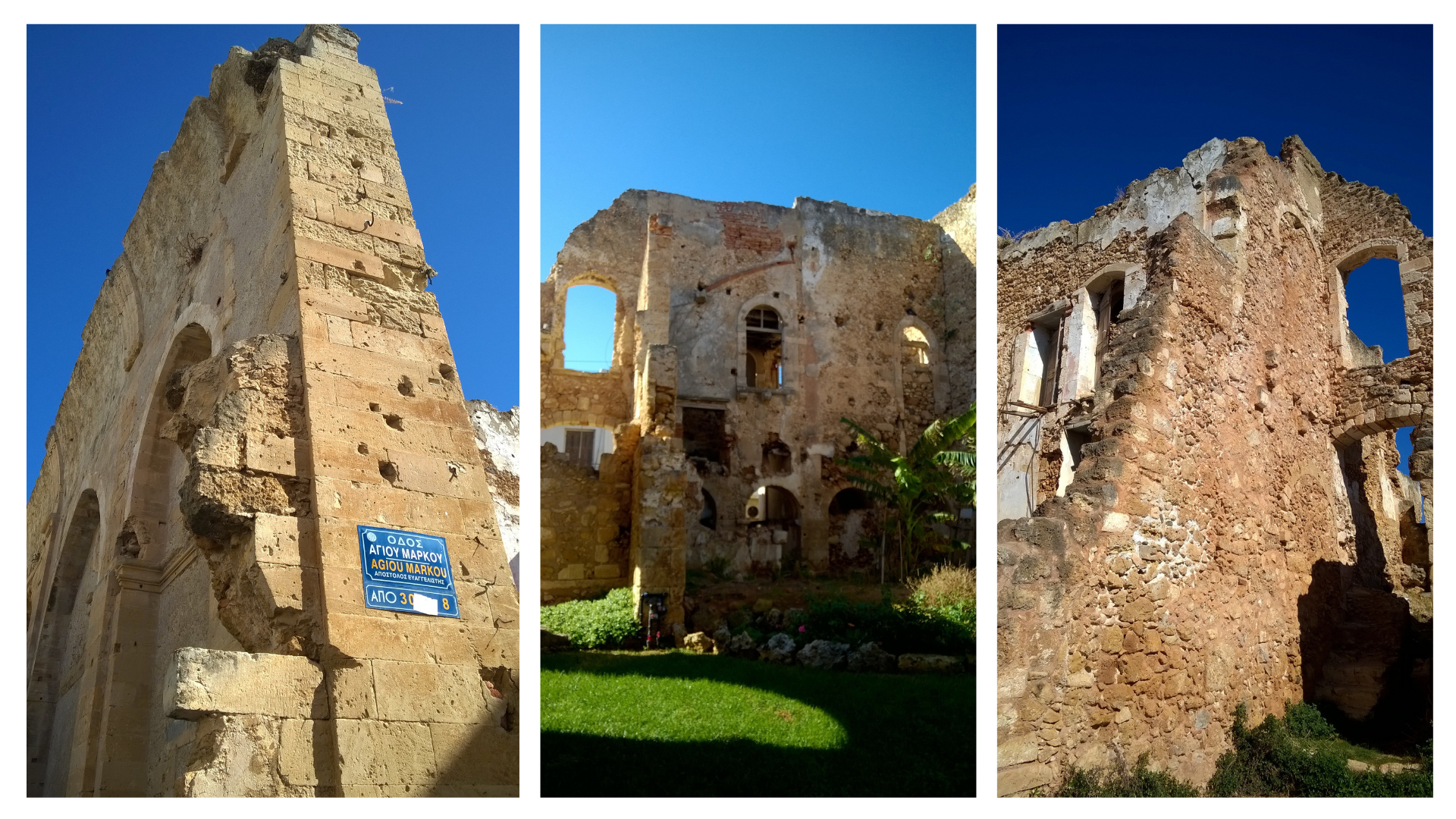
Winding my way through the ancient inner Chania old town of Kastelli Hill, I continue along Odos Sifaka, turning left onto Odos Archoleon, looping back through Odos Kanevarou, and then onto Odos Agia Markou, where the ruins of the Santa Maria dei Miracoli Monastery stand as a quiet remnant of Chania’s Venetian past.
Built in 1615 by Marussa Mengano for the Dominican nuns, the monastery was once a peaceful retreat, with comfortable rooms and an interior courtyard protected by the old Byzantine wall. The structure featured a single room church, and a small gate to the covered walkway leading to the nuns' rooms. Much of the monastery was lost to wartime bombings and urban expansion, where only ruins now remain of its past. Today, it’s a quiet place to pause and reflect on Chania s’ charm cloaked in history.
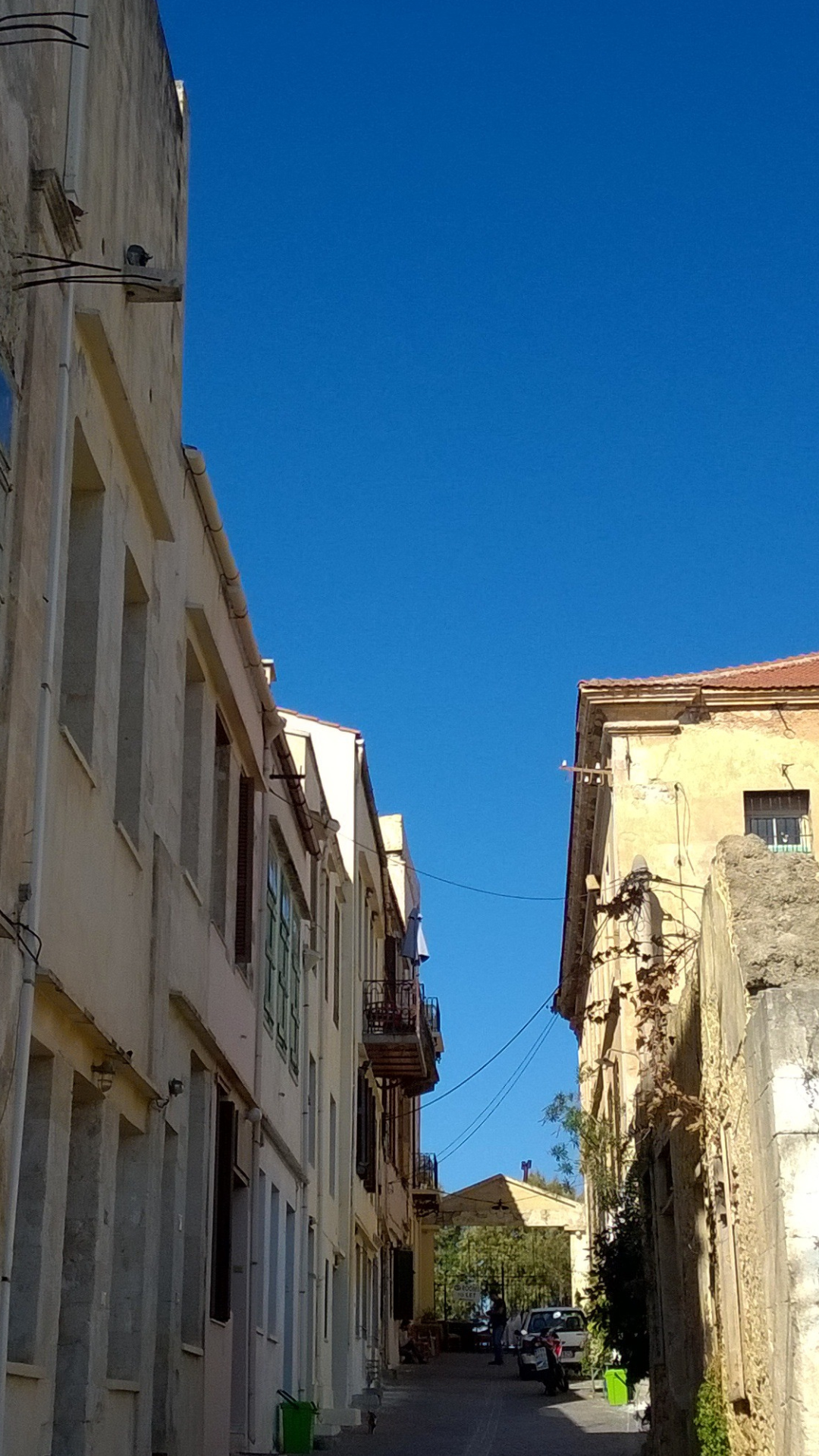
Passing through the gate at the end of Odos Agia Markou, I found myself at Konaki/Seragio, where breathtaking views of Chania and her harbour unfolded before me. This vantage point and once a significant landmark, offers a sweeping panorama of the old town and the city beyond that reflects the cultural blend with Venetian, Ottoman, and Greek influences etched into its architecture.
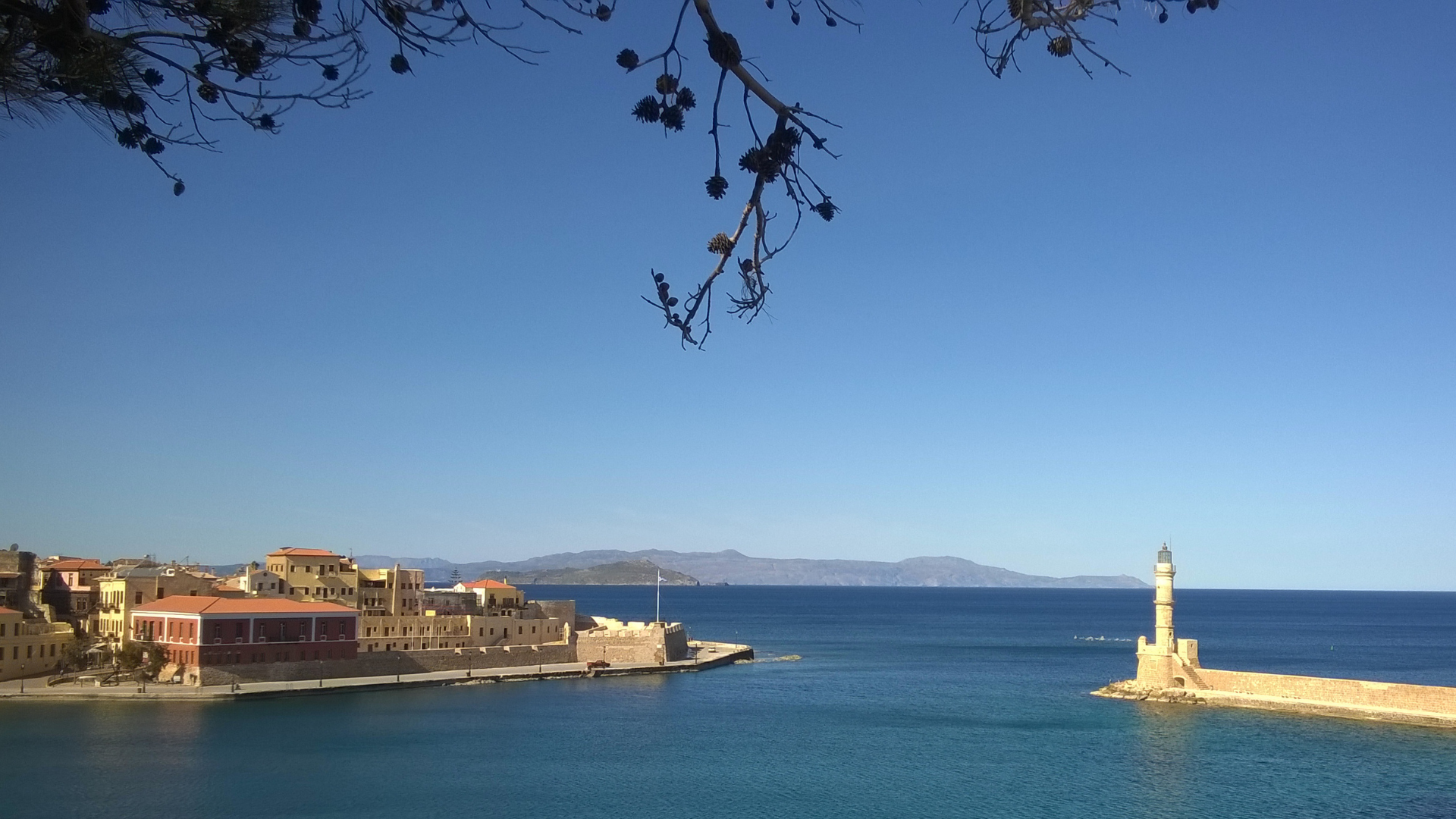
Its elevated position not only provides an incredible perspective of the Firka Fortress, standing firm at the harbour entrance, adjacent the lighthouse, but also serves as a quieter retreat from the city’s bustling streets, during the summer months. While many visitors head straight to the waterfront, this spot will reward those who take the time to explore beyond the well trodden paths.
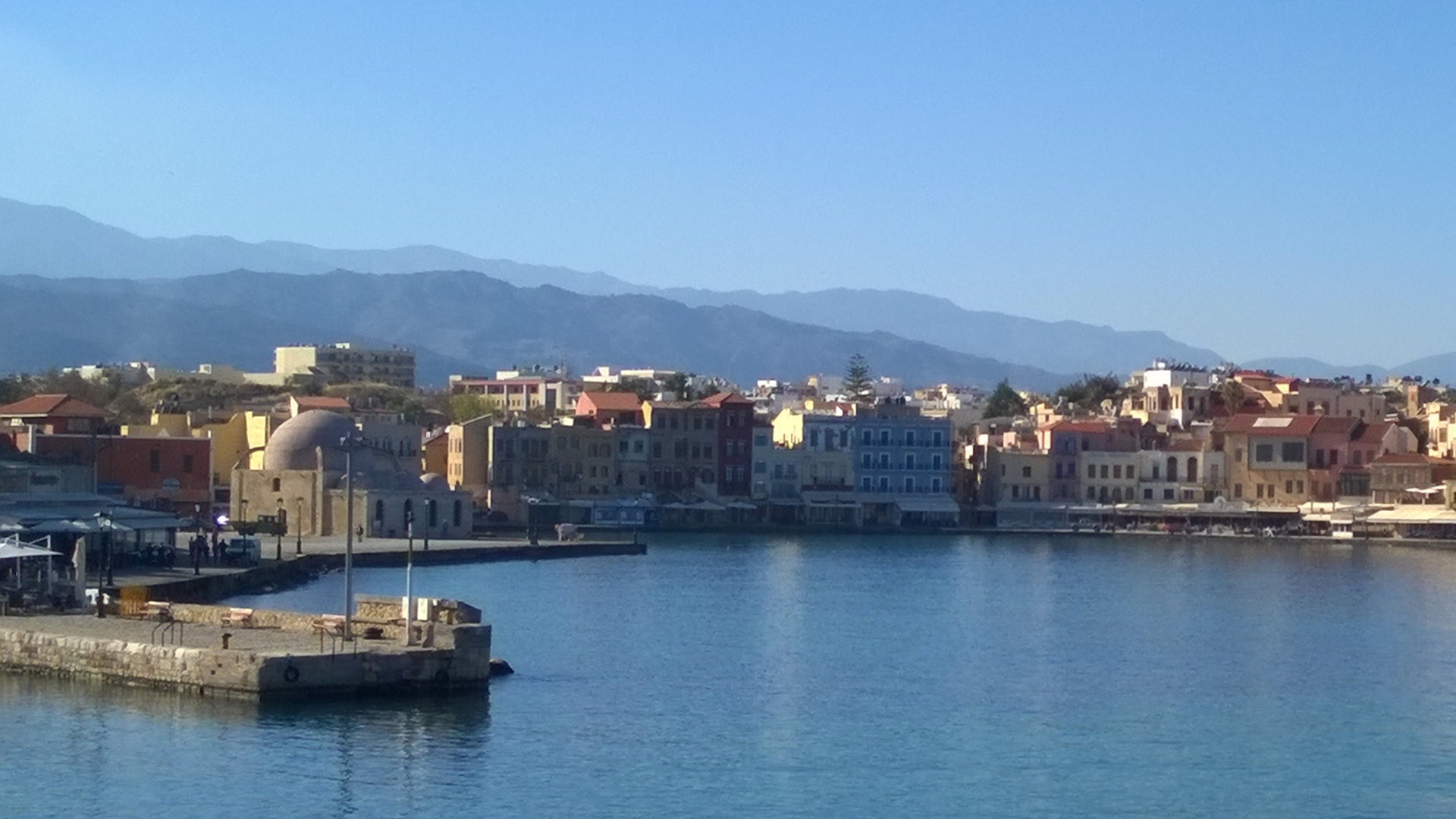
Whether admiring the architectural details, soaking in the atmosphere, or simply enjoying the moment, being here feels like stepping into a living history book, with the city’s ever evolving past. Beyond its historical intrigue, Konaki/Seragio is a place to pause and take in the essence of Chania, a city where past and present coexist.
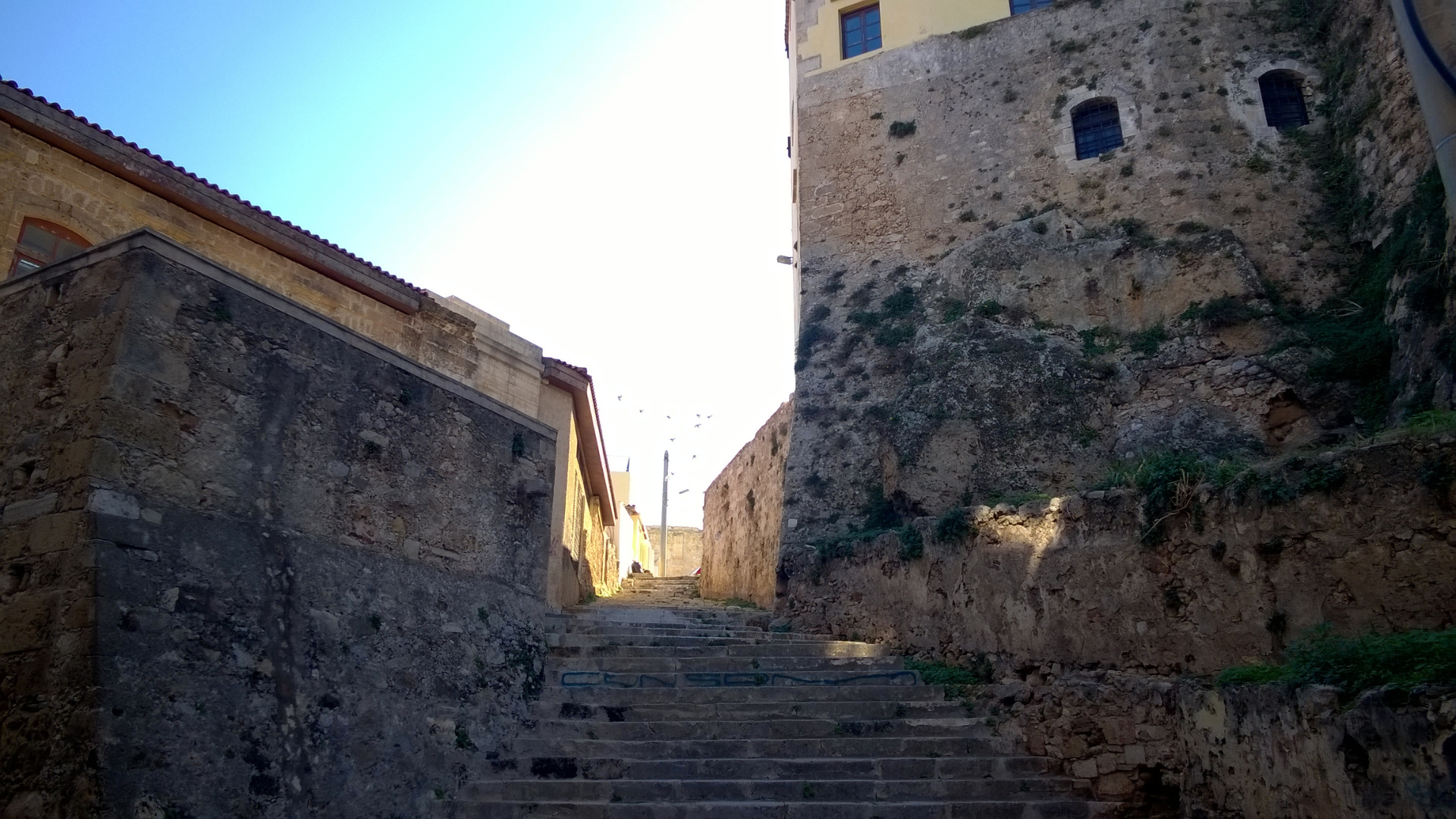
Leaving Konaki/Seragio behind, I follow the ancient stone staircase adjoining Odos Agia Markou, passing remnants of the old Byzantine walls as I descend to the harbourfront.
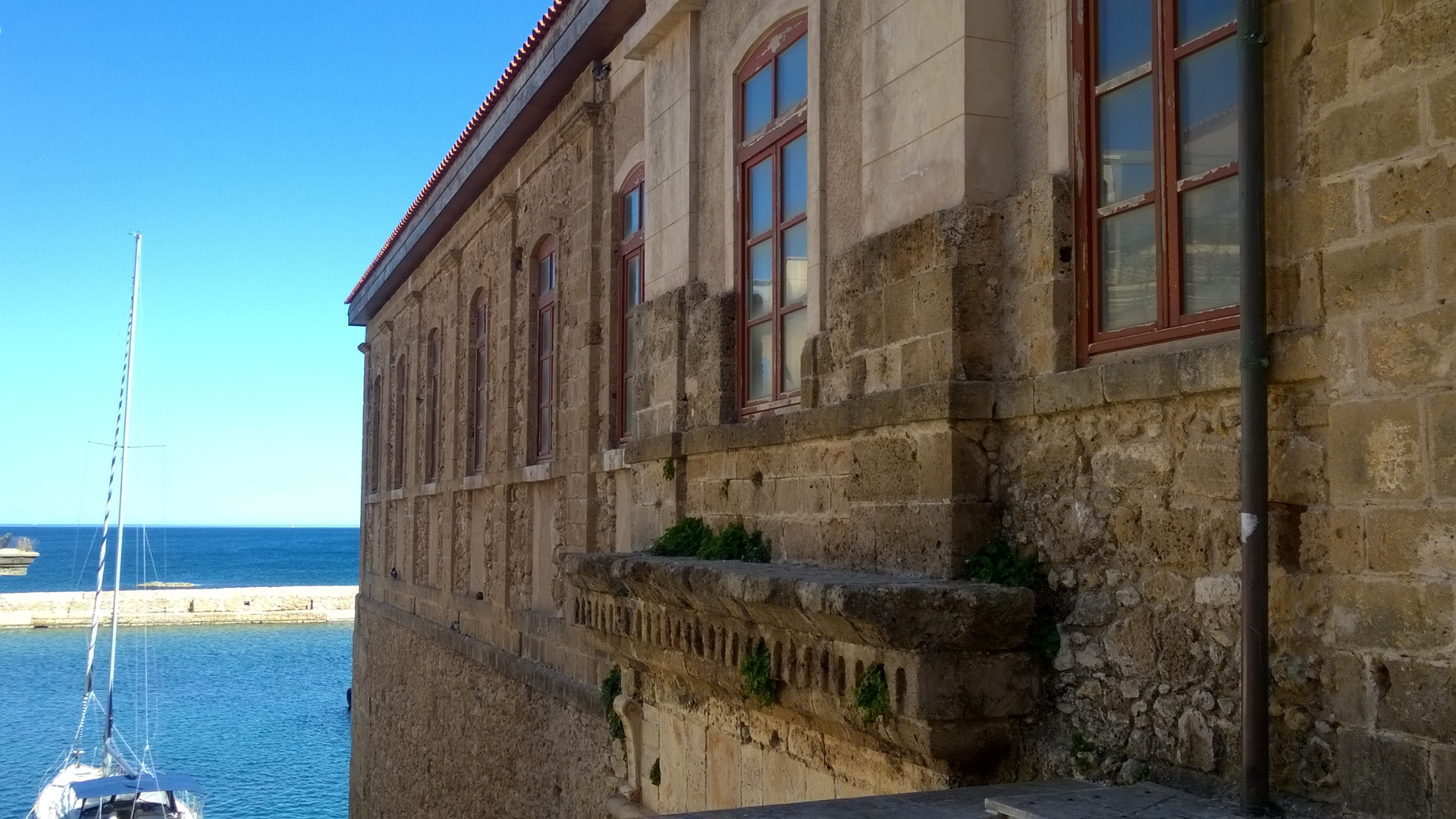
Descending past a side wall of the Megalo Neorio, also known as the Grand Arsenal, an outstanding structure that once formed part of Chania’s Venetian shipyard complex. Built in 1585 as one of twenty three original Neoria, Venetian shipyard buildings, today it stands alone, separate from the remaining seven adjoining arsenals that still remain further along the harbour.
With the arrival of the Ottomans, a second floor was added in 1872. From this period onwards, the building served various roles, housing a school for the Christian community in 1872, becoming a theatre in 1892, served as a public hospital in 1923, and later became Chania’s Town Hall from 1928 to 1941.
During the German invasion, extensive bombing left the structure in ruins, making it unusable for years. Until, restoration work in 2002 breathed new life into the Grand Arsenal, transforming it into the Center of Mediterranean Architecture. Today this beautifully restored building is a vibrant cultural hub, hosting exhibitions, international conferences, and again providing theatrical performances, in addition to workshops, and concerts.
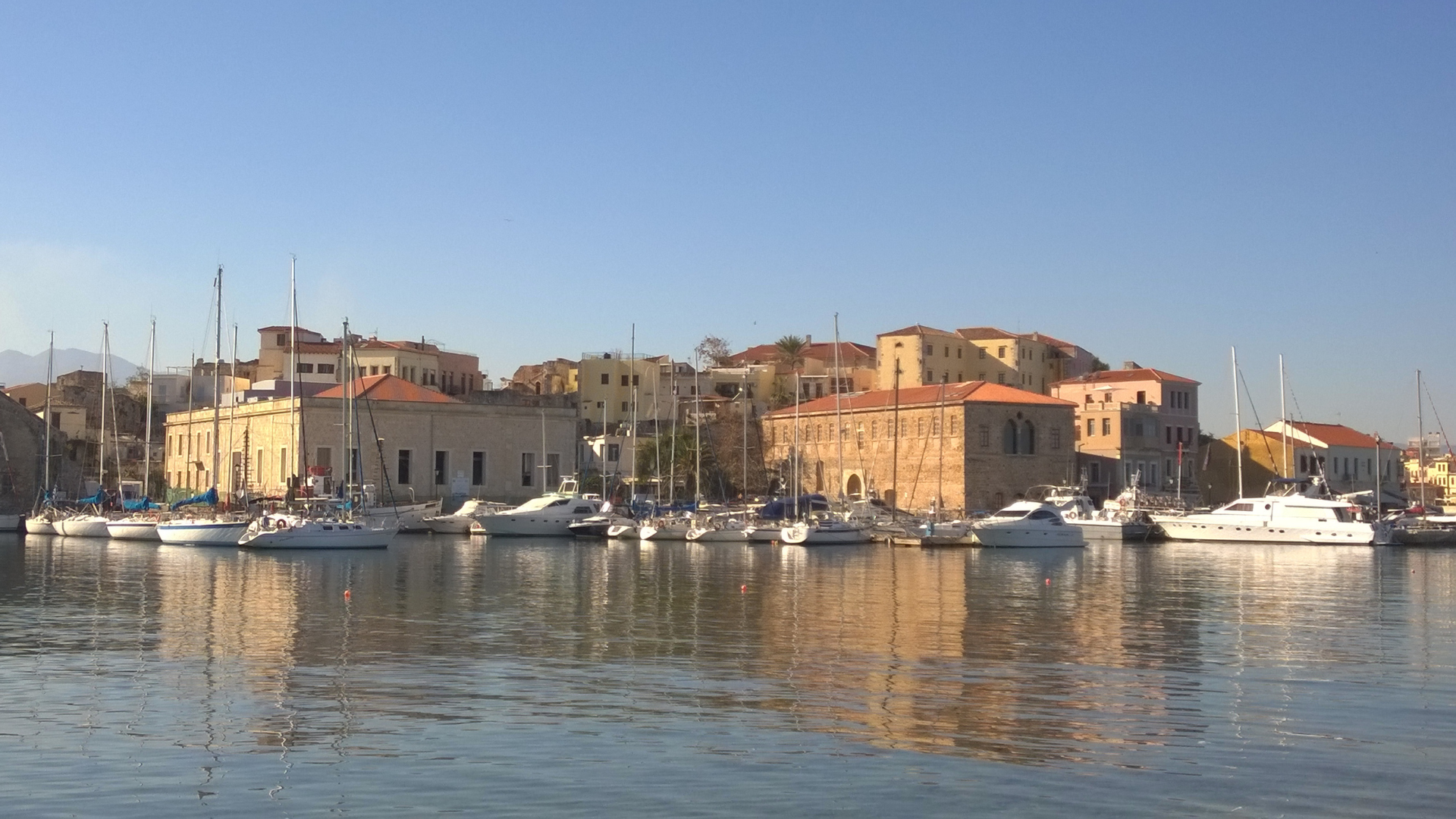
From the Grand Arsenal, I made my way toward the eastern end of the harbour, where a walk along the breakwater wall leads to the Chania Lighthouse, passing the Agios Nikolaos Redan, another of the harbour’s historic fortifications.
Looking back across the harbour, boats lay anchored, and the Grand Arsenal stands in full view, alongside Katexaki Square and the nearby Crete Municipal Regional Theatre.
At this point you can either walk along the breakwater wall, or walk from the northeastern end of the breakwater, where the wall seamlessly connects to the Venetian fortifications, continuing inland to meet the Sabbionara Rampart. Within these eastern walls, stretching from north to south, lies the historic Turkish quarter of Splantzia, while just beyond the wall, the seaside neighbourhood of Koum Kapi unfolds and extends beyond the coastline.
This section of the fortification walls would be for another day, as I chose to walk along the breakwater wall to the lighthouse before continuing along my path of Chania’s harbourfront.
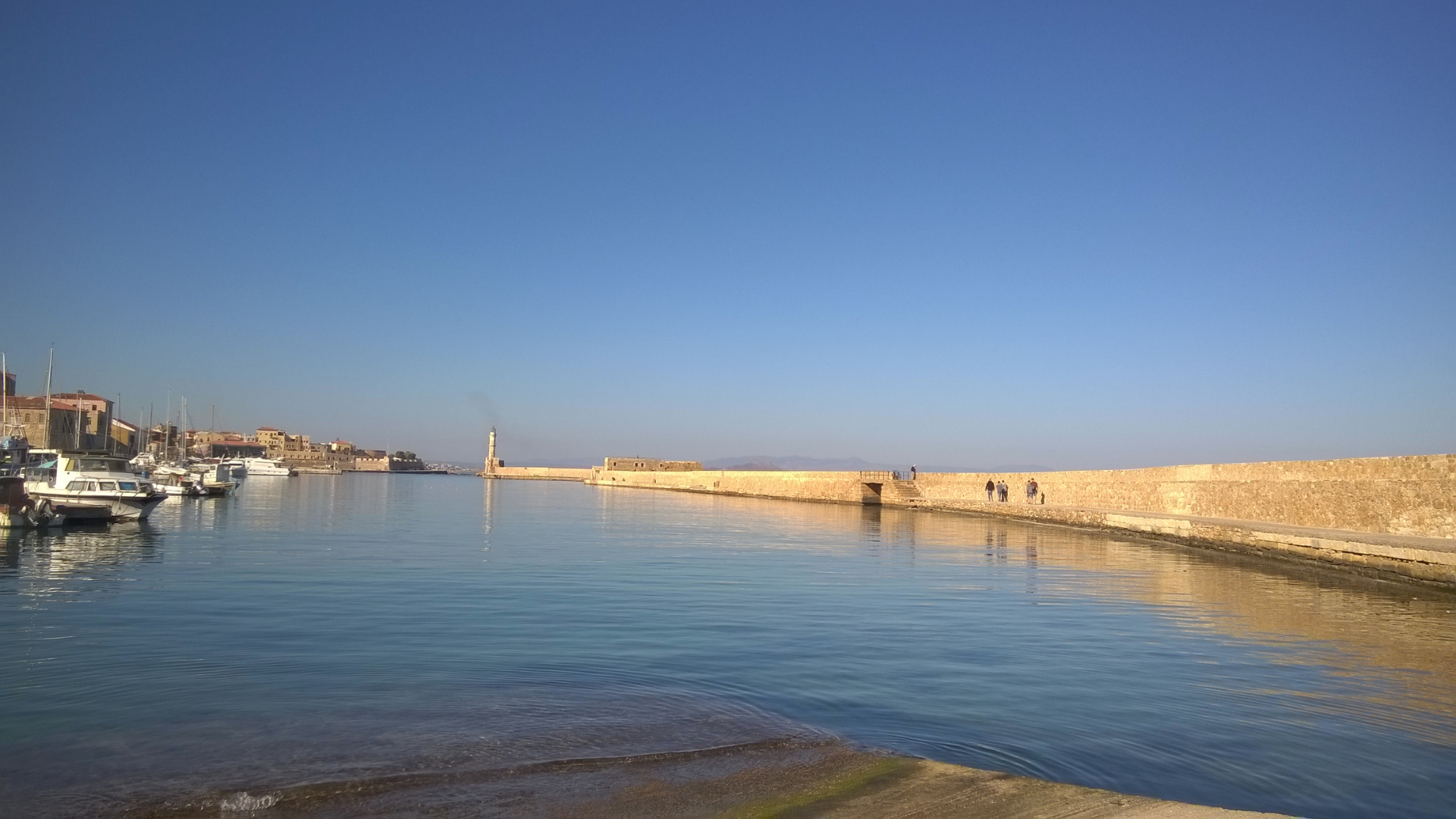
The Venetian built breakwater wall in Chania's harbour extends approx. 570 meters, serving as a protective barrier against waves and, at the time of its construction, provided safe harbour from potential pirate invasions. Construction of the harbour began between 1320 and 1356, with significant enhancements, including the addition of the lighthouse and fortifications, occurring between 1595 and 1601.
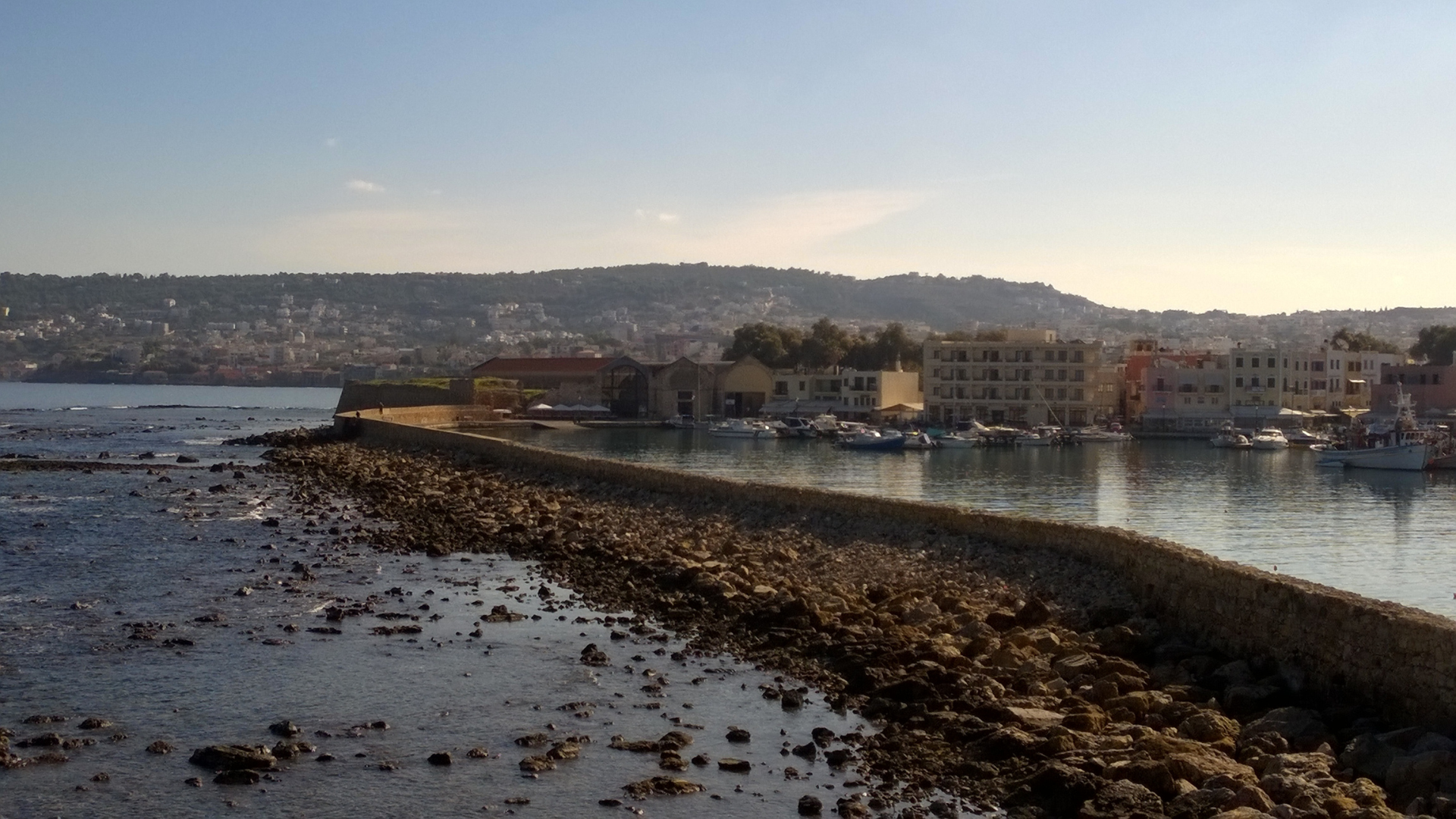
Walking along the breakwater wall offers wonderful views of the northeastern harbour front, against the backdrop of the neighbourhood of Chalepa and beyond to Tabakaria.
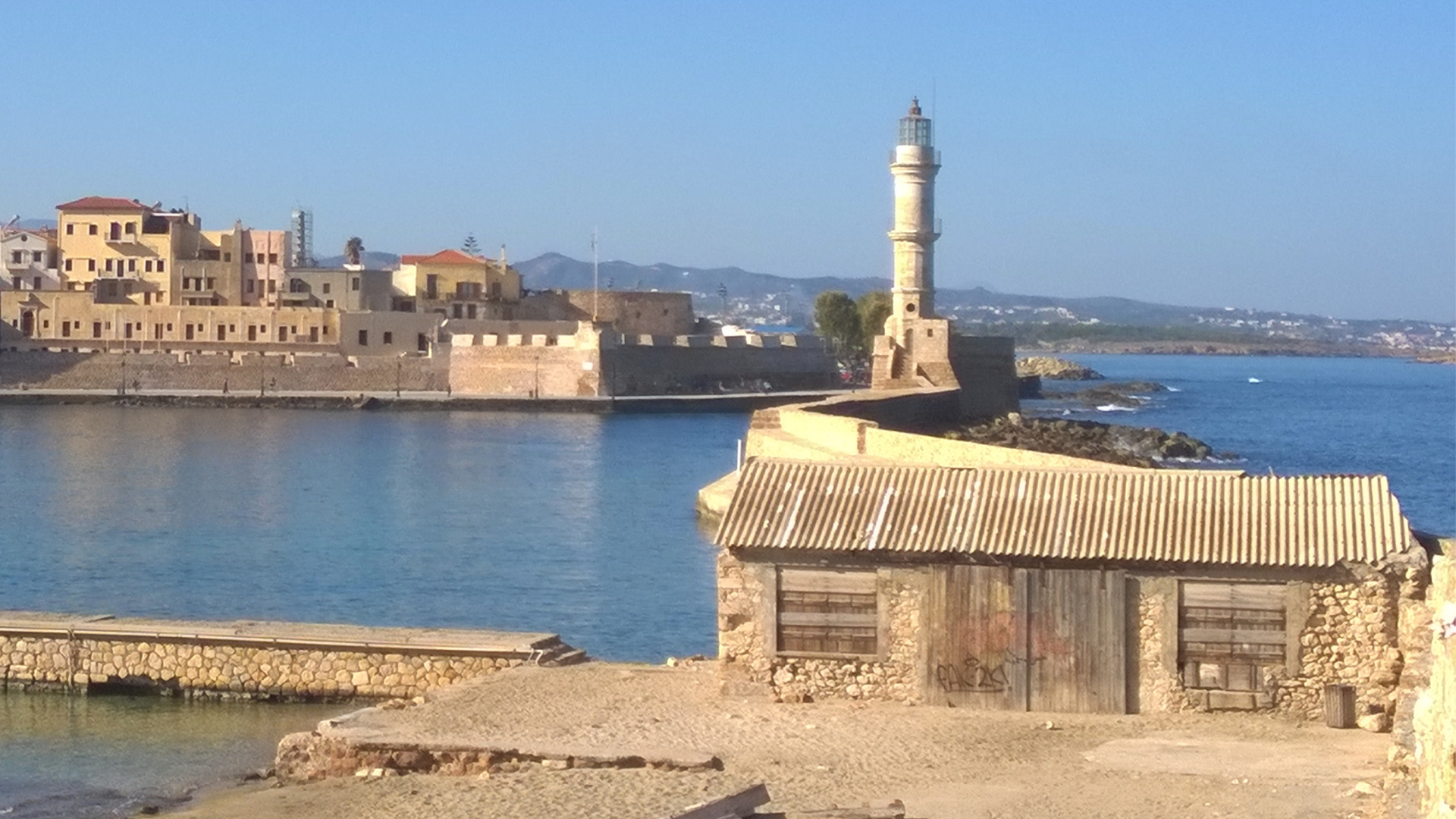
Walking along the breakwater wall, navigating a set of worn stone stairs along the way, I found myself at the Agios Nikolaos Redan, before continuing onto the lighthouse and then turning back. Also, built during the Venetian period, Agios Nikolaos Redan was designed as a defensive stronghold, providing a strategic advantage with its ability to create overlapping vantage points to fire against approaching enemies, reinforcing Chania’s maritime defences, and forming a crucial link in the city’s protective network.
Staying awhile to admire Chania’s rich architectural designed buildings where history unfolds through a blend of Venetian, Ottoman, and neoclassical architecture, alongside more modern buildings that now line the harbour's waterfront.
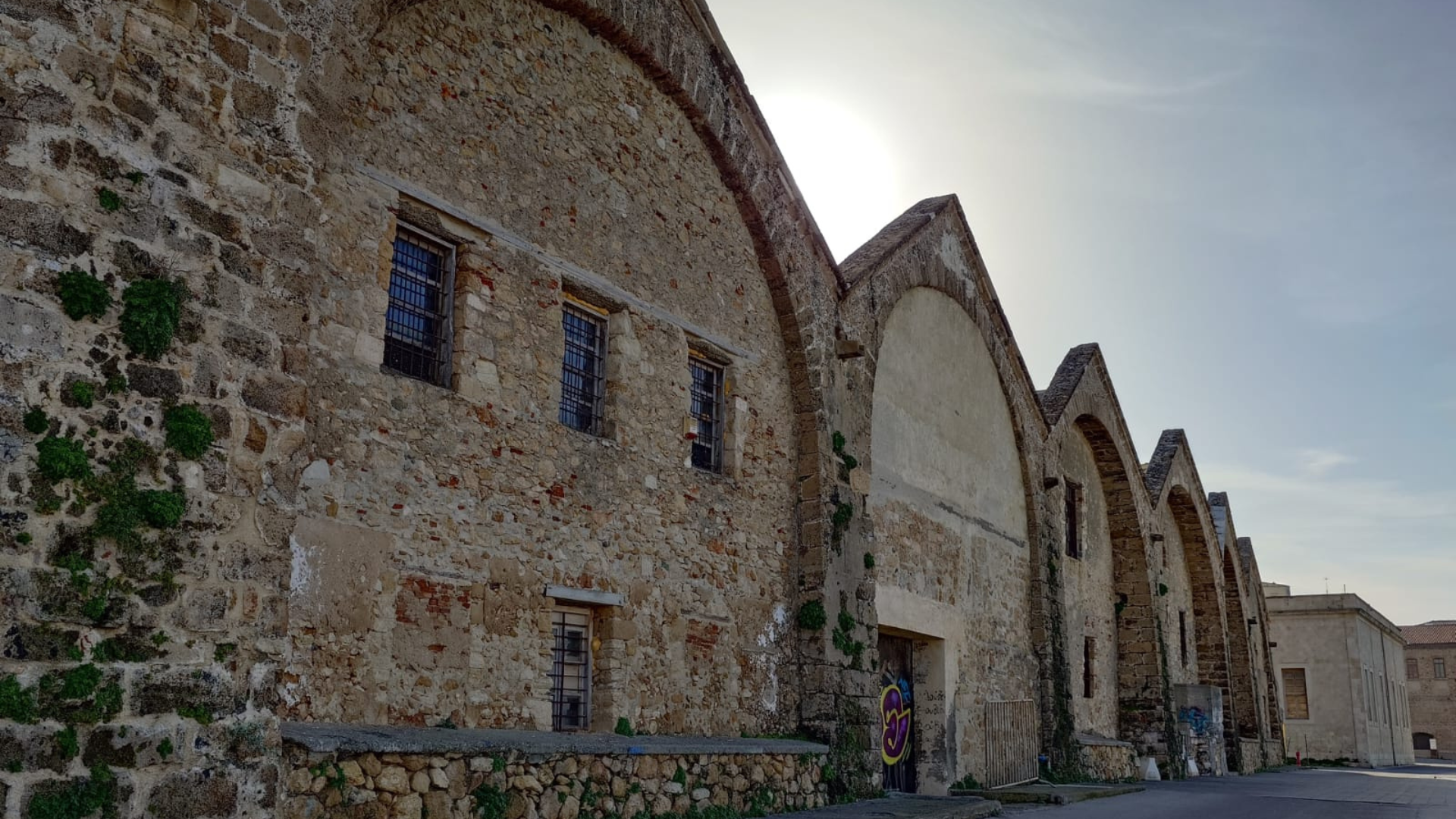
Back on the harbourfront, I passed the remaining seven Neoria shipyards, their weathered stone structures bearing the marks of time, yet still standing as a testament to Chania’s maritime significance during the height of Venetian rule.
The shipyards once served as a vital hub for the Venetian fleet, which dominated Mediterranean trade. Constructed for shipbuilding and repairs, these approximately 50metre long and 9metre high structures were designed with high vaulted roofs, each accommodating a single vessel. Originally open to the sea, they allowed ships to dock directly inside.
However, the construction of the breakwater wall in the early 20th century permanently closed off sea access, leaving these timeworn relics as enduring symbols of Chania’s seafaring past.
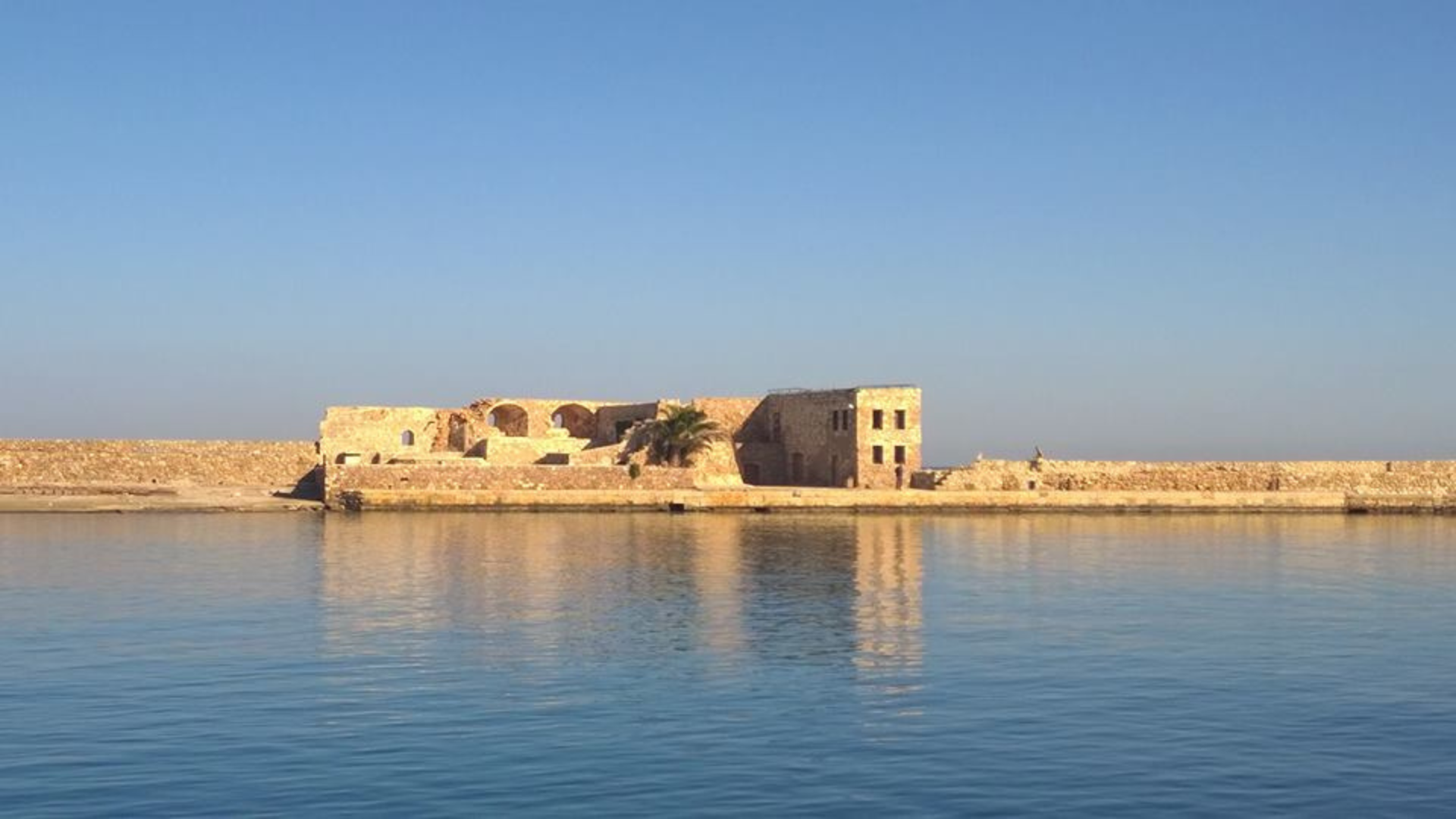
As I continued along the harbourfront, the full view of the Agios Nikolaos Redan came into sight.
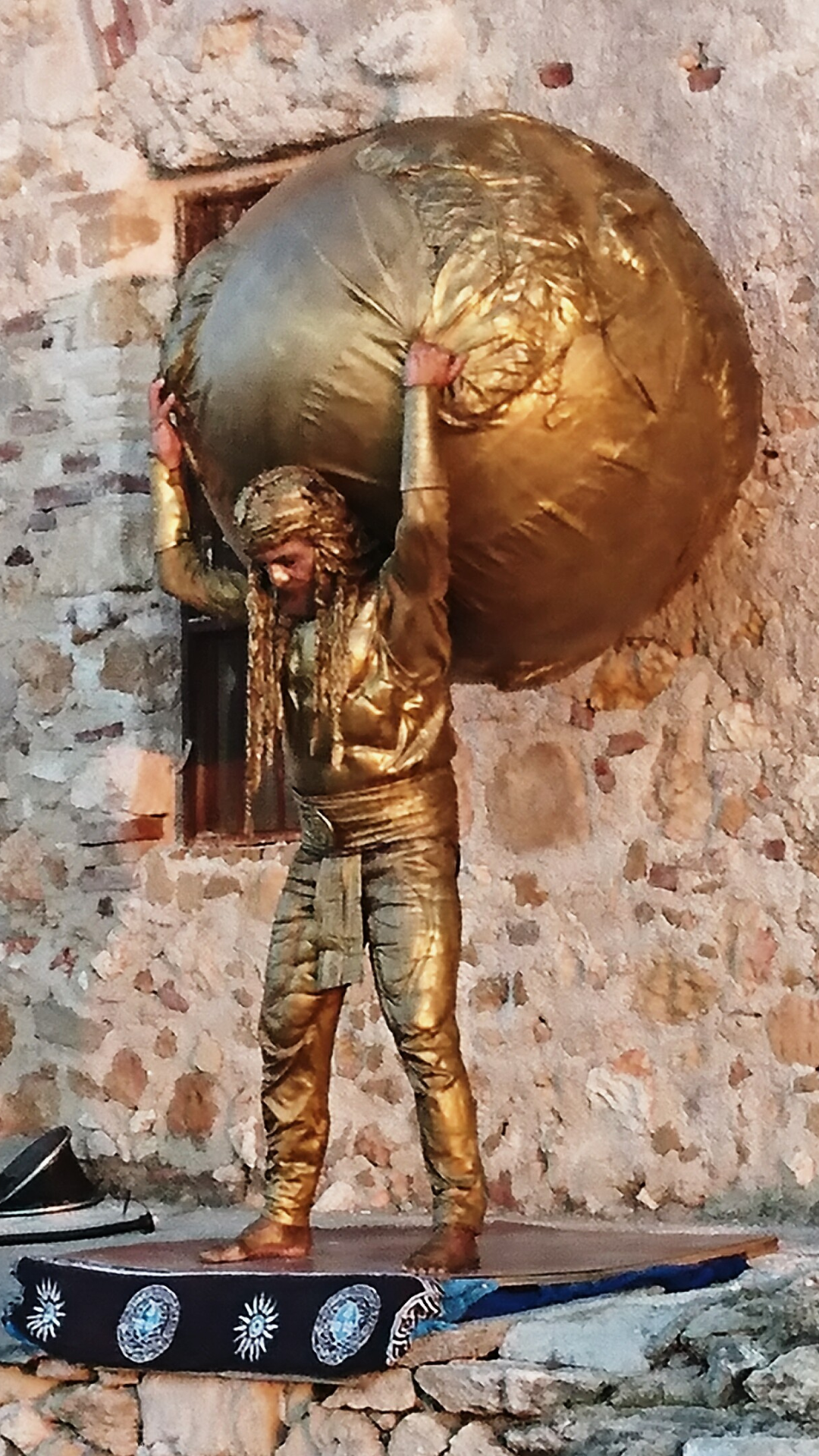
During the summer months, not only is the harbour alive and busy with tourists, but you may also catch sight of Atlas, though not the Titan of Greek mythology himself, but a striking street performer bringing his legend to life.
Covered entirely in gold, from his clothing to his skin and long, textured hair, he stands on a small stage, seemingly straining under the immense golden sphere resting on his shoulders.
A theatrical representation of endurance and myth, he evokes the image of Atlas bearing the weight of the world, blending ancient symbolism with the vibrant atmosphere of Chania’s historic harbour.
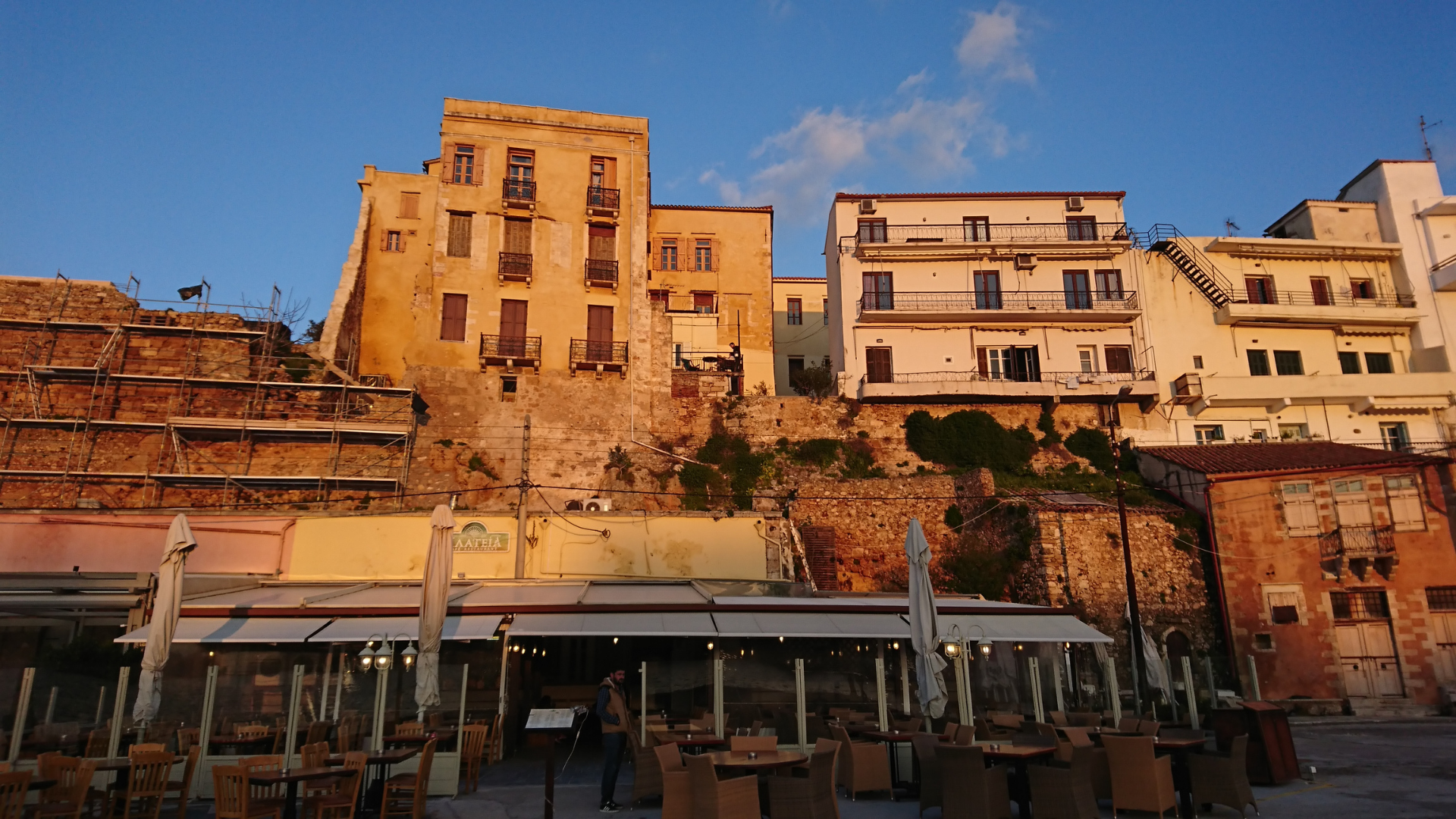
It’s now late afternoon, and time for something to eat. The Plateia Taverna, set against the backdrop of the original Byzantine inner city walls of Kastelli Hill, glows in the warm late afternoon light, an inviting spot to sit, be, and enjoy a meal.
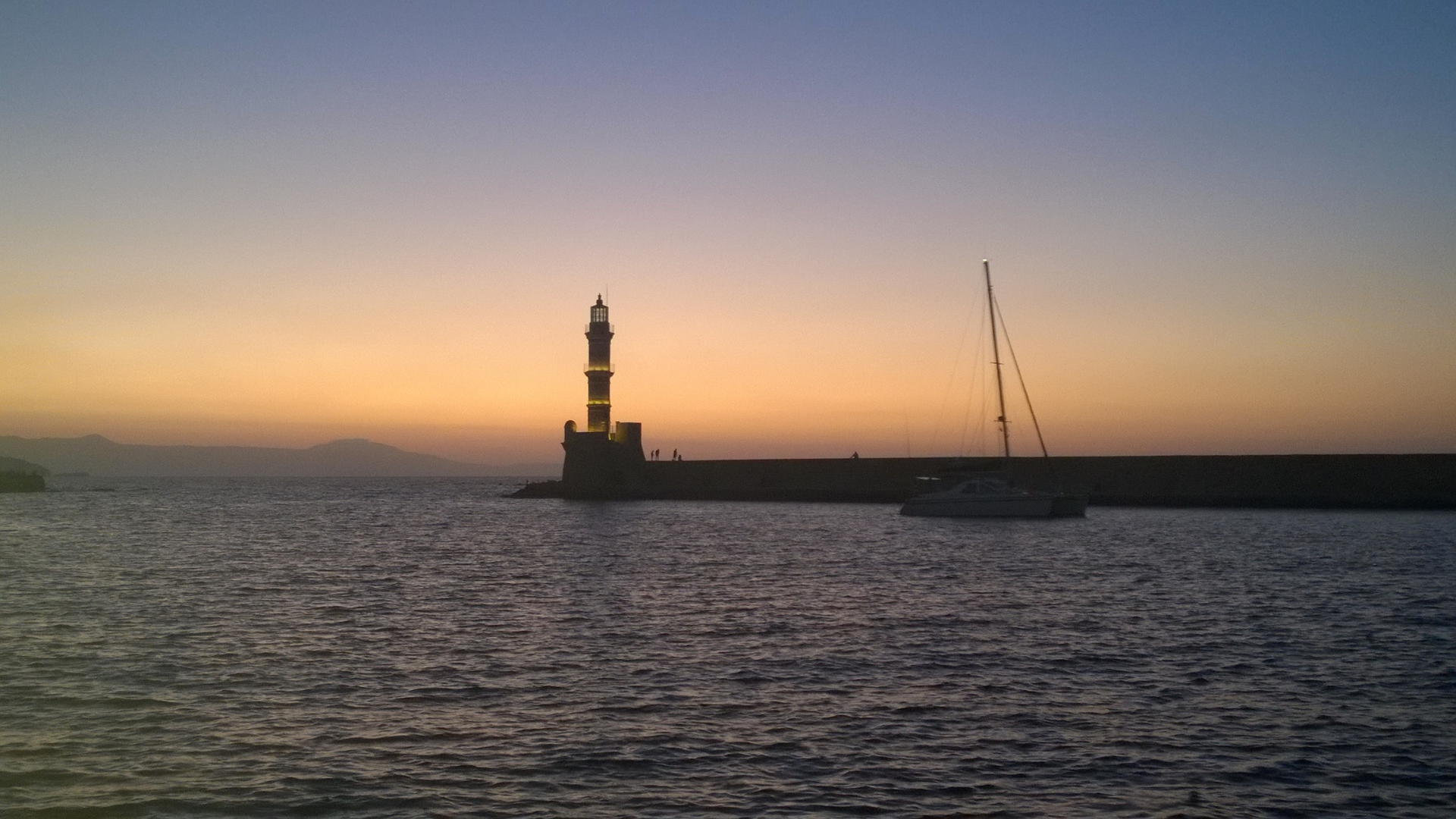
Opposite, the Chania Lighthouse is bathed in a golden glow as the sun sets across the horizon.
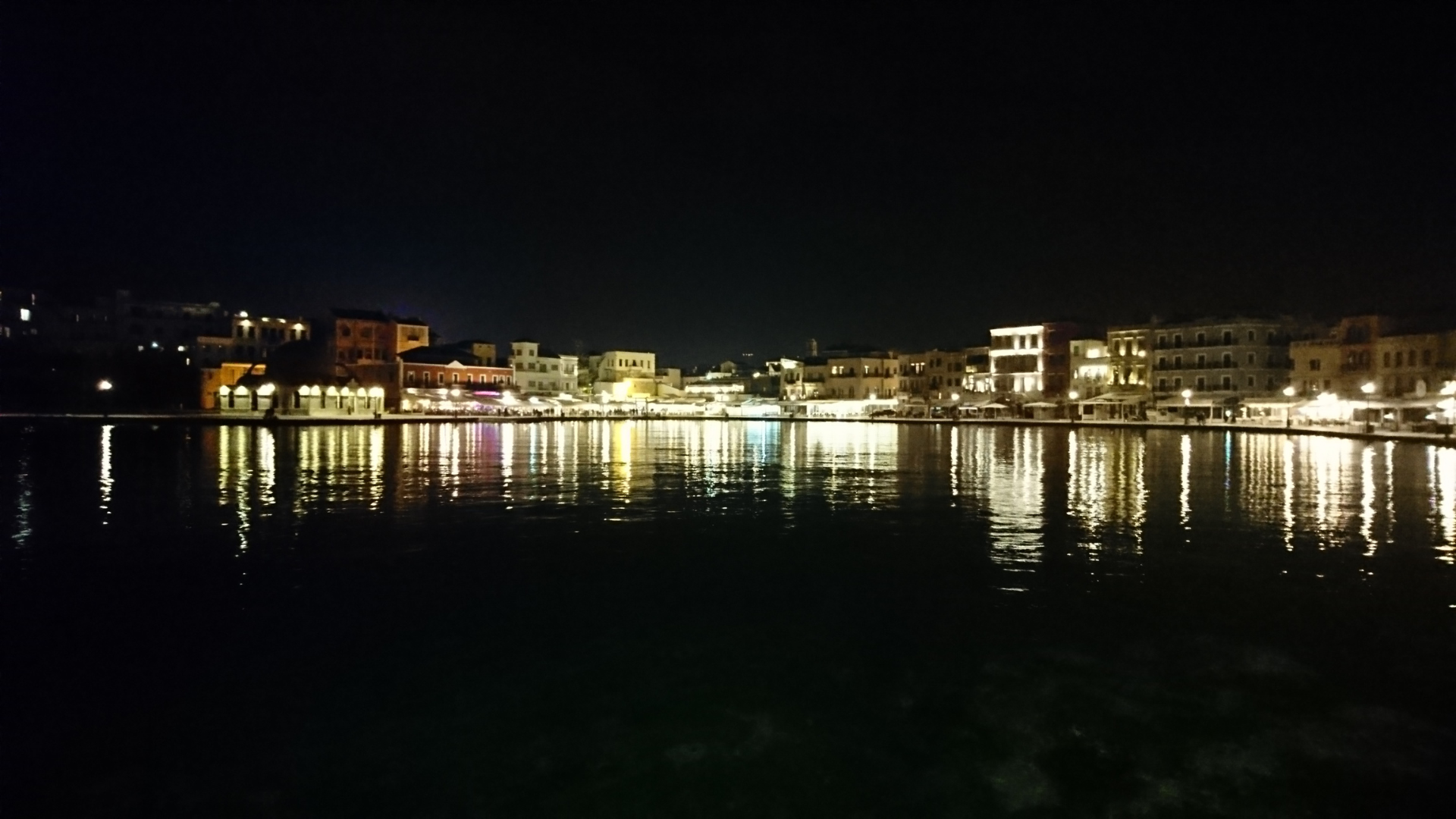
From the early start too my day in the seaside beach of Nea Chora, through the lanes of Chania’s Venetian harbour, and to the golden hues of sunset reflecting across the water, today has been one of connection, exploration, and deep reflection. Wandering through the atmospheric lanes, I encountered echoes of history, moments of cultural exchange with locals, and the ever present celestial influences guiding my journey.
Chania had revealed its magic cloaked in charm, as I connect with a powerful presence of Pluto and Mars, energies that have drawn me into encounters with those from a vastly different culture and perspective. Integrity and duplicity have intertwined in ways I couldn’t yet fully grasp, but as time would tell, these connections would alter the course of my life forever. Powerful allies, bringing rewards, challenges and moments of frustration, yet through it all the pursuit of balance and harmony enriched my experience, making every twist in the journey worthwhile.
Jupiter, though just within bounds, offered its quiet guiding hand, expanding possibilities, dissolving limitations, and illuminating the path to achieving my heartfelt wishes and dreams.
However, perhaps what is most profound has been the karmic pull of my North Node in harmony with my Black Moon Lilith placement. Lilith represents the primal, untamed force within us all, and speaks to a reclamation of self, unapologetic and true. Together this astrological aspect suggests that by fully embracing my authenticity, I step into my soul’s purpose. Collectively, these placements have unlooked doors to both my personal and spiritual evolution. This was more than just a day; it was a step along a destined path. As night fall, the harbour lights shimmer over the water, a quiet reminder of how deeply Chania has woven itself into my life.
The following week, I found myself back in Chania, to roam through the clustered intertwining lanes, exploring within the eastern walls, of Splantzia, a neighbourhood steeped in its own storied past, and the footsteps and forgotten stories etched in history. (Link to previous blog: Chania’s Eastern Walls: Fortifications, Footsteps, and Forgotten Stories.)
After my initial four months here, I returned once more. And for more than a decade, Crete has been my home.
In this Soul Travel blogs of my journey throughout Greece and Her Islands, I explore the beautiful Old Town and harbour city of Chania on the island of Crete, where Venetian elegance, Ottoman whispers, and Cretan warmth intertwine.
Strolling through its maze of narrow lanes, I learn the tales etched into centuries old stone walls, through heartfelt conversations with locals, enjoyed Cretan cuisine in idyllic settings, and take in the ever changing light reflecting upon the harbour’s storied waters.
See you soon,
Consider signing up to receive new Soul Travel blogs, travel reflections, and astrocartography insights as new destinations are shared.

✨ If this story resonated with you, you are warmly invited to continue the journey in a way that feels aligned with you.

✨Explore personalised insights through consultations

✨ Begin with ‘The Journey’ Orientation

✨ Listen to Destined Places podcast stories
✨ Save and share Soul Travel inspiration on Pinterest