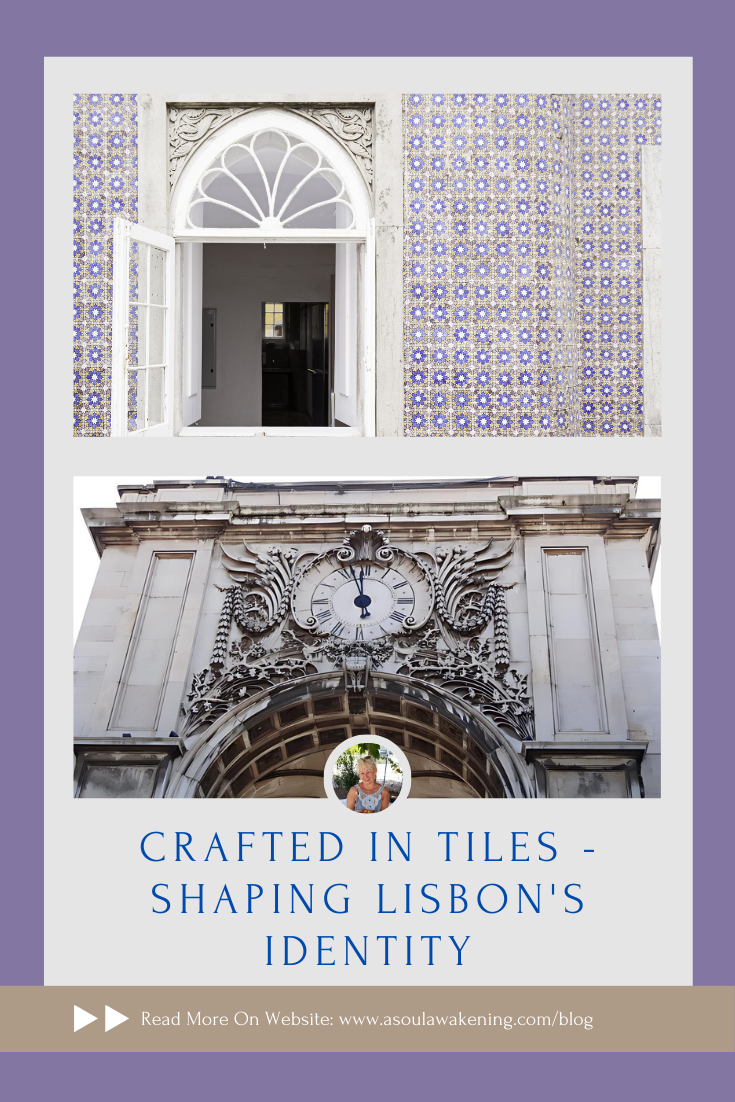
Crafted in Tiles | Shaping Lisbon’s Identity
Travelling by bus and crossing the Spanish/Portuguese border at the towns of Tui, Spain and Valença, Portugal, is marked by the 19th century bridge over the River Minho. I’m on my way to the Portuguese capital of Lisbon.
Lisbon is one of the oldest cities in the world, and both the westernmost large city in Europe, and the second oldest city (after Athens), predating many other modern European cities by centuries. With Phoenicians settlement since as early as 1200BC.
Julius Caesar made it a municipium (the Latin term for a town or city) known as Felicitas Julia, adding to the name Olisipo, also spelt as Olissipo. Ruled by a series of Germanic tribes from the 5th century, it was captured by the Moors in the 8th century. In 1147, the Crusaders reconquered the city and since then it has been a major political, economic, and cultural center of Portugal.
Arriving in the capital mid evening amidst the hustle and bustle of a busy city bus interchange, there are many people going about the evening. Finding a taxi and making my way to pre-booked accommodation in the Estrela district of the city.
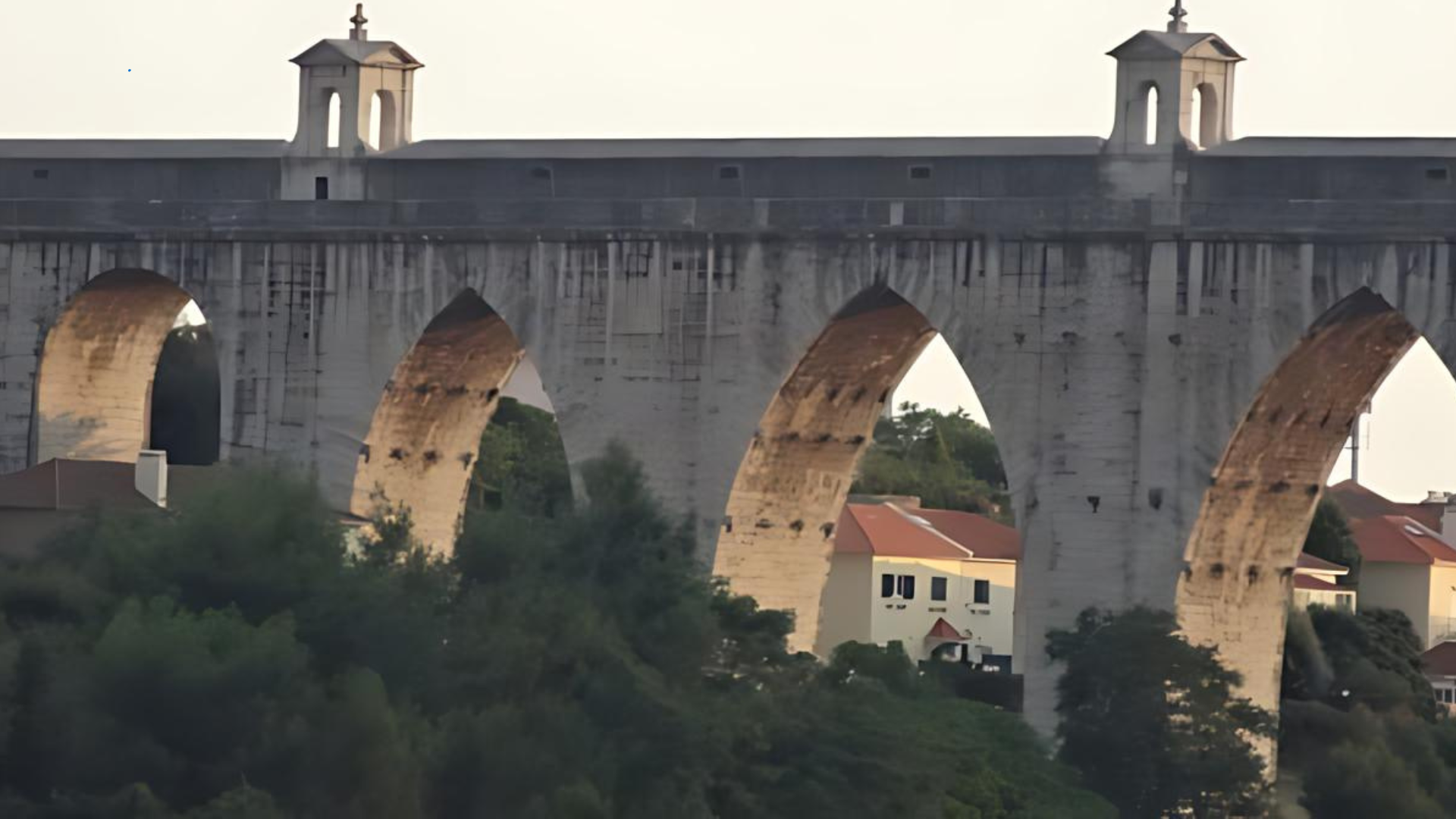
Waking next morning and opening the curtains, to view of one of Lisbon’s historic landmarks. The morning sun creating a warm glow on the Aqueduto das Águas Livres – Aqueduct of the Free Waters, built between 1731 – 1799 that was a vast system for capturing and distributing fresh drinking water to the whole city by gravity.
Considered as a masterpiece of hydraulic engineering from the Baroque and neo-classical period. The aqueduct withstood the 1755 earthquake and was declared a National Monument in 1910 and ceased operation in the 1960s to carry water for human consumption. Comprising a network of canals that extends to approx. 58km, starting in the water springs of Aguas Liveres, nestled in the Serra de Sintra – Sintra Mountains northwest of Lisbon. The main 14km stretch of 21 magnificent arches run through the Alcântara district of the city.
I am greeted by friendly and helpful staff at the front reception that provided me with brochures, of must see and do ideas in and around the city heart. Along with a ‘must’ visit to Sintra Castle and a ‘must’ try the traditional pastel de Nata – Custard Tart.
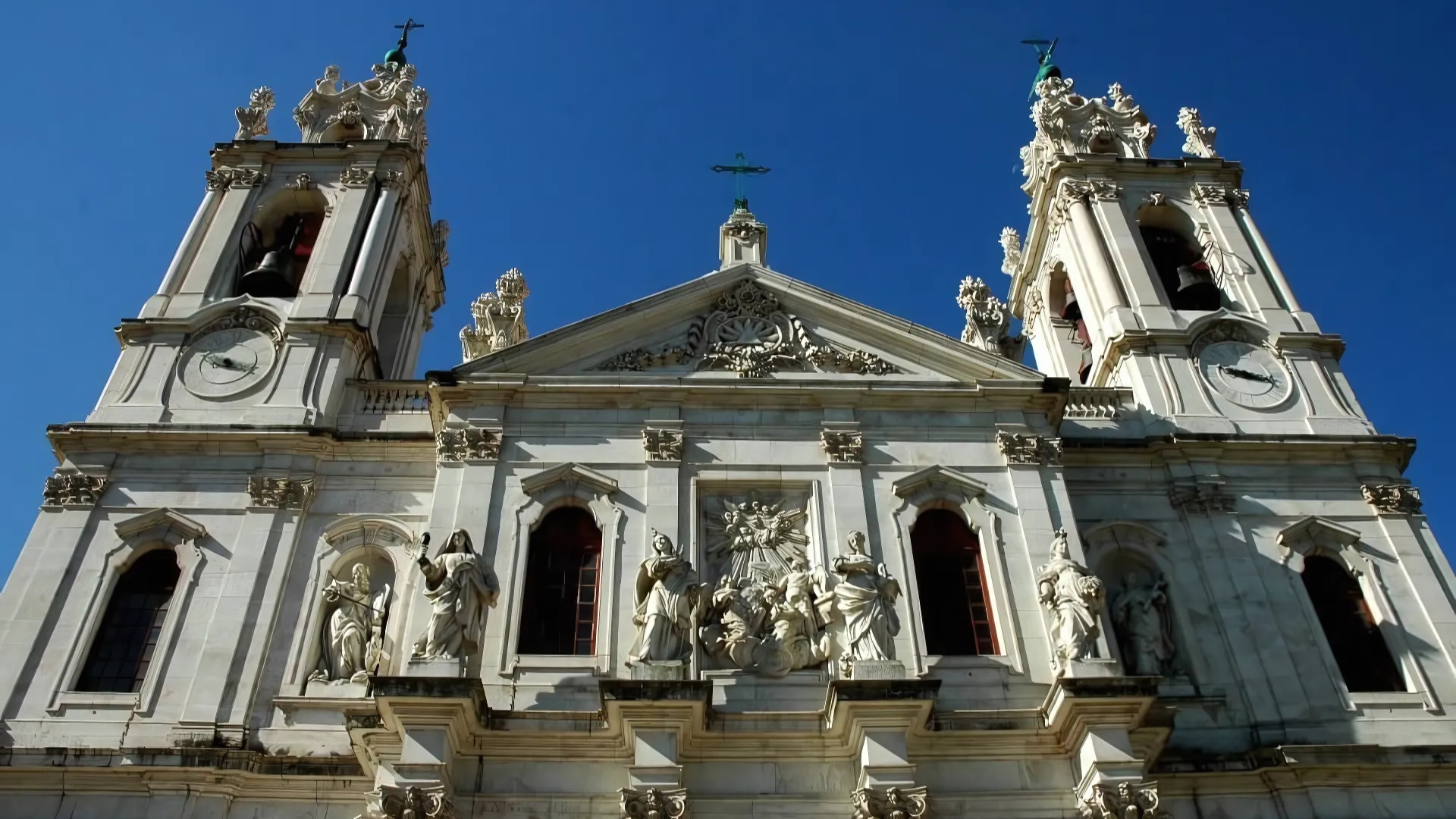
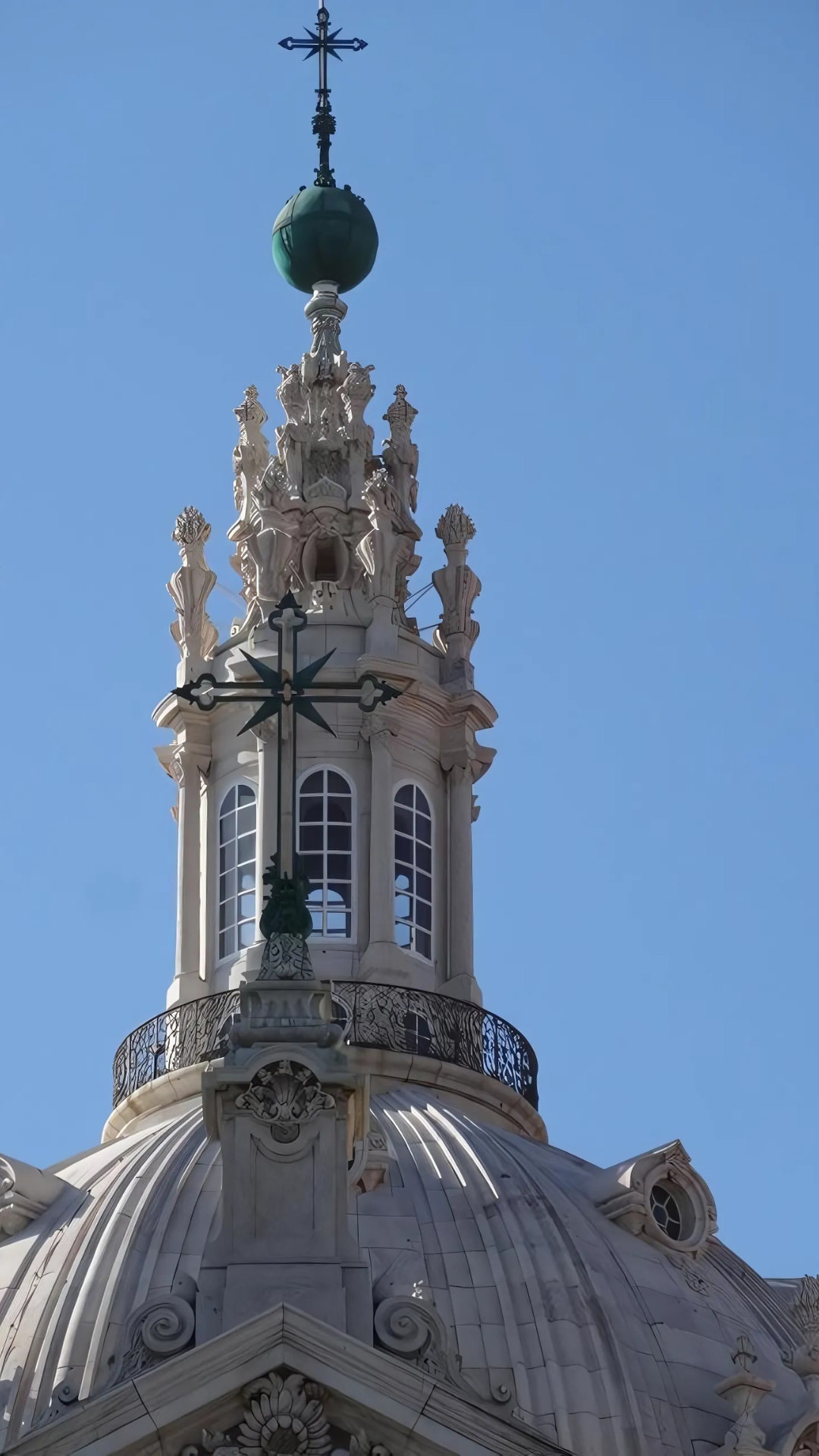
Walking outside to a crisp autumn day, I make my way to the tram stop on the corner that will take me into the city centre and the Praça do Comércio. To my delight, I see the ornate rococo (style of architecture that originated in France) domed roof of the 18th century Braque Basilica da Estrela – Basilica of the Star, also known the Real Basílica e Convento do Santíssimo Coração de Jesus – Royal Basilica and Convent of the Most Sacred Heart of Jesus is a minor basilica and historic Carmelite convent and one of the finest churches in Portugal.
The beautifully ornate Basilica was built as a religious commitment by Queen Mary I of Portugal; the first monarch to rule over all of what is today considered as Portugal and Brazil following the birth of her son and heir to the Portuguese throne.
Holding true to her commitment, the Queen commissioned the building of the Basilica in 1761 shortly after the birth of her son. Sadly, her son José – Prince of Brazil died in 1788 at age 27, two years before the completion of the Basilica of the Star. The grieving Queen was buried in the basilica dedicated to her son, 28 years later.
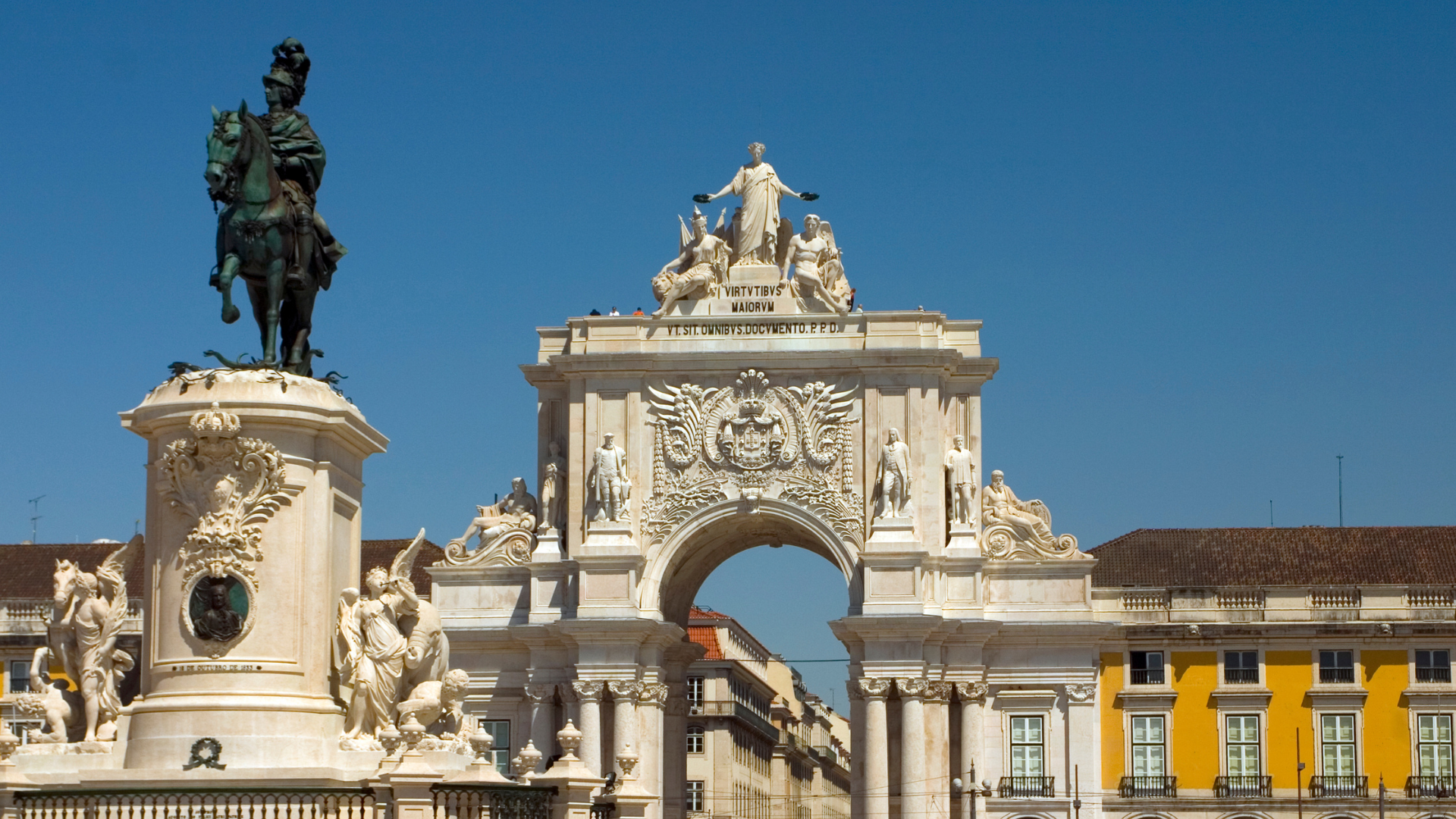
A traditional tram No. 28 takes me to the Praça do Comércio – Commerce Square located in the city centre, situated near the banks of the Tagus River. The square is still commonly known as Terreiro do Paço – Palace Square, being the location of the Paços da Ribeira – Royal Ribeira Palace until it was destroyed by the 1755 earthquake.
The Commerce Square is a grand square with brightly coloured buildings along three sides and a central statute of King José I. In the northern side of the square lies the Rua Augusta Arch – Triumphal Arch, designed to symbolise the city’s recovery following the devastating 1755 earthquake that killed tens of thousands of people.
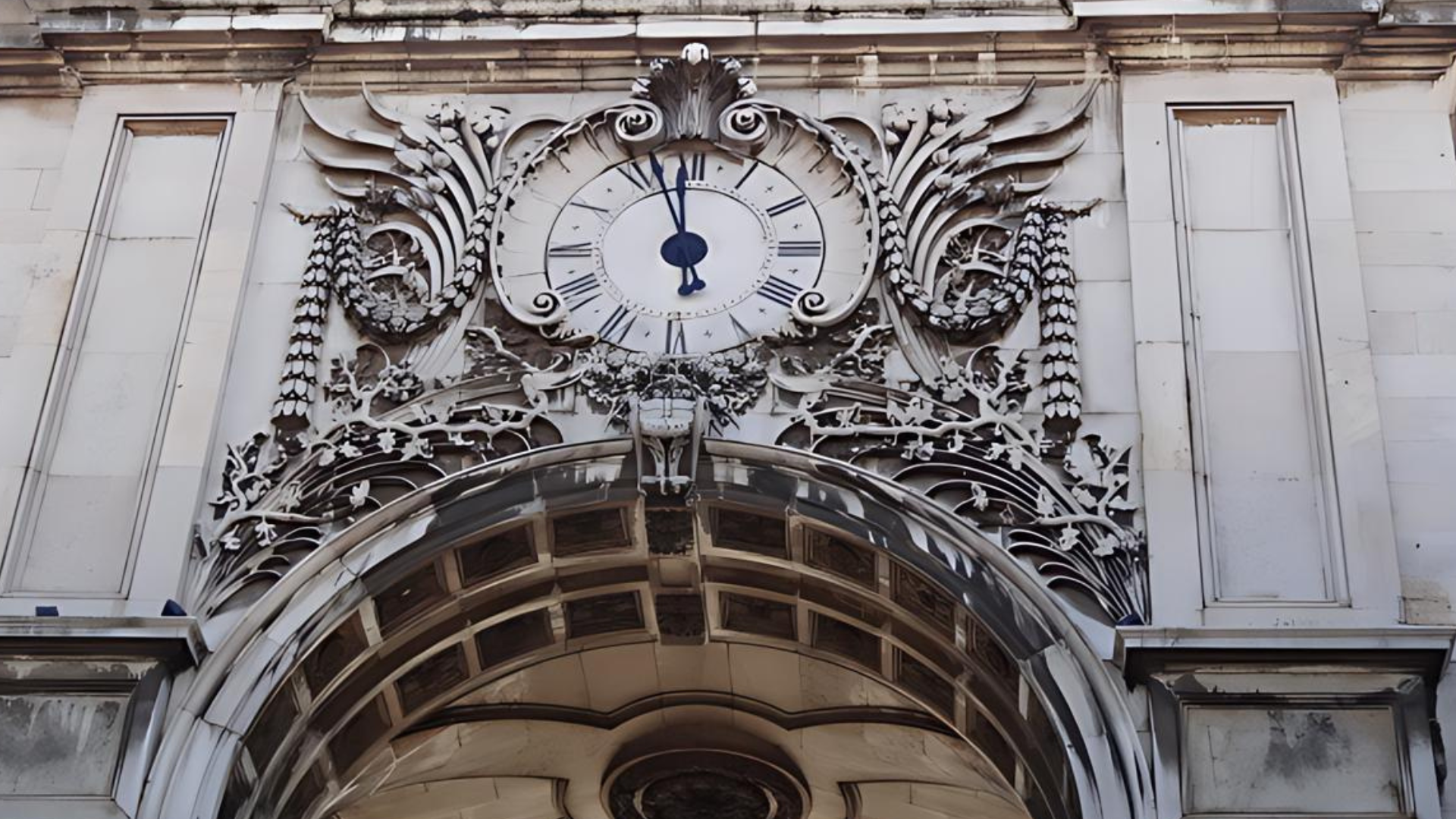
Approaching the Triumphal Arch, your eyes meet with the intricately designed filigreed stone relief clock.
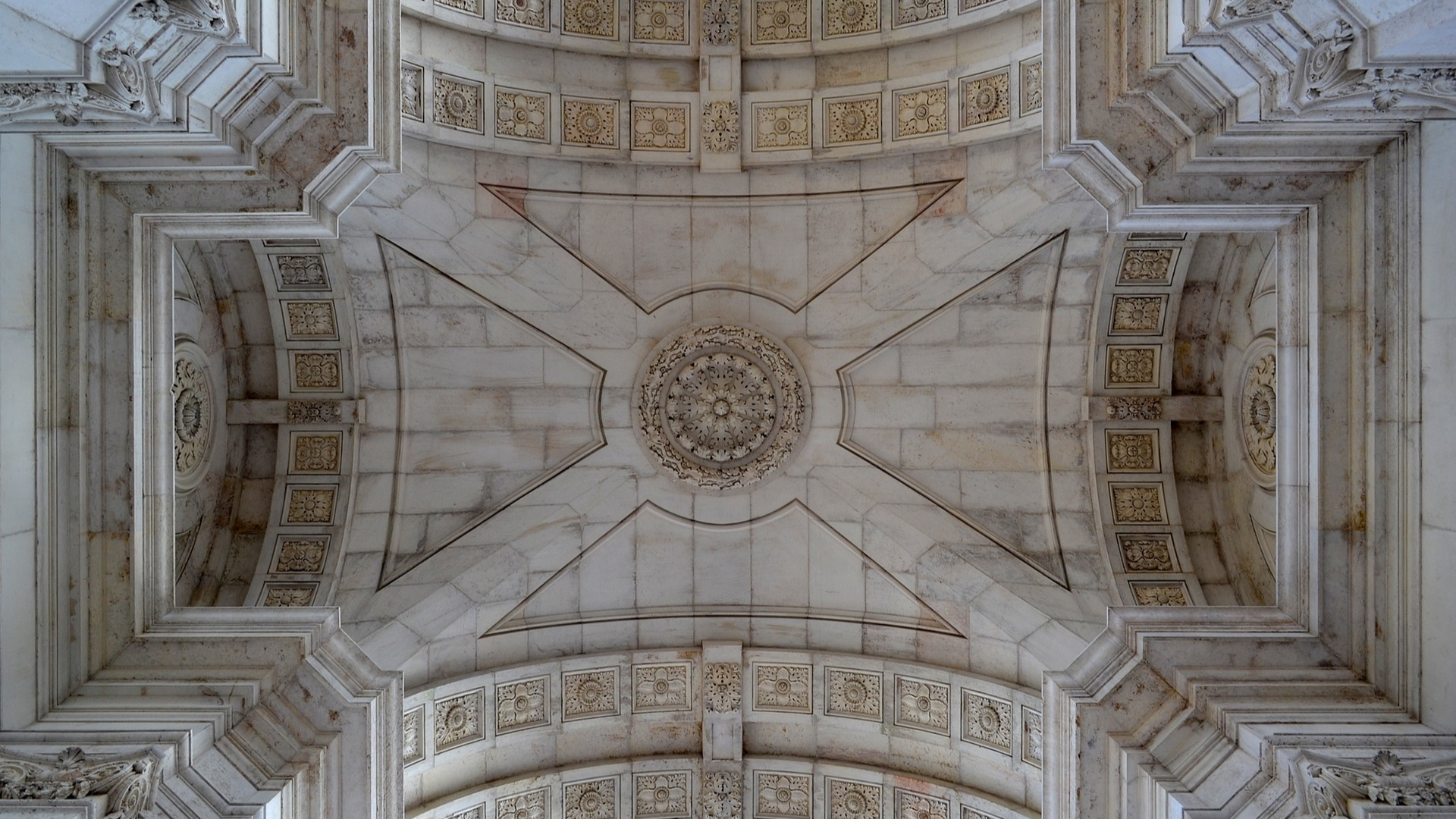
While walking through the arch and looking up your eyes capture the exquisite unbending lines that curve the arch entrance symbolising the entryway to the sea and to the city.
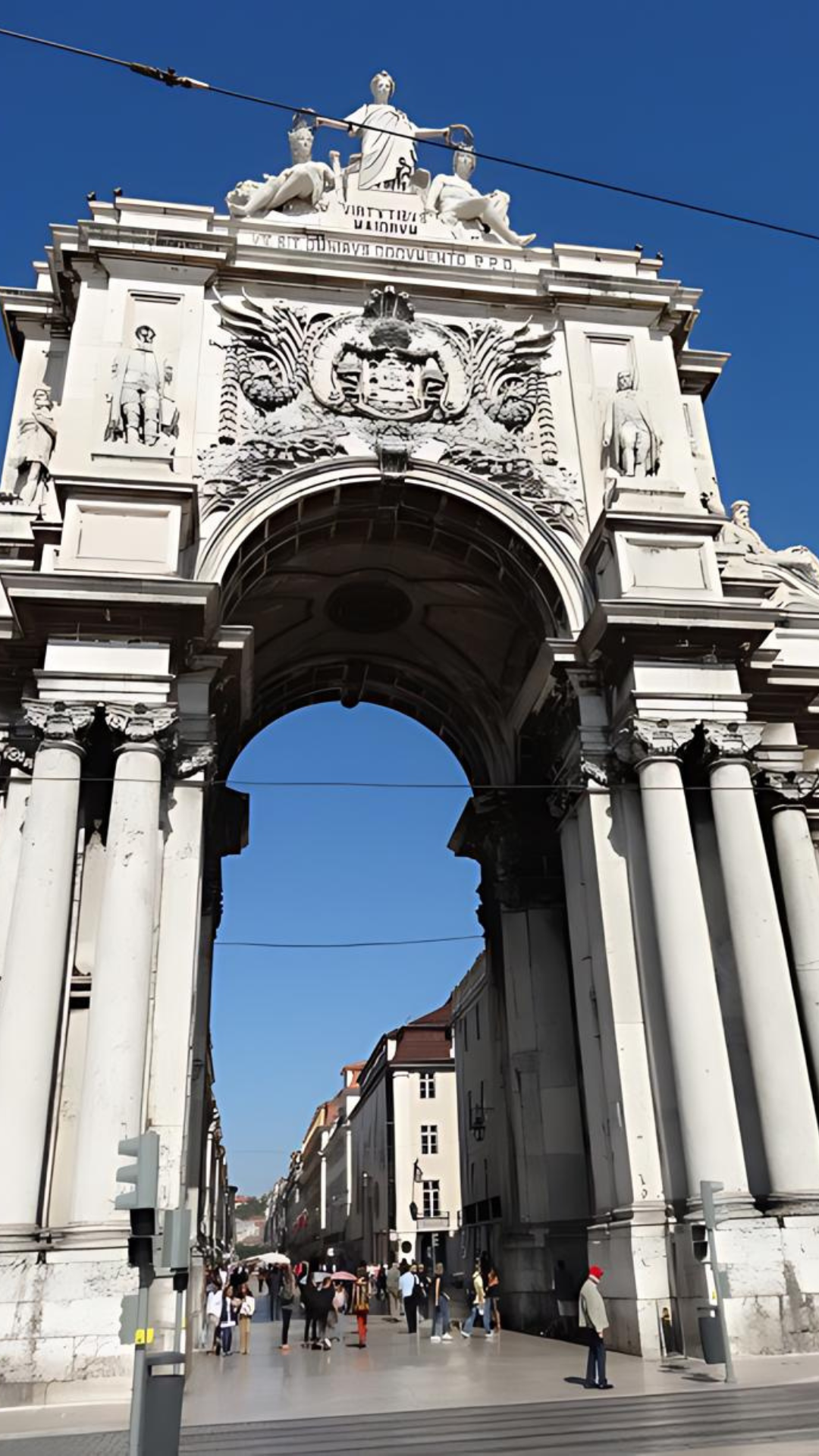
The grand Triumphal Arch signifies the entrance to the city centre’s commercial district. Positioned atop the arch are three statues representing key virtues that underline the spirit and historical achievements of Portugal.
The three statutes represent a female symbol of ‘Glory’ standing and presenting bronze laurel crowns rewarding/crowning Valour (value) and Genius (genie).
Valor is personified by a female sculptural representation of Athena, the Greek goddess known for her wisdom. Wearing a plume helmet and holding a sword, with a lion at her side, she is the goddess of wisdom, strategic warfare as representative of Valour, together with bravery and courage. This statue of Athena is a testament to the strength and resilience of Portugal and its people, in overcoming adversity and achieving greatness in exploration and military achievements throughout history.
Genius is symbolised on the east side of Glory by the winged Greek messenger god, Hermes, equipped with books and a lyre (a form of harp). Beneath Hermes’ right wing stands Poseidon, the Greek god of the sea. Together, they symbolise the enduring strength and resilience required by sailors to overcome challenges as they explore and navigate the uncharted waters throughout history of the Age of Discoveries.
Below the three statues the words; VIRTVTIBVS MAIORUM VT SIT OMNIBVS DOCMENTO. P. (ECVNIA) P. (VBLICA) D. (ATVM). The translation from Latin: “The Virtues of the Greatest”: the strength, resilience and achievements of the Portuguese people.”
The four standing statues either side of the Portuguese coat of arms, represent Nuno Álvares Pereira and the Marquis of Pombal on the right, and Vasco da Gama and Viriatus on the left; prominent men of the time. The two seated statutes at the base represent the two significant rivers of Portugal – Rio Tejo (Targus River) and Rio Douro.
The statute of King José I, the Portuguese ruler during the reconstruction of Lisbon stands proudly in the centre of the square.
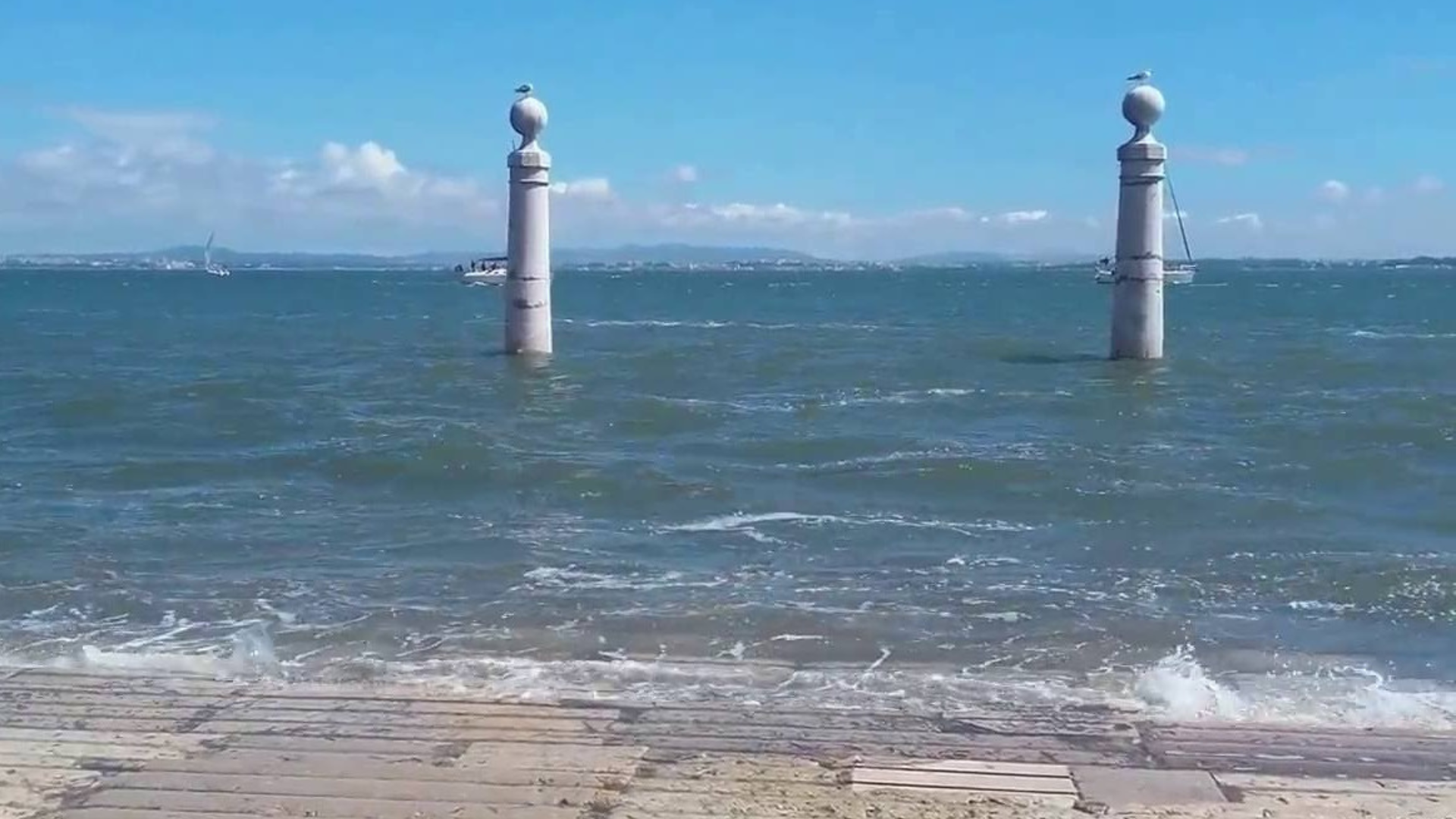
On the southern side of Commerce Square are the Cais das Colunas – Columns Pier, a set of marble stairs leading to the water’s edge. The stairs were built to enable royal dignitaries to approach and enter the Royal Ribeira Palace.
The square is an enjoyable place to reminisce and admire what was once a grand entrance to the Baixa district and the commercial heart of the city. The streets of the old Baixa district were formerly home to the city’s banks and many of their tradespeople and artisans. Today, only a few jewellers remain along Rua do Ouro – Gold Street, and shoemakers along Rua dos Sapateiros – Cobble Street.
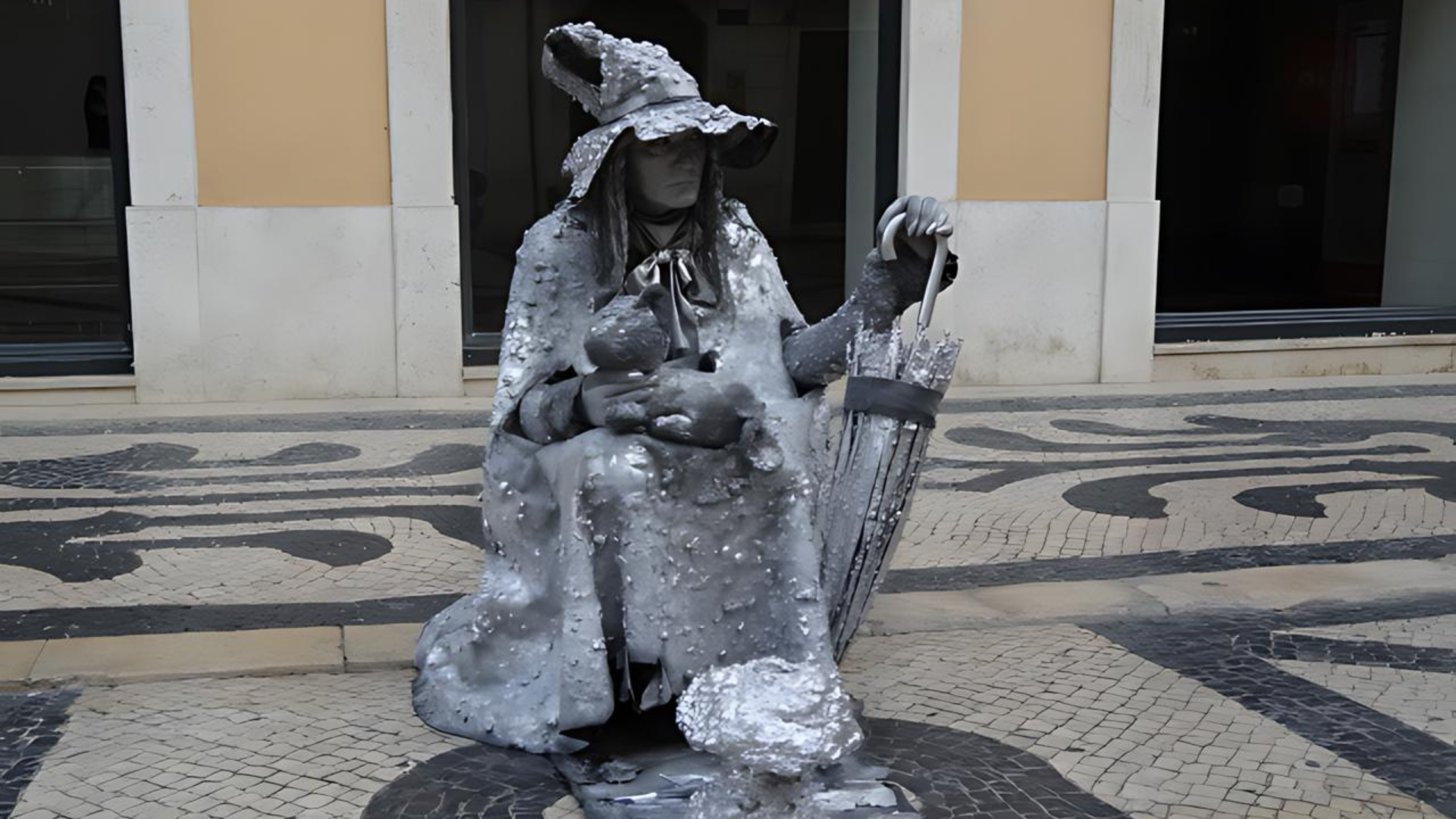
Leaving the square and passing back through the Triumphal Arch, adjoing Rua Augusta, the city’s primary pedestrian street. The bustling throughfare with its mosaic traditional Portuguese mosaic pavements, outdoor cafes and numerous stores along the way is a shopper’s haven. I also encounter the occasional, very creative and imaginative street artist and pop-up vendors as I make my way to Praça Martim Moniz – Martim Moniz Square.
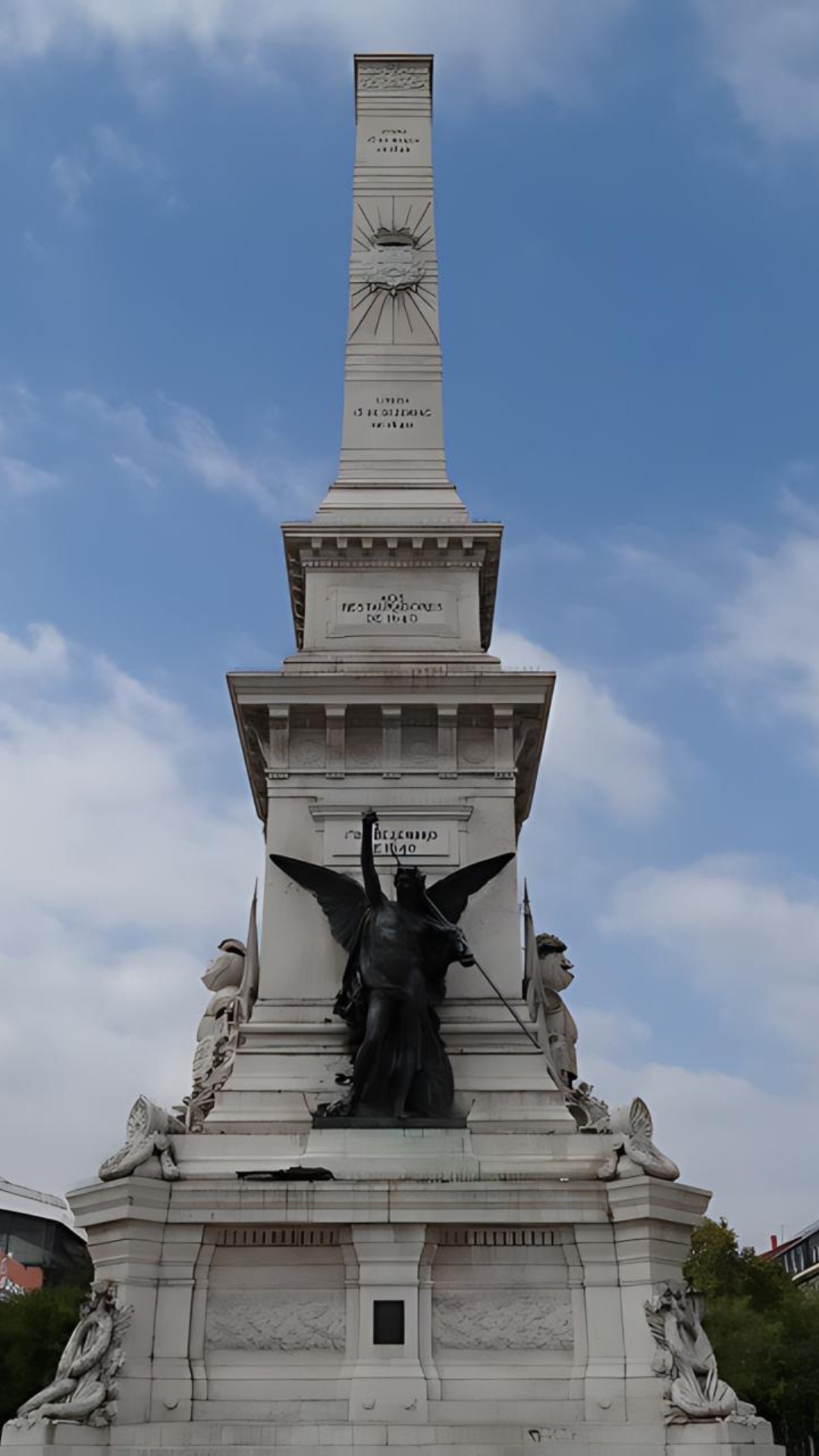
Passing through Restauradores Square and the towering 30 meters (about 98 feet) Obelisk of the Restauradores commemorating Portugal’s Restoration of Independence following 60 years of Spanish rule, and marking a pivotal moment in Portuguese history.
The revolt on December 1, 1640, led by the Portuguese nobility, was a crucial step toward regaining Portugal’s sovereignty and self-determination. The monument, erected in 1886, stands as a testament to Portugal’s resilience and its people’s deep seated yearning for independence, serving not only as a historical marker but also as a symbol of national pride.
I then make my way to the busy square of Praça Dom Pedro IV, also known by its much older name of Praça Rossio – Rossio Square where many people are enjoying the outdoor meeting space.
The Rossio Square is one of Lisbon’s oldest and most iconic squares, with its origins dating back to the Middle Ages. Historically, the square dates back to the 13th century hosting various activities, including bullfights and royal announcements, to public shows, festivals and military parades. During the period of Inquisitions, the square was used for public executions as early as 1540, with the last recorded public execution having occurred in the late 1700s. These events generally drew a large crowd, that served both as a form of deterrence and public spectacle. By the 19th century, as societal norms and legal practices evolved, public executions were phased out across Portugal. In today’s time, the square is the preferred meeting place of Lisbon locals and tourists alike.
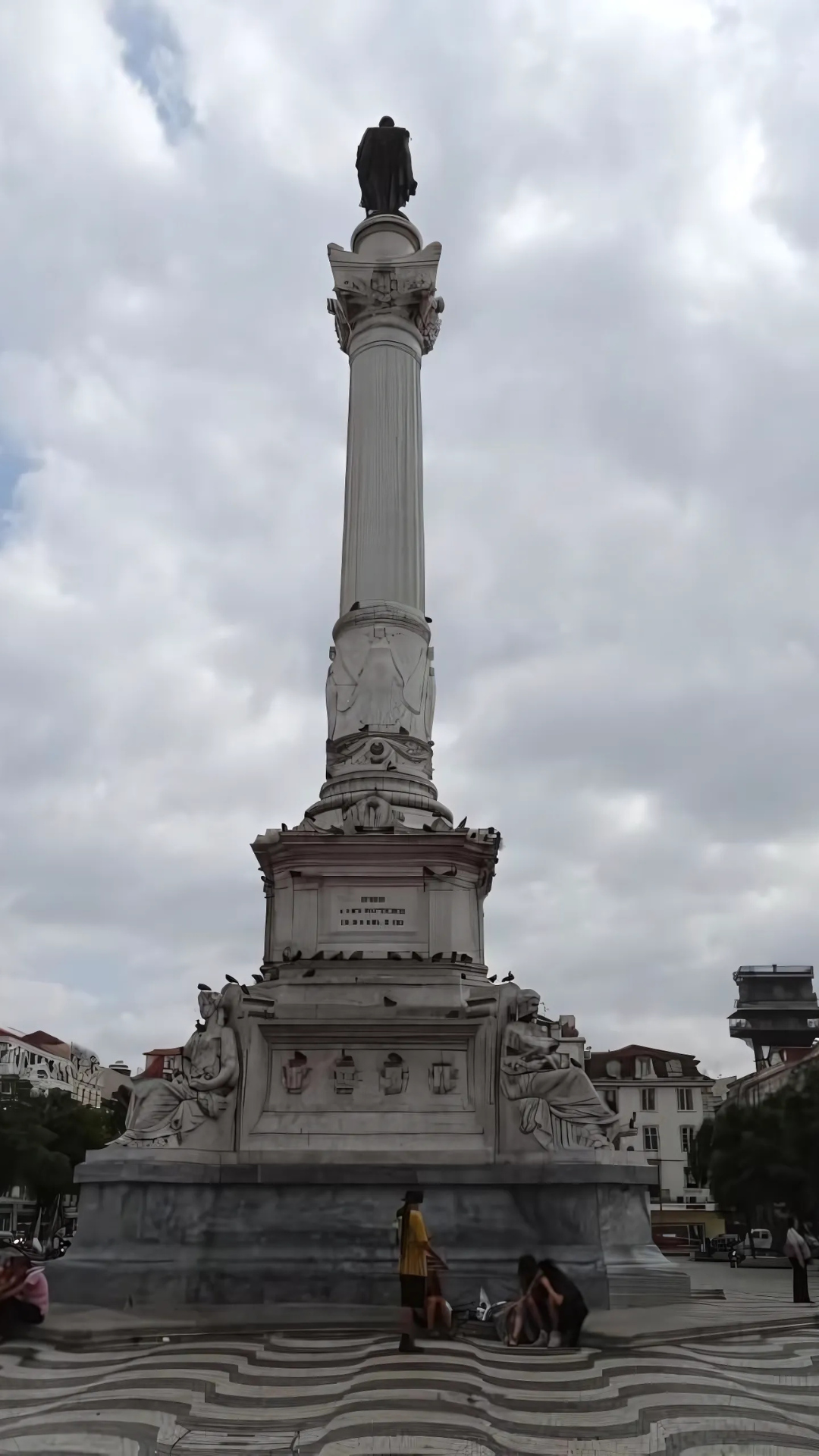
The Monument Fountain, towering at 27 meters (just under 90ft), is centrally located in Rossio Square. It features a pedestal adorned with marble representations of Justice, Wisdom, Strength, and Moderation – virtues associated with Dom Pedro IV, whose standing statue crowns the monument.
On either side of the square are two baroque fountains imported from France that bring a sense of peace and calm to the square.
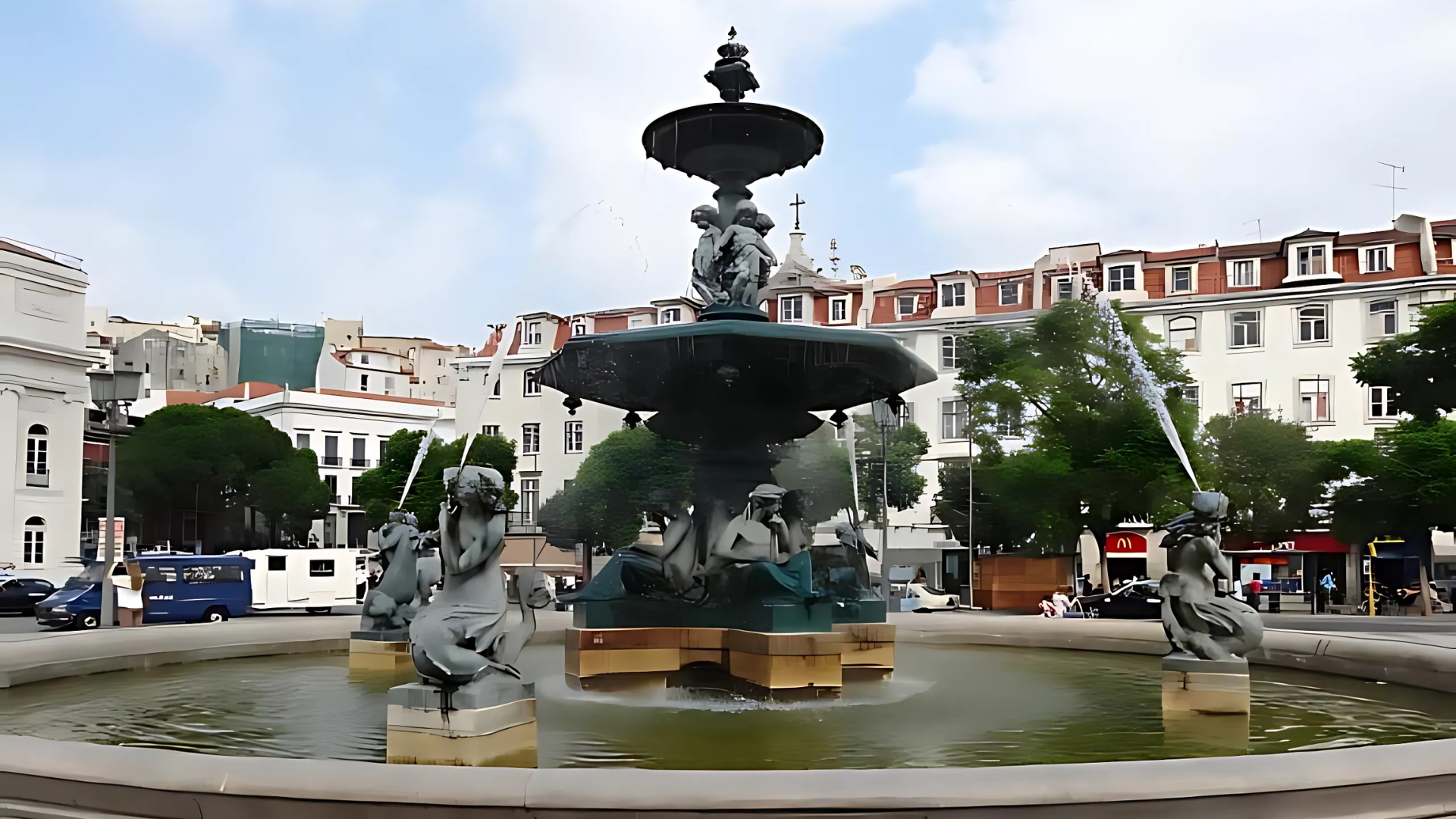
The two identical Monumental Fountains were placed in the Rossio Square in the 1880s. The fountains, are surrounded by the distinctive Portuguese wave patterned cobblestone design paving that represents the coming together of two seas brings back fond memories of another time in Manos, Brazil. The harmonising paving was introduced in the 19th century as part of the redesign that helped shape the square’s modern appearance.
The fountains feature an intricate arrangement of sculptures consisting of a central structure crowned by four fish that sprout water into a shallow basin, whilst beneath the fish, four children are shown holding hands with their right palm facing down as a gesture of receiving and their left palm facing up in a gesture of giving.
Looking closer at the statue design below the four children holding hands, one sees, the representations of Poseidon and Aphrodite, that provide a captivating blend of Greek mythology and maritime symbolism, deeply entwined with Portugal’s own storied history of seafaring and exploration.
The presence of Poseidon (or Neptune, as he is known in Roman mythology), the formidable god of the seas and earthquakes, alongside the goddess Aphrodite, known in Greek mythology and was said to have been born from the sea, and her role as a protector of navigators, is beautifully echoed in Portuguese literature. Luís de Camões, one of Portugal’s most celebrated poets, immortalises her in his epic poem “Os Lusíadas,” as Venus (known in Roman mythology), who intervenes on behalf of the Portuguese explorers, ensuring their success.
In Greek mythology, the love story between Acis, a young shepherd and Galatea, a Neried (sea nymph) is shown on the opposite side of the monumental fountains.
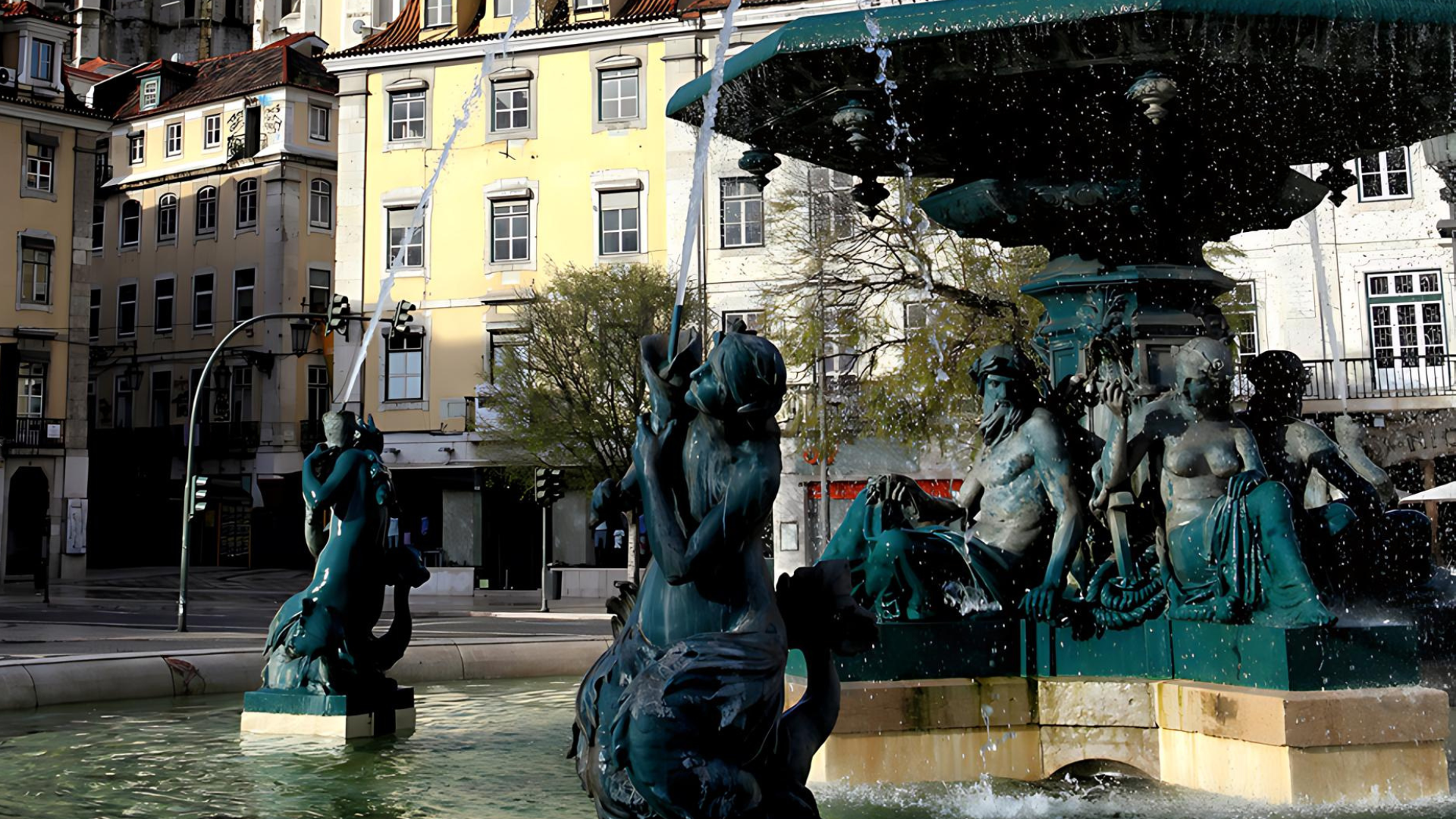
The outer side of the monumental fountain features four mermaids, each holding an open-mouthed fish that sprouts water. The four tiered structure artistically pays homage to the divine patrons of the sea and also symbolises Portugal’s triumphs in maritime exploration and achievements, celebrating the country’s contribution to the Age of Discoveries.
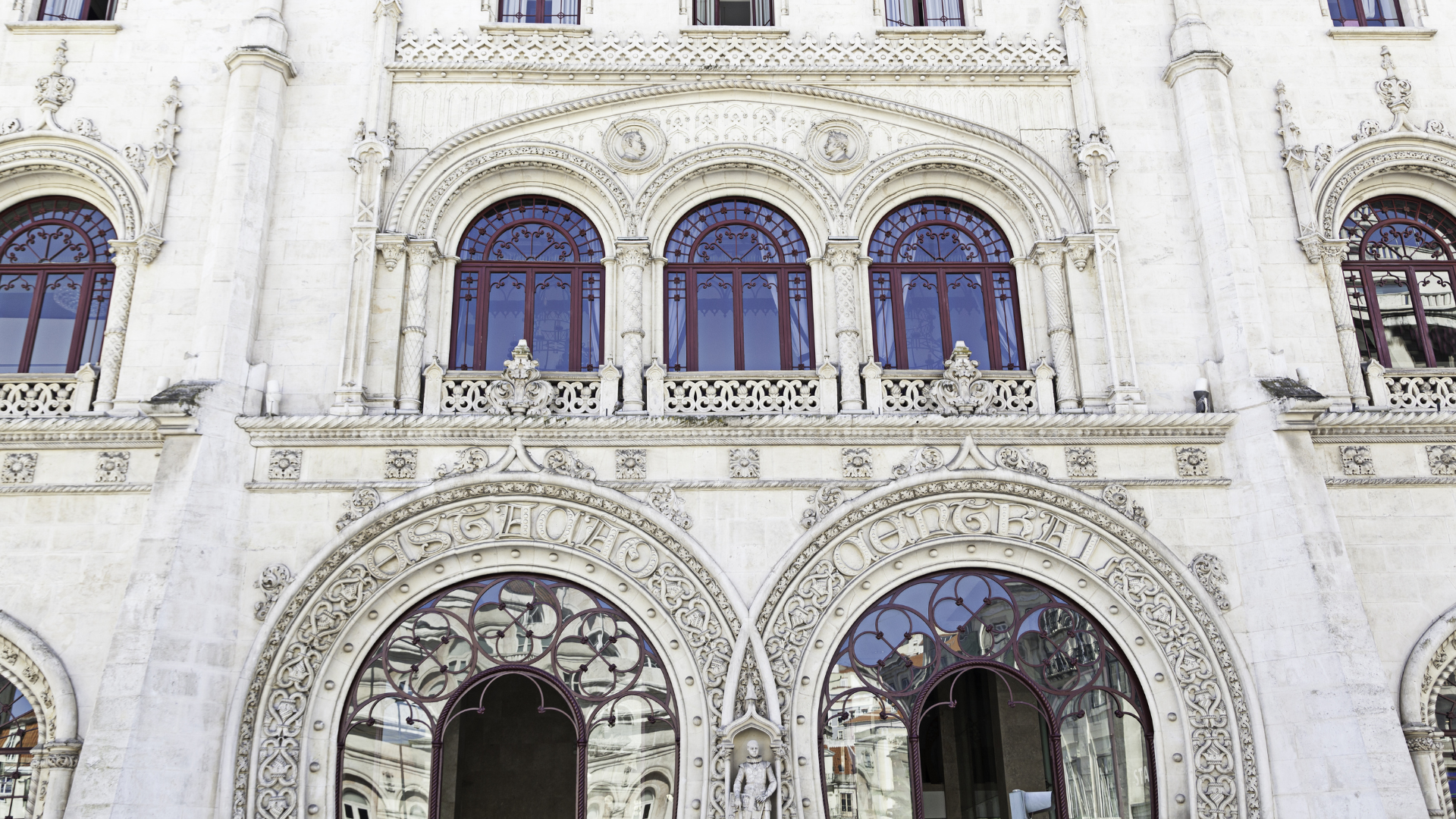
A stone’s throw away is the landmark Estação does Rossio station – Rossio Train Station, with its eloquent arches and neo-Manueline façade built between 1886/87. The building looks more like a theatre or a lavishly adored palace with its Moorish horseshoe arched doorways. Built during a time when train stations were seen as temples of technology, and became an important addition to the city’s infrastructure. The local station services the main line between the city centre and Sintra.
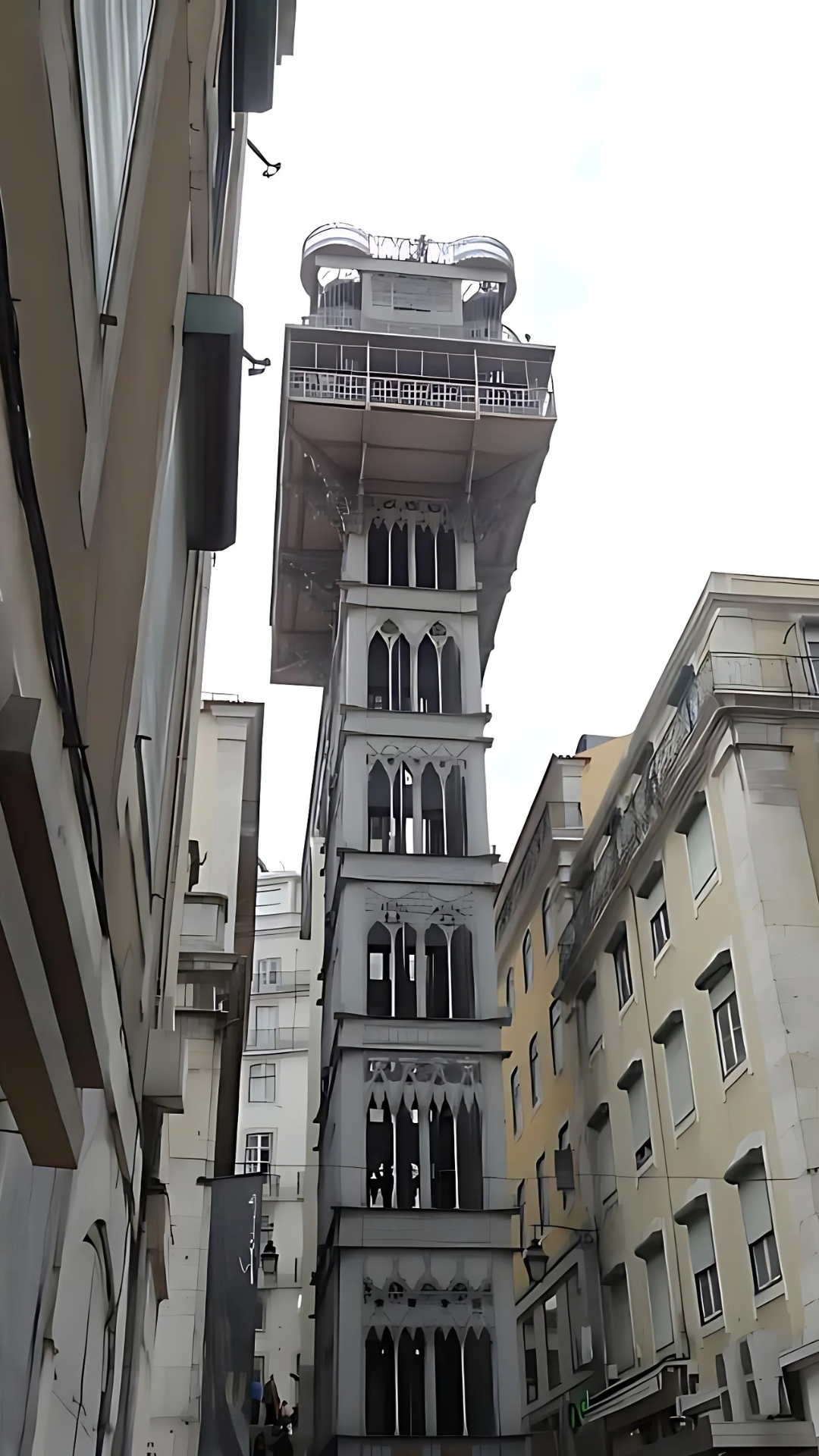
I’m still on my way to Praça Martim Moniz and pass by the Elevador de Santa Justa – Santa Justa Lift, also known as the Elevator of Carmo, one of the city’s best loved landmarks. There’s a lot of people waiting in a queue to ride the elevator.
The beloved icon and extraordinary structure was completed in 1902 when wrought-iron was both a construction material and art form. Adorned with glorious neo-gothic arches and geometric patterns the elevator connects the Baixa district with the elevated Bairro Alto and higher ground of Largo do Carmo. Standing seven stories high, or 45 meters, the lift facilitates easy transit across the city’s hilly terrain.
Conceived by Raoul de Mesnier du Ponsard, who trained under Gustave Eiffel and brought a touch of the Eiffel Tower’s flair to Lisbon. In 2002, the Elevator de Santa Justa was classified as a National Monument, celebrating over a century as both a functional piece of infrastructure and a tourist attraction.
I keep walking.
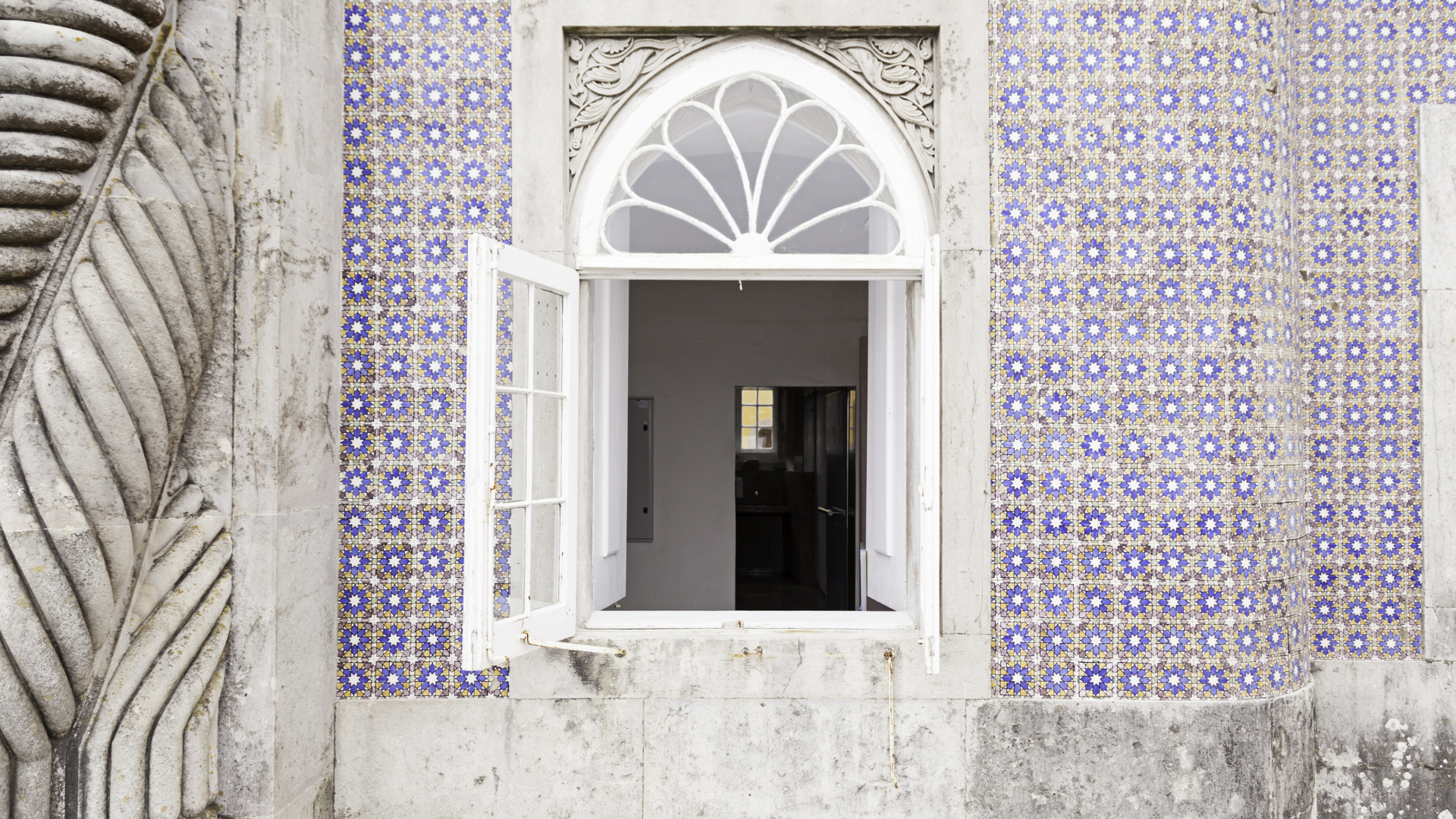
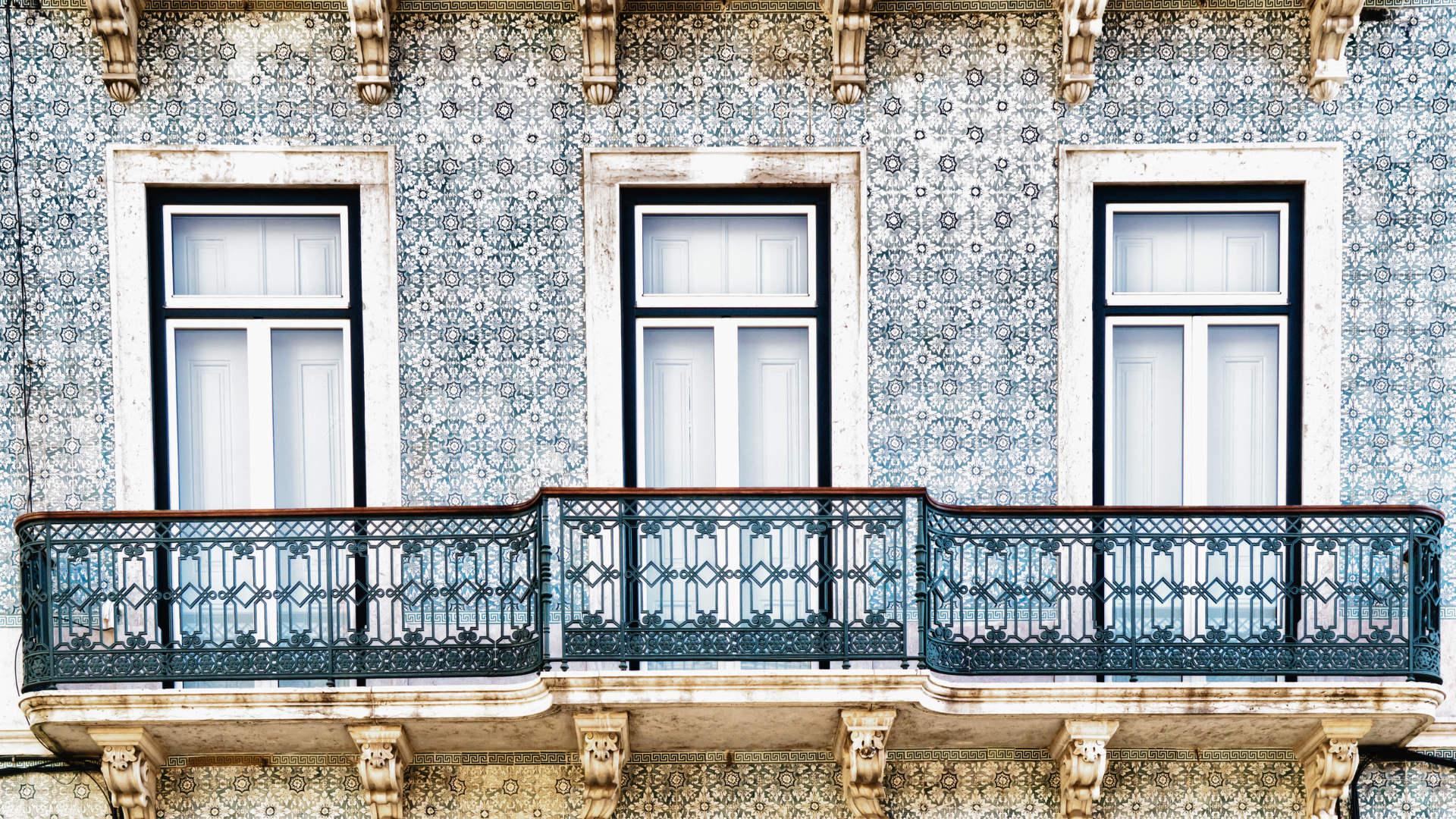
Happy that I kept walking as I saw a number of buildings with azulejos, the city’s iconic ceramic tiles, that embody the essence of Portuguese culture, intertwining historical depth with visual attraction. These tiles, with roots stretching back to the 15th century were inspired by Moorish craftsmanship, and have become a hallmark of Portugal’s architectural narrative. Azulejos are celebrated for their diverse patterns and descriptions, particularly the emblematic blue and white, mirroring the Portuguese sky and sea.
They are more than mere décor; they offer practical benefits by cooling interiors during the warm summers, making a perfect blend of form and function. These ceramics also serve as storytelling mediums, illustrating tales from Portugal’s rich history, folklore, and religious themes, acting as visual archives of the nation’s soul. The streets of Lisbon, adorned with these vibrant tiles, reflect a unique urban charm, enhancing the city’s identity.
The art of azulejo making is also preserved and valued, with institutions like the National Azulejo Museum safeguarding this legacy. Azulejos are thus a cherished symbol of Lisbon’s and Portugal’s artistic expression and cultural heritage, merging aesthetic beauty with historical significance.
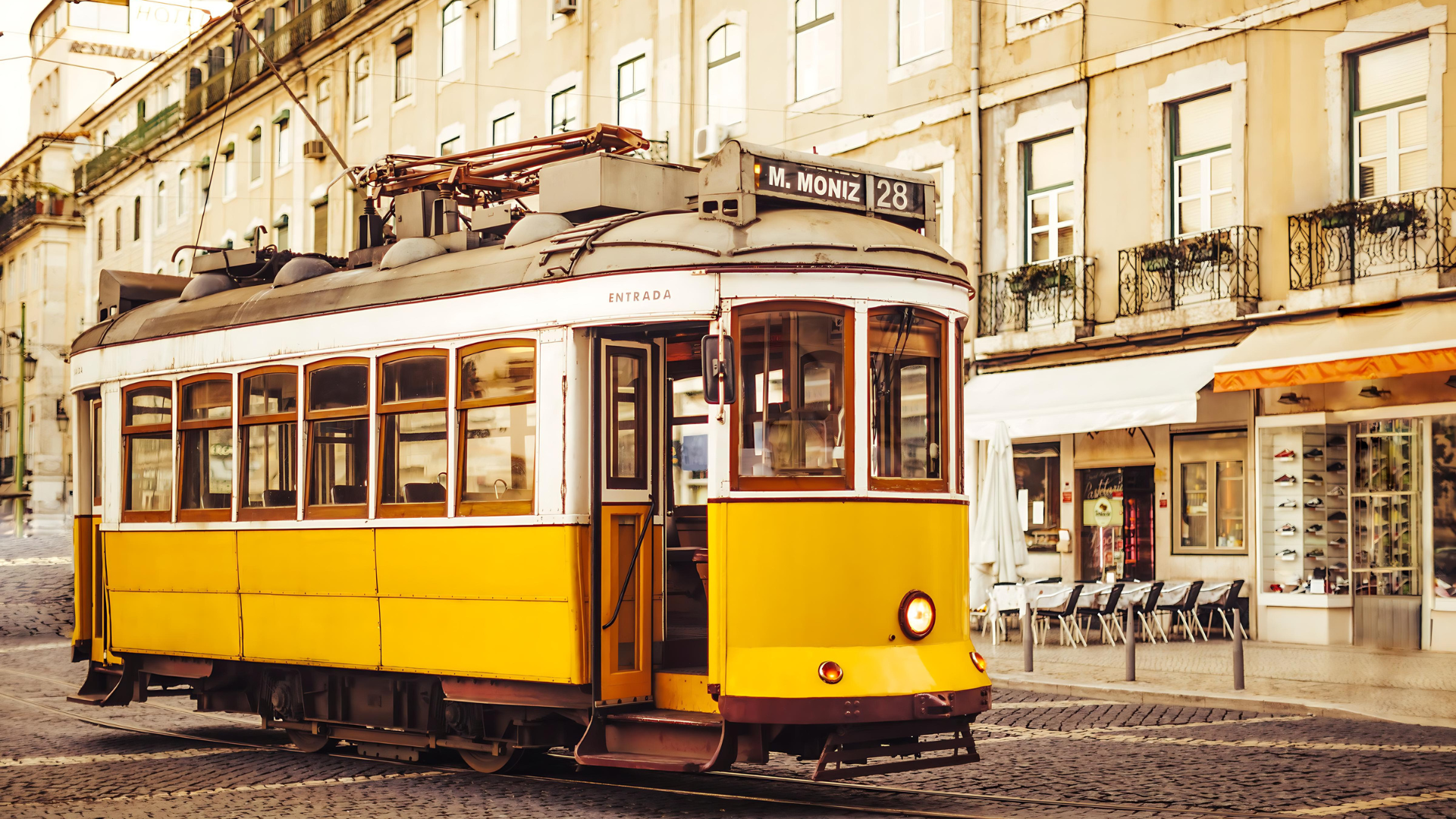
I find myself at the Praça Martim Moniz – Martim Moniz Square and the starting point to catch Tram 28. Before the tram’s era, local residents relied on horse drawn carriages to navigate the hilly and winding streets of Lisbon. The iconic Tram 28 commenced service in 1914, then merged as a quintessential and traditional mode of public transport in the 1930s.
The tram’s scenic route travels approx. 7km and takes approx. 50mins depending on the time of day/evening.
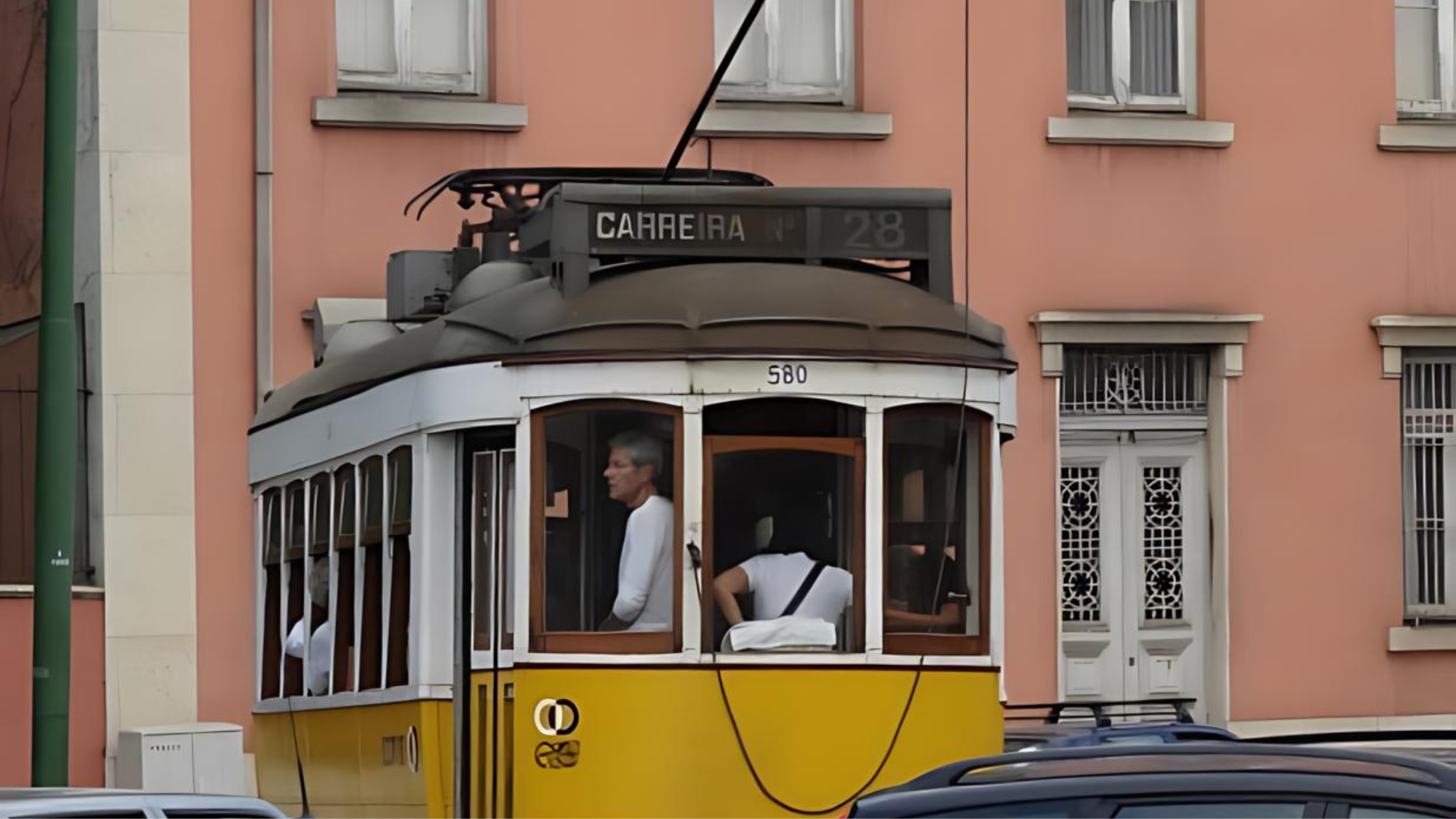
Starting from Martim Moniz then climbing to reach the picturesque Graça district that offers excellent views across of the medieval layout of the city and the many traditional architectural buildings.
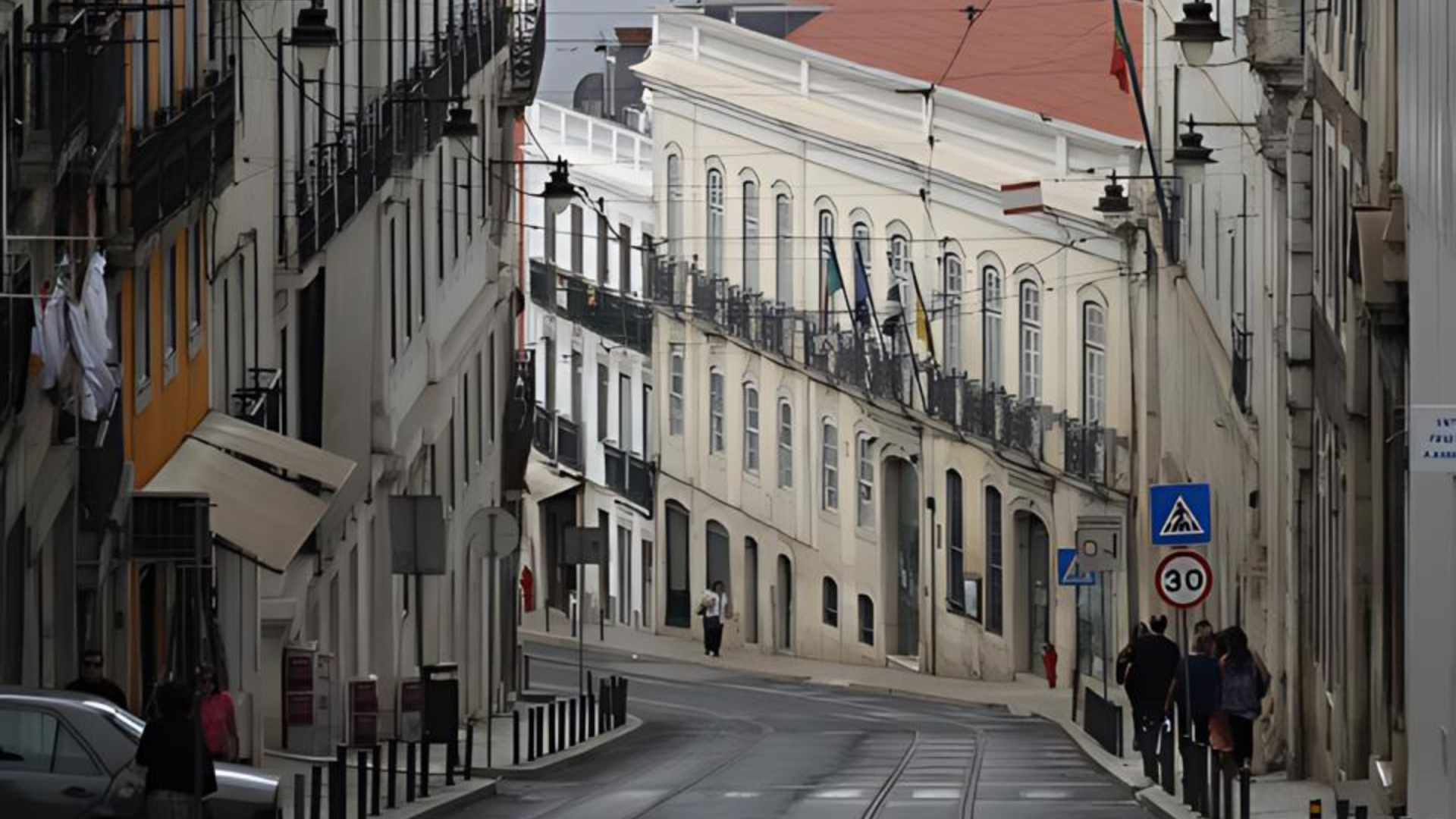
The bright yellow tram number 28 then travels through the tiny steep hills and narrow cobblestoned lanes of Alfama as they were in medieval times. One of Lisbon’s oldest areas and the only district to be spared from the devastating earthquake of 1755, thanks to its compact labyrinth of narrow streets and small squares.
Alfama, an old Moorish district is also known as the historic soul of Lisbon with many Fabo venues dotted throughout the neighbourhood. Fabo music, is a traditional music genre from Portugal, prominently featuring the Portuguese guitar, also known as the “guitarra portuguesa.” This unique 12-stringed instrument and its distinctive sound adds a melancholic and soulful quality to a Fado performance, complementing the emotive vocal of the singer.
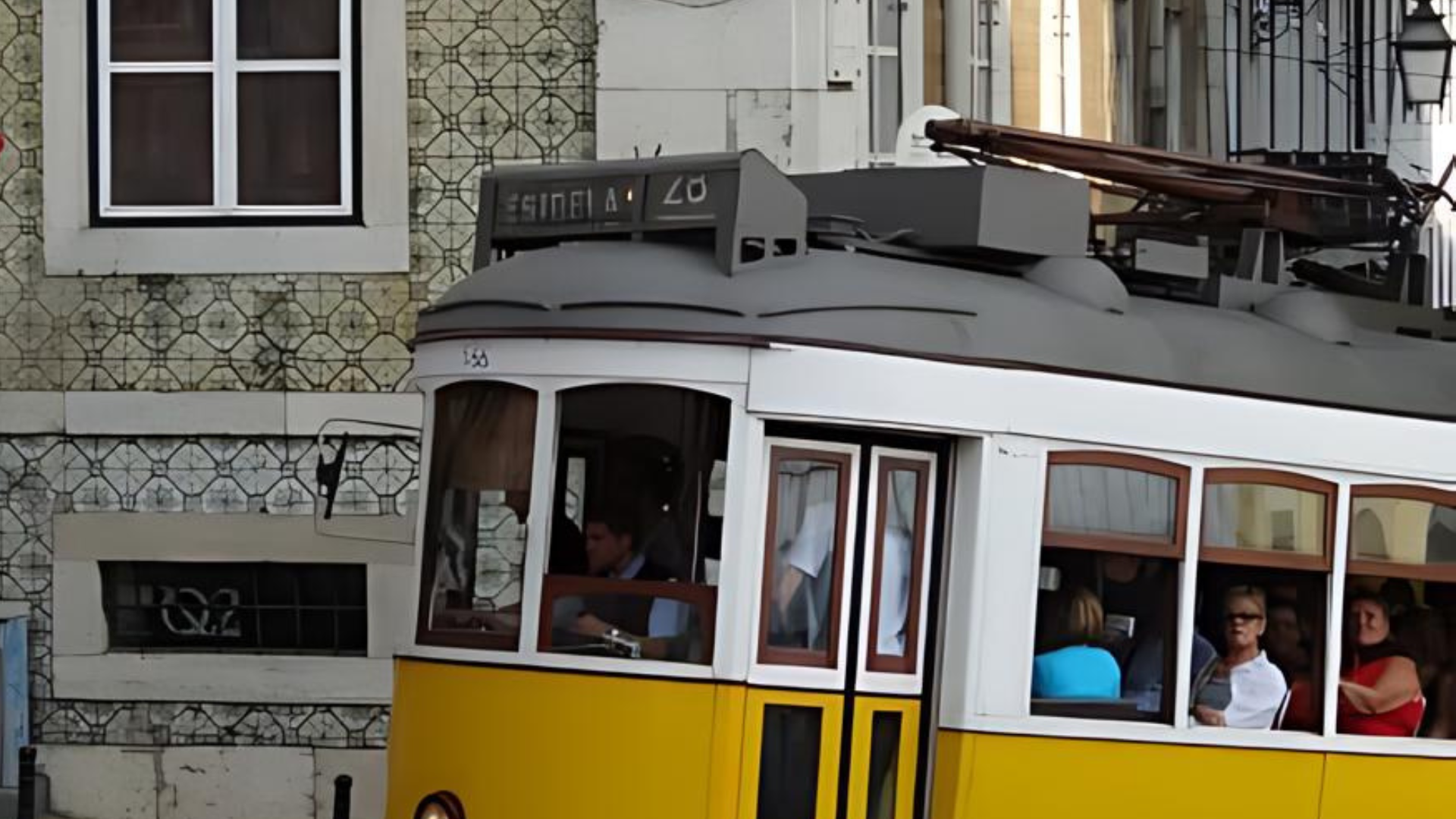
Expressions of colour feed your eyes with colourful interlocking azulejo houses and pretty flowers together with drying laundry overflowing from balconies and a mix of impressive tiling add to that decorative landscape.
Stopping to walk around some of the narrow lanes, to admire the colours and take in the sights across the roof tops and catch sight of the bell tower and castle of the Castelo de São Jorge – Castle of St. George, and the Convento do Carmo – Carmo Convent before boarding the tram again and continuing onto Baixa.
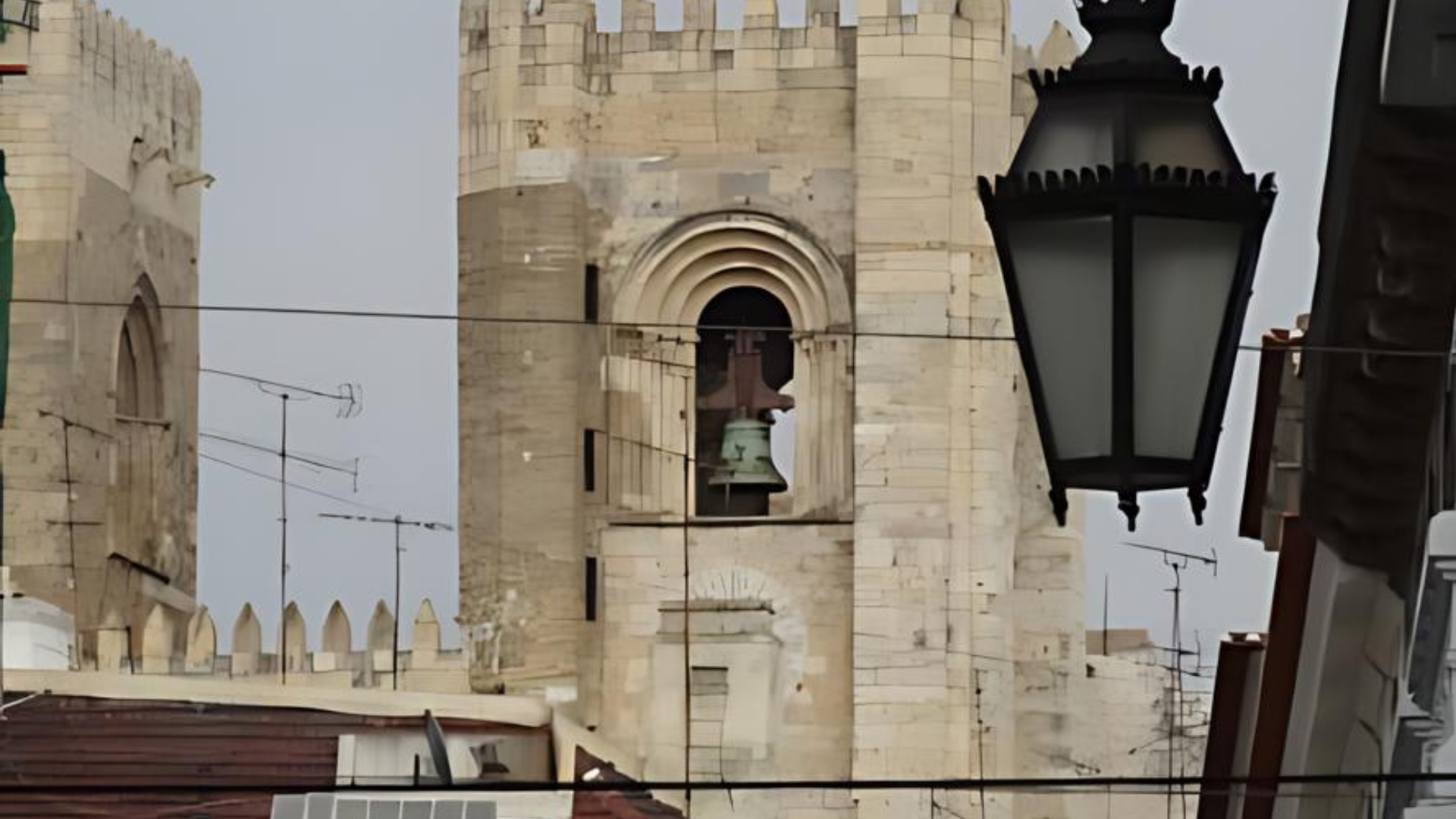
The Castelo de São Jorge – Castle of St. George, perched atop the highest of Lisbon’s seven hills, has been overlooking the city for millennium. It can be seen from almost everywhere in the city and holds a pivotal place in the city’s history.
The castle’s oldest parts date back to the 6th century, when it was fortified by the Romans and Visigoths, before serving as a fortified residence for the Moorish Governor and the city’s urban elite in the mid 11th century.
With the Moors losing their stronghold, the castle was captured by Afonso Henriques in 1139 during the Battle of Ourique in the south of Portugal. He then defeated the Moors in 1147 claiming Lisbon, with the help of northern European crusaders on their way to the Holy Lands.
Afonso Henriques proclaimed himself King of Portugal on 25 July, 1139, following his victory of the Battle of Ourique. However, it wasn’t until the Treaty of Zamora in 1143 that his title was recognised by the Kingdom of León, and it was further confirmed by Pope Alexander III in 1179.
This marked the beginning of the castle’s golden era which lasted until the 16th century. It was during this period that the castle, also known as the Palace of Alcáçova was expanded to accommodate the royal court, including the king, his advisors, and the bishop, together with housing the royal archives. The castle also became the venue for significant state events, including coronations ceremonies and receptions for distinguished guests.
In 1386, in honouring the Anglo-Portuguese alliance, the castle was dedicated to St. George, the patron saint of England. A new royal palace was therefore built known as Ribeira Palace closer to the banks of the Tagus River, although it was later destroyed in the Great Earthquake.
The castle’s role continued to evolve in 1580 when Portugal came under Spanish rule, transitioning to a primarily military function which lasted until the 20th century. The devastating earthquake of 1755, which laid waste to parts of Lisbon, led to significant restoration efforts to repair and restore the castle.
In the 20th century, significant restoration work was undertaken that revealed many medieval remnants of the original structure. Following the restorations the castle was open to the public and reclaimed its status as a landmark of Lisbon.
Today, Castle of St. George stands as a testament to Lisbon’s rich history, from its Moorish origins and role as a royal residence to its current incarnation as a beloved monument, embodying the spirit and reliance of the country’s capital.
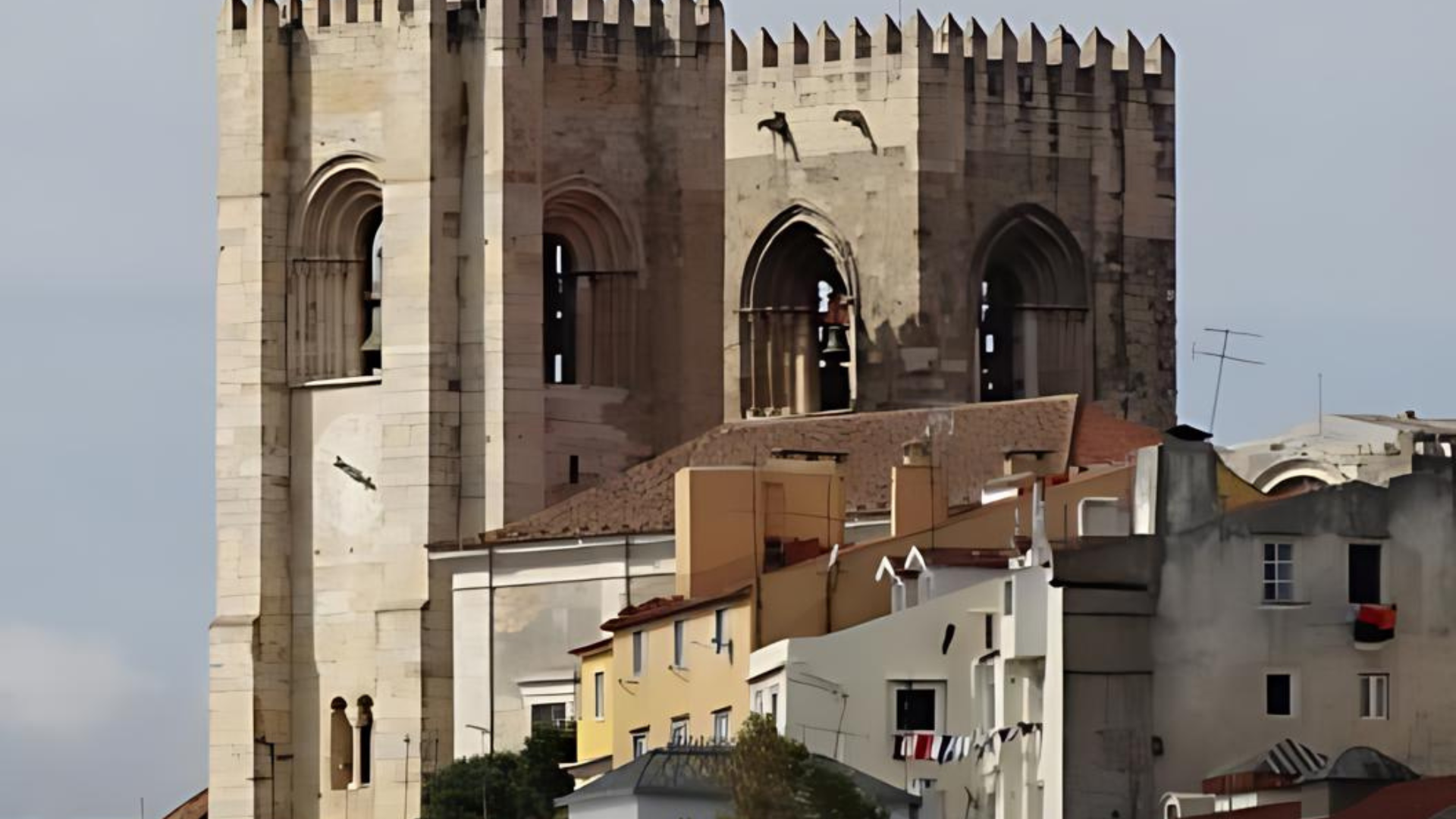
The ruins of the Carmo Convent as seen from the Alfama district. An historic sight that I’ve noted to visit (later in the day).
Back on the tram to continue to the Baixa district.
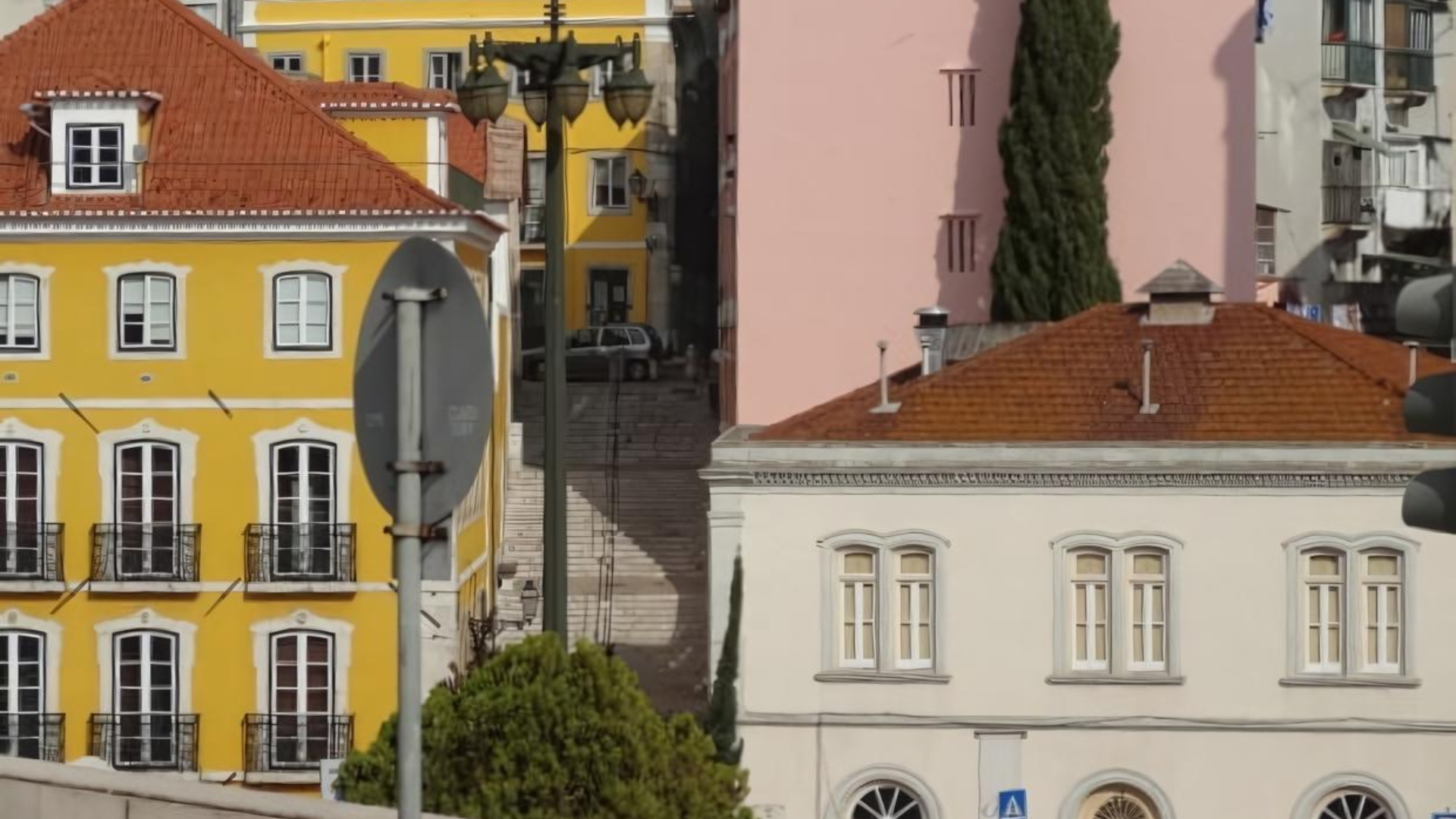
The Baixa district, is a testament to the city’s enduring spirit, charting its journey from golden ages through disaster to rebirth. Central to Baixa’s narrative is the devastating 1755 earthquake. In the wake of this disaster, the Marquis of Pombal, serving as Prime Minister to King José I, directed a groundbreaking overhaul of Baixa. His vision brought to life a district characterised by enlightenment ideals of urban planning, with its geometric streets and uniform, together with broad avenues. This era also saw the introduction of the “gaiola pombalina,” an innovative construction method designed to withstand seismic forces, a pioneering step in architectural safety. Today, present-day Baixa thrives as a dynamic commercial center, embodying the city’s capacity to blend its rich past with a lively present, a true symbol of the city’s resilience and adaptability.
Passing through the cultural and trendy district of Chiado, known for its historic cafes, theatres and boutiques; before arriving in the Bairro Alto district.
The tram 28, then skirts close to Bairro Alto, the “Upper District,” that began as agricultural land beyond the city walls. Established formally in 1513 under King Manuel I, its grid layout departed from Lisbon’s traditional older district streets, offering a structured urban space to the city’s burgeoning elite and merchant class having benefitted from Portugal’s global ventures during the Age of Discoveries.
Over the centuries, it evolved into a cultural haven, attracting artists and intellectuals. By the 19th and 20th centuries, it multiplied with printing houses, newspapers, Fado music venues and cultural gatherings, solidifying its reputation as a bohemian quarter. Despite today’s modernisation, Bairro Alto retains its enchanting historic charm, with its labyrinthine street, historical buildings and rich cultural heritage continuing to captivate both locals drawing and visitors alike; a testament to Lisbon’s rich history and diverse cultural heritage.
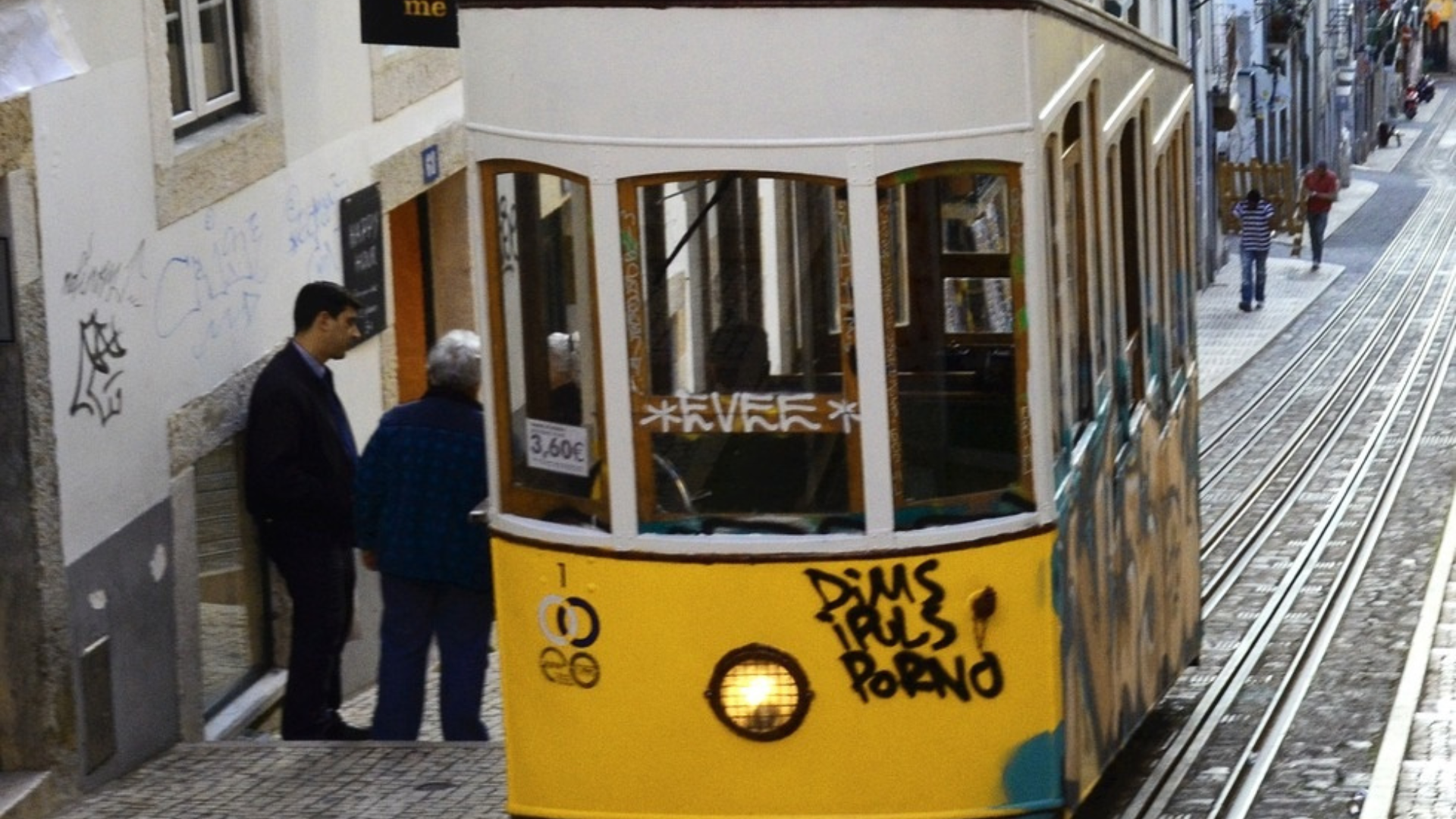
Whilst wandering the steep cobbled streets of Bairro Alto, I learn about and see the Bica Funicular; or Bica Lift, also known as the Elevedor da Bica.
The Bica Funicular, known in Portuguese as the Elevedor da Bica, is another of Lisbon’s iconic public transportation routes and another popular tourist attraction.
The third of its kind in Lisbon, this funicular system has been transporting people up and down the steep and colourful hillside street since June, 1892 connecting the São Paulo district near the waterfront of the Tagus River with the Barrio Alto district on the hilltop.
The charming vintage tram was designed to ease the commute for residents navigating the steep incline between the two neighbourhoods covering a short steep route of approx. 245 meters nestled between the tightly built houses and small quaint shops.
Like the other funiculars in the city, the Bica Funicular has become not just a means of transport but a cultural symbol of Lisbon, reflecting the city’s historic commitment to public transportation and its adaptation to the challenging topography.
The tram 28 route then continues to Estrela, known for its elegant basilica and the peaceful Jardim de Estrela – Estrela Garden (a short walk from where I’m staying). Tram 28 continues onto Campo de Ourique, a residential neighbourhood that I’m told is a shopping destination.
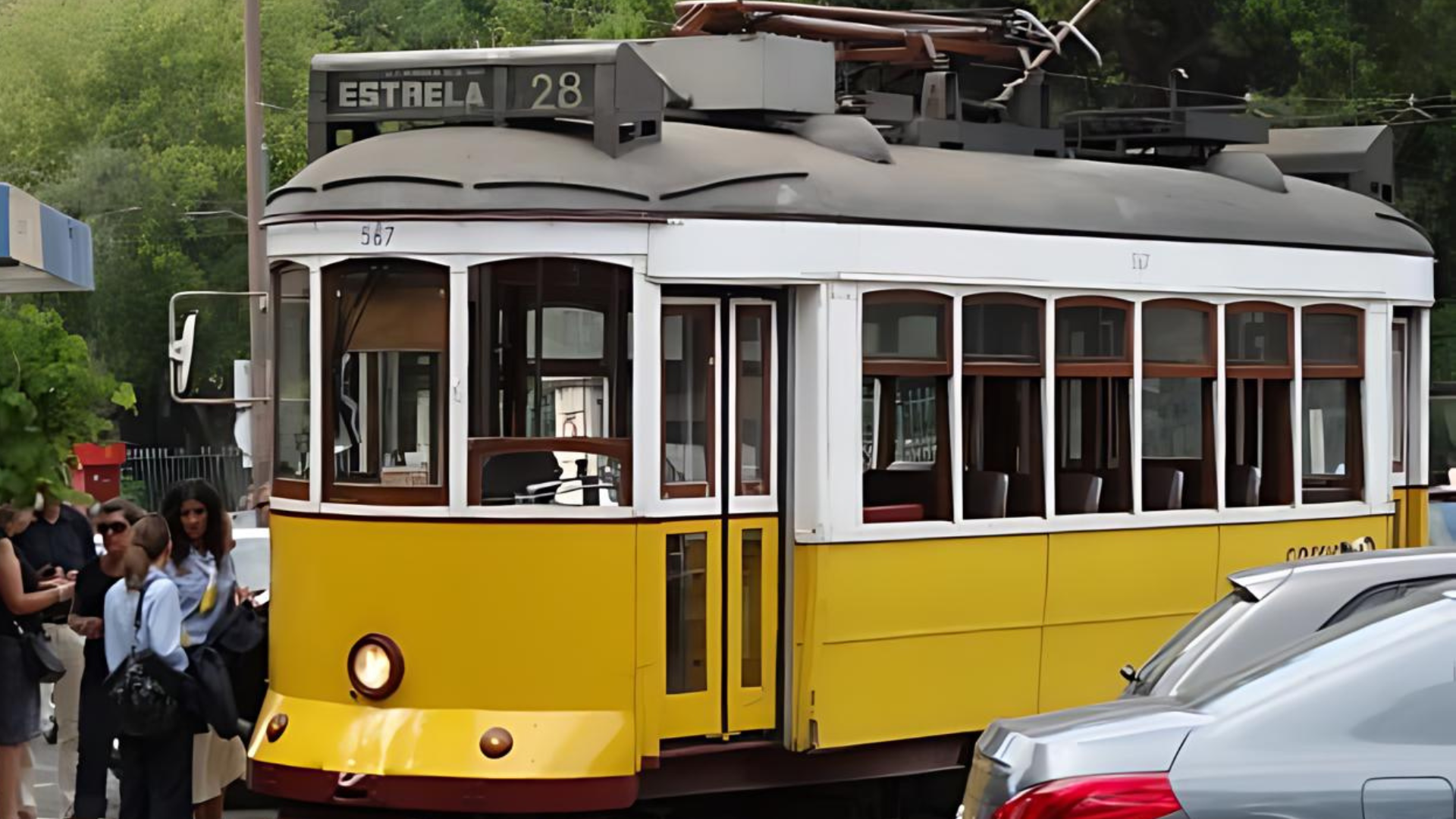
I decided to end my tram 28 journey at Estrela, where there are a number of traditional Portuguese taverns and modern cafes to pick up a mid afternoon bite to eat and enjoy the time in the gardens before taking tram 28 back to the city centre.
Estrela provides a combination of cultural, historical, and relaxation amidst its elegant streets and green spaces.
Walking back to Tram 28 stop, and reflecting on what I have seen so far in this beautiful city, rich in culture and history, and I am enchanted and delighted. A truly memorable, enjoyable and captivating experience.
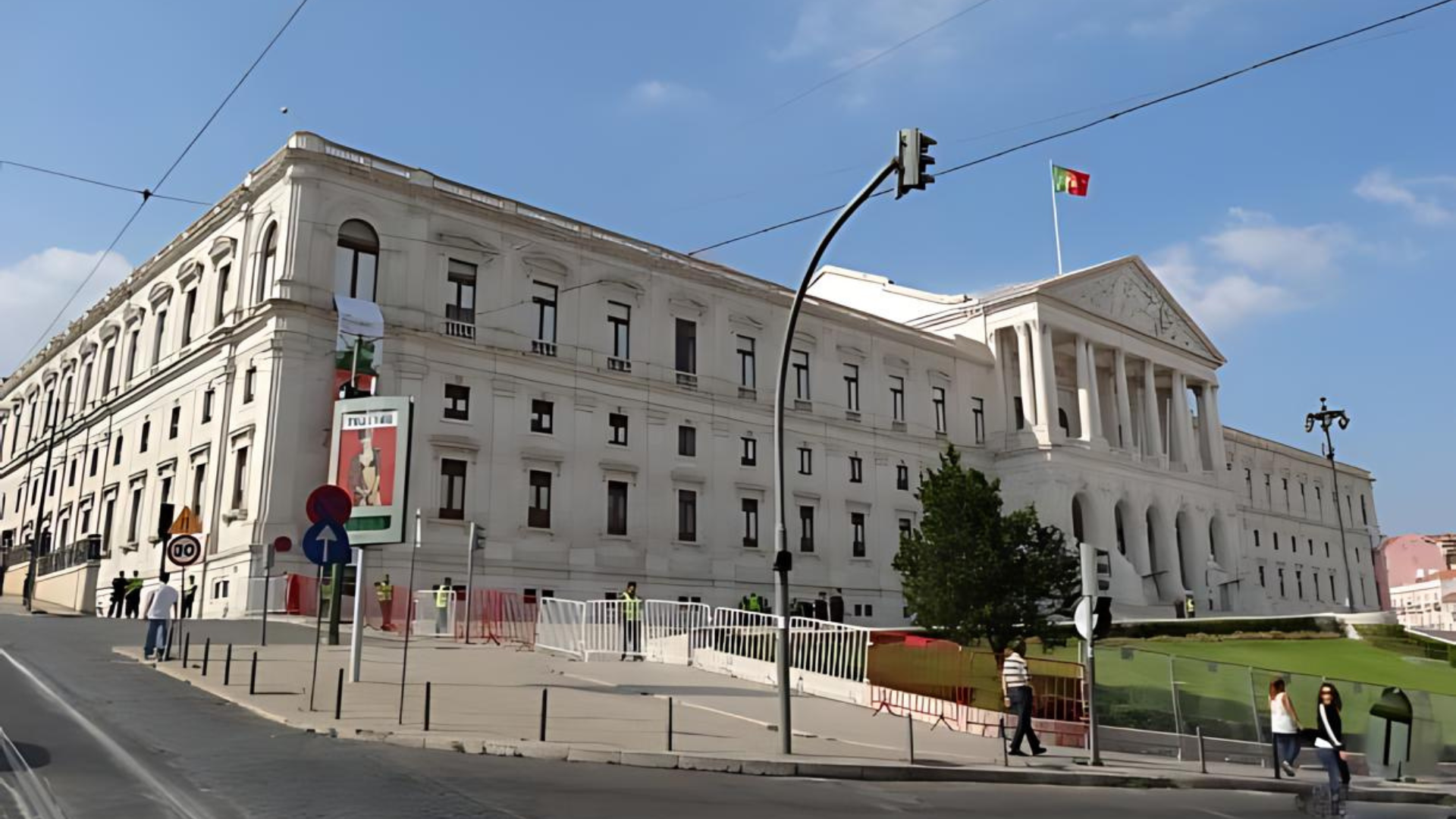
On my return journey to the city on tram 28, I find myself on the opposite side, where we pass the Palácio de São Bento – São Bento Palace, currently the seat of the Portuguese Parliament. This grand building has a storied history that dates back to its origins as a monastery for the Benedictine Order in 1598. A serene monastic site that was transformed into a government building following the liberal revolution of 1820, that resulting in the subsequent dissolution of monasteries in 1833.
The former monastery was repurposed to house the Cortes Gerais, the precursor to the modern Parliament, in 1834. Significant renovations in the late 19th and early 20th centuries, gave the building its current grand façade and staircase. Today, São Bento Palace having been repurposed as the Assembleia da Republica – Assembly of the Portuguese Republic is not just the seat of the Portuguese Parliament but a symbol of the nation’s political history and its transition from monasticism to modern governance.
Returning to Martim Moniz Square it’s a short 10/15 min walk to the Convento do Carmo – Carmo Convent.
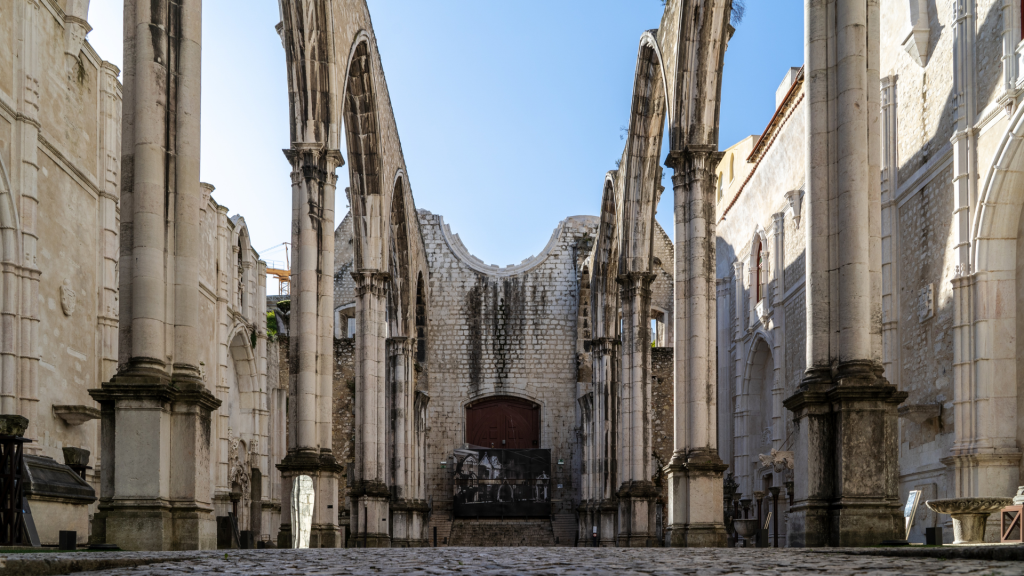
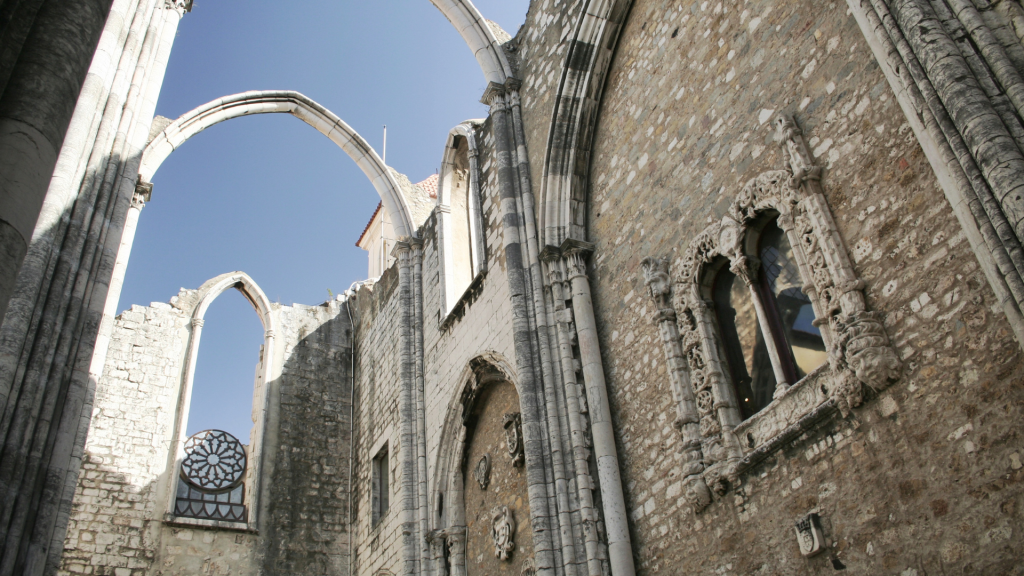
Officially known as the Convento de Nossa Senhora do Monte Carmelo – Convent of Our Lady of Mount Carmel, the Convento do Carmo – Carmo Convent, standing above Rossio Square, was founded in 1389. Initially intended as a place of worship for the Carmelite order and a resting place for members of the Pereira family, the Gothic style convent quickly became one of Lisbon’s most important and majestic religious buildings. Its significance peaked in the 15th century as it became a center for spiritual worship and retreat, housing Portuguese nobility and high-ranking clergy.
However, the Carmo Convent’s fate took a dramatic turn during the catastrophic earthquake of 1755, which created devastation for much of Lisbon. The earthquake caused extensive damage to the convent, leading to the collapse of its roof and much of its Gothic structure. The ruins were left largely untouched becoming a poignant reminder of the earthquake’s destruction until the 19th century when restoration and preservation efforts began. In 1864, these efforts led to the establishment of the Carmo Archaeological Museum within the preserved ruins, showcasing a diverse collection of artifacts that span various periods, from Roman mining tools to 16th century Portuguese azulejos.
Today, the ruined Carmo Convent stands as a significant historical and architectural site in Lisbon. Its open-air ruins not only tell the story of its own past but also serve as a symbol of Lisbon’s diversity through the eras, and its resilience and recovery from one of its greatest tragedies.
Back in Rossio Square, to take a train from Rossio station and make my way to the Jerónimos Monastery.
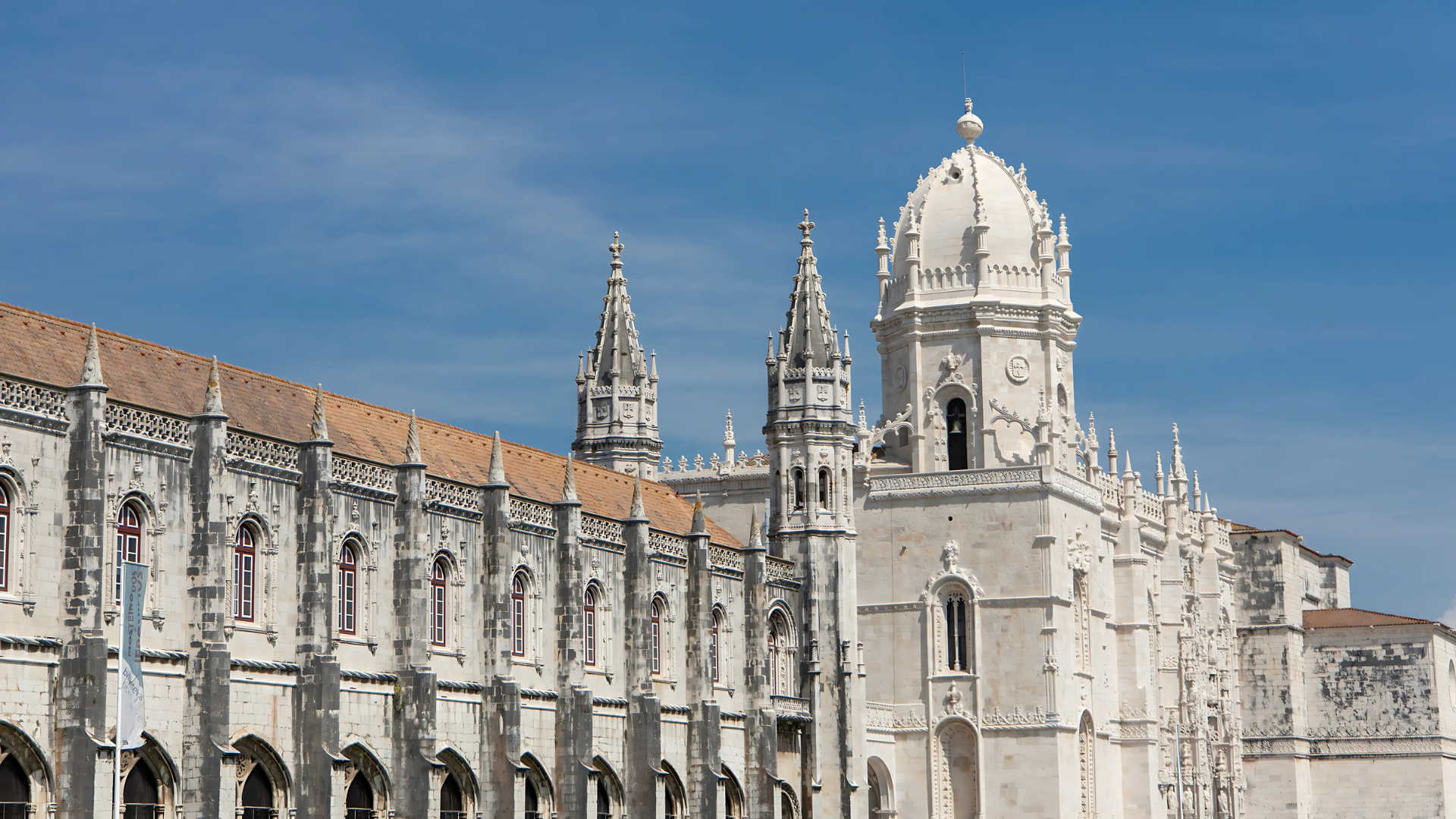
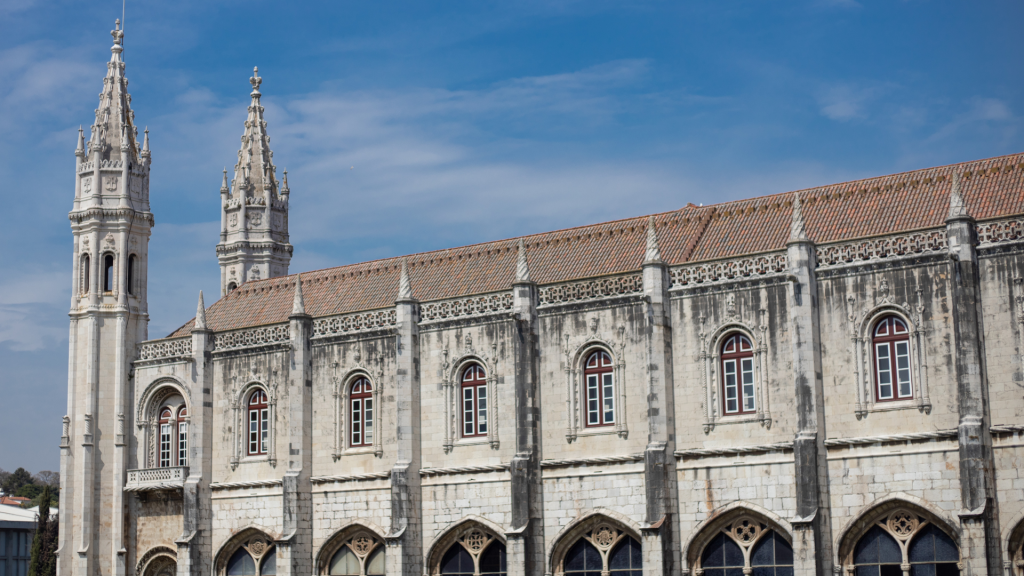
The Mosteiro dos Jerónimos – Jerónimos Monastery, is a grand monument located in Lisbon’s Belém district. It took a century to build, with construction finishing in the early 16th century to commemorate Vasco da Gama’s expedition to India and the Orient. Construction of the monastery was financed by the wealth generated from the spice trade during the Age of Discovery.
Built on the location where Vasco da Gama and his crew spent their final night before setting sail, the Jerónimos Monastery with its architectural magnificence, and intricate sculptures incorporating maritime motifs alongside religious imagery is a tribute to Portugal’s maritime achievements and the explorers of that time.
Originally a monastery for the Order of Saint Jerome, it’s now the resting place of illustrious figures such as Vasco da Gama and poet Luís de Camões. A section of the monastery now also houses the Maritime Museum.
Proclaimed as a UNESCO World Heritage Site in 1983, it stands as a symbol of Portugal’s maritime success and cultural heritage. Unfortunately, for me it was closed by the time I arrived. I’m sure it’s worth seeing inside.
Whilst in Lisbon I enjoyed a memorable boat ride along the Tagus River, that offered a unique view of the city’s picturesque waterfront and historical sites. The two-hour journey was both relaxing and informative, thanks to the engaging commentary provided.
The cruise started from the Terreiro do Paço – Palace Square ferry terminal, also known as the Estação Sul e Sueste – South and Southeast Station. Conveniently situated in the historic center, and a short stroll from the busy Commerce Square, right alongside the scenic Tagus River.
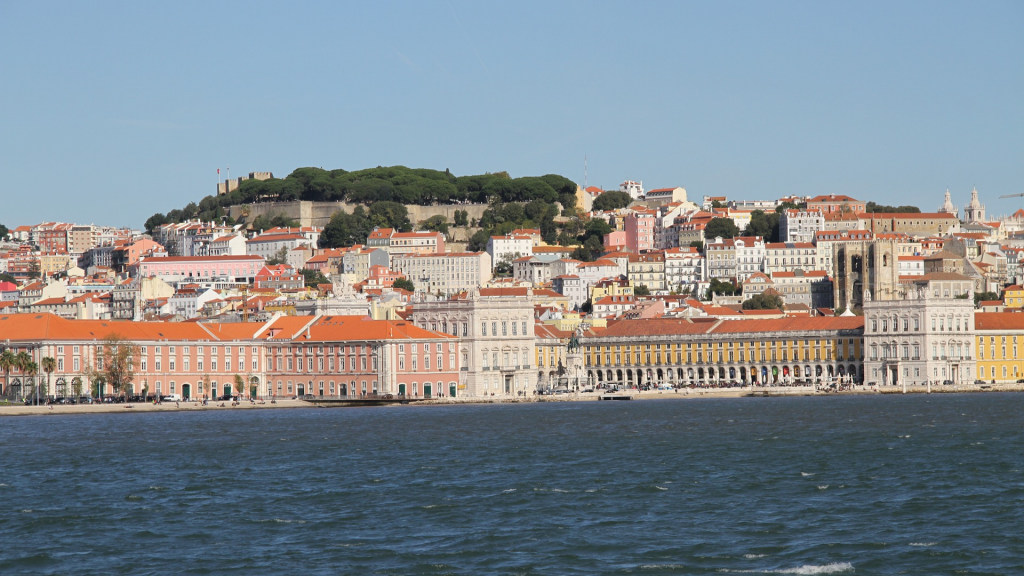
Departing from the Palace Square ferry terminal, the cruise offers views of the vibrant, colourfully painted buildings lining Commerce Square. As you move along, the iconic Castle of St George, a historic medieval landmark, dominates the skyline from its majestic hilltop position.
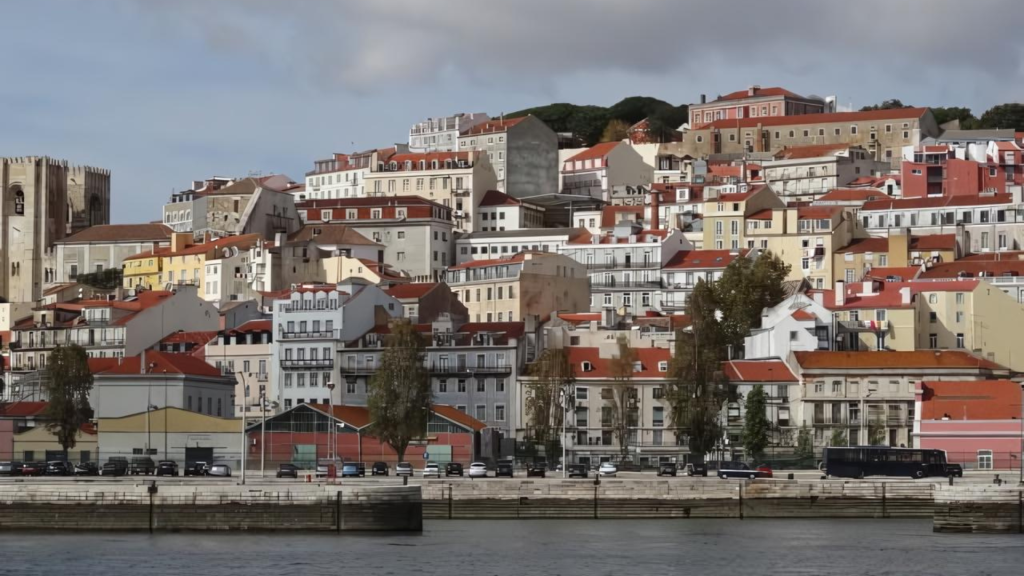
As we cruise past Commerce Square, we get a vivid view of the densely built, brightly coloured buildings of the Baixa district, with the Castle of St. George coming into closer view.
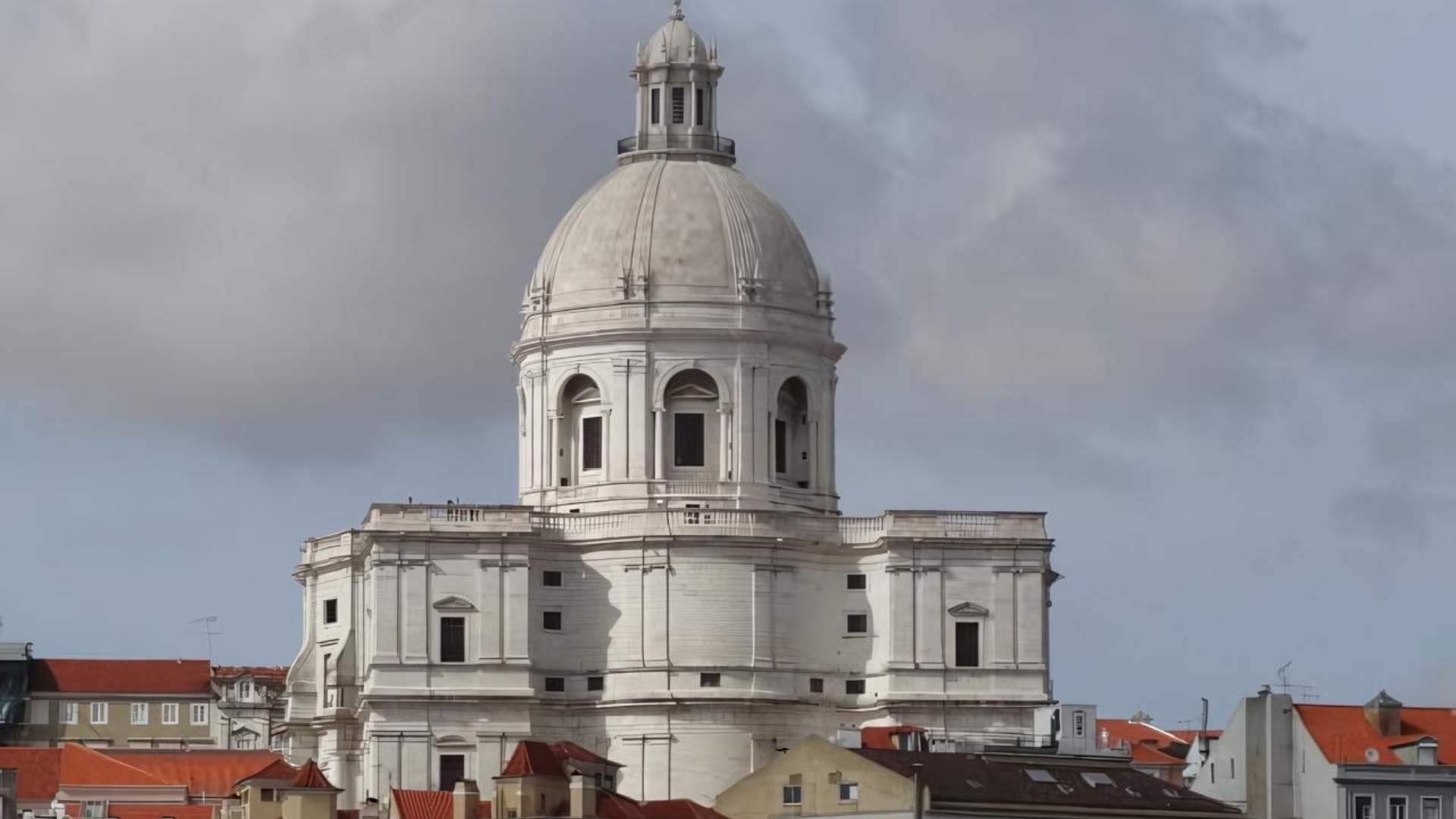
Continuing along the Tagus River, the prominent white dome of the Panteão Nacional – National Pantheon captures our attention. Originally the Church of Santa Engrácia, constructed in 1682 and located in the historic Alfama district. It was transformed into the National Pantheon in 1916, with the iconic dome being added in 1966. The National Pantheon serves as a final resting place and a tribute to Portuguese citizens who have made notable contributions in various fields including public service, military, culture, arts, science, and the protection of human dignity and freedom. Its architectural significance also makes it a prominent and key landmark in Lisbon.
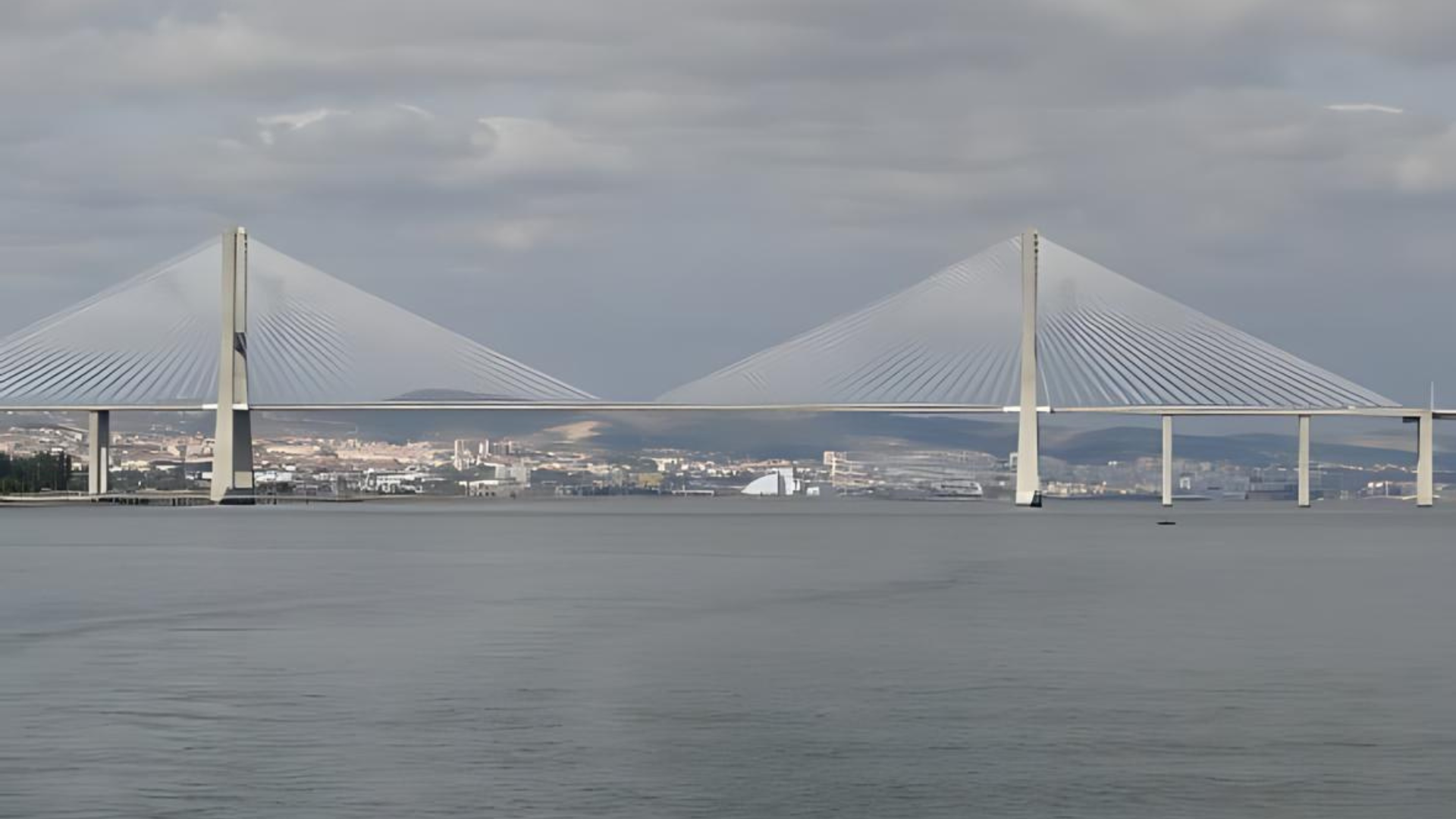
Cruising along the Targus River at a relacing pace, it’s clear to see that Lisbon’s skyline is defined not only by its historic monuments but also by its impressive bridges, including the Vasco da Gama (cable stayed) Bridge. Constructed in 1998, just in time for the Expo ’98 in Lisbon, which celebrated the 500th anniversary of Vasco da Gama’s sea voyage to India and the Orient, after whom the bridge is named.
This bridge was built to alleviate traffic congestion in the capital, and to facilitate the north-south traffic flow across the Tagus River. It extends from the capital’s Sacavém district in the north to Montijo on the southern side. Including its viaducts, the bridge spans a total length of 17.2 km making it one of the longest bridges in Europe. Supporting six road lanes where the typical speed limit is 120 km/h, similar to that on motorways. However, one section of the bridge has a reduced speed limit of 100 km/h, during hazardous weather conditions such as wind, rain, or fog, with the speed limit further reduced to 90 km/h to ensure safety.
The Vasco da Gama Bridge remains a symbol of Portuguese innovation and a testament to the country’s rich and long-standing maritime heritage and the role that the Targus River contributes to Portugal’s capital throughout the years.
Approaching the Vasco da Gama Bridge also marks the turnaround point on our cruise, after which we navigate back along the Tagus River, offering more of the city’s landmarks from a different perspective.
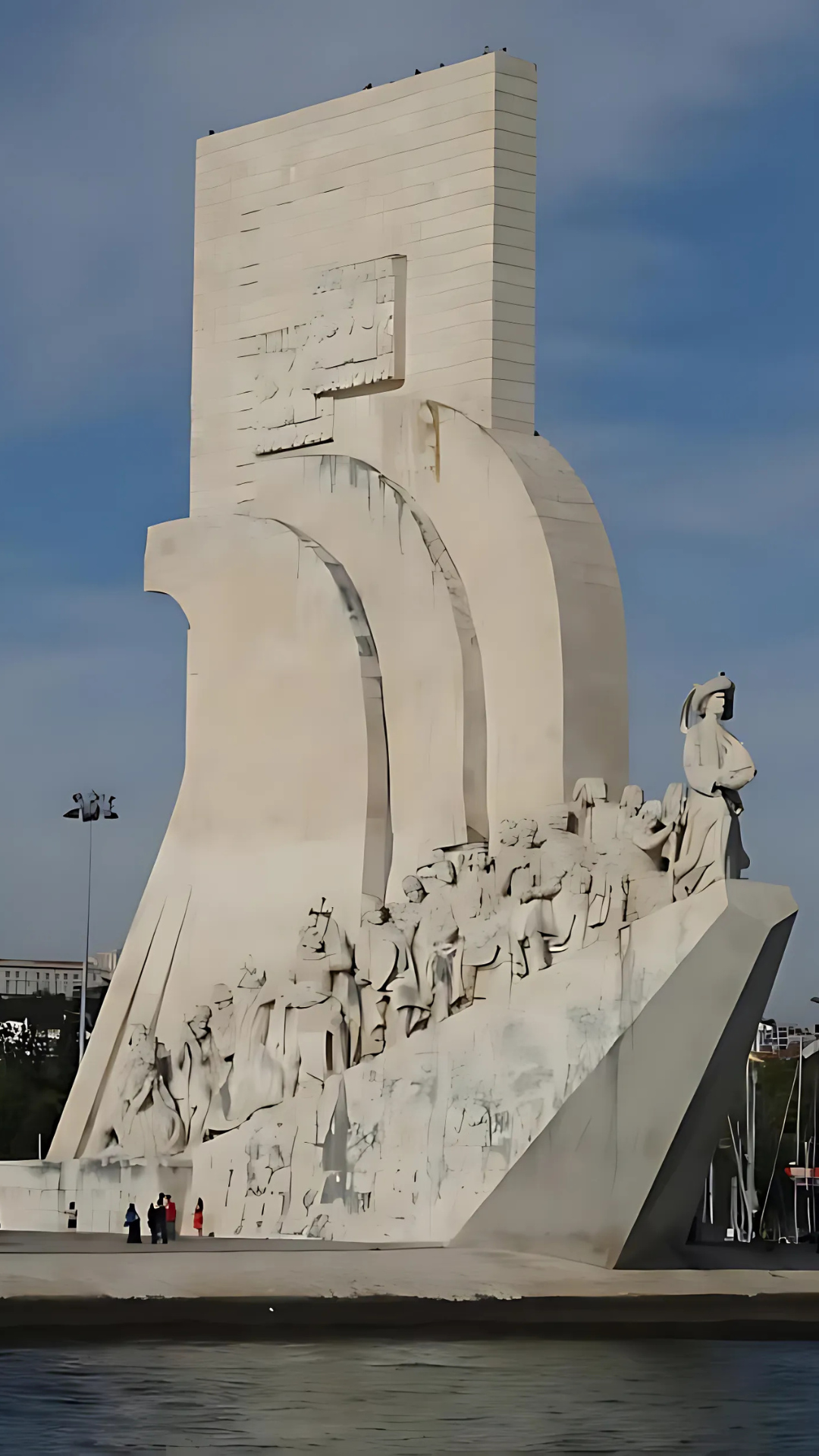
Relaxing and enjoying the sites, our cruise continues and passes by the Padrão dos Descobrimentos – Monument to the Discoveries, a prominent architectural landmark located in the Belém district on the northern bank of the Targus River.
The monument stands were ships once departed to explore and trade with India and the Orient during the 15th and 16th centuries and celebrates the Portuguese Age of Discovery. It was originally constructed for the Portuguese World Exhibition in 1940, and later rebuilt in 1960 to commemorate the 500th anniversary of the death of Prince Henry the Navigator, a central figure in the early days of the Portuguese Empire.
Designed in the shape of a ship’s prow, the monument stands 52 meters tall, pointing out towards the Atlantic Ocean.
The façade showcases sculptures of 33 figures from the Portuguese Age of Discovery, including explorers, cartographers, artists, scientists, and missionaries. Prince Henry the Navigator is prominently positioned at the front of the monument, holding a model of a carrack (a masted sailing ship), and symbolising his leadership and vision. A powerful tribute to the courageous and innovative Portuguese explorers and their significant contributions to maritime exploration.
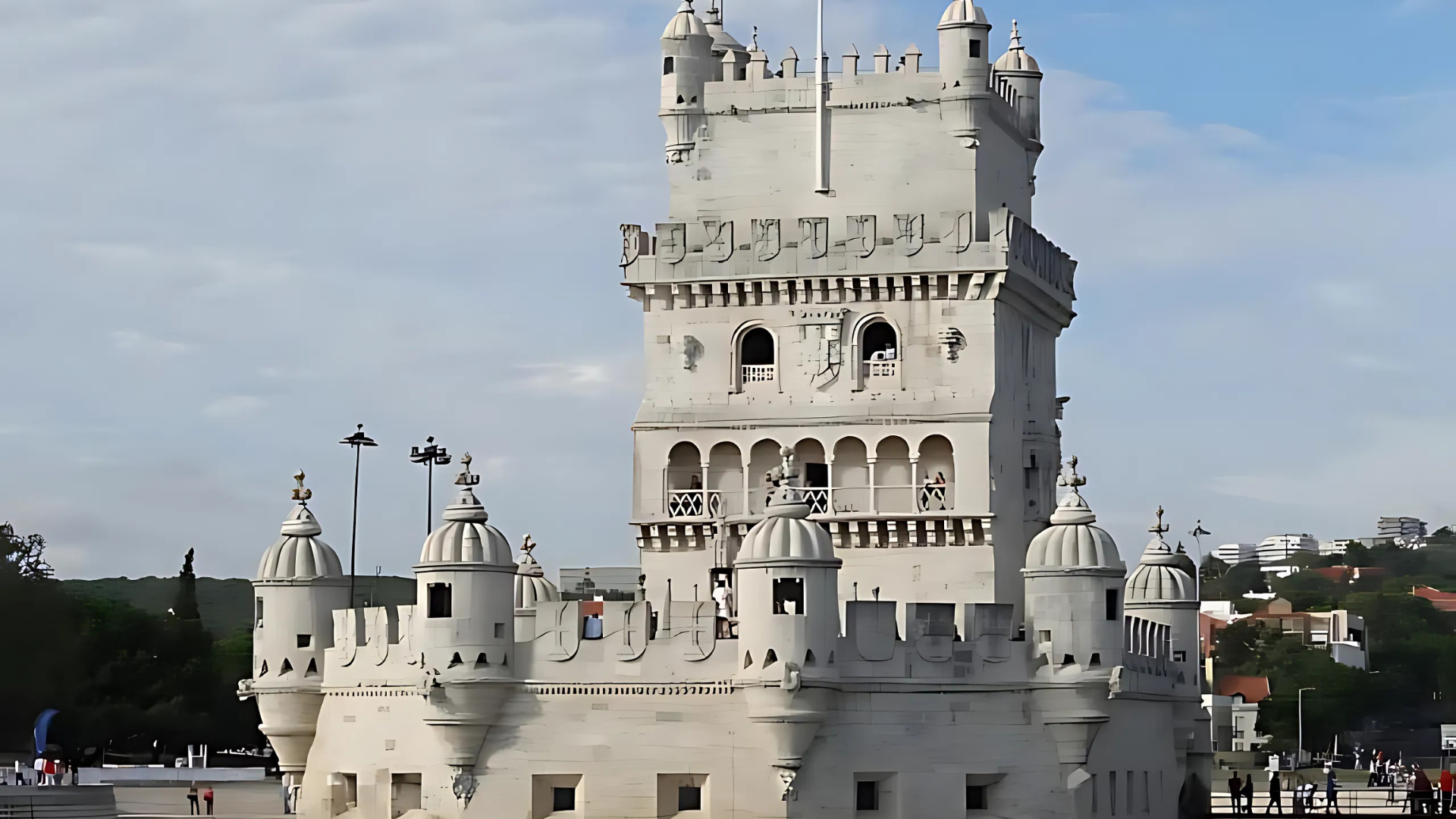
As we make our way back towards the city, on our left stands the Torre de Belém – Belém Tower, an historic fortress located in the Belém district. Built between 1514 and 1520 during the reign of King Manuel I of Portugal, this iconic structure was designed with a bastion equipped with cannons, a four-story tower, and a terrace. It was part of a defensive system guarding the Tagus River estuary, intended to protect Lisbon and control access to its port.
The elaborate tower showcases a distinctive architectural fusion of Moorish, Gothic, and Renaissance styles, featuring decorative stonework, ornate battlements, and sculpted figures that underscore Portugal’s maritime prowess during the Age of Discovery.
Designated a UNESCO World Heritage Site in 1983, Belém Tower has served various roles, including a customs checkpoint, political prison, and lighthouse. Today, it is one of Lisbon’s most iconic landmarks, attracting visitors from around the world who are drawn to its rich history, architectural beauty, and the breathtaking views it provides of the Tagus River and surrounding areas.
Note: You have the option to disembark here, but I’ve chosen to continue the cruise and return to our starting point at the Palace Square ferry terminal.
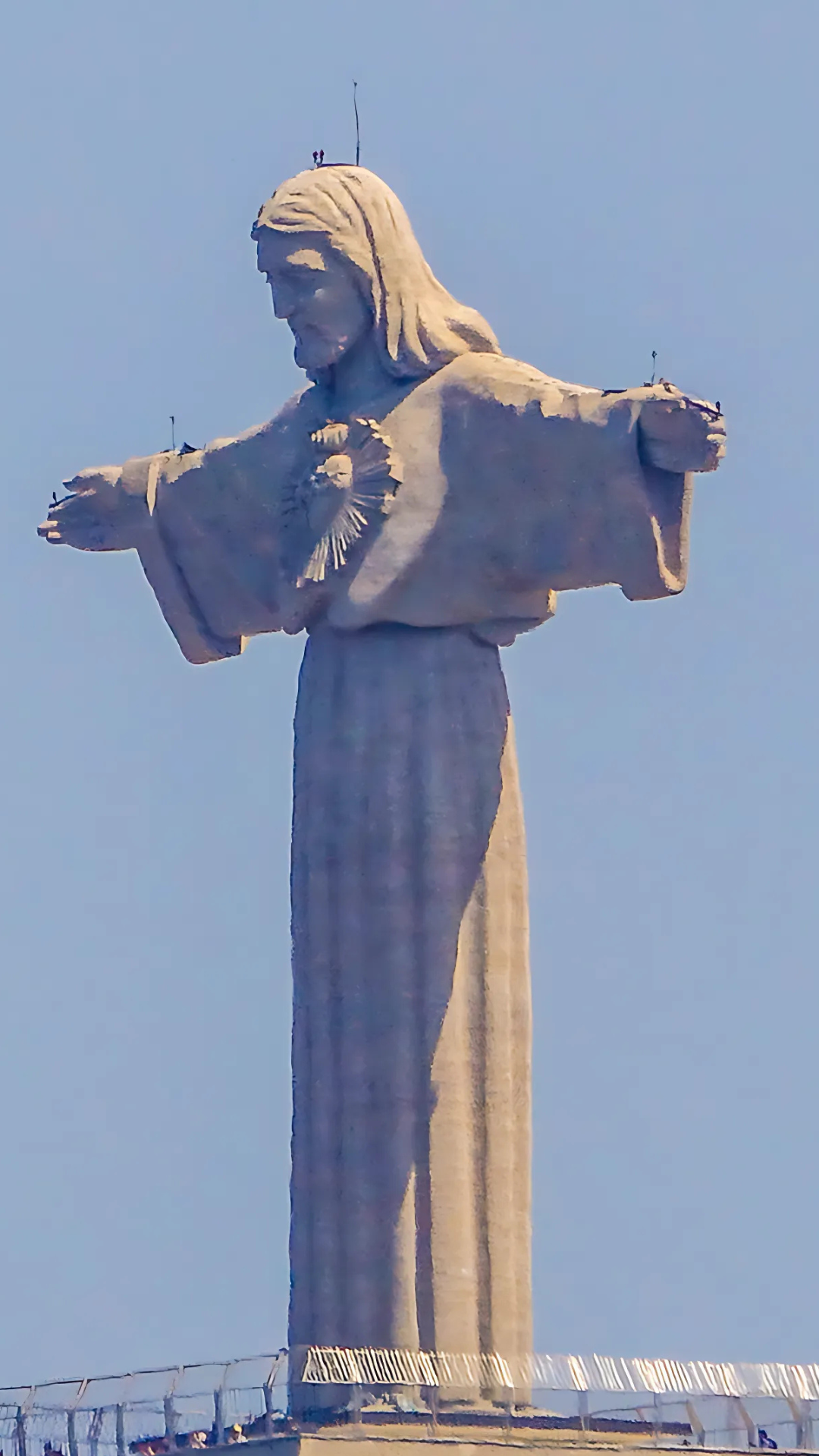
As our cruise continues, we see the imposing Santuário de Cristo Rei – The Sanctuary of Christ the King, which stands tall on the southern shores of the Tagus River in Almada. The entire structure reaches a height of 110 meters, composed of a 28 meter statue atop an 82-meter pedestal.
Inspirated by Rio de Janeiro’s Christ the Redeemer, the Cristo Rei statue began construction in 1950, and was inaugurated in May, 1959 in acknowledging Portugal’s gratitude for being spared the horrors of World War II.
Overlooking Lisbon and the 25th of April Bridge, the monument symbolizes peace and acts as a guardian watching over the city.
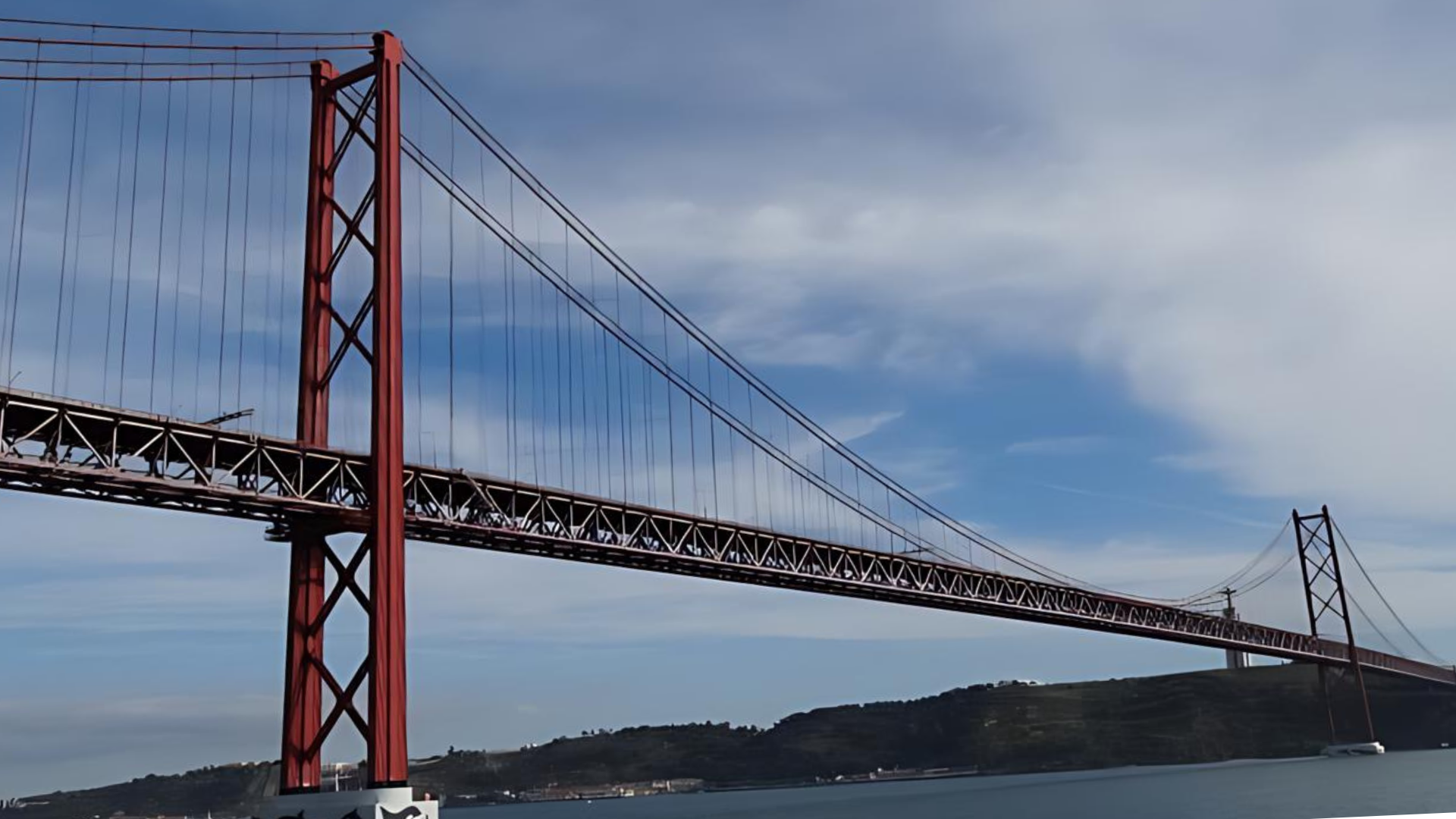
The Ponte 25 de Abril – 25th of April Bridge, originally known as the Salazar Bridge named after the Portuguese Prime Minister António de Oliveira Salazar, who governed from 1932 – 1968. The suspension bridge connecting the city of Lisbon to the district of Almada (and home to the statue of Cristo Rei) on the left bank of the Tagus River was inaugurated on 6 August, 1966. Built by an American Bridge Company, its often likened to the Golden Gate Bridge in San Francisco, USA, due to its similar colouring and style.
Following the Carnation Revolution on 25 April, 1974, which overthrew Portugal’s Estado Novo regime, the bridge was renamed the 25th of April Bridge to commemorate the revolution. This name change was significant as it marked the transition of Portugal from dictatorship to democracy.
The bridge extends across 2.277 kms, with its overall length including viaducts reaching approx. 3.2 kms. Accommodating six road lanes, and the introduction of a railway line in 1999, providing greater ease and flow of the cross river connection, making this bridge a vital contribution to Lisbon’s transport system.
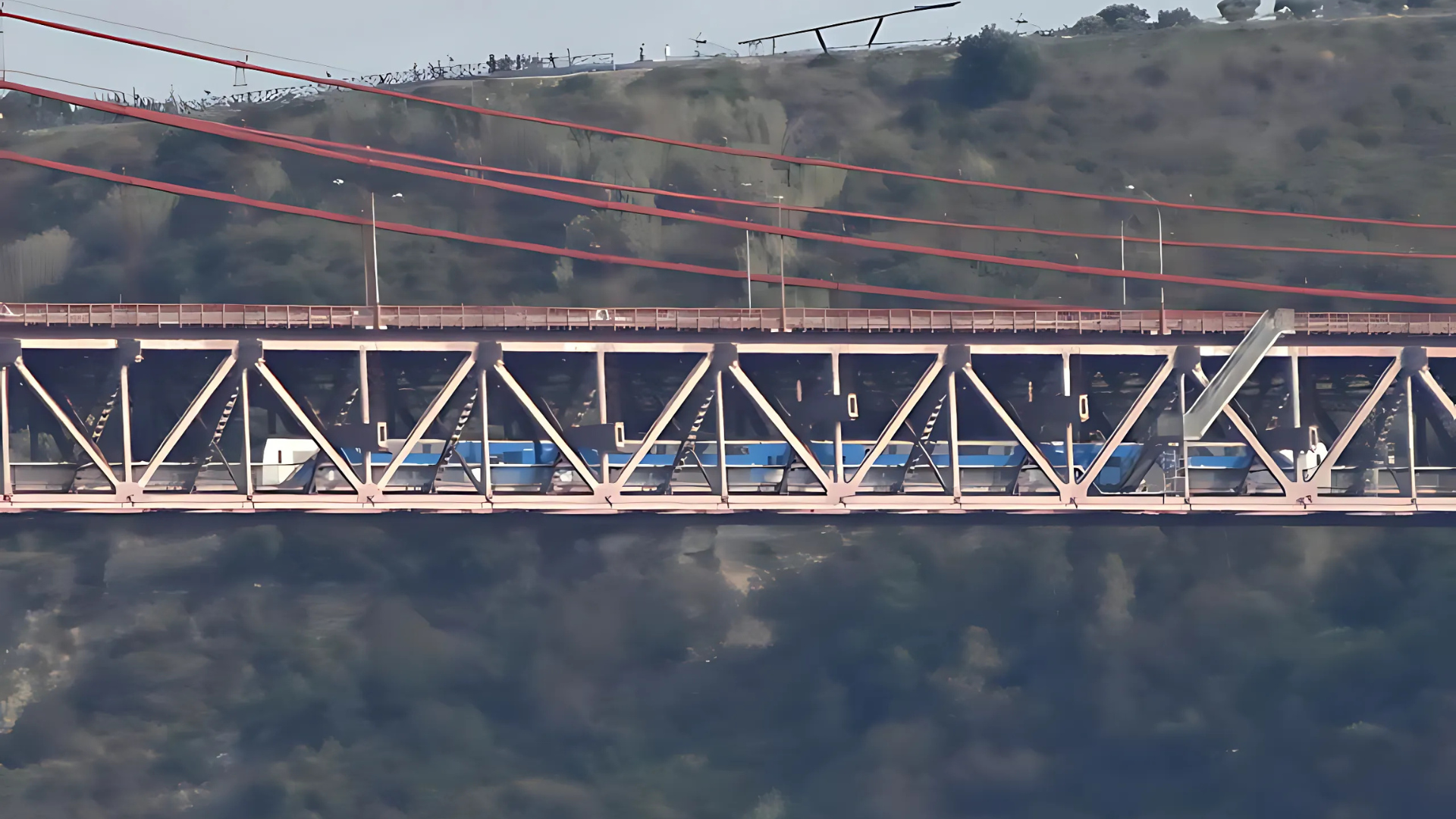
Then approach our departure point at the Palace Square ferry terminal, I catch a final glimpse of the historic districts of Alfama and Baixa cascading down to the Tagus River. Cruising along this waterway offers a unique perspective of Lisbon, providing a tranquil yet enchanting view of the capital that captivates every visitor.
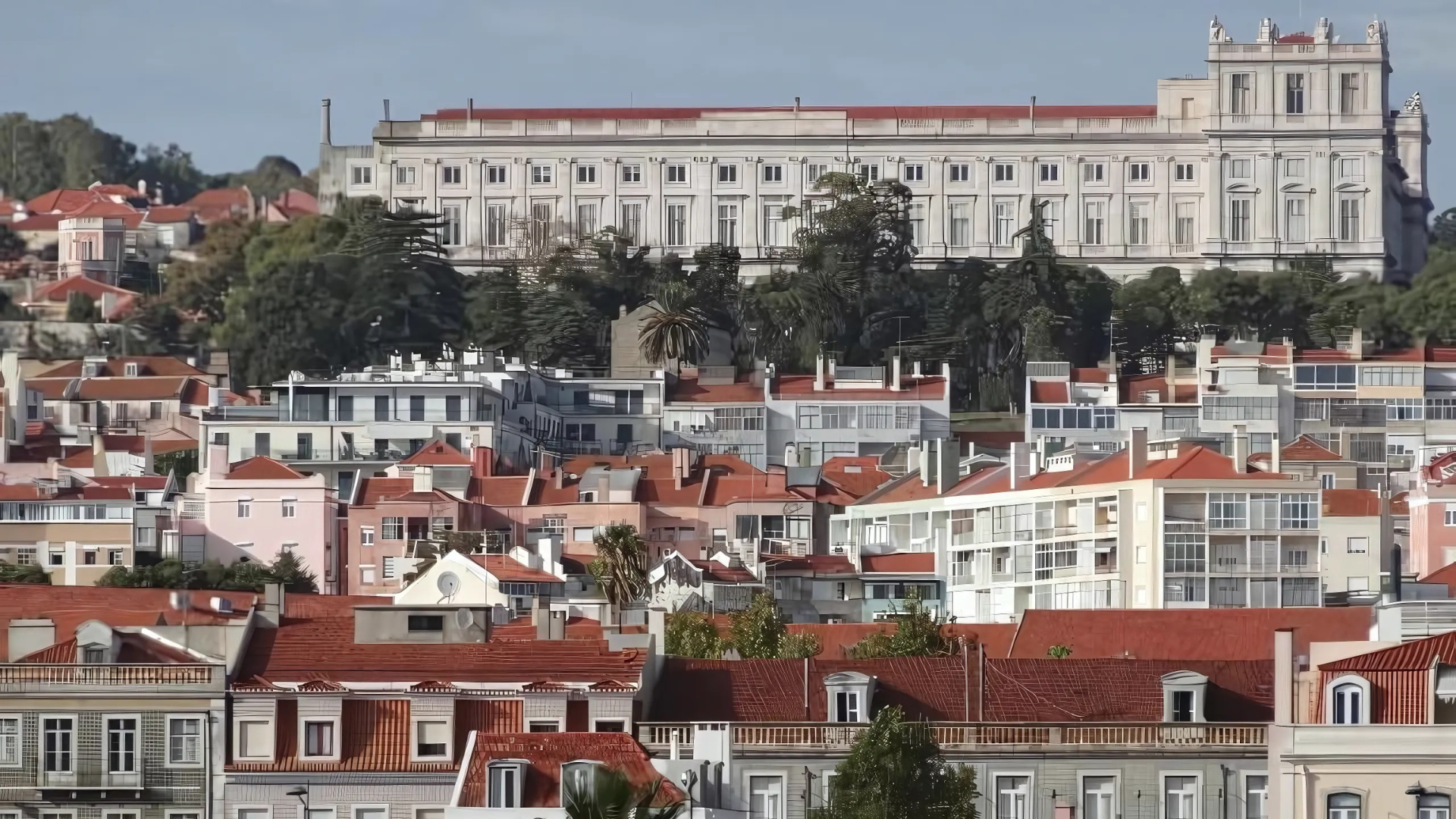
Lisbon, the vibrant heart of Portugal, captivates countless tourists and travellers every year. It’s easy to fall for this enchanting European city, which resonates like a fado song, harmonising the past with the present. Lisbon embodies passion, nostalgia, valour, and the spirit of great explorers. For me, it was love at first sight with this city. Or perhaps, more accurately, I was in love with Lisbon even before we met, on a warm autumn morning embraced by a soft breeze.
My personal connection with Lisbon has been deeply influenced by the astrological placement of the North Node in my birth chart, also known as horoscope, inviting me on a spiritual quest. This placement ties my destiny to the exploration and expression of my artistic and creative talents, and influencing my psychic and intuitive abilities and providing a greater deep of insights into my unique contributions to humanity.
With Venus and Neptune bringing passion to centre stage, casting everything in a dreamy glow. This celestial alignment enabling me to immerse myself into the emotive narratives expressed through tile art, resonate with the harmonious tunes of music, and appreciate other forms of architectural beauty, helping me to navigate these feelings without falling into excessive sentimentality.
In this Soul Travel blogs of my journey in Portugal, I explore the city of Lisbon's, vibrant culture and rich history, that wears its legacy on its walls. The craft of azulejos, Portugal’s iconic hand painted tiles, adorns churches, palaces, and humble alleyways alike, telling tales of maritime discoveries, devotion, and artistic expression. Wandering through Alfama’s narrow streets reveals the intricate beauty of these ceramic masterpieces, a mosaic of art, culture, and timeless charm.
See you soon,
Consider signing up to receive new Soul Travel blogs, travel reflections, and astrocartography insights as new destinations are shared.

✨ If this story resonated with you, you are warmly invited to continue the journey in a way that feels aligned with you.

✨Explore personalised insights through consultations

✨ Begin with ‘The Journey’ Orientation

✨ Listen to Destined Places podcast stories
✨ Save and share Soul Travel inspiration on Pinterest