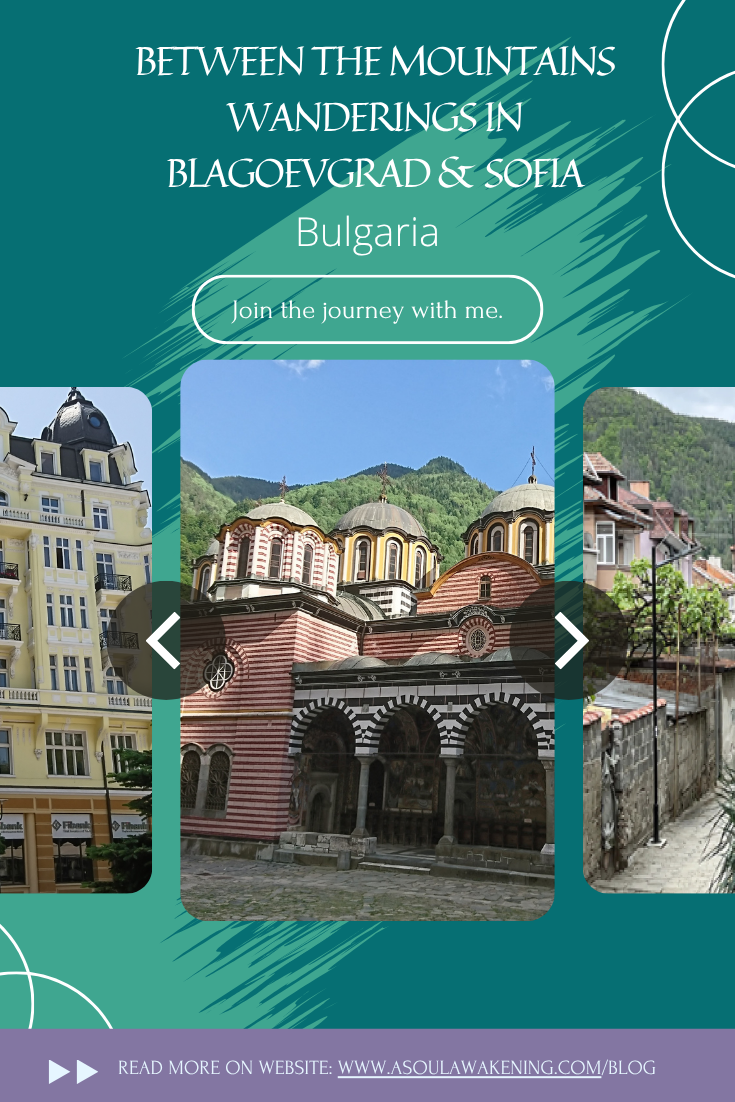
Between the Mountains | Wanderings in Blagoevgrad & Sofia
When the Universe presents the welcome opportunity to spend a week in Bulgaria, soaking in its history, atmosphere, and sharing it all with a delightful friend; you get yourself on a plane and go.
Geographically, Bulgaria bridges East and West, it’s position evident in the country’s rich layers and striking natural beauty. Mountain ranges and monasteries, Ottoman echoes and Orthodox icons, all stitched together into a land both grounded and deeply historical.
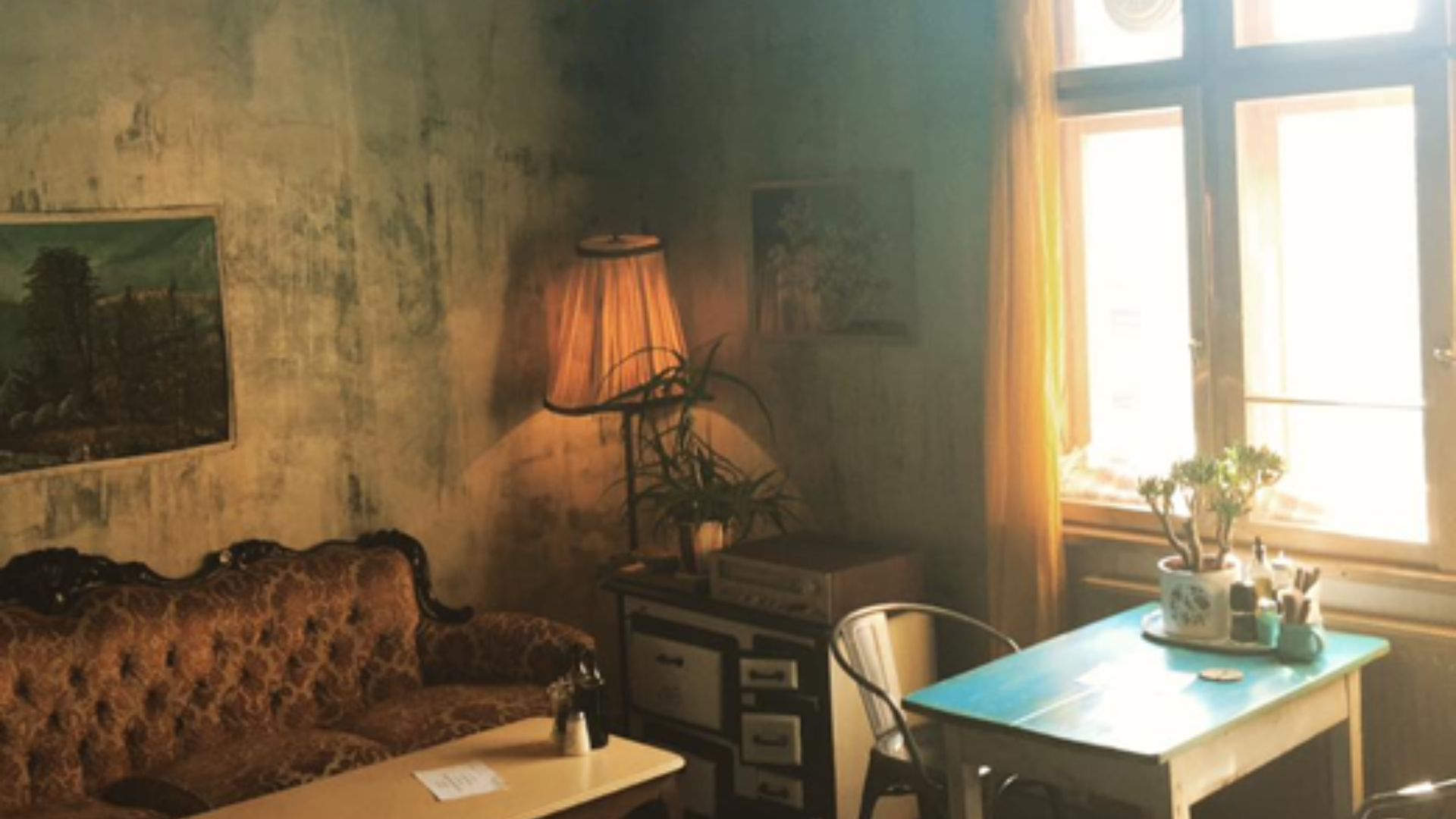
I arrived in Sofia, Bulgaria’s capital during mid-morning on an early summer’s day, just in time for a long, laughter filled lunch with my friend at Made in Blue. Housed in what was once a crumbling old home, Made in Blue is now a soulful revival of past and present: its retro interior and soft blue façade giving way to a leafy garden terrace.
A non resident cat had clearly claimed its favourite spot, curled up in the cool soil of a potted plant by the front door, an unbothered little custodian of this charming space. With glasses of celebratory wine in hand, we caught up on stories and savoured the feeling of being exactly where we were meant to be.

This quirky, quaint café feels like home, though not in any particular national style. Rather than fitting neatly into one culinary tradition, be that Bulgarian, Italian, French, or Turkish, it creates its own flavourful story. Made in Blue offers a refreshingly eclectic menu filled with homemade, flavour rich dishes. Think: falafel with creamy hummus and a vibrant Middle Eastern fattoush salad, or seasonal creations like a zucchini mash-topped chicken fillet, and a slow-cooked pork carnitas burrito that wouldn’t be out of place on a well loved street corner in Mexico City. The desserts being carried to nearby tables looked equally inviting, delicately plated, temptingly sweet, and clearly well loved.
With our bellies happily content and a glass of chilled white wine easing us into the afternoon, my friend suggested we stretch our legs and take a wander around the city before returning later for a well earned dessert treat.
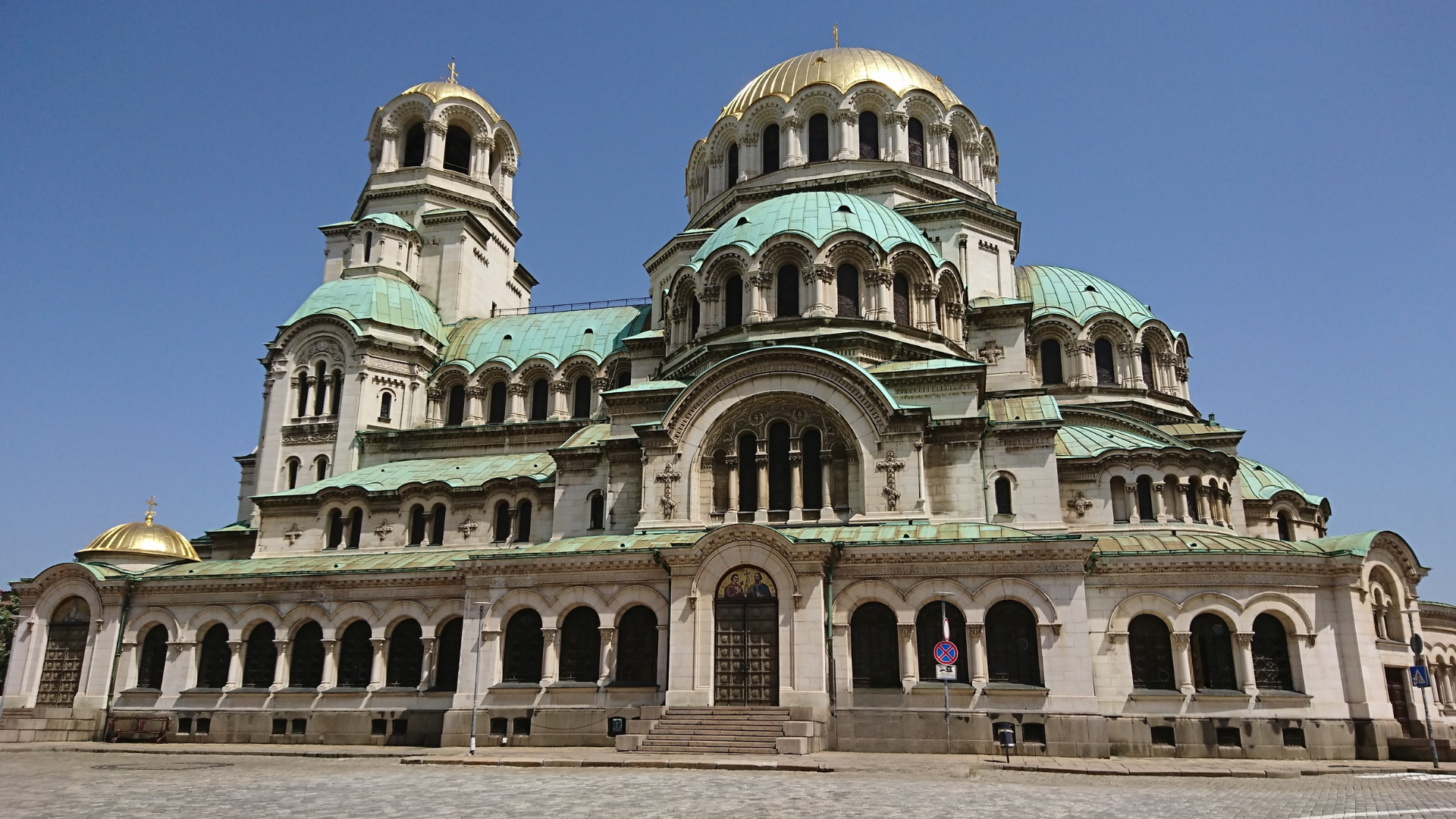
Leaving the café, we made our way towards one of Sofia’s most iconic landmarks, the Alexander Nevsky Cathedral. This grand cathedral stands as Bulgaria’s largest Orthodox church, a symbol of faith, remembrance, and architectural elegance.
Following the end of the Russo-Turkish War in 1878, when Bulgaria gained independence after centuries under Ottoman rule, this monumental cathedral was commissioned as a token of gratitude, and in memory of the thousands of Russian, Bulgarian, Ukrainian, Moldavian, Finnish, and Romanian soldiers who gave their lives in the fight for freedom during 1877–1878. Named after Grand Prince Alexander Nevsky, a Russian military commander and saint, construction of the cathedral began in 1904, was completed in 1916, and later sanctified in 1924.
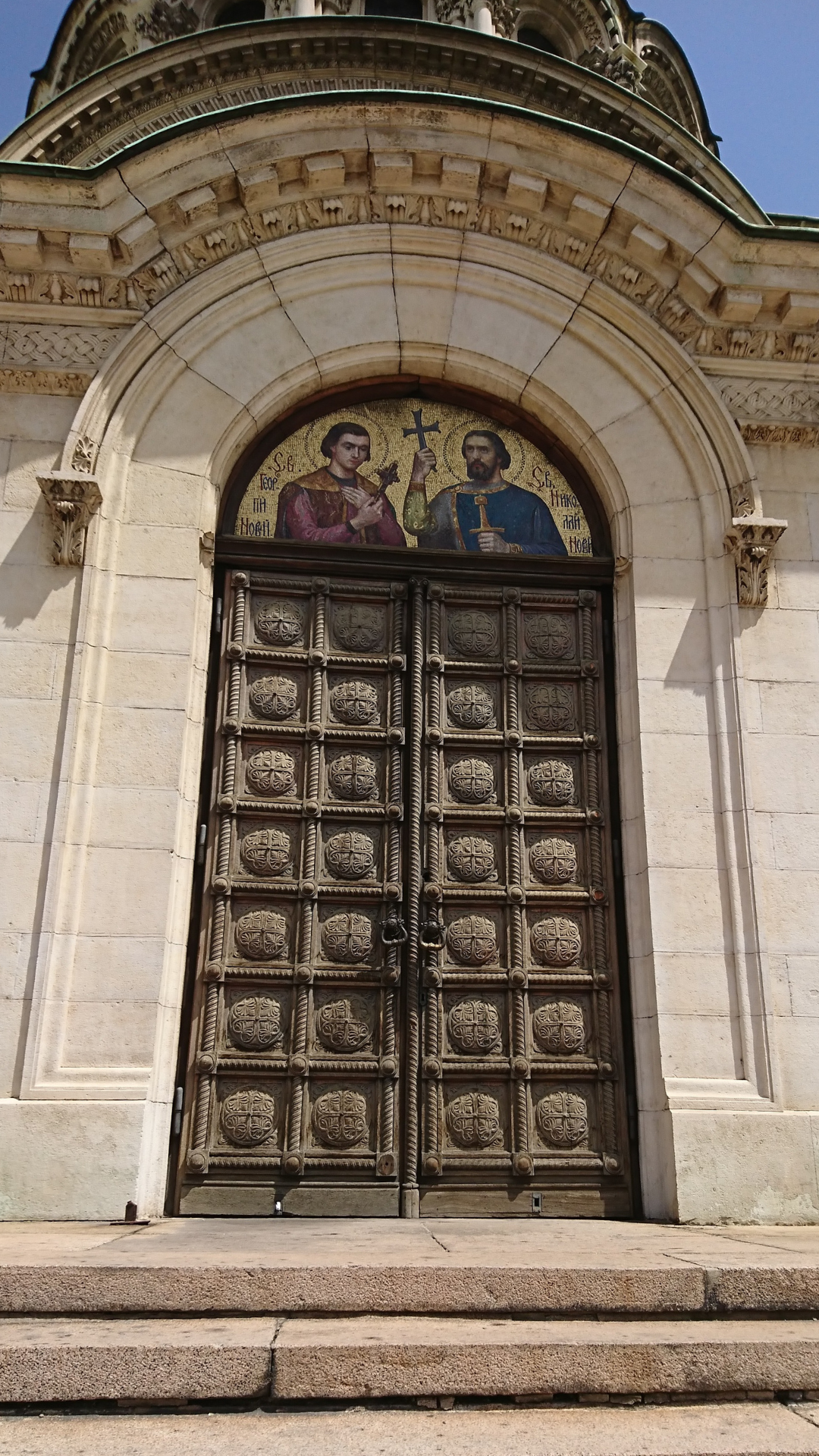
Drawing inspiration from 11th century Byzantine religious architecture, the cathedral is topped with ornate gold leaf domes and guarded by heavy timber doors.
Its interior offers sanctuary for up to 5,000 worshippers.
Five days later, I returned, this time stepping quietly into the darkness of its dimly lit interior.
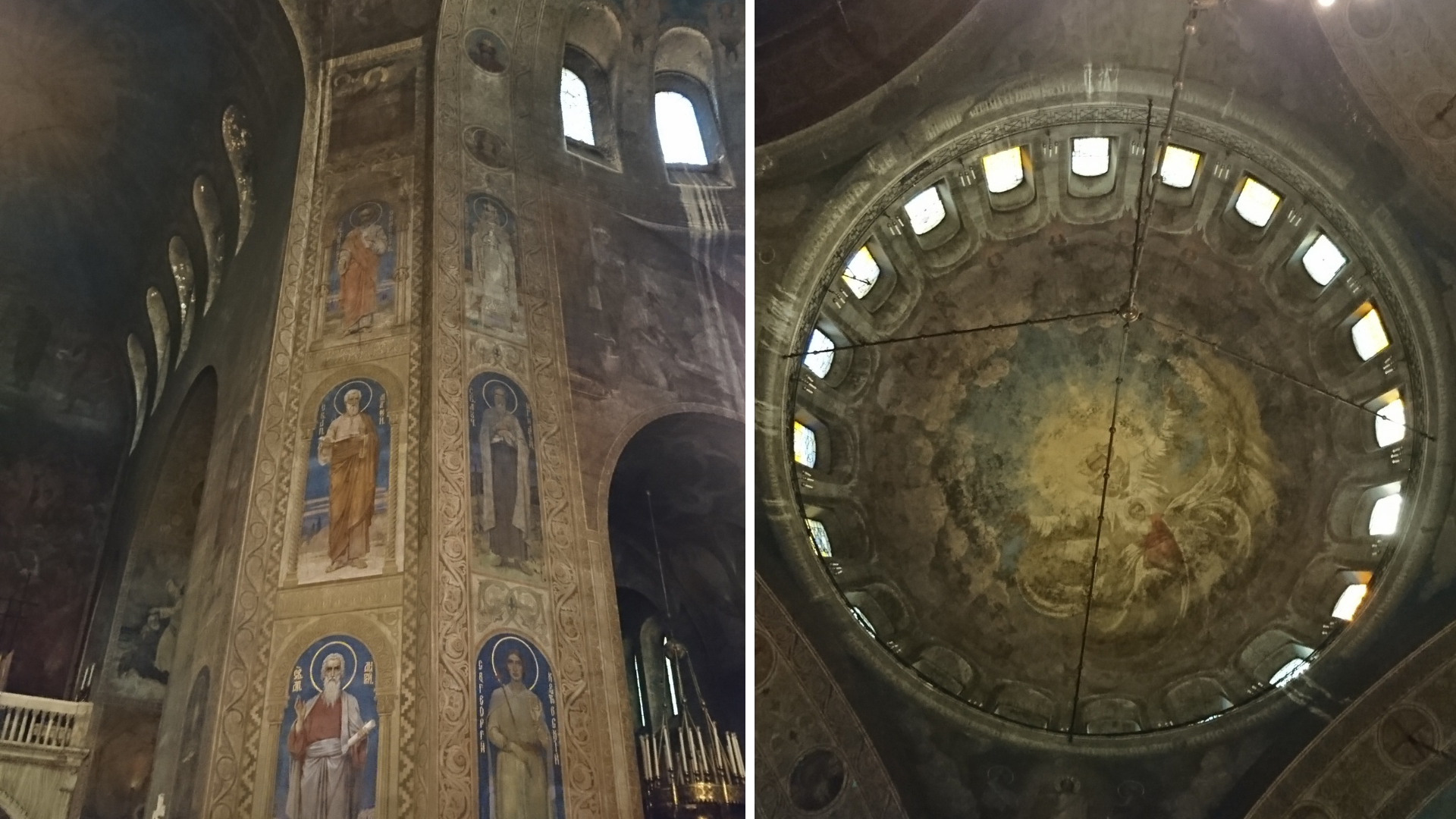
The quiet space invited reflection, while the high columns and detailed frescoes created an atmosphere both humbling and magnificent.
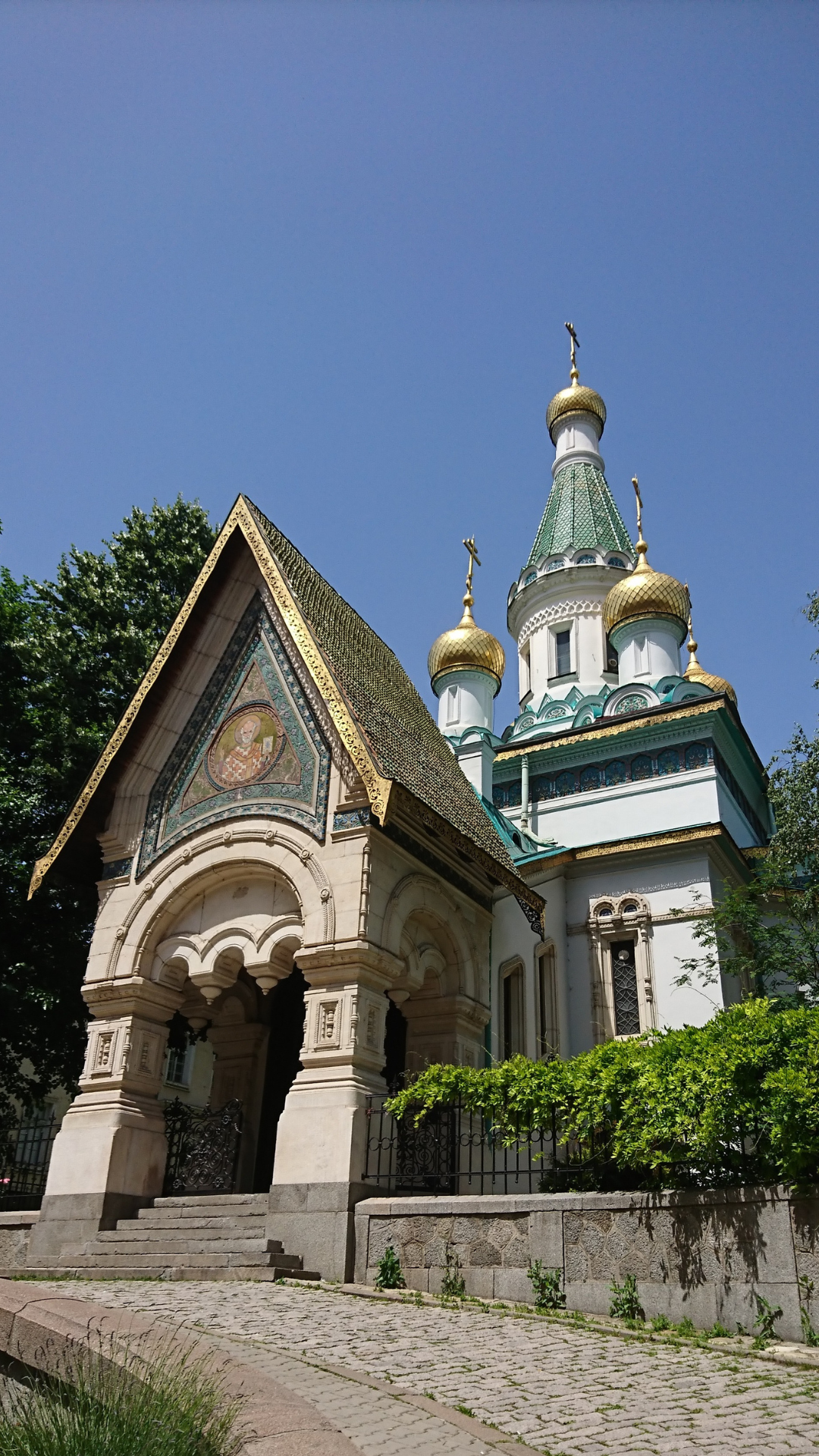
A short walk from the cathedral, along the tree lined Tsar Osvoboditel Boulevard, brings you to another place of worship, one that feels at once intimate and storied.
The Church of St Nicholas the Miracle Maker.
It’s easy to see why it’s affectionately referred to as the Russian Church. Built on the site of the former Saray Mosque, which was destroyed in 1882 after Bulgaria’s liberation from Ottoman rule, this petite yet striking church was completed in 1914.
With five golden domes and a cheerful façade reflecting 17th century Moscow architecture, it feels almost like a fairytale nestled in the city’s historic heart.
The church owes its presence to a Russian diplomat who petitioned for a dedicated space where Russian expatriates could worship, and eventually became the official church for the Russian Embassy.
In August 1921, Vladyka Seraphim, a Russian born bishop, was appointed Director of the Russian Orthodox monastic communities in Bulgaria. He arrived at St Nicholas and quickly became more than just a figure of religious authority. During his early years, he formed a committee to aid the poor and vulnerable: securing pensions, homes for the invalid, free hospital treatment, and offering meals in his own home. His sermons called on parishioners to support this cause, and they did, in quiet acts of generosity.
By 1934, he had been appointed Archbishop, and it wasn’t long before he was widely known for his gentle compassion, and his gift for miracles.
During the nearly fifty years of Communist rule in Bulgaria, the church stood quietly amid growing repression. The monarchy had been abolished, and religious practices were discouraged, even policed. People were barred from attending services, baptising their children, or holding religious funerals. On holy days, authorities would sometimes station police outside churches to deter worshippers from entering. And yet, hundreds continued to seek the Archbishop’s help. It’s said that the day before his passing in 1950, he consoled a grieving woman with these words: “When I am gone, write letters.” Today, his tomb rests in the crypt of the Church of St Nicholas, and it remains a place of pilgrimage, visited by those near and far who still leave handwritten letters, asking for his guidance and miracles.
On a personal note, without knowing any of this history at the time, this church happened to be the first one I stepped into in Bulgaria. I quietly lit a candle … and took a moment to acknowledge what was at the time, the passing of my own father.
By mid-afternoon, we found ourselves, like many others, drawn to the calm embrace of the City Garden (Градска градина), Sofia’s oldest and most beloved public park. There, on the cool green lawns beneath the gracious shade of large, leafy trees, the rhythm of the day softened. Locals were out for an afternoon stroll, couples sat beneath the shade of the trees in quiet conversation, and children ran freely across the green lawns, enjoying each other’s company.
It’s a space that offers both movement and stillness, were time seems to loosen its grip, and the city takes a calming breath.
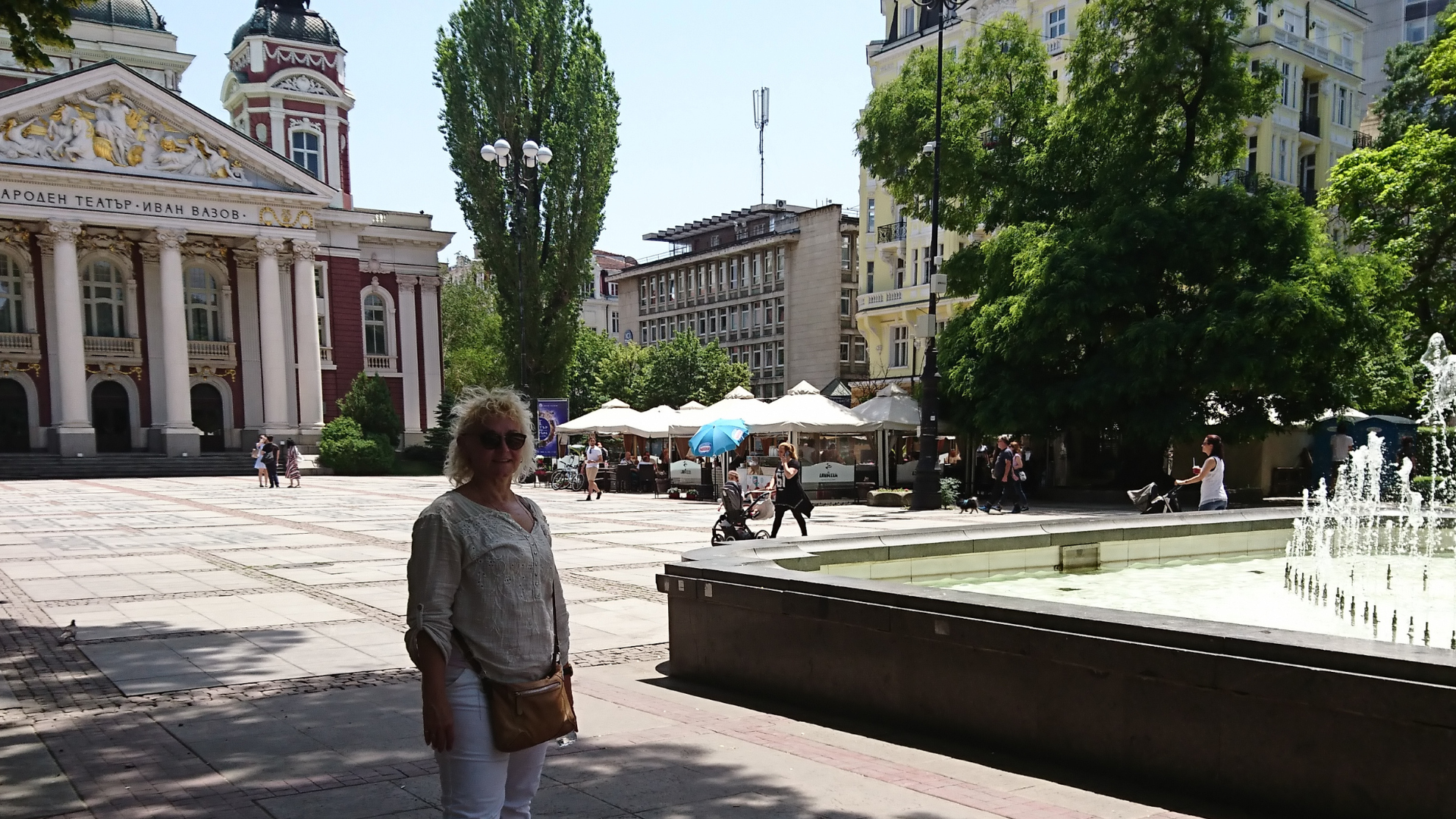
While my friend remained under the comfort of the trees, happily people watching, I wandered off to admire the water fountain and surrounding architecture. The centre walkway through the park is adorned with water features, including a poised ballerina statue and gracefully arranged fountains that catch the sunlight just so.
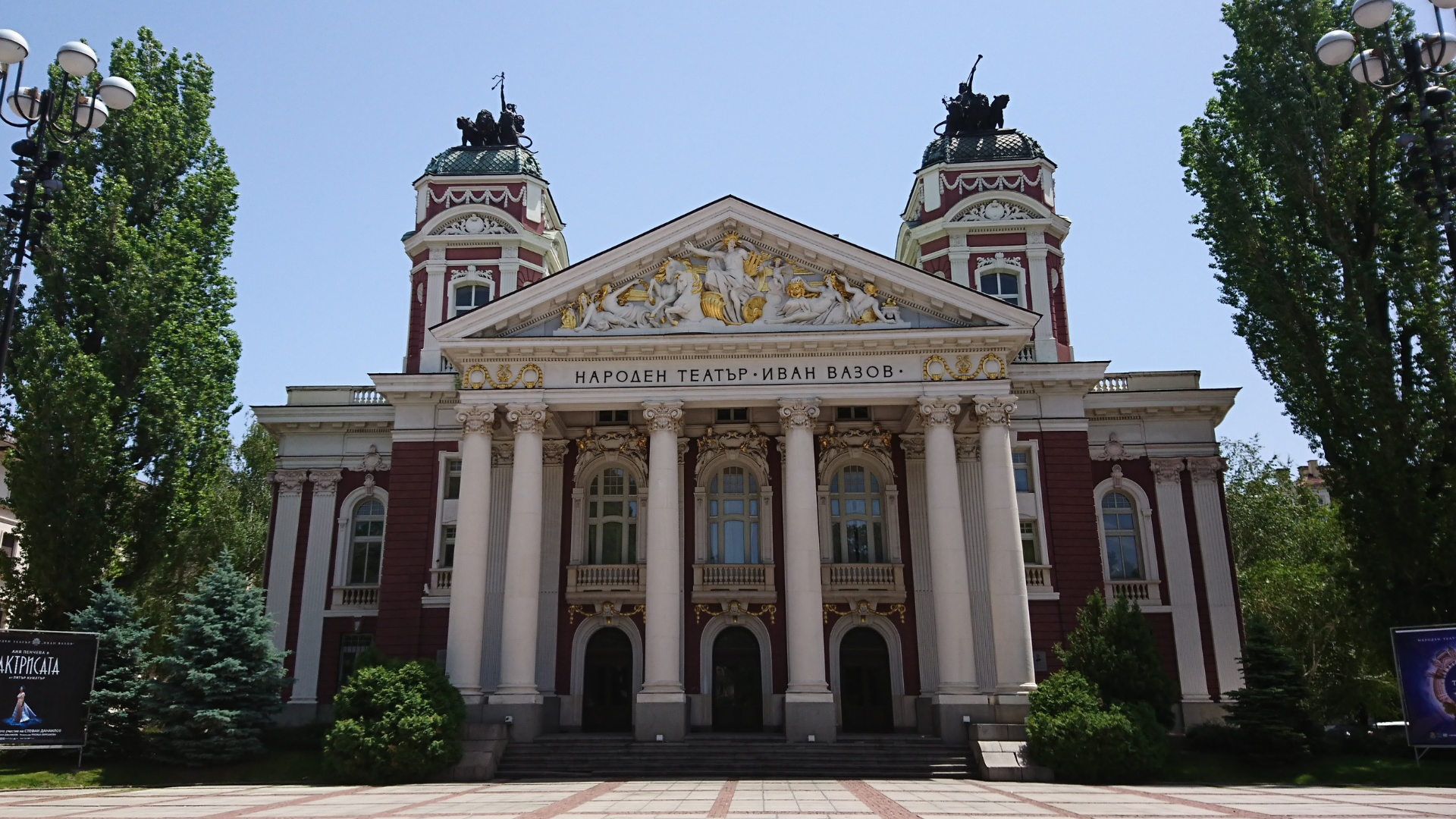
Directly ahead stands the striking façade of the Ivan Vazov National Theatre (Народен театър Иван Вазов), Bulgaria’s national theatre and another of Sofia’s iconic landmarks. Founded in 1904, it is the country’s oldest and most Authoritative theatre. Its elegant neoclassical design was crafted by Viennese architects Hermann Helmer and Ferdinand Fellner and completed in 1906. The theatre first opened its doors on 3 January 1907, though a tragic fire during an anniversary celebration in 1923 led to extensive damage. It was later restored with care by German architect Martin Dülfer and reopened in 1929.
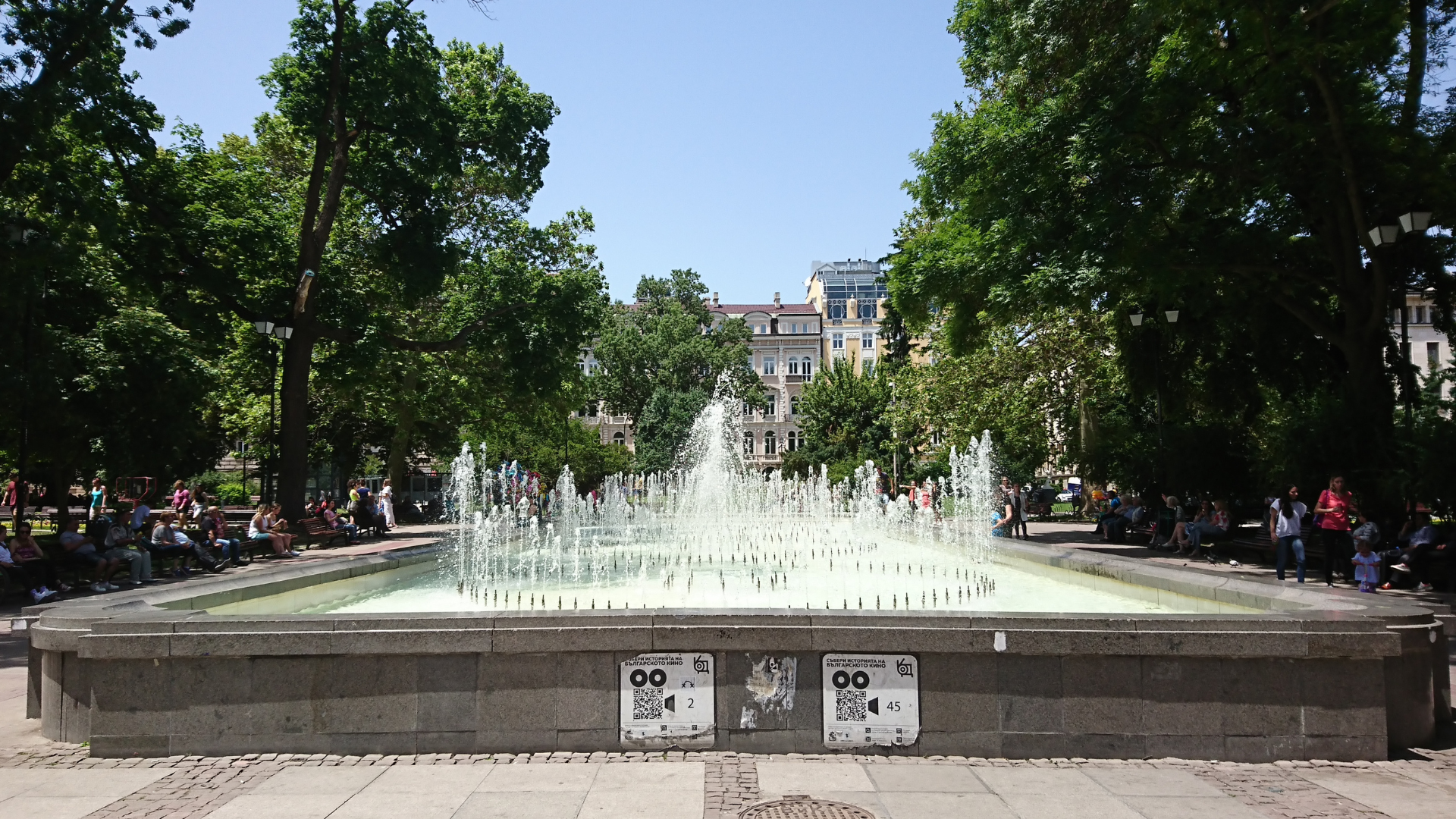
Looking back across the parkland toward the central water feature, I was struck by the quiet harmony before me. The play of water catching the light, and the calm presence of people walking by, created a sense that was both timeless and reassuring. It was one of those small yet meaningful moments where the beauty of a place quietly seeps in, where nature, culture, and history share space with the simple pleasure of being present.
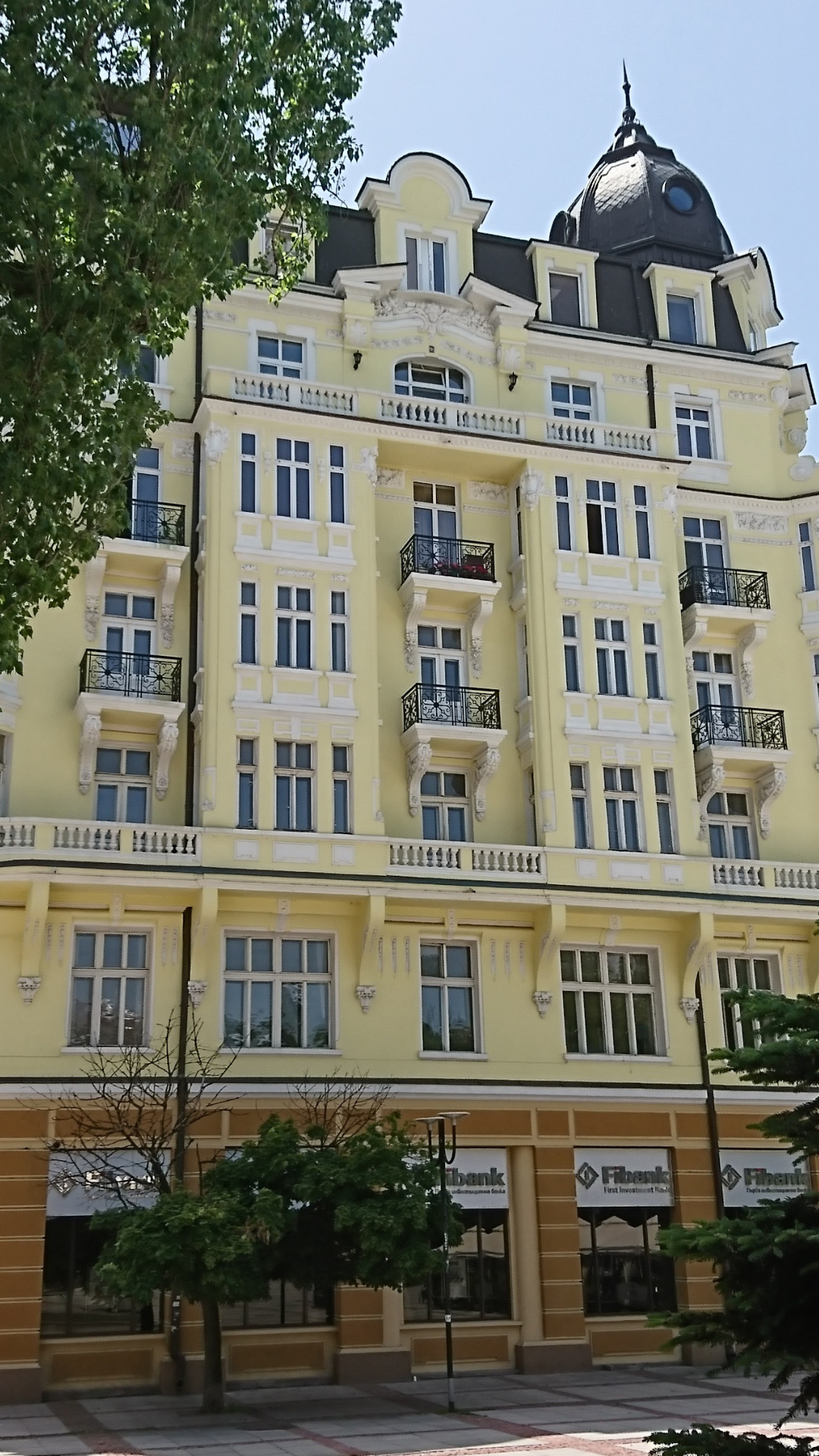
As we were leaving the City Gardens, another beautiful building caught my eye, its quaint wrought iron balcony railings and ornate carvings a quiet invitation to pause and take notice. This was the Sofia headquarters of Bulgaria’s First Investment Bank, known as Fibank. A striking example of early 20th-century architecture, its graceful façade stood as a reminder that even the institutions of finance here are housed in elegance, with thoughtful detail that echoes the city's layered past.
The area surrounding the theatre and city gardens is framed by Sofia’s beautifully designed buildings, many of them holding architectural significance in their own right. The city centre itself is paved with distinctive yellow cobblestones, an elegant and iconic feature that adds both charm and historical depth to the urban layout. These cobbled paths, accessible to both foot and vehicle traffic, thread gracefully through the heart of the city.
What I found quite heartening was how pedestrians always had the right of way. A quiet nod to civility, perhaps, in a city shaped by resilience, reverence, and artistic expression.
Having admired the sumptuous desserts earlier during lunch, my friend had suggested we wait until after our short sightseeing adventure, and by late afternoon, that sweet moment had arrived. We made our way to Confetti, a superb traditional Italian gelateria and restaurant renowned for its homemade ice cream.

The selection was nothing short of impressive, ranging from classic flavours to indulgent creations that looked more like edible works of art than desserts. Given the tempting array of 30 flavours, I opted, for now, for a classic double scoop in a cone.
Bulgaria is often associated with its Black Sea coastline, a favourite beachside destination for water lovers. But for those who only venture to the more established tourist routes, there’s a side of this country that remains wonderfully undiscovered. And it’s well worth exploring.
Its capital, Sofia (София), located in the west of the country, is Bulgaria’s largest city. Nestled at the northern foothills of the Vitosha Mountain, in the Sofia Valley, the city is enclosed by mountains on all sides. Three important passes lead into Sofia, which for millennia have served as major thoroughfares connecting the Adriatic Sea and Central Europe with the Black and Aegean Seas.
Sofia is one of the oldest capital cities in Europe, with roots that stretch back to the 8th century BC, when the Thracians established a settlement called Serdica, named after the Serdi tribe. Around 500 BC, another Thracian group, the Odrysi settled in the region and formed their own kingdom.
During the 4th century BC, the area around present day Sofia fell for a short time under the control of Philip II of Macedon and later his son Alexander the Great, as part of their expanding Macedonian Empire. However, after Alexander’s death and the fragmentation of his empire, control of the region changed hands multiple times. Eventually, by the 1st century AD, the settlement, then known as Serdica was absorbed into the Roman Empire.
The Romans developed Serdica into a significant regional town. Following the division of the Roman Empire, it became part of the Eastern Roman (Byzantine) Empire, flourishing particularly under Emperor Justinian I in the 6th century. When the Huns destroyed Serdica in 447, it was rebuilt and fortified by Justinian I, who renamed it Triaditsa.
Its strategic location once again brought prominence when it became part of the First Bulgarian Empire during the reign of Khan Krum in 809, following a long siege. It was renamed Sredets and developed into a significant fortress and administrative centre. In 971, with the fall of northeastern Bulgaria, Bulgarian Patriarch Damyan moved his seat to Sredets. The city fell to the Byzantine Empire in 1018 after repeated sieges, though it would later be reabsorbed into the restored Bulgarian Empire under Tsar Ivan Asen I.
Between the 12th and 14th centuries, the medieval town became a flourishing hub for trade and crafts, complete with civic basilicas, protective towers, public baths, and a Bouleuterion (a council house). In 1376, the city was officially renamed Sofia, meaning “wisdom” in Greek, after the Church of St. Sofia in Constantinople. Interestingly, the old name Sredets remained in common use well into the 16th century before Sofia became more widely adopted.
Sofia then fell to the Ottoman Empire in 1382, becoming the capital of the Ottoman province of Rumelia for more than 400 years. Turkish influence reshaped the city’s architectural landscape, with the construction of mosques, fountains, and public baths (hamams), appearing alongside older structures. The city’s population surged, from around 7,000 to approx. 55,000 by the mid 17th century.
Religious diversity also marked this period, with the Vatican establishing a Catholic seat in Sofia in 1610, which remained until 1715. The city had long been home to Jewish communities, dating back to at least 967, but their presence declined under Ottoman rule, and by the 16th century, with only 126 Jewish households recorded.
Throughout these many transitions, of empires, names, and religious connections, Sofia retained traces of each, which can still be seen today among its modern boulevards and historical landmarks. From Roman ruins to Ottoman architecture, Byzantine churches to socialist era monuments, Sofia is a city where centuries layer upon one another in full view.
Religiously, Sofia, and Bulgaria more broadly now identifies predominantly with Eastern Orthodox Christianity. Christianity was officially introduced to Bulgaria in 865, when an Archbishop from Constantinople was appointed. Today, around 6.7 million Bulgarians, approx. 85% of the population, are registered members of the Bulgarian Orthodox Church.
Making our way back to the car, my head was full of wander. The sun dipped lower behind Vitosha Mountain as we began the drive south towards my friend’s home in Blagoevgrad, I knew I would need to return to Sofia to experience more of its layered past, and its vibrant present. What a delightful day it had been, sightseeing in Sofia.
Just over an hour later, heading towards the Bulgarian–Greek border, passing through open stretches of countryside. The landscape began to shift, softened by the dusky colours of early evening sky.
We arrived in Blagoevgrad. A short fifteen-minute walk brought us into the heart of the city square, where the sounds of live local music filled the air. Families, couples, and groups of students had gathered to enjoy an evening of music, laughter, and connection under the stars.
This small city, nestled at the foothills of the lush Rila Mountains, holds an atmosphere that’s both grounded and quietly vibrant. It’s home to around 71,000 people and has long been cherished for its natural beauty and nearby healing thermal springs. The city’s roots stretch back to antiquity, when it was first settled by the Thracians, who were drawn to the area by its mineral waters. In time, it also became part of the Thracian Macedonian realm, and later, under Roman rule, the town developed further. Traces of its Roman past are still present, with ancient inscriptions, remnants of infrastructure, and the echo of old Skaptopara, as it was once known.
The Ottomans held this area for centuries, during which time it became a significant military outpost. It was known as Gorna Dzhumaya (or Ano Tzmaia in Greek) until mid-20th century reforms, long after it had been liberated during the First Balkan War on 5 October 1912.
Set along the Blagoevgradska Bistritsa River, which flows into the larger Struma River basin, the town is secured by its natural surroundings. The Rila Mountains, which rise beyond the city’s boundary, bring a sense of shelter and calm, as if nature herself has drawn close to protect its stories.
Set along the banks of the Blagoevgradska Bistritsa River, which flows into the larger Struma River basin, the city is surrounded by nature, mountain ranges and steeped in centuries of layered history. Evidence of ancient life can be seen in inscriptions dating back to 238 from the settlement once known as Skaptopara. Today, Blagoevgrad stands as the cultural and economic centre of southwestern Bulgaria, lively, proud, and still deeply connected to its historical roots.
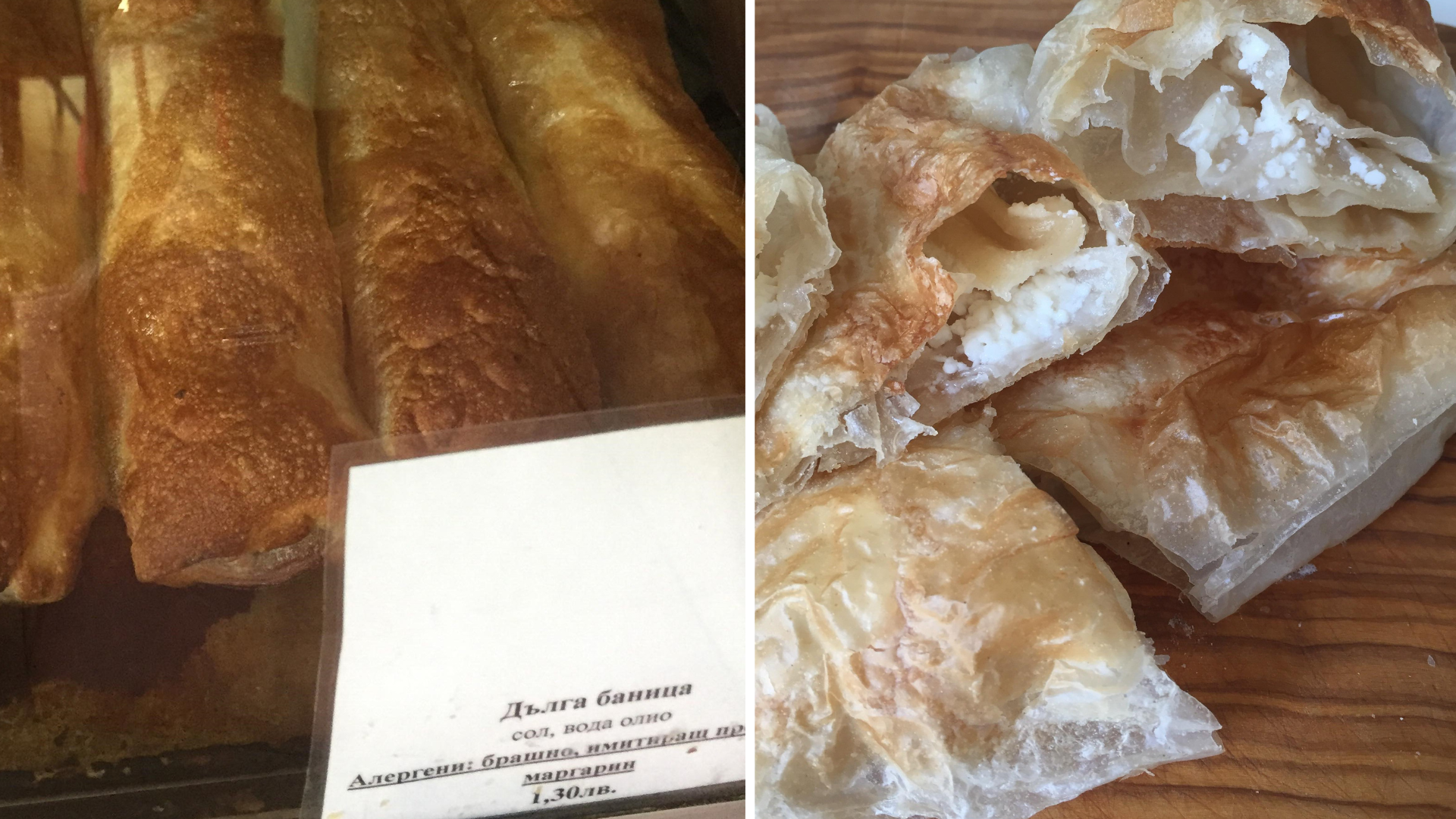
The following day began with the ease that only a relaxed Sunday morning can bring, accompanied by the scent of something freshly baked. My friend had taken a short walk to the local bakery, tucked away in the quiet neighbourhood between apartment blocks, and returned with a paper bag in hand, and the smell of warm and freshly cooked pastry. Inside were slices of Banitsa (баница), a beloved Bulgarian breakfast classic.
Typically enjoyed in the mornings, Banitsa also takes centre stage on New Year’s Eve. Made from delicate layers of pastry filled with Greek yoghurt, eggs, and feta cheese, it’s sometimes baked with small charms or handwritten fortunes tucked inside. These little surprises are said to bring luck, health, or happiness to those who find them.
This was my first time tasting Banitsa, and it didn’t disappoint. Light, golden, and rich without being heavy, it was a delicious introduction to Bulgarian comfort food, and the perfect start to a slow Sunday.
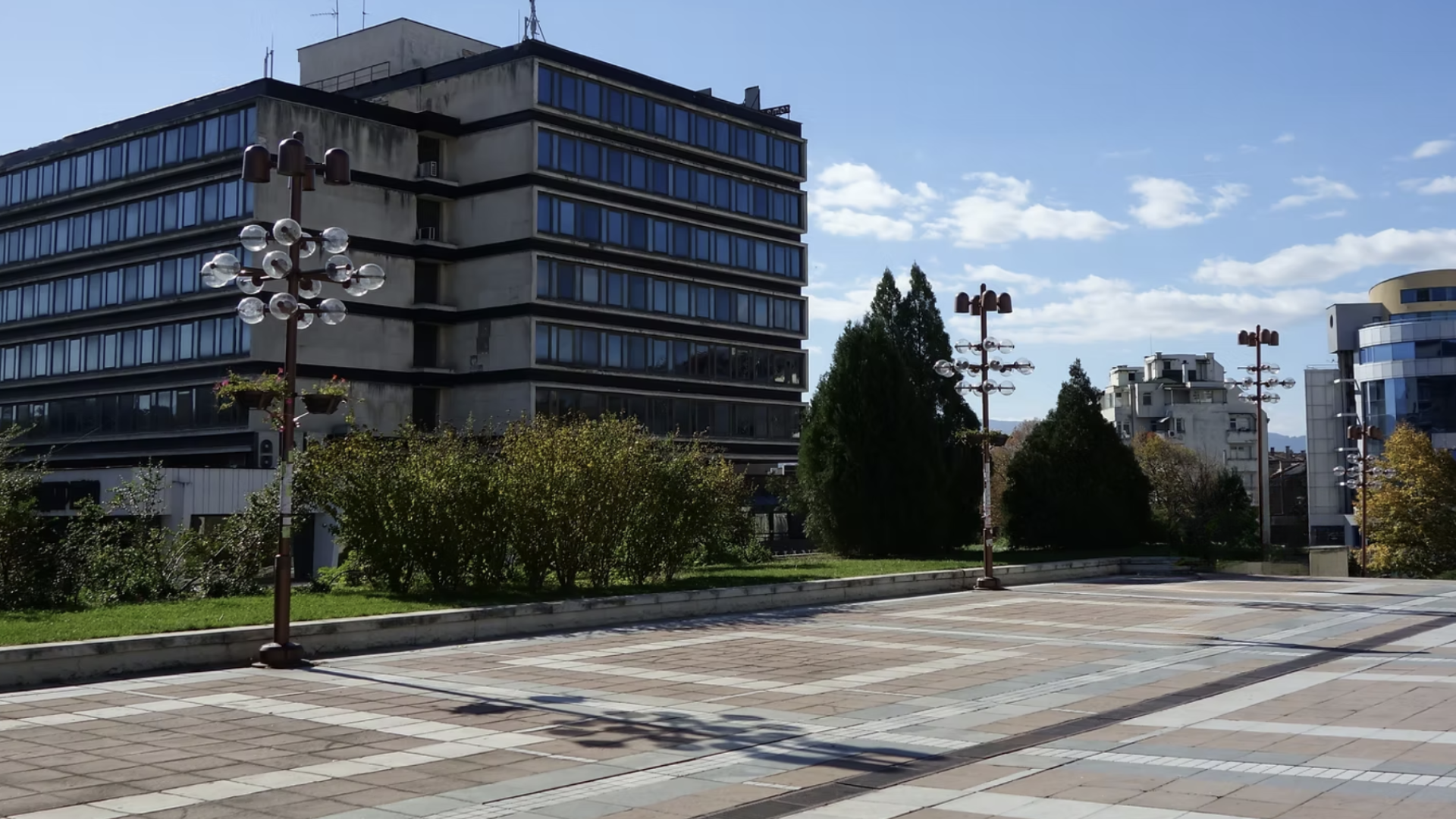
After a slow breakfast and a gentle morning stroll through Blagoevgrad’s streets, soaking in the relaxed rhythm of the town, the day gradually opened up.
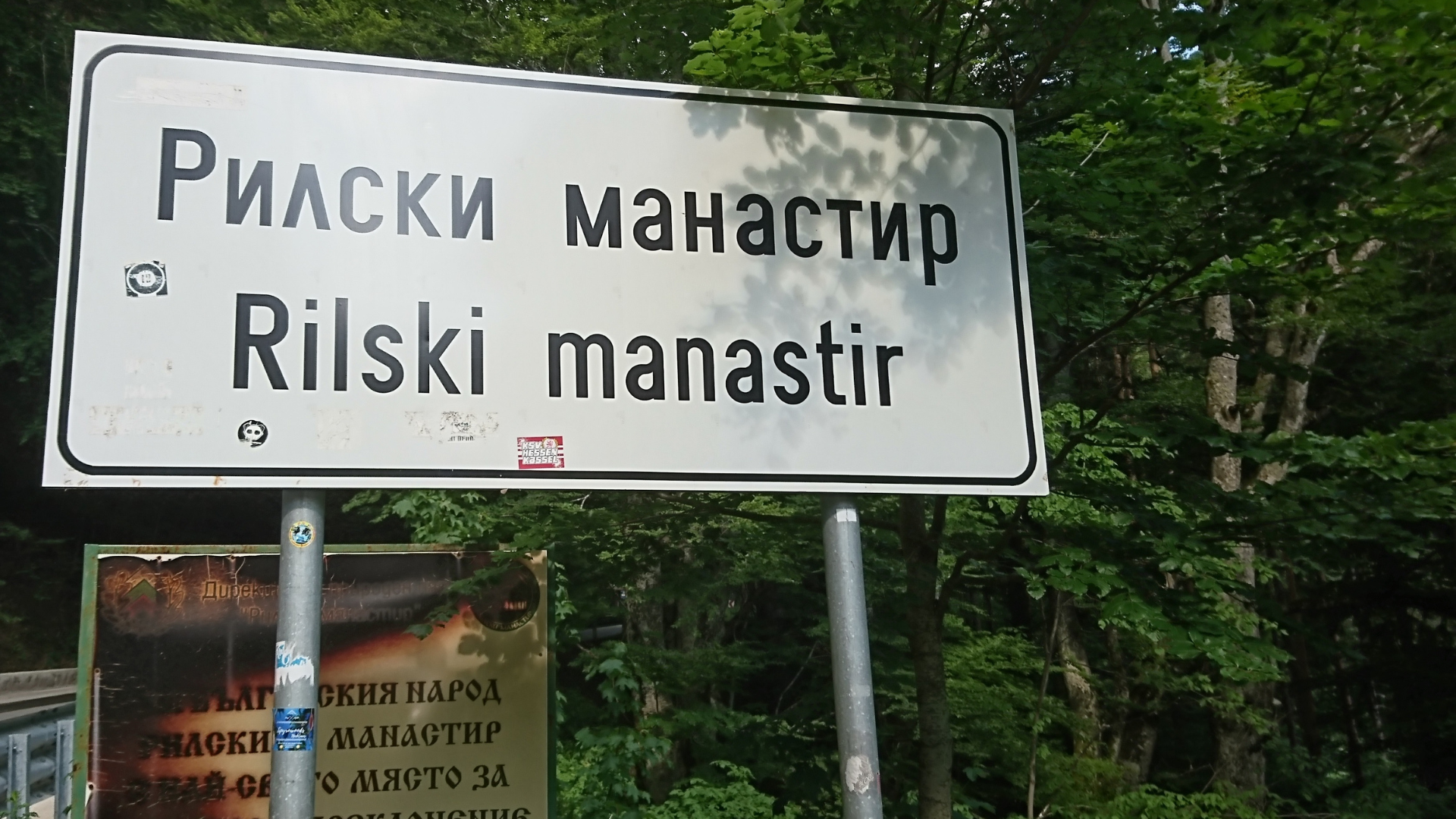
By early afternoon, we were heading into the Rila Mountains, a scenic drive through the townships of Kocherinovo (Кочериново) and Rila (Рила), winding through a lush green landscape to reach the renowned Rila Monastery (Рилски манастир). Nestled deep within the valley along the Rilska River and high in the heart of the Rila Monastery Nature Park, this sacred site is the largest Orthodox monastery in Bulgaria, and a place of profound historical and spiritual significance.
The monastery was founded in the 10th century by a hermit, Ivan Rilski, who lived on the site from 876 to 946 and would later become known as St. John of Rila, during the period 927 to 968, under the reign of Tsar Peter I. Interestingly, St. John himself never lived within the monastery walls, instead choosing a solitary life in a cave nearby. It was his devoted disciples who built the complex as a place of spiritual education and monastic life.
Today, Rila Monastery stands not only as a respected spiritual sanctuary but also as a UNESCO World Heritage Site (inscribed in 1983), and honoured for its exceptional architecture, frescoes, and continuing cultural legacy. The monastery has long been a symbol of Bulgarian identity, and its image even graces the country’s 1 lev banknote.
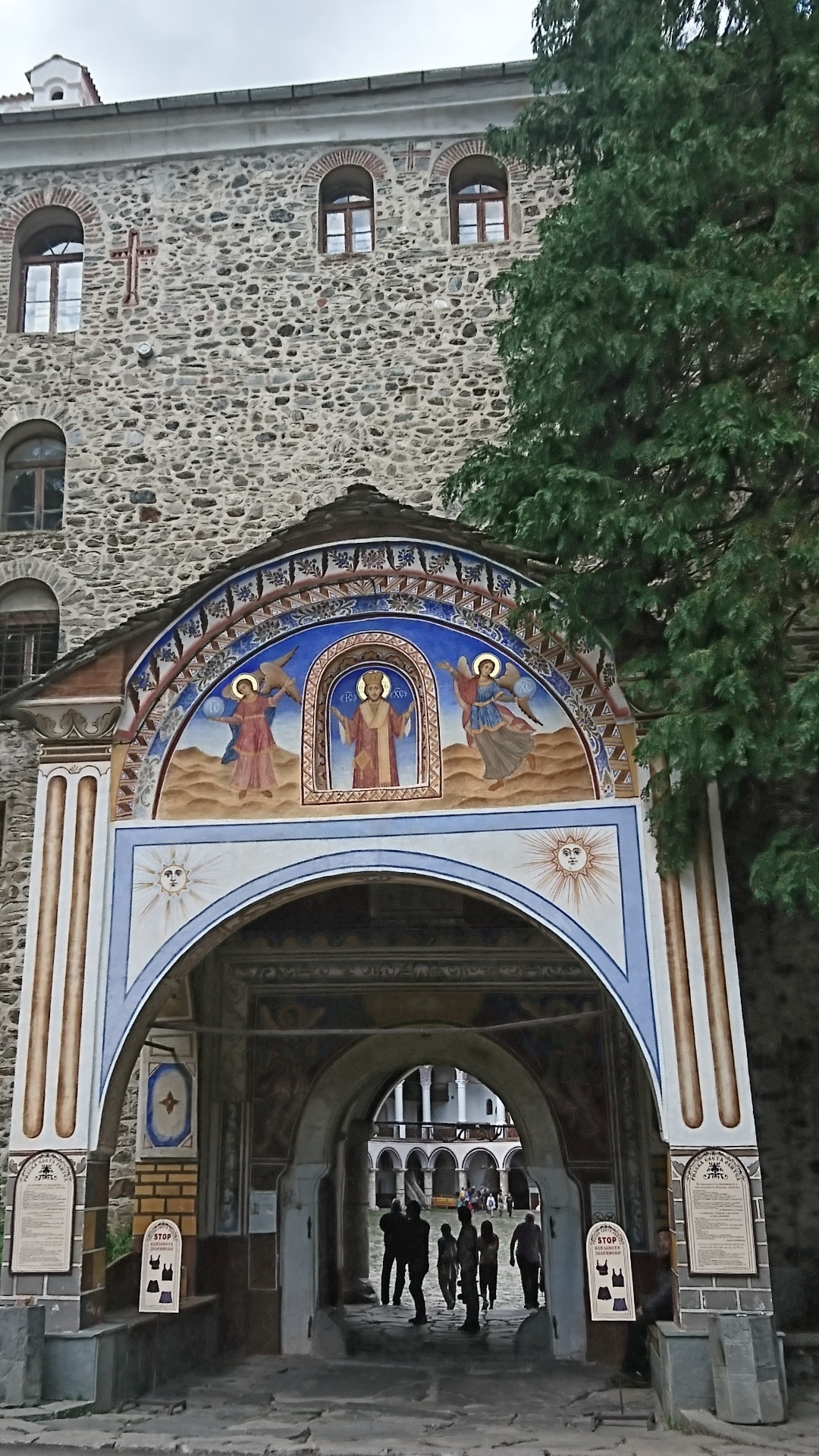
Walking through the heavy, fortress like entrance, you're suddenly greeted by a sweeping view that stirs a quiet awe.
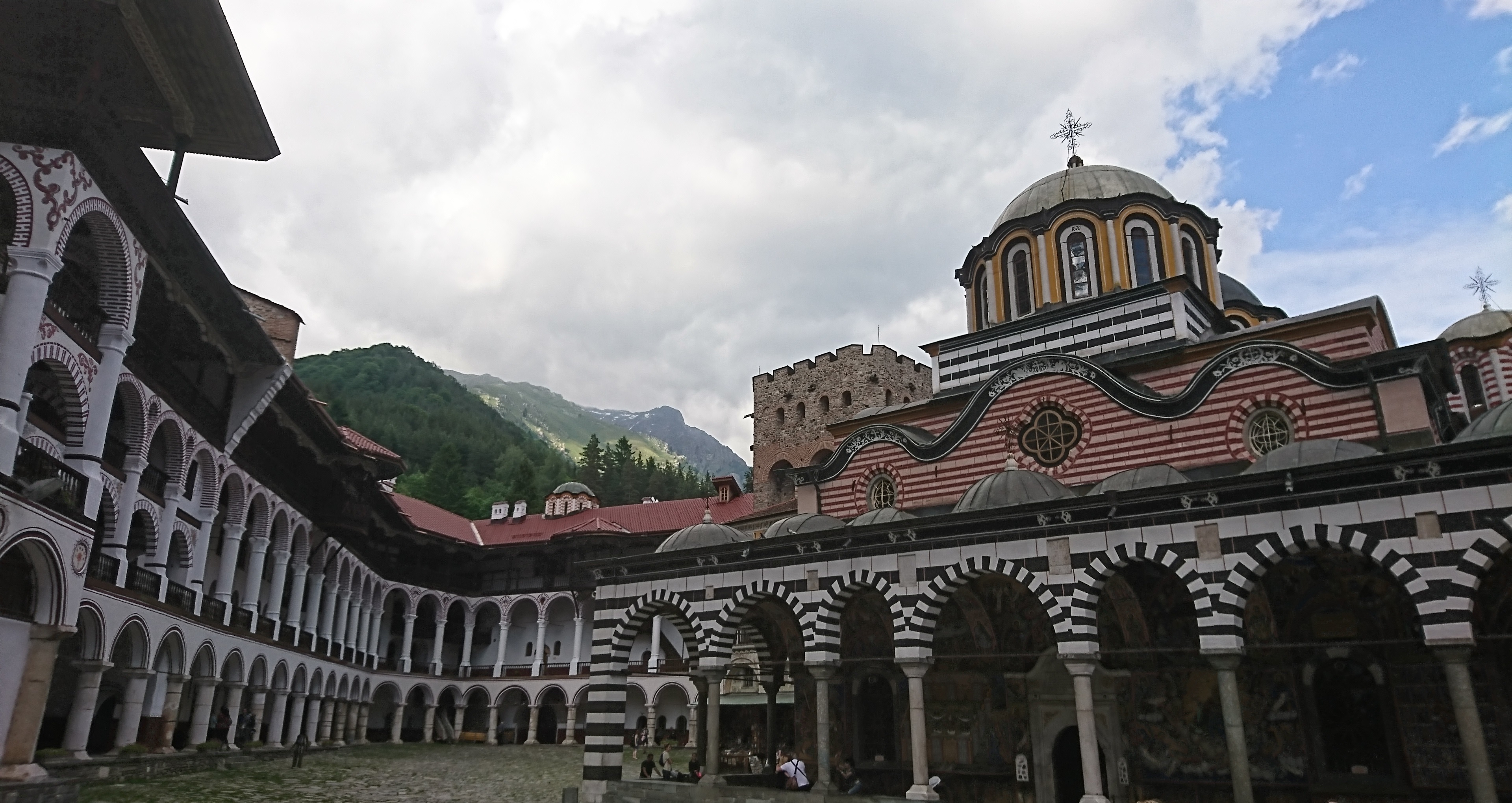
The courtyard reveals the main church, The Nativity of the Virgin Mother, with its striped arcades, vivid domes, and rich architectural detail.
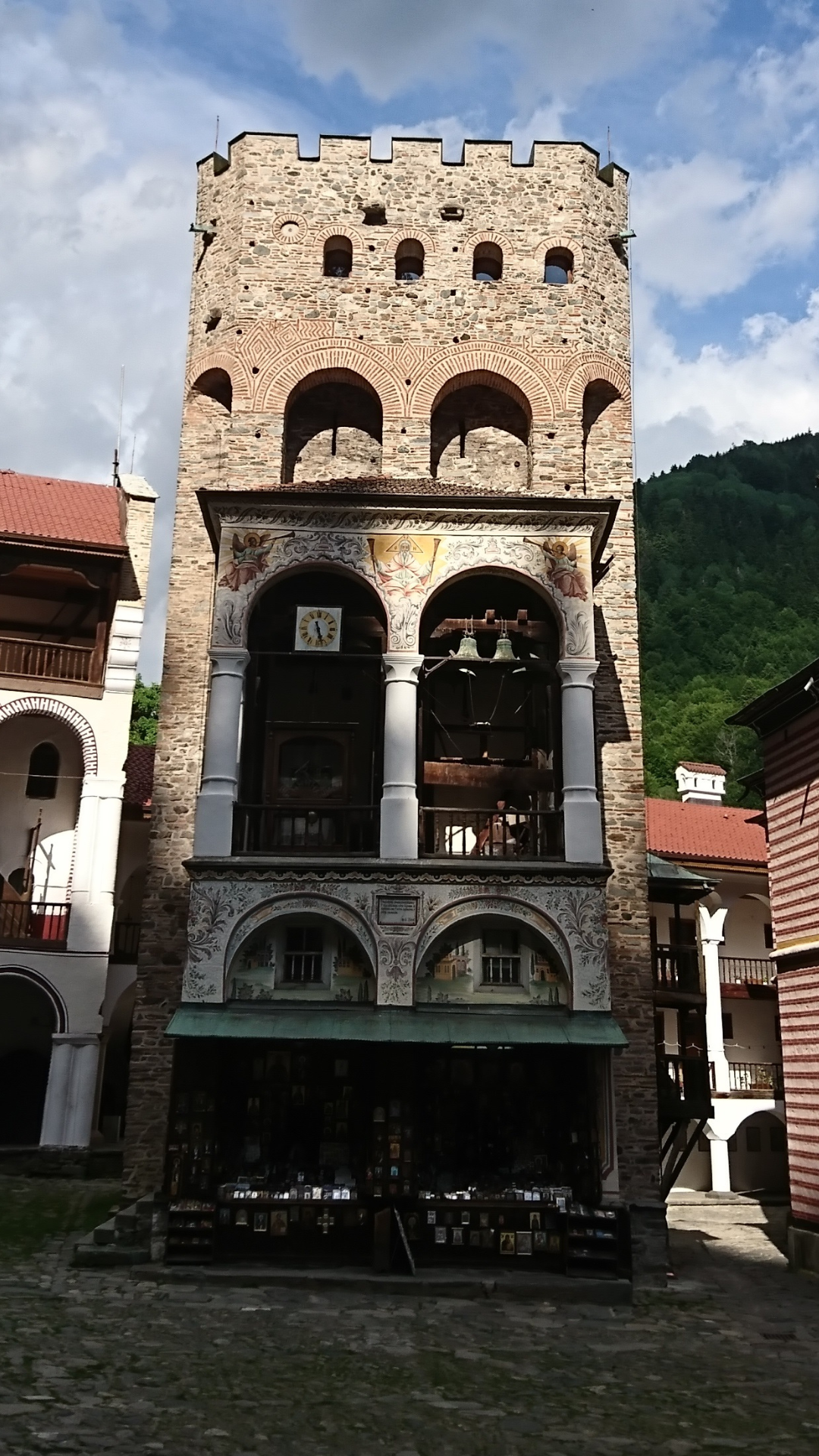
Adjacent to it stands the Hrelyo Tower, built in 1335 by the feudal lord Hrelyo, and the oldest preserved structure within the complex. At its base sits the small medieval chapel known as the Hrelyova Church, a modest yet deeply significant part of the original monastic site.
Together, the tower and chapel once served as both a spiritual sanctuary and fortified refuge, reflecting the monastery’s long standing role as a place of both devotion and protection through turbulent centuries.
One of the most striking features of the monastery is the recurring pattern of black and white lines painted on the arches and arcades.
In Bulgarian Orthodox tradition, these alternating lines are more than decorative, they symbolise the dualities that define the human experience: life and death, good and evil, the earthly and the divine. Together with vibrant tones of red and yellow, these colours create a visual dialogue between the sacred space and the natural beauty of its mountainous setting, drawing the soul inward while pointing to something far greater.
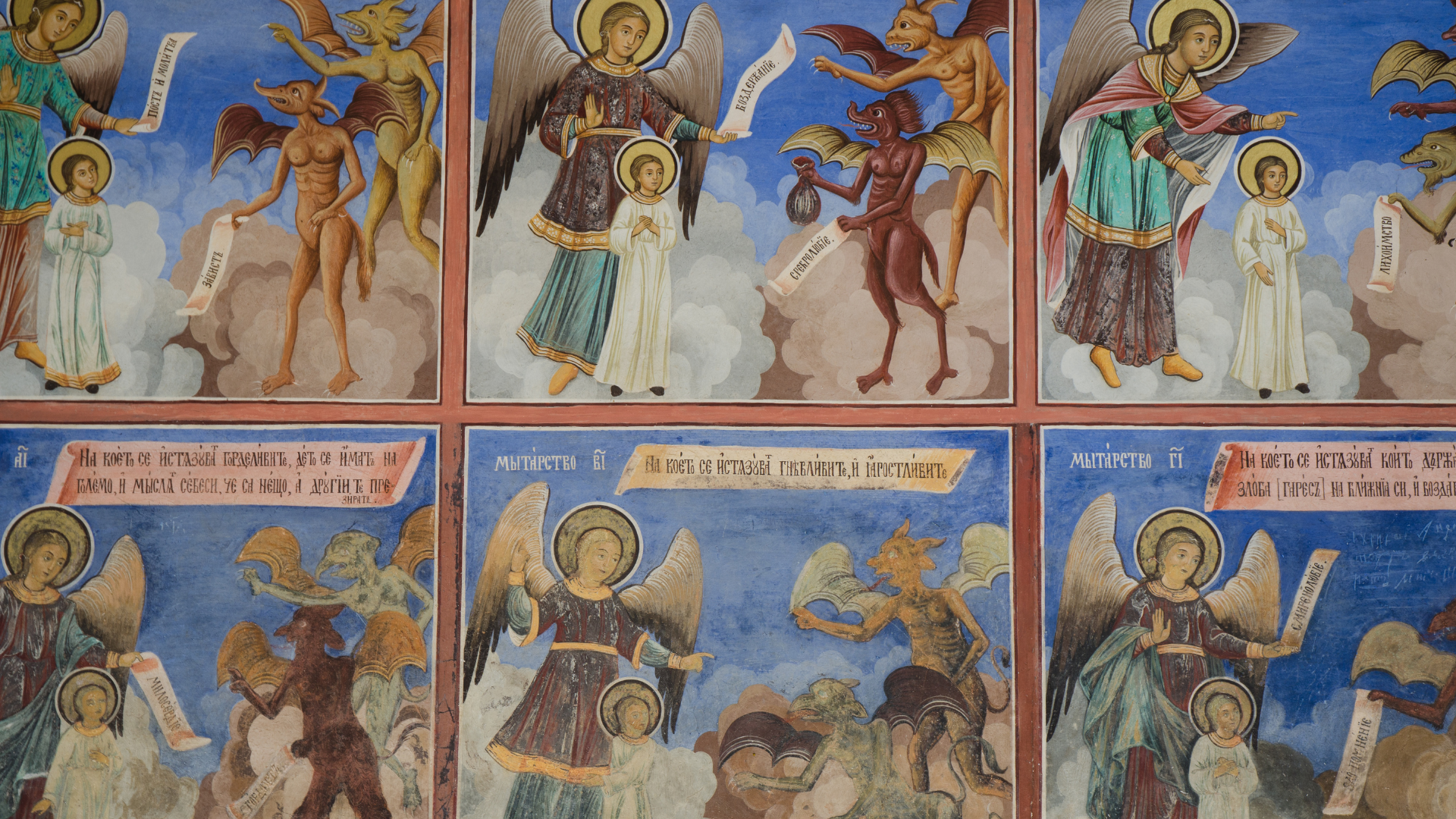
Approaching the church, I was immediately drawn to the vibrant frescoes adorning the exterior porticos. These aren't simply decorative, they tell sacred stories.
One of the most striking scenes painted just above the entrance of the church is the Wheel of Life, a circular fresco representing the stages of human life and the eternal cycle of birth, death, and rebirth. Alongside it are vivid depictions of angels, saints, sinners, and demons, illustrating the moral struggles between good and evil, all beneath the watchful eye of the divine.
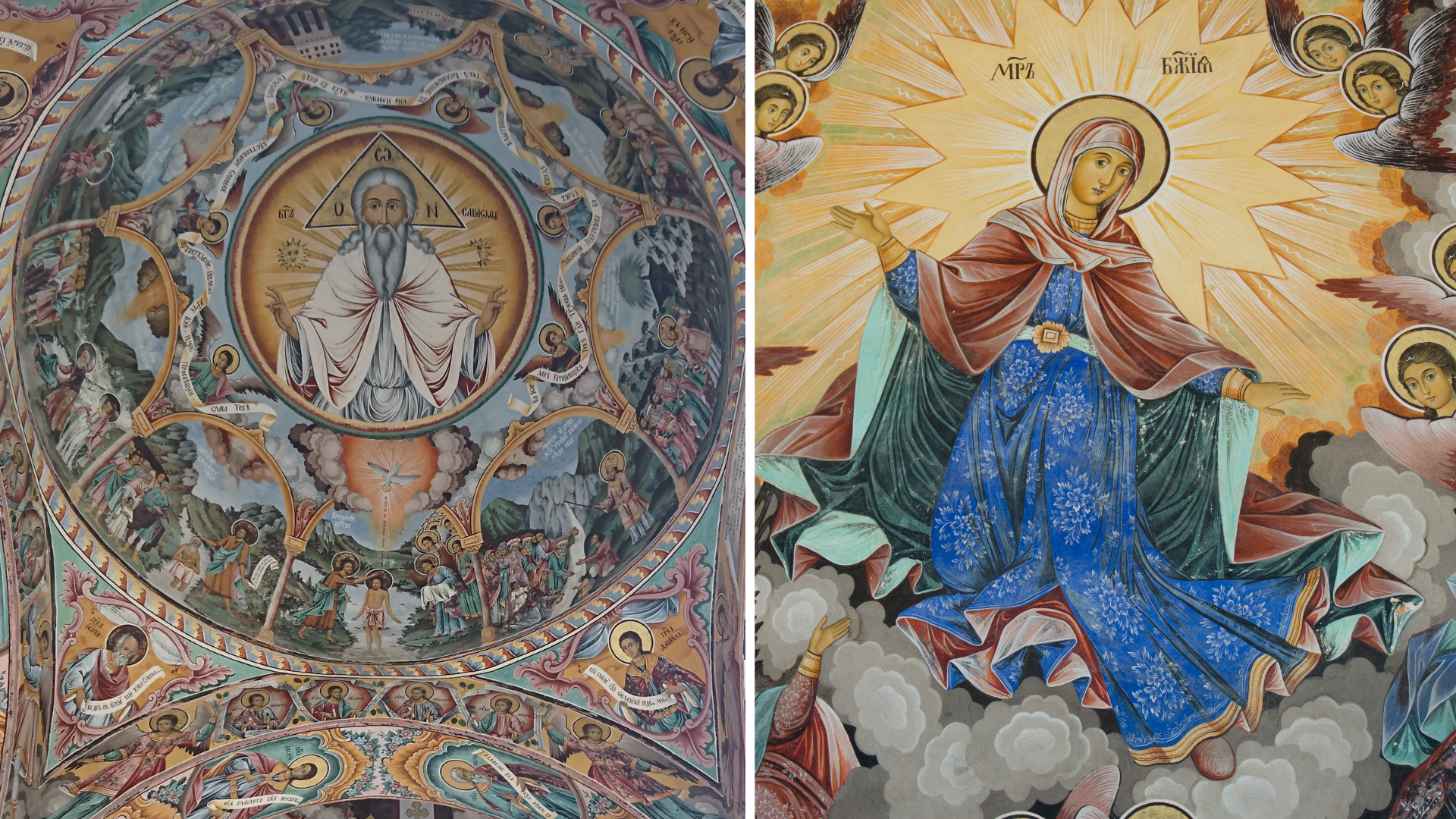
Then stepping inside, you’re wrapped in the stillness of the dimly lit interior. It’s richly adorned with gold framed icons, chandeliers, and more colourful, and exquisitely detailed frescoes covering the domed ceilings. Standing quietly, whilst admiring the frescoes above my head, I first heard a group of monks, then saw them singing in gentle unison, their voices rising to fill the nave, a beautiful harmonic acoustics. It was a moment of utter peace, deeply grounding, and timeless.
Stepping back outside the church, I found myself looking up, again captivated by the richly detailed frescoes that adorn the eaves. They tell their own stories to anyone who takes the time to pause and notice.
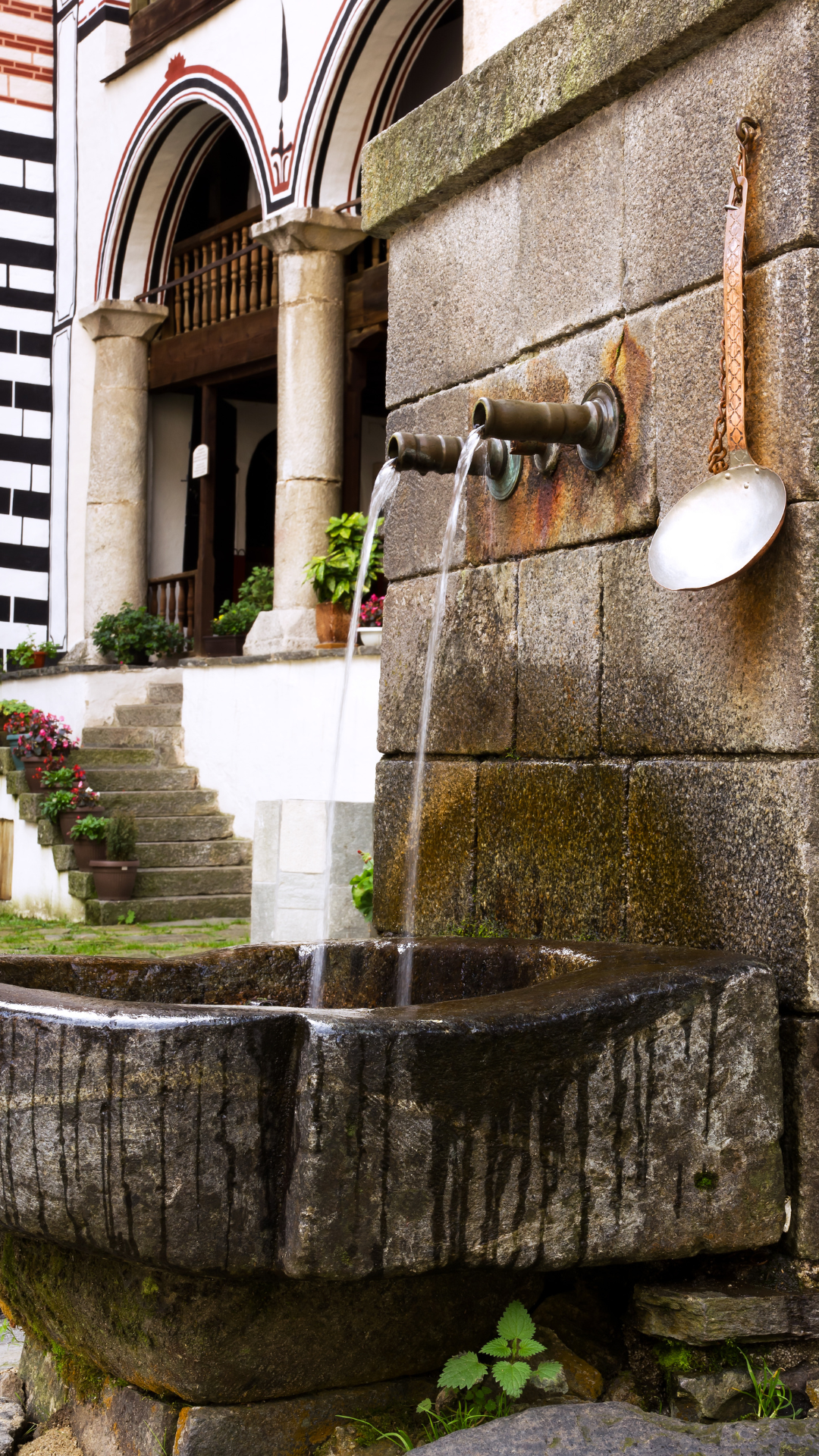
The monastery complex itself is home to around 60 monks and includes a functioning water mill providing fresh water year round.
A cavernous kitchen houses a giant cauldron capable of cooking for up to 5,000 worshippers, an astonishing reminder of its historic role as a place of gathering and community care.
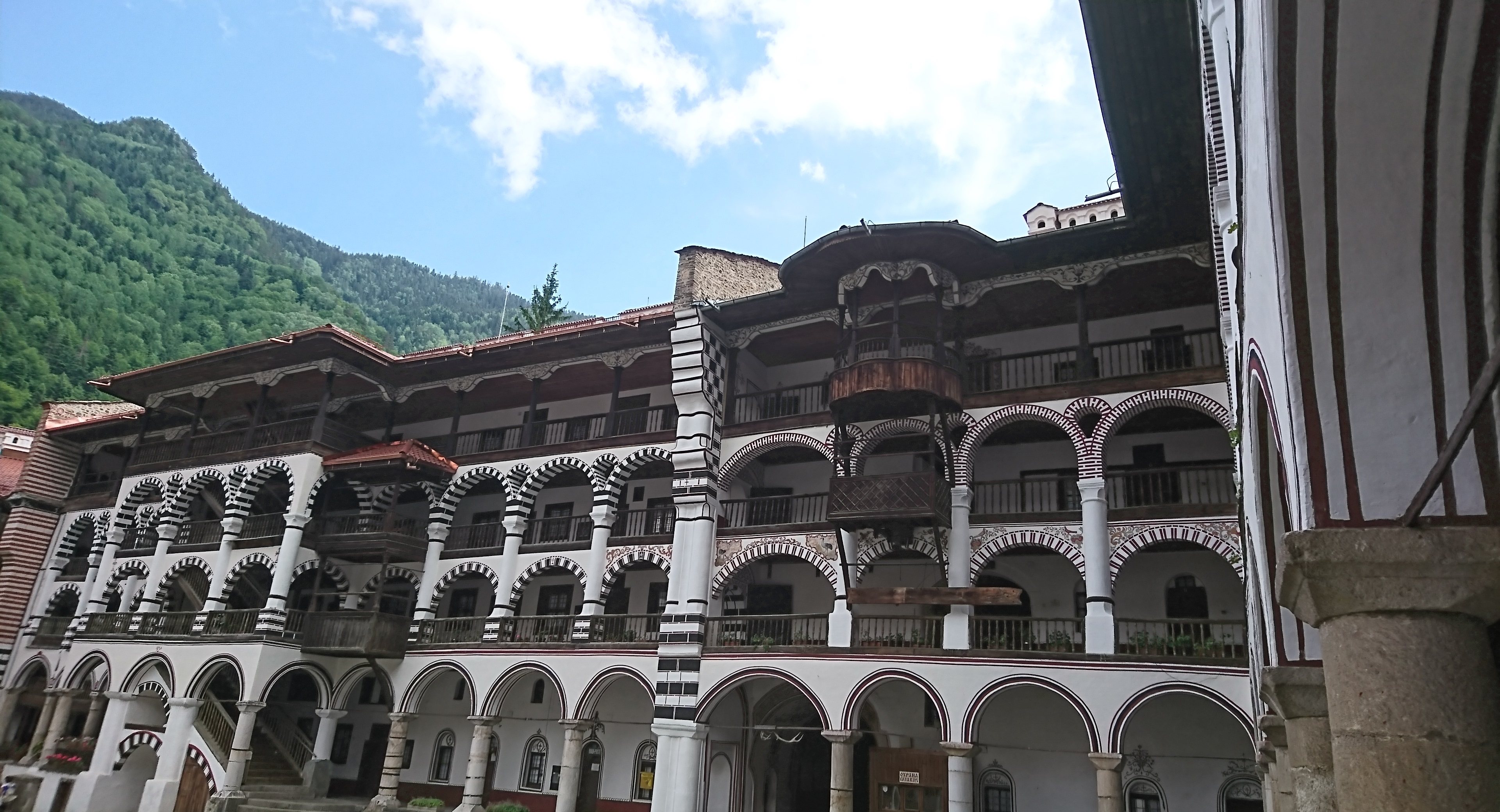
Wandering through the monastery’s quiet courtyard, there's a serene hush in the air. A sense of calm lingers here, perhaps it’s the altitude, or the centuries of prayer woven into the stones. The cool mountain air carries a clarity that refreshes the spirit.
Before leaving, we walked the outer monastery grounds, following the gentle sound of the river that runs nearby. A short woodland path offered a moment of solitude among tall trees and soft ground, the scent of earth reminding me of nature’s simple gifts.
As we made our way back towards Blagoevgrad, retracing the scenic route down through the Rila valley, I carried with me the stillness of the monastery, the purity of the mountain air, and the quiet grace that seemed to wrap around this sacred place. A true jewel in Bulgaria’s cultural and spiritual heritage.
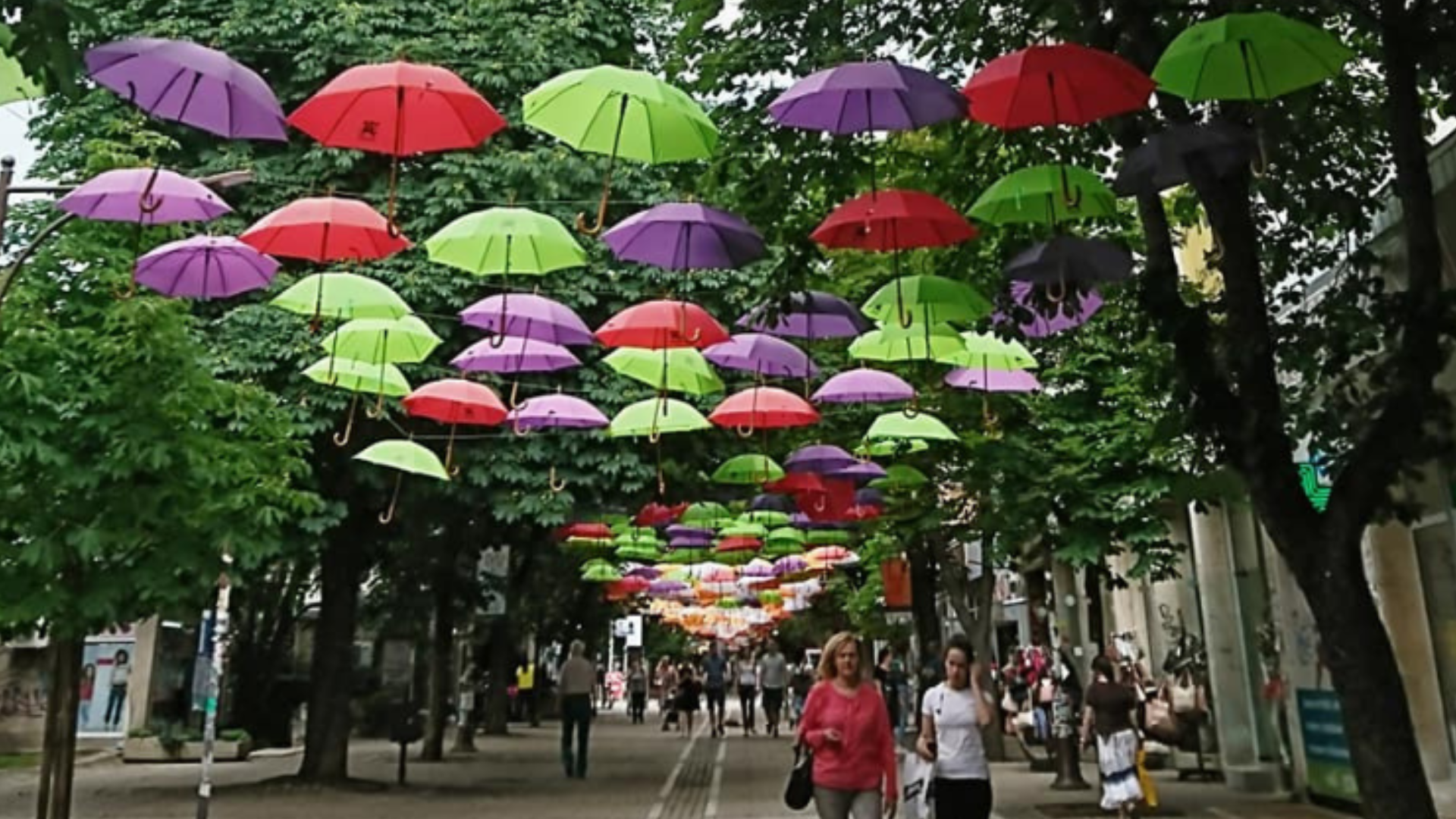
There is much to see both locally and within easy reach of Blagoevgrad city centre, either on foot or just a short drive away. The following afternoon was a relaxing time, spent strolling along Blagoevgrad’s Central Boulevard, shaded beneath the colourful canopy of umbrellas strung overhead, enjoying the relaxed rhythm of the city and the pleasure of simply exploring on foot.
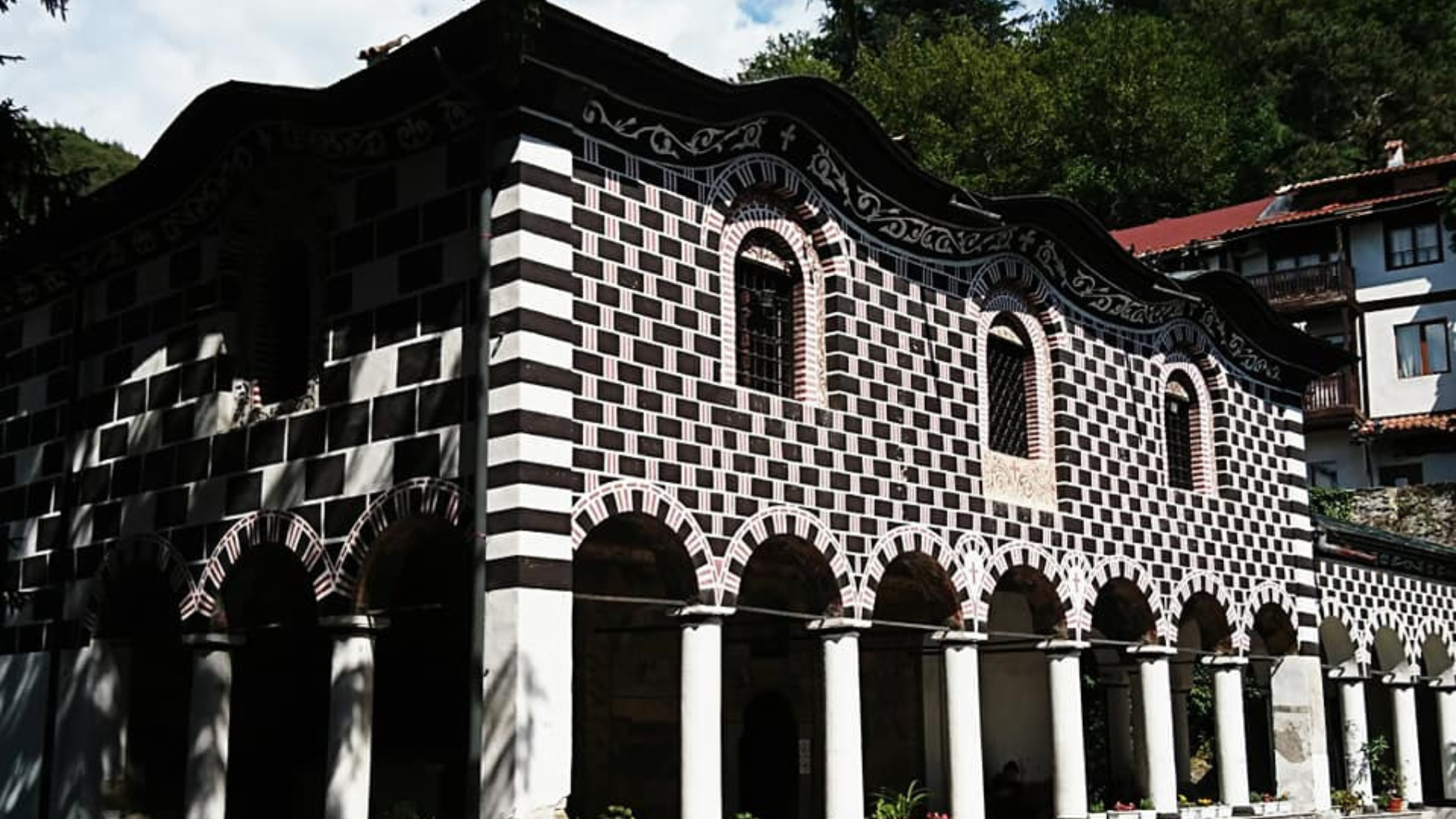
From there, we made our way towards the old town district of Varosha, with the Presentation of the Blessed Virgin Church just a pleasant fifteen minute walk from the city centre. Built in 1844, this sacred space was the result of a remarkable communal effort. At the time, the village, then known as Gorna Dzhumaya was home to around 150 residents, and nearly every one of them contributed in some way. Wealthier village folk donated funds, while others gave their time and strength. Women and children carried stones for construction, and in total, some 200 local volunteers helped raise the church, stone by stone. Their combined efforts gave rise to what would become the spiritual heart of the community.
The church is a beautiful example of traditional Bulgarian Orthodox architecture, bearing more than a passing resemblance to the grand design of the Rila Monastery.
As I later learnt, this likeness is no coincidence. The site where the church now stands was once home to a convent joined with the Rila Monastery itself. The iconostasis inside, richly carved and intricate, mirrors that of Rila’s and is largely attributed to the celebrated masters of the Samokov School of woodcarving. Portions of the interior also reflect the stylistic work by masters of the Debar School. The royal icons were painted by Dimitar Zograf and his son Nikola Dospevski, who were talented and well-known skilled master artists in Bulgarian sacred art. Many of the festive icons were completed by other skilled master artists from nearby Bansko, such as Dimitar and Simeon Molerov, Michalko Gorev, and Dimitar Sirleshtov.
Now over 170 years old, the Virgin Mary Church has been declared a cultural monument of national significance. It was here that the city’s first church school was established, nurturing both faith and learning. Interestingly, the original structure had no narthex or columns. From the very beginning, however, at the entrance stands images of Saints Cyril and Methodius, the esteemed brothers who created the Cyrillic alphabet, stand as timeless guardians.
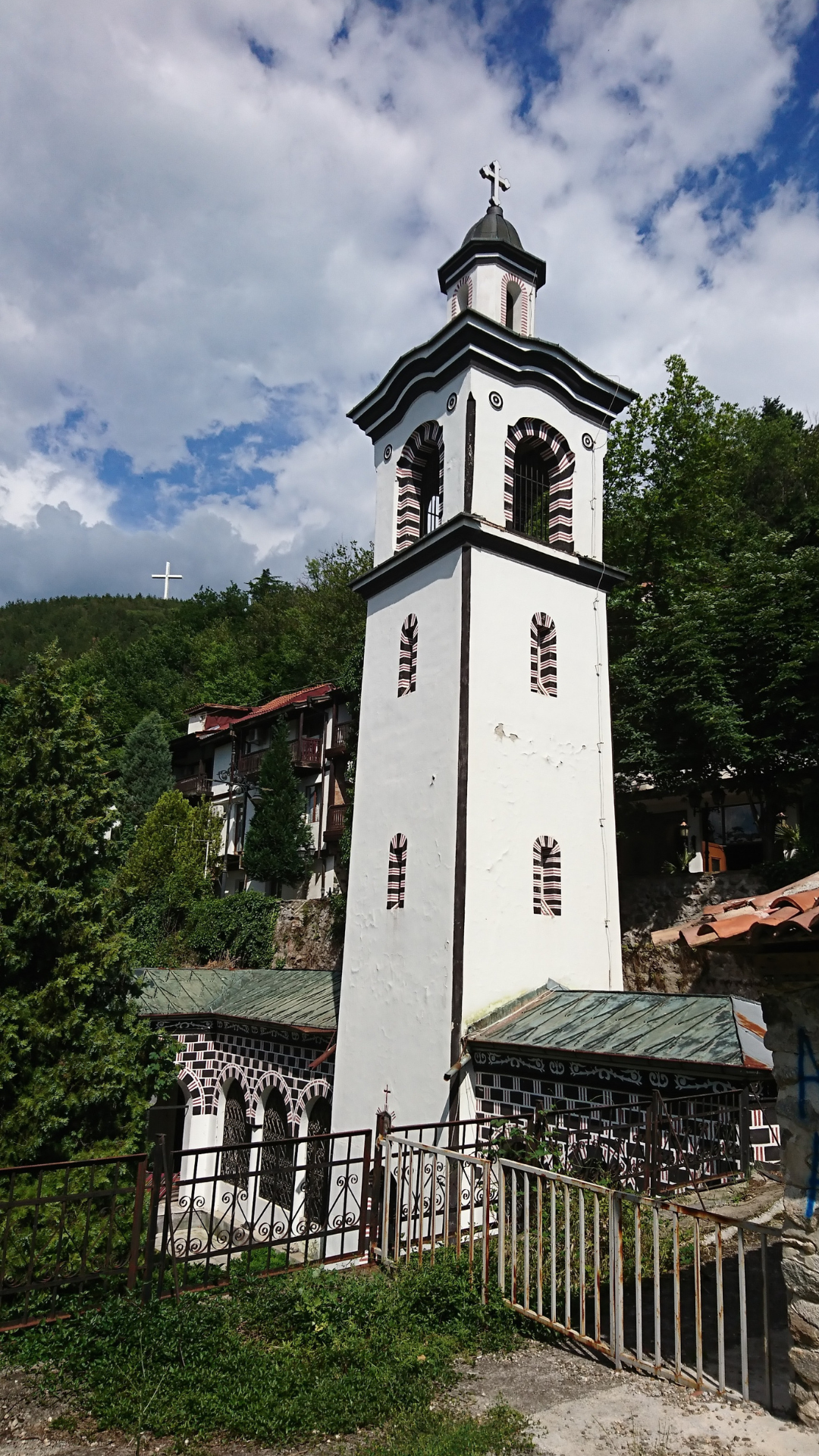
Standing beside the church is its distinctive bell tower, which was added sometime after the main building was completed. During the period of Ottoman rule, Orthodox Christian churches were subject to strict building limitations, often requiring them to remain modest and without towers. The later addition of this tower marked a shift, a declaration of faith and identity, its bells once used to call parishioners to prayer and now serving as a lasting symbol of the town’s cultural and spiritual heritage.
Today in the courtyard of the church you will see the memorial of Gotse Delchev and his family.
Looking up from the church bell tower, or indeed from nearly any spot in Blagoevgrad, your eyes are drawn to the great steel cross standing tall on the hillside. Visible in this photo, it watches over the city like a quiet guardian.
Erected in 2007, the cross rises 33 metres high, symbolically matching the age of Christ and was intended as a spiritual protector for the city. Though I didn’t make the climb myself, I learned it’s perched beside a small chapel and can be reached either by a easy hike through Loven Dom Park or by car. At night, the cross is softly lit, casting a serene glow above the city, marking a fitting symbol of quiet faith and resilience.
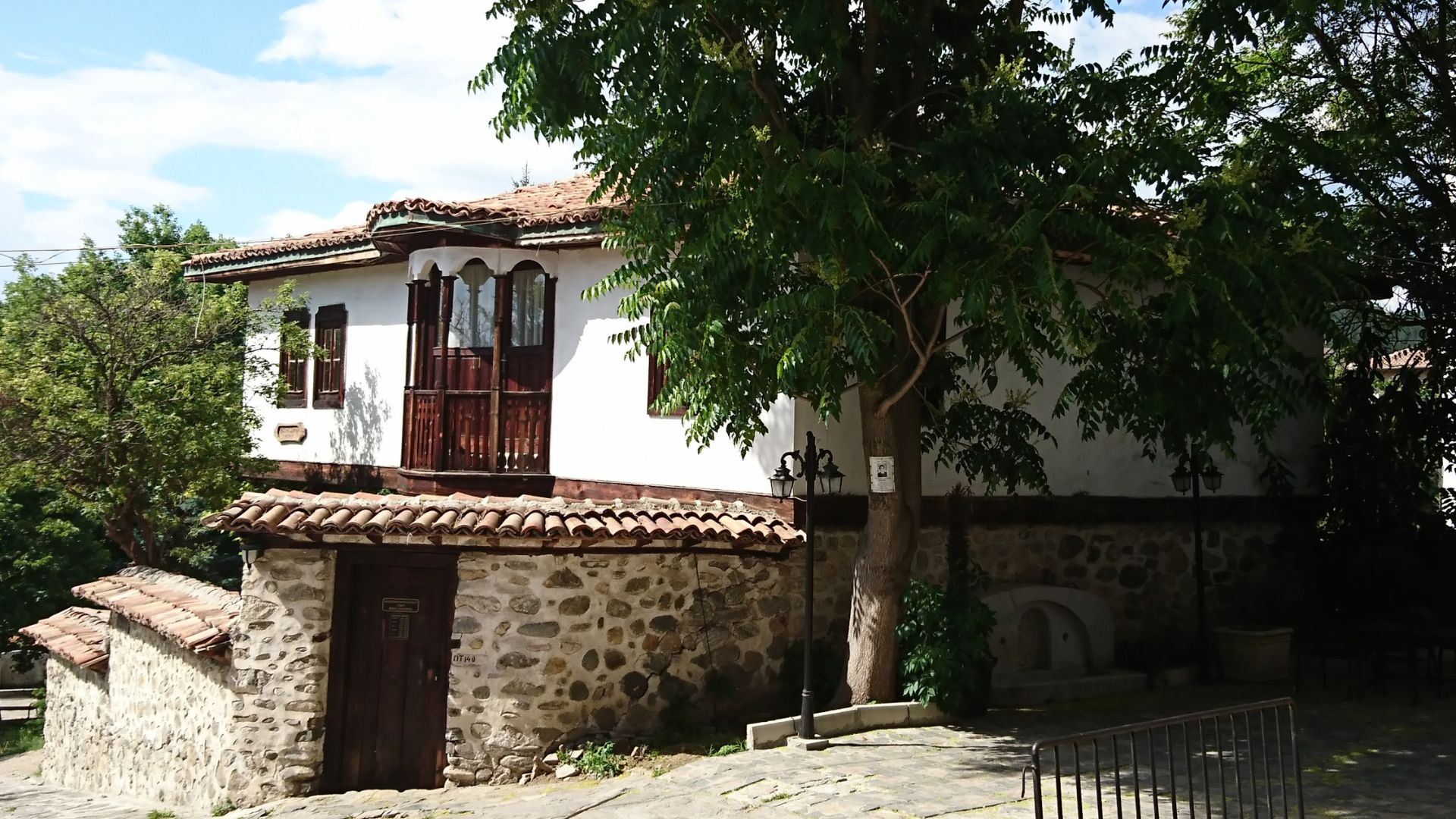
Whilst in the old neighbourhood, we took our time strolling through the narrow lanes, admiring the white houses from the Revival period. Their timber frames and quiet elegance spoke of a different era, and it was a joy simply to wander and take in the original local architecture that gives Varosha its enduring charm.
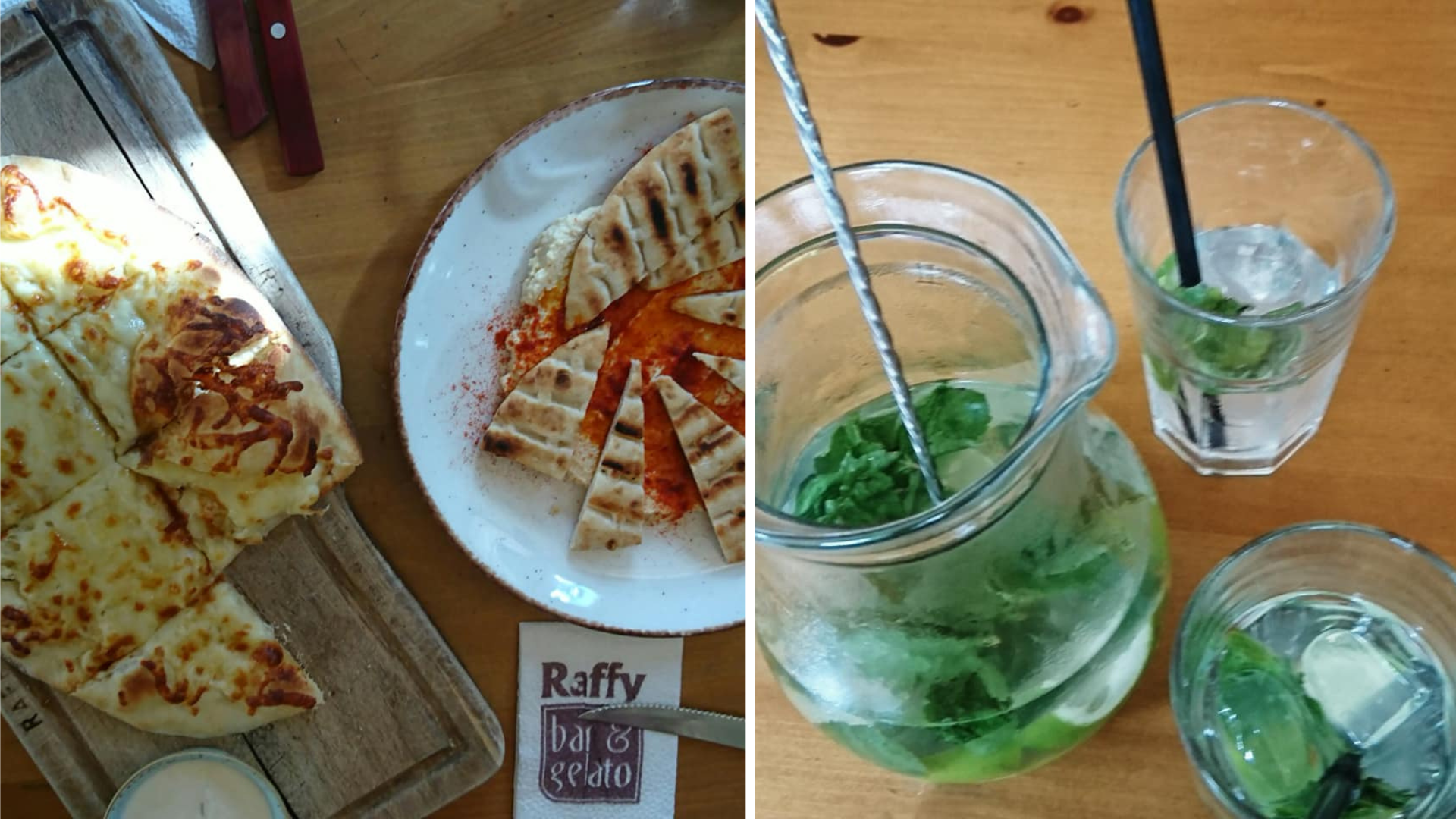
Returning to the city centre, we ducked into Raffy Bar and Gelato for a late bite to eat—freshly made hummus, warm garlic and cheese oregano bread, all washed down with not one, but two delightfully refreshing Mojitos. Grateful to have made it back just before an unexpected afternoon downpour rolled in.
With the rain now passed, we strolled home under clearer skies. That evening, after a bit of research and conversation, we decided that the following day we’d take a day trip to Skobelevo and the Damascena Ethnographic Complex, Experiencing the Heart of Bulgaria's Rose Valley.
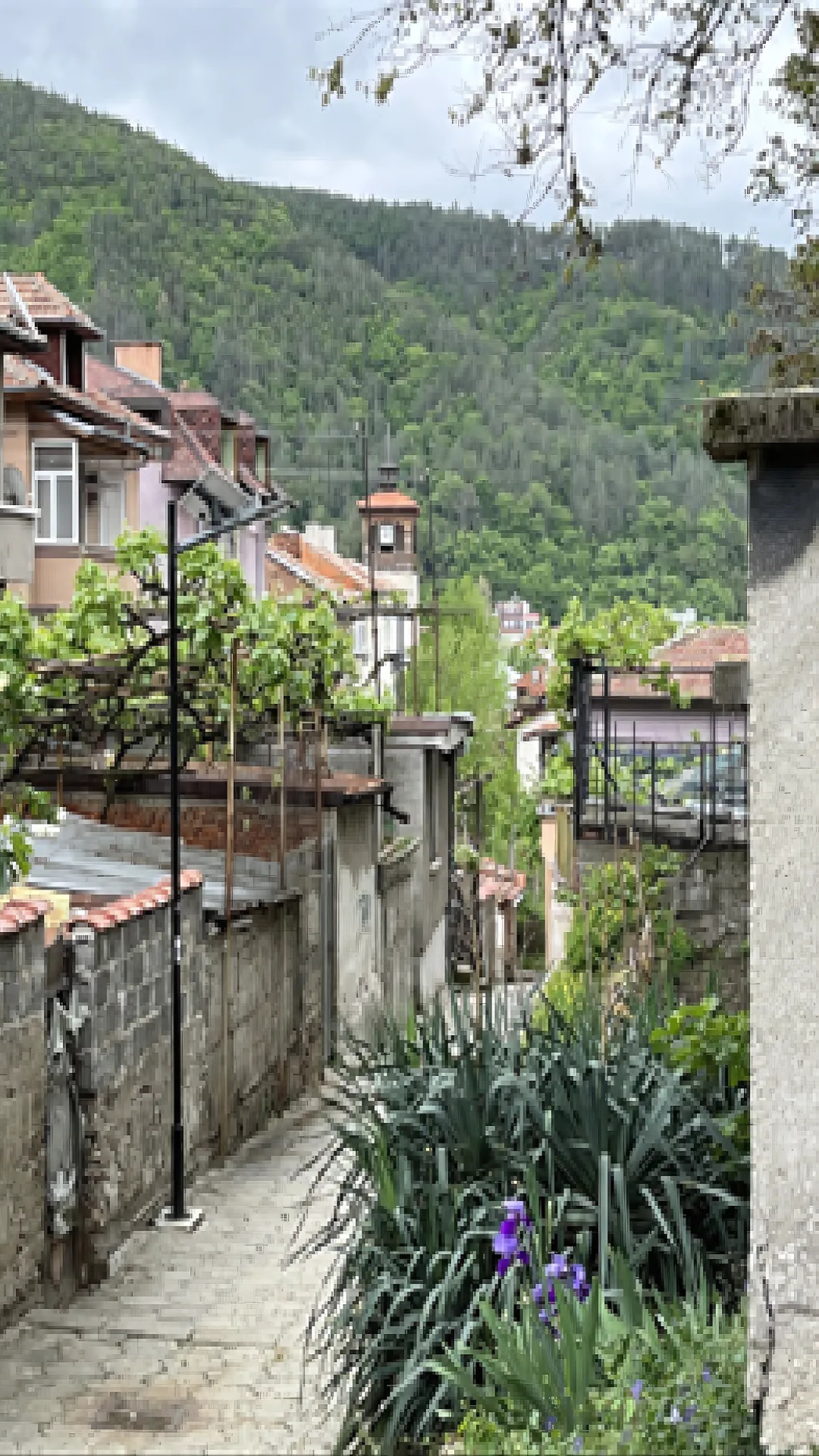
A slower pace was needed today after yesterday’s full travel itinerary and our unexpected detour: Plovdiv Unplanned: Serendipity in Bulgaria’s Ancient City. With slightly overcast skies and the flow of the day inviting more unplanned wonders, I set out for an afternoon stroll through the heart of Blagoevgrad’s former Turkish quarter.
My wanderings led me to one of the city's proudest landmarks, the Blagoevgrad Clock Tower. Standing nearly 17 metres high, it’s one of the oldest surviving clock towers in Bulgaria and a striking example of late-Renaissance design.
Built in 1867 by skilled master craftsmen from the village of Maleshevo, nestled in the Maleshevo Mountains that form part of the Osogovo–Belasica mountain range, stretching across both the Bulgaria and North Macedonia border. The tower once served as the heartbeat of the town’s daily rhythm. Featuring clock faces on three sides (omitting the north), and houses a unique Swiss-made nineteenth century mechanism that rang out across the quarter to mark the end of each working day for local artisans.
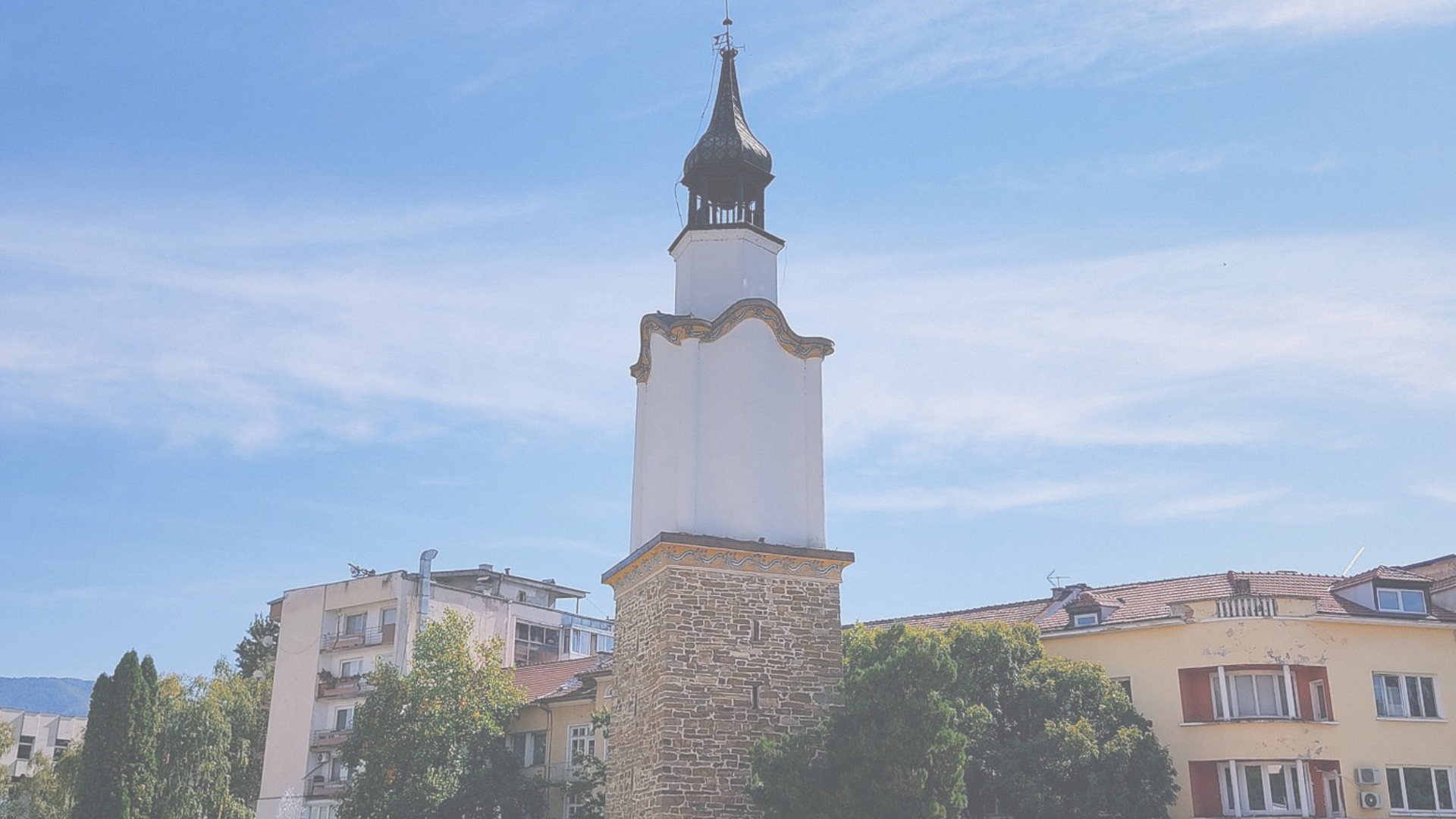
The tower’s sturdy stone base rises into a truncated pyramid topped with a copper lined roof, while the clock faces are set in wooden panels. After decades of watchful silence, in 2009, the Municipality restored the tower, illuminating its clock faces, bell section, and stonework returning to its former elegance.
Interestingly, immediately next to the tower once stood a mineral bathhouse, its warm waters fed by local springs and used by residents for bathing and washing. Though only ruins remain today, its presence hints at a time when the measure of daily life was set not just by clockwork, but also by the healing flow of mineral rich thermal fountains.
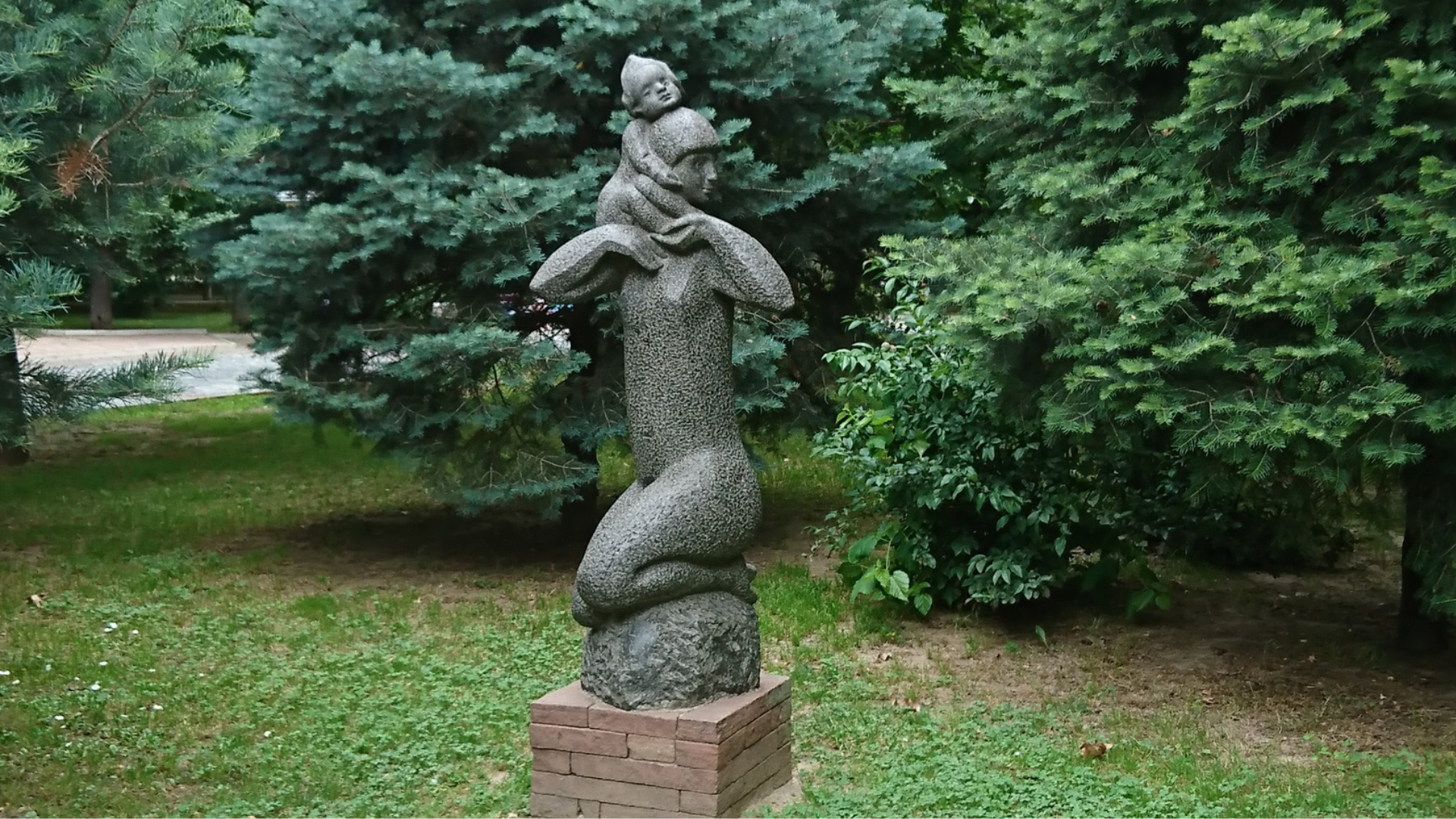
My wanderings then took me back through the city centre and into the green embrace of Градска градина, Blagoevgrad’s city park. A peaceful space shaded by lush trees, it offered a welcome pause from the stone and stories of the old town and the busy city centre. Scattered throughout were statues that quietly caught the eye, each one telling its own tale. One in particular stood out: a mother, kneeling, balancing a child on her shoulders. There was something tender and timeless in that moment, cast in stone and an echo of nurturing strength and playfulness, captured for all to see.
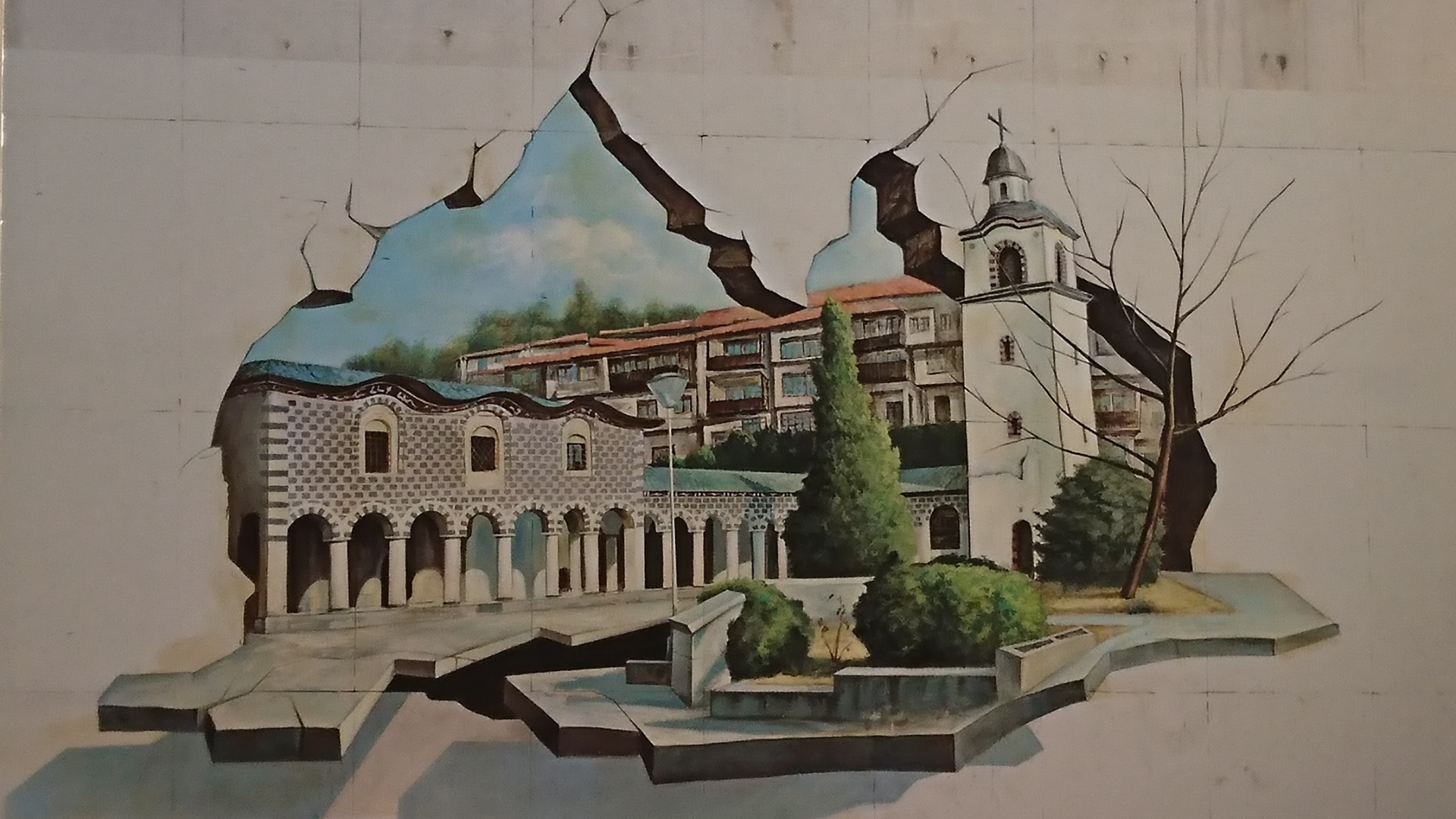
Leaving the calm of the city park behind, I wandered along Todor Alexandrov Street, the main boulevard into Blagoevgrad. As I walked, a small but striking mural caught my eye, an artistic representation of the Presentation of the Blessed Virgin Church from the Varosha Old Town, condensed in beautiful, stylised detail. A gentle reminder of one of the city’s cherished landmarks, tucked unexpectedly into the everyday streetscape. Also, a quiet reminder that, even amidst modern day life, the history and spirit of Varosha continues to watch over the city.
It was nearing the end of my first week in Bulgaria, and the pull to revisit Sofia was growing stronger.
So, the next day, I went back to the capital, this time using the local public transport system.
Sofia and to a slightly lesser degree Blagoevgrad, due to the short latitudinal distance apart, met me with a strong Mars line and a moderate Pluto line, together stirring an insatiable drive to explore, to learn, and to truly understand the historical depths of this city. These planetary combinations carried a quiet intensity, a push to look beneath the surface of architectural façades and uncover the human stories that have endured through time. There was an undeniable passion to walk through history not just as a tourist, but as a witness. Jupiter added a light touch, but it was enough to lift the heaviness at times, and allow joy to slip in, and to nudge me along the path of discovering a previously unknown city.
Adding complexity to the experience, I found myself under several Paran influences, each layering energy around me. With three intersecting paran lines weaving through my visit, the emotional and spiritual tones were deepened further.
The Venus/Mars paran infused the experience with charm and assertiveness, stirring a desire for passionate engagement, whether with people, places, or moments that moved the soul.
The Saturn/Neptune influence provided a deeply grounding energy that offered both structure and imagination. Under this alignment, I felt the ability to turn inspiration into something lasting, to give form to the intangible. It quietly supported moments of reflection, helping me to engage with the city’s spiritual and artistic offerings in a way that felt both disciplined and sincere.
The Moon/Neptune, paran, was a more subtle, tender thread running through my visit. Opening a softness and emotional receptivity, bringing heightened sensitivity to the atmosphere, the history, and the unseen currents of place. At times, it felt as though the city whispered its stories through stillness and shadow. It was also the influence that led me to seek out quiet corners under the canopy of trees in a peaceful square, drawing me gently into as much as it drew my outer into the world.
Together, these planetary energies didn’t just colour the visit, they animated it. They shaped my lens, helped me feel more than just see, and left me with a fuller, more soulful understanding of Sofia’s enduring legacy and its relevance to all of us navigating life through changing times.
As this first Soul Travel blog, Between the Mountains: Wanderings in Blagoevgrad and Sofia, gently folds to a close, I find myself lingering in thought, touched by the grace and quiet generosity of this region.
Bulgaria offers more than just impressive landmarks and layered history; it invites you to notice the spaces in between, the tree-lined paths where locals laugh in the shade, the quiet courtyards where the past still breathes, and the generous spirit of people who hold both memory and hope close to heart.
Blagoevgrad, with its youthful pulse and centuries-deep roots, and Sofia, with its architectural grandeur and softened edges, both offered something beyond what any itinerary could promise. They revealed themselves slowly, through gentle encounters, curious wanderings, and moments where time itself seemed to still.
My fascination with this land, its people, its cultural threads, and the shifting balance between remembering and becoming, has only deepened. This is just the beginning.
See you soon,
Consider signing up to receive new Soul Travel blogs, travel reflections, and astrocartography insights as new destinations are shared.

✨ If this story resonated with you, you are warmly invited to continue the journey in a way that feels aligned with you.

✨ Explore personalised insights through consultations
✨Begin with ‘The Journey’ Orientation
✨Listen to Destined Places podcast stories
✨Save and share Soul Travel inspiration on Pinterest