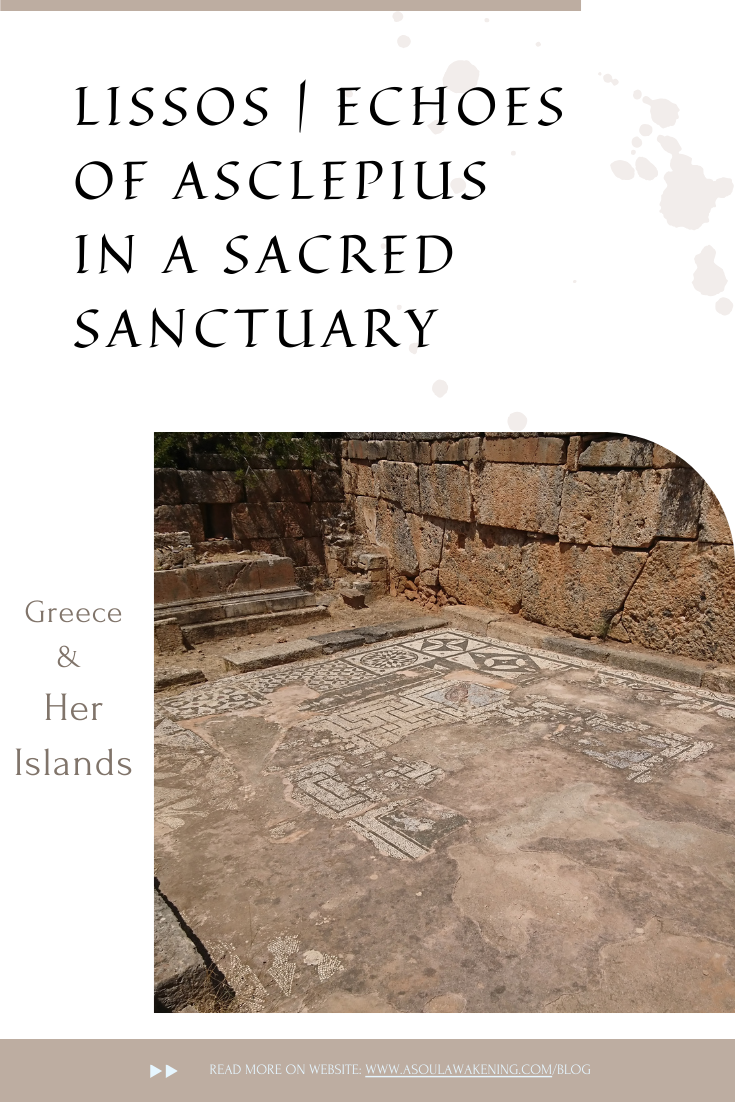
Lissos, Crete | Echoes of Asclepius in a Sacred Sanctuary
Nestled along the Libyan Sea on Crete’s rugged southern coast lies Lissos - GR: Λισσός, the principal harbour of Elyros, one of western Crete’s most powerful ancient cities. Lissos played a key role in trade, religion, and healing, and lies beyond the modern seaside town of Sougia, known as Syia in antiquity.
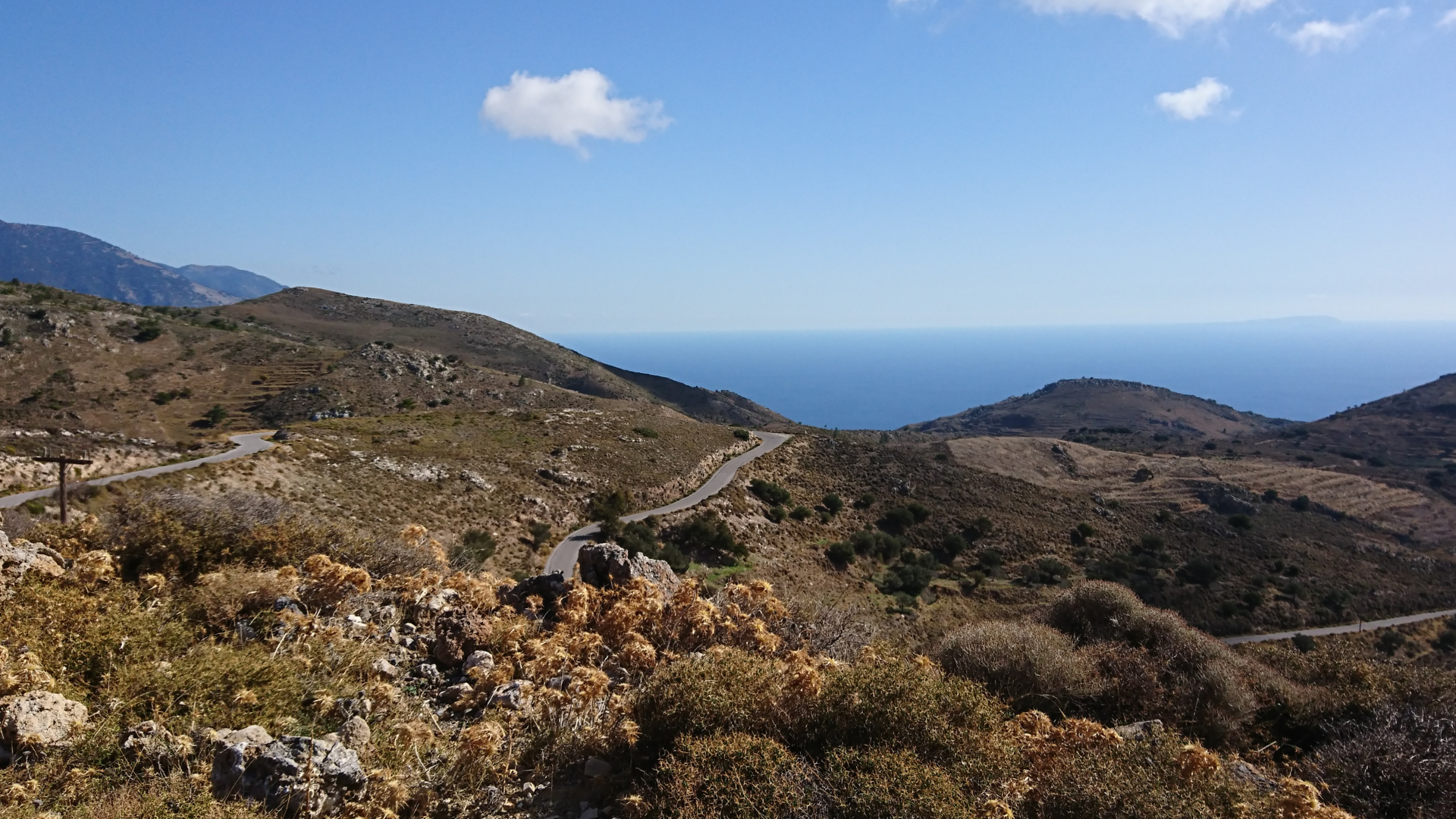
The journey to Sougia from Chania is roughly 60 kilometres and unfolds over winding switchbacks along the Epar. Od. Chanion – Sougias road, pocketed with a number of small villages and the raw, mountainous beauty of southwestern Crete. Nearly an hour and a half later, I arrived in Sougia, ready to step back in time.
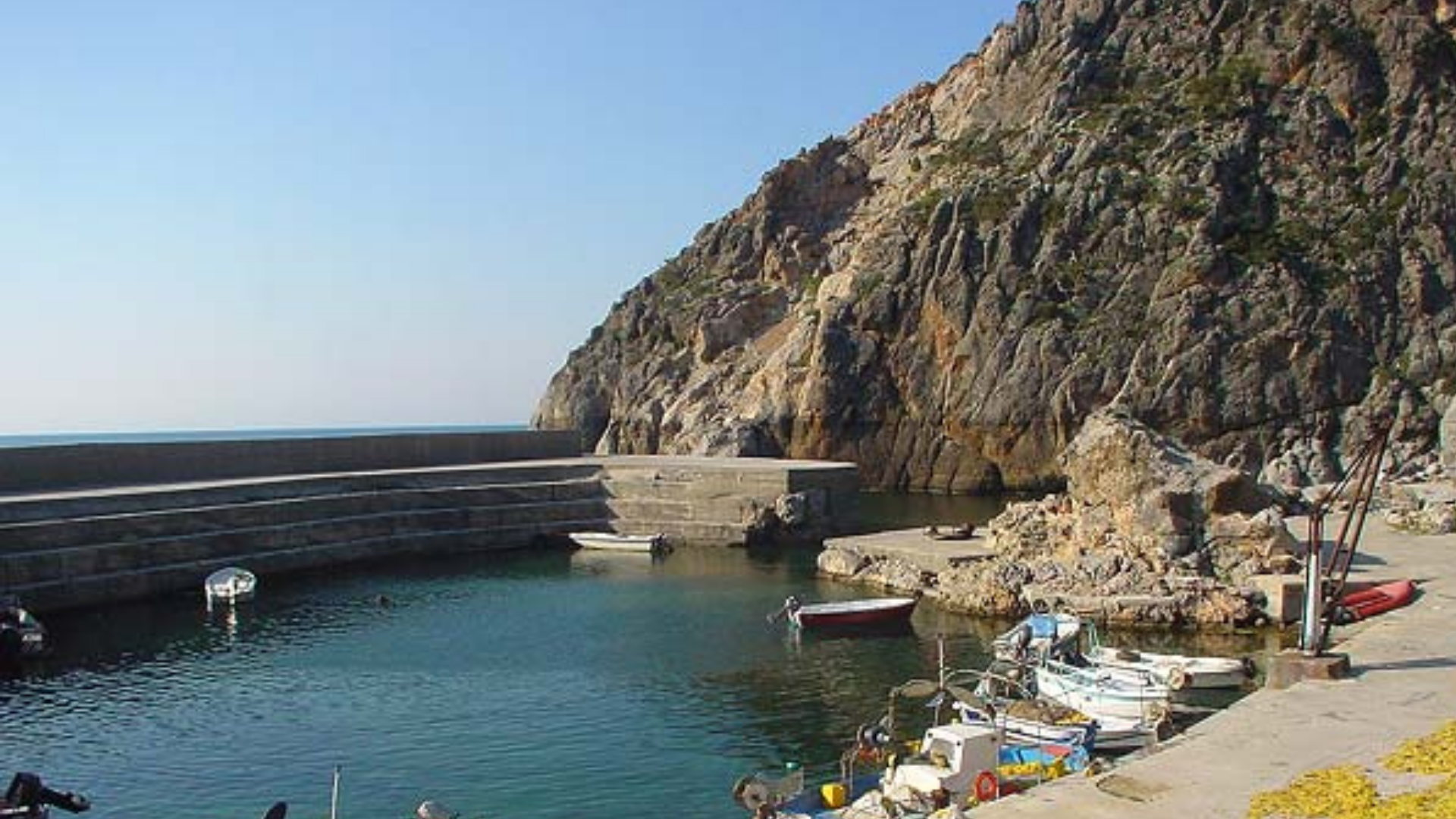
Sougia was once also one of the harbours of the ancient city of Elyros, a testament to the region’s history as a network of small, independent city states that once flourished across Crete. Among them, Lissos stood out as a thriving city, its significance reflected in inscriptions and coinage from the 3rd century BC, highlighting its prosperity and regional influence. Lissos played a crucial role in Cretan politics and trade, forging alliances with Magas of Cyrene, the King of Carthage’s Greek controlled colony in modern day Libya, and becoming part of the League of Oreians
This once powerful maritime hub, thrived on trade and fishing. Many of its inhabitants were sea merchants and fishermen, yet the city's greatest wealth stemmed from its religious prominence. Pilgrims travelled to Lissos to seek healing at the sanctuary of Asclepius, the Greek god of medicine. The sanctuary housed a renowned spring, believed to possess miraculous healing properties, drawing visitors from across the region and solidifying Lissos as a major religious and healing centre of the ancient world.
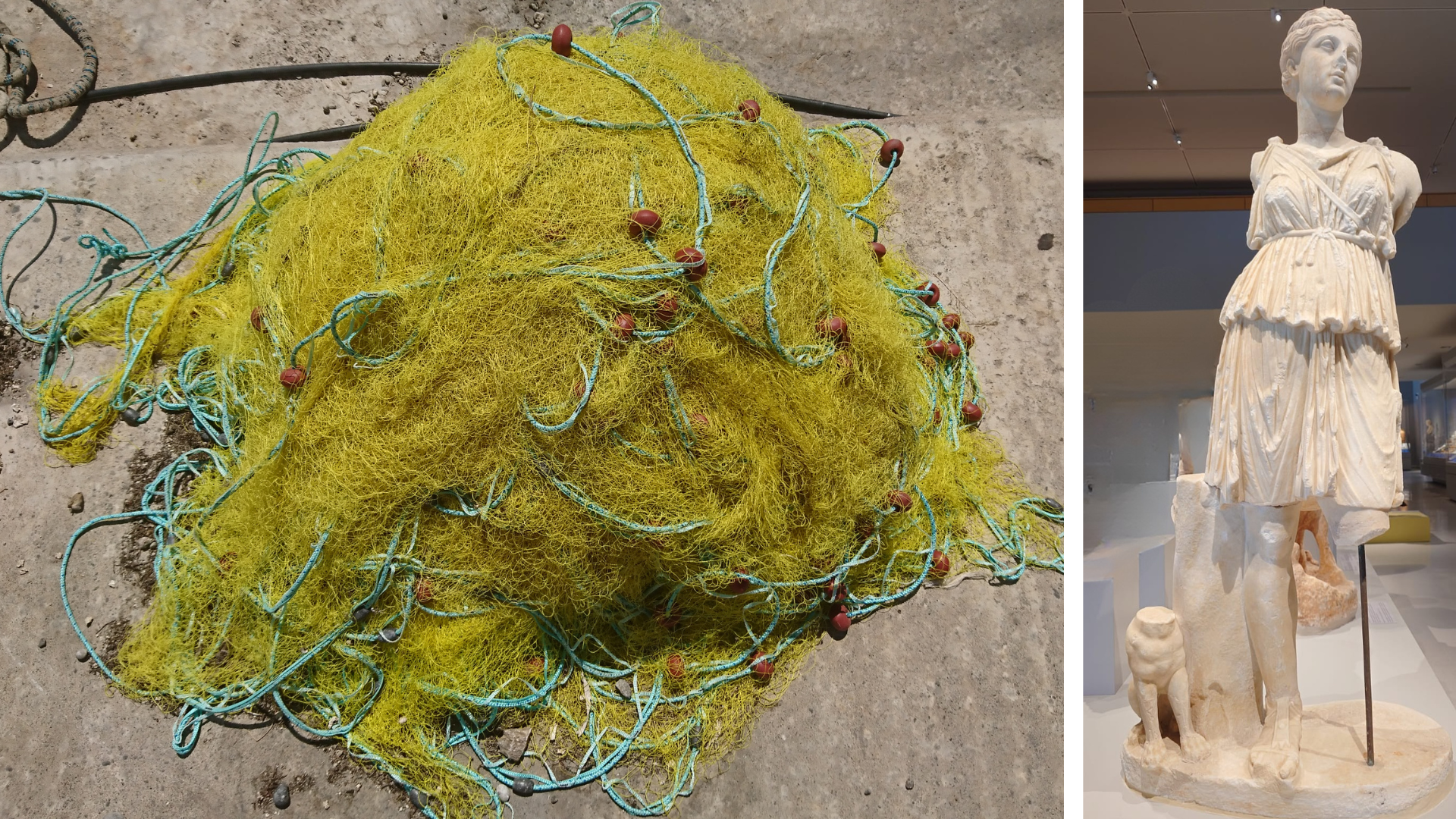
Britomartis, the Cretan goddess of hunting, fishing, and fowling nets, also known as Diktynna, meaning ‘Lady of the Nets’, was historically considered the city’s principal deity. Closely linked to Artemis, her prominence is attested by coins found at the ancient city site, now on display at the Archaeological Museum of Chania.
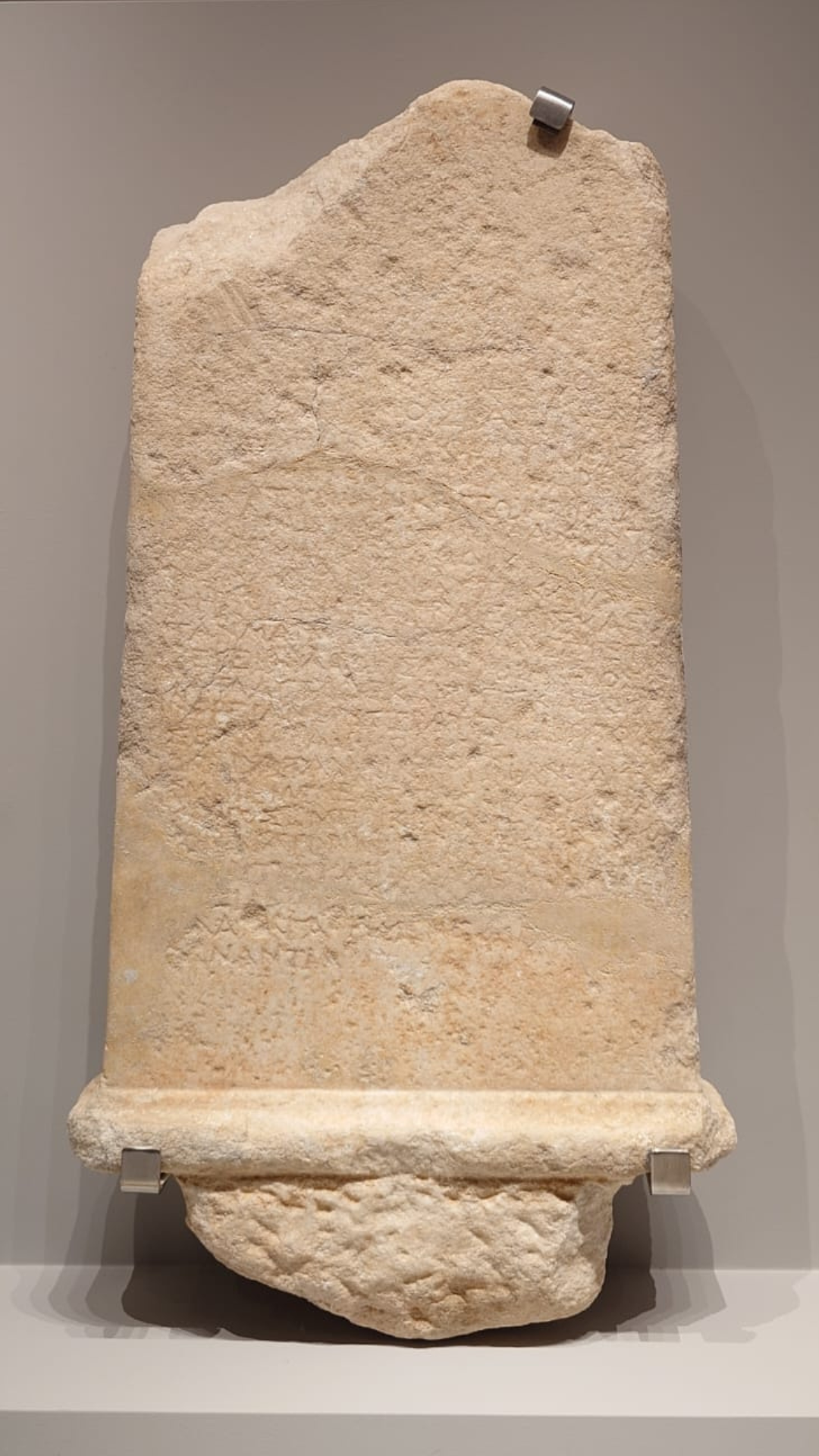
An inscription carved into a single marble tablet, now on display at the Archaeological Museum of Chania, preserves the record of The Koinon of the Oreioi, or League of the Highlanders, an alliance established in the early 3rd century BC to strengthen commerce and economic cooperation across this mountainous region.
The league comprised the city state of Elyros and its coastal ports, of Lissos, Syia (modern day Sougia), Tarrha, and Poikilasion, ancient settlements now scattered across the sparsely populated area of East Selino in southwestern Crete.
As time passed, the influence of this alliance grew, extending ties to Gortyn, the once powerful city state inland from present day Heraklion, Crete’s modern capital. Gortyn not only wielded considerable political authority but was also the birthplace of the Gortyn Code, the most complete codes of laws remaining from the ancient European world.
Even further afield, the Koinon formed relationships with Cyrenaica in North Africa, now known as Shahhat in modern day Libya, demonstrating a sophisticated network of exchange and diplomacy across the Mediterranean.
Further testament to Lissos’ prosperity during this era lies in its coinage, that can be seen in the Chania Archaeological Museum. Between 330–280/270 BC, silver coins were pressed using small, stone carved seals, each bearing distinctive symbols that served not only as identifiers of the city state but also as a means of conveying messages. Coins from Elyros featured the image of a bee, a creature long associated with industriousness and sacred connection in antiquity. Another Elyros coin bore the Cretan kri-kri, or mountain goat, an enduring emblem of Crete’s rugged terrain and untamed spirit, both a cultural motif and a reflection of the landscape that shaped the lives of its people.
The stability of the alliance waned in time, and by 219–184 BC, the Koinon of the Oreioi was dissolved. Yet Crete’s strategic location ensured its continual entwinement with greater geopolitical tides. In 69 BC, the island was conquered by the Roman Republic, marking the beginning of a new era. This conquest underscored Crete’s enduring significance in the broader Mediterranean world, soon to be drawn fully into the administrative and cultural expanse of the Roman Empire.
The ancient city of Elyros, and sea ports continued to prosper during the Byzantine period, while the powerful earthquake of 365 AD created significant damage to ancient Lissos, remaining an important centre until the Arab and Berber forces, referred to as ‘Saracens’ in medieval texts, successfully invaded Crete around 824 AD.
During the Byzantine period, Crete experienced both prosperity and turmoil. The powerful earthquake of July 365 AD caused widespread destruction across the island, significantly impacting cities like Lissos. Despite such natural disasters, many urban centres managed to recover and continued to thrive. However, the stability of these cities faced a formidable challenge in the early 9th century. Around 824–827 AD, Arab and Berber forces, referred to as ‘Saracens’ in medieval texts, led by exiles from Andalusia, launched an invasion of Crete. They successfully established the Emirate of Crete, which endured until the Byzantine reconquest in 961 AD. This period marked significant changes for the island's cities, including Elyros and its associated ports, as they came under Arab control. Their conquest brought widespread destruction, marking the decline of Elyros as a thriving city.
Fast forward to the twentieth century, long after coin seals and temples had fallen silent. In the wake of Crete’s German occupation and the end of WWII, a remarkable rediscovery emerged. In 1957, a local man, simply searching for a water source, uncovered around twenty statues buried at the site of the ancient Temple of Asclepius. These long forgotten figures, depicting gods and goddesses such as Asclepius, Hygeia, Plouton (Pluto), and various statues of children, now reside in the Archaeological Museum of Chania. Silent yet striking, they serve as enduring witnesses to the city’s sacred past, and to the reverence once held for healing, regeneration, and the unseen forces guiding life and death.
At the time, there was no road connecting the western Crete capital of Chania to Sougia and the region of East Selino, so a regular boat service from Piraeus, the main port of Athens, was established to deliver goods. Supplies were then transported by mule to the inland villages, making Sougia and its neighbouring settlements key trade centres. This also led to several families settling in the village. During the 1950s, Sougia had a school with 150 pupils.
However, when a road linking Sougia to Chania was finally built, the village gradually lost its significance as a trading post. Today, it has a population of approximately 95 residents, which increases with tourists during the summer months, transforming this once-bustling hub of antiquity into a quiet, somewhat sleepy village in winter, only to awaken once more with the arrival of summer.
From Sougia, there are two ways to reach the ancient city site of Lissos and the ruins of the Temple of Asclepius: on foot via the Lissos Gorge, or by boat to the small rocky beach and ancient harbour of Lissos.
During my first visit, I arrived in Sougia in winter, a particularly quiet time when very few people were around and no boat services were available. Knowing this in advance, I had already planned to hike through the Lissos Gorge. My research had shown that the ruins of ancient Lissos were a 3.5 km one way, walk from Sougia (approx. 90 minutes) along a coastal path that eventually continued to Paleochora, another seaside village further west along Crete’s southern coastline.
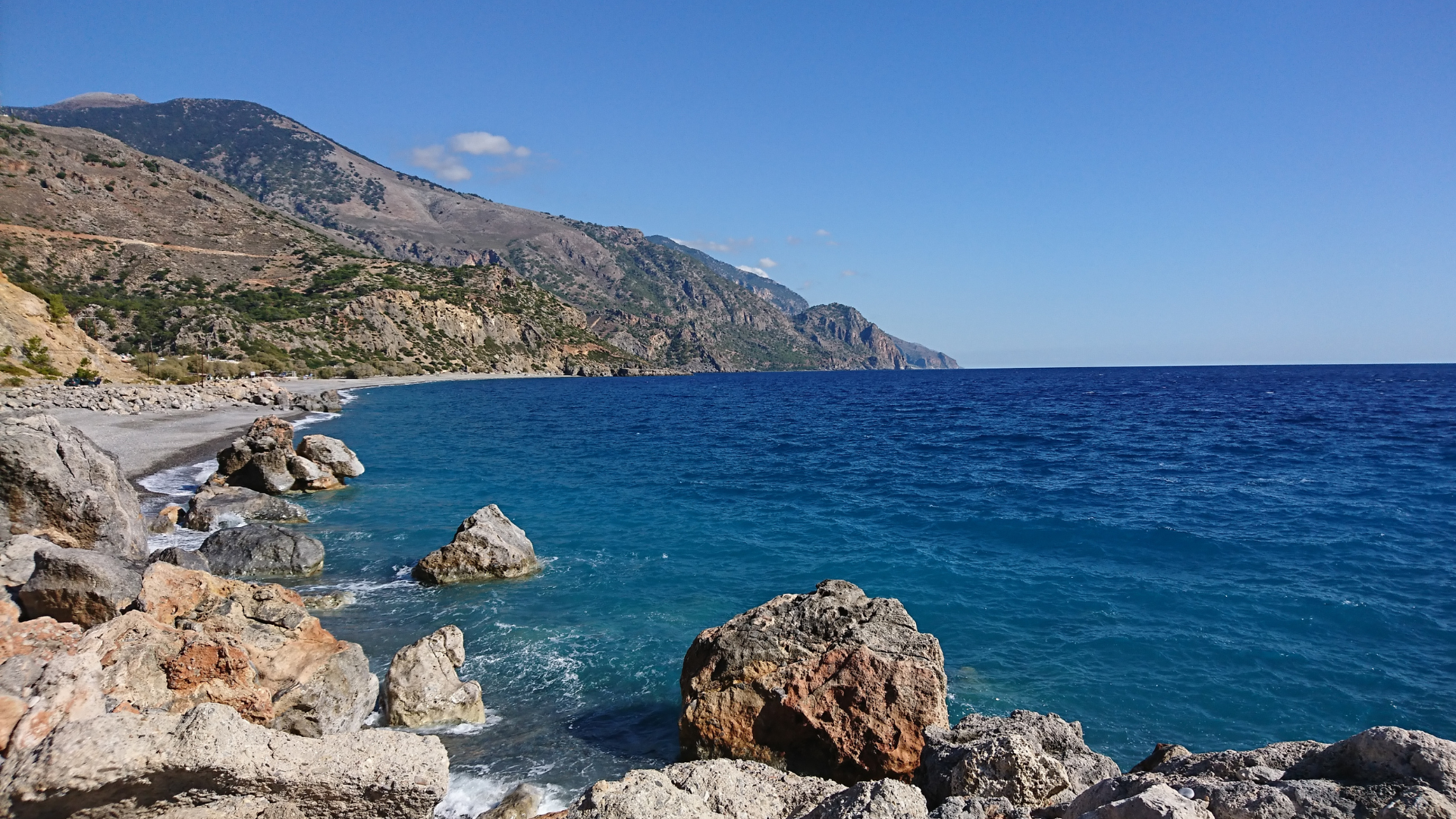
Leaving the village of Sougia behind, I made my way toward the small boat harbour, pausing to look back at the sheltered beach tucked into the cove and the turquoise waters of the Libyan Sea. At the far end of the port, I found the path leading into the Lissos Gorge, marked by a closed off fenced section with a gate.
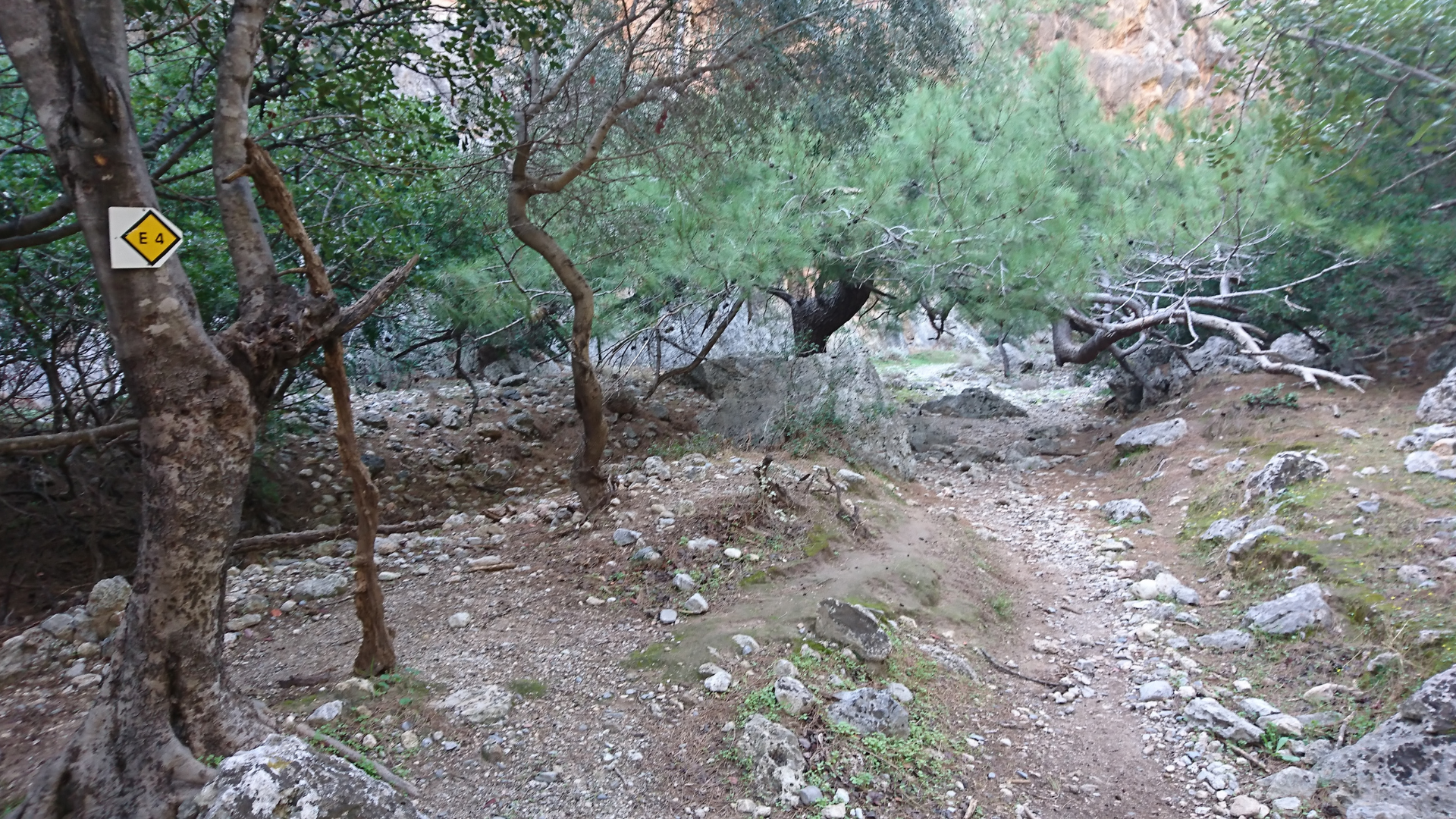
To begin with, the path was clearly marked with E4 trail signage.
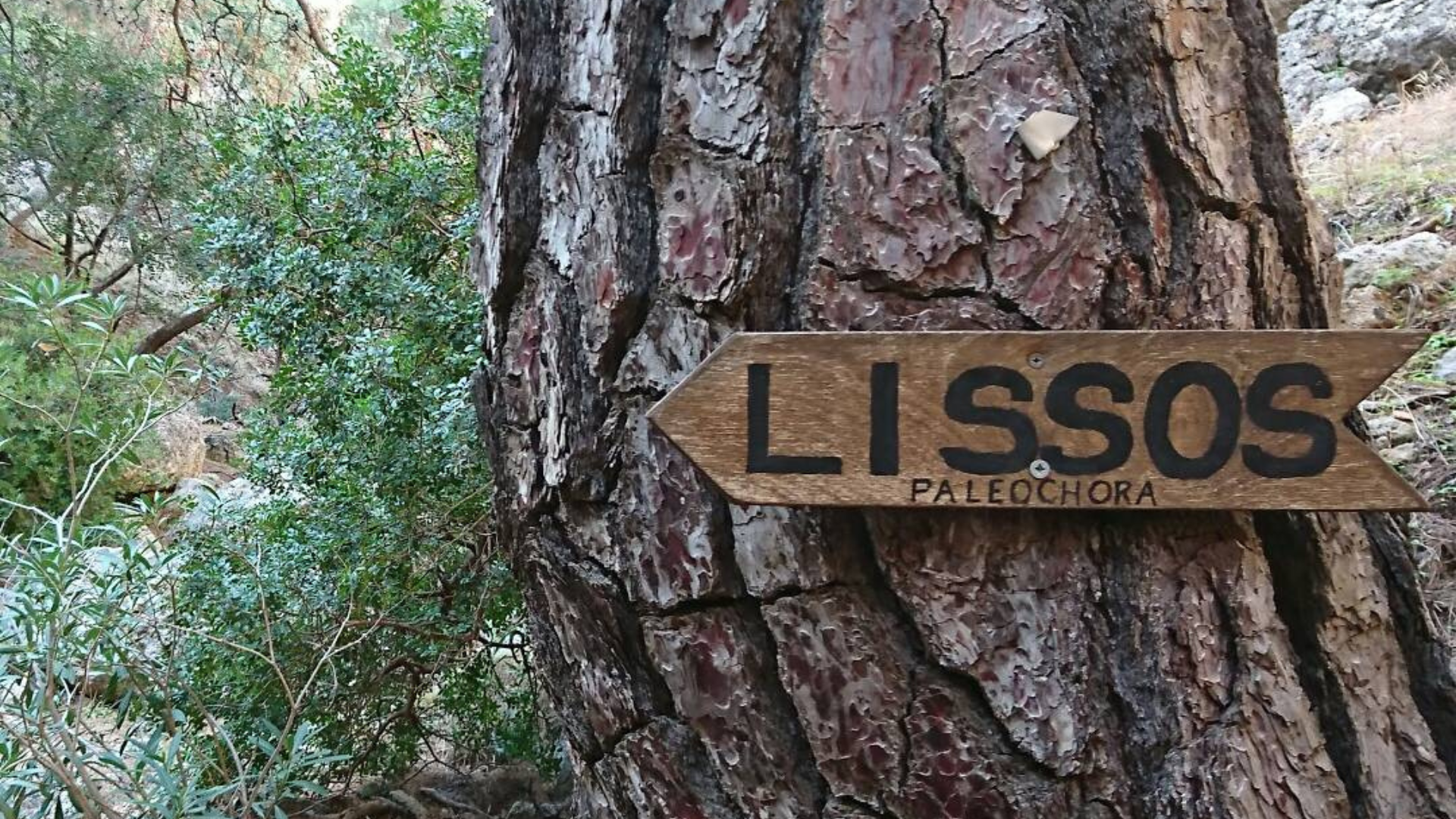
Continuing and passing by the signage to Lissos, and Paleochora.
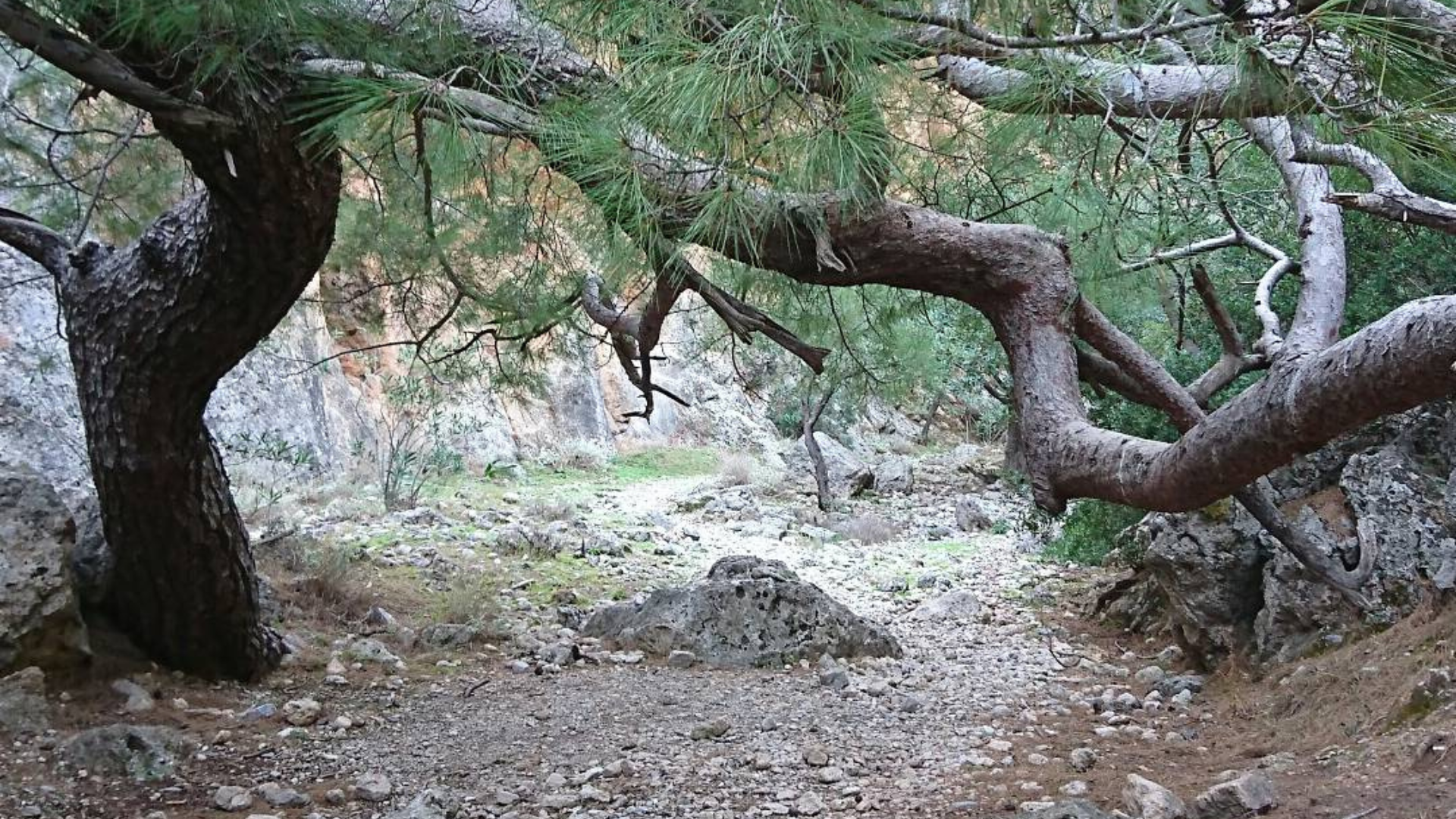
The stoney path led me through a woodland area shaded by old pine trees.
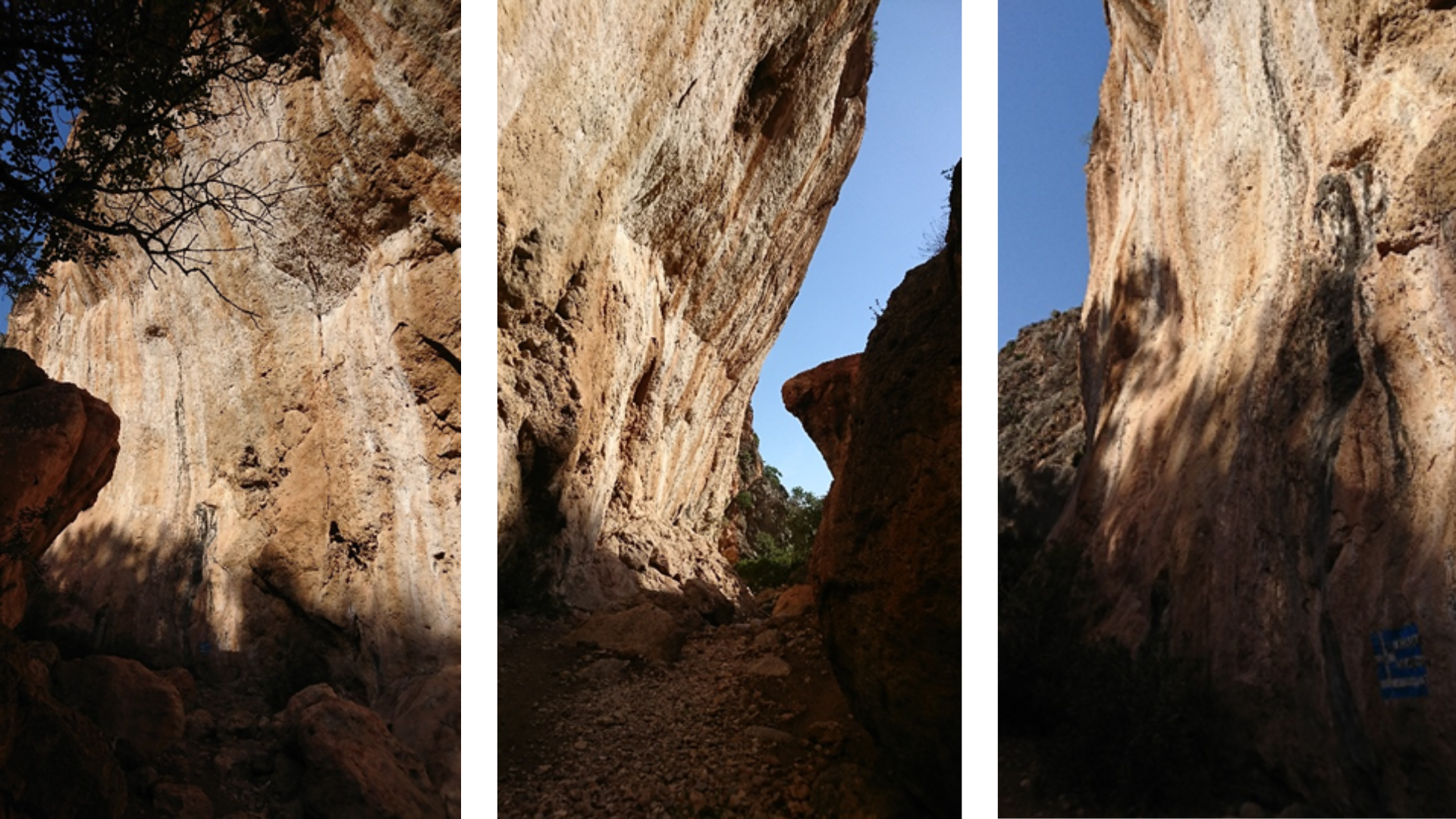
The landscape then shifted, opening into a dramatic passage of sheer, steep rock faces, where wild capers cling to the rugged slopes, thriving in the rocky terrain of the gorge. The rugged beauty of the gorge was striking, yet somewhere beyond this point, the trail markings disappeared.
With no clear signposts ahead, I decided to climb a nearby hillside, hoping to gain a better vantage point. From the higher ground, I could see the vast stretch of the Libyan Sea, but frustratingly, there was no sign of any ruins.
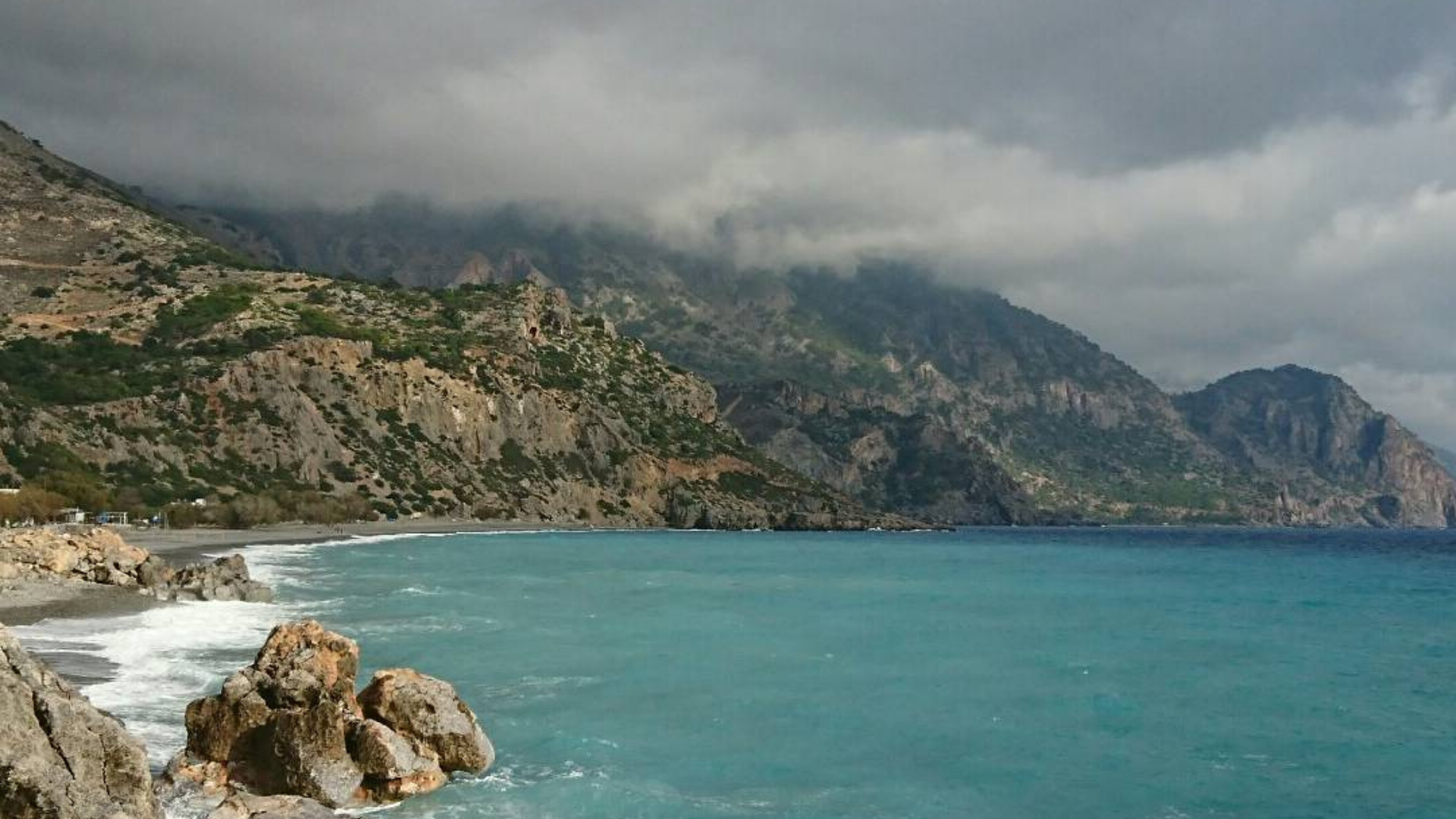
Looking back toward Sougia, I noticed the sky had darkened, with thick storm clouds rolling in from the east. What had begun as a clear blue sky morning had quickly turned unpredictable, a common occurrence on Crete’s southwestern coast in winter. Not wanting to risk getting caught in a downpour, I turned back toward the village.
I made it back to Sougia just before the heavens opened, and as swiftly as the rain arrived, it cleared again, leaving a refreshing scent in the cool air.
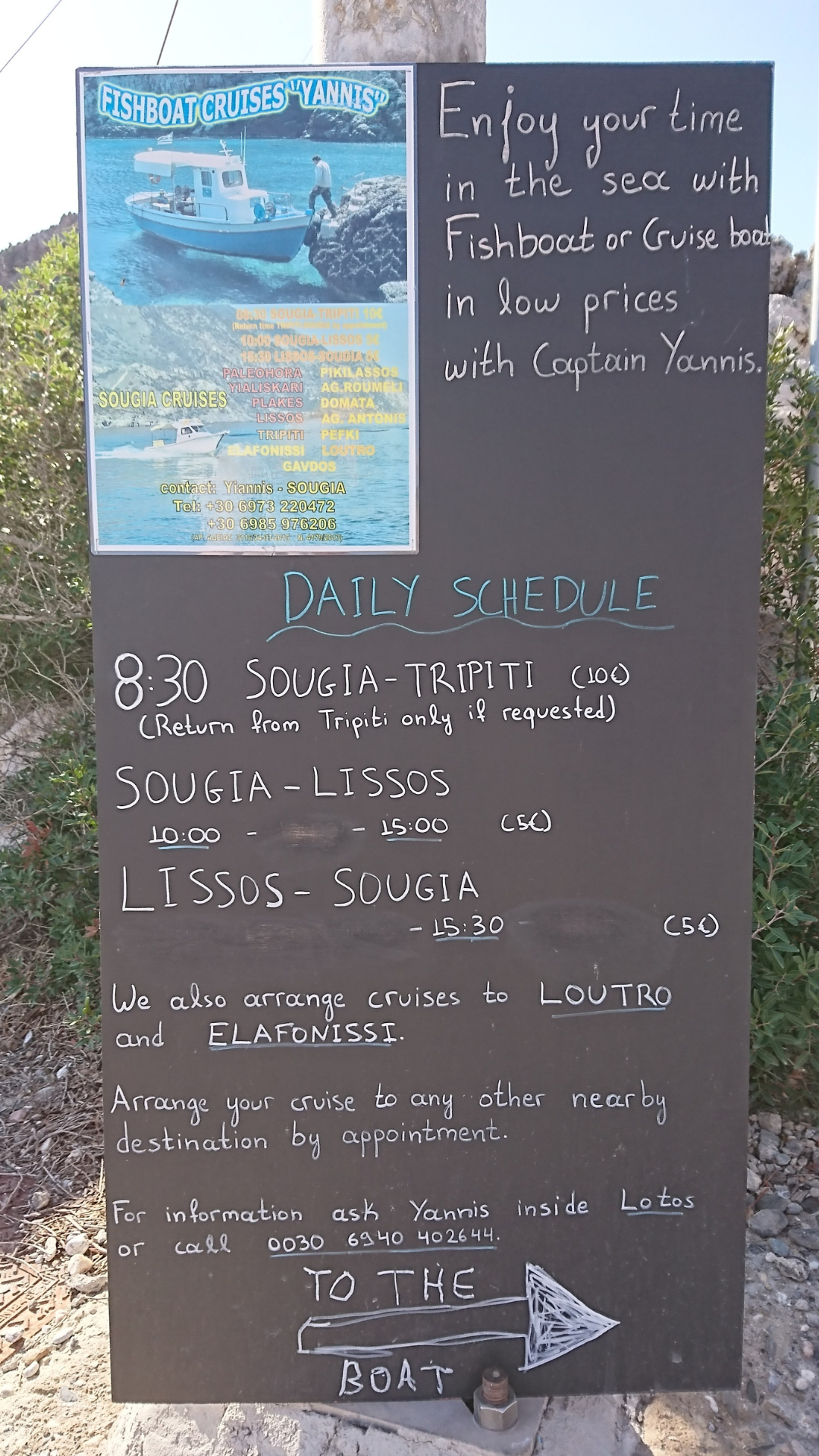
I'll be back in the summer, when I can take the water taxi or the scheduled boat service instead, now that I know the timetable offered by Captain Yannis.
Leaving Sougia behind, I began my drive back in the general direction of Chania.
However, an intriguing stop awaited me along the way, the ruins of the Vaulted Tomb of Nea Roumata.
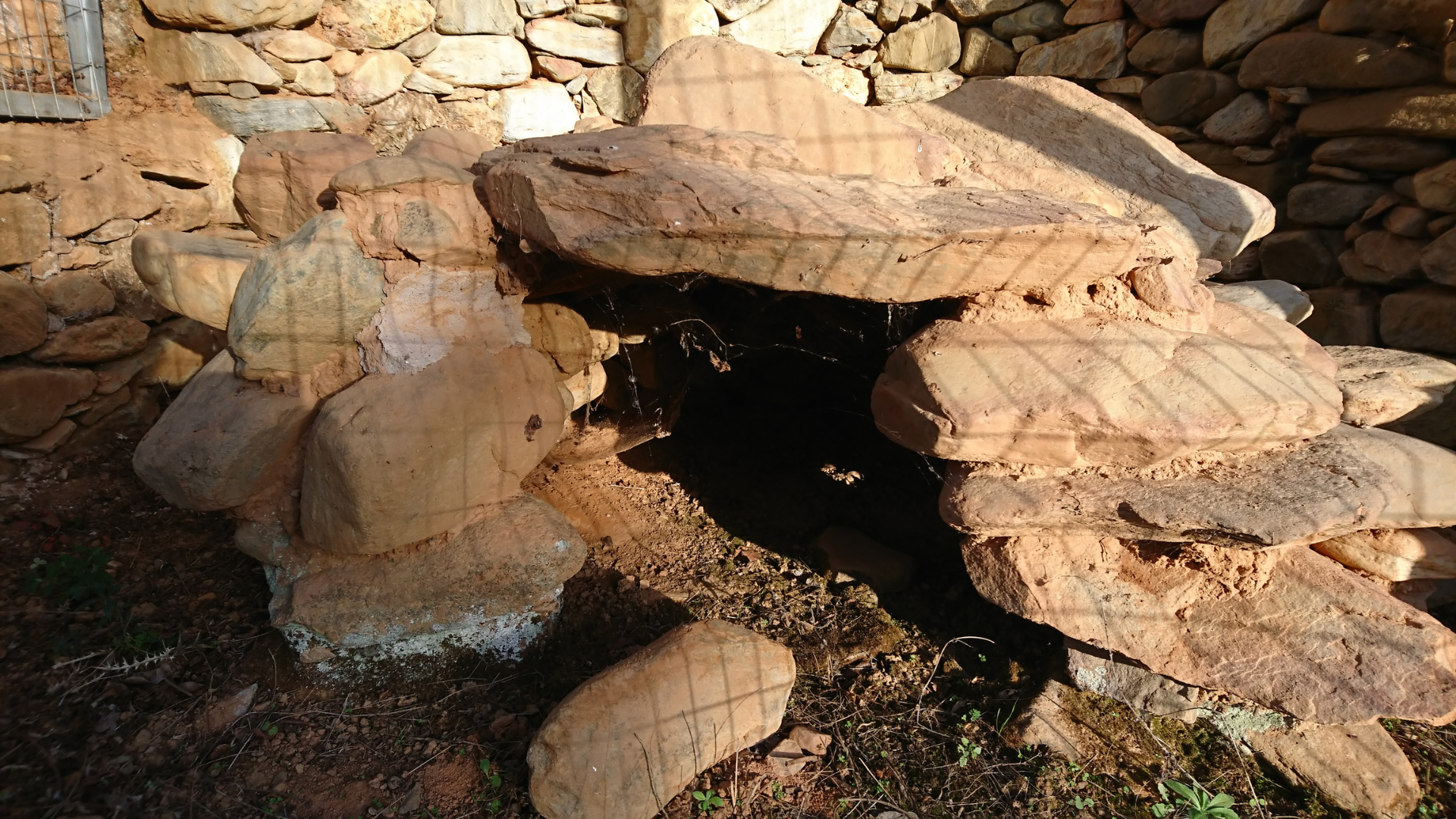
About an hour’s drive from Sougia, nestled in the foothills of Lefki Ori, also known as the White Mountains, lies the small village of Nea Roumata. The name Nea Roumata is thought to originate from the many springs found in the area, with rouma translates to “spring” in the Cretan dialect.
Nea Roumata is known for its archaeological significance with the discovery of Early Minoan tholos tombs in the nearby valley at the ancient site of Pefkos. These tombs, dating back to approximately 3500–2900 BC, offer valuable insights into the burial practices and cultural connections of Crete during this period.
An information sign at the site suggests that the tomb’s design closely resembles Cycladic tombs, reinforcing the idea of a strong connection between Cretan and Cycladic civilizations in antiquity.
One well preserved tomb, discovered in 1980, is particularly notable for its small size and simple construction, resembling contemporary Cycladic tombs. Built using stacked flat stones, the tomb originally had its entrance sealed with stone slabs, though it lacked a corridor leading into the burial chamber. Inside, archaeologists uncovered a skeleton in a crouched position, accompanied by a globular cooking pot and a cylindrical cup.
The 1980 excavation also revealed fragments of Early Minoan vases, clay and pottery making materials, including grinding stones, obsidian blades, spindle whorls, and a fragment of rock crystal.
Having had the opportunity to visit this site, my day didn’t feel entirely lost after my planned hike through Lissos Gorge was cut short.
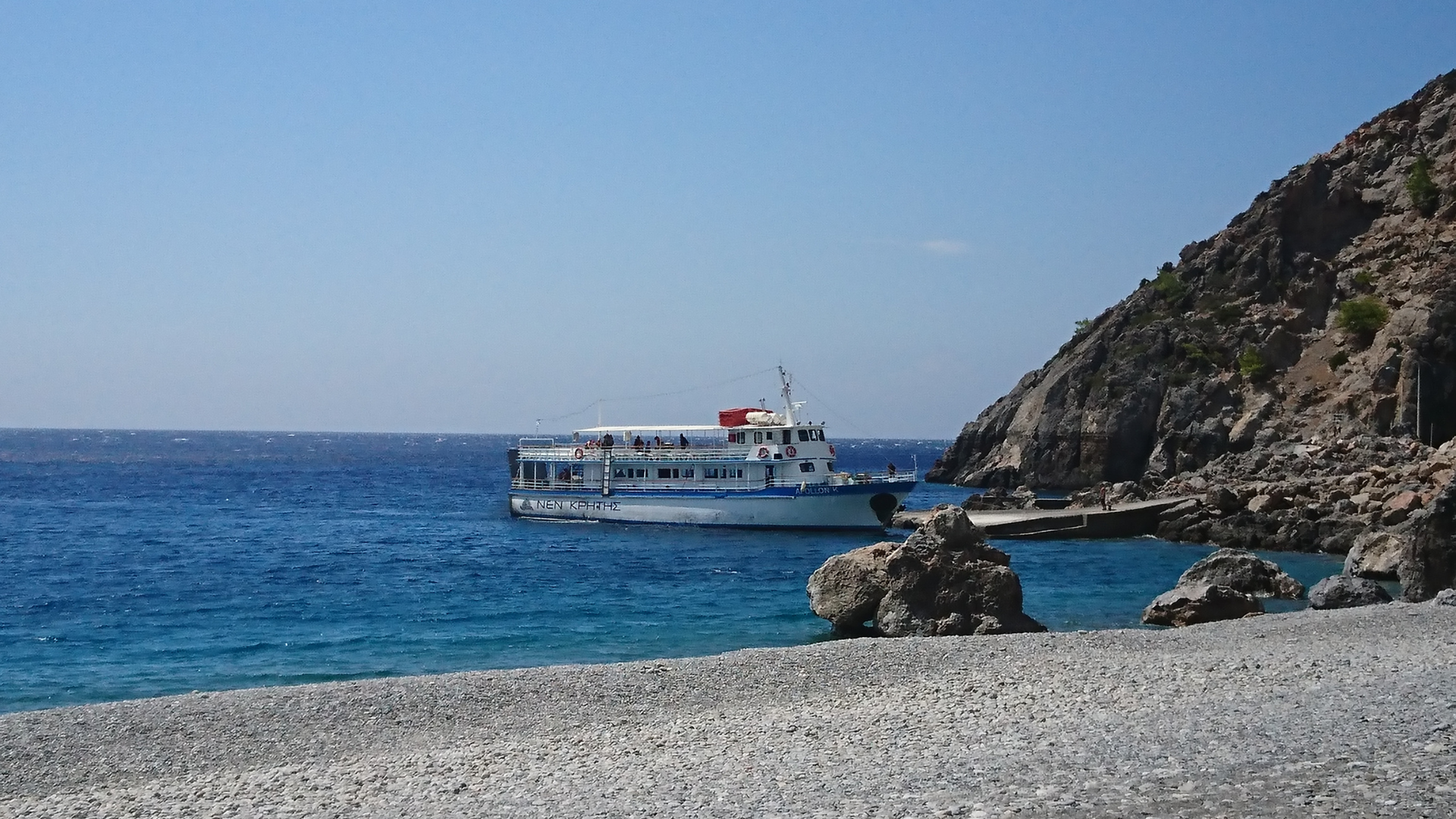
I returned the following summer under clear skies to a more livelier atmosphere in the seaside village of Sougia, where a boat crew were preparing the boat for departure to Lissos and onward to Paleochora. I had arrived just in time for the scheduled water taxi.
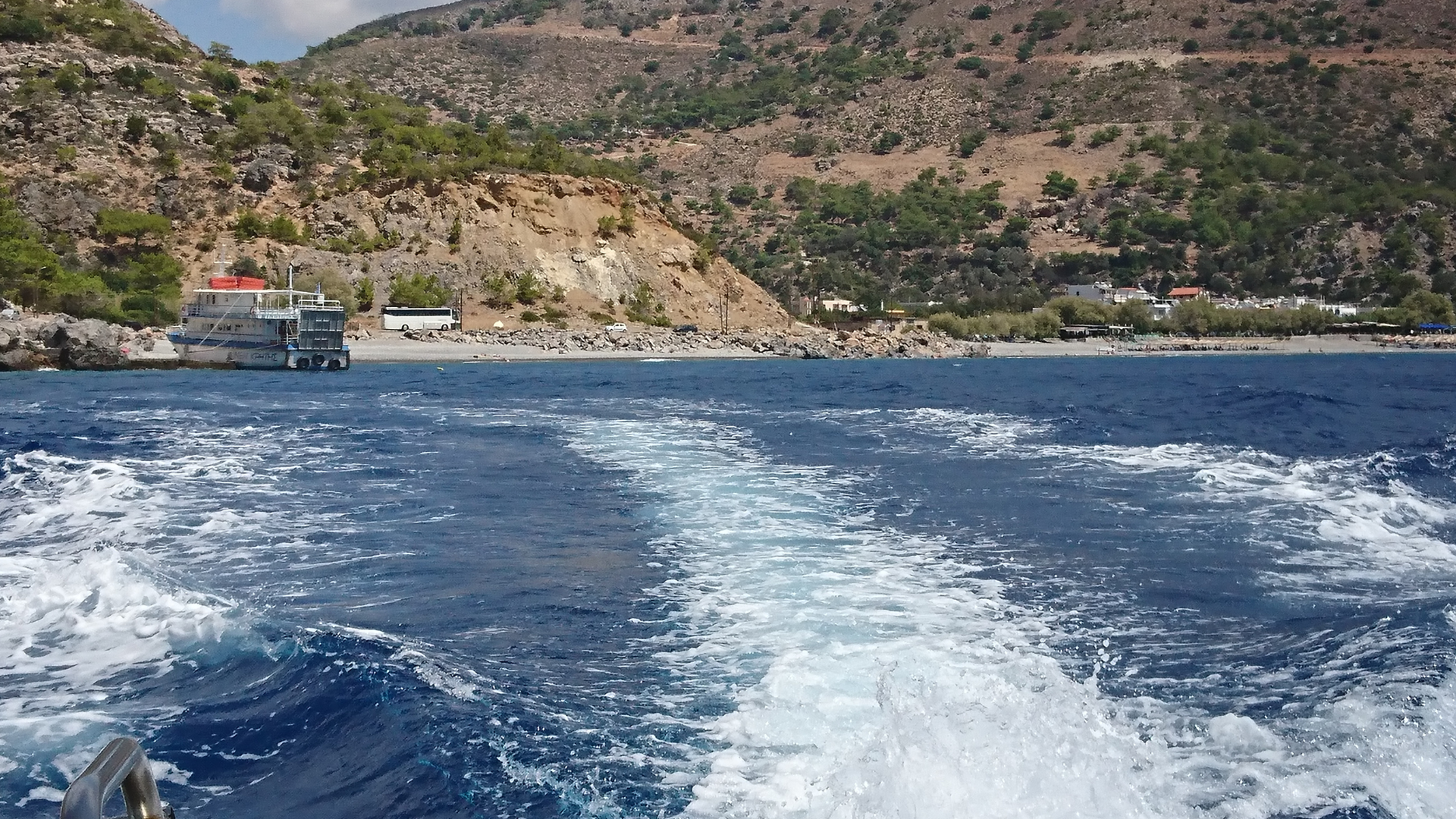
Leaving Sougia harbour, it’s a short 20 minute taxi boat ride to the shores of the small pebble beach harbour of ancient Lissos, to find other day trippers enjoying time in the sun and swimming.
Arriving by boat, the once thriving ancient city of Lissos reveals itself, a picturesque valley embraced by rugged nature.
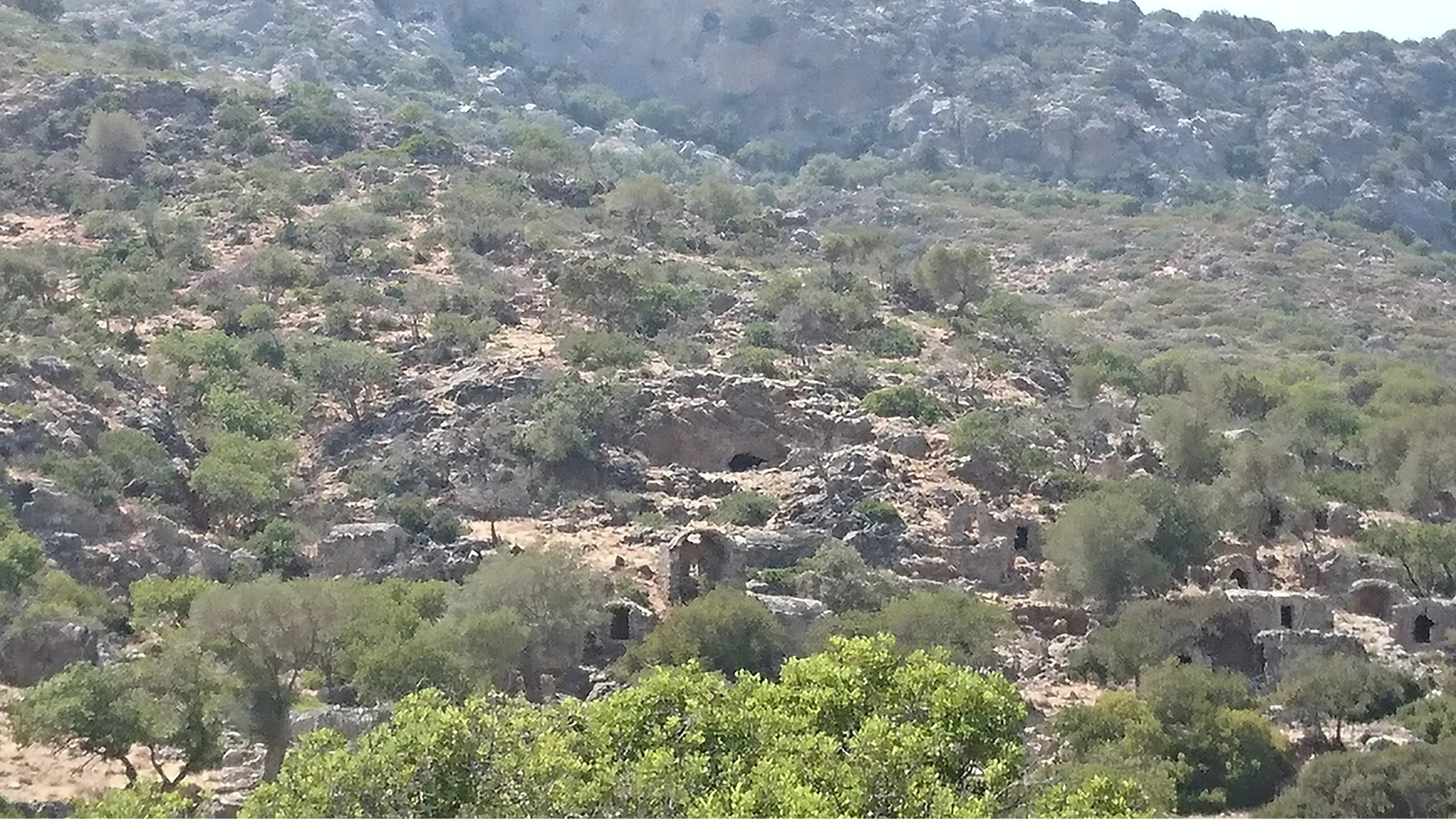
To the left, the Roman necropolis stretches across the southwestern and western slopes, where the remains of 118 rock cut chamber tombs are visible. Most of these graves were constructed as single chambered, vaulted tombs within a rectangular layout. Notably, three of the chamber tombs were built as two storey structures, with the ruins of at least four small buildings nearby.
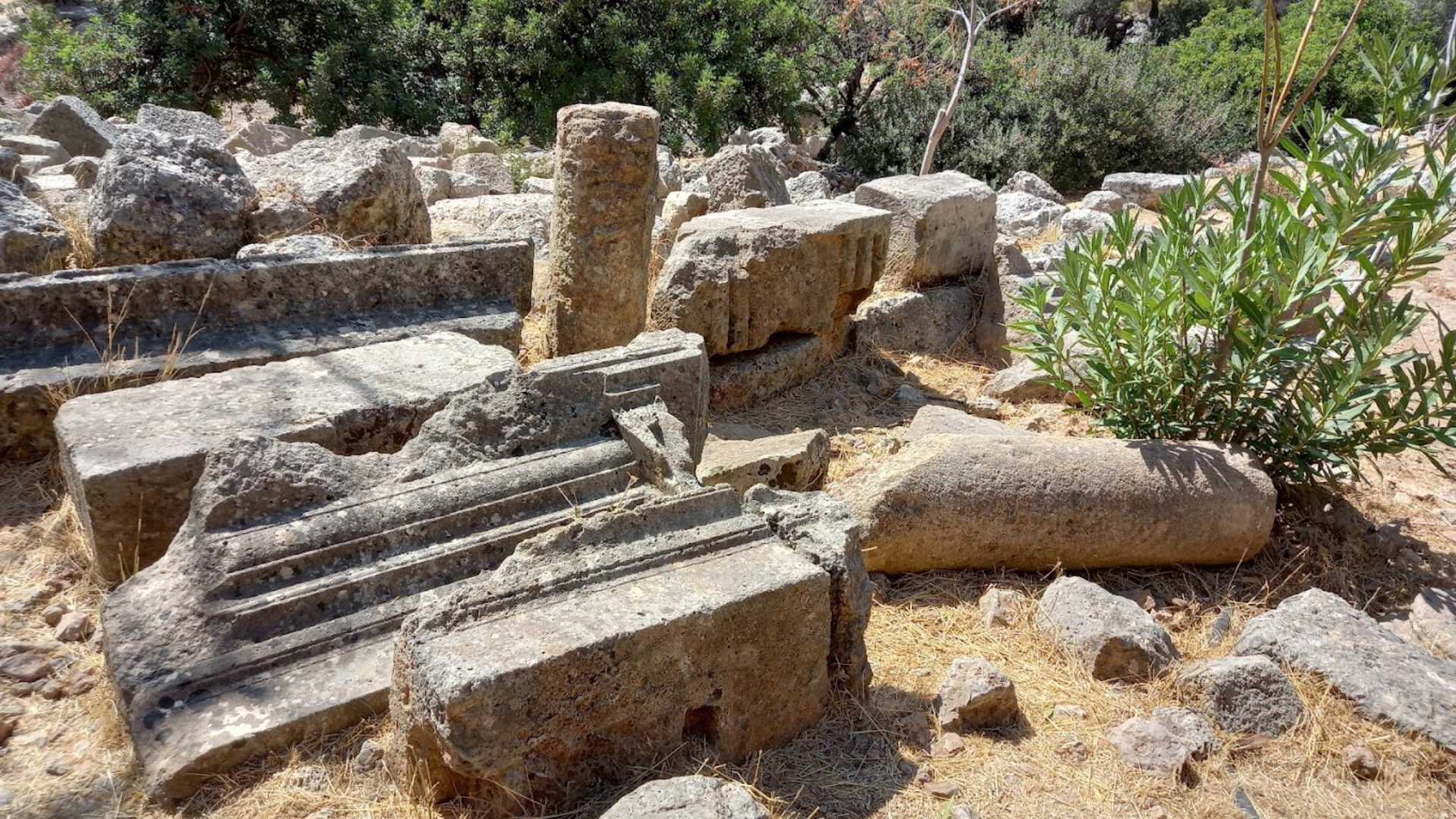
To the right, with a little imagination, you can picture what was once the ancient residential area. At its heart stood the city’s bustling marketplace, the Agora, though now only scattered ruins remain.
Unlike other ancient settlements, Lissos had no fortifications, a testament to its prestige as a renowned healing and religious sanctuary.
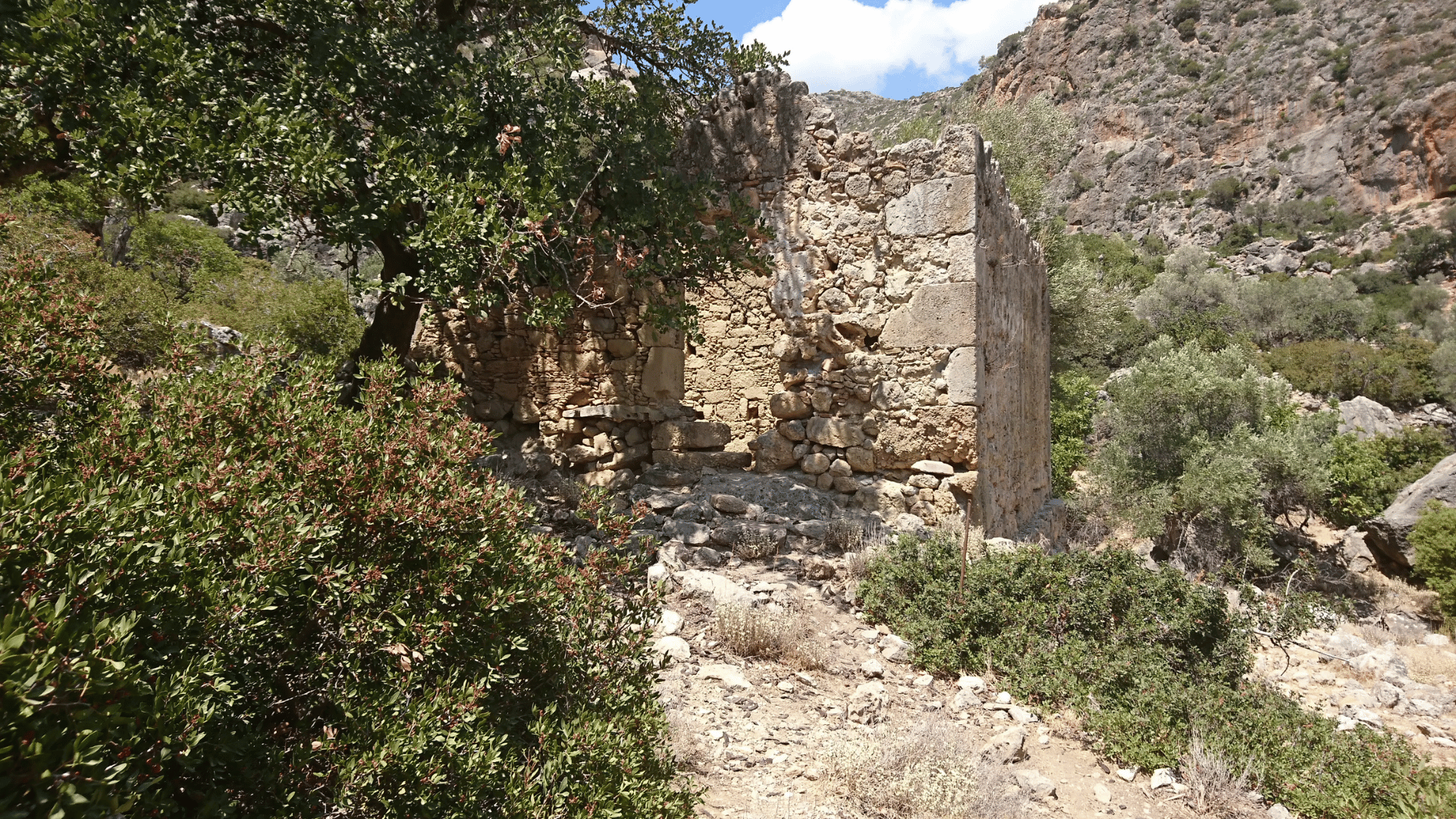
Traces of ancient towers can still be seen, yet no evidence of roads or pathways has been discovered.
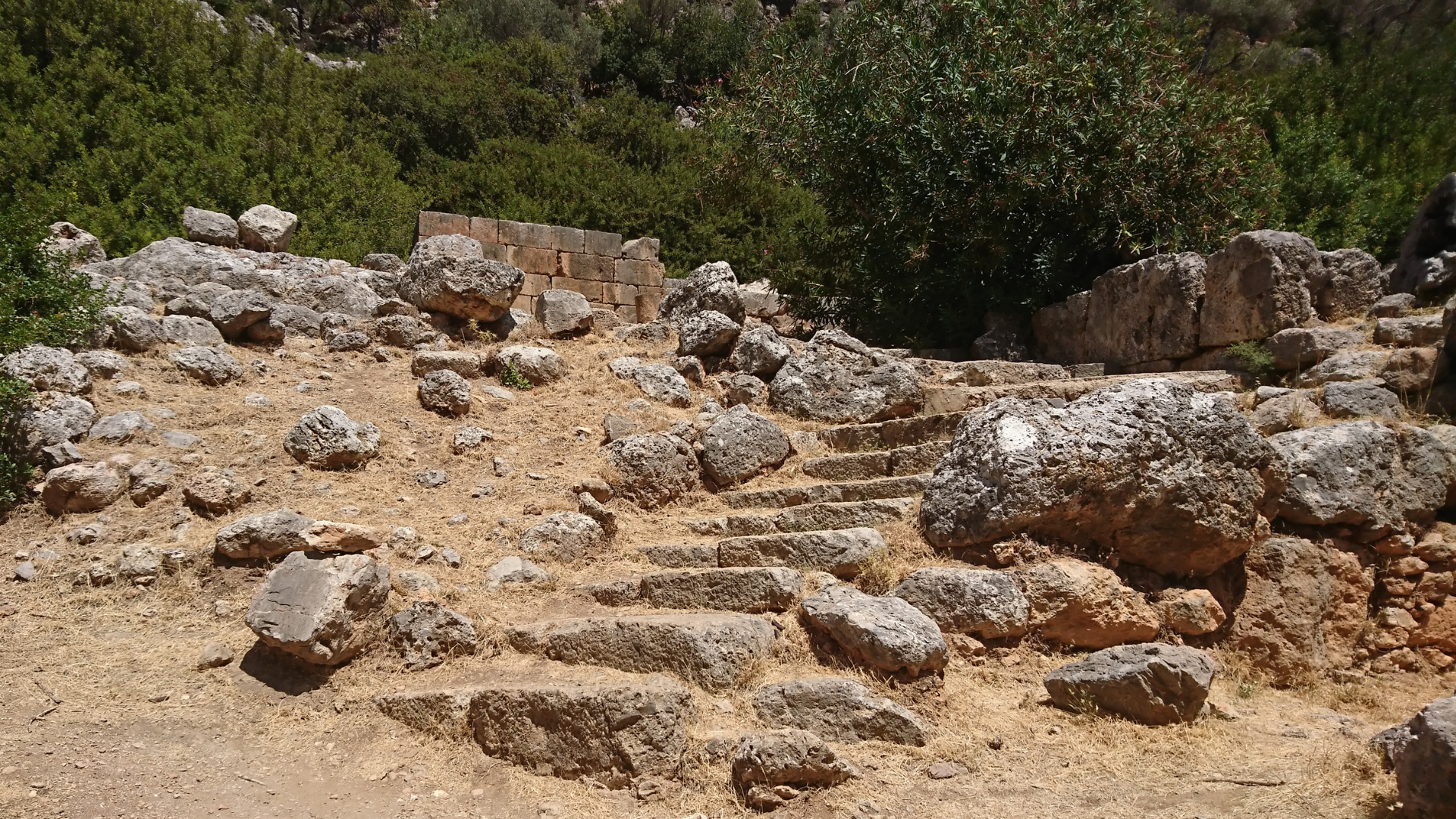
A short walk past the scattered remnants of the residential area, a stone stairway ascends to what was once the heart of Lissos’ spiritual life, the Asklepieion, the temple of Asclepius.
Revered as the god of medicine, healing, and restorative health in Greek mythology, Asclepius was the son of Apollo and the mortal Coronis, a Thessalian princess. According to legend, it was the wise centaur Chiron who taught him the healing arts, that brought both awe and divine consequences.
Such was his prominence, with more than 900 temples dedicated to Asclepius, known as Asklepieia were built across the ancient Greek world. These temples weren’t merely places of worship; they were early forms of wellness retreats, blending spiritual healing with practical medicine, extending across various layers of society. Pilgrims would travel great distances to seek cures through sacred rituals, offerings, and incubation, a healing practice involving sleeping within the sanctuary in hopes of receiving curative dreams.
Some of the most significant Asklepieia include:
1. Epidaurus (Peloponnese)
The most famous Asklepieion of them all, nestled in the northeastern Peloponnese. From the 4th century BC onwards, it blossomed into a major centre for healing, complete with a hospital, sacred spring, dormitories for dream incubation, and a grand theatre still in use today. It became the benchmark for Asclepian sanctuaries across the ancient Greek world.
2. Athens – South Slope of the Acropolis
Established in the 5th century BC, this sanctuary stood near the Theatre of Dionysus and served as a healing centre right in the heart of classical Athens. Pilgrims sought treatments and offered thanks in what was a bustling and urban setting, blending public life with sacred health rituals.
3. Kos (Dodecanese Islands)
The birthplace of Hippocrates, the “father of medicine”. Kos was home to an impressive Asklepieion built in terraces overlooking the Aegean. This sanctuary functioned as both a healing centre and a place of learning, carrying on Hippocratic teachings under Asclepius’ divine watch.
4. Pergamon (Modern day Turkey)
Though beyond Greece’s modern borders, Pergamon’s Asklepieion became one of the most innovative healing sites of the Hellenistic world. Famous for its use of hydrotherapy, sacred music, and dream interpretation, it rivalled Epidaurus in stature.
5. Gortyna (Crete)
The sanctuary of Asclepius at Gortyna, once the political capital of ancient Crete, shows that healing sanctuaries were thoughtfully spread across the island, each serving as vital centres of physical and spiritual restoration.
The Asklepieion at Lissos, though smaller and more secluded, likely served the broader southwest region of Crete.
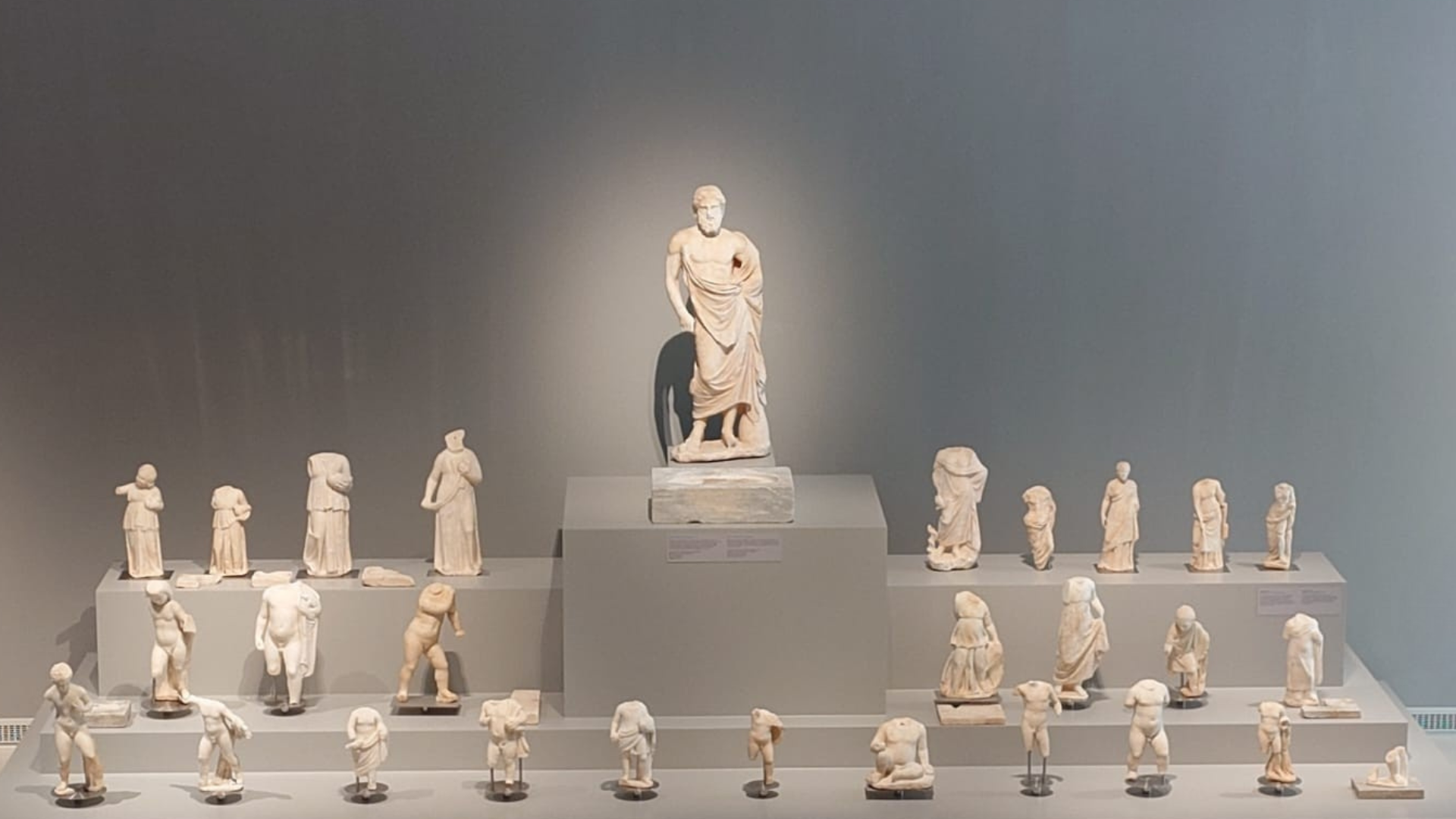
Its importance is revealed in the number of votive offerings unearthed on site, statues, inscriptions, and coins left behind by those who once travelled here in search of relief, renewal, or divine guidance. Many of these finds have since been carefully preserved and are now housed in the Archaeological Museum of Chania, where they offer a glimpse into the sanctuary’s former life and the people who placed their hopes in the healing hands of Asclepius.
Today, the sanctuary's peaceful valley setting, reachable only by foot, water taxi, or boat would have enhanced its atmosphere of retreat and introspection.
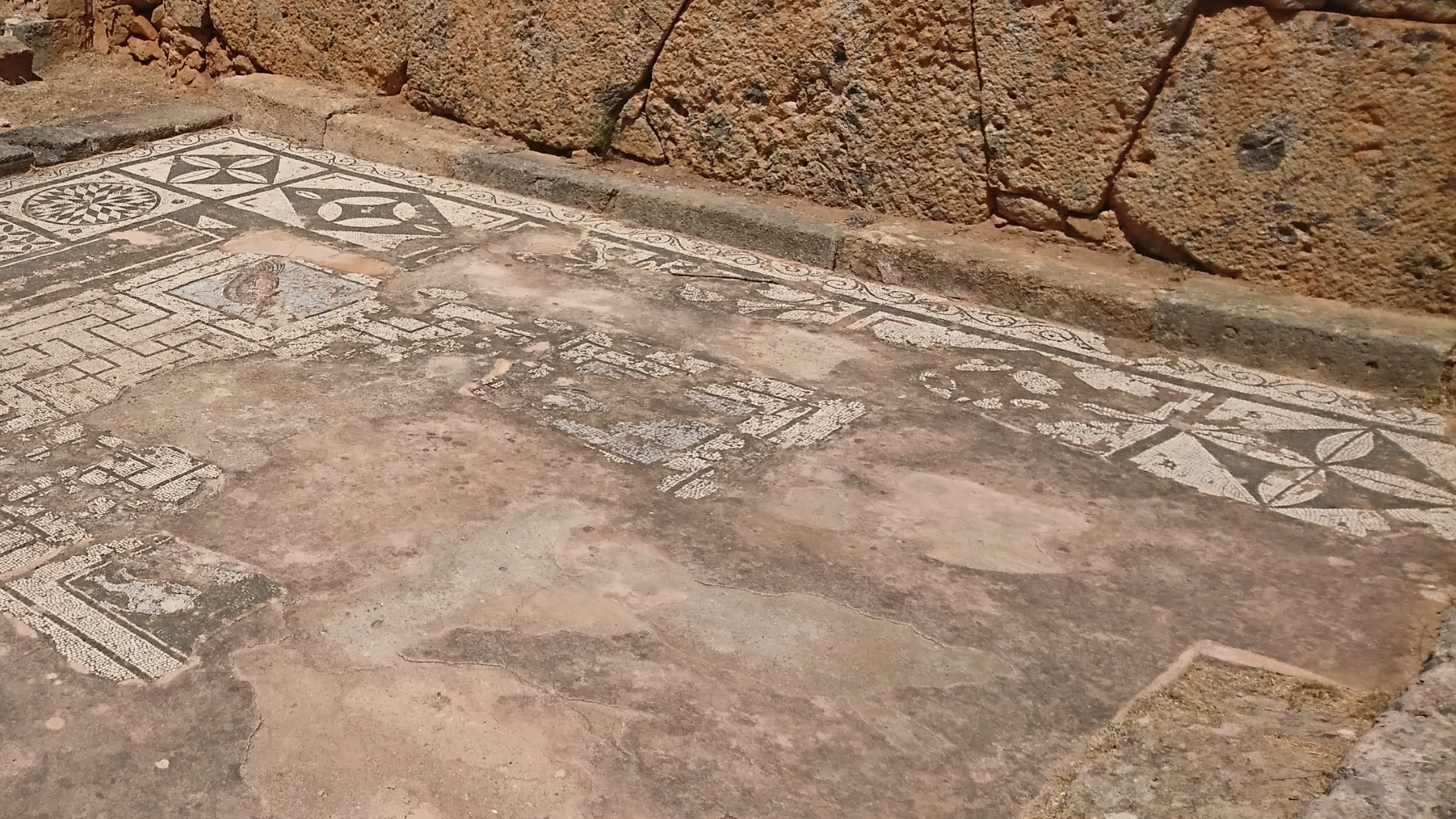
I stay for a while, as I'm the only person at the site and quietly admiring one of the sanctuary’s most distinctive features, the mosaic floor. Composed of multicoloured tiles, it displays intricate geometric patterns alongside delicate images of birds, a lasting tribute to the craftsmanship and care once poured into this sacred space. A reminder that even in ruin, beauty and purpose still whisper through the stones.
As centuries passed and early Christianity swept across Crete, and the whole of modern day Greece, these ancient temples were not merely abandoned, many were repurposed. At the Lissos sanctuary of Asclepius, engraved crosses appeared on the stonework, perhaps as acts of sanctification or spiritual claiming. These markings reveal a shifting tide in Crete’s sacred landscape, where new beliefs layered themselves over the old, yet echoes of an ancient faith still linger in the stones and mosaic floor.
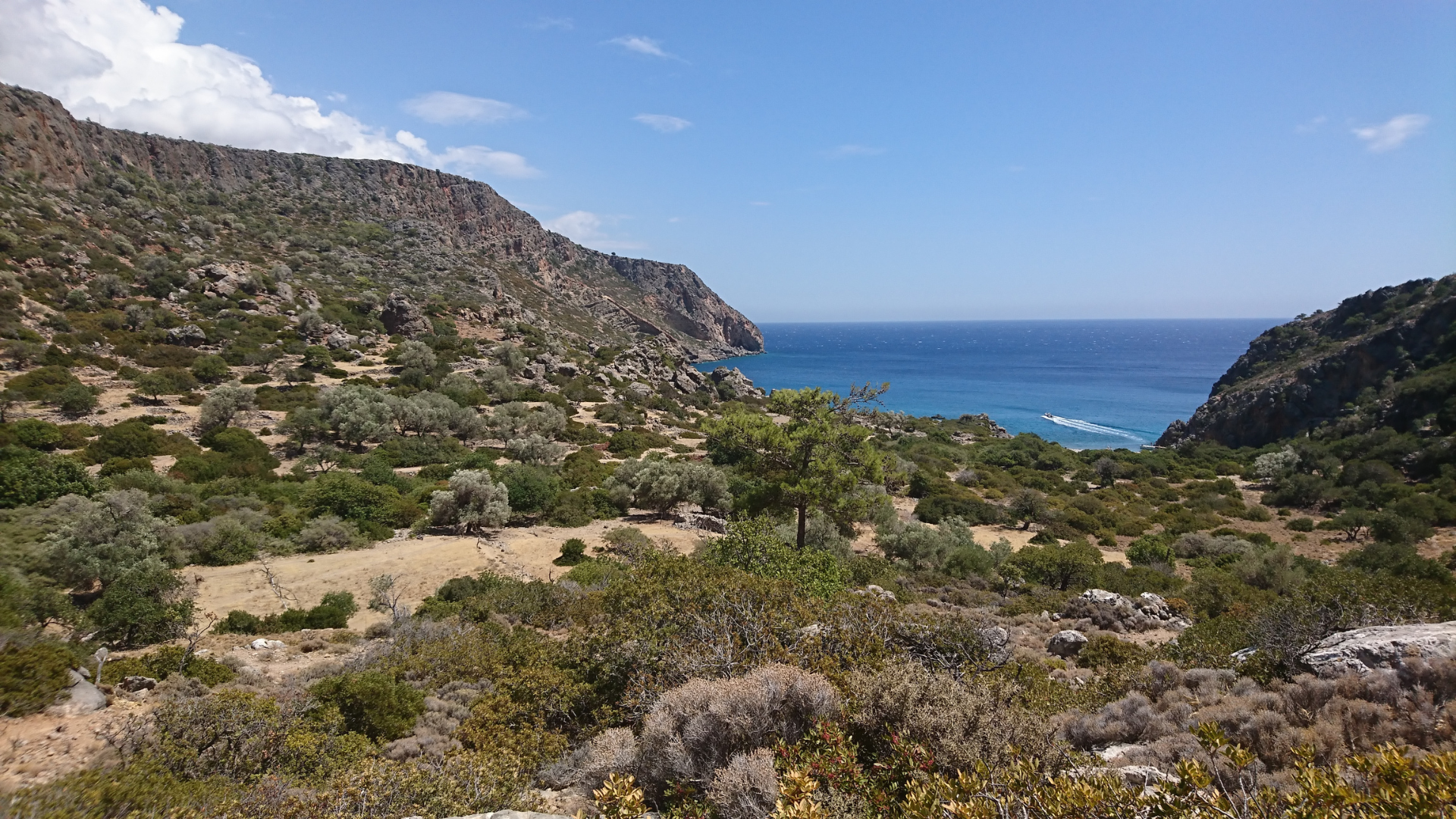
As I leave the temple ruins behind, the landscape opens, across the valley floor cradled between rugged mountains, where the narrow cove greets the Libyan Sea. In the distance the water taxi is leaving, taking others back to Sougia.
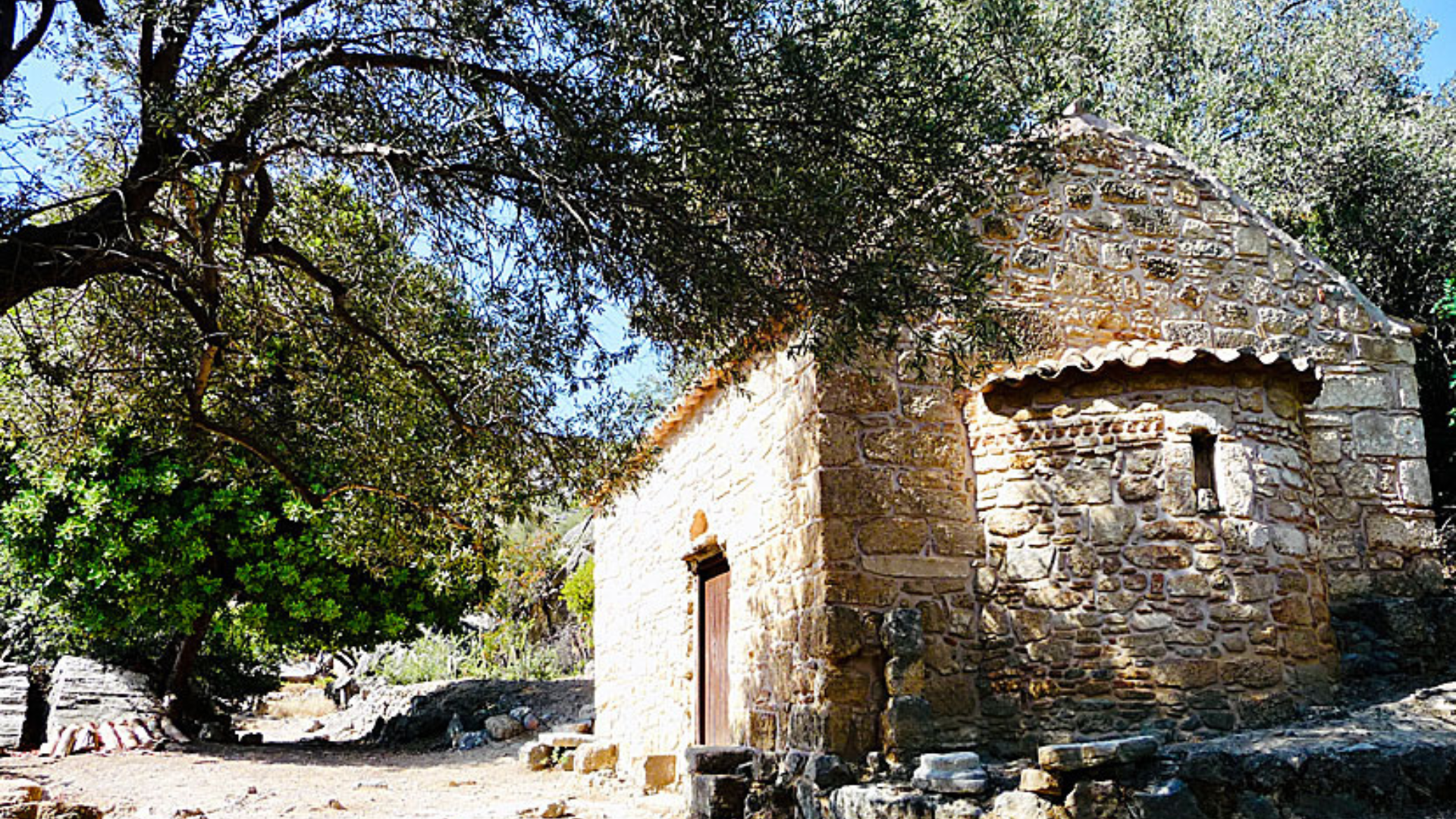
A short walk from the sanctuary, tucked quietly amongst the trees, stands one of two small chapels in Lissos. The first is the stone built chapel of Agios Kirikos, which also lends its name to the cove of Lissos. Constructed during the Byzantine period, sometime between the 13th and 14th centuries, it stands upon the foundations of an earlier Orthodox Basilica. Here, the Holy Bema once stood, a raised platform that preceded the entrance to the adyton, the innermost and most sacred part of the sanctuary.
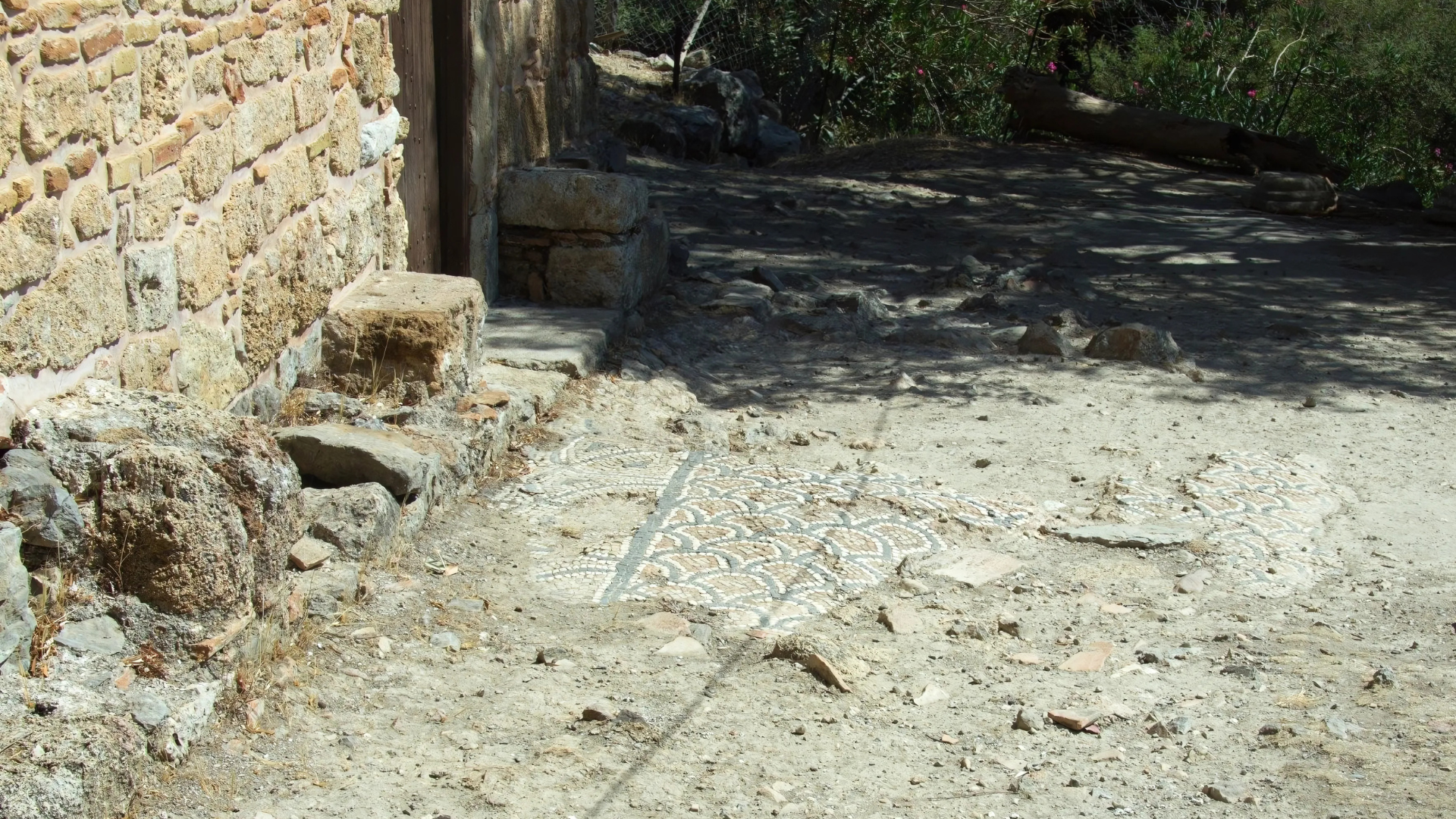
At the chapel’s entrance, a portion of a ruined mosaic floor catches the eye, weathered, but still offering a glimpse into its former beauty, as a memory beneath your feet.
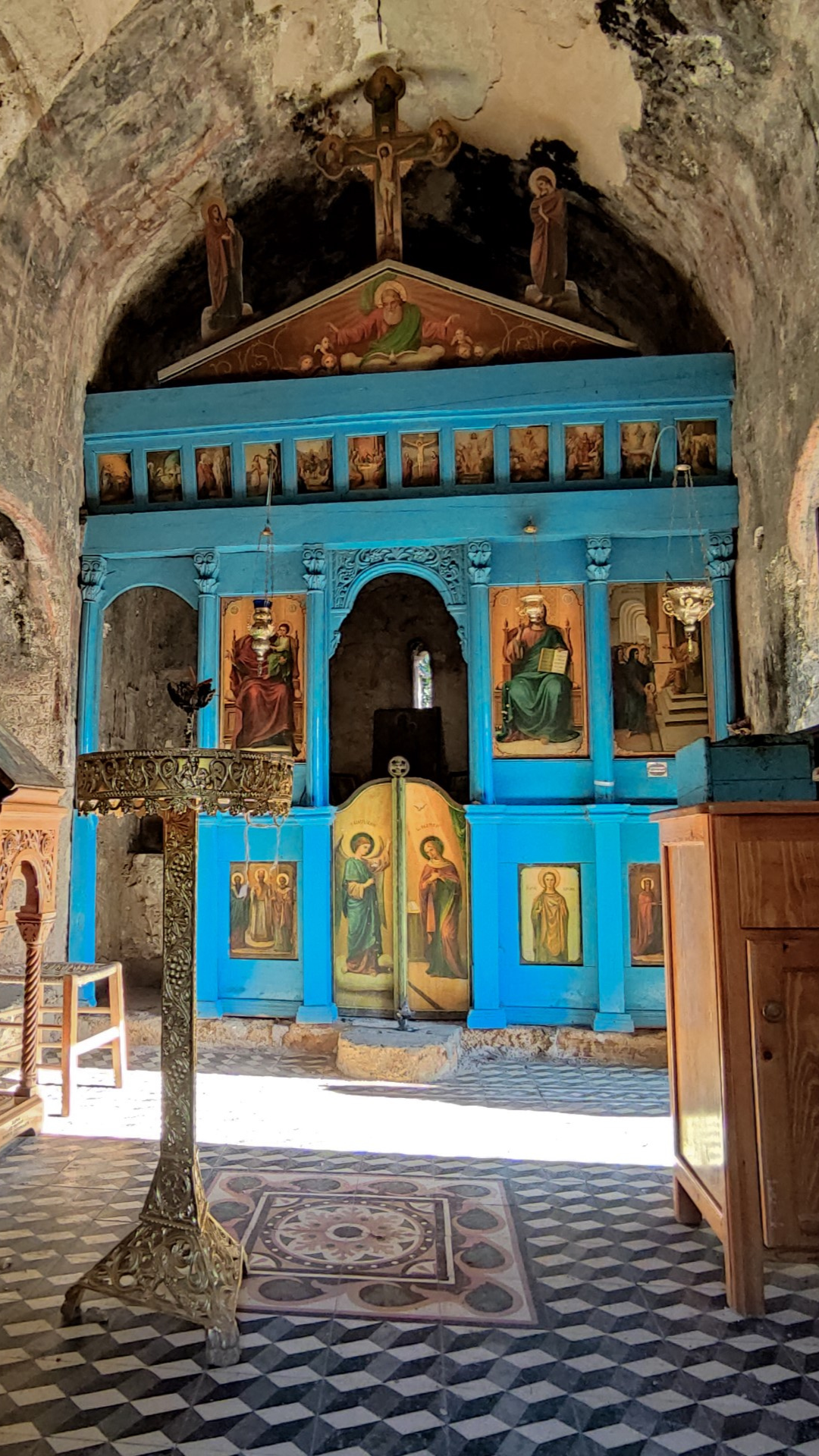
Inside, the vaulted interior holds the Iconastasis, that shows the images of saints.
It’s also important to note, that whilst the icons of saints change in each church, in the center there are always two icons that do not vary. On the right is an icon depicting Christ and on the left an icon depicting Mary.
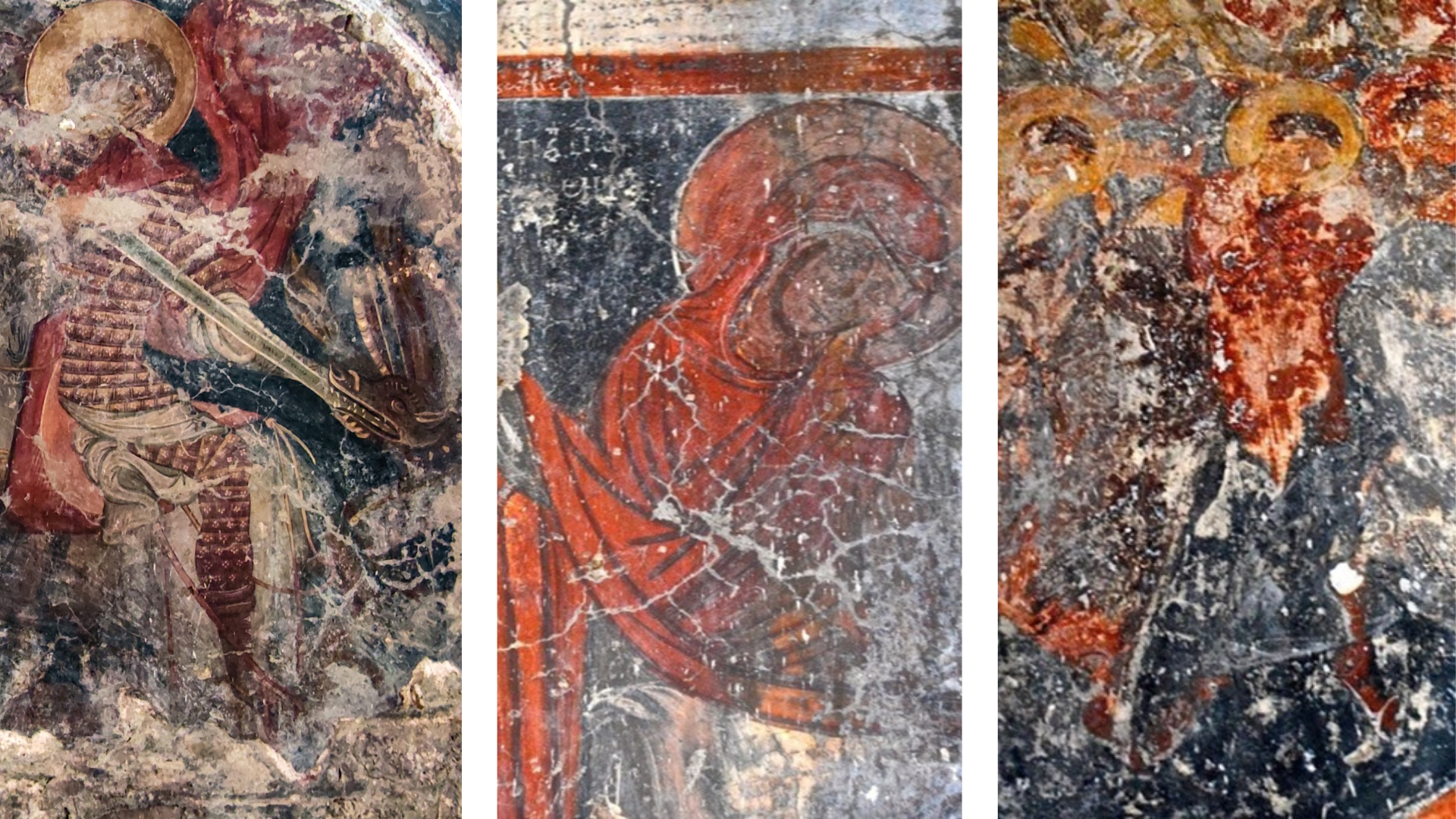
Looking above on the ceiling are traces of painted frescoes. Time has worn away much of their detail, and some have been defaced, yet their presence remains striking.
Among the more visible is an image of Saint George slaying the dragon (left) Mother Mary (centre) and other frescoes, depict saints and biblical scenes, dated to the years 1436, 1437, and 1439, anchoring this small chapel in its late Byzantine period, during a time of both devotion and uncertainty as Crete shifted under Venetian rule.
The chapel of Agios Kirikos holds a presence that is quiet yet grounded, as though watching over the ruins below. It continues to serve a purpose even now, as each year on the 15th of July, it comes to life again for the saint’s feast day. Though the stories told within its walls have shifted over time, the desire remains unchanged: to gather, to reflect, and to seek connection with something greater than oneself.
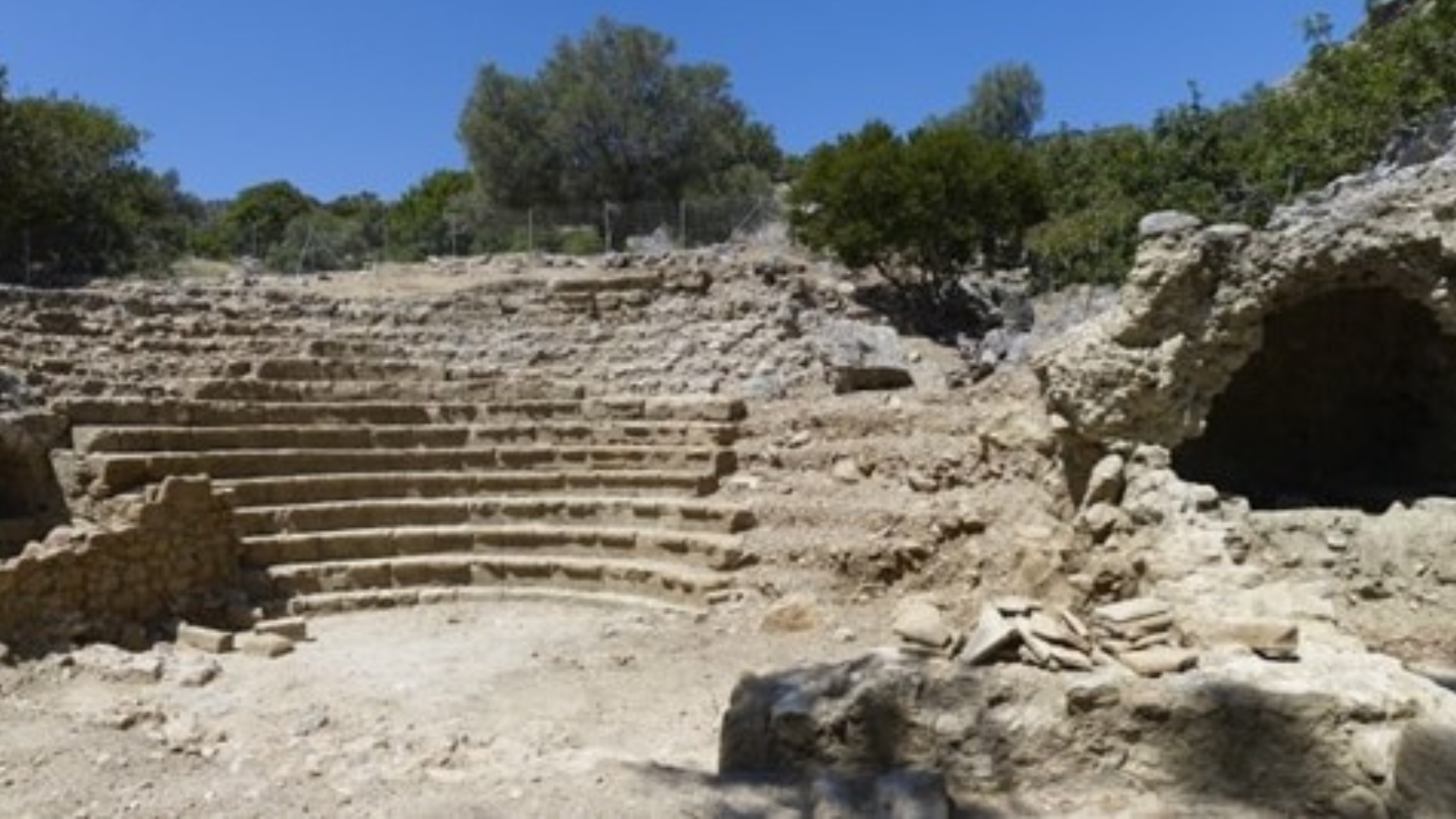
Excavations that began in the 1950s, with more than six decades past have revealed the foundations of an east facing structure that is continuing excavation. Archaeologists believe this structure to be either an odeon, meaning a “singing place” for musical performances, poetry, and public gatherings, or a bouleuterion, where civic assemblies once gathered. As excavations continue, each stone turned is a quiet reintroduction to Lissos’ deeper past, revealing that this coastal sanctuary was not only a place of healing, it’s a reminder that it was once a vibrant communal space where ideas, art, and governance intertwined.
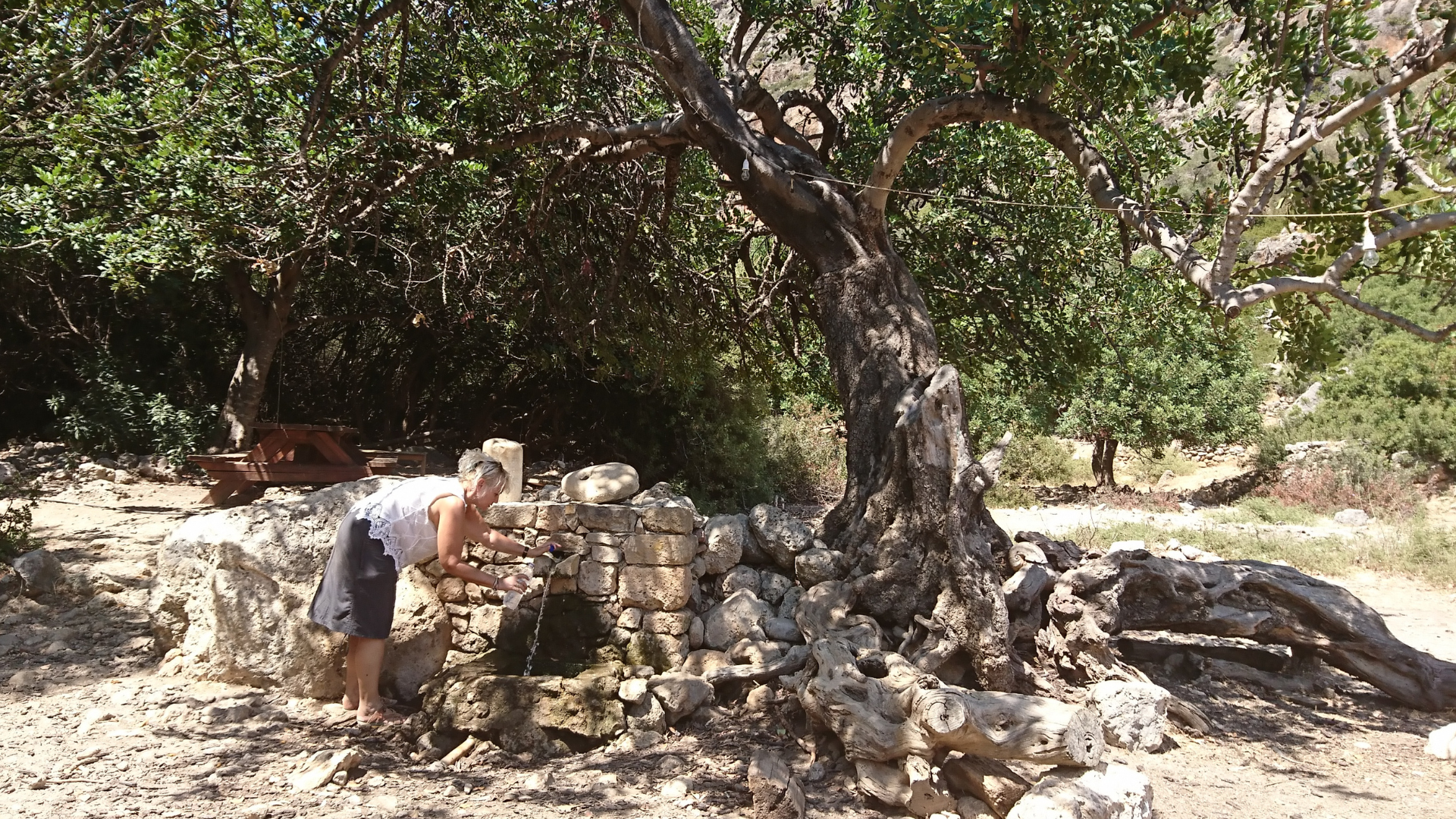
Walking back towards to sea, I stop by the spring water fountain, that has become todays resting area, under the shade of carob trees, for both the local goats and humans to replenish their thirst.
Walking back toward the sea, I stop by the spring water fountain, which has become today’s resting place, under the shade of carob trees, for both local goats and passing humans to quench their thirst.
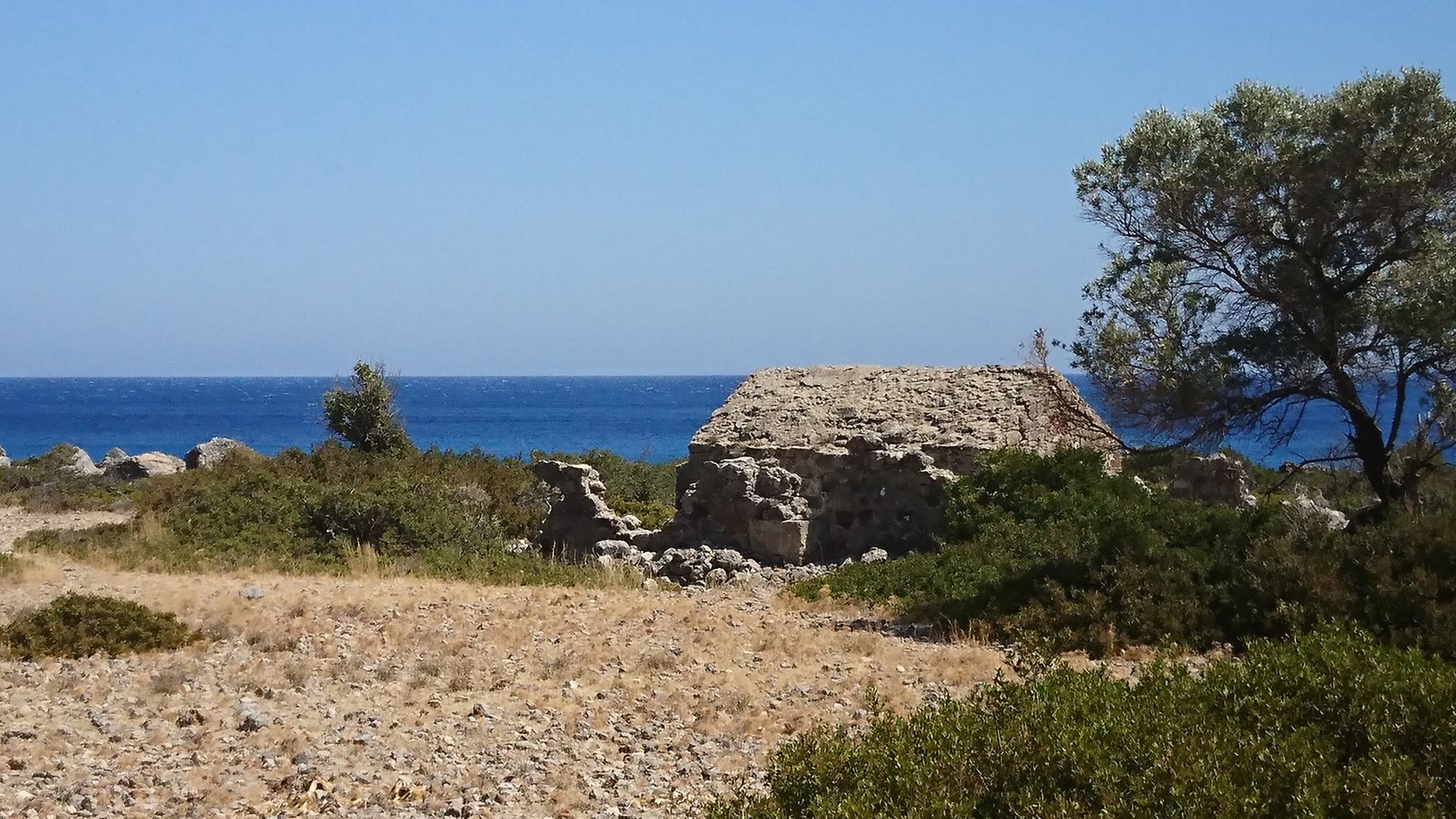
I continue on and not too far, nearer to the beach, stands the second early Byzantine chapels, dedicated to Panagia, the Virgin Mary.
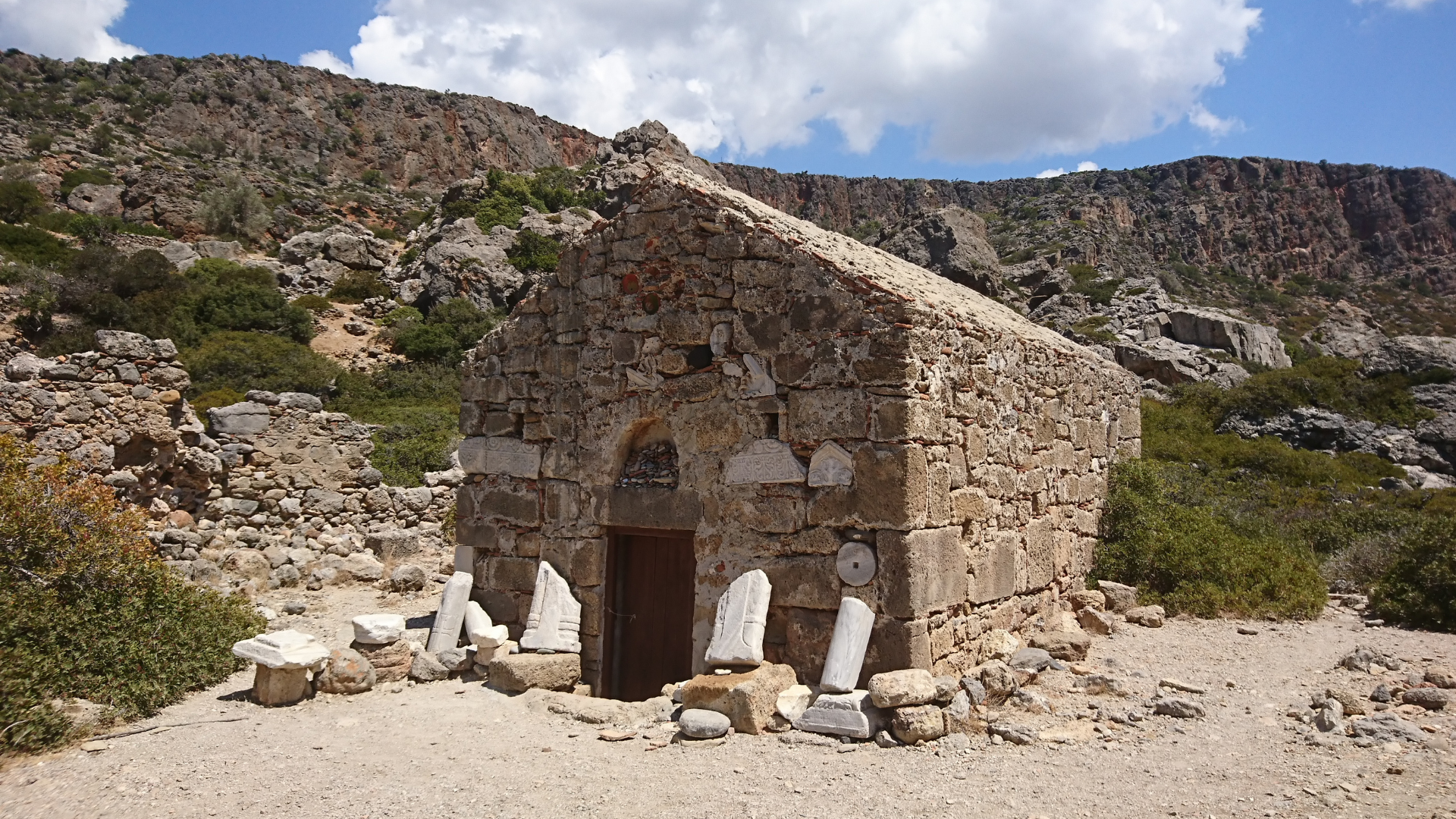
Modest and weathered, this small stone structure was built atop the ruins of a much earlier Christian church. Where materials from the ancient city are visibly embedded in its walls, broken columns, carved fragments, and timeworn marble now part of its foundation.
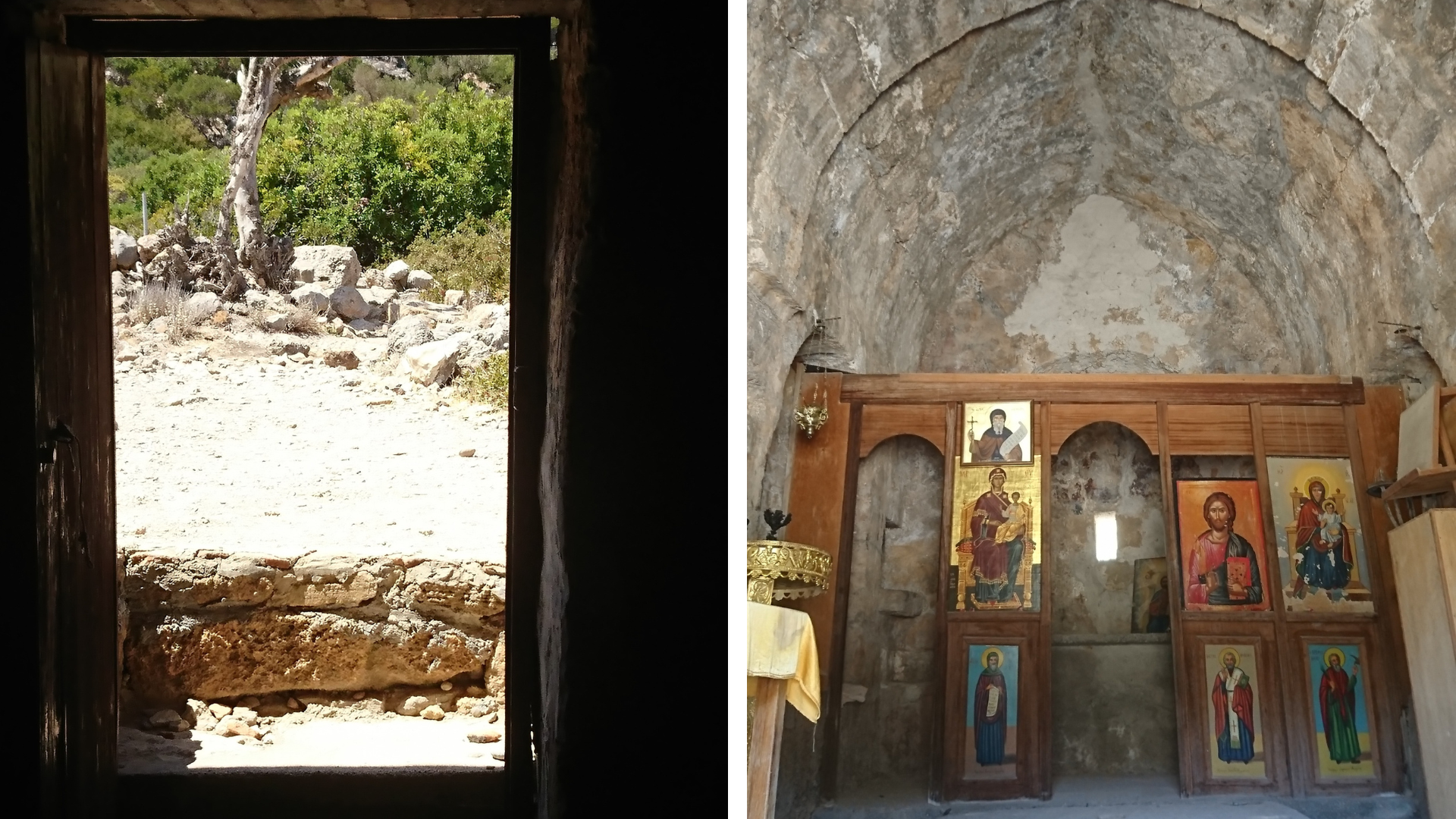
Approaching the entrance and stepping down one stone, then another onto the earthen floor inside, you enter a space that’s peacefully quiet. The chapel’s rustic interior and simple iconostasis hold images of saints that still offer their silent presence to those who wander in.
Given the ancient historical facts of a goddess, an early antiquity and sustainable fishing community, where commerce and trade flourished, together with Lissos becoming a member city state of a 300 BC regional alliance, to becoming a site of traditional healing and wellbeing. Along with the findings of the 1950s excavations and the more recent discoveries from 2020, it’s been an enriching experience to witness the structures, remnants, and ruins of a culture so deeply rooted in myth and meaning. Despite its modest size and remote setting, ancient Lissos is a evidence to its strategic and political significance. This is a land that has endured centuries of change and natural upheaval, including the powerful earthquake of 365 AD, believed to have uplifted the southwestern area of the island of Crete by some nine metres, contributing to the eventual decline of the Asklepieion.
Further excavations are still needed to fully uncover the extent of the ancient city, including ruins of Roman houses in the eastern part of the valley, the remains of an aqueduct, and a Roman bath building, clues that hint at the city’s former complexity and connection to Greco-Roman civic life.
From archaeological evidence, it’s clear that Lissos was a small city, hemmed in by limited cultivable land and reachable only by sea. Yet, despite its modest size, its prominence has seen more sculptures unearthed than any other Cretan site, aside that of Gortyn. With numerous statue fragments, and heads of Asclepius, and his daughter Goddess Hygeia. The goddess whose name gave birth to the English word hygiene. Many statues are thought to be from the Hellenistic and Roman periods, with the statue bases inscribe dedications to Asclepius and Hygeia, confirming the sacred role this location played in the ancient healing traditions.
It is also important to note, during the Byzantine era, Lissos continued to hold significance, becoming a bishop’s seat until the 9th century AD, an honour reserved for only the most important cities of the time.
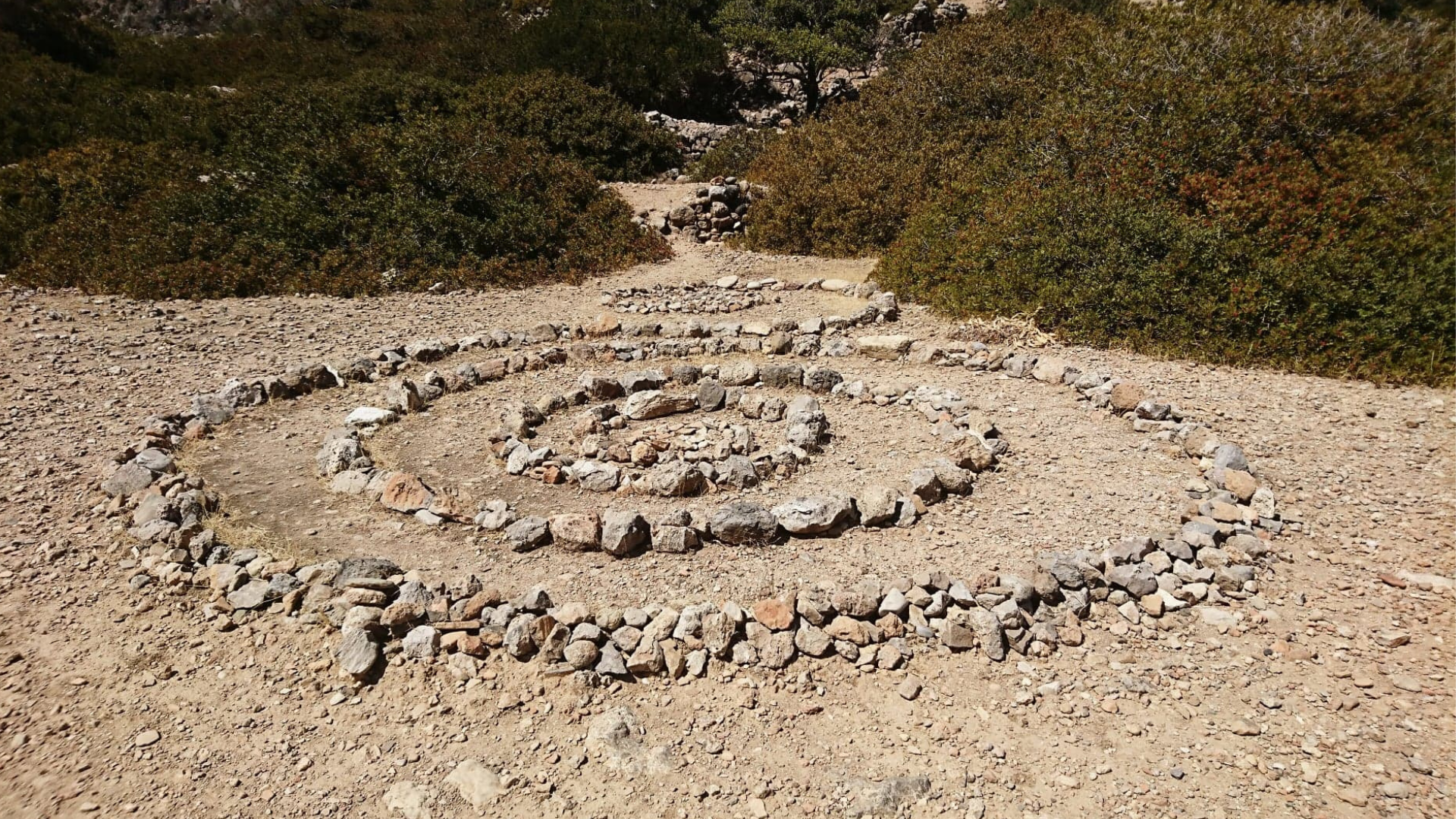
Yet amid all this history, another feature caught my eye, unofficial, undocumented, and quietly powerful. Not far from the beach, someone had created a spiral labyrinth of small stones. Possibly placed there by spiritual travellers, hikers, or modern pilgrims drawn to Lissos' age old atmosphere of healing and reflection. These simple stone labyrinths are often walked slowly and mindfully, each step a symbolic journey inward and then back out again, a kind of moving prayer.
Whoever shaped it, I felt called to enter. I found myself walking the spiral slowly to its centre, pausing to reflect on my daytrip and the lives of those who had once lived, healed, prayed, and walked here. As I made my way back out, I paused once more, then wandered to the beach to wait for the water taxi back to Sougia, grateful that my second venture to ancient Lissos filled with the echoes of history and spirit are still so present in this sacred place.
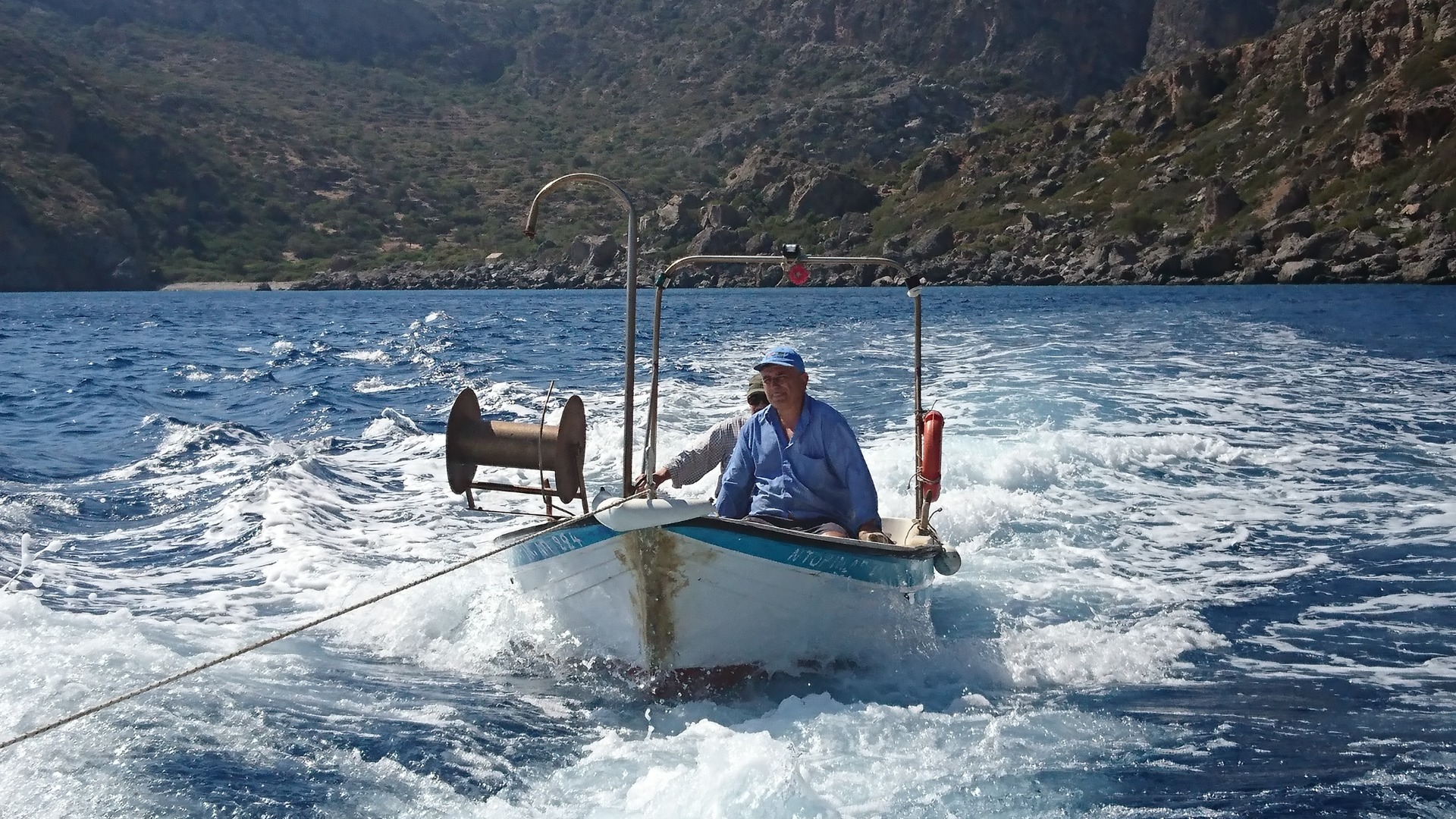
For my return to Sougia, I’d booked the water taxi. However, when I arrived at the small jetty, I saw a small dingy (fishing boat) being hitched to the water taxi, it had broken down earlier. What followed was a peaceful, slightly slower journey across the water back to Sougia, the dingy trailing behind in the wake of whitewash.
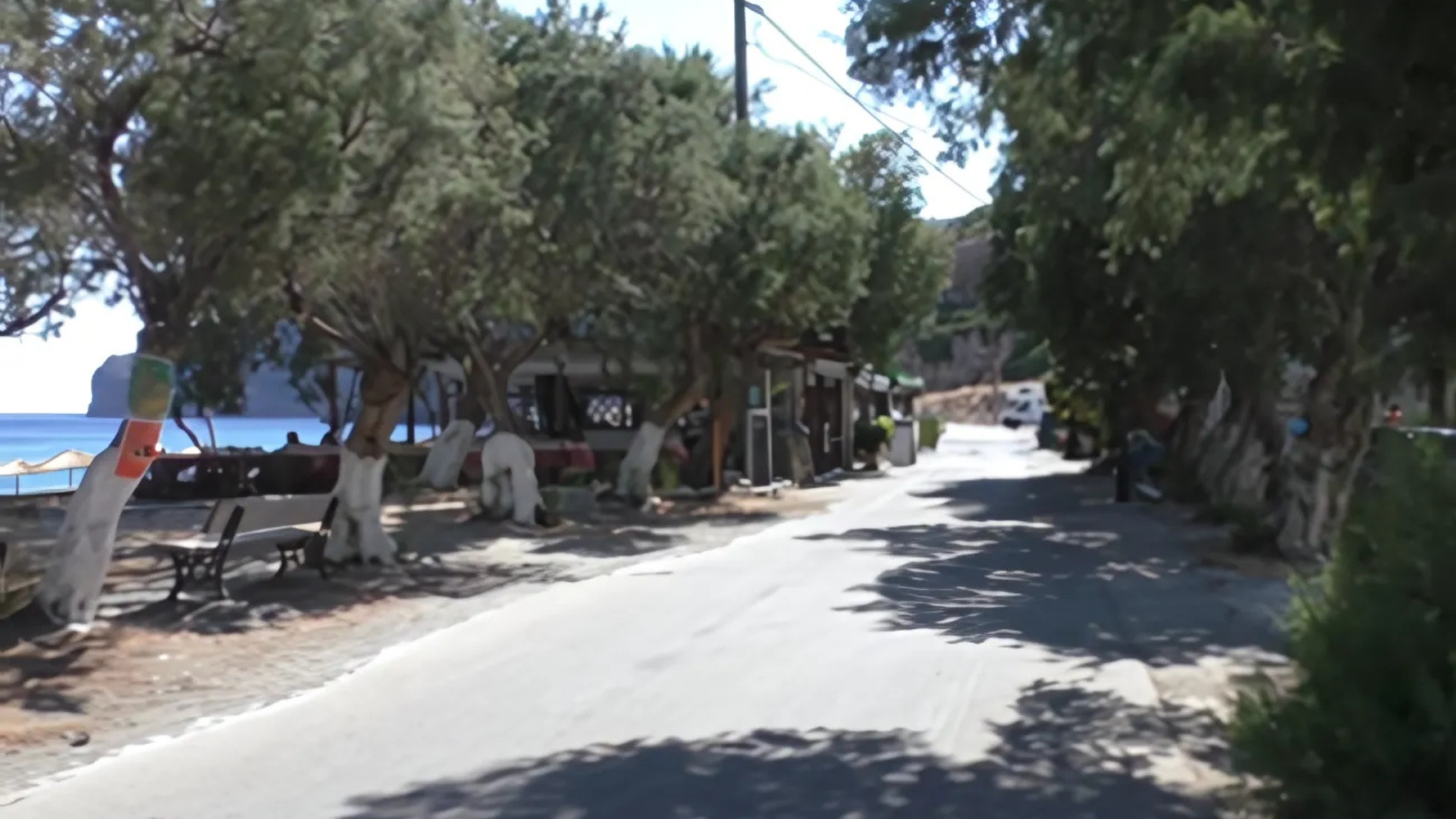
Back in Sougia, the summer sunbeds and umbrellas were already lining a section of the beach, showing the return of warmer days. One of the tavernas had opened for the season, offering the perfect place to stop for a bite to eat before making the drive back to Chania.
Given the seaside town of Sougia and the ancient city of Lissos still rest within the energetic planetary path of Pluto, Mars, and the North Node in my astrocartography map, I’ve made a conscious effort to welcome each experience as an opportunity to integrate their transformative influence. These planetary energies have placed me in conversations and connections with people whose cultural values and life experiences are strikingly different from my own. Rather than being a source of division, these differences have become an invitation to expand my understanding of how truth and integrity are shaped by cultural context.
Some moments have left me quietly questioning, especially when meanings felt unclear or layered in complexity. Yet over time, I’ve come to recognise these encounters as catalysts for growth, reminding me to remain grounded in compassion and consideration while developing a broader perspective. These planetary allies have offered rewards, tested my patience, and occasionally stirred internal conflict, but with each step I’ve remained open. In seeking balance and understanding, I’ve found myself enriched, not just by the beauty of ancient history, but by the very human encounters, and the very present lessons that unfold through everyday connection.
In many ways, it feels as though Pluto’s depth, Mars’ persistence, and the North Node’s karmic pull are not just celestial influences, but inner companions, guiding each interaction, deepening each insight, and quietly awakening another layer of the person I am.
In this Soul Travel blog series through Greece and Her Islands, I find myself embraced by the beauty and stillness of the sheltered cove of Agios Kirikos and the ancient city of Lissos.
Getting there is part of the story, whether by foot through the quiet Lissos Gorge or by boat across the Libyan Sea, each path carries its own sense of reverence, preparing you for the atmosphere that awaits in this once sacred sanctuary.
See you soon,
Consider signing up to receive new Soul Travel blogs, travel reflections, and astrocartography insights as new destinations are shared.

✨ If this story resonated with you, you are warmly invited to continue the journey in a way that feels aligned with you.
✨ Explore personalised insights through consultations
✨Begin with ‘The Journey’ Orientation
✨Listen to Destined Places podcast stories
✨Save and share Soul Travel inspiration on Pinterest