Minoan Snake Goddess, Palace of Knossos and the Capital of Crete
When dreaming of a summer escape and cruising a sampling of the Greeks Islands became a reality…
The Greeks have always had a deep appreciation and an intimate relationship with the sea. With an extensive, intricate coastline and more than 240 inhabited islands that are peppered throughout the Ionian and Aegean seas.
During the peak summer months in Crete…it gets ‘Hot’, very hot with the mercury reaching into the 40s. It’s late July and my birthday month. My birthday gift to myself each year is to do something I have never done, or go somewhere I have never been.
A short break island hopping cruising through the Cyclades and stopping in at the high points of interest islands of Santorini and Mykonos and continuing through the Dodecanese to explore the medieval history that awaits on the island of Rhodes and the humble quaint island of Patmos and then beyond, cruising through to the north eastern Aegean and a stop in Kusadasi, Turkey to experience all that was and is, the magic ancient city of Ephesus. This short island hopping break beckons a welcome relief; and Greece’s Celestyal Cruises can take me there.
I learn that there are options for boarding and departure locations, and as I’m living on the island of Crete, I have the opportunity to board the ship in the island's capital, Heraklion (GR Ηράκλειο, Irákleio) and to see the city from the sea.
The beautiful island of Crete, the largest of Greece’s islands nestled between the Sea of Crete and the Libyan Sea in the Mediterranean boasts mountain ranges that run the length of the island, ravines and vast plains that make it seem more like a country unto itself, than another Greek island.
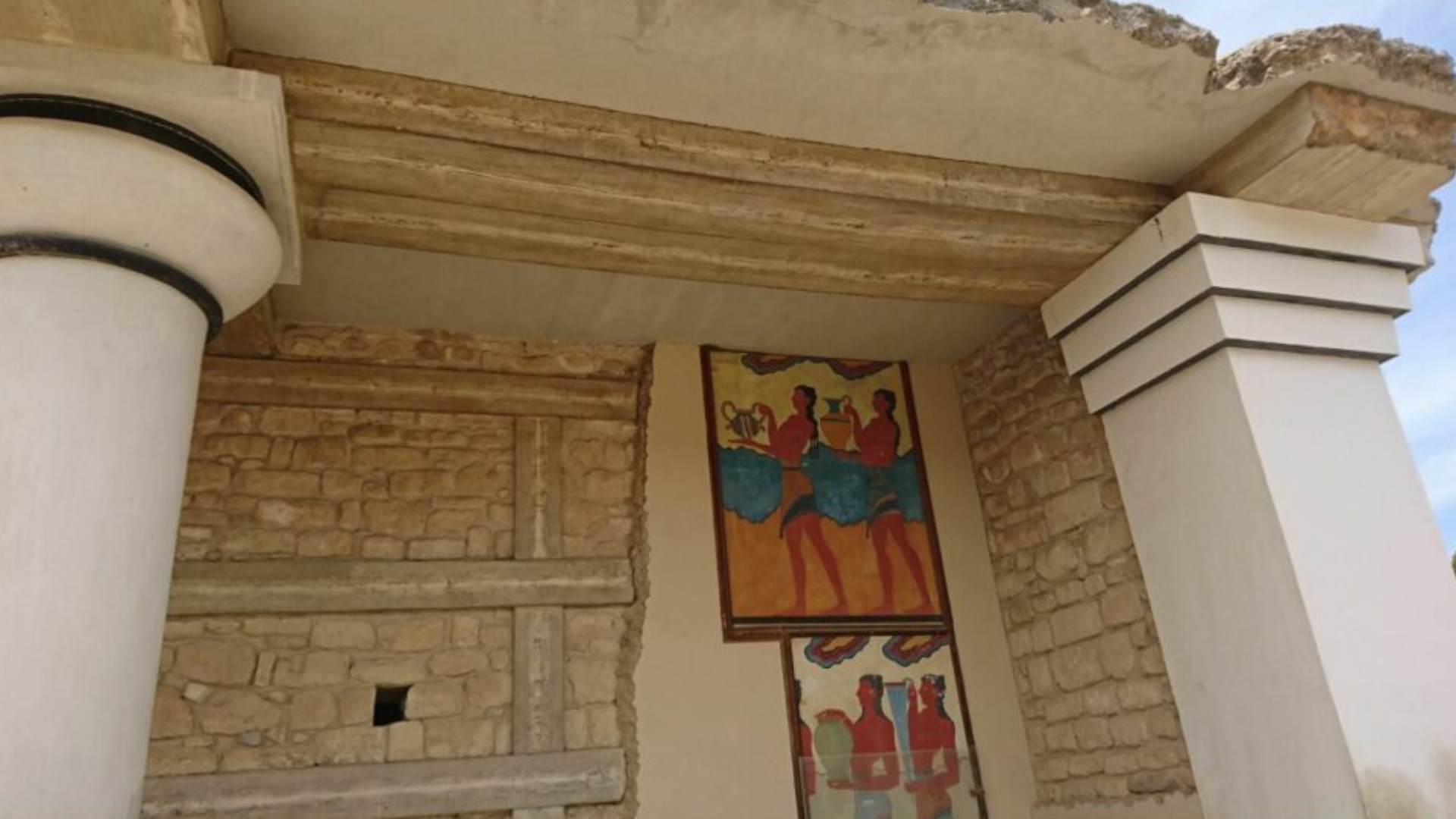
The city of Heraklion and the island’s long and tumultuous past is recorded back as far as the 7th century BC and predates the Minoan era. The Minoan’s were the centre of Europe’s most ancient civilizations and the first people in Europe to build Palaces. Heraklion is located close to the ruins of the Palace of Knossos, which during Minoan times was the largest centre of population in Crete, between 3500 - 3100 BC. With the fall of the Minoan era, the capital and the island was left to be stripped and looted by bandits and pirates and was a battle ground for vying city states until the Romans conquered in 69 BC.
The slaughter of Saracens and the safe haven for pirates was resolved under the command of Nikephoros Phokas, who later became the Emperor. The city was further looted, before being burned to the ground in 961 and falling under the rule of the Byzantine Empire and its control for 243 years. Feuding between the local native inhabitants and the Venetians continued across the island until 1669, when the Ottoman Empire took possession. The new victor held control of the island until 1898, however not without continuous uprisings and unrest. The Greek War of Independence in 1821 and subsequent battles during the Balkan War, WWI and WWII, saw more destruction and slaughter of the local Cretan population by Turkish and then German soldiers. Following many years of unrest through various battles the signing of an unconditional surrender by a German Commander was signed on May 9, 1945 at the Villa Ariadne at Knossos.
I have had the opportunity to visit the Palace of Knossos, which is only a short drive from the city’s harbour on a number of occasions and each time I learn more about the Minoan era and the Cretan Goddess Ariadne, whose name means both “scared” and “pure”.
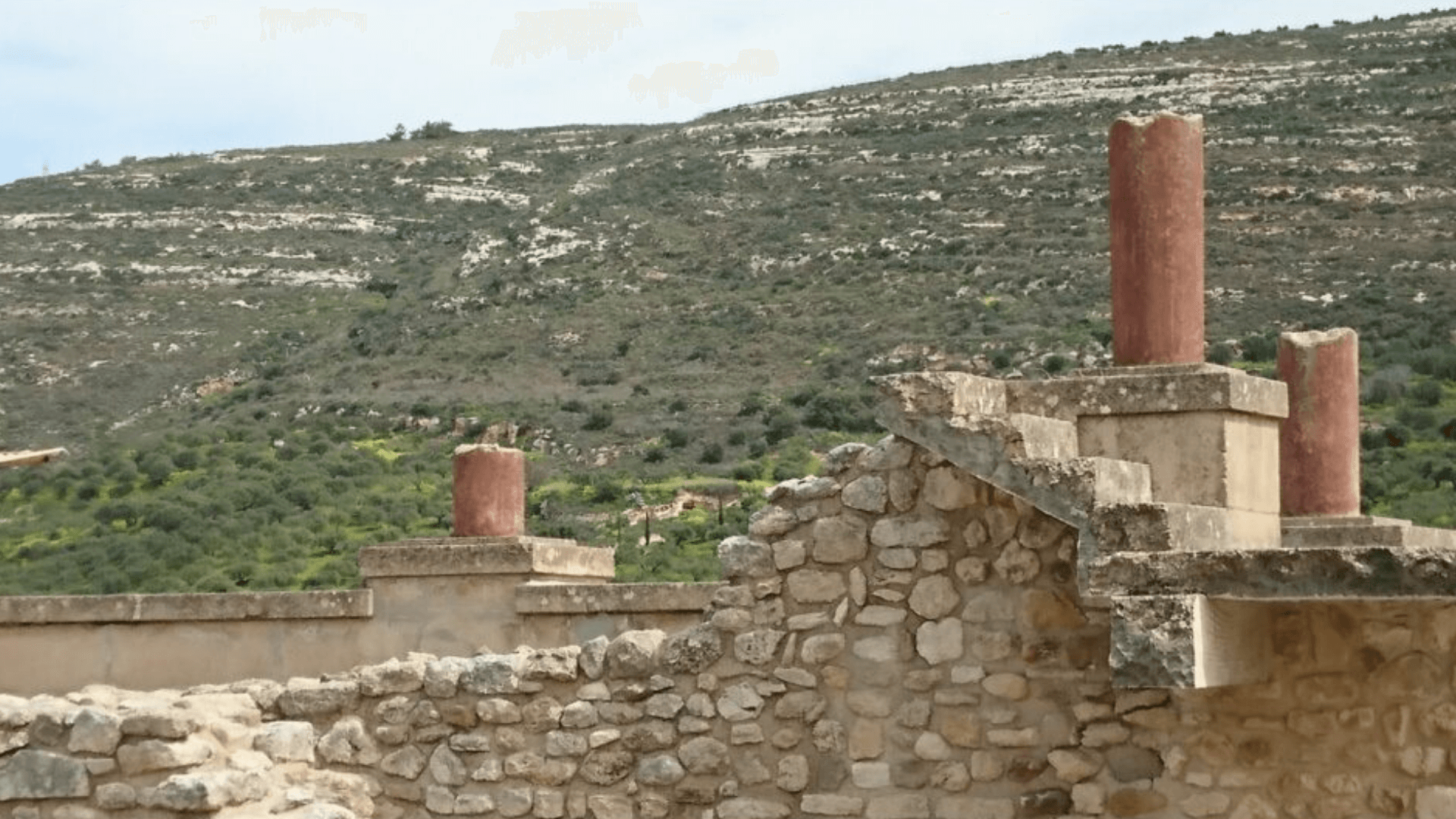
The Minoan culture is known for its sophisticated ethos, love of nature and peaceful rule. The palace’s peaceful setting, free of fortifications and defences, provides a vast panorama of the surrounding landscape.
Greek Mythology: The Goddess Ariadne (GR - Θεά Αριάδνη), the Minoan Snake Goddess was the daughter of King Minos and Queen Pasiphaë, and granddaughter of Zeus and Europa. It is said that she was the official companion of Dionysus. Yet, according to myth Ariadne in an attempt to help her beloved Theseus, leaves a golden thread to escape the labyrinth of the half man, half beast, the Minotaur. Following the demise of the monster, the hero took her with him to the island of Naxos only to abandon her following a visit by Dionysus in his dream. Ariadne embodies the scared marriage having endured the trials of betrayal and abandonment. She is an influential representative in the world and watches over our loves and labours, our trials and triumphs, as well as our worldly concerns and attitudes. Wandering around the ruins, the story of Ariadne and her ill fated affair with the man god Theseus sparks the imagination.
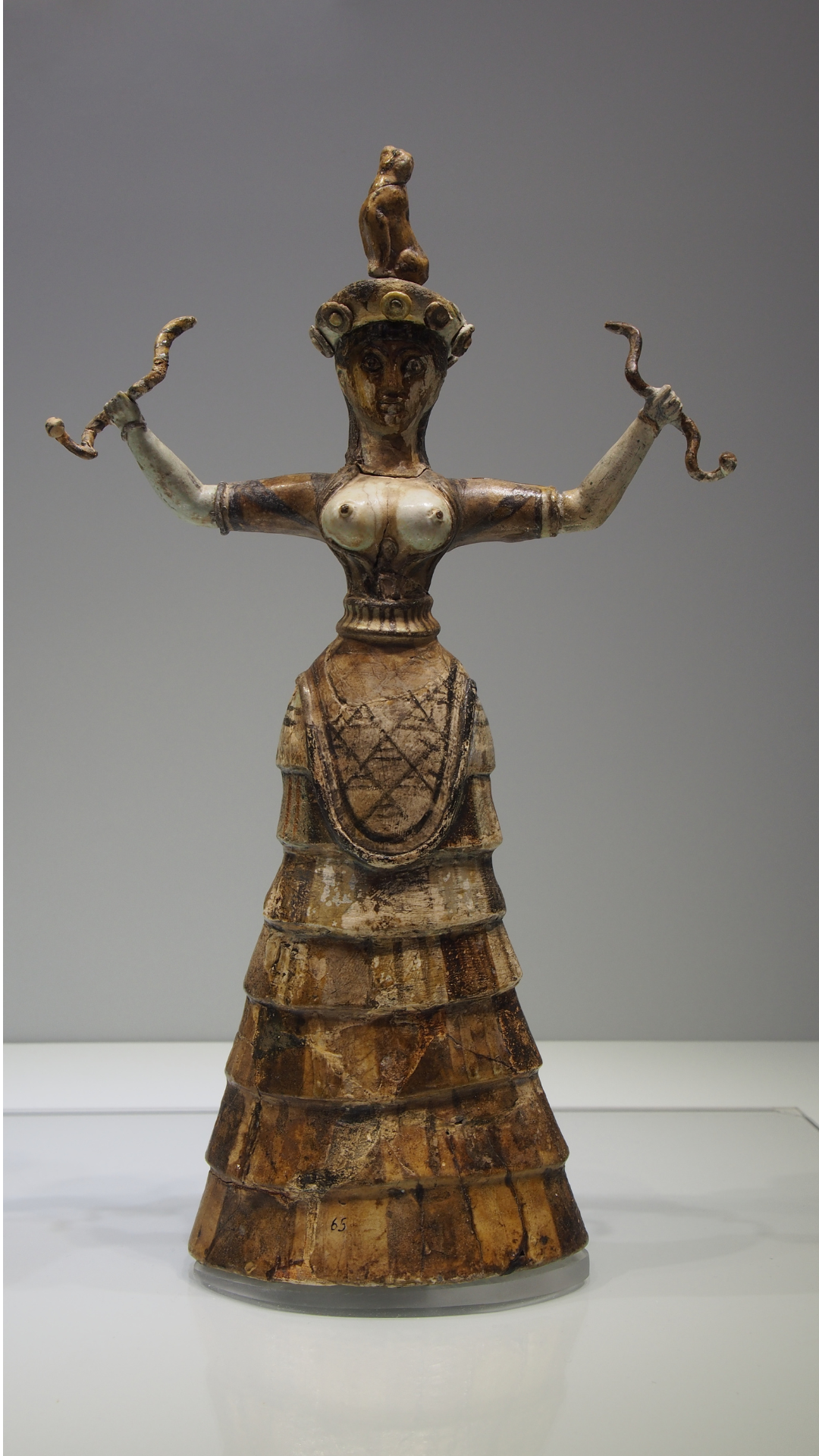
Ariadne figurine image is that of a woman with hands held up with a snake in each hand, and was used during worshipping practices that symbolises the rebirth, resurrection or renewal of life following a transition into the underworld.
In astrology Ariadne represents abandonment as an archetypal process that strips away the mind's illusions in order to hear the calling of the true self. Confronted by the painful reality of being left the individual is forced to relinquish their hopes and fantasies in order to awaken to the authentic path of the heart.
Ariadne embodies the soul in relationship that must first experience the painful course of the labyrinth before a divine connection can be realised.
Learn more about where the Goddess Ariadne and other Greco/Roman Goddess are located in your horoscope and what this means for you, here.
I have time to roam around Heraklion city centre, before finding my way to the port in time for the ships departure.
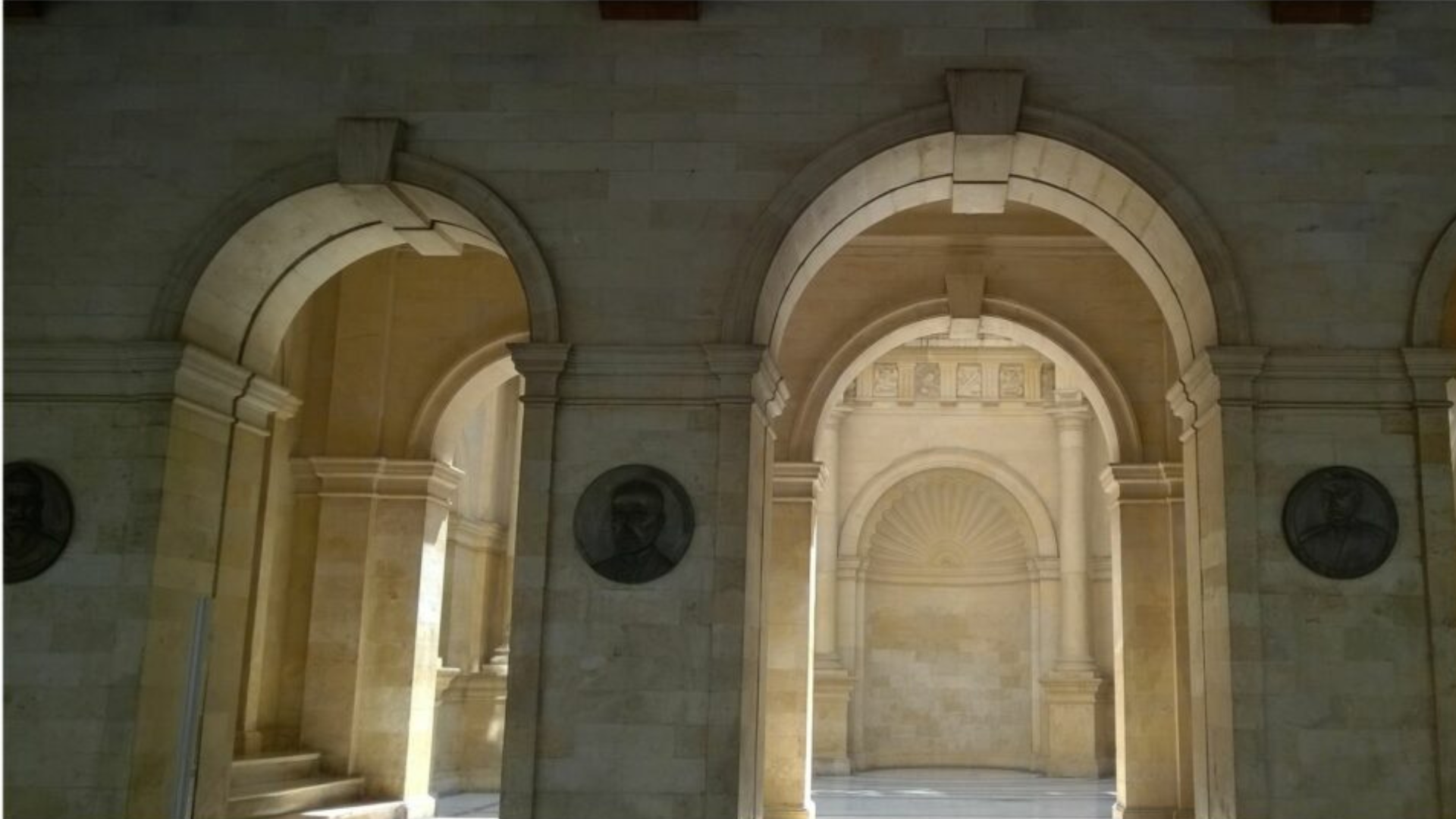
Passing through the inner city centre and the historic Town Hall, that is now part of the 1962 reconstructed building of Loggia - Armeria. Built by the Venetians, the armoury was used to gather, store and guard the largest bank of ammunition. During the Ottoman era, the historic building was used as a treasury to collect the islands taxes.
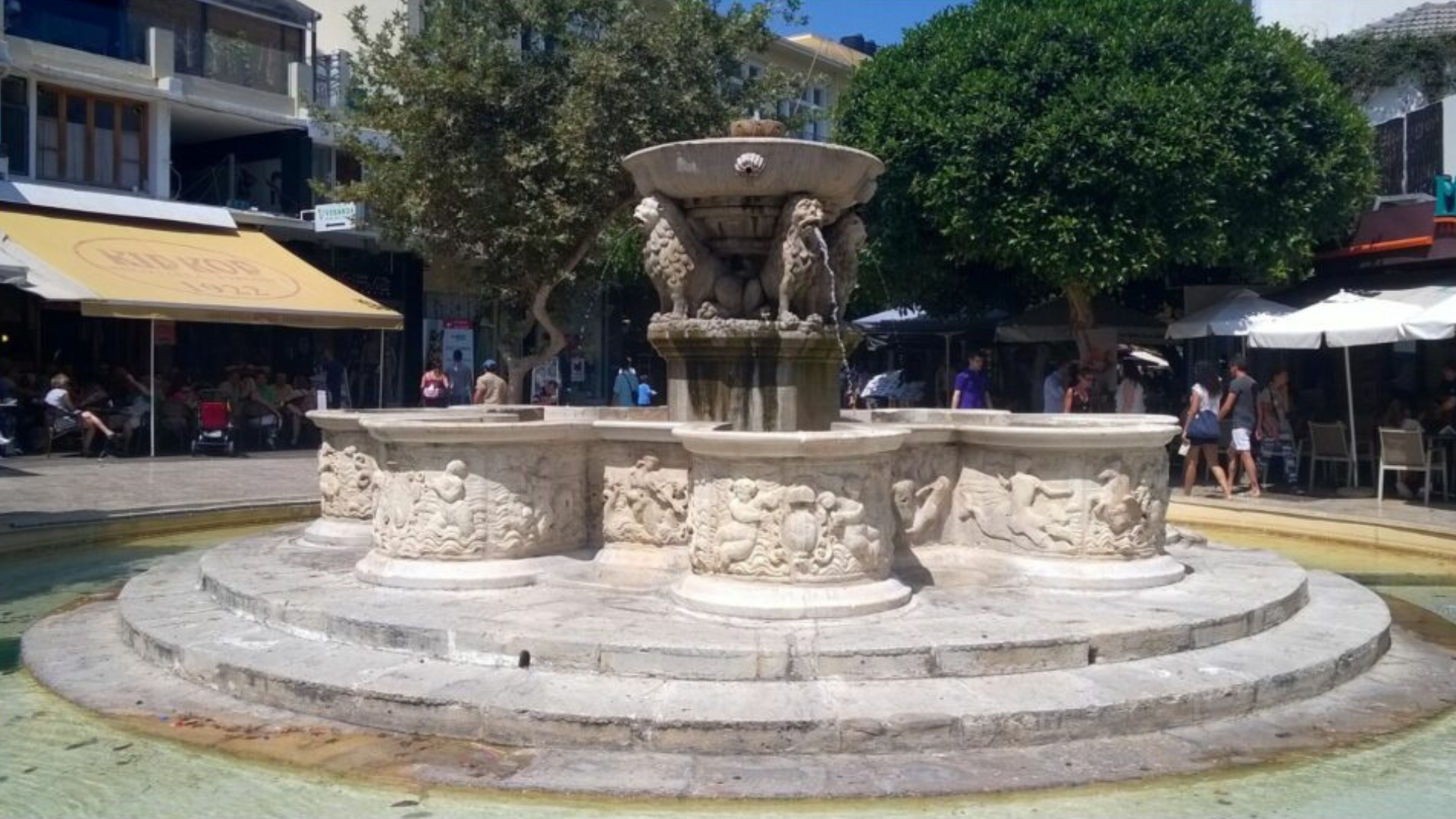
As, I continued wandering through the city centre, I passed through the Eleftheriou Venizelou Square, more commonly known as Lions Square and the Morosini Lions Fountain. The fountain was built in 1628 during the Venetian rule to commemorate the Venetian success, of bringing water to the city. The ornately decorated Lions fountain depicts scenes from Greek Mythology and is a central focal point in the city centre.
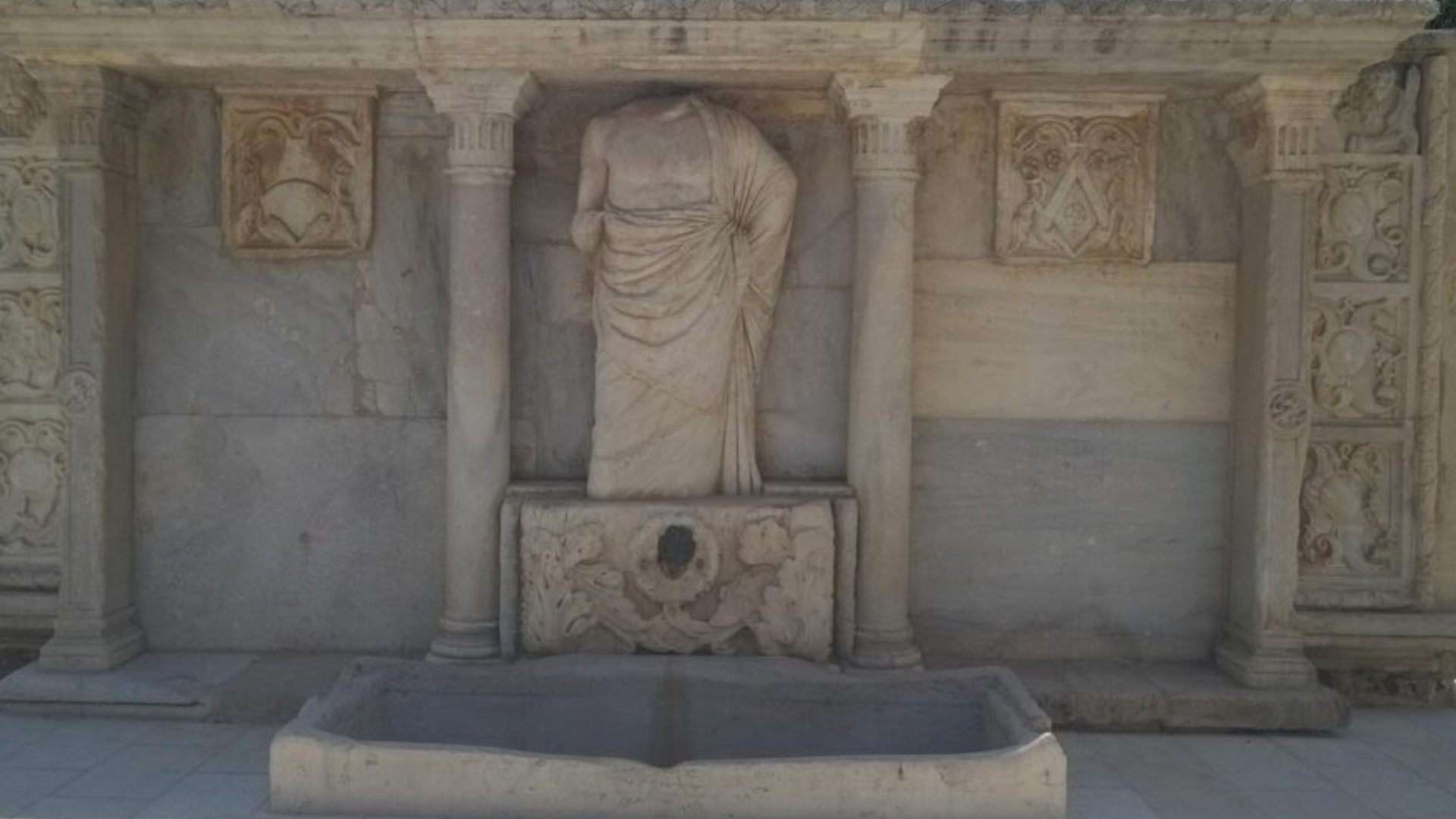
Wandering through the local market stalls, I reached the end of the lane and came across one of the many Venetian fountains scattered throughout the city centre. During Venetian rule, supplying water to the city was a major priority, but the city itself had a rich and complex history of names under different rulers. In medieval times, under Arab control, it was called Chandakas, derived from the Arabic word for fortification or ditch. During the Venetian period, the city became Candia, and under Ottoman rule it was known as Megalo Kastro, meaning “Big Castle.” To address the city’s limited water supply, the Venetians constructed cisterns and wells, both public and private, alongside ornate fountains. One of the finest examples is the Bembo Fountain, built between 1552 and 1554, located in Kornarou Square, showcasing the elegance and intricate design typical of the era.
From the market stalls, I found myself on 1821 Street in the heart of the city centre, a name that honours the island wide 1821 uprising for freedom.
Turning left, I continued along Plaza Agias Ekaterinis (Πλ. Αγίας Αικατερίνης) until I reached the small and old Monastery of Agia Aikaterini (Μονή Σινά Αγίας Αικατερίνης), a foundation tied to the Sinai monks and dating back to the 10th century.
During Venetian rule it flourished as the School of Saint Catherine of Sinai from 1550 to 1640, where students studied ancient Greek writing, philosophy, theology, rhetoric and icon painting.
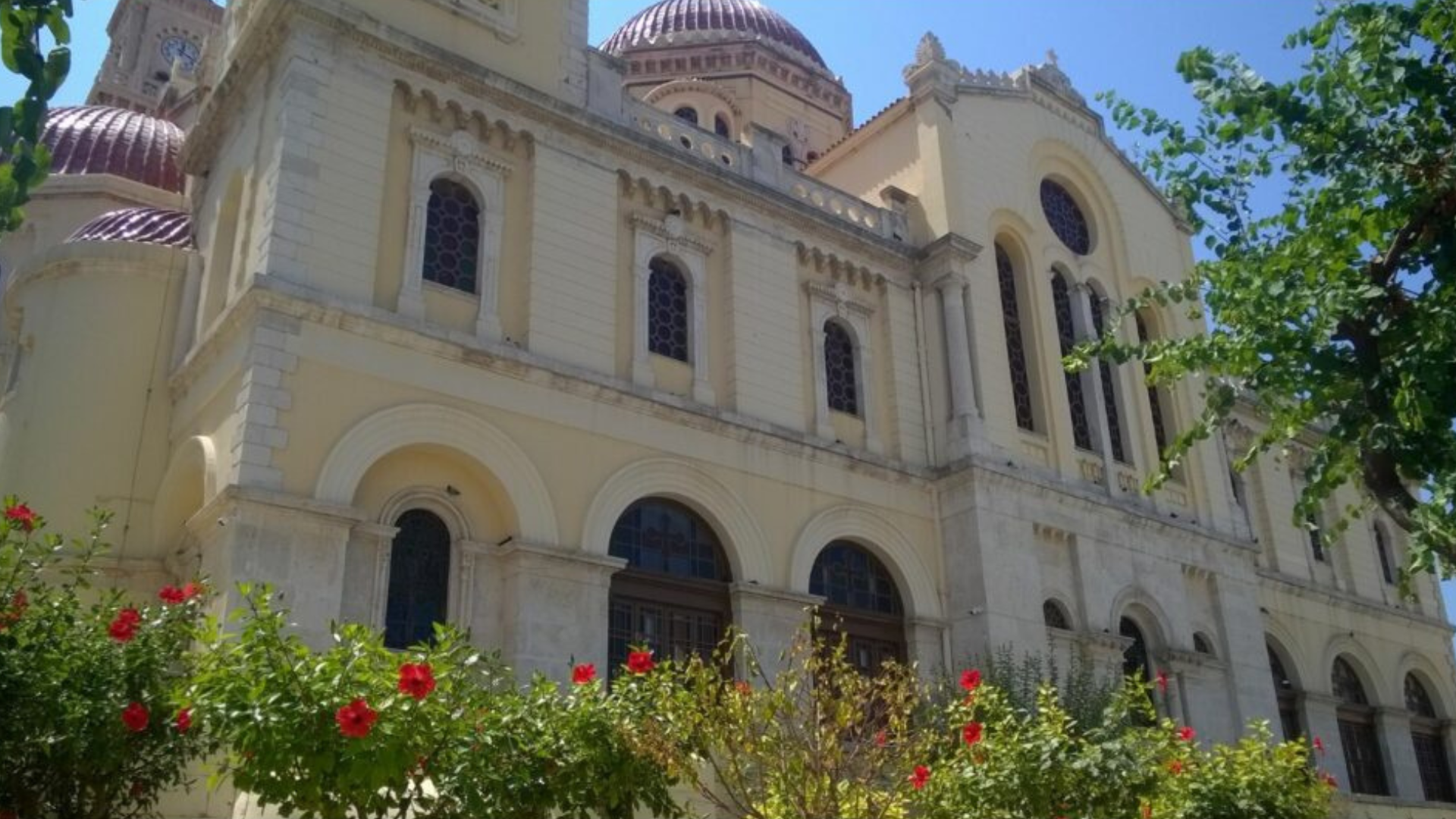
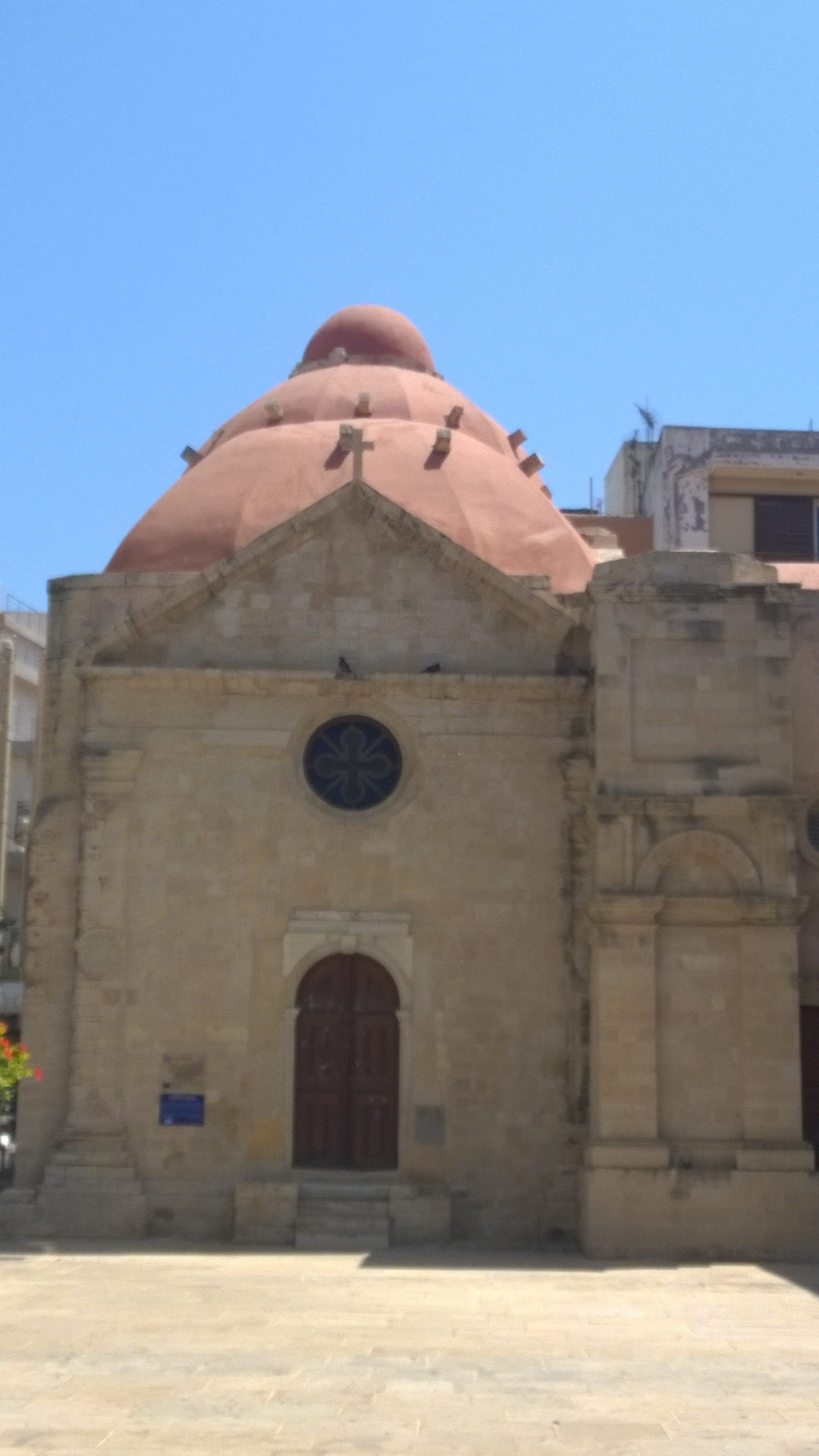
Adjacent to the monastery, in Saint Catherine Square (GR: Πλατεία Αγίας Αικατερίνης), stands the smaller and older Saint Mina Church and the impressive Saint Minas Cathedral (Άγιος Μηνάς), named after the martyr and wonderworker who lived between 285 and 309 AD. Born in Egypt, Minas became a Roman army officer and endured imprisonment and torture before being beheaded for upholding his faith. He later became the patron saint of Heraklion. The cathedral is not only the largest in Crete but also one of the largest in all of Greece.
I was fascinated to learn that very few children are named after Saint Minas today. According to local stories, during the Turkish occupation, orphaned or illegitimate boys were left on the cathedral steps to be cared for by the church, and they were given the name Minas. For many years afterward, the name remained associated with illegitimacy, and parents generally avoided naming their children Minas.
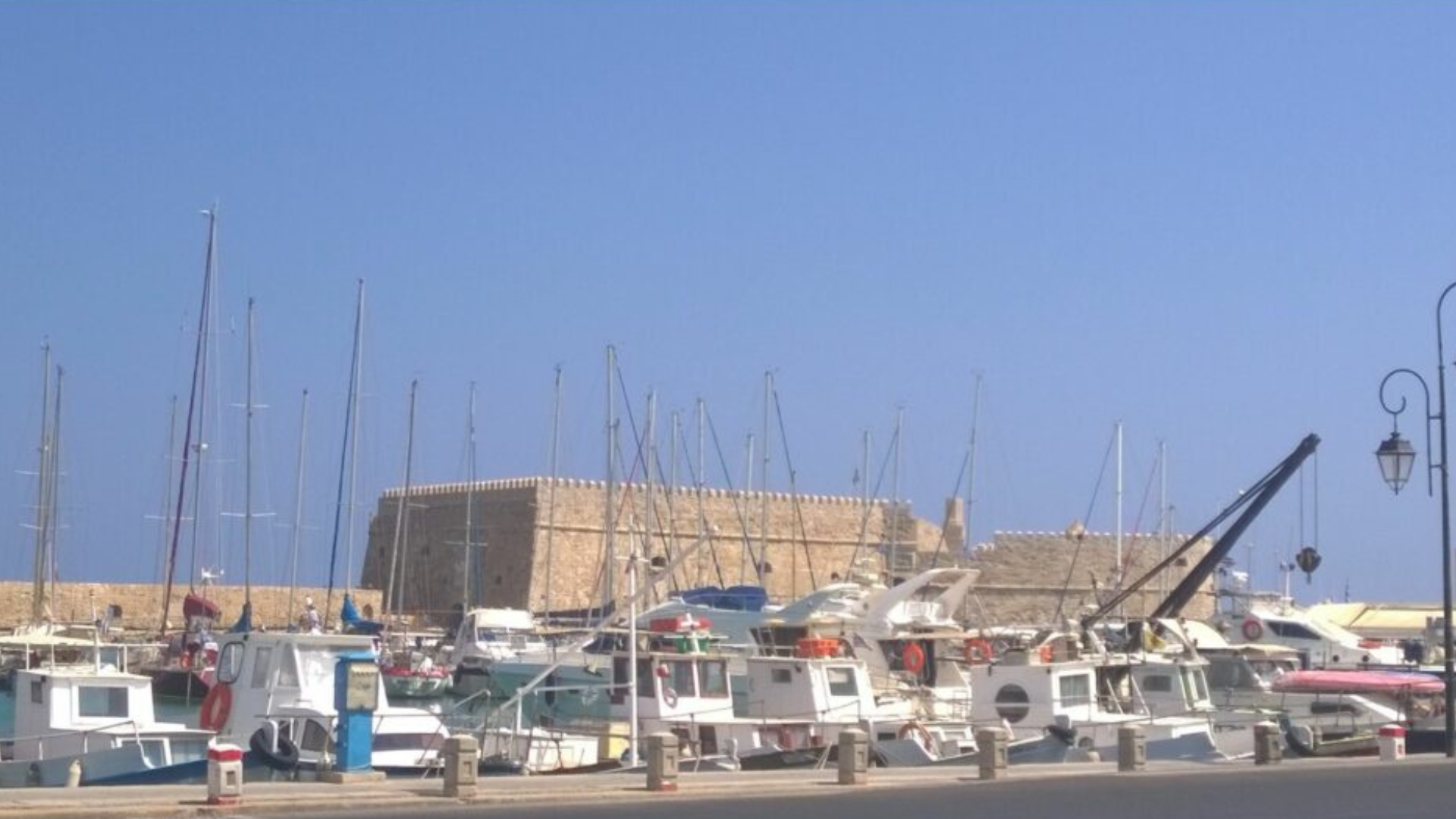
By late afternoon, I made my way back through the city centre, then wandering along the sea front and past the fortress walls originally built during the Arab period in the 9th and 10th centuries. At the entrance to the harbour once stood the Castellum Communis, a Byzantine fortification from the 10th - 13th centuries designed to guard the city’s strategic port. In the 16th century, the Venetians replaced this tower with the imposing Rocca al Mare, also known as “Fortress by the Sea”, and constructed to defend the harbour and city. Its walls, up to 8.7 metres thick in places, were built on foundations that included old ships filled with rock to extend the pier, creating a formidable barrier against invaders. During Ottoman rule, the fortress became known by the Turkish name Su Kulesi, or “Water Tower,” which evolved into the local Greek name Koules. Over the centuries, the fortress served multiple purposes: as storage rooms, a mill, a bakery, and even prison cells, reflecting the ever changing needs of a city that has long been at the crossroads of empires. Today, Koules dominates the modern port of Heraklion, and as a striking reminder of the city’s layered history and its enduring strategic significance.
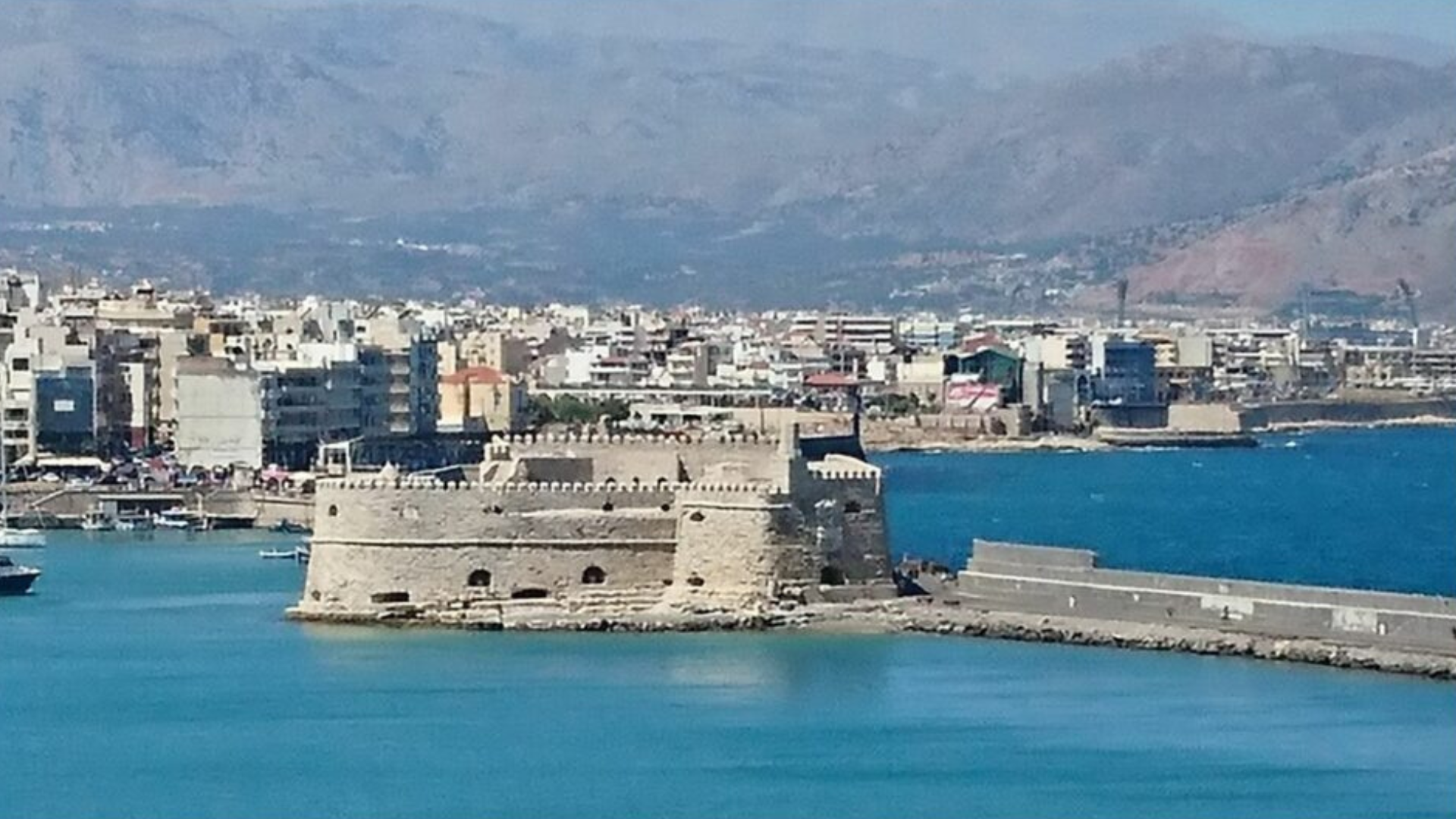
Boarding the ship, I made my way to my cabin before returning to the deck. As we set sail from Heraklion port, the 16th century Koules Fortress at the harbour’s entrance loomed impressively, as a reminder of the city’s historical defences, with the hazy summer sun baking the Asterousia Mountains in the distance. Settling in and exploring my temporary floating home for the seven days ahead, I felt a familiar sense of reflection, a quiet moment to consider life on Crete and the journey unfolding before me.
Living on this island, the energy of my planetary placements stretches across the land, reaching even to Heraklion. Under the powerful influence of Pluto, I’ve experienced profound transformation, confronting deep truths, growing personally, and renewing relationships and life direction. The challenges are real, yet they carry the potential for meaningful evolution and a stronger alignment with my true self.
The Mars placement stirs assertiveness and competitive energy, reminding me to bring awareness and care into relationships and projects. Meanwhile, the subtler Jupiter rising line brings moments of joy, expansion, and opportunities to connect with others and express myself fully. Meanwhile, the Chiron local space line draws my attention to healing and restoration, encouraging reflection, release of old pain, and the reclamation of balance and vitality.
The symbolism and myth of the Minoan Snake Goddess Ariadne resonate strongly with my experiences here. Her figurine, hands raised with a snake in each, represents rebirth, renewal, and the journey through the labyrinth, much like my own path under these planetary influences. In astrology, Ariadne embodies confronting abandonment and relinquishing illusions in order to awaken to the authentic path of the heart.
As we journey across the Aegean, Crete’s ancient ruins and rugged landscapes seem to mirror my inner journey, guiding me through transformation, challenge, and ultimately renewal. That evening, as the sun dips below the horizon and the lights of Heraklion fade behind me, I settle in for a night at sea, knowing that by dawn I will awaken to the cliffs of Santorini, ready to greet the next chapter of this island hopping journey.
In this, one of many Soul Travel blogs of my journey throughout Greece and her islands, I explore Heraklion, the island of Crete's capital, and some of its historic sites, where the legacies of former rulers, Arabs, Venetians, and Ottomans, intertwine with the enduring warmth and hospitality of the Cretan people.
See you soon,
Consider signing up to receive new Soul Travel blogs, travel reflections, and astrocartography insights as new destinations are shared.

✨ If this story resonated with you, you are warmly invited to continue the journey in a way that feels aligned with you.

✨Explore personalised insights through consultations
✨ Begin with ‘The Journey’ Orientation
✨ Listen to Destined Places podcast stories
✨ Save and share Soul Travel inspiration on Pinterest