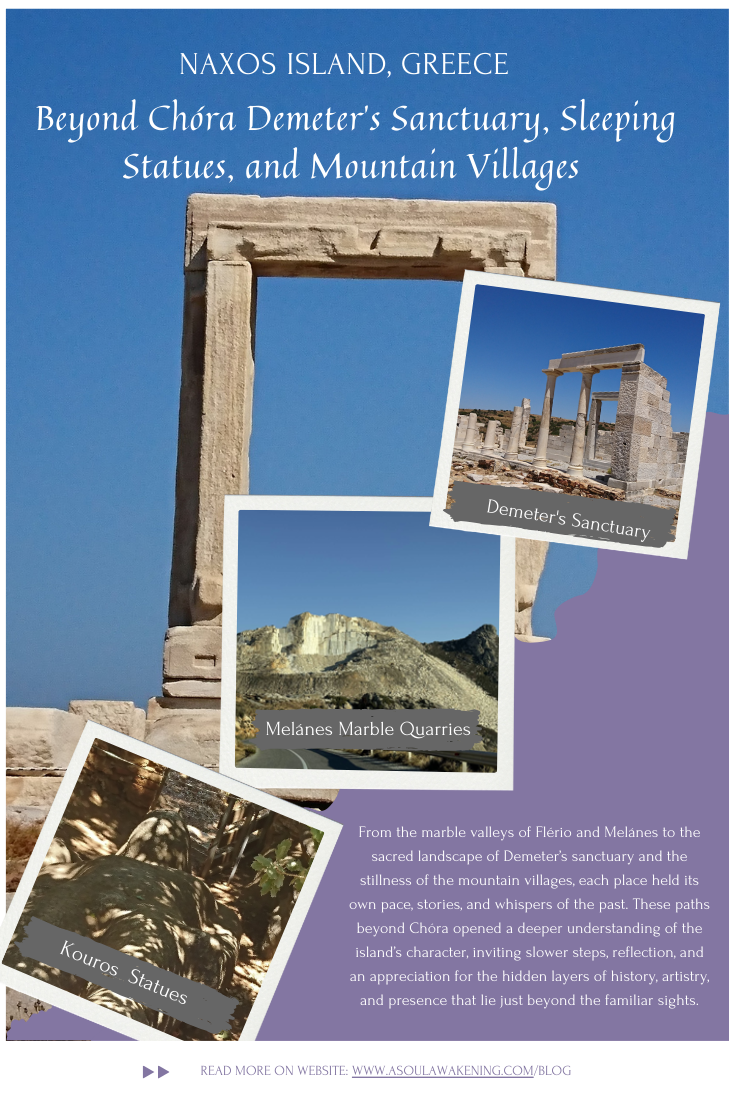
Náxos | Beyond Chóra Demeter's Sanctuary, Sleeping Statues, and Mountain Villages
With more days to explore the Greek island of Náxos, I set out to learn the local bus services and find my way to the village of Sangri (GR - Σαγκρί), following a walking path that leads away from the roads and closer to the earth trodden paths of stone and myth.
From Chóra old town, the local bus service, operated by KTEL, takes approx. 20–25 minutes to reach the village of Sangri, which today is a single rural community made up of three closely linked much older settlements: Ano (Upper) Sangri (GR - Άνω Σαγκρί), Kato (Lower) Sangri (GR - Κάτω Σαγκρί) and Kanakari (GR - Κανακάρι). Together, these districts form the wider Sangri area, renowned for its fertile plateau, traditional villages, and historic sites.
Historically, these were originally separate hamlets that grew up in close proximity on a rich agricultural landscape. Over time, particularly through the 19th and 20th centuries, the small communities became administratively and socially bound together under the name Sangri. In 1912, the area was recognised as an official community, and by 1951 all three settlements were acknowledged as part of that single administrative unit.
Each settlement contributes its own character to the wider area: Ano Sangri, positioned slightly higher and located closest to the Temple of Demeter, offers panoramic views and is home to the former Monastery of Agios Eleftherios, which during the Ottoman occupation functioned as a secret school and now houses the local folklore museum; Kato Sangri lies amid the fertile plains with its traditional stone houses and the ruins of Venetian era towers; and Kanakari, with its historical ties to Venetian agricultural buildings and defensive structures, reflects the region’s past shaped by successive previous periods of occupation.
What would be less than a ten minute drive from Ano Sangri, to the ancient Temple of Demeter turned into a roughly 45 minute walk, reminding me that time on foot has its own pace, one that allows the landscape to speak.
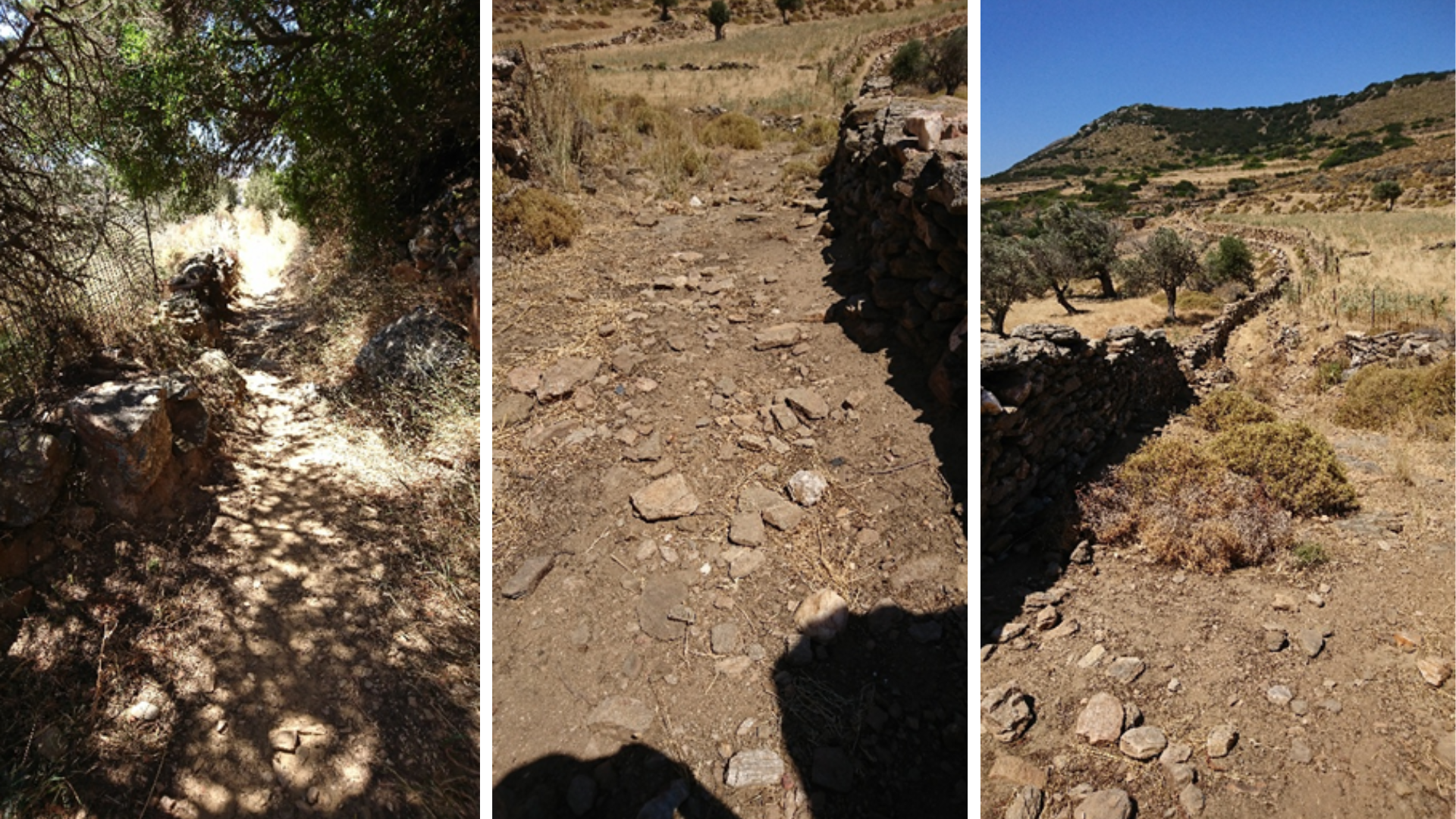
Choosing the path less travelled, I followed a walking trail more familiar to goats than people, moving through fields and gentle slopes, away from sealed roads and into the island’s heart.
Finding my way from Sangri to Ano Sangri was fairly straightforward. From Ano Sangri to the Temple of Demeter, approx. 1.5 to 2 kilometres from the village, proved a little more interesting. Sensing it was taking longer than anticipated, I stopped to ask a young girl tending her flock of sheep. With a smile and a gesture down the slope, she let me know I was far closer than I realised.
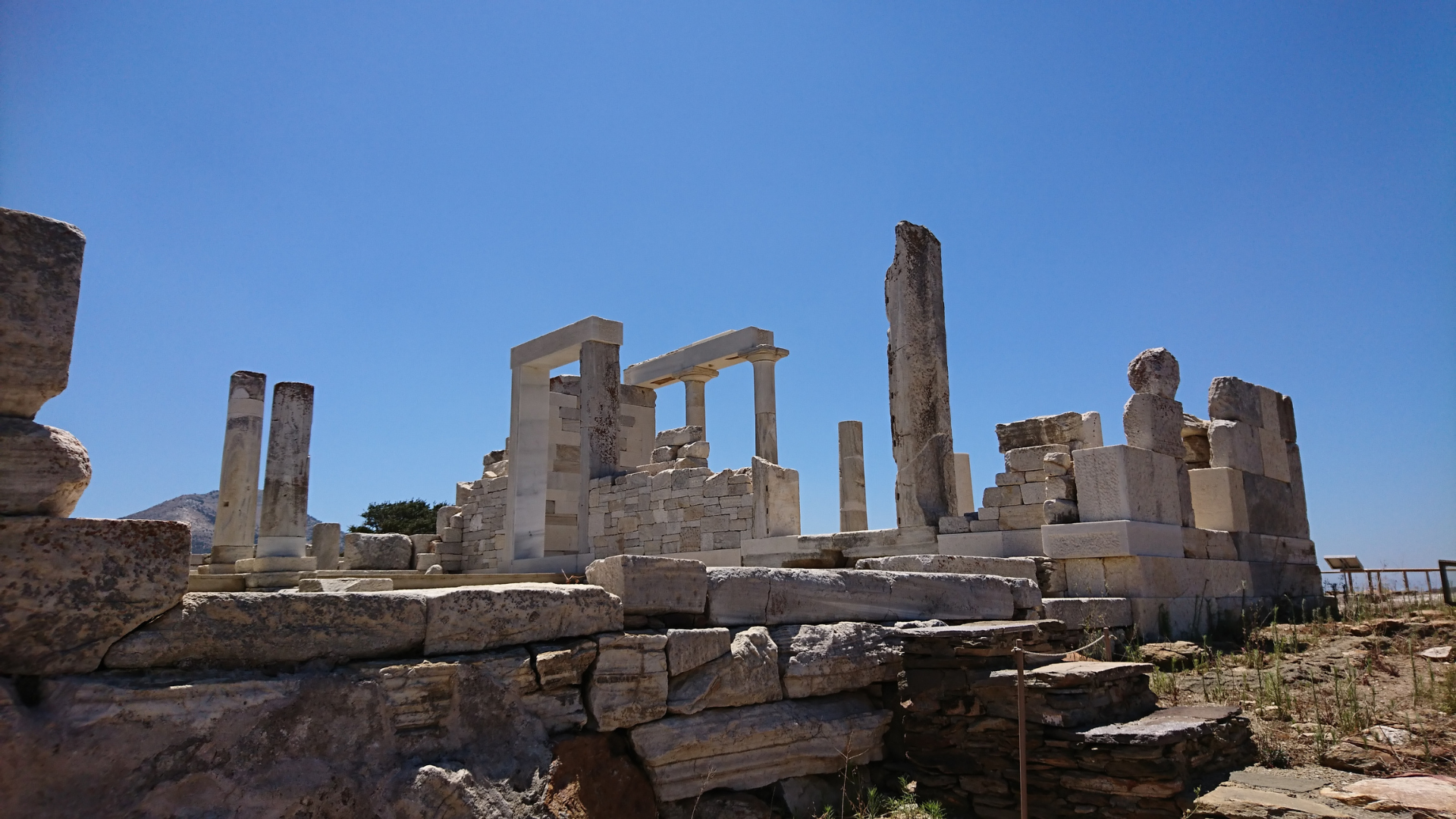
The temple ruins are located in the Gyroulas area, in the middle of a fertile valley, and date back to 530 BC. Built entirely from Naxian marble, it is an Ionian temple rooted in Cycladic soil. Nestled in the heart of Naxos, the Sanctuary of Demeter once stood amid fields of grain, dedicated to the goddess who oversaw fertility, harvest, life and rebirth, energies that feel deeply nourishing for any traveller seeking meaning, grounding and a sense of the ancient past that shape a place.
It was during the reign of Emperor Justinian in the 6th century that the temple was converted into a small church, with walls constructed between the marble columns and a doorway added. Later in the same century, this small church was demolished to make way for a much larger, three aisled Christian Basilica. Built directly over the original sanctuary, the basilica retained only the northwest corner of the ancient temple. Much of the remaining marble was reused, remodelled or repurposed, showing how sacred sites evolved, shifting with the needs and beliefs of each era.
Walking there, through farmland and across quiet paths you sense how intimately this place once connected earth, community and devotion. The fields, olive groves and expansive skies heighten that feeling, offering a peaceful link to the island’s agricultural past and its enduring relationship with the goddess of grain and harvest.
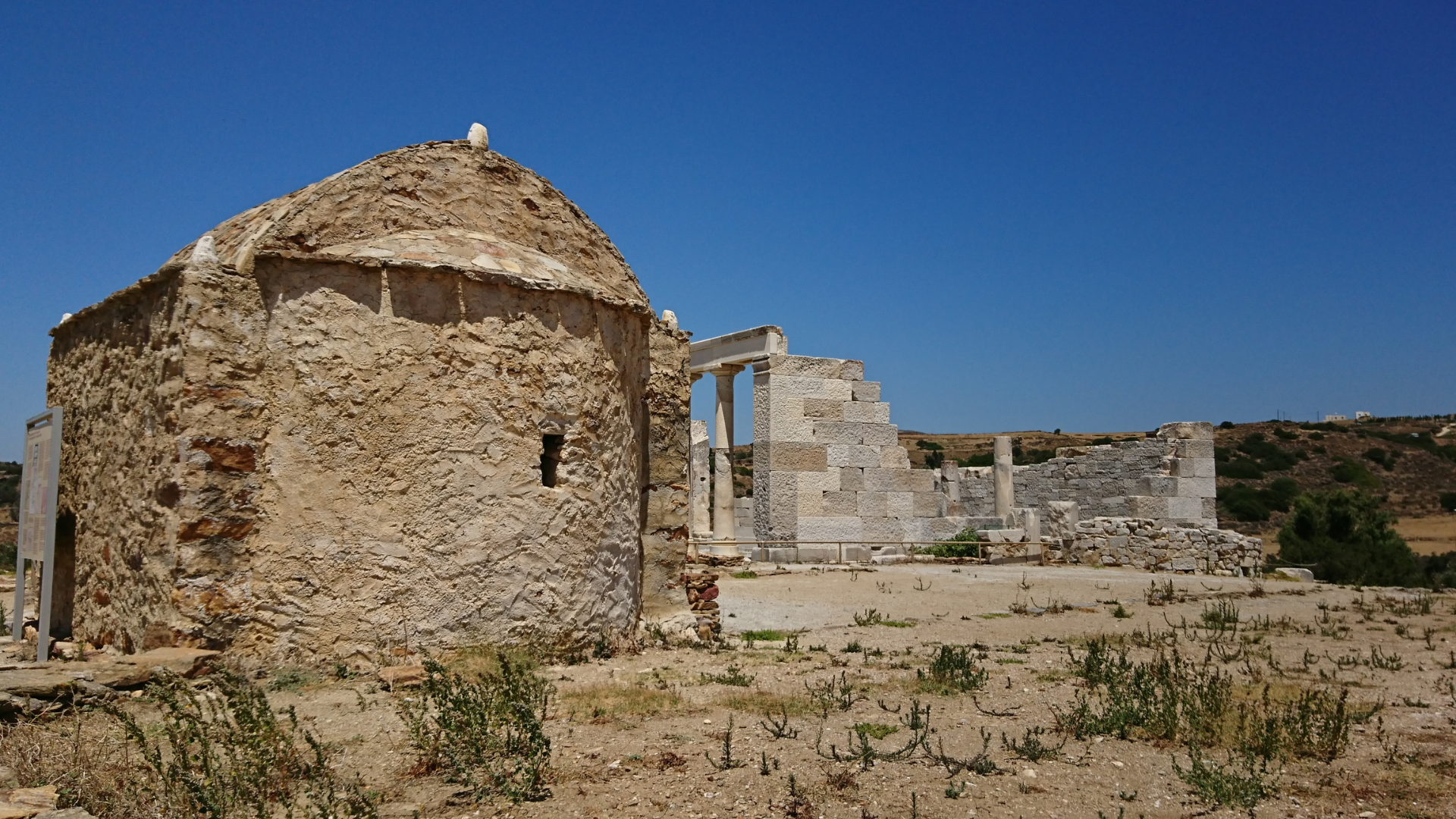
Nestled close to the temple ruins is the little chapel of Agios Ioannis Theologos (GR - Άγιος Ιωάννης ο Θεολόγος), a humble Christian presence that carries remnants of the site’s historical past. Built using marble taken from the ancient temple, the chapel was repositioned to its current position in 1977 allowing archaeologists, working in conjunction with teams from both the University of Athens and the Technical University of Munich to continue restoration of the sanctuary.
The chapel’s modest form and setting speak to centuries of Christian presence at Gyroulas, with the wider site understood to have passed through medieval and post Byzantine phases of use and care. Sitting quietly alongside the ancient marble remains, it offers a subtle contrast rather than a commentary, a lived expression of faith beside its much older predecessor. Nearby, the Nearby, the Archaeological Collection at Gyroulas brings these timelines into clearer focus, preserving finds from the sanctuary that allow visitors to trace the passage from ancient cult practice to early Christian devotion, and on to the modern conservation of the site, revealing how faith, daily life and stewardship of the land have continued here across centuries.
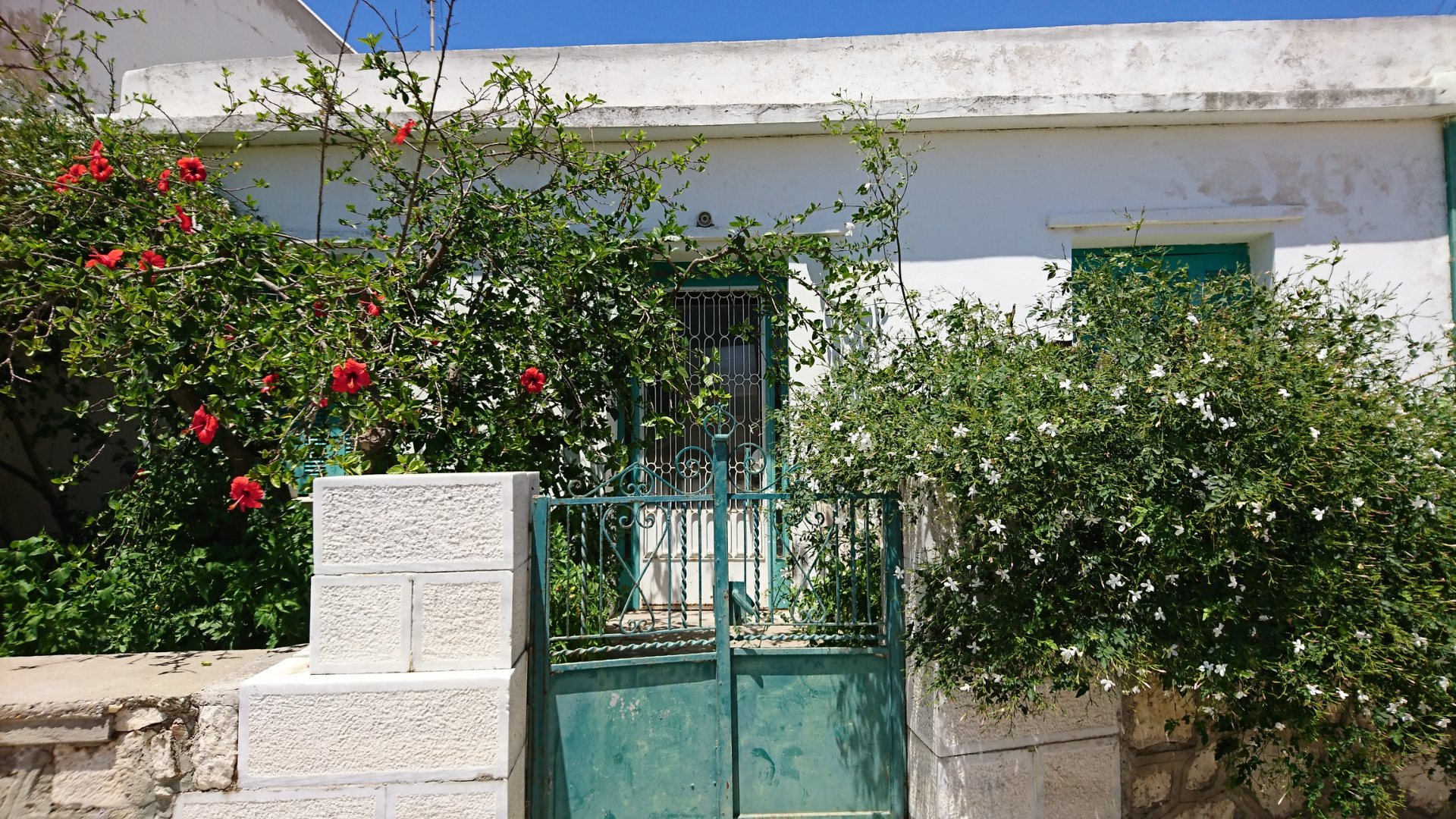
Conscious of the bus timetable, I made my way back on foot along the sealed road to Ano Sangri. From there, I continued on to Kato Sangri, the main settlement and village heart of Sangri, known for its charming mosaic of whitewashed houses, narrow alleys and stone cottages shaped over centuries by a supportive farming community.
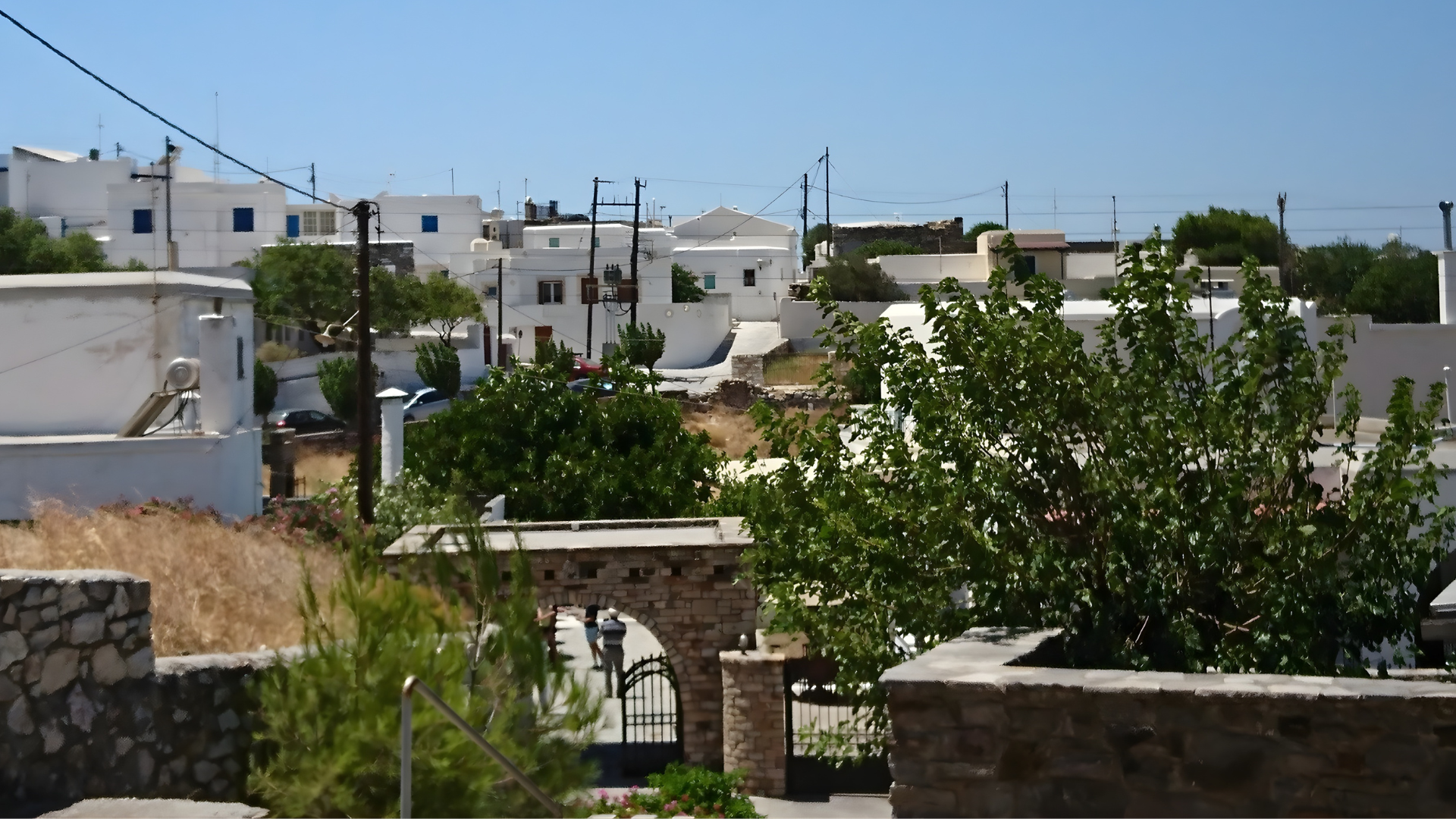
Here, traces of historical rural life continue, as medieval details, windmills, churches and old stone fragments appear between fields and lanes.
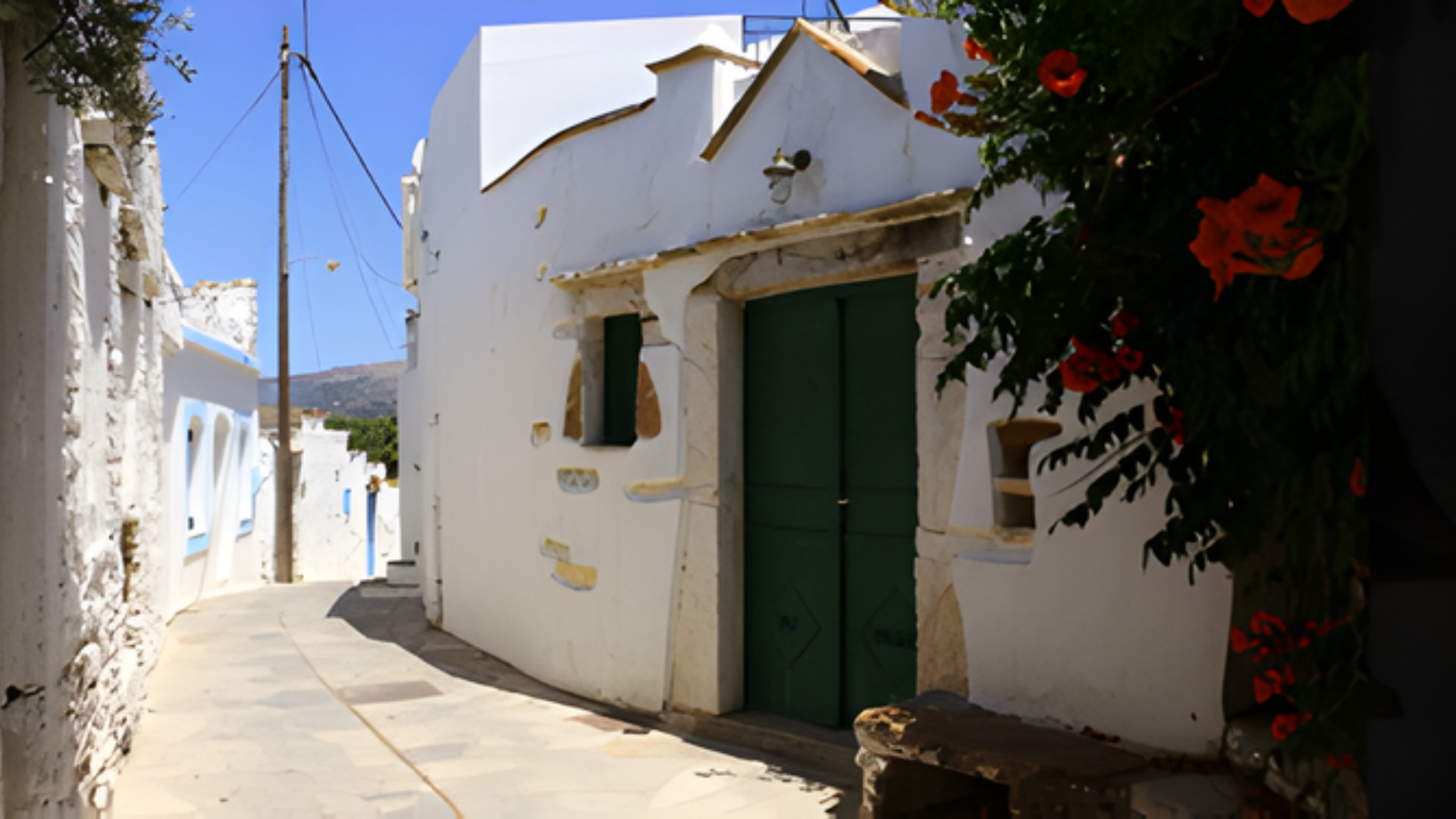
From here, after wandering through the narrow whitewashed lanes of Kato Sangri, and lingering longer as I admired the quaint stone cottages, I then found a delightful taverna for a simple bite to eat before catching the bus back to Chóra.
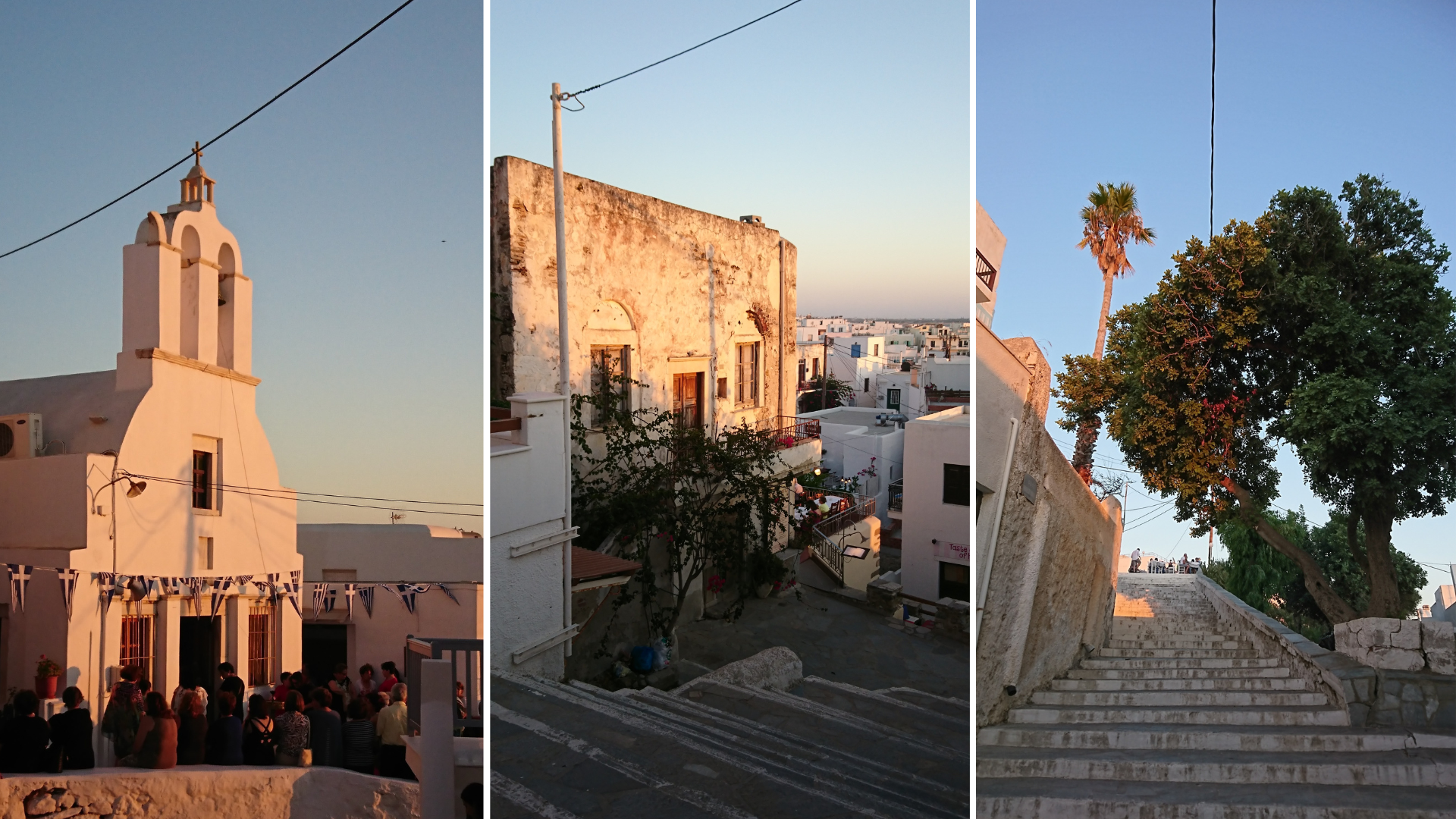
The afternoon light softened the old town lanes on my return, and I allowed myself time to wander and explore more.
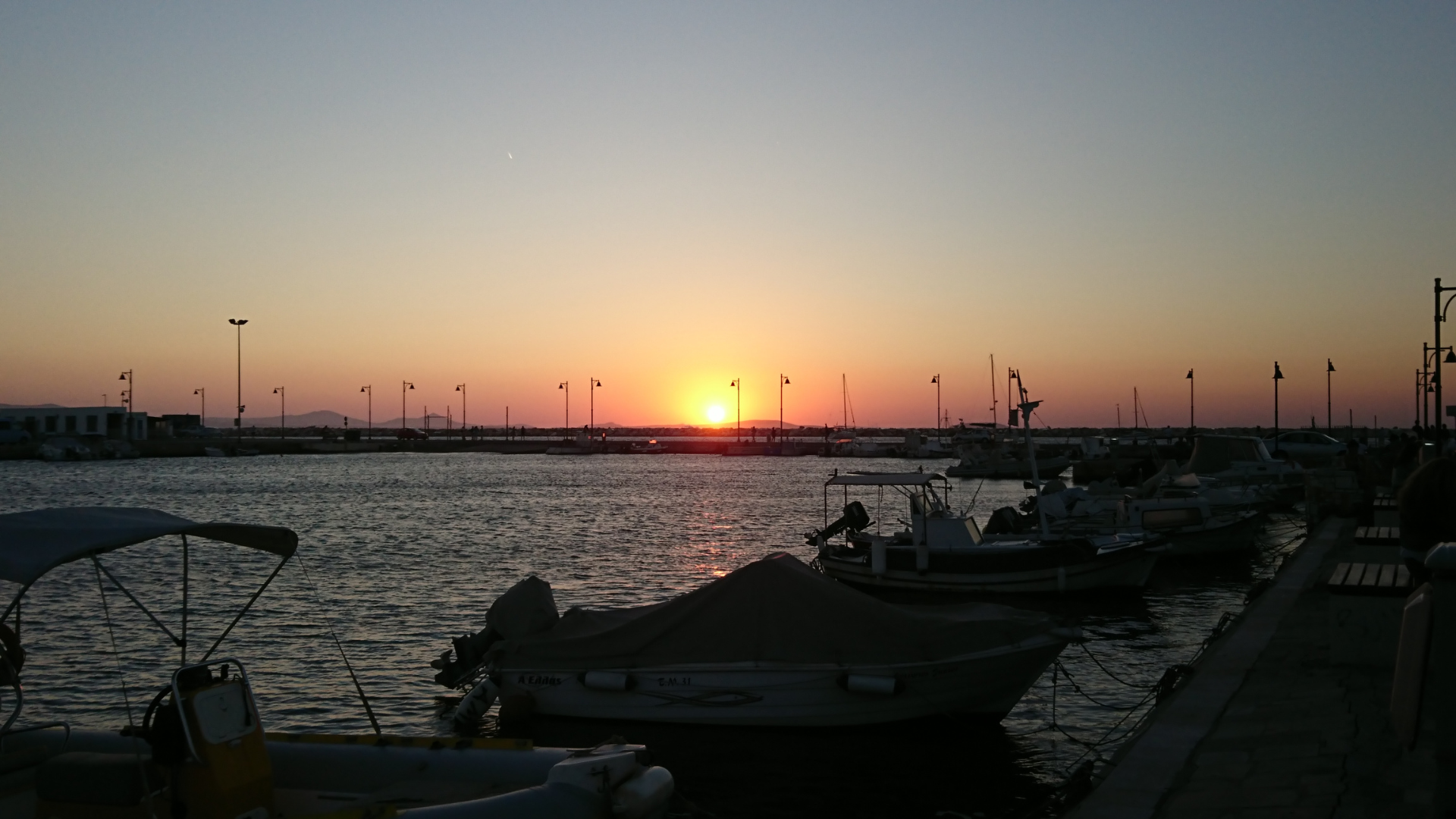
I then made my way down to the harbour to watch the sun slip below the horizon, with vibrant warm orange tones and a bright golden glow reflecting across the water as evening settled over the island.
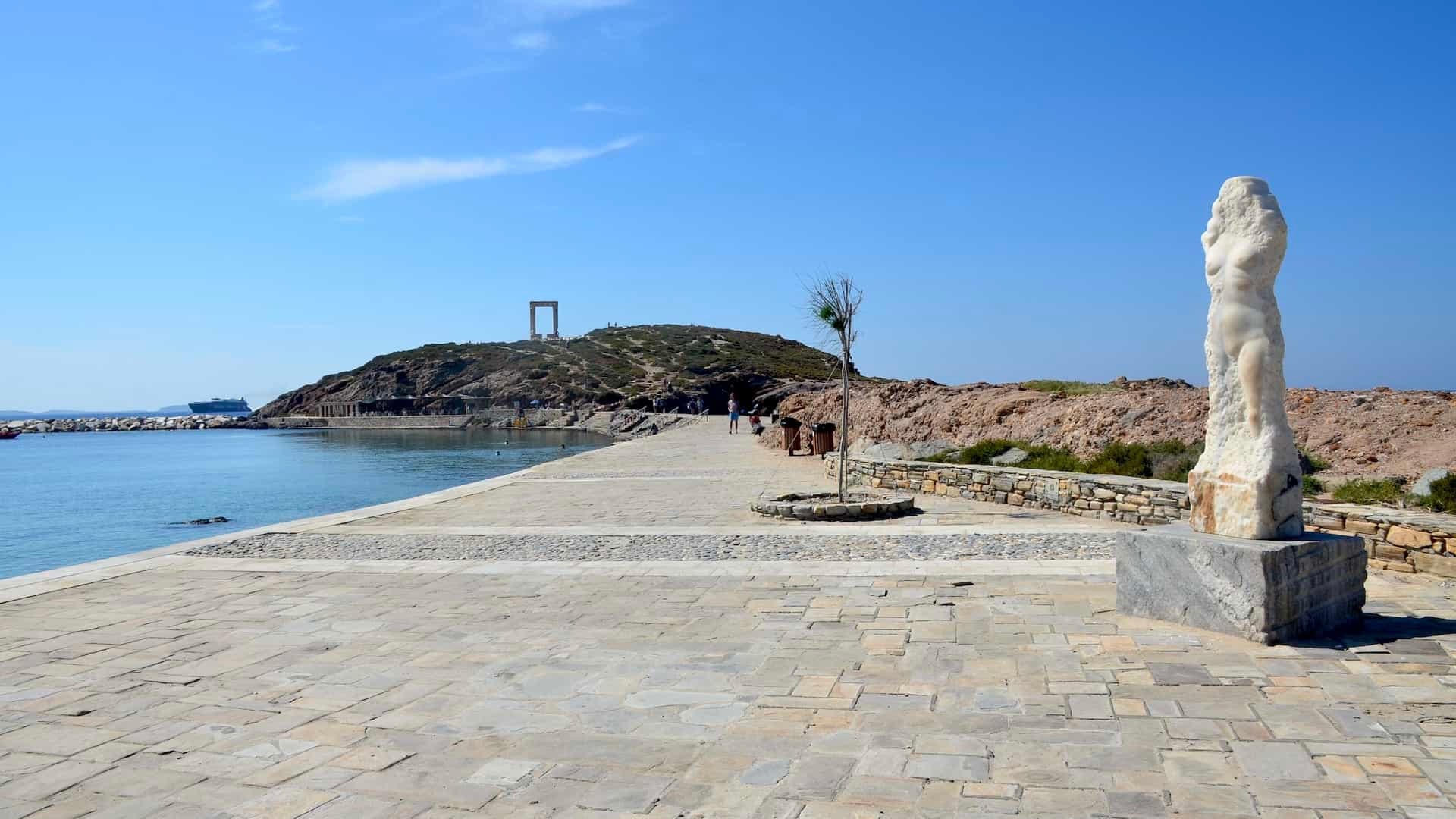
The following day began with an early walk over the causeway that links the old harbour to the tiny islet of Palátia (GR - Παλάτια), meaning palace and passing the statue of Aphrodite, in quiet moments before the day’s warmth set in and before the crowds gathered. The causeway leads to the iconic Temple of Apollo, known locally as the Portára (GR - Πορτάρα), a monumental marble doorway that’s all that remains of an unfinished temple begun around 530 BC by the tyrant Lygdamis (GR - Λύγδαμις). Intended as a grand sanctuary to Apollo, it was left incomplete when his reign ended. Today, the massive doorway stands against sky and sea, its proportions a reminder of how ambitious ancient projects could become symbolic in their unfinished glory.
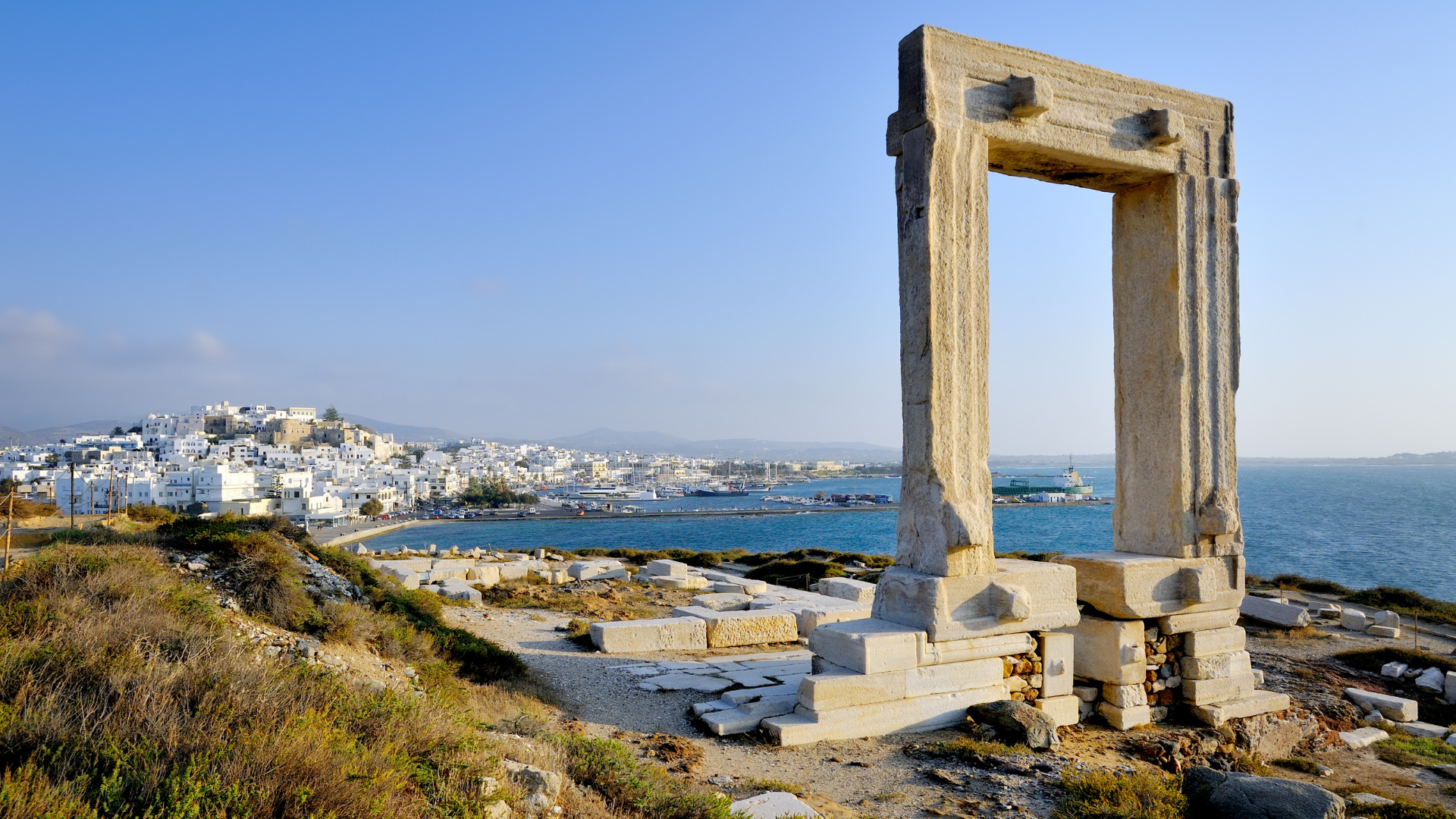
From this vantage point, I stopped to look back across Chóra and the inner old town within the castle walls, the white buildings and labyrinthine lanes shaping the harbour below. Rising above the Venetian Kástro (GR - Κάστρο), with its fortifications dating to the early 13th century, when Márkos Sanúdo (GR - Μάρκος Σανούδος) established the Duchy of the Archipelago and made Chóra the island’s capital, a place where Byzantine, Venetian and Greek traditions still meet in stone, archways and shared memory.
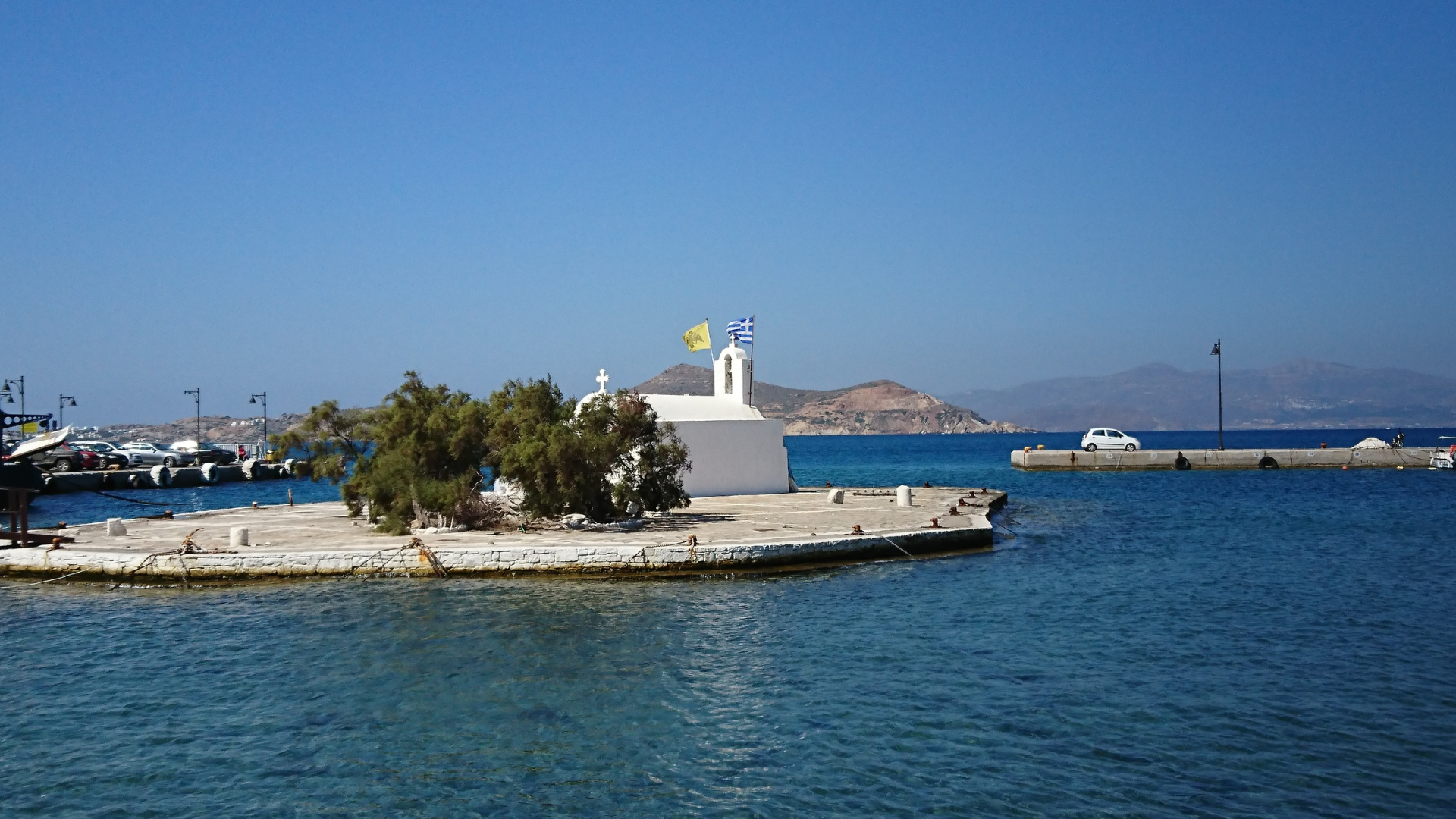
In the harbour itself, just at the water’s edge, sits the small Church of Panagía Myrtidiotíssa (GR Παναγία Μυρτιδιώτισσα), a whitewashed chapel built on a rocky islet and one of the first sights to greet visitors arriving in Náxos. In antiquity, the islet is believed to have been a place of worship dedicated to Poseidon, god of the sea. Today, it stands as a serene Christian tribute to the Virgin Mary, offering unique views back toward the Portára and Chóra. Each year on 24 September, the church’s name day is marked with a traditional local celebration.
After picking up a takeaway breakfast from a local bakery, a warm pastry and hot chocolate in hand, I made my way to the bus station and caught the morning bus out into the hills, heading to the villages of Flério (GR - Φλεριό) and Melánes (GR - Μέλανες).
The bus winds its way out of Chóra through open farmland and olive groves passing the fertile valley that opens into Melánes, one of the island’s most ancient settlements.
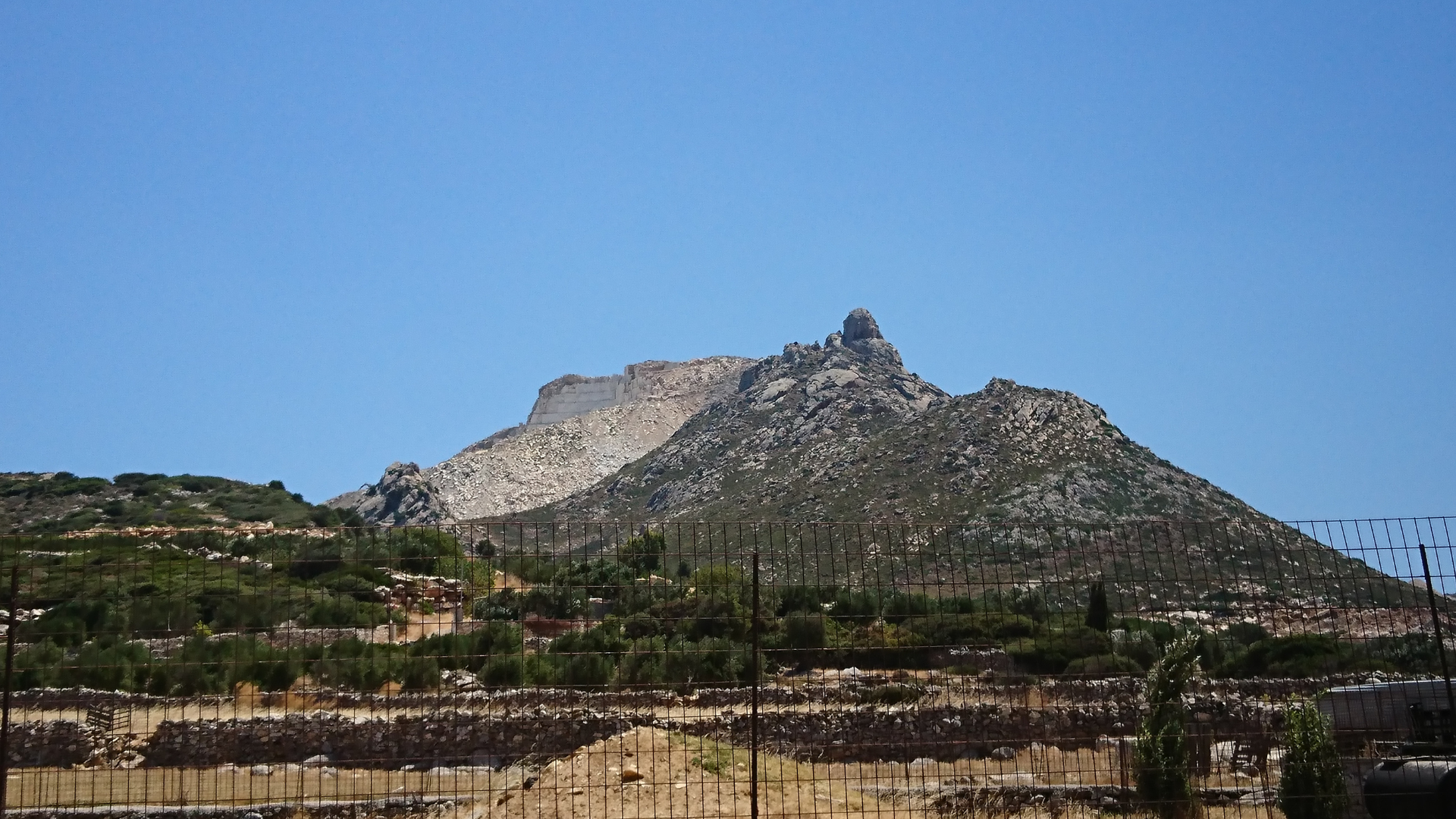
From the window, a short drive from Melánes are the modern Naxos marble quarries that are clearly visible. Open cut sites where fine marble is extracted today, a continuation of an industry that dates back millennia.
I stayed on the bus as it travelled past the quarries toward the northern village of Kinidaros (GR - Κινίδαρος), where I got off.
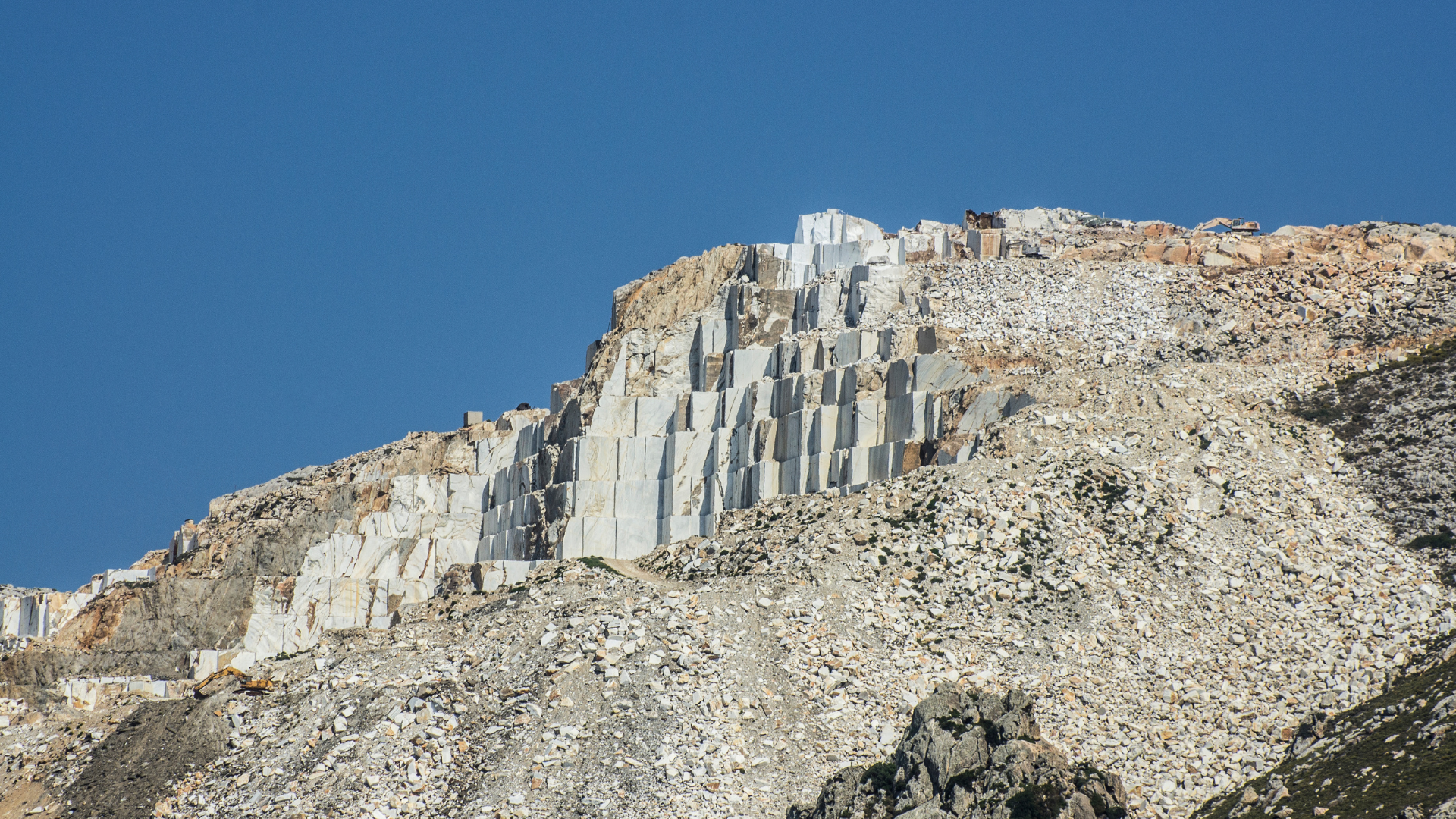
Waiting at the bus stop near the bakery for the return service back to Chóra, and again passing the open cut marble quarries of Melánes, I then prepared to stop at the valley near Flério (GR - Φλερίου) to visit the unfinished kouroi.
In antiquity, the valley of Flério was a major centre for marble quarrying, with fine quality marble extracted from at least the 7th–6th centuries BC. This marble shaped both the island’s economy and its enduring artistic legacy, supporting the flourishing of Cycladic stone sculpture and temple building on Naxos during this early period.
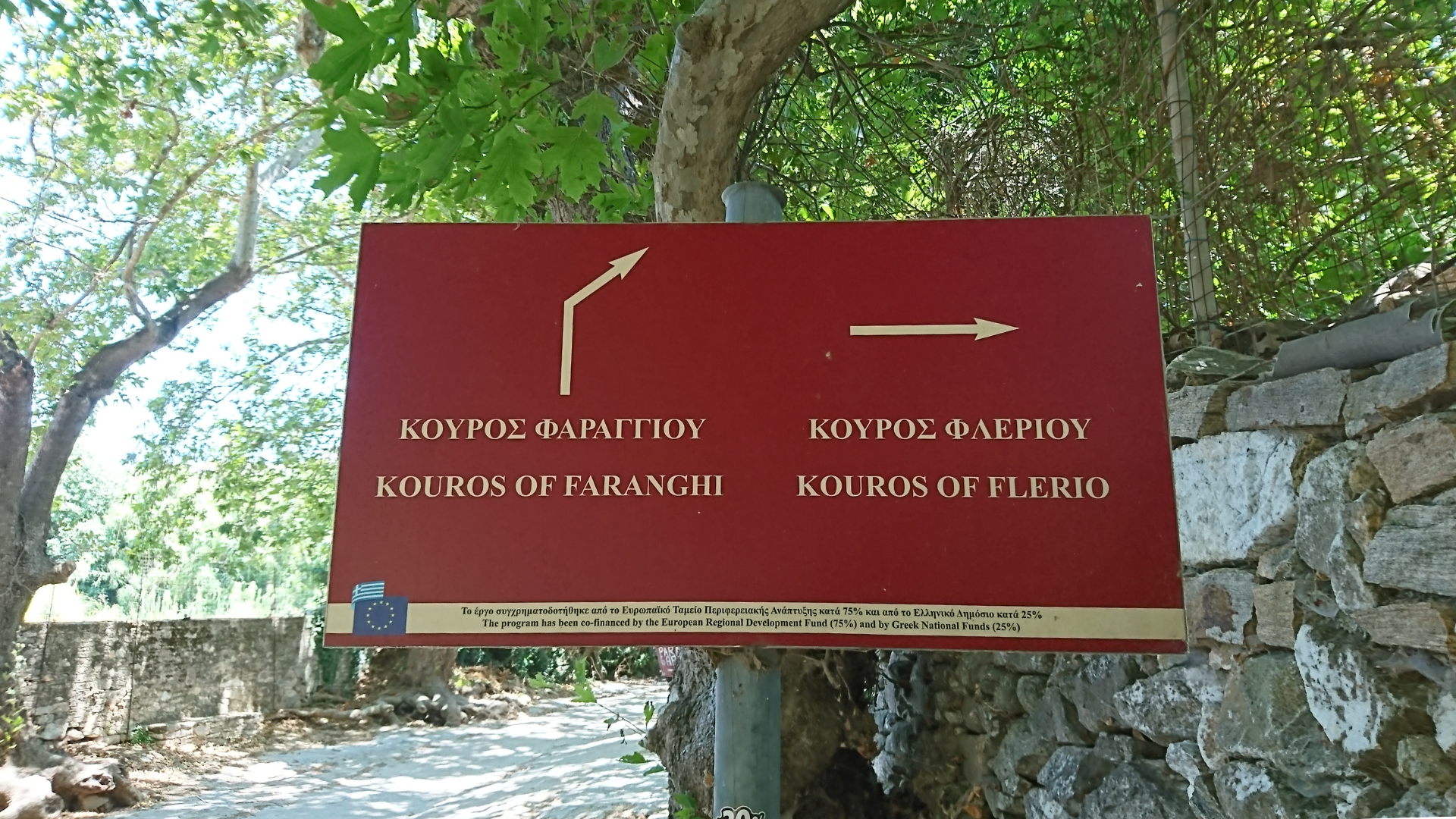
In the valley near Flério, two colossal unfinished kouroi; statues of idealised young men, lie where they were carved directly from the ancient marble beds, abandoned when cracking or difficulties in transport halted their removal from the quarry.
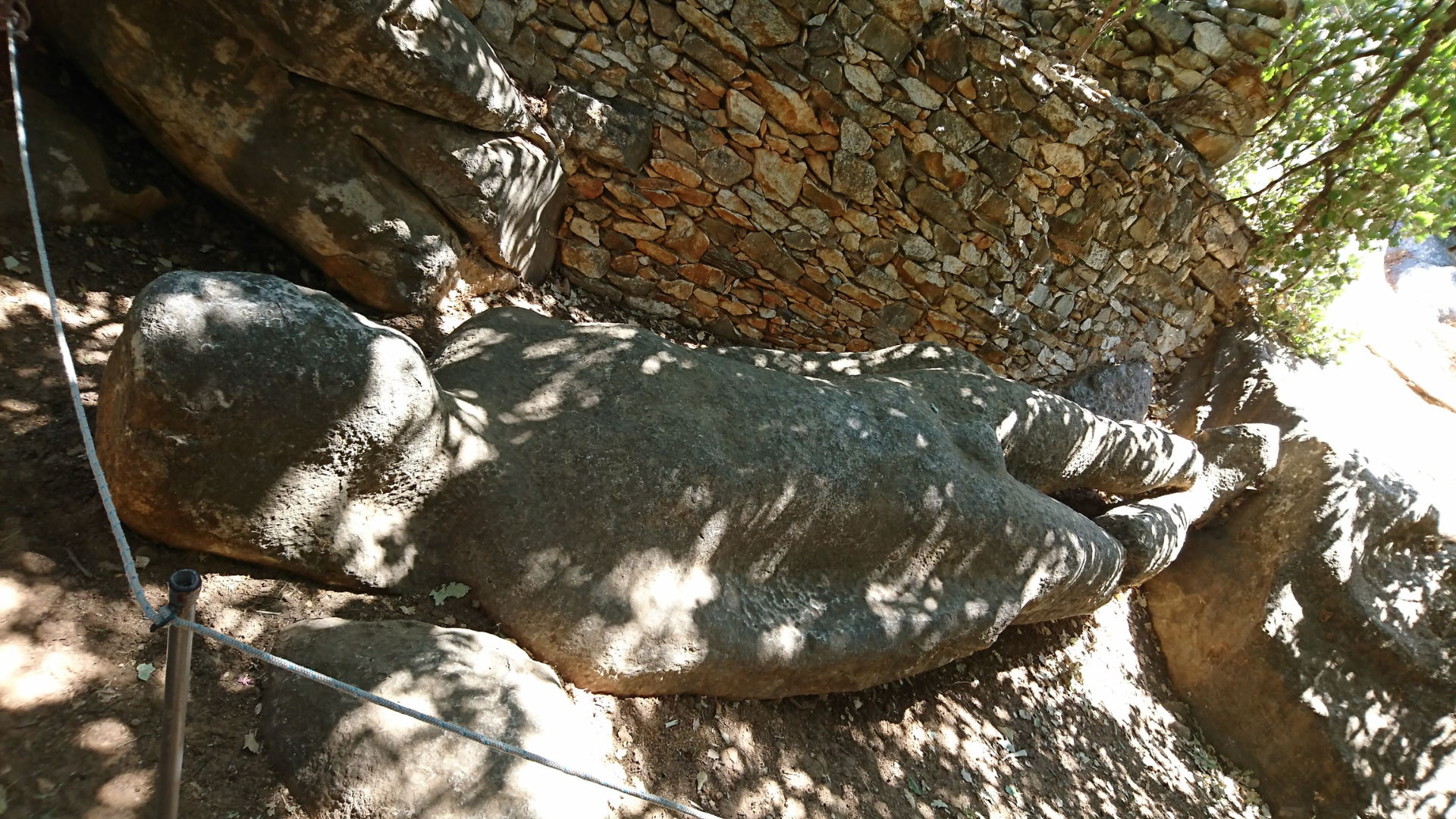
The first of the unfinished Kouros of Flério (GR Κούρος Φλερίου) lies where it was abandoned in the 6th century BC, its massive marble form, measuring around 6–7 metres tall, was halted when damage occurred during attempts to move it proved too difficult, leaving it resting on its back in the valley where it was first carved. A striking reminder of the ambition and challenges faced by ancient Naxian sculptors working directly from the island’s renowned marble beds.
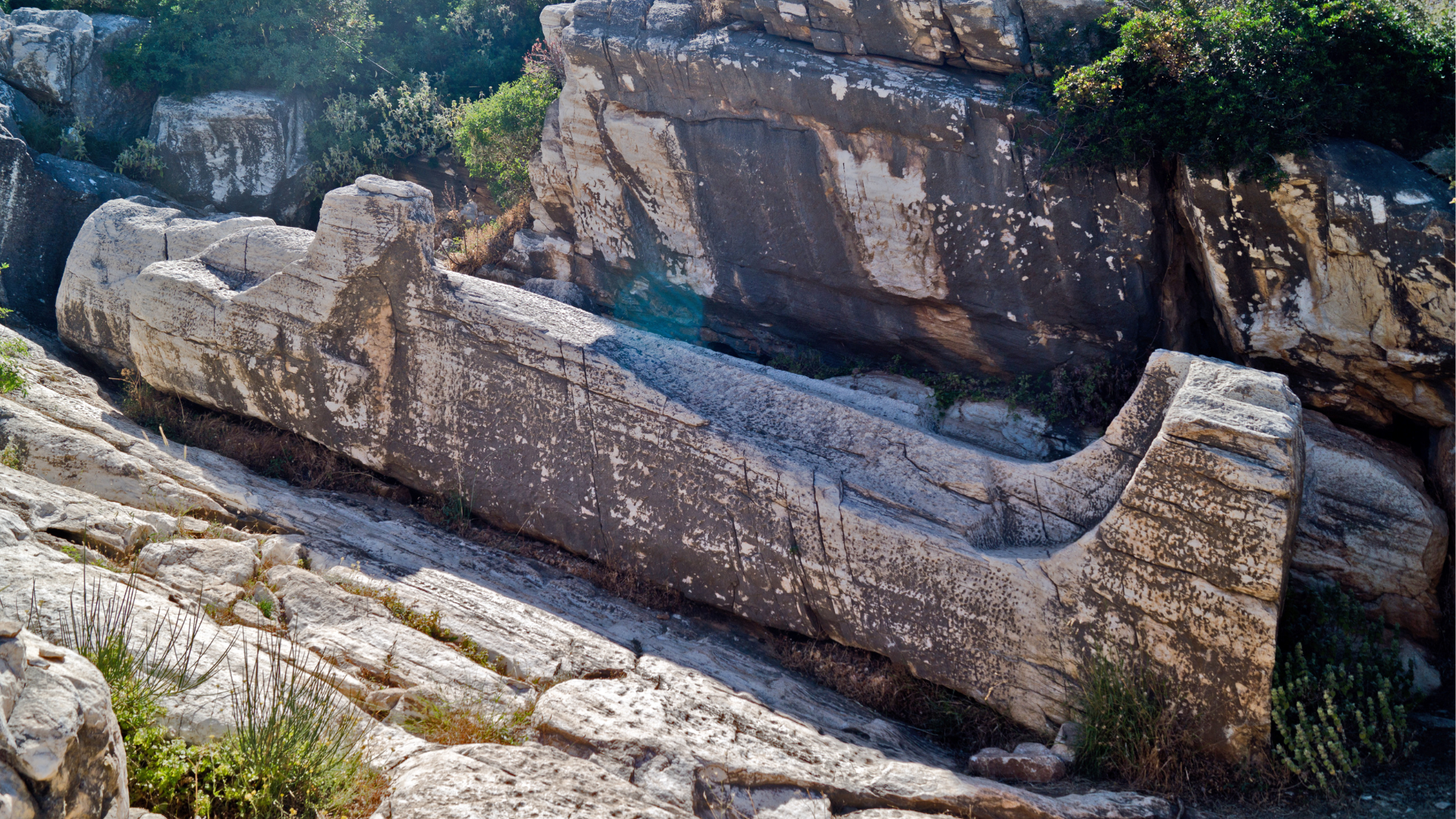
A short distance away, the second Kouros of Faraggi (GR Κούρος τοῦ Φαράγγι) also rests where it was carved, left unfinished when further transport proved impossible. Like its neighbour and similarly gigantic in size, it was sculpted from local Naxian marble, showing the scale and determination of early sculptors on the island.
Although these sites lie some distance from today’s main marble quarries in Melánes, they were carved from local ancient outcrops. Ancient sculptors often worked directly where the marble was best, so these unfinished statues are part of the same local Naxian marble tradition that supplied many of the island’s celebrated classical works.
In the same valley are other reminders of Melanes’s rich past, where sections of an ancient aqueduct that once carried water from the springs around Flério into Naxos Town, are visible here and there along the landscape, as well as traces and remains of the sanctuary of the springs, where rural cult practice once honoured local deities connected to water and prosperity.
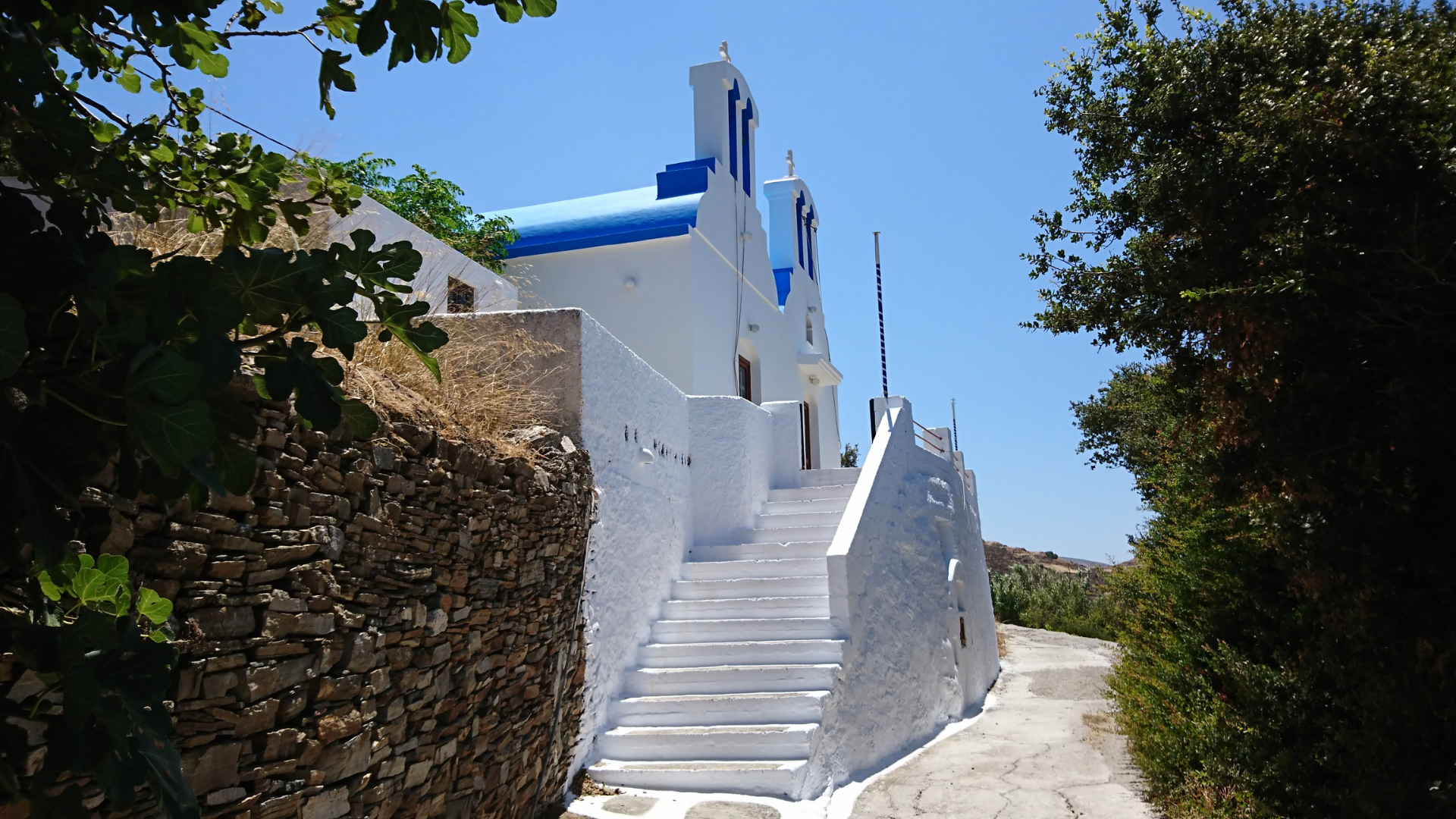
From the quarries, I was briefly back on the bus, where I asked the driver to drop me off at the Agios Nektarios – Agios Nikodimos Church, located just off the road near the village of Kourounochori (GR - Κουρουνοχώρι).
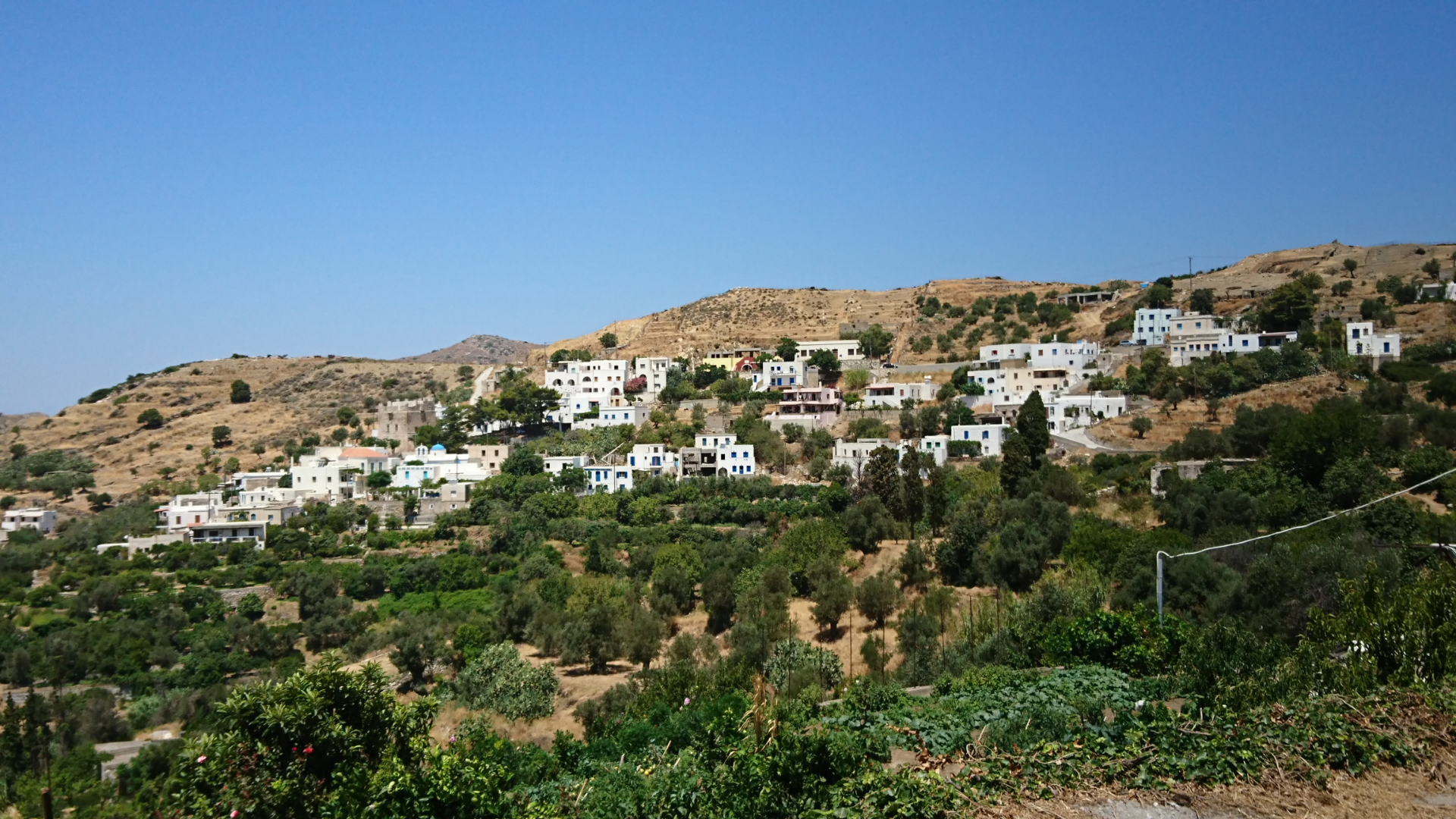
From here, I set off on foot, wandering the old paths that thread through the Melánes valley toward the village of Kourounochori, affectionately known as the Flower Village for its hillside terraces, orchards, and blooming gardens that soften the mountain slopes. This traditional settlement, inhabited for centuries and officially recognised as a traditional village since 1988, blends serene rural charm with palpable history: elegant stone houses, fragrant courtyards, and remnants of older structures speak of a timeless pace.
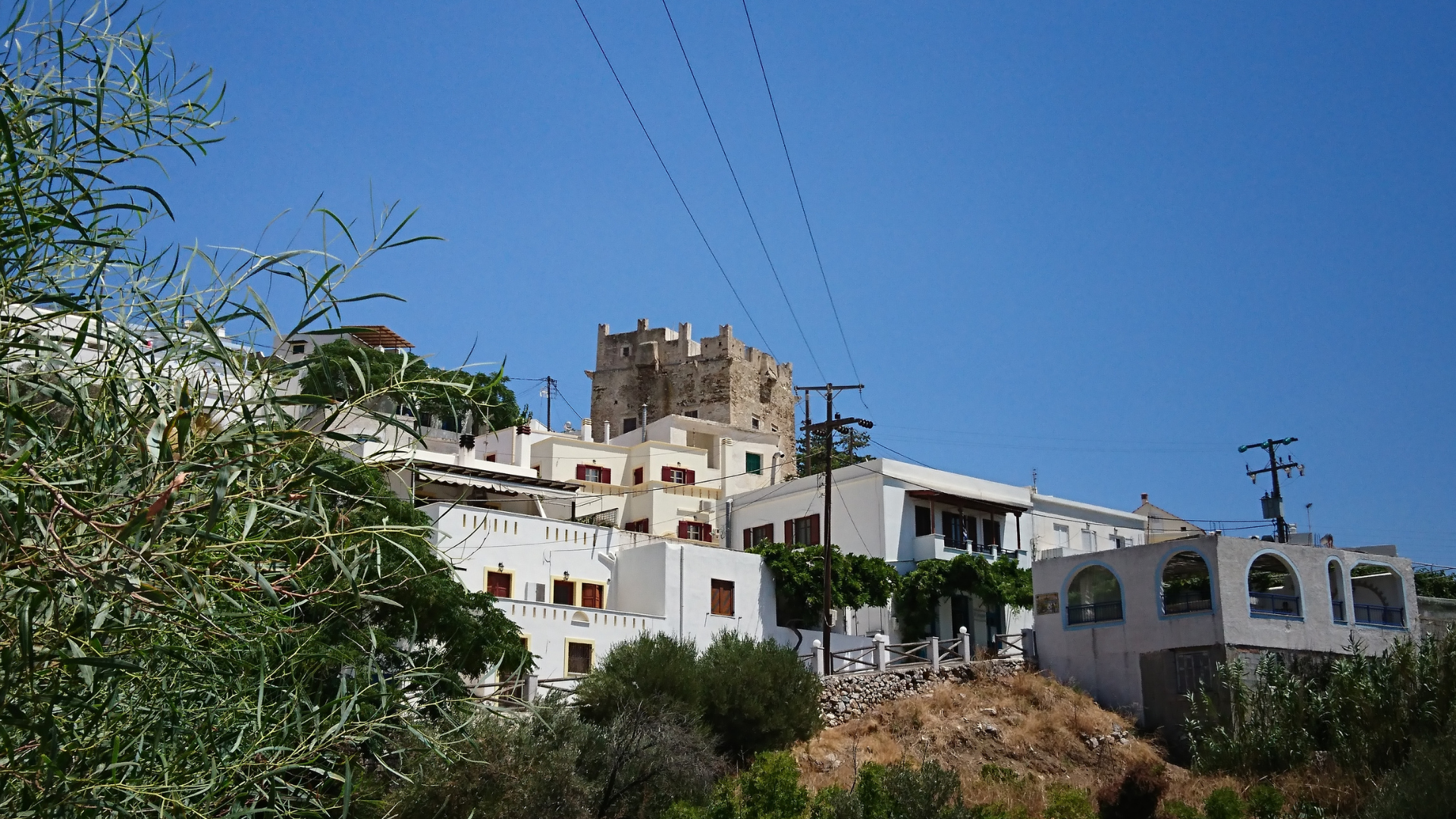
Behind the village church stands the Della Rocca Tower, an impressive three storey Venetian tower believed to be the oldest tower house on Naxos, dating back to the 14th century. Its thick walls and machicolations, also known as murder holes, openings above the entrance through which defenders could pour boiling water, oil, or drop stones on attackers reflect its former role in protecting the community during medieval times.
In the 18th century, the tower belonged first to the Somarippa family and later to Georgakis Fragkopoulos, a Greek Fanariote from Constantinople who had become a Venetian subject. Fragkopoulos also acquired the Barozzi Tower, where the family coat of arms remains, and today the tower is owned by Ioannis Dellarocas.
Inhabited for millennia and counted among the oldest villages on Naxos, Kourounochori likely takes its name from the dark, fertile soil of the valley, ideal for orchards and cultivation. Local myth reaches even further back, linking the area to the giants Ótos and Ephialtés, whose tragic tale from Greek lore was said to have unfolded here.
Walking along the village path that joins Kourounochori to Melánes (GR – Μέλανες), I followed the well trodden route that has linked these settlements for generations. The landscape unfolded with wide, sun drenched terraces of citrus, sprawling olive groves, and glimpses of Naxos’s enduring rural life, including a lone donkey grazing as I passed by. While modest in size today, the original settlement of Melánes has stood here for millennia and is counted among the oldest on the island. Its name, derived from the ancient Greek word for “black,” likely refers to the dark, fertile soil that colours the valley below. This rich agricultural land, alongside the ancient marble industry, has shaped the village — its orchards and cultivated terraces sustaining local communities through countless seasons, while the surrounding marble hills produced the monumental sculptures and aqueducts that once carried water down toward Chóra.
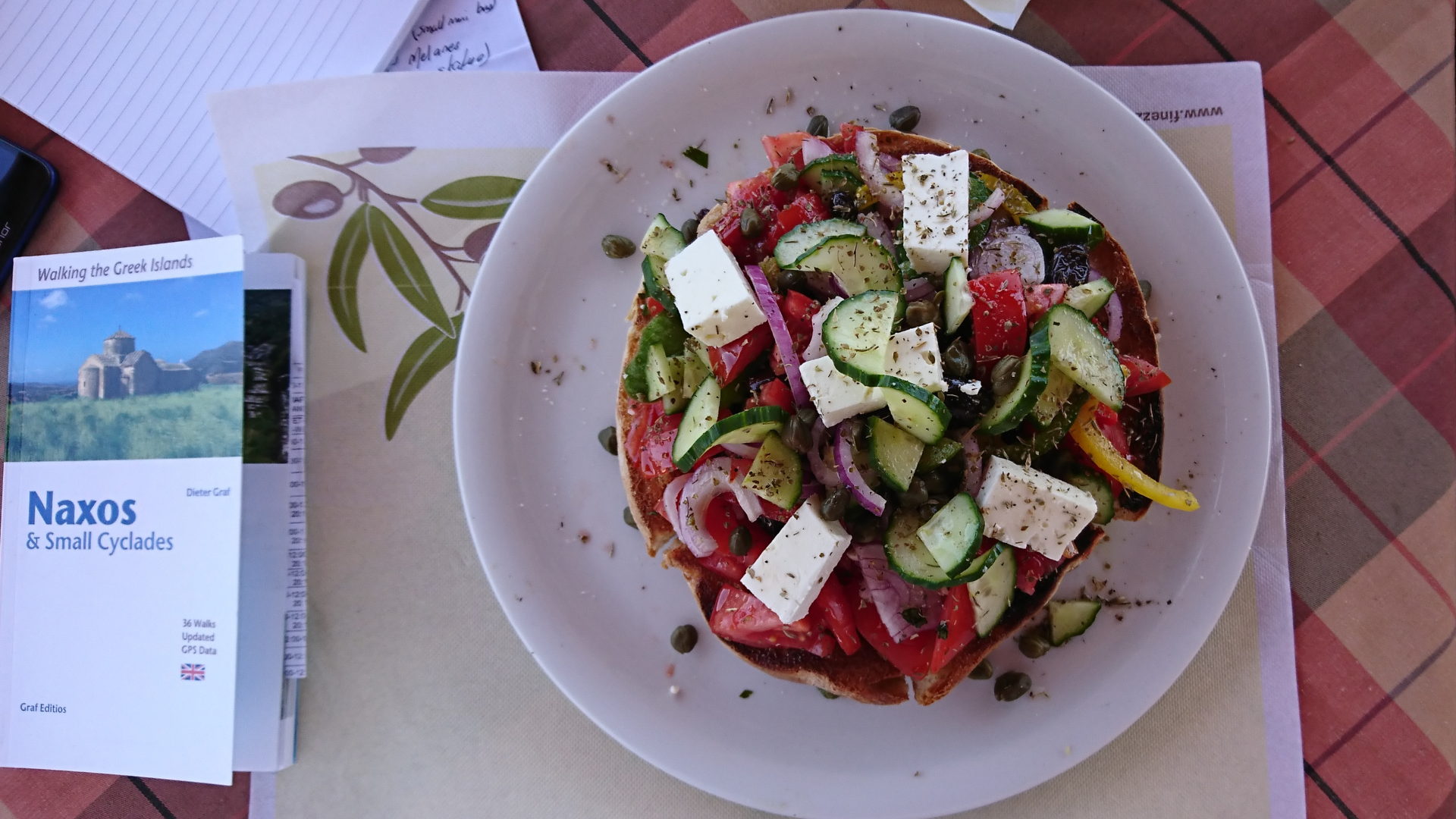
Arriving in the village of Melánes, I checked the bus timetable and found I had ample time to enjoy a welcome lunch at Arolithos Taverna, where local fare and friendly hospitality restored both energy and appetite, offering a delicious taste of island life before the next leg of the journey.
Travelling beyond Chóra to Demeter’s sanctuary, the marble valleys of Flério, and the mountain villages of Náxos, the planetary influences revealed themselves quietly, shaped by the land itself. Mars supported the physical pace of the journey, walking ancient, lesser travelled paths and moving through landscapes long formed by human contribution. Jupiter widened my perspective, inviting reflection on time, continuity, and the enduring relationship between people, land, and stone.
Pluto’s influence, ever present during my travels through Greece, was subtle here, being felt in the patterns of interruption, reuse, and transformation within the landscape, and in how these places speak of endurance shaped over generations rather than moments.
Underlying the journey, several paran lines were activated: North Node / Black Moon Lilith, Sun / Black Moon Lilith, Venus / Black Moon Lilith, Neptune / North Node, and Uranus / Chiron. Together, carrying soft undertones of destiny, feminine strength, intuitive insight, unexpected discovery, and awakening. These energies expressed themselves less through events, and more through atmosphere, reflection, and a quiet sense of alignment with the landscape.
Catching the bus once more, I returned to Chóra for my final afternoon and evening on Náxos.
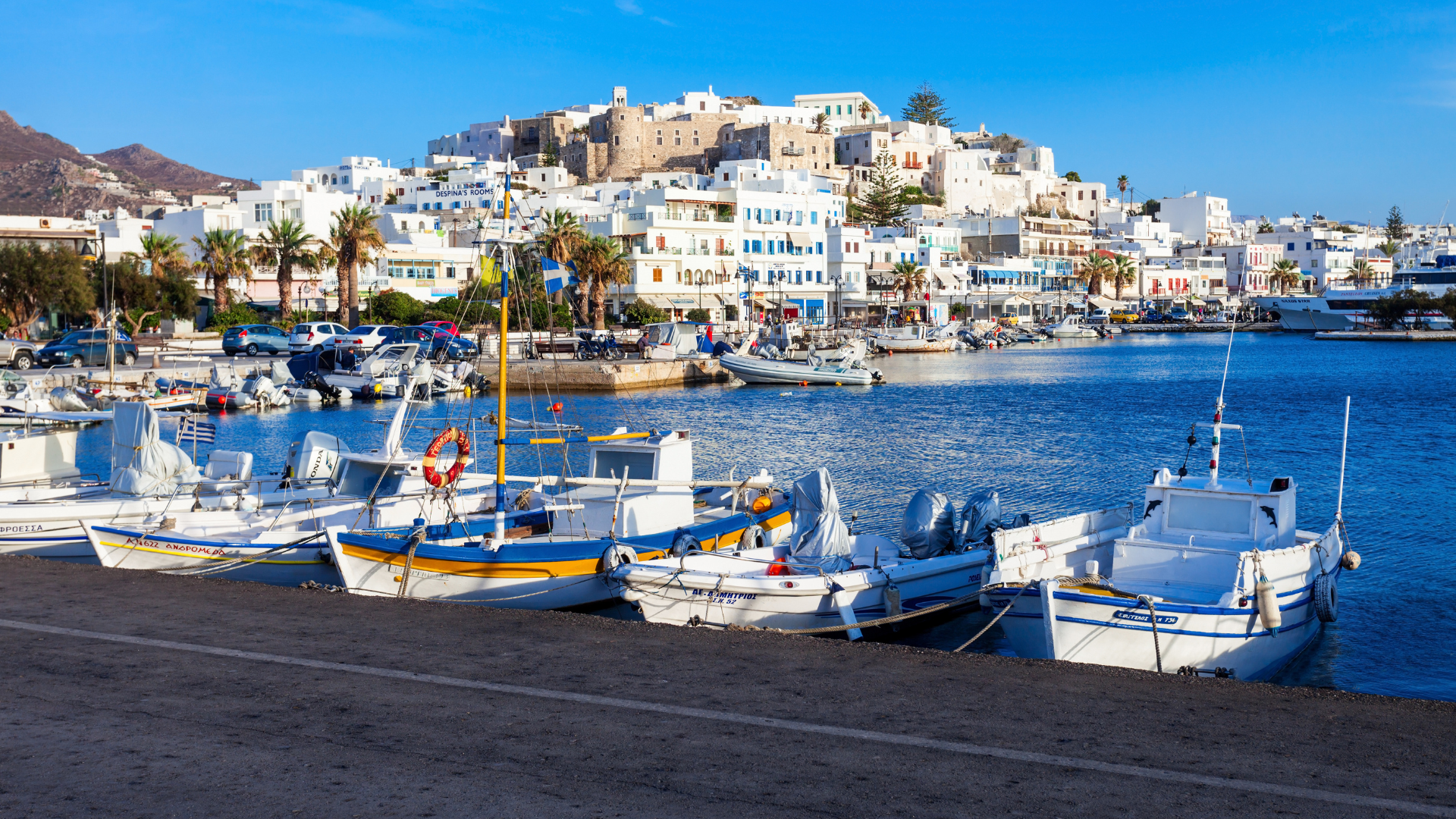
Along the waterfront, small boats rested quietly in the harbour, framed by the timeless backdrop of Chóra and its castle.
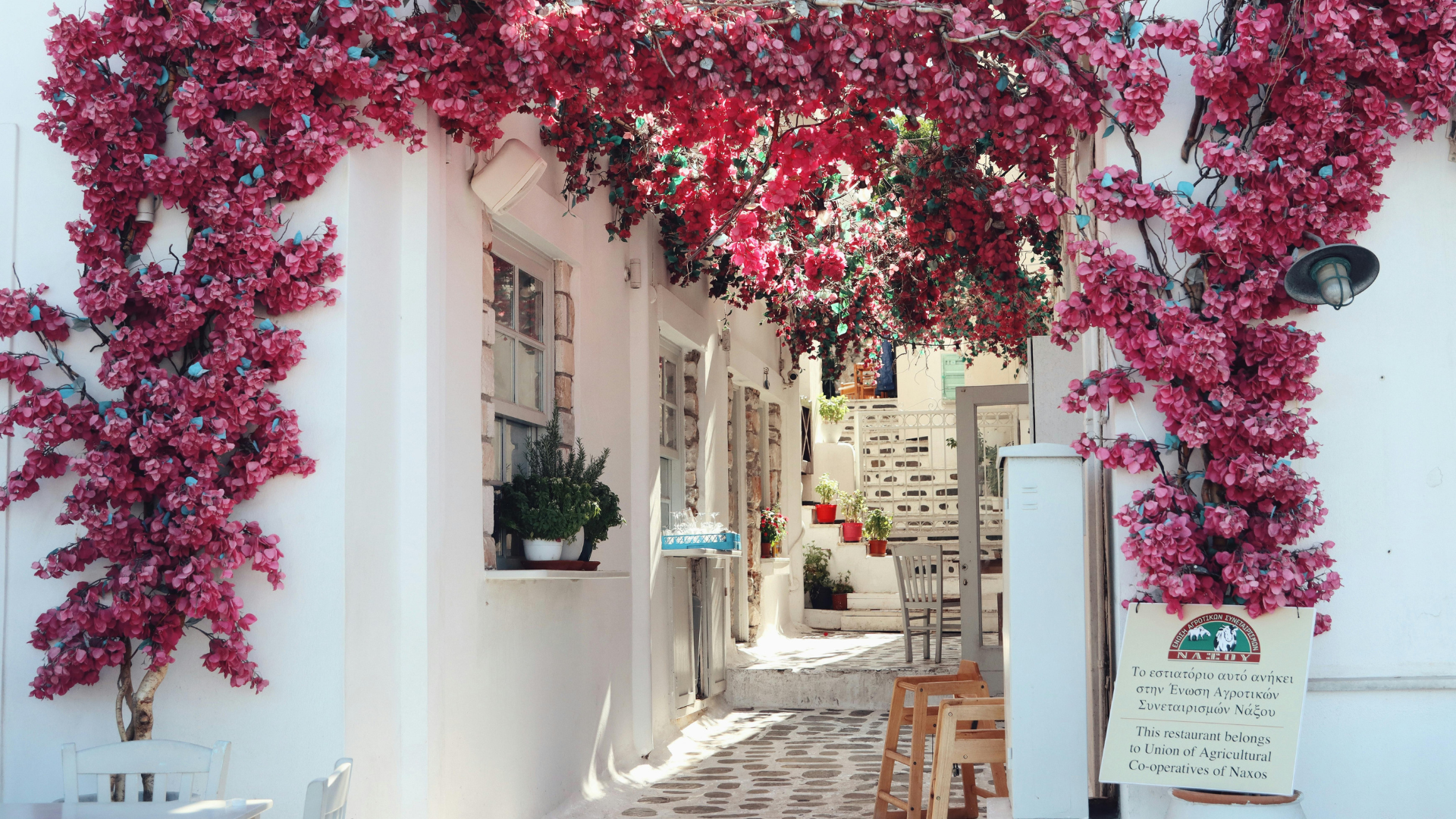
Then wandering again back through the picturesque lanes of the old town.
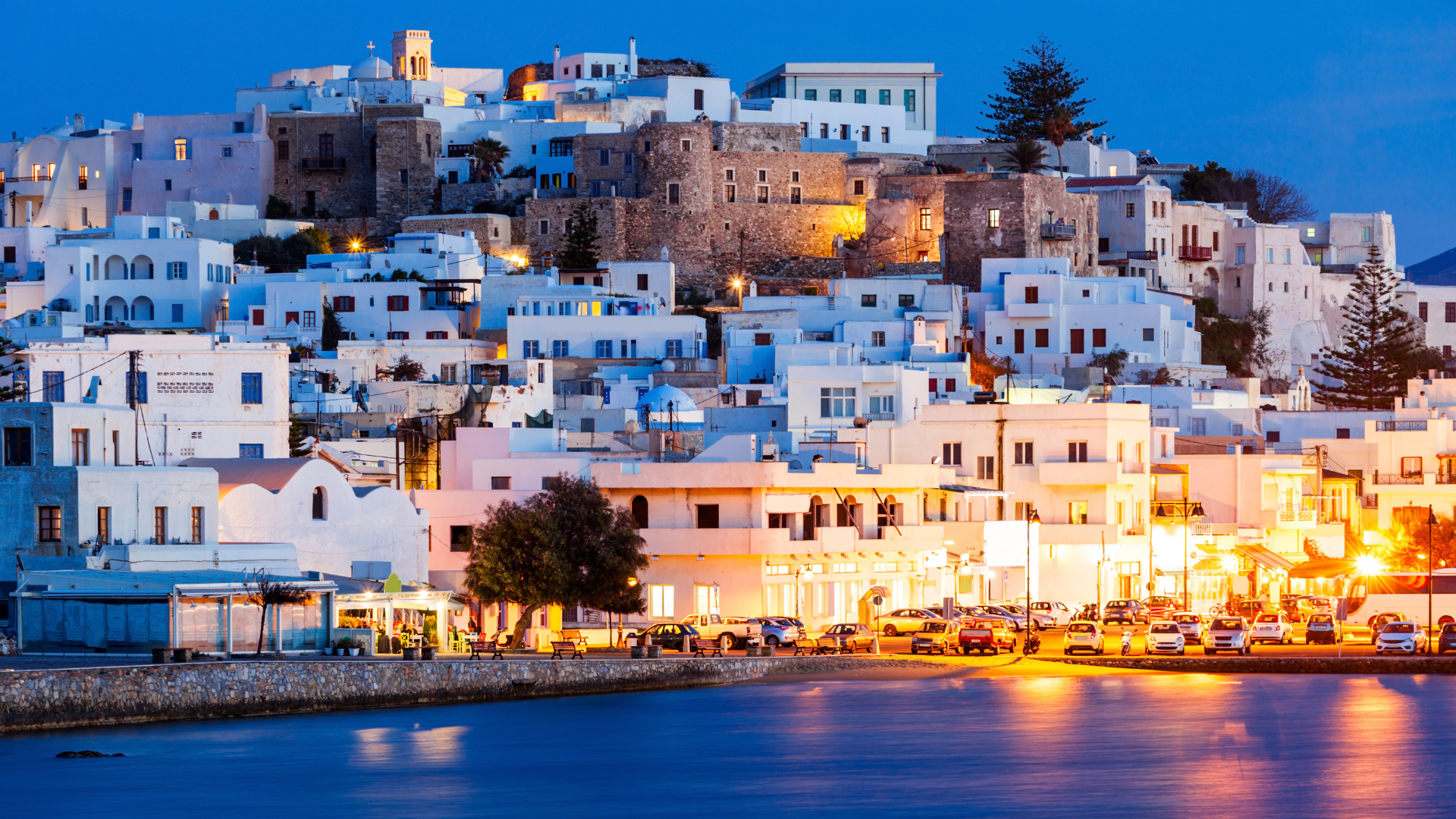
As early evening lights switched on among cafés and shops along the harbour, the island seemed to exhale (need a different word). My last night unfolded gently, quietly and unhurried, a closing chapter before departure the following day, and the beginning of the journey home.
In this, one of many Soul Travel blogs of my journey through Greece and her islands, the extra days offered an opportunity that revealed only a fraction of the island of Náxos quiet wonders. From the marble valleys of Flério to the sacred landscape of Demeter’s sanctuary and the stillness of the mountain villages, each place held its own pace, stories, and whispers of the past. These paths beyond Chóra opened a deeper understanding of the island’s character, inviting slower steps, reflection, and an appreciation for the hidden layers of history, artistry, and presence that lie just beyond the familiar sights.
See you soon,
Consider signing up to receive new Soul Travel blogs, travel reflections, and astrocartography insights as new destinations are shared.

✨ If this story resonated with you, you are warmly invited to continue the journey in a way that feels aligned with you.
✨ Explore personalised insights through consultations
✨Begin with ‘The Journey’ Orientation
✨Listen to Destined Places podcast stories
✨Save and share Soul Travel inspiration on Pinterest