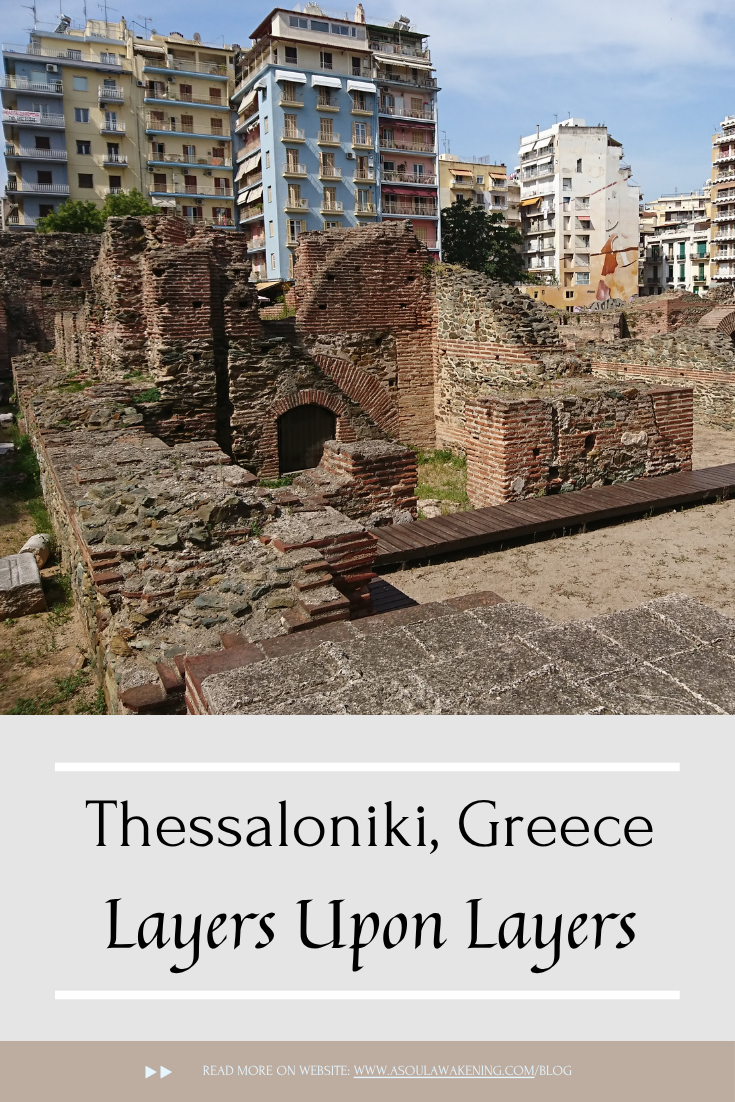
Thessaloniki | Layers Upon Layers
We humans share an enduring intellectual pursuit and an insatiable thirst to understand the past, after all, it’s our window to making sense of the present.
Every culture carries its own creation stories, weaving myths that form the foundation of ancient societies. These tales leave traces in written records and material remains, turning places like Thessaloniki - GR: Θεσσαλονίκη into a modern day paradise for archaeologists, where each discovery finds its place in the history records for generations to come.
Imagine a city that wears its history like a well loved cloak, rich, worn, and patched with stories from every era it has lived through. Thessaloniki is exactly that kind of place. From ancient Greek roots to Roman empire grandeur, Byzantine splendour, Ottoman echoes, and its lively, modern day buzz, this city is a living tapestry. Layers upon layers of culture, myth, and memory folded into narrow streets, historic structures and building, and seaside promenade.
Wandering Thessaloniki feels like stepping through time, where the layers of past civilisations quietly meet the present. It’s a city that encourages you to slow down, to savour your coffee, take in the streetscape, and let the Aegean breeze carry whispers of history along the shoreline. While each person’s planetary placement is unique, and I can’t speak for how this city might resonate in your chart, I can share this: for me, Thessaloniki’s celestial imprint amplifies transformation and resilience. There’s an undercurrent of curiosity here, one that gently nudged me to embrace change while staying grounded in where I’ve come from.
So, whether you’re here to explore ancient ruins, lose yourself in Byzantine mosaics, or simply soak in the city’s warm atmosphere, Thessaloniki promises a journey of discovery, both outward and within.
Let’s peel back these layers together and uncover the soul of Greece’s second largest city, a place where civilisations meet and time folds upon itself.
Having visited Thessaloniki a few times now, I’ve arrived by both long-distance bus and by car, and each experience has offered its own rhythm. On this occasion, I flew into Thessaloniki’s “Makedonia” airport, approx. 13 kilometres from the city centre. A local public bus runs every half hour, connecting the airport to the “Makedonia” regional bus terminal, with several city stops along the way. It’s not a fast journey, around 45 to 50 minutes, but if you’ve just landed, there’s something quite grounding about watching the city unfold through the window.
You could hire a car, of course, but personally, I find public transport in Thessaloniki to be more than sufficient, straightforward, reliable, and a chance to observe daily life.
Overland travel is easy too. The KTEL intercity buses run from various locations across Greece, and there are also cross border services for those arriving from neighbouring countries. The “Makedonia” terminal can feel a bit of a hub, slightly chaotic at times, but efficient in its own way.
Once you’re in the city, much of Thessaloniki can be explored on foot. That’s how I prefer to experience it, slowly, intuitively, letting the city’s history and character reveal itself in moments, not checklists. There's a local hop-on hop-off bus if you’re looking for an overview, but I’ve also found that joining a local guide, even for a short walk, can shift the experience entirely. Stories told firsthand carry a different kind of truth.
If you're travelling solo, I’ve put together a walking companion of places I personally loved and recommend, [download here]. There’s no need to rush. This is a city best absorbed over three to five days, with time to pause, to look up, to lean into its layers, and maybe, to feel something unexpected shift within.
Having arrived on an early afternoon flight and caught the local bus into the southern district of the city, I made my way to my accommodation. After meeting my host, dropping off my bag, and gathering my bearings, I did what I usually do, stepped straight back out again, curious to feel the city’s energy underfoot. I walked to a nearby stop and caught a bus into the heart of Thessaloniki.
Over the next five days, the local bus service became a familiar pace, a moving thread that connected me to historic landmarks, museums, and cafés, as well as moments of quiet wandering where the city offered up its stories in the most unexpected places.
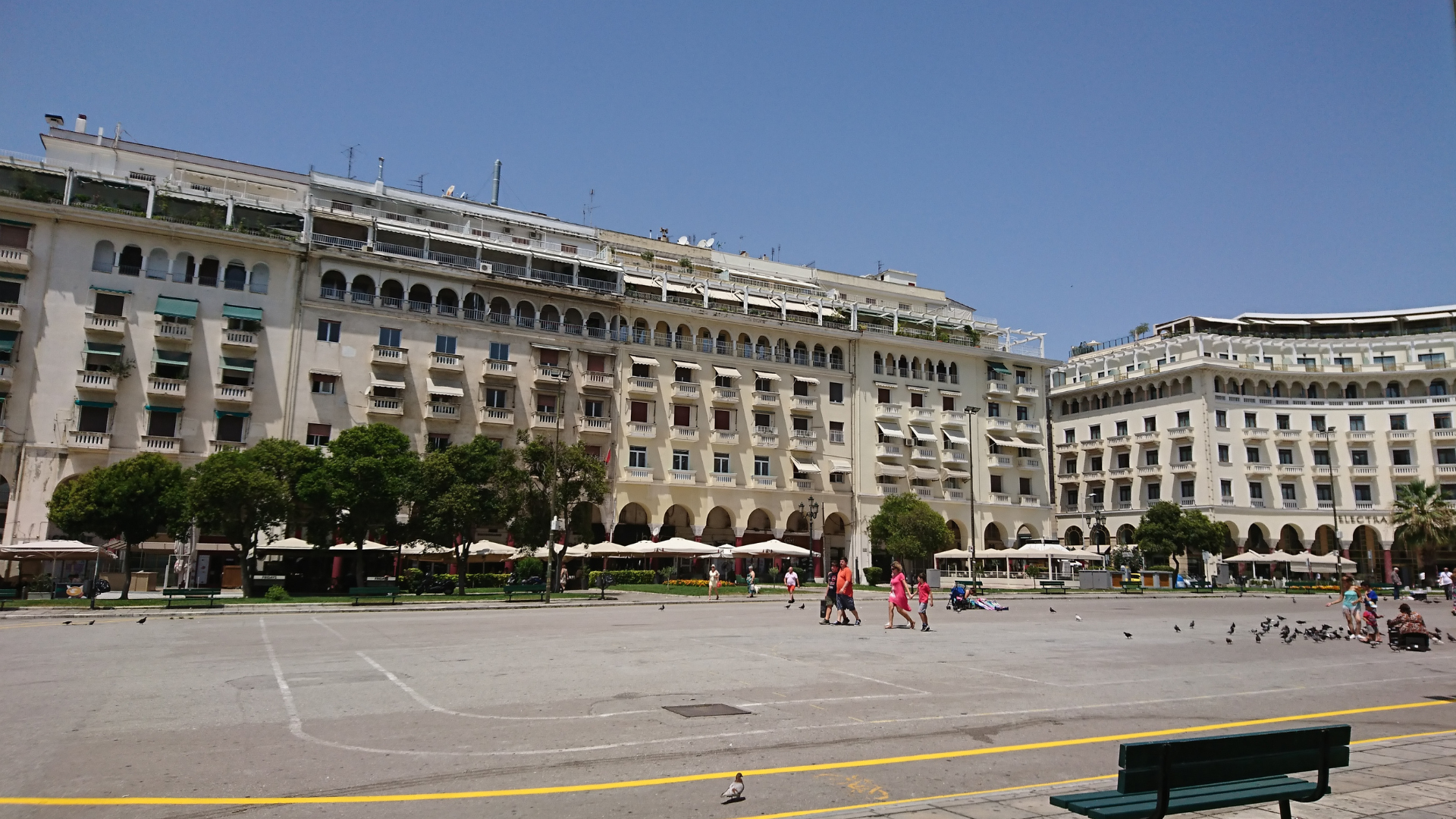
Finding my way to Aristotelous Square, a popular meeting point for locals and a natural orientation marker for first time visitors. The wide, open space opens onto Nikis Avenue, where the horizon stretches out across the Thermaikos Gulf. You can stand here and feel the city exhale.
Since the 1950s, the twelve elegant buildings that frame the square have been listed by the Hellenic Republic, modern, yet bearing that distinctly neoclassical design that hints at Thessaloniki’s blend of eras.
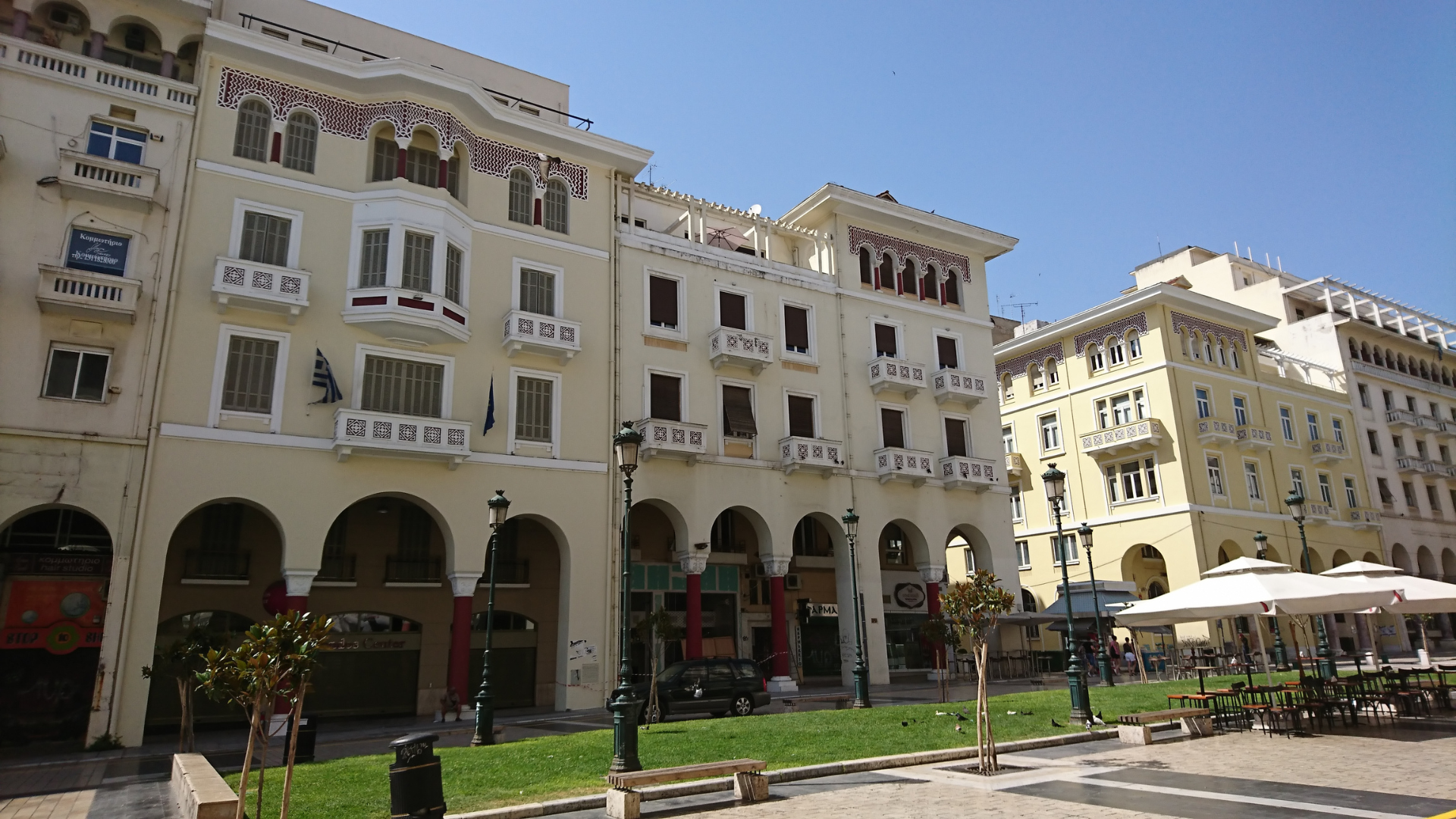
A choice of cafés and bars now occupy the ground floor arcades, offering plenty of places to pause and people watch. On the left hand side stands the Electra Palace Hotel, a mansion style property turned five star accommodation, its architecture gracefully preserved. To the right, the Olympion Theatre stands proud, and is home to the city’s annual International Film Festival and a cultural landmark in its own right.
Throughout the year, this square becomes a stage for the city’s celebrations. At Christmas, it transforms with lights and a festive atmosphere, while in January and February, it bursts to life with colour, costumes, and music during Thessaloniki’s month long carnival. Yet even in the absence of an event, Aristotelous Square holds a quiet confidence, as though it’s fully aware of the countless lives, gatherings, and stories that have passed through its open embrace.
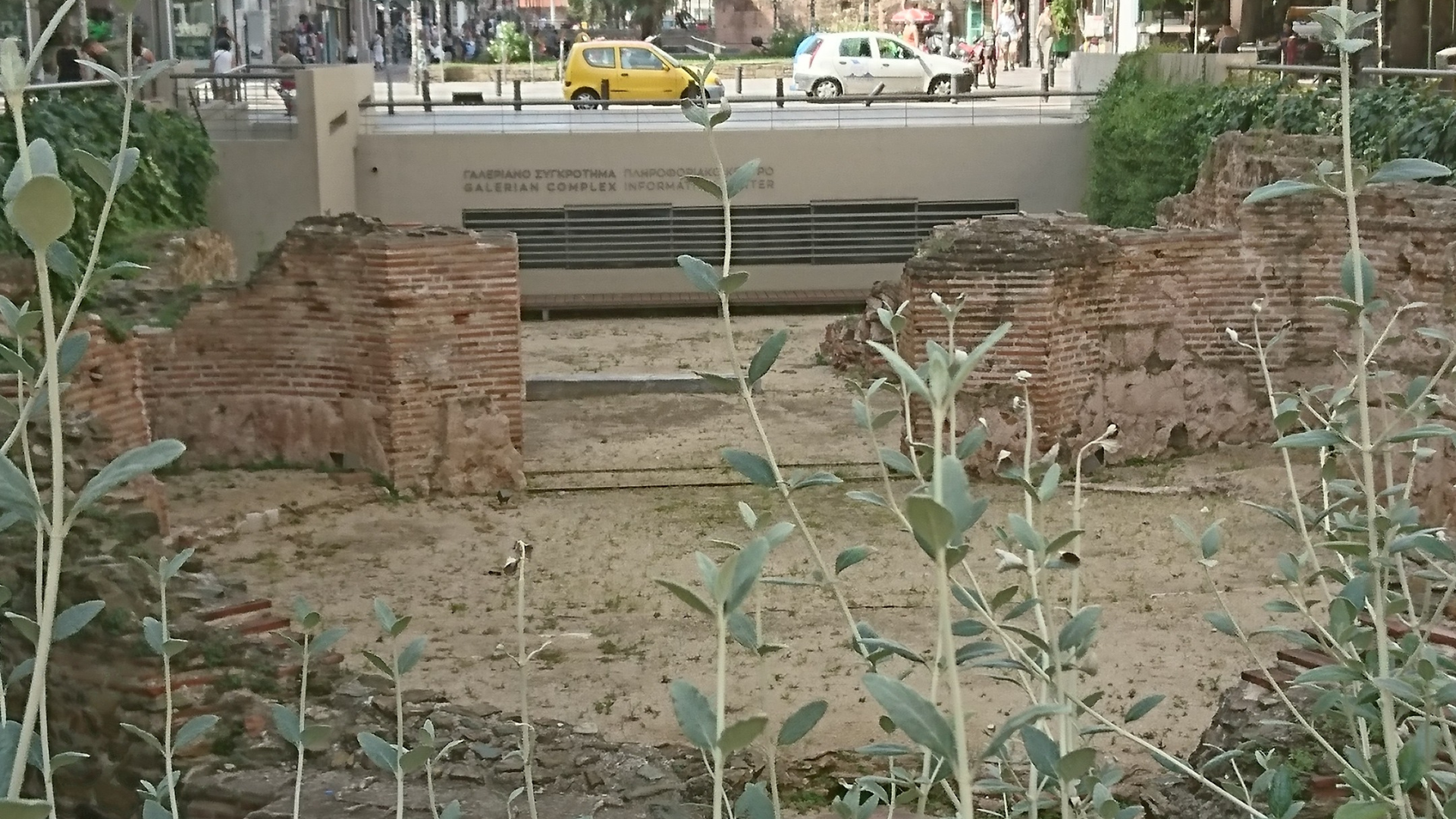
Wandering along Aristotelous, the pedestrian only thoroughfare that stretches from the Square to the busy Egnatia Street, I found myself not just walking through a city, but through layers of time. Here, beneath your feet and tucked behind the elegant façades, is a story that reaches back millennia.
This part of Thessaloniki has been continuously inhabited since antiquity. Archaeological evidence traces settlements in the wider area back to the Bronze Age, with the ancient town of Therma situated near the Thermaikos Gulf well before classical times. However, the city as we know it began to take shape in the Hellenistic period.
In 315 BC, the Macedonian general and later king, Kassandros (or Cassander), officially founded the city near the site of Therma and 26 neighbouring villages. In a gesture both political and personal, he named it Thessalonike, after his wife, who was also the half sister of Alexander the Great. Thessalonike herself was the daughter of King Philip II of Macedon and therefore, part of a powerful dynastic lineage.
Her name, Thessalonike, was itself a tribute to victory. Born on the day the Macedonians, aided by the Thessalians, defeated the Phocians in battle, her name marked the triumph: Thessalo - a name that merged people and glory, and - nike meaning ‘victory’. A name born by conquest, and carried forward in the founding of a city that would come to embody the merging of legacy and power.
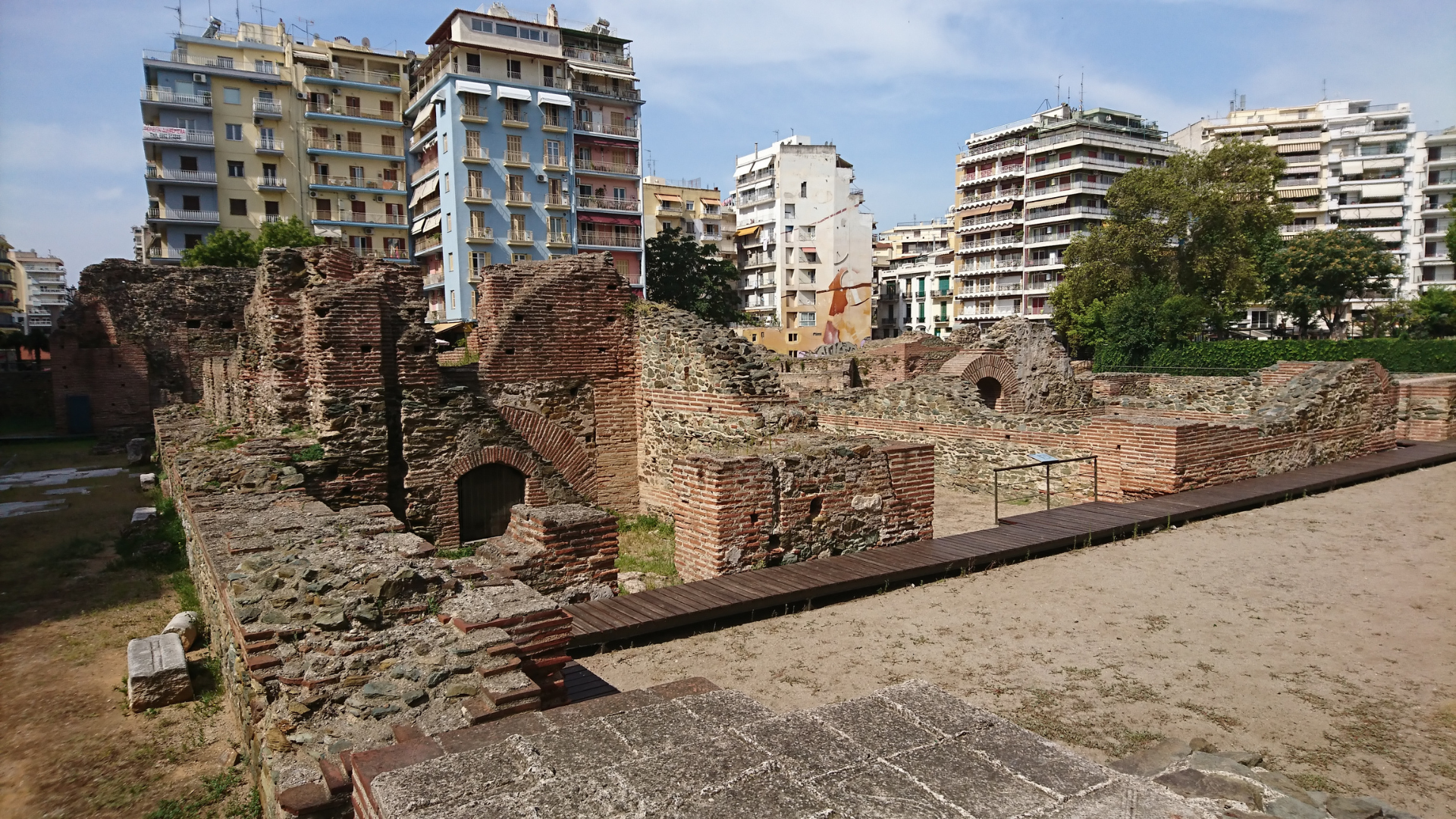
As I continued my wander along Aristotelous, I found myself drawn toward Navarinou Square, where the archaeological site of the Roman Emperor Galerius's palace quietly lingers between city life and centuries past.
Galerius, who ruled during the late Roman period 250–311, left behind what was once a vast imperial complex, a bold statement of political authority, architectural ambition, and Rome’s enduring presence in the eastern provinces.
What we see today is only a fragment of what once stood here. Much of the original complex remains hidden beneath apartment buildings, shops, and busy streets, entombed not by neglect, but by the living, breathing evolution of the city above it. The excavated remains reveal glimpses of the central courtyard, reception halls, elaborately paved mosaic pathways, and the Roman baths and cisterns that once serviced the palace. And so, while only a portion has been revealed through excavation, these foundations whisper of a life filled with ceremony, administration, and imperial symbolism, and the center of Roman Thessaloniki's civic and political life, the rest lies silently beneath, reminding us that every step taken here overlays centuries of imperial history just beneath the surface.
At its peak, the Galerius Palace Complex is thought to have extended across a wide section of the city, stretching from Navarinou Square to the Rotunda, the Arch of Galerius (Kamara), and toward the area where the now buried hippodrome once stood. Scholars suggest the entire precinct may have spanned nearly 150,000 square metres, evidence to both Galerius’s ambitions and Thessaloniki’s significance within the eastern Roman Empire.
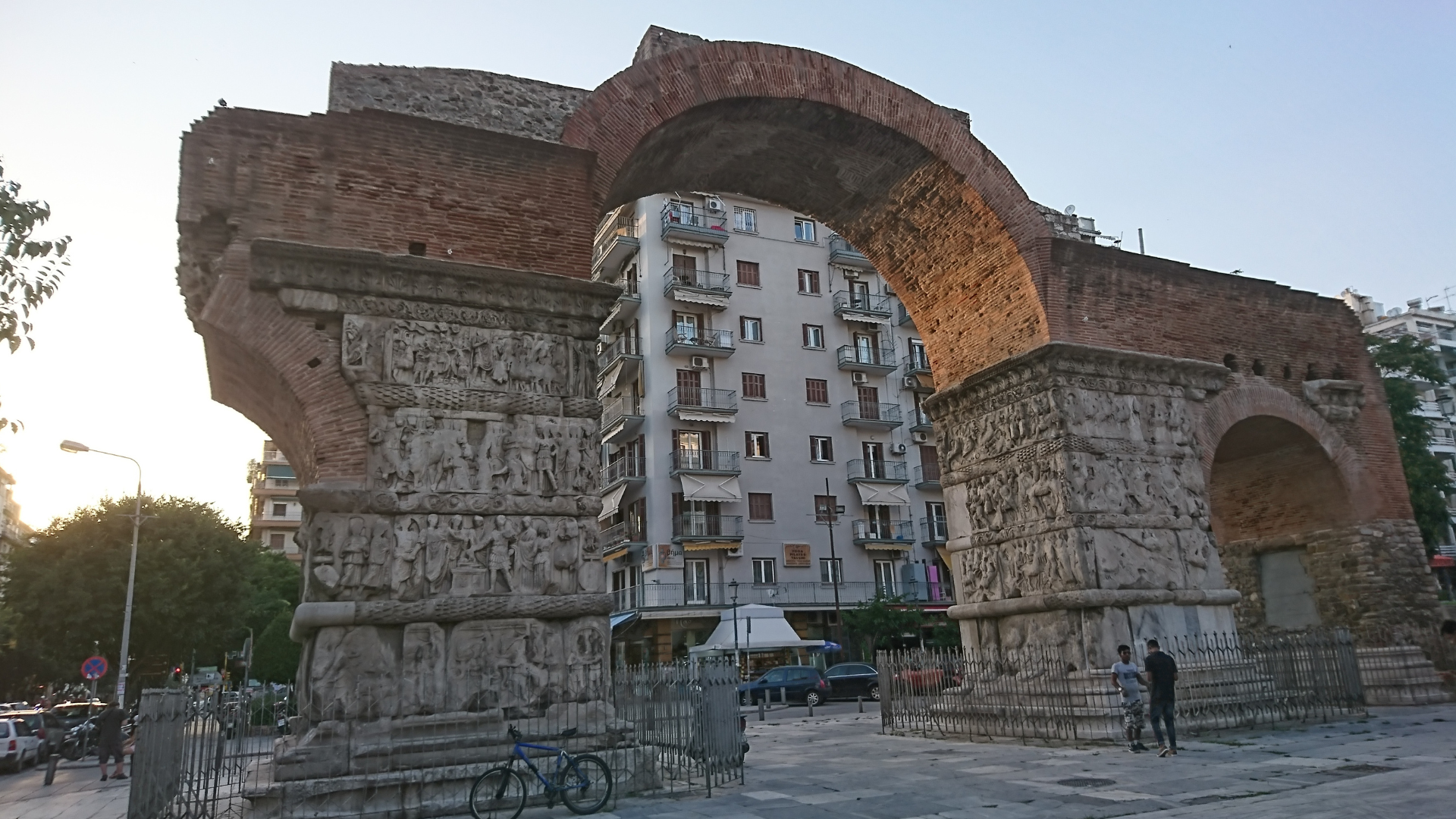
Standing at the entrance to the Palace of Galerius, I find myself at the Arch of Galerius (GR – Αψίδα του Γαλερίου), or as it's more colloquially known, Kamara (GR – Καμάρα). It once formed part of the ceremonial gateway leading into the vast courtyard of the Palace of Galerius.
The structure was commissioned between 298 and 305 to commemorate Galerius’s decisive victory over the Sassanid Persians during the Battle of Satala. Originally, it was an eight pillared structure forming a triple archway, a grand architectural statement of Roman dominance.
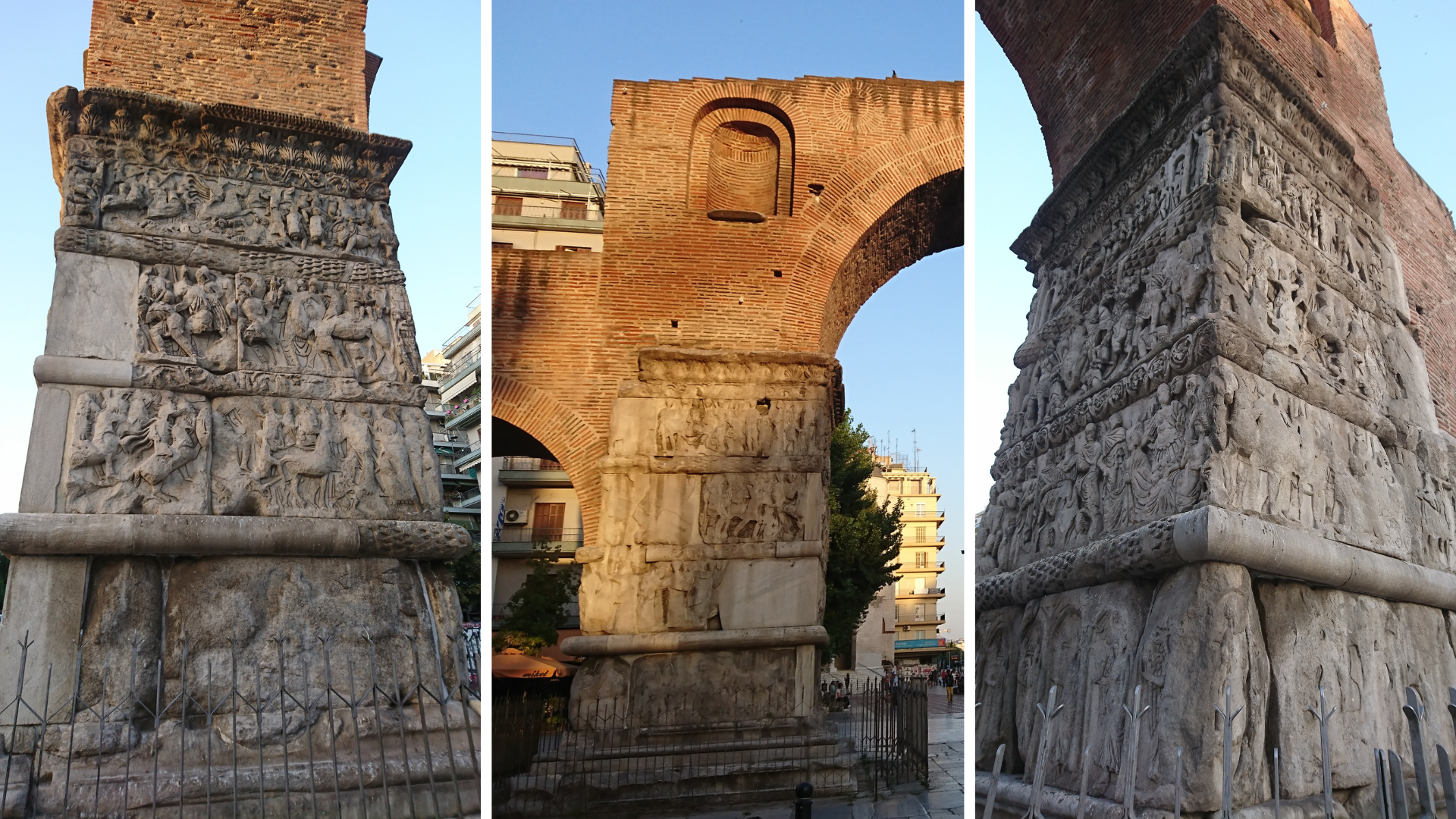
Today, only three of the original eight pillars remain, with the two principal piers supporting the central archway still standing at an imposing 12.5 metres tall. These pillars retain their intricately carved marble reliefs, not merely decorative, but narrative in nature, illustrating scenes of imperial power and conquest.
These richly detailed reliefs show a series of scenes from Galerius’s Persian campaign. You’ll find Roman soldiers charging into battle, Galerius on horseback in a victorious stance, and the submission of Persian rulers, all expressed in a deeply emotive classical style. The carvings don’t just glorify Galerius as a military leader; they serve as persuasive propaganda, visually reinforcing Roman supremacy and Galerius’ divine right of rule. Though time has weathered the marble, much of the original storytelling remains visible, capturing a vivid historical account when Thessaloniki stood at the heart of imperial ambition.
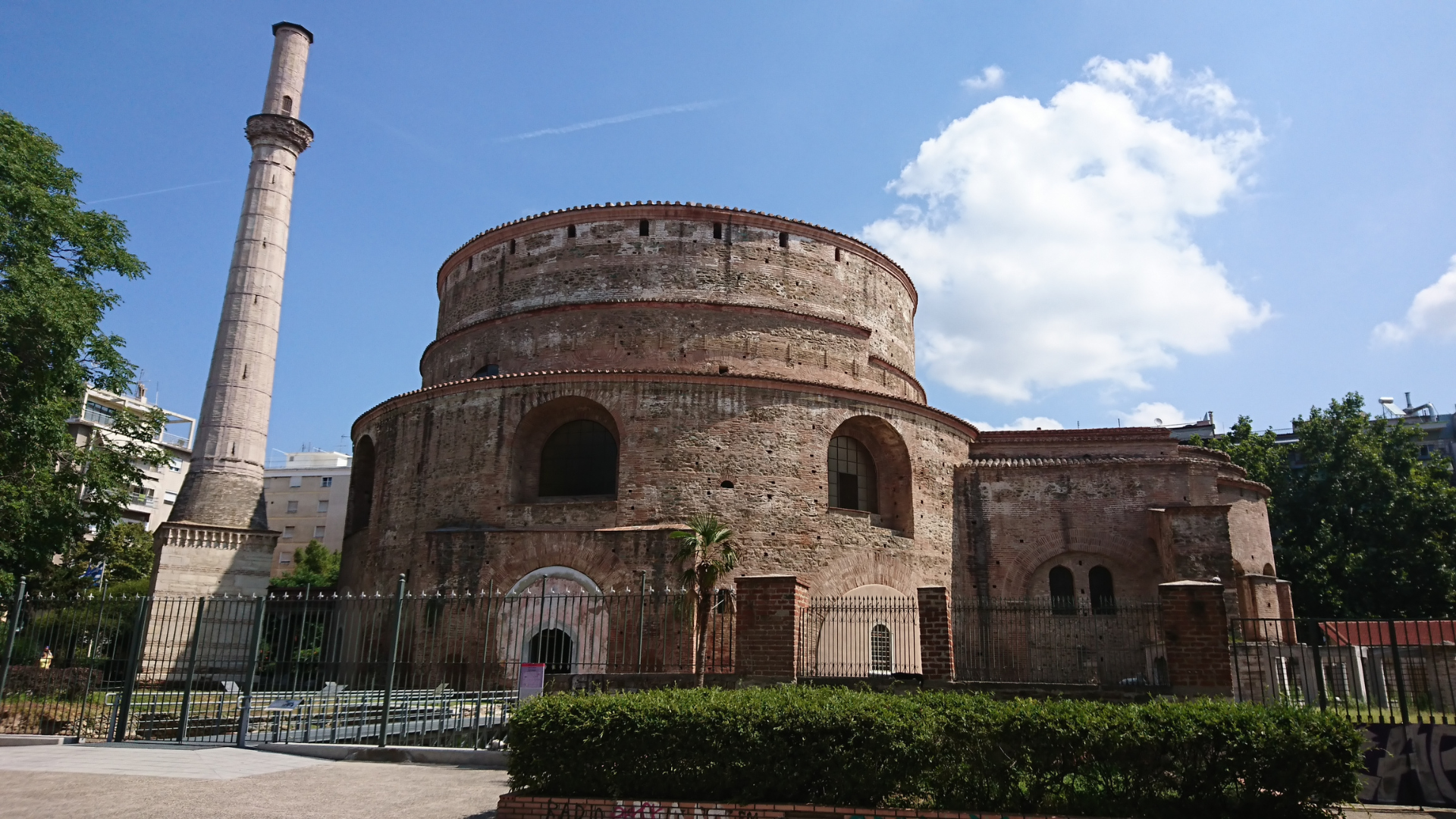
From the Arch of Galerius, it’s a stone’s throw to the Rotunda of Galerius, also known as the Rotunda of Saint George. And, at the time of my visit, the Rotunda was closed for the day, so I settled into a nearby café for a bite to eat. It was a quiet, relaxed part of the afternoon, and one of the staff, with the kind of easy warmth that often makes travel so memorable, noticed I was alone and unhurried, came over and decided to keep me company with a chat. We spoke about the area, the buildings, and how Thessaloniki feels like a city that holds its past quite close to the present. What began as a casual exchange turned into a wonderful local history lesson.
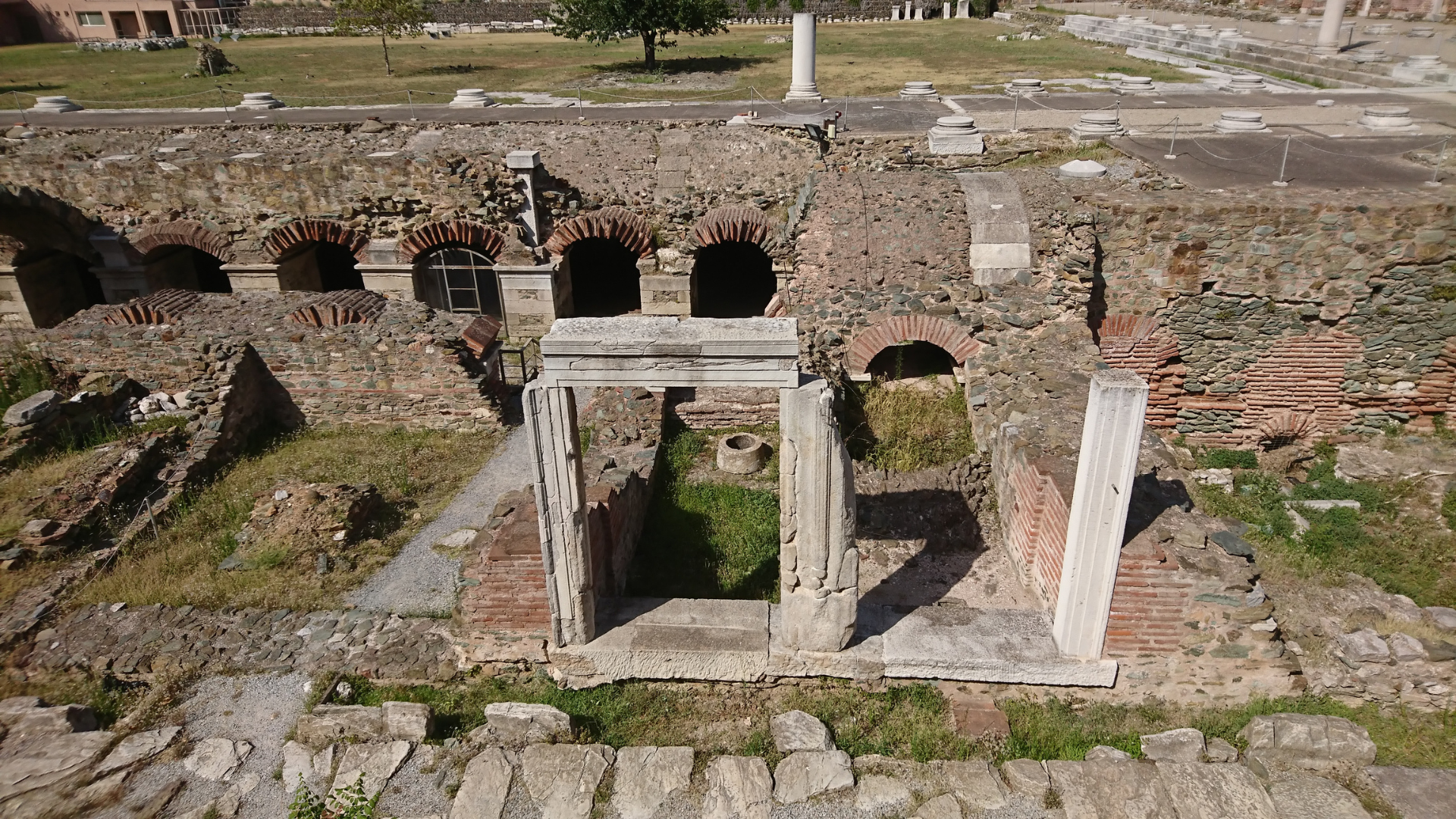
By early evening, I wandered off to catch the bus back to where I was staying, with plans to return the next day to explore the interior of the Rotunda. On the way, I passed the 2nd century ruins of the Roman Agora, a remarkable slice of Thessaloniki’s ancient urban life.
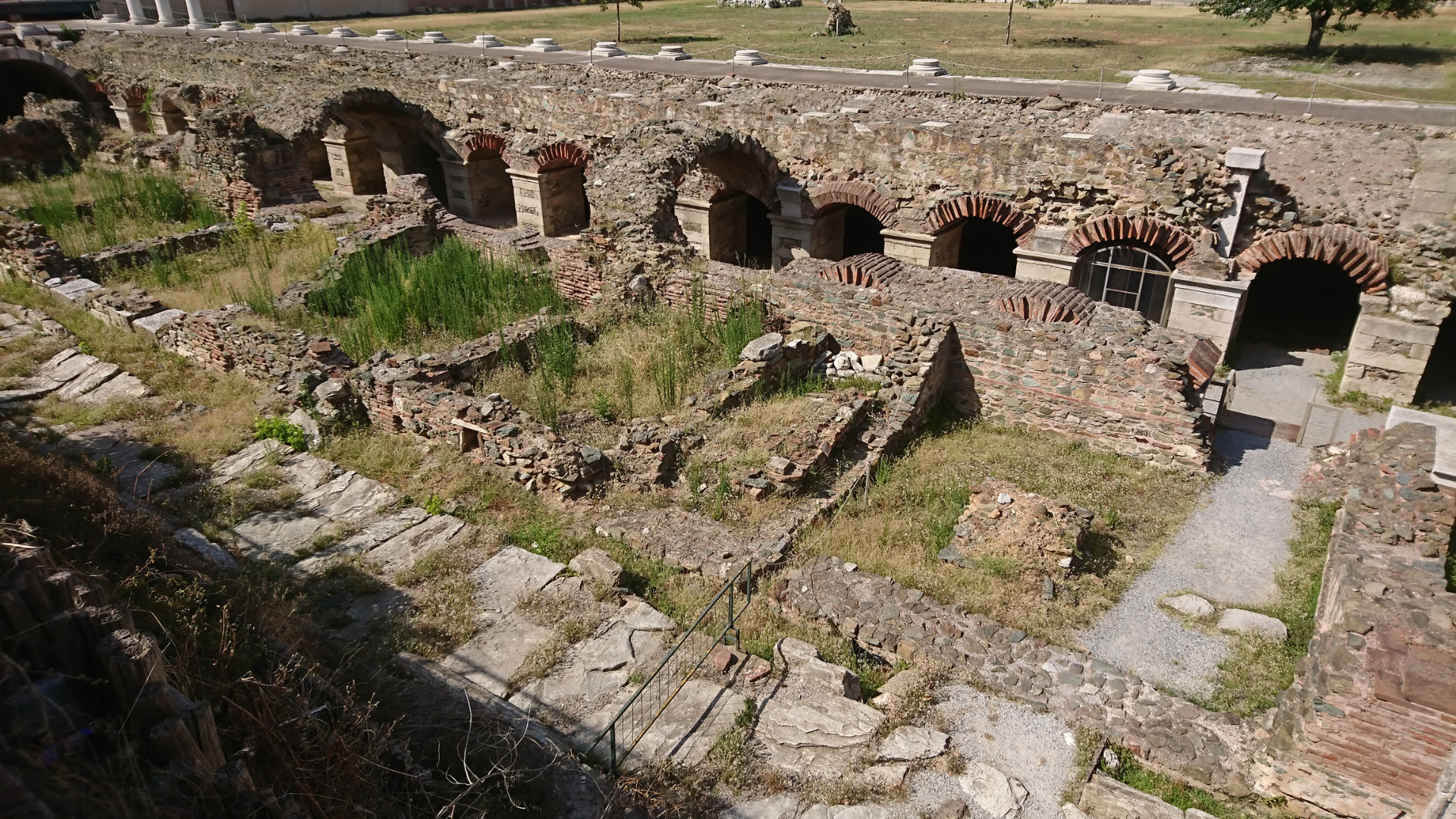
Built in phases from the late 1st to early 2nd century, the Roman Agora served as the civic and commercial heart of Roman Thessaloniki for several centuries. This two level complex was lined with shops and stalls where goods from across the empire were bought and sold, everything from amphorae of olive oil and wine to fine fabrics and imported wares.
At its centre stood a large open square, framed by administrative buildings and shaded colonnades where merchants, and officials mingled. Among its key features was the Odeion (also spelt as Odeon), a roofed theatre used for gatherings and performances, along with underground passageways believed to have housed civic offices.
Interestingly, Thessaloniki had begun minting its own coins much earlier, with the establishment of a local Mint as far back as 187 BC, well before the Roman Agora’s construction. Though it may not have operated directly from this site in its earliest days, the later inclusion of minting facilities within or near the Agora reflected the city’s long standing administrative significance and economic independence under Roman rule.
Archaeologists have also uncovered evidence of public and private baths, a taverna, and even what’s believed to be a hetaera’s house, a residence linked to an educated courtesan. In classical Greek society, hetaerae were women of learning and conversation, often companions to elite men, with social influence well beyond that of most women of their time.
Nearby, remains of a temple and early Christian tombs from the 4th to 7th centuries reveal how the area evolved through successive eras of worship and cultural change.
The Agora remained a central hub well into the Byzantine period, before its gradual decline. Natural disasters, the shifting of trade routes, and later Ottoman construction covering or repurposing parts of the site. As Thessaloniki’s layout evolved, the Roman Agora was eventually abandoned, now lying beneath the city’s ever changing foundations.
Today, the excavated remains of the Roman Agora lie quietly below street level, offering a quiet glimpse into daily life in ancient Thessalonica, a city that once thrived with the chatter of markets, civic announcements, and the occasional political drama unfolding under the colonnades. To the east, the Agora Archaeological Museum stands as a modern day guardian of this history, housing artefacts and insights that bring depth and context to the ruins below. Not to be confused with the larger Archaeological Museum of Thessaloniki, this smaller museum is dedicated specifically to the finds and story of the Roman Agora itself.
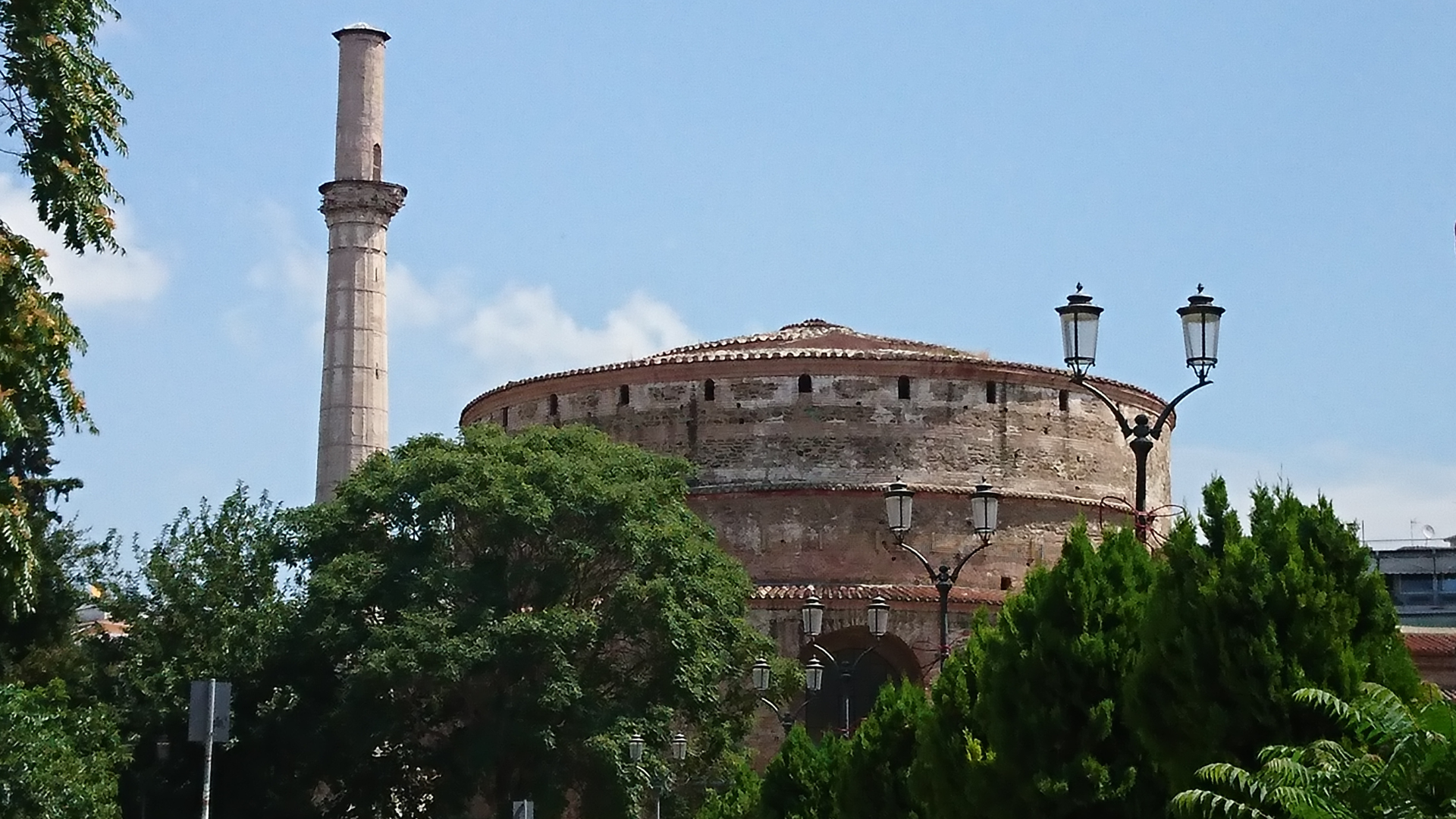
The following morning, I joined the early stream of city bound commuters, catching the bus back into the city centre to continue from where I’d left off the day before. Stopping by the same café, to enjoy an iced tea, before making my way to the Rotunda. This time, stepping inside to explore a structure that doesn’t command attention through grandeur, but rather through its calm and enduring presence.
During the reign of Emperor Galerius, the current Rotunda, or the Rotunda of Galerius, as it was originally known, was constructed around 306. This imposing circular structure, with its 30 metre high dome, was a marvel of Roman engineering and is thought to have been intended as Galerius’s mausoleum, although he was buried elsewhere.
Architecturally, the Rotunda is considered one of the earliest surviving examples of a domed building in the Roman Empire, and it likely served as an influential precedent for later sacred domed structures, most notably the Hagia Sophia in Constantinople (modern day Istanbul). Constructed under Emperor Justinian I, the Hagia Sophia was completed in 537, more than two centuries after the Rotunda, while the Pantheon in Rome, with its monumental dome, was completed around 126 CE during the reign of Emperor Hadrian. Thessaloniki’s Rotunda stands firmly within this architectural lineage, as a vital link between Roman innovation and the sacred spaces that went on to define early Byzantine and Christian architecture.
The Rotunda, known today as the Church of the Rotunda or Agios Georgios, stands on a site that is believed to have once held a 3rd century BC temple, dedicated to Zeus, the King of the Gods in Greek mythology.
Some years after its construction, and due to its initial lack of use, the Rotunda was repurposed as a Christian church and baptistery under Constantine I. Centuries later, between 1524 and 1590, it served as Thessaloniki’s cathedral church, until the city fell under Ottoman rule, when the Rotunda was converted into a mosque. Renamed the Mosque of Suleyman Hortaji, with a minaret added, that still stands today as a striking visual reminder of this chapter in the building’s history.
When Greek forces recaptured the city during the Balkan Wars in 1912, the Rotunda was reconsecrated as a church once more. However, the minaret was left intact, a respectful nod to the layers of history this structure has witnessed.
Today, the Rotunda operates as a museum under the oversight of the Department of Byzantine Antiquities. In 1988, it was recognised as a UNESCO World Heritage site, and stepping inside, it’s easy to see why.
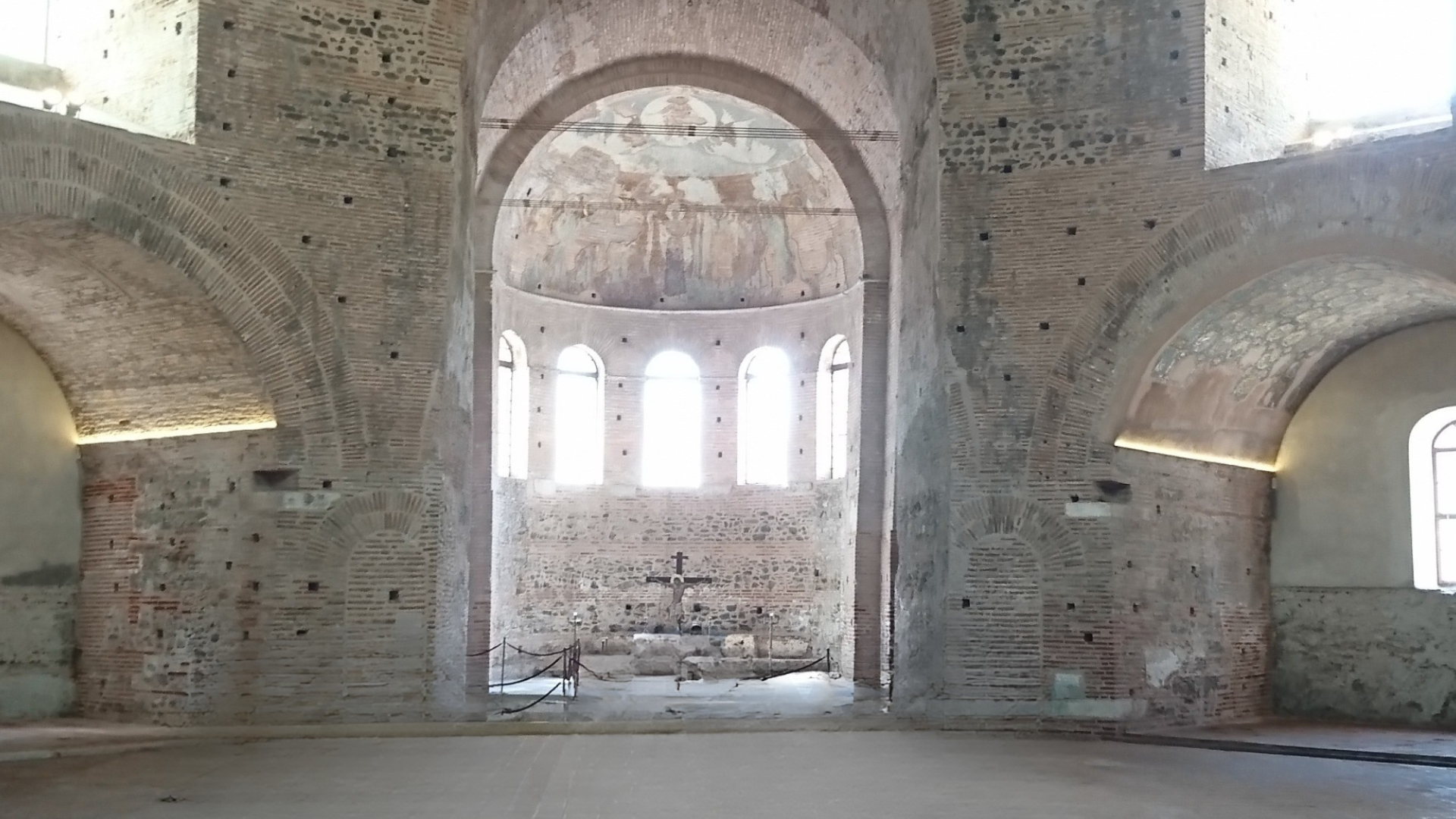
The interior, with its worn frescoes and high arches, offers a quiet grandeur that surpasses centuries of change.
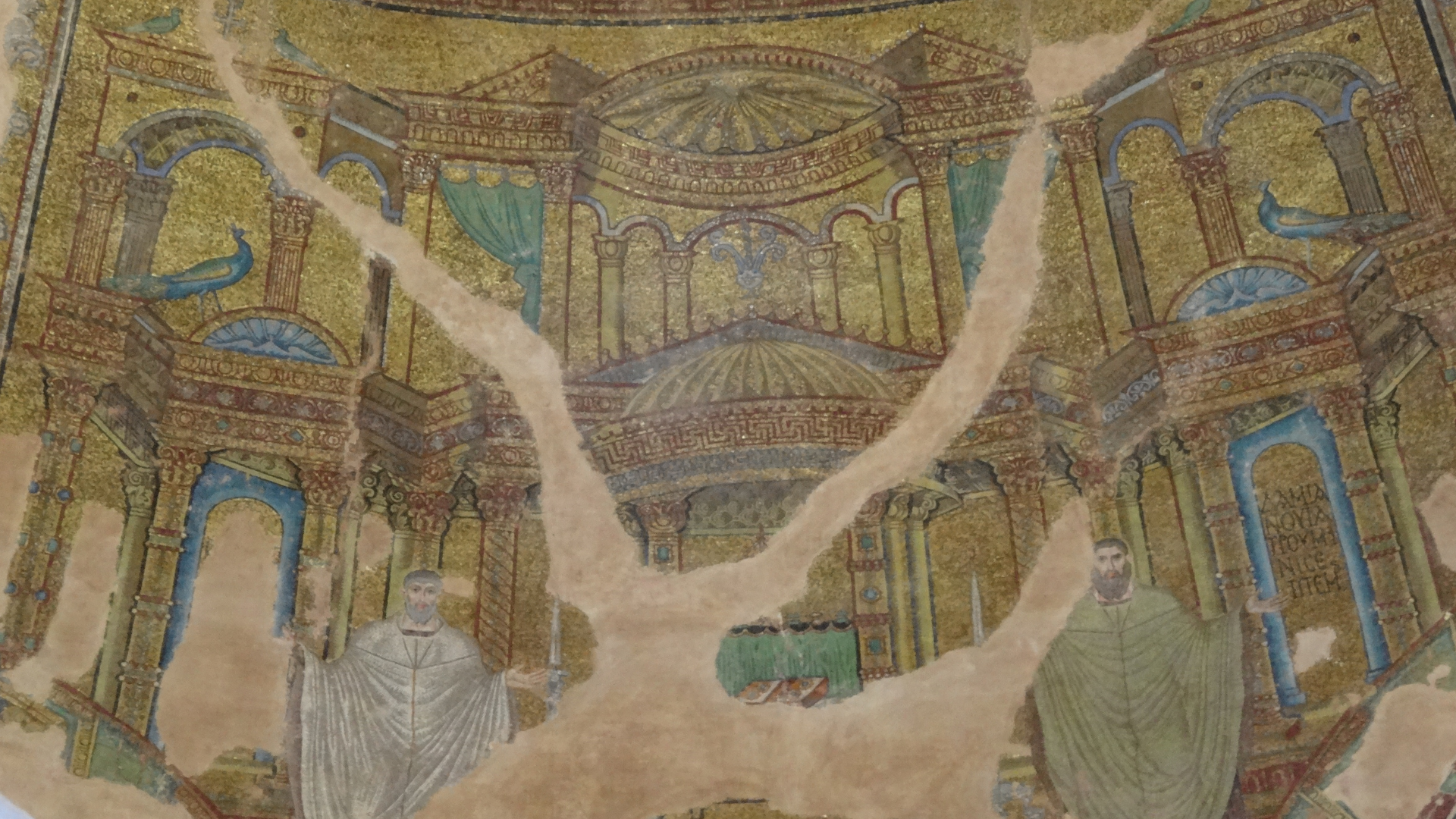
In the dome and nave, fragments of early Christian mosaics shimmer against gold backgrounds, their intricate details include peacocks and architectural motifs, alongside two cloaked human figures who seem to silently watch over the space. Faded yet still full of presence, they offer a timeless connection to those who once prayed, passed through, or found solace here.
Grateful that I made the time to return to the Rotunda and step inside. Its atmosphere felt different when you're within, more quiet, more profound. The mosaics that remain inside, though timeworn, are incredibly detailed. I couldn’t help but be drawn to the two cloaked human figures still visible in the upper layers, witnesses to history in gold and stone, caught in a time that spans centuries.
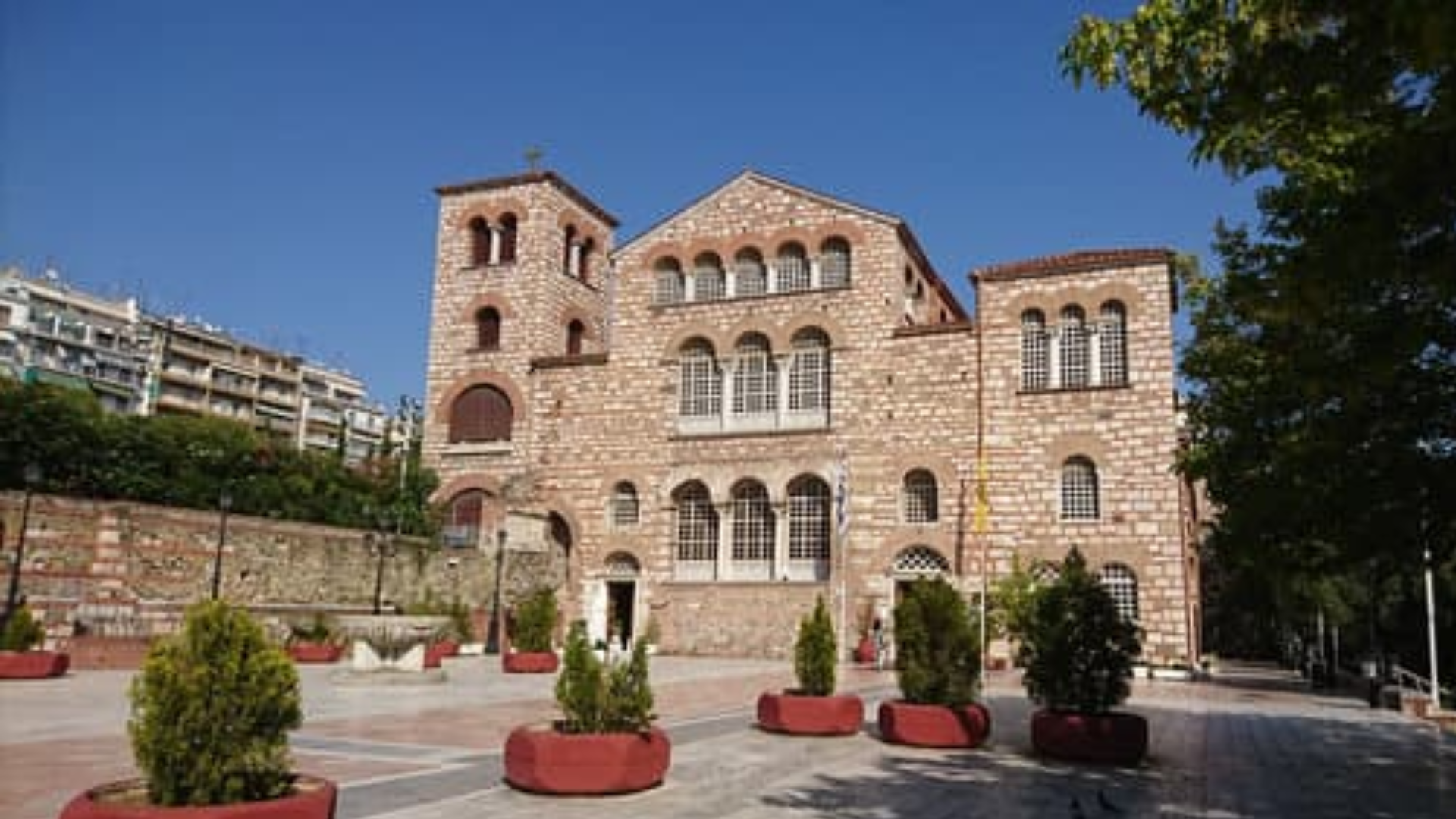
From the Rotunda, it’s only a short ten minute walk to another important site in Thessaloniki, the Church of Saint Demetrios. Dedicated to the city’s patron saint, this early Christian and Byzantine church is also listed as a UNESCO World Heritage site.
The current structure stands on the grounds of the original church founded in 313, with layer upon layer of history shaped by fire, pillage, and faith. During the Byzantine period, it suffered multiple attacks, including the theft of Saint Demetrios’s relics in 904, and later discovered in Italy and finally returned in 1978.
In the 13th century, whilst undergoing renovations the chapel of Agios Efthimios was added on the southern side of the church. This addition brought prestige to the city, becoming the second largest church in the Byzantine Empire at the time. Like many sacred places in Greece, this church changed roles under Ottoman rule, and was transformed into the Casimir Mosque.
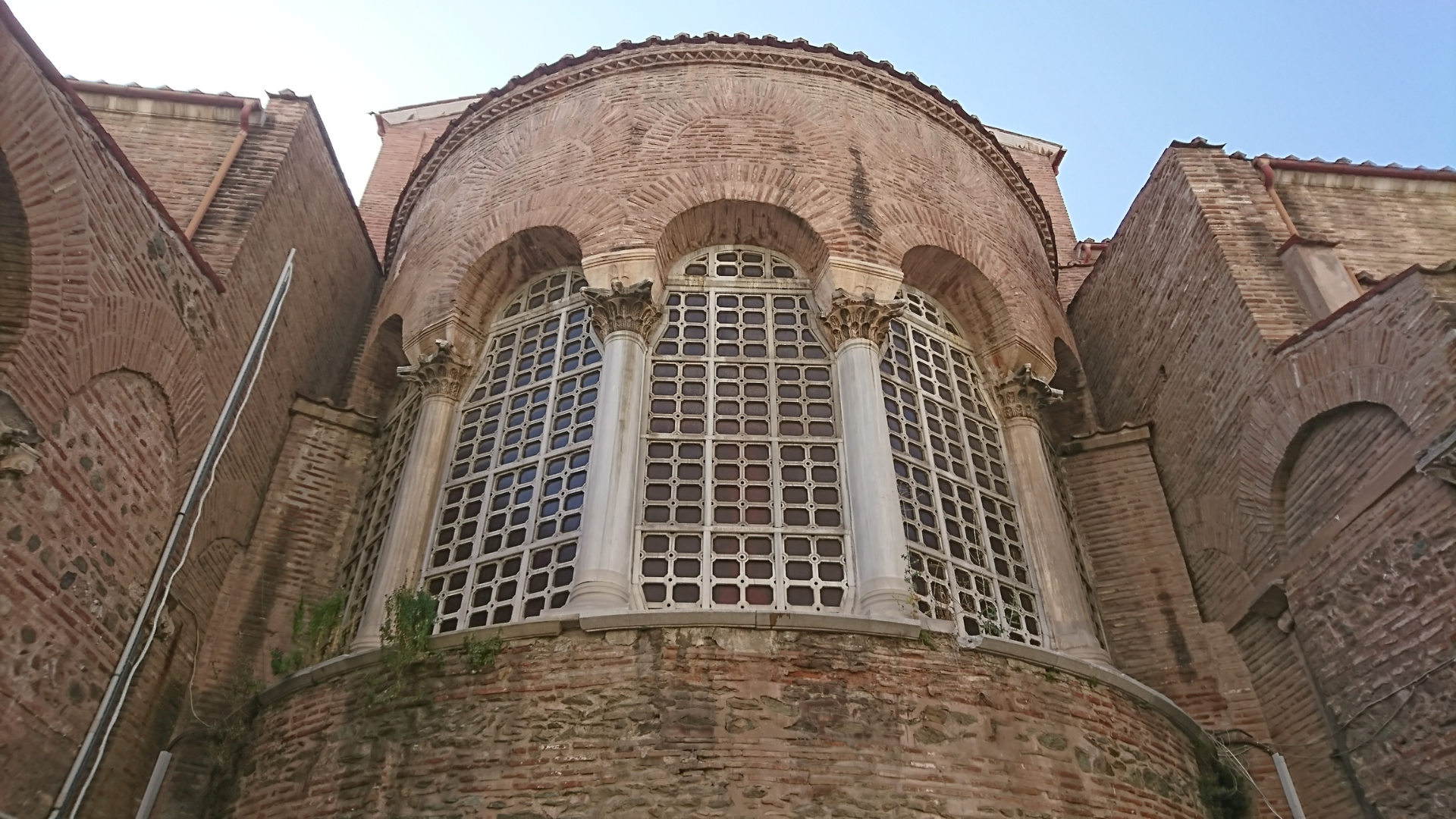
Following the devastating city fire in 1917, the church was completely restored by 1948, and although modern elements were introduced, much of the Byzantine character was thoughtfully preserved.
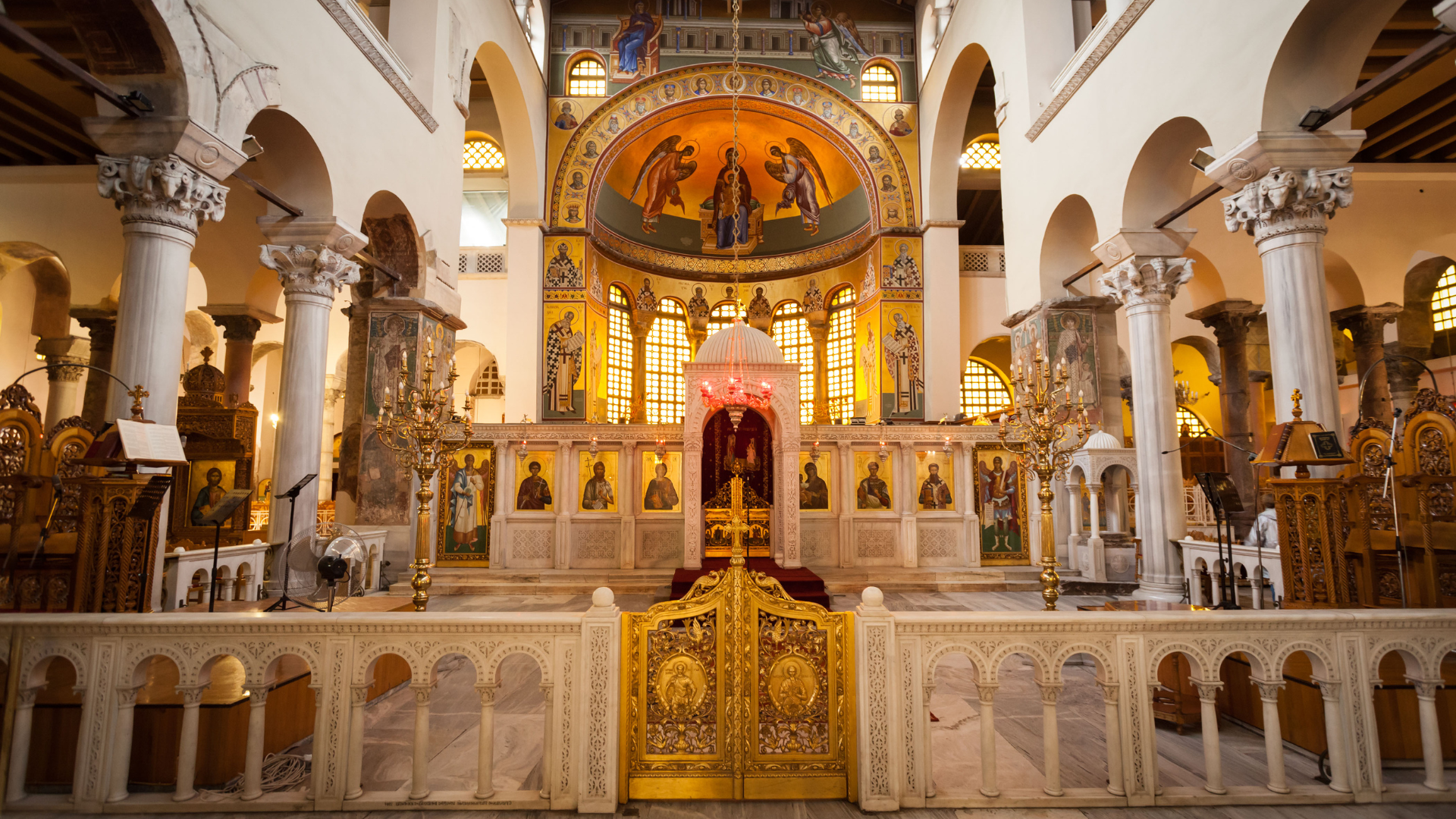
Inside, the church holds a deeply calming energy. Light pours through narrow windows and catches the shimmer of a silver-laid shrine where the Saint’s revered relics now rest once more. There are also relics of another kind, stone fragments, sculpted columns, and remnants of archways that speak to the many lives this building has lived.
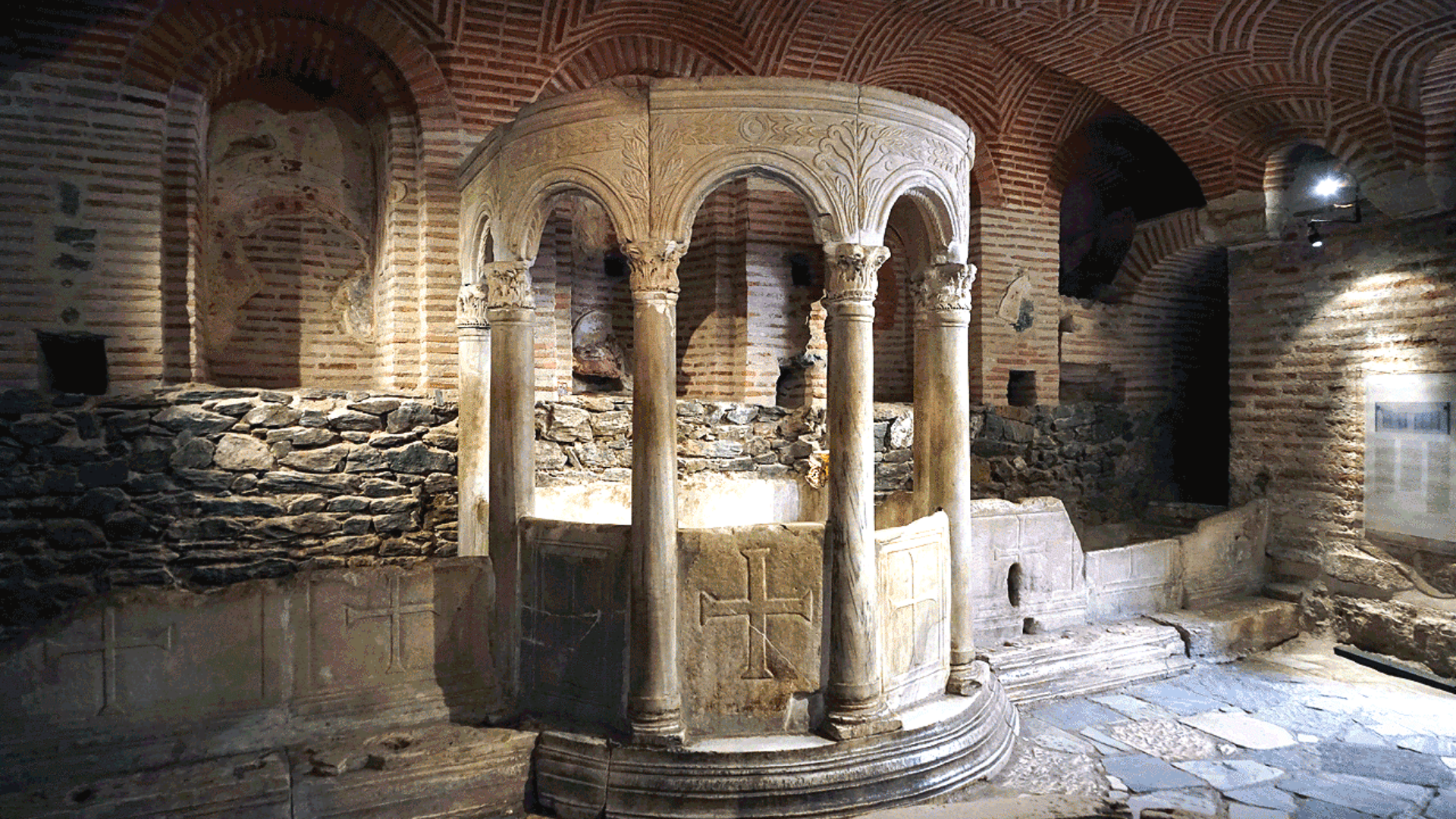
Whilst below the floor, a chamber houses the catacombs, an evocative space steeped in reverence and quiet antiquity. These underground chambers once served as burial grounds for early Christians and are believed, by tradition, to have safeguarded the relics of Saint Demetrius himself.
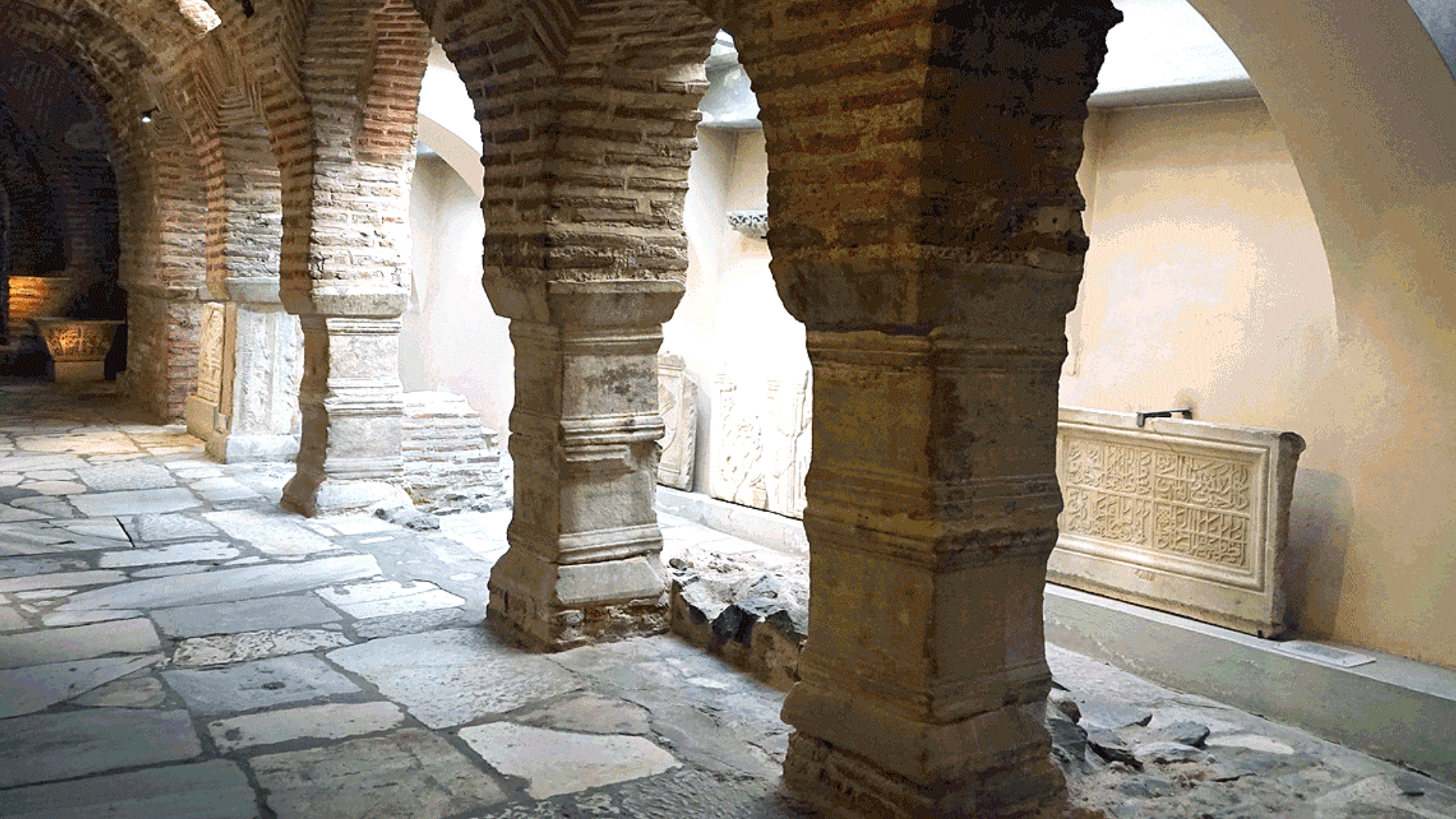
The walls still bear faint traces of ancient inscriptions, offering a glimpse into early Christian life, faith, and symbolism. Wandering the narrow, stone corridors, you encounter more than just history; there’s a quiet solemnity here that lingers, as though the past continues to breathe softly through the walls.
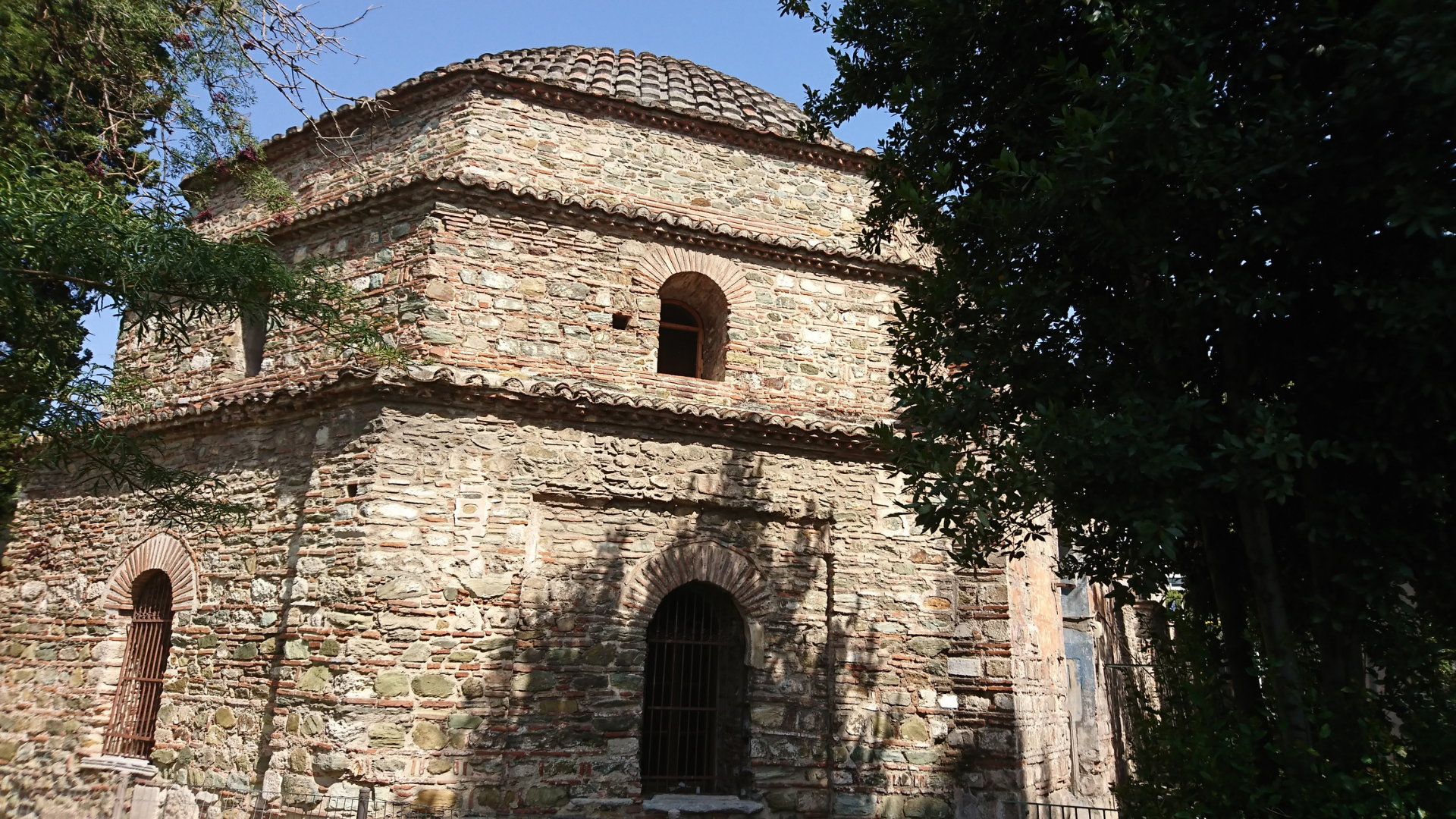
From the Church of Saint Demetrios, it's a short walk to the Bey Hamam. And, is the oldest of the Ottoman baths in Thessaloniki, built by Murad II in 1444 following the Ottoman occupation of the city in 1430. Several similar hamams are dotted throughout the city, highlighting not only the basic importance placed on hygiene and wellbeing but also the symbolic spiritual act of ritual cleansing and purification. For women in particular, these spaces also served as important social hubs.
As with all traditional Turkish hamams, the bathing areas are separated by gender, with distinct entrances on either side of the building. The Bey Hamam continued being used until the mid 1960s under the name Paradeisos (Paradise) Baths. Today, the site is only open upon request and on occasion is used for cultural events, art exhibitions, and temporary displays.
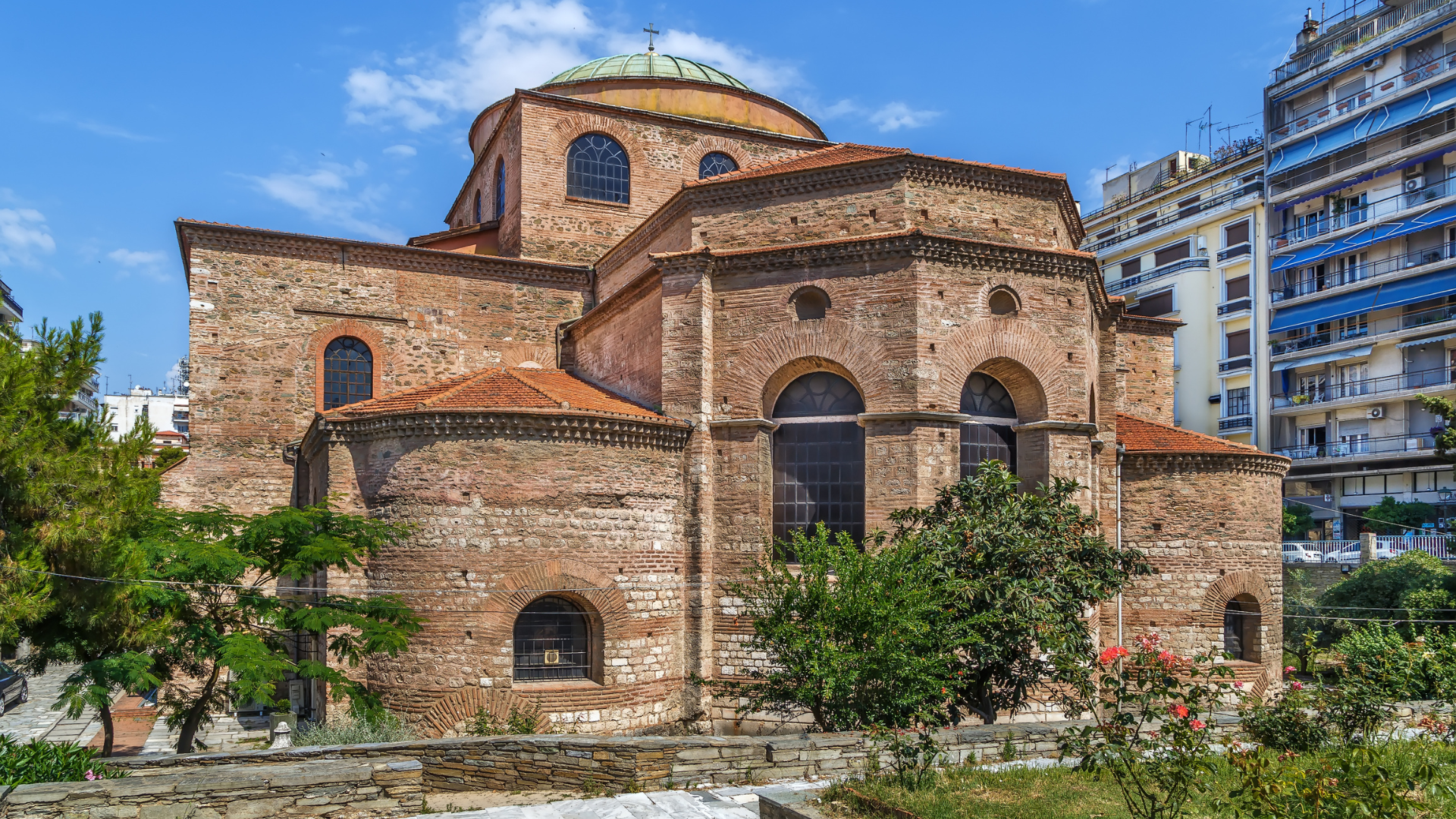
By now I was needing lunch, so I made my way to the Nea Paralia, also known as the Seaside Promenade. Along the way, passing Agia Sophia, just a few minutes from the Bey Hamam.
Agia Sophia, or the Church of the Holy Wisdom, is one of Thessaloniki’s most important early Christian churches. Inspired by its namesake in Constantinople (now Istanbul), it was built in the 8th century and has served as both a Byzantine church and an Ottoman Mosque.
Whilst I didn’t go inside, I learnt later that some remarkable 11th century frescoes, and mosaics within the dome dating from the 8th - 12th century have survived, to tell the stories of its layered past. Despite earthquakes and centuries of occupation, it stands resilient, as an emblem of the sacred continuity in the heart of the city.
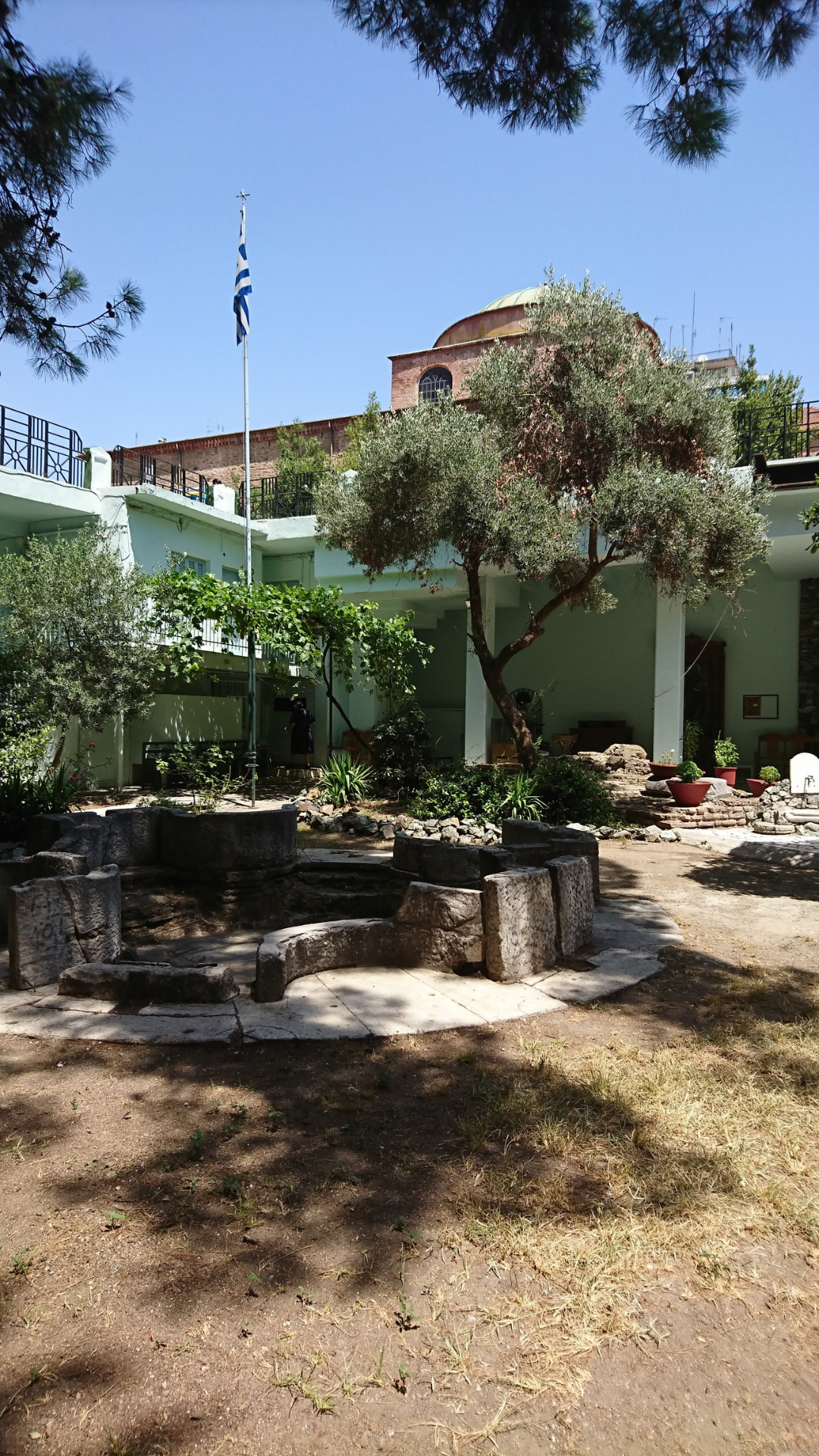
Just past Agia Sophia, I noticed a sign pointing towards the Catacombs of Agios Ioannis, that are visible from the street, just five metres below street level.
Tucked into the earth and often overlooked, these catacombs are believed to date back to the early Christian period. Associated with Saint John the Baptist, they were part of an underground chapel and water source that drew early Christians for both worship and ritual cleansing.
Their quiet presence beneath the city streets reminds us that Thessaloniki’s history isn't just something to look up at, but also something buried below, waiting to be noticed.
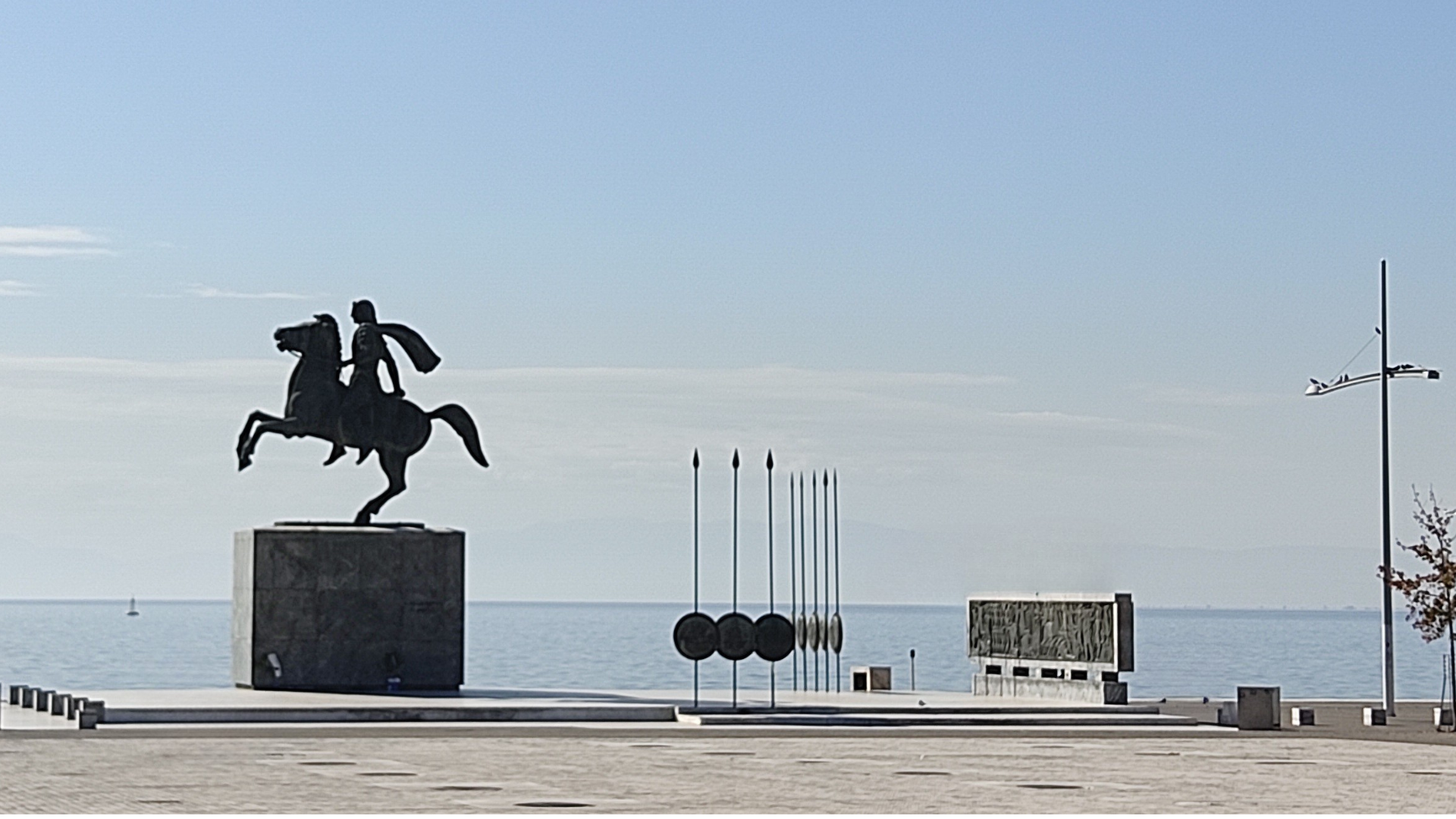
Walking along the New Paralia, Thessaloniki’s waterfront promenade, took me past fountains and bold sculptures. At the centre of this scene stands none other than Greece’s most iconic hero: Alexander the Great, on his loyal horse Bucephalus, gazing proudly out to sea.
The statue, was unveiled in 1973 and captures Alexander in a moment of commanding presence with spear in hand, the wind in his cloak, as though ready to ride into another legend. While my photo doesn’t show a close up, the base of the monument is especially captivating. A bronze frieze encircles it, showing key moments from Alexander’s military campaigns, from dramatic battle scenes to ceremonial triumphs. It's a sculptural storybook carved in metal, a fitting tribute to the young Macedonian king who reshaped history before the age of 33.
From the statue of Alexander the Great, I continued with a short walk along the waterfront, passing the White Tower, Thessaloniki’s most recognisable landmark, which also houses a museum. I didn’t stop by here just yet, as I planned to return later for a proper visit.
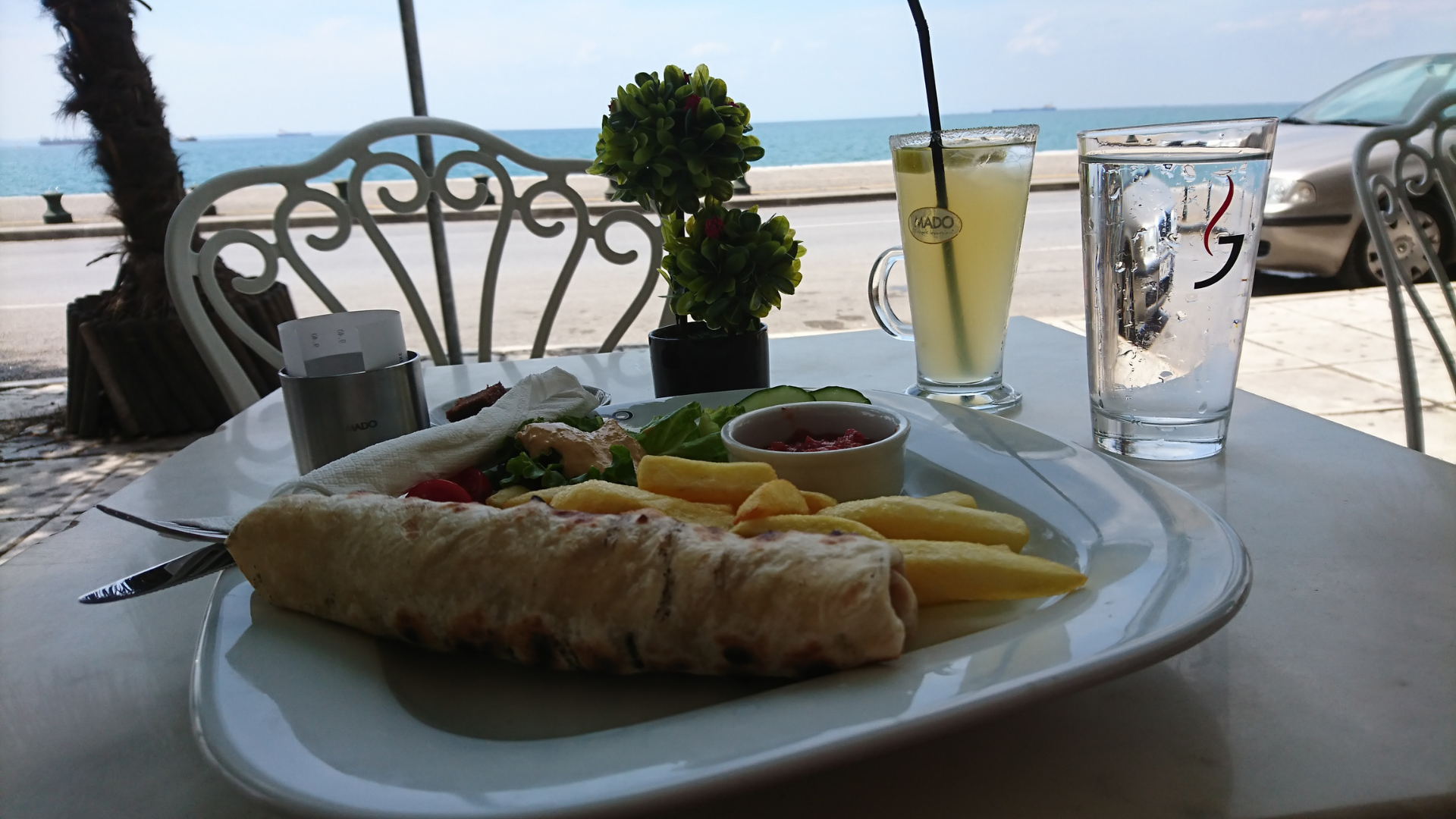
Instead, I followed the start of Nikis Avenue, a lively stretch running to the ferry terminal, lined with cafés, bars, and shops. Stopping at Balkonaki for lunch, taking in the views across the Thermaic Gulf. The food was good, the sea air fresh, and the city’s pace unfolding all around.
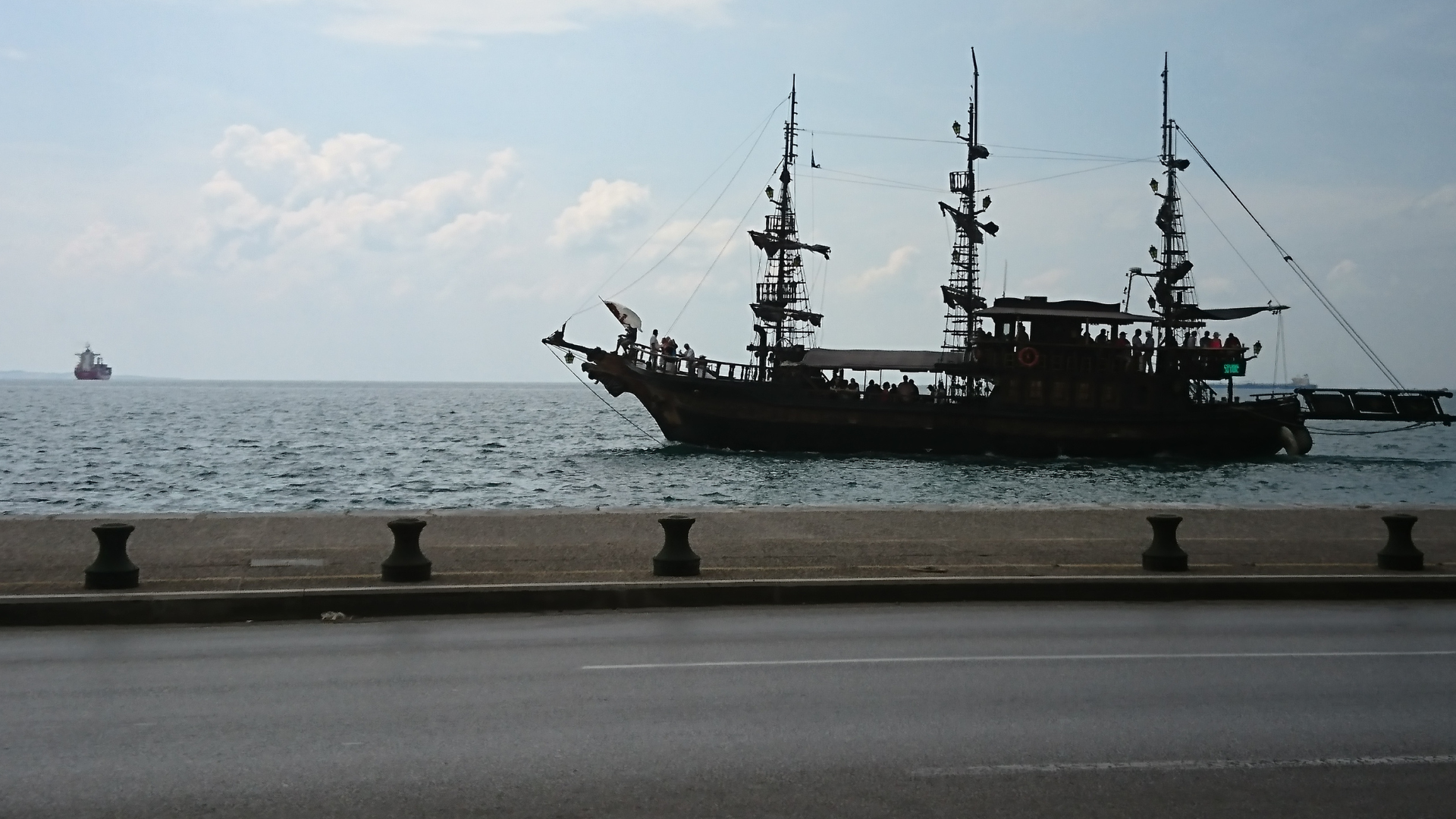
Following lunch, I continued my walk along the waterfront, eventually making my way to the Louloudadika district.
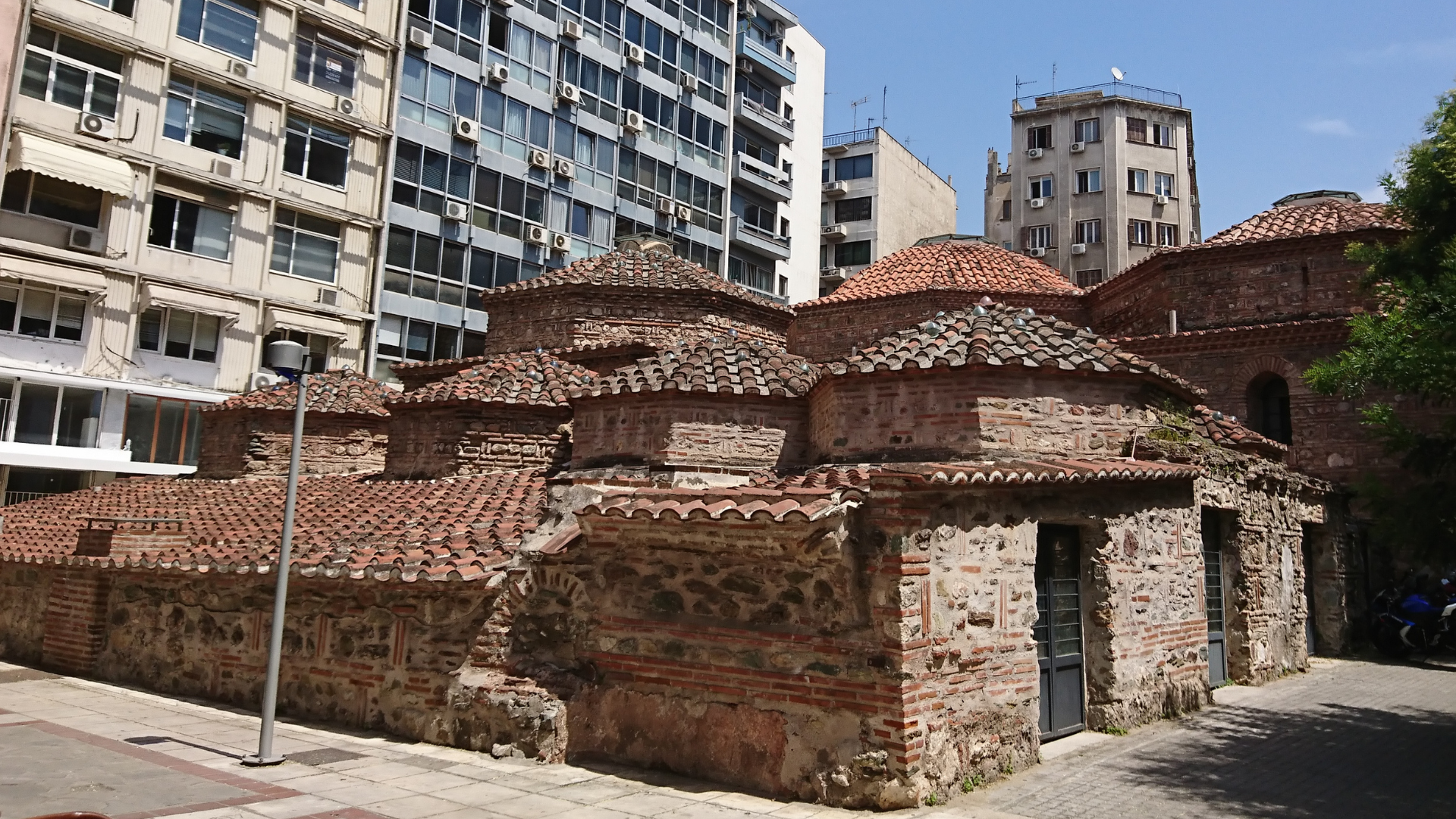
It’s here, quietly nestled within the daily life of modern Thessaloniki, that I came across the Yahudi Hamam, also known as the Bath of the Jews.
Built in the 16th century, this Ottoman era bathhouse once served the city’s vibrant Sephardic Jewish community, who had settled in Thessaloniki after their expulsion from Spain in 1492. It’s the kind of place that doesn’t draw attention to itself, as there is no signage, but certainly worth finding. You feel history close in.
The Yahudi Hamam once stood at the heart of the city’s bazaar district, a true crossroads of trade, language, and culture. Its twin domes, though weathered by time, still stand with grace, echoing the layered coexistence that defined Thessaloniki for centuries: Muslim, Christian, and Jewish lives overlapping, entwining, shaping the city together.
Though no longer a functioning bathhouse, the building remains, its name a quiet tribute to a community that once was. Walking past it, I wasn’t just admiring architecture, I was sensing a presence. A memory of belonging, of ritual, of the sacred woven into the everyday. In many ways, this modest structure reflects the soul of Thessaloniki itself: layered, resilient, and deeply human.
From here, I wound my way back through Thessaloniki’s backstreets, where the past often lingers quietly beside the present.
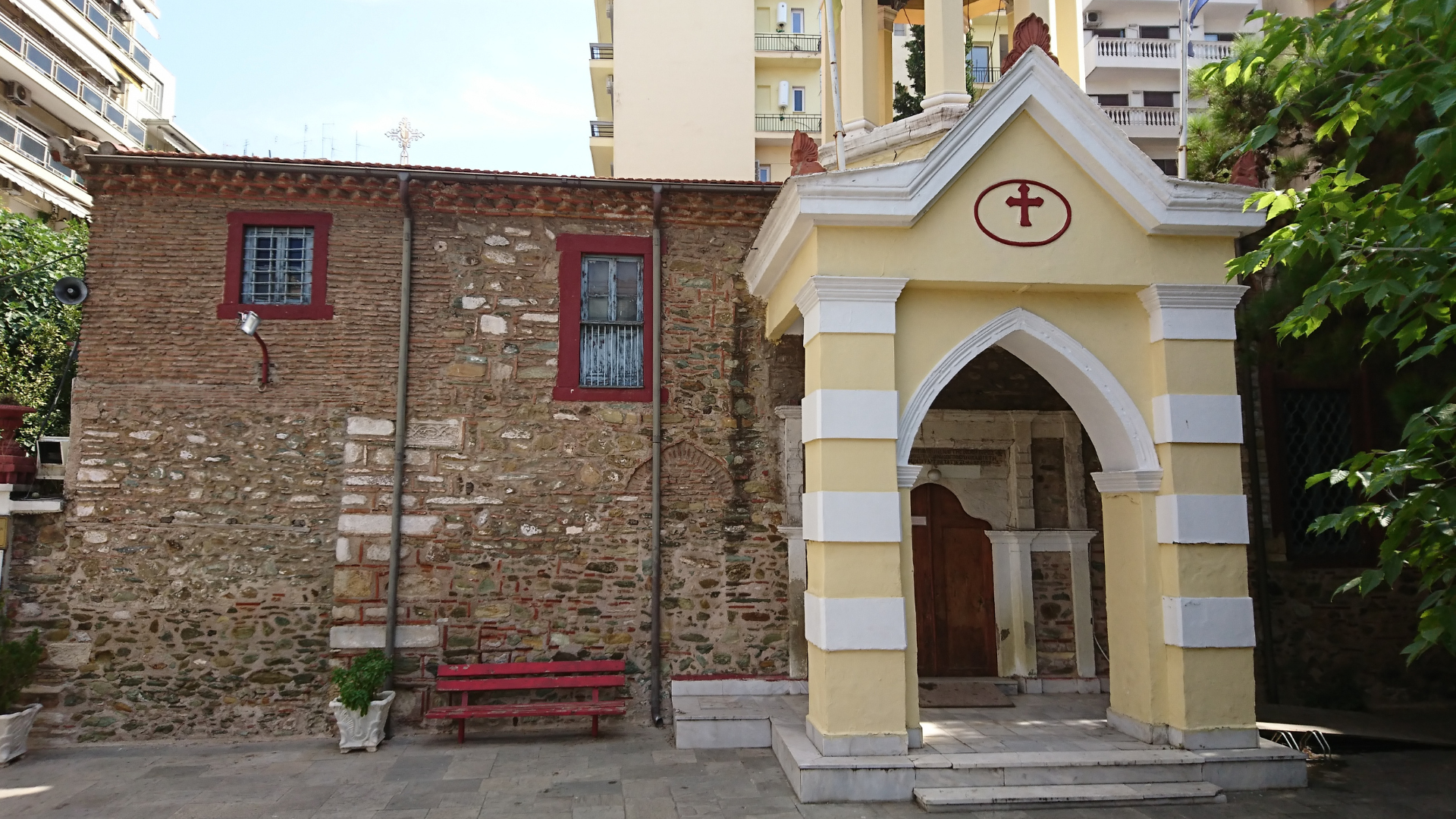
One such moment was passing by the Nea Panagia Church, Church of the Dormition of the Mother of God, a quaint 18th century Orthodox church dedicated to the Virgin Mary. The marble inscription over the south entrance shows that the building was built in 1727, on the foundations of an earlier Byzantine chapel, its simple façade and structure are tucked between modern buildings, a gentle reminder of the city's religious continuity. Once, nearby was a Byzantine monastery in honour of Panagia from the 12th century, however was destroyed by fire in 1690.
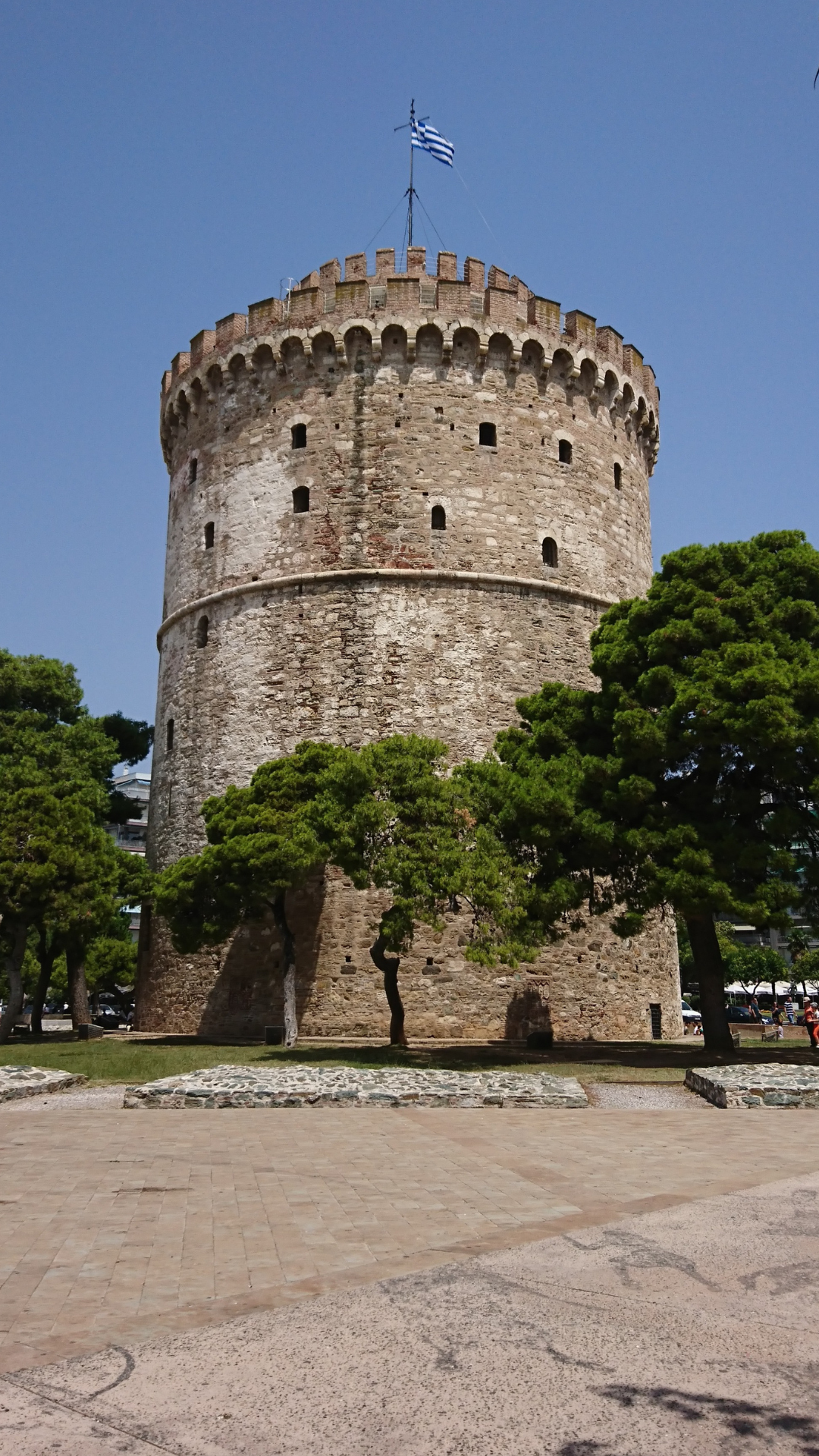
My walk led me once again toward the promenade and the unmistakable White Tower (GR - Λευκός Πύργος), a symbol of Thessaloniki’s enduring spirit.
Originally part of the Byzantine fortification walls, the tower once separated the city from its Jewish and Muslim cemeteries. Reconstructed by the Ottomans in the 15th century to strengthen harbour defences, it later became a prison, earning the ominous name Tower of Blood - GR: Kanli Kasteli.
When Greece reclaimed Thessaloniki in 1912, the tower was whitewashed, both literally and symbolically, and renamed the White Tower.
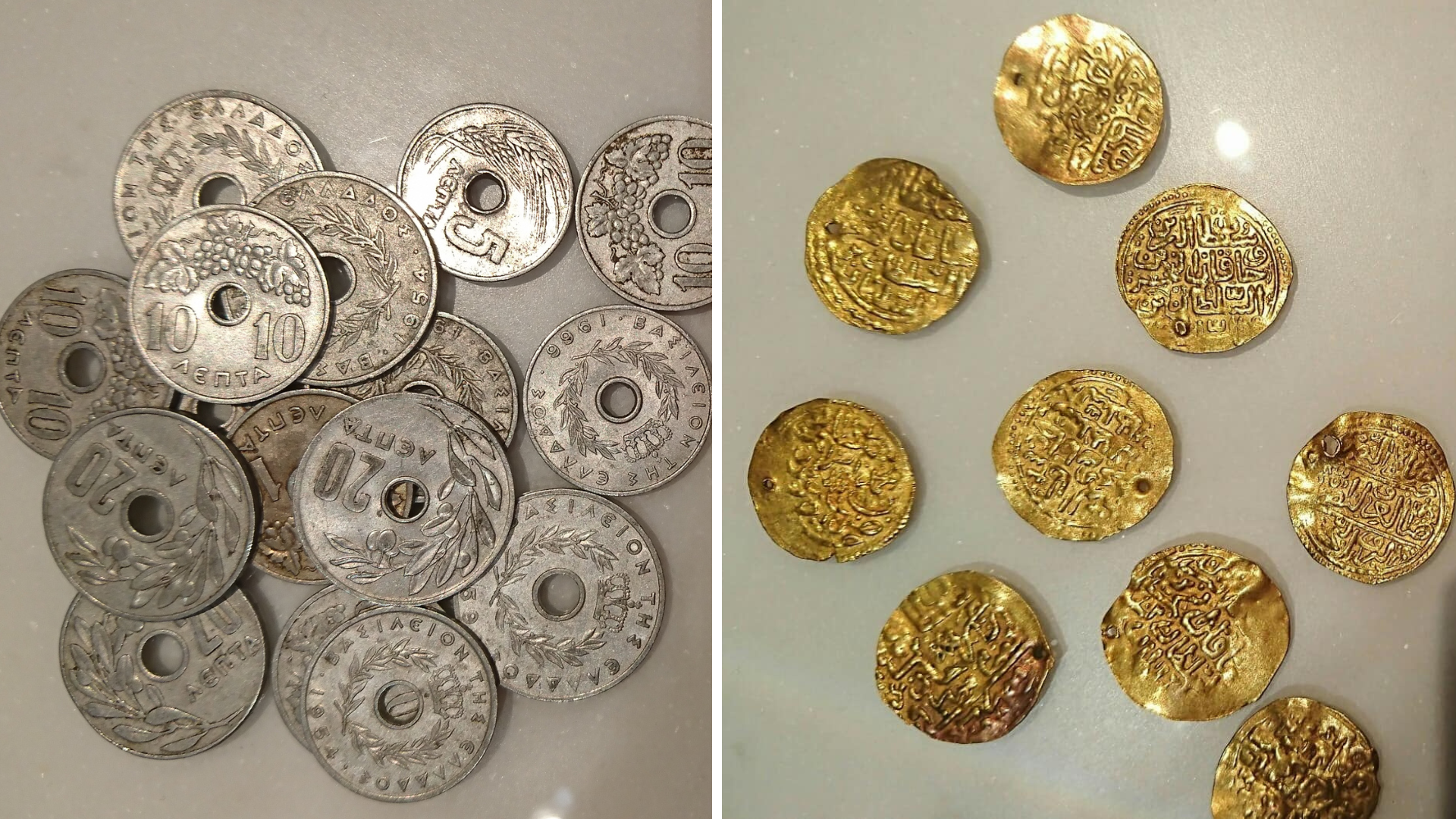
Today, the White Tower hosts the permanent exhibition on the history of Thessaloniki, spanning from its founding days through to the present. It’s well worth paying the entrance fee, not only to view original gold and silver coins, shimmering relics of the city’s rich past.
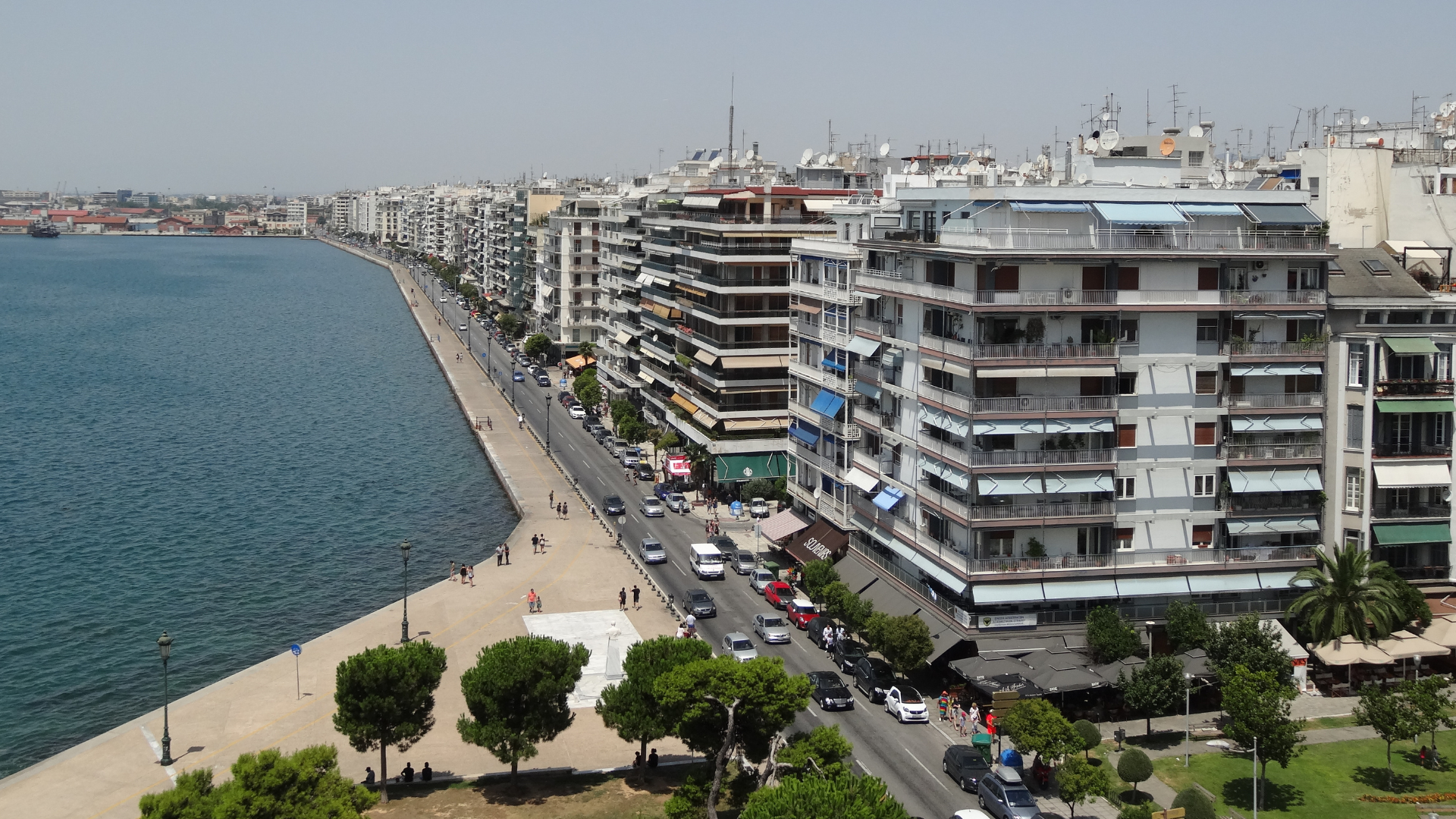
But to climb the spiralling interior stairs and take in the expansive views looking back along the promenade and out across the Thermaikos Gulf
Stepping inside this enduring landmark, there’s a quiet sense that it embodies the very soul of Thessaloniki, layered with history, weathered by change, and always looking outward, just like the city itself.
Time to catch the bus home.
It was a late start the following day, and I returned to Niki Avenue to wander around the historic neighbourhood of Ladadika, close to Aristotelous Square. This part of the city was spared from the devastating 1917 fire, and many of its colourful neoclassical buildings have since been carefully restored, now housing a lively mix of restaurants, cafés, and nightclubs.

This time, I found myself at Mado café/restaurant, enjoying a healthy late lunch followed by a very tasty dessert of profiteroles, yes, plural, and once again admiring the view out to sea and the passing boats.
Thessaloniki is home to a variety of monuments bearing witness to the city’s layered historical journey. In 1998, many of its early Christian and Byzantine monuments were collectively included on the UNESCO World Heritage list. While I didn’t manage to visit them all, notable sites including the Church of Panagia Acheiropoietos and the Latomou Monastery. I’ve listed several others above that I personally visited, each offering unique insight into Thessaloniki’s sacred architectural legacy. You’ll find these thoughtfully presented and offering reflection in the Soul Travel Companion e-booklet, created to help you connect more deeply with the atmosphere and heritage of this remarkable city.
Whilst in the city centre, take note of the many Art Nouveau style buildings and once wealthy homes, along with prominent statues and monuments, including the Holocaust Victims Monument in Freedom Plaza, down near the harbour. The monument is dedicated to the more than 46,000 Greek Jews of Thessaloniki who were deported to concentration camps during WWII. Only 4%, approx. 1,950 people, returned to their home after the war ended.
The city also boasts more than twenty museums, but two stand out for anyone wanting meaningful insight into its ancient past: the Archaeological Museum of Thessaloniki and the Museum of Byzantine Culture. As afternoon skies turned overcast and the first drops of rain began to fall, it felt like the perfect opportunity to take shelter, and inspiration, inside a museum or two.
A combined ticket, valid for three days, is available for 15 €, and includes entry to both the Archaeological Museum of Thessaloniki, ranked sixth among the top museums in Greece, and the Museum of Byzantine Culture, as well as access to the White Tower and the Rotunda of Thessaloniki. Check here for details.
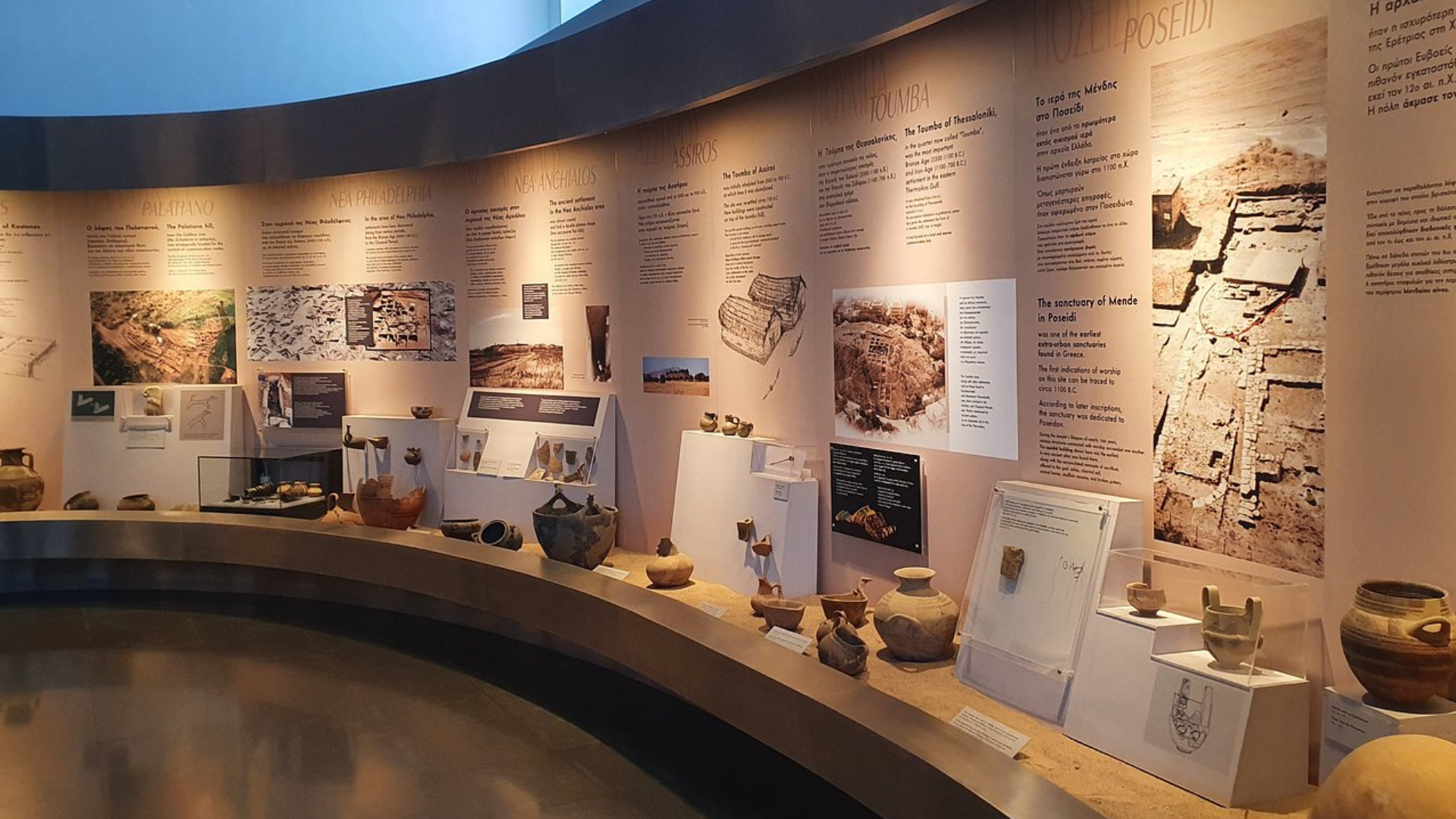
I began my museum afternoon at the Archaeological Museum of Thessaloniki, one of the most respected of its kind in Greece. I spent a couple of hours here, absorbing a rich and layered account of the region’s ancient story. The museum presents an impressive timeline, beginning with finds from the Palaeolithic Age, dating as far back as 300,000 BC, and extending through to Late Antiquity. From Neolithic tools and Bronze Age pottery to Hellenistic jewellery and Roman mosaics, it offers a vivid account of daily life, both public and private, across the ancient Macedonian kingdom and the city of Thessaloniki.
Among the many sculptures and artefacts, one particular relief caught my eye: a 4th century BC dedication to Asclepius, the revered god of healing, and his daughter Hygeia. Asclepius, whose sanctuaries once dotted the landscapes of ancient Greece and Crete, including the sacred sanctuary in Lissos, were central to the ancient world’s approach to medicine and spiritual wellbeing. His daughter, Hygeia, stood not only as a devoted supporter of her father’s healing arts but came to symbolise the prevention of illness and the preservation of health, her name, in fact, gives us the word hygiene.
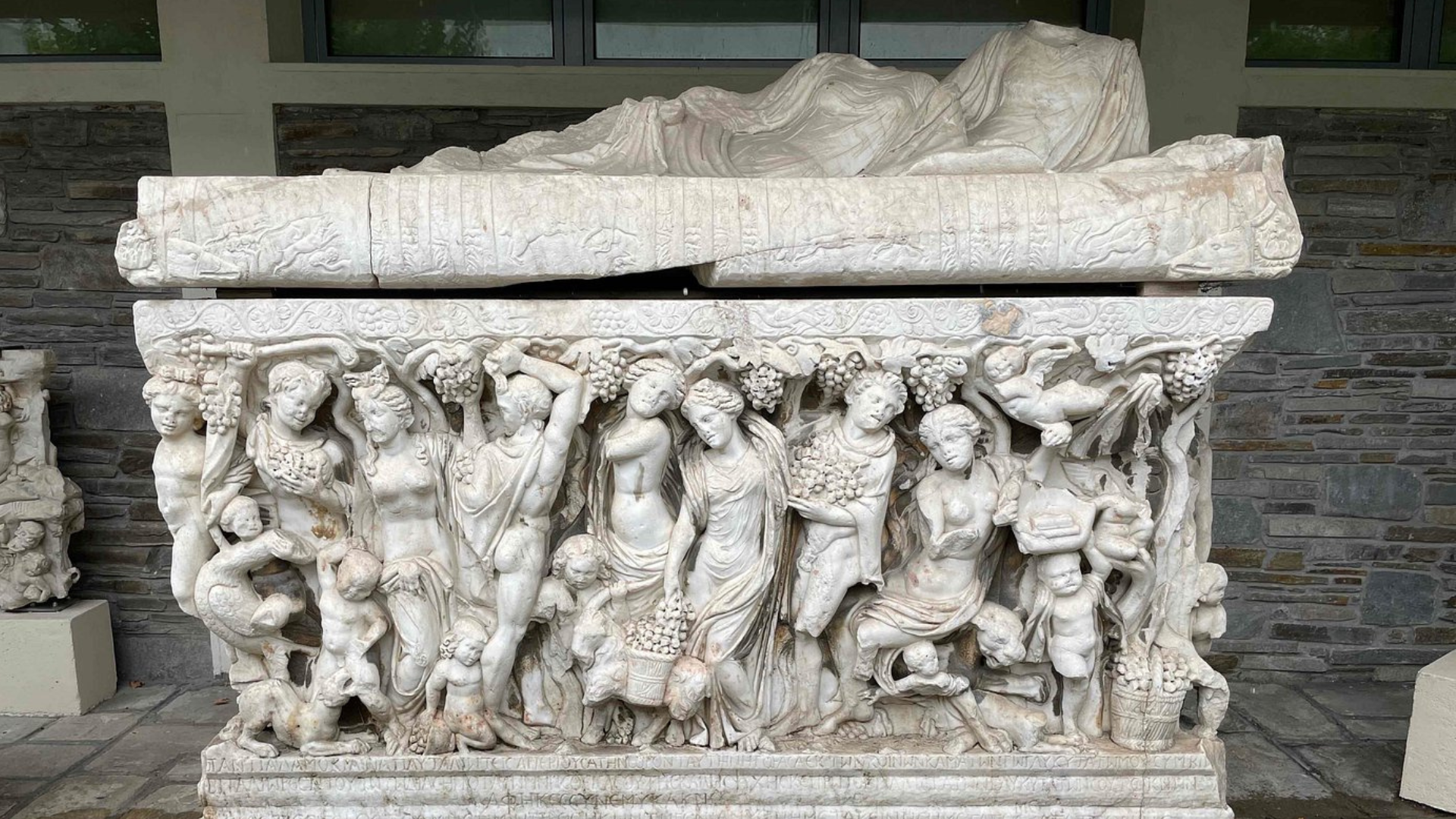
Outdoors, the museum continues with a peaceful sculpture garden, where statuary fragments and inscriptions from across the region rest beneath the open sky. One beautifully detailed bas relief forms the base of a reclining female statue, graceful in form, though sadly without a head, leaving her identity unknown. It’s a beautiful space to pause and reflect, ancient marbles gently holding centuries of stories.
Leaving the Archaeological Museum, I made my way to the Museum of Byzantine Culture, approx. 20 minutes walk away, with brooding rain clouds still lingering overhead. Fortunately, it didn’t rain.
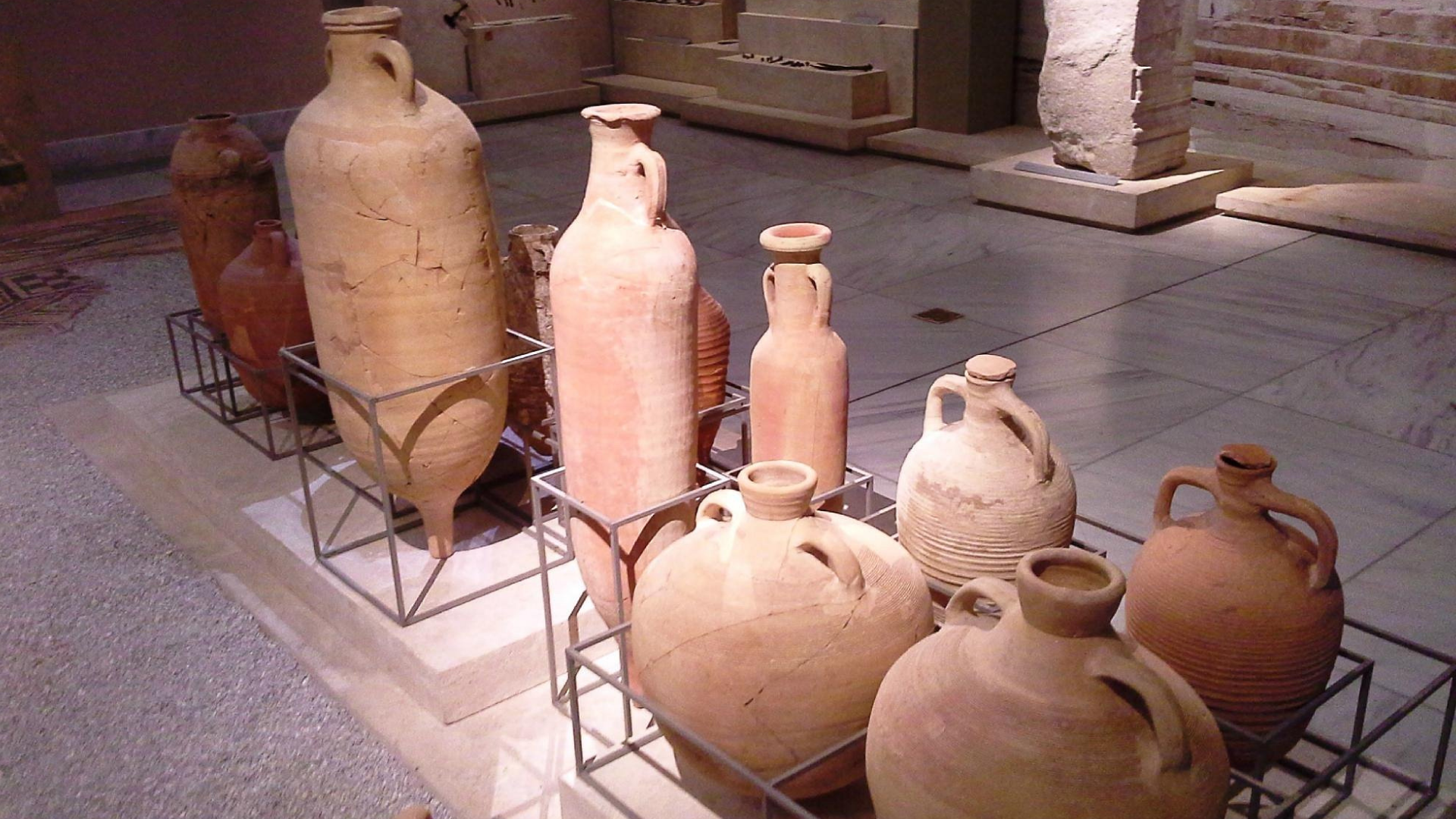
This museum houses a permanent exhibition that reveals many layers of Byzantine art and cultural life. Among the artefacts are amphorae of varying shapes and sizes, ancient ceramic storage vessels once common across the Mediterranean. With their two handles and narrow necks, these amphorae were used to hold wine, olive oil, and other household staples, serving not only personal use but also playing a central role in ancient trade.
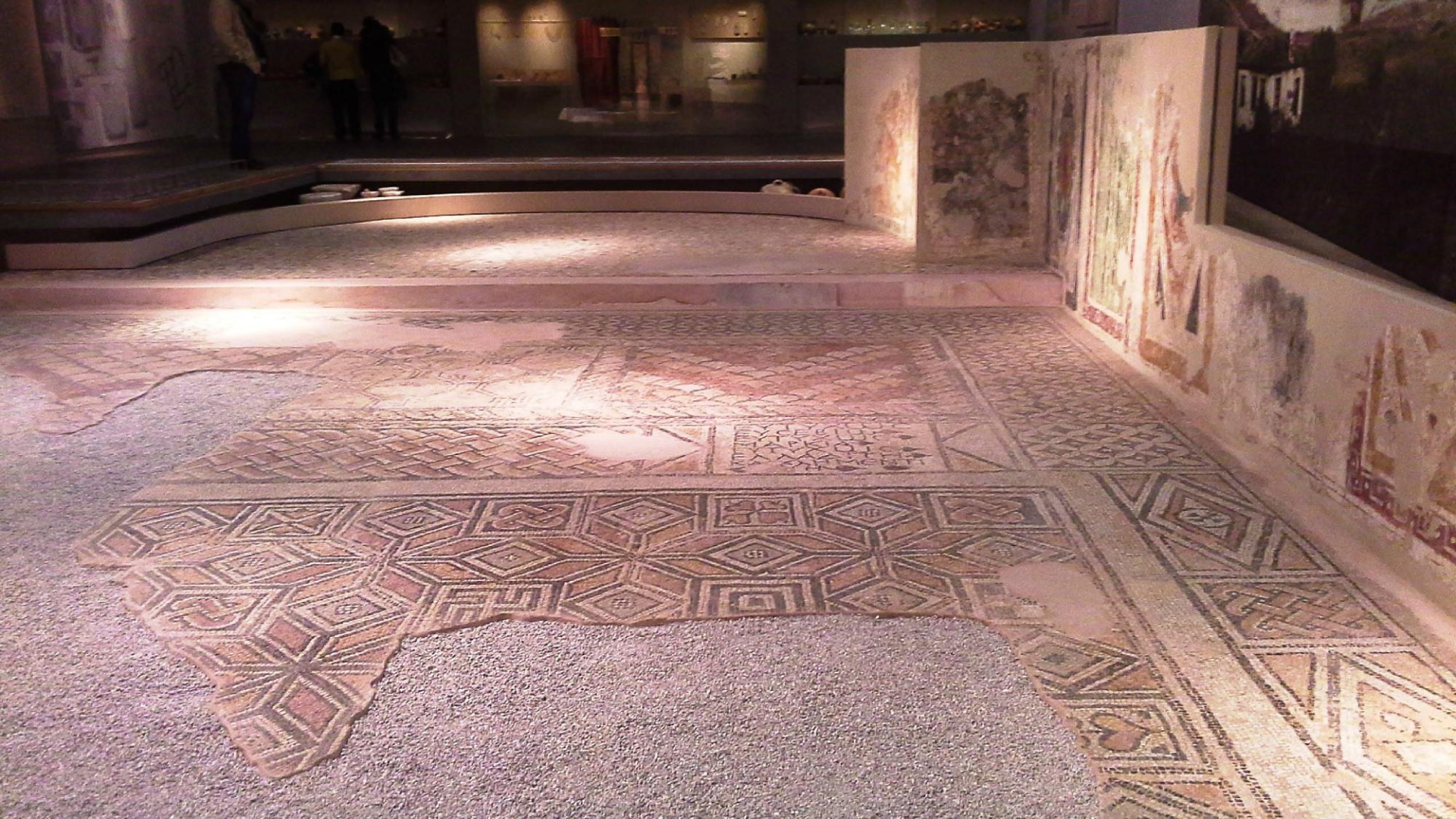
Many wonderful mosaics, like the intricate floor designs I captured in my photo, can be seen in sections of the museum, alongside wall paintings and religious icons that reflect the deep spiritual and artistic life of the Byzantine era. The collection also includes impressive jewellery, rare books, and beautifully preserved scripts, each piece offering a glimpse into the refined craftsmanship and devotional heart of the period.
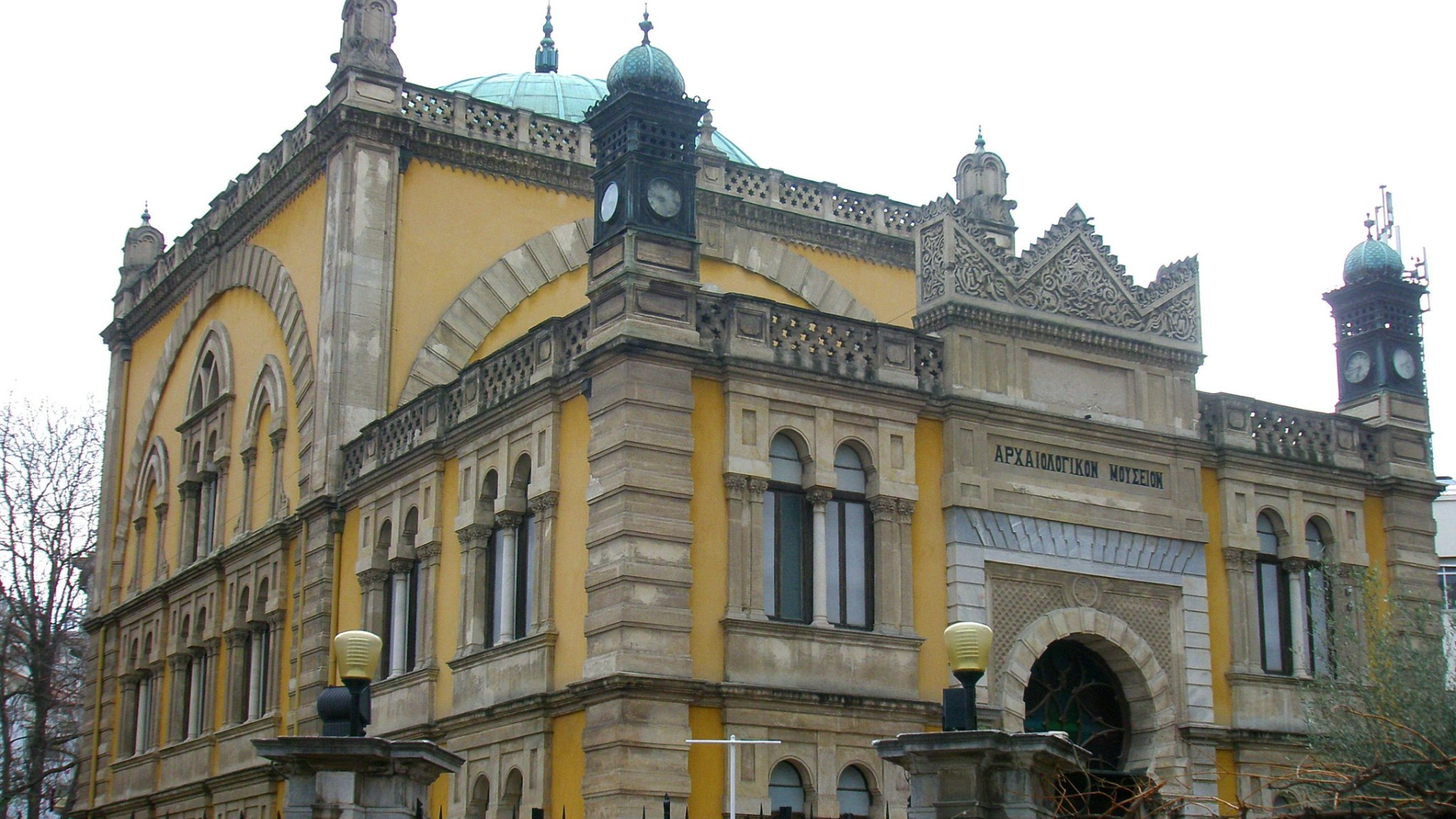
Stepping outside the rain had passed, and from the Museum of Byzantine Culture, I made my way to Yeni Camii, the "New Mosque", a short 10–15 minutes walk from the museums. Built in 1902 by Italian architect Vitaliano Poselli for Thessaloniki’s Dönmeh community, Dönmeh meaning converts, specifically Jewish converts to Islam, it was the last mosque constructed in the city during Ottoman rule.
The Dönmeh were a discreet yet influential group who outwardly embraced Islam while privately preserving elements of their Jewish heritage. They commissioned Yeni Camii as a spiritual and communal centre. However, following the Greco‑Turkish War and the Treaty of Lausanne in 1923, the course of history shifted. Under the terms of the treaty, Greece and Turkey agreed to a compulsory population exchange, relocating Muslims living in Greece, including the Dönmeh to Turkey, while Christians from Turkey were resettled in Greece. With most of the mosque’s original community gone, its minaret was removed, and by 1925, Yeni Camii was repurposed as Thessaloniki’s first Archaeological Museum, a role it held until the current museum was completed.
At the time of my visit, the mosque building was temporarily closed, a quiet exterior holding layers of memory, faith, and identity woven through Thessaloniki’s complex past.
A visit to Thessaloniki wouldn’t be complete without experiencing the charm of the historic old town, Ano Poli - Upper Town - GR: Άνω Πόλη. Tucked around the city’s ancient acropolis and perched on the mountainside, this area offers some of the most breathtaking views across the Thermaikos Gulf and out toward the Aegean.
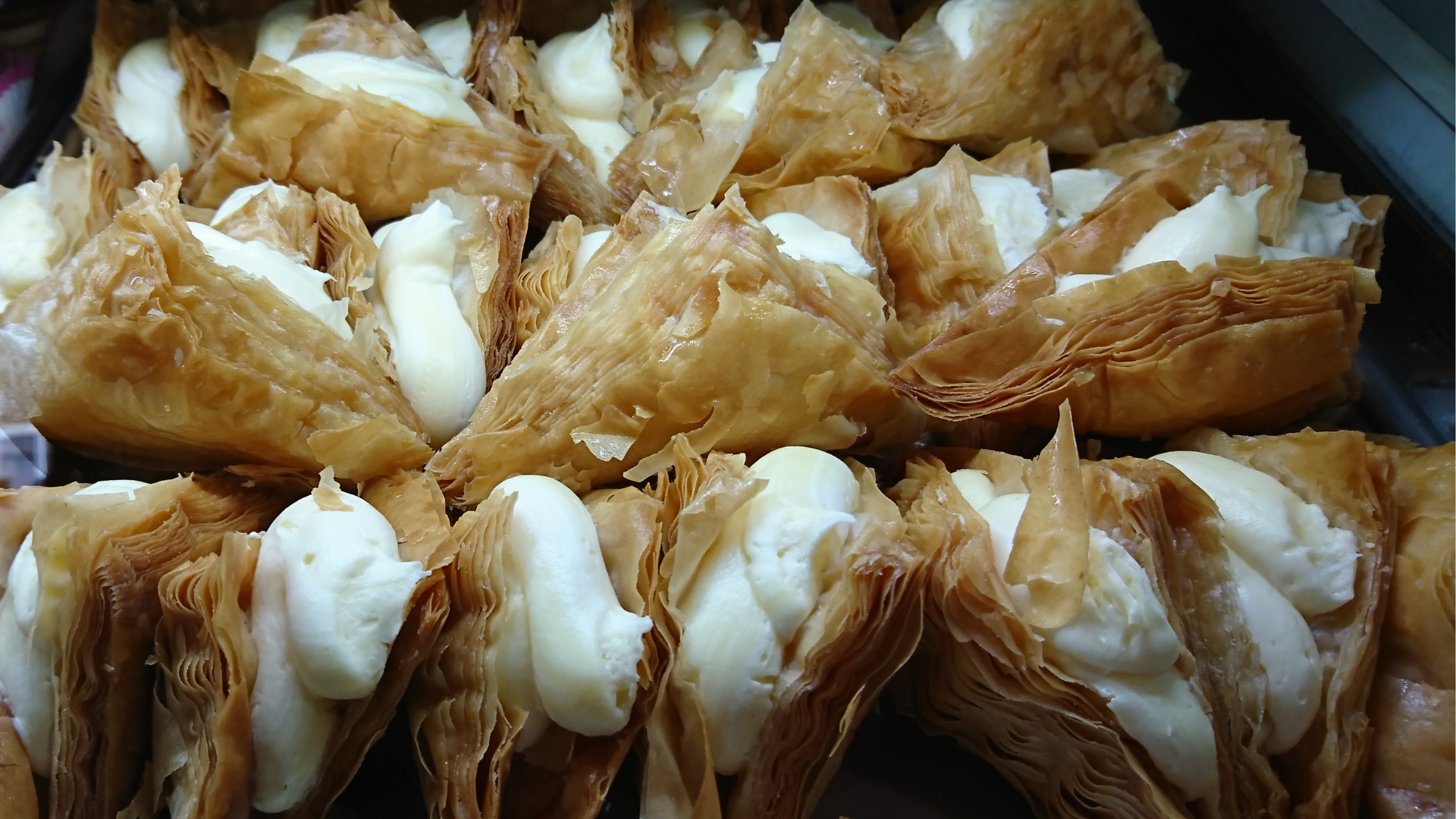
Renowned not only for its elevated views over the Thermaikos Gulf, the village of Panorama is also a culinary destination, especially for those with a sweet tooth. While Thessaloniki is widely celebrated for its syrupy delights and refined pastry culture, Panorama holds a special place in Greek dessert history as the birthplace of the beloved Trigona Panoramatos.
These crisp, golden phyllo triangles, delicately layered and baked to a light crunch, are filled with a fragrant, velvety custard and lightly soaked in syrup. First crafted in the 1960s, their fame quickly spread beyond the village boundaries, attracting pastry enthusiasts from across the country.
Today, several family run patisseries in Panorama proudly continue the tradition, offering a taste that blends nostalgia with indulgence.
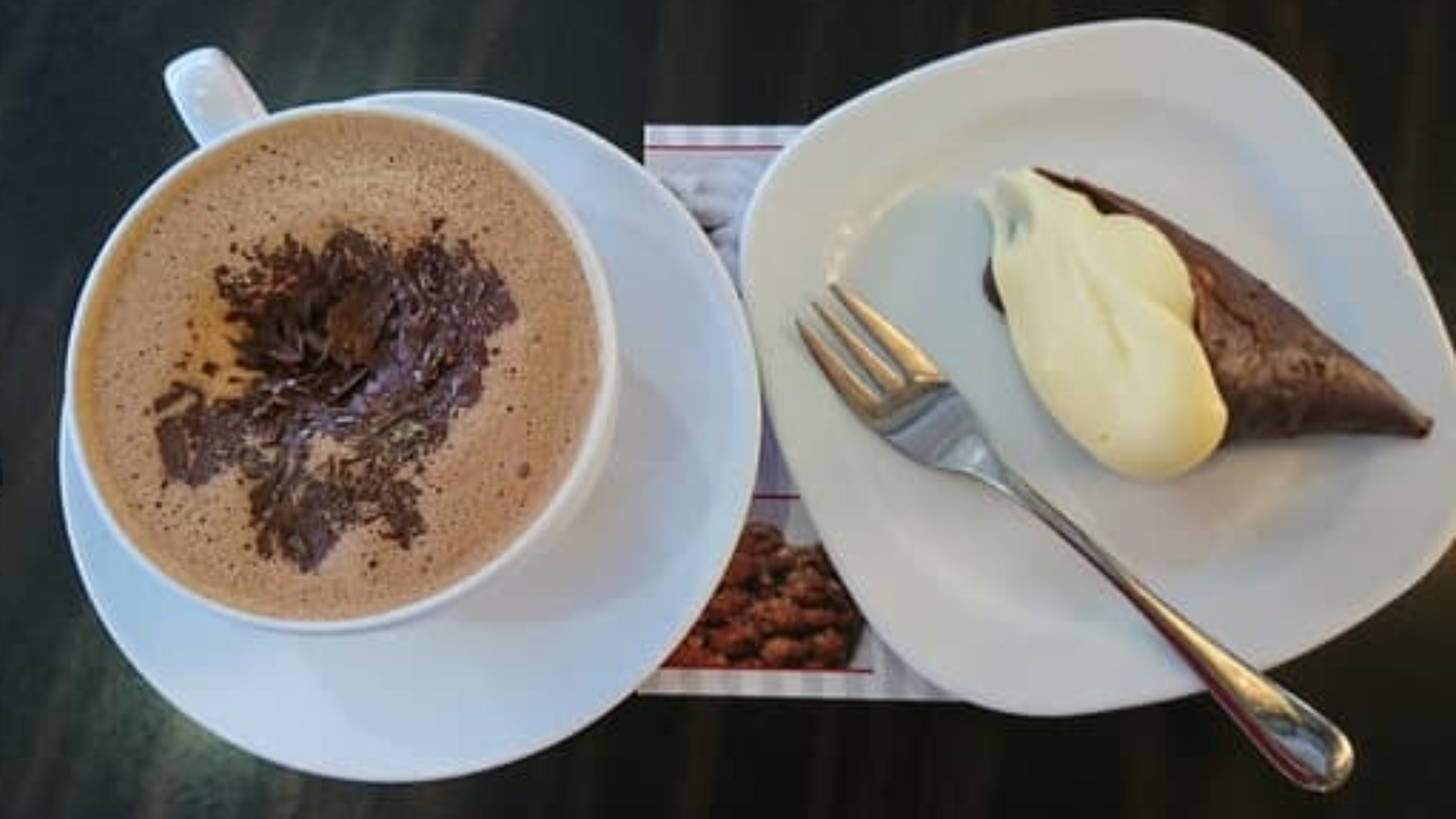
On my last day in Thessaloniki, I hopped on the bus to Panorama, a sweet finale to my visit, quite literally. I ordered a hot chocolate and chose one of the chocolate flavoured pastries, its crisp phyllo shell hiding the same mouth watering custard cream that’s drawn sweet toothed customers here for decades. These handmade pastries are still prepared using the original recipe that first made them famous, and biting into one, fresh from the local patisserie, felt like a delicious tribute to tradition.
Thessaloniki isn’t a city you just pass through; it asks something of you. With both Mars and Pluto present in my astrocartography lines here, I wasn’t surprised to feel moments of intensity. These planetary influences often invite transformation, stir emotions, and challenge comfort zones. And Thessaloniki certainly delivered on that front, yet it also offered quiet gifts in between.
From the self care tones of Venus and the dreamlike filter of Neptune, came glimpses of beauty, warm evening light spilling over the waterfront, museum corridors echoing with stories, and a final detour to Panorama on my last day, where a hot chocolate and a chocolate trigona pastry, filled with velvety custard, offered the sweetest of departures.
It’s not a city I’d seek out to live in, but one I’ve happily returned to, next time with a deeper understanding of its layers, its past, and the personal truths it stirred within.
Historical Insight for Curious Travellers
Following my visit, more layers of Thessaloniki’s ancient past came to light during the construction of the Venizelou and Agias Sofias metro stations, that opened as part of the city’s first metro line in November 2024. Construction had begun in 2006 but was repeatedly delayed, especially after archaeologists uncovered over 300,000 artefacts, including coins, jewellery, amphorae, marble statues of the goddess Aphrodite, Roman era oil lamps, perfume vases, and more.
These items were discovered in what was once the city's bustling commercial centre, along the Roman Decumanus Maximus and Byzantine era thoroughfares, leading the Venizelou station excavation to be dubbed a “Byzantine Pompeii”. Archaeologists also uncovered over 5,000 tombs and graves, some containing exquisite golden wreaths. The project became Greece’s most extensive archaeological undertaking in recent decades, bridging modern infrastructure and ancient heritage.
🔗 For interested history lovers, this Soul Travel blog comes as a downloadable Soul Travel Companion e-booklet, or printable travel journal insert of all locations visited and their historical context. Download here
Thessaloniki has a charm all of its own, with a unique modern blend of an active cosmopolitan city and the easy, relaxed atmosphere of a smaller historic place. In short, this city offers the best of both worlds.
See you soon,
Consider signing up to receive new Soul Travel blogs, travel reflections, and astrocartography insights as new destinations are shared.

✨ If this story resonated with you, you are warmly invited to continue the journey in a way that feels aligned with you.

✨ Explore personalised insights through consultations
✨Begin with ‘The Journey’ Orientation
✨Listen to Destined Places podcast stories
✨Save and share Soul Travel inspiration on Pinterest