Experiencing the Heart of Bulgaria's Rose Valley
It was an early departure from Blagoevgrad, refreshments in hand, a quick stop to fuel the car, and quiet anticipation in the air. We set off north to the outskirts of the capital, Sofia, before turning eastward through the Stara Planina foothills, part of the greater Balkan range where the road began to wind through a landscape of lush greenery and gently rising slopes. The scenery shifted into a palette of deep greens, rolling hills, and scattered farming land, a quiet prelude to the beauty that awaited us.
This four hour journey was taking us to one of Bulgaria’s most enchanting regions: the Rose Valley (Розова долина, Rozova dolina), gracefully nestled between the Balkan and Sredna Gora mountain ranges.
As we neared the township of Kazanlak, the stunning scenery, dripping in shades of green unfolded before us, with picturesque views across the Tundzha Valley, part of the greater Rose Valley region, welcoming us into Central Bulgaria’s floral heartland.
We’d planned to stop in Kazanlak itself, a town steeped in Thracian history and rose oil heritage, before heading a short distance to the village of Skobelevo, home to the Damascena Ethnographic Complex. Built in 1991, the complex offers a living showcase of Bulgaria’s centuries old rose oil distillation methods, celebrating both the craftsmanship and culture that surround this fragrant tradition.
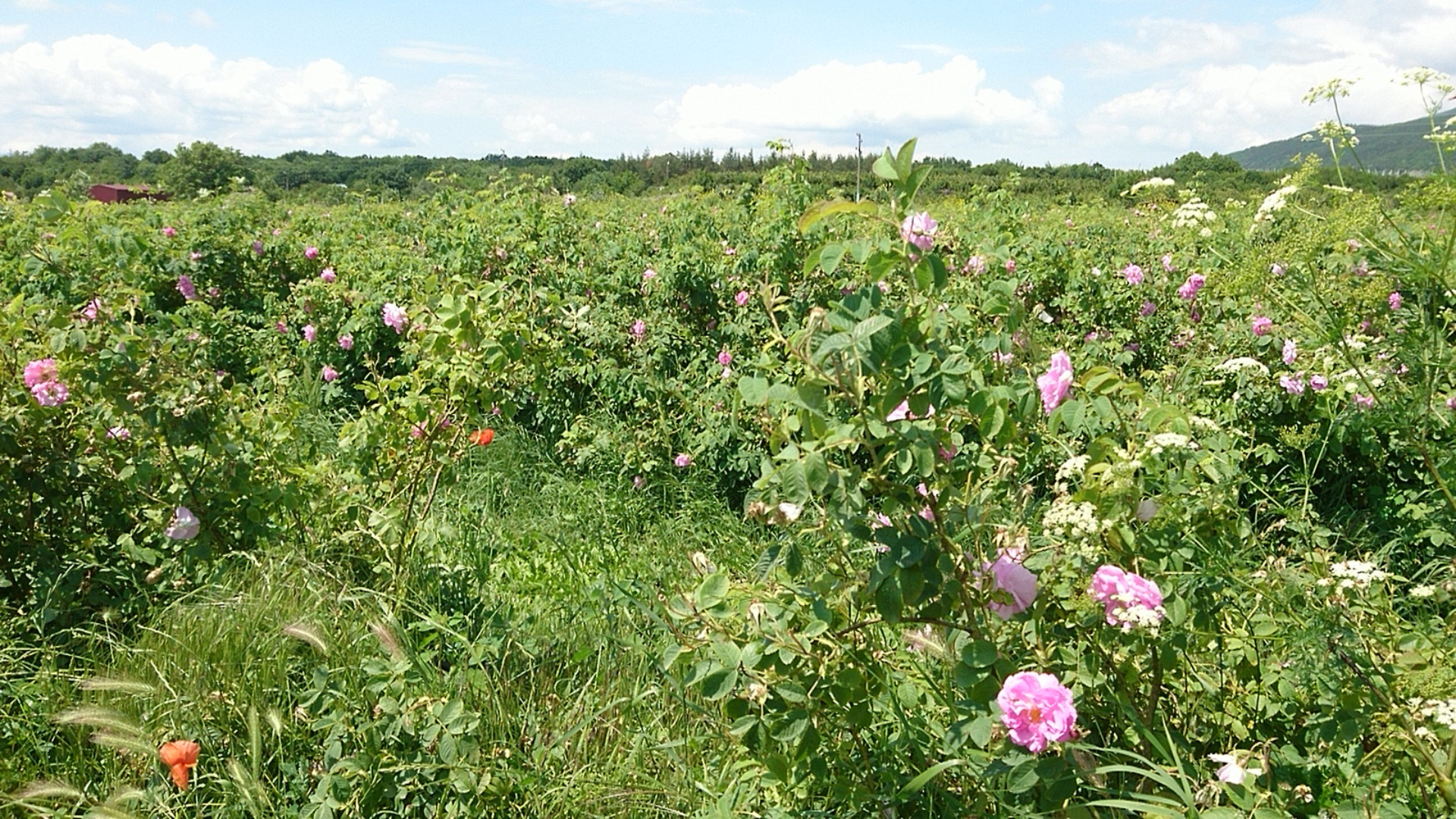
It was mid June, and although many fields had already been harvested following the annual Rose Festival, we were fortunate to still see fields and fields of rose bushes.
Driving towards the Damascena Ethnographic Complex along the quieter regional roads, we passed working rose fields where locals were still handpicking delicate pink blooms and placing them into large sacks. The scent lingered in the warm air, mingling with the earthy freshness of the countryside. Smaller lavender fields, with their soft violet hues, also dotted the landscape, quiet companions to the more celebrated roses, yet just as enchanting.
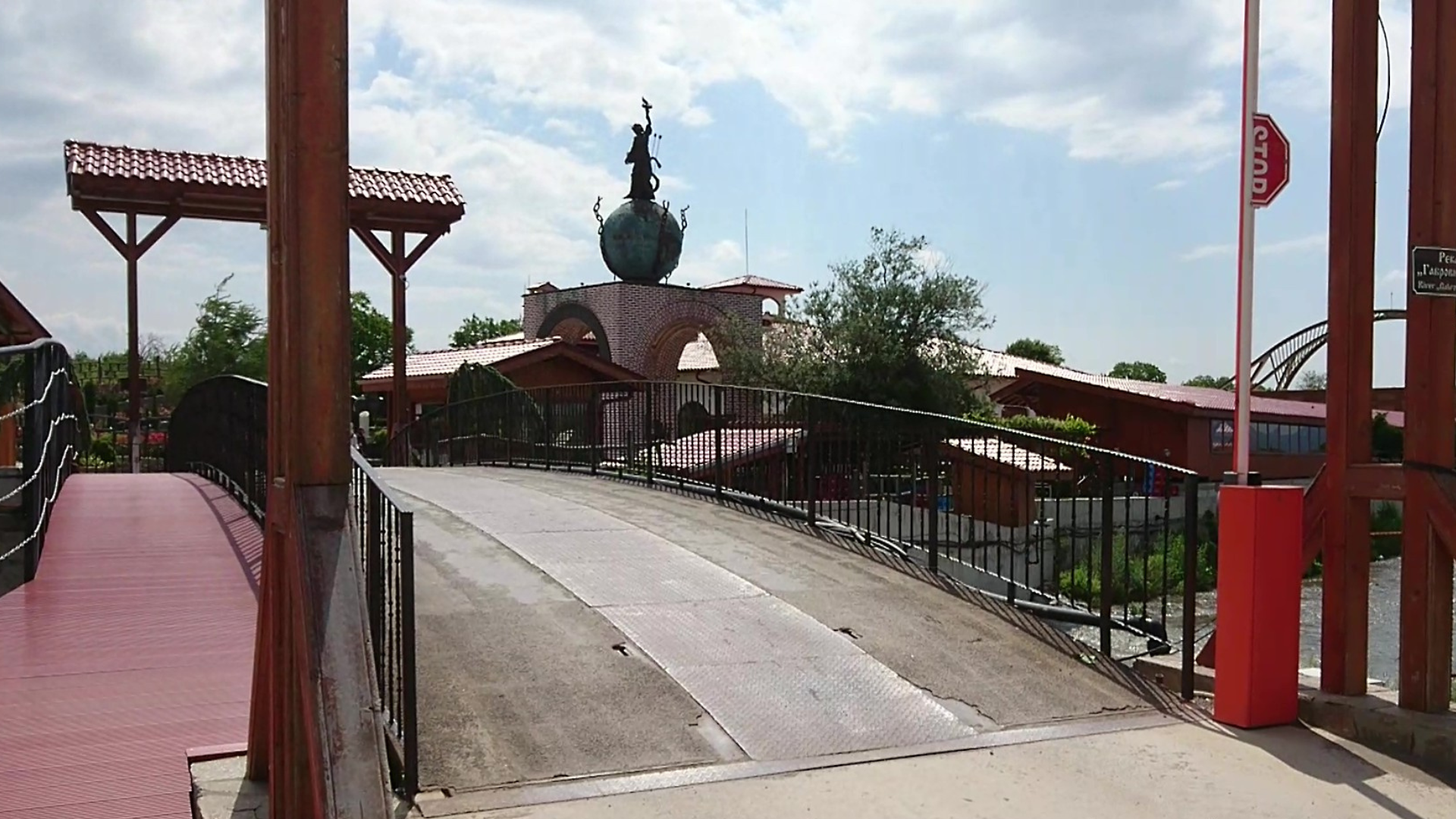
Arriving at the Damascena Ethnographic complex, at Skobelevo was something of a ‘BIG’ treat for me. I use many Essential Oils, as part of my daily health and wellbeing, and finding myself in Bulgaria at an Organic Rose Farm and distillation was pretty special.
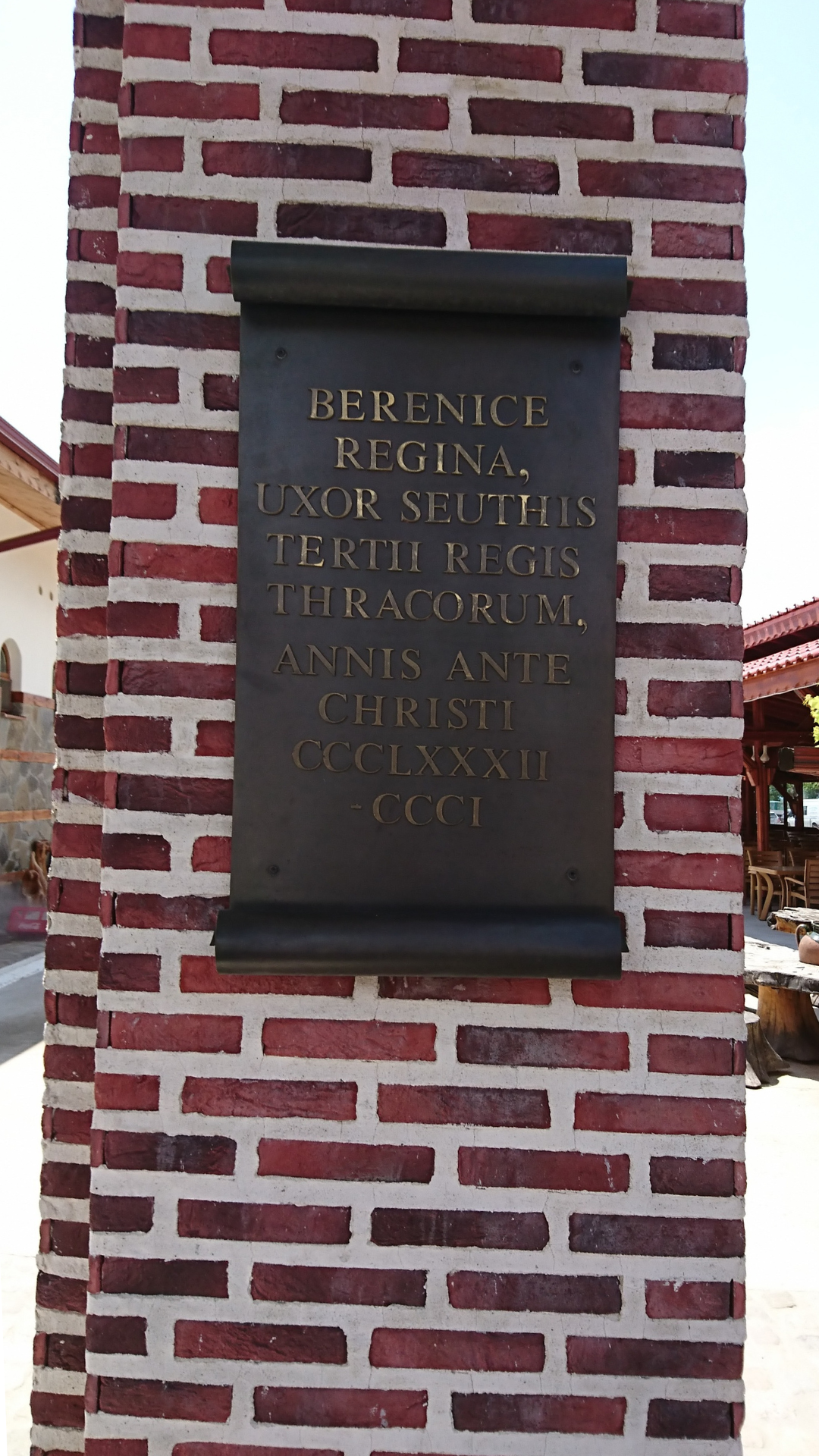
The Latin inscription, displayed on a commemorative plaque at the entrance of the complex, honours Queen Berenice, wife of Seuthes III, ruler of the Odrysian kingdom of Thrace.
Their reign, dating from 382 to 301 BC, places them in the classical period, around the era of Alexander the Great.
This connection adds a deeper layer to the region’s story, highlighting not just its agricultural richness, but also its historical significance as a cradle of Thracian culture and leadership.
A beautiful tribute to the enduring legacy of the region, as you step into Damascena, a place that celebrates Bulgaria’s rich cultural and botanical heritage.
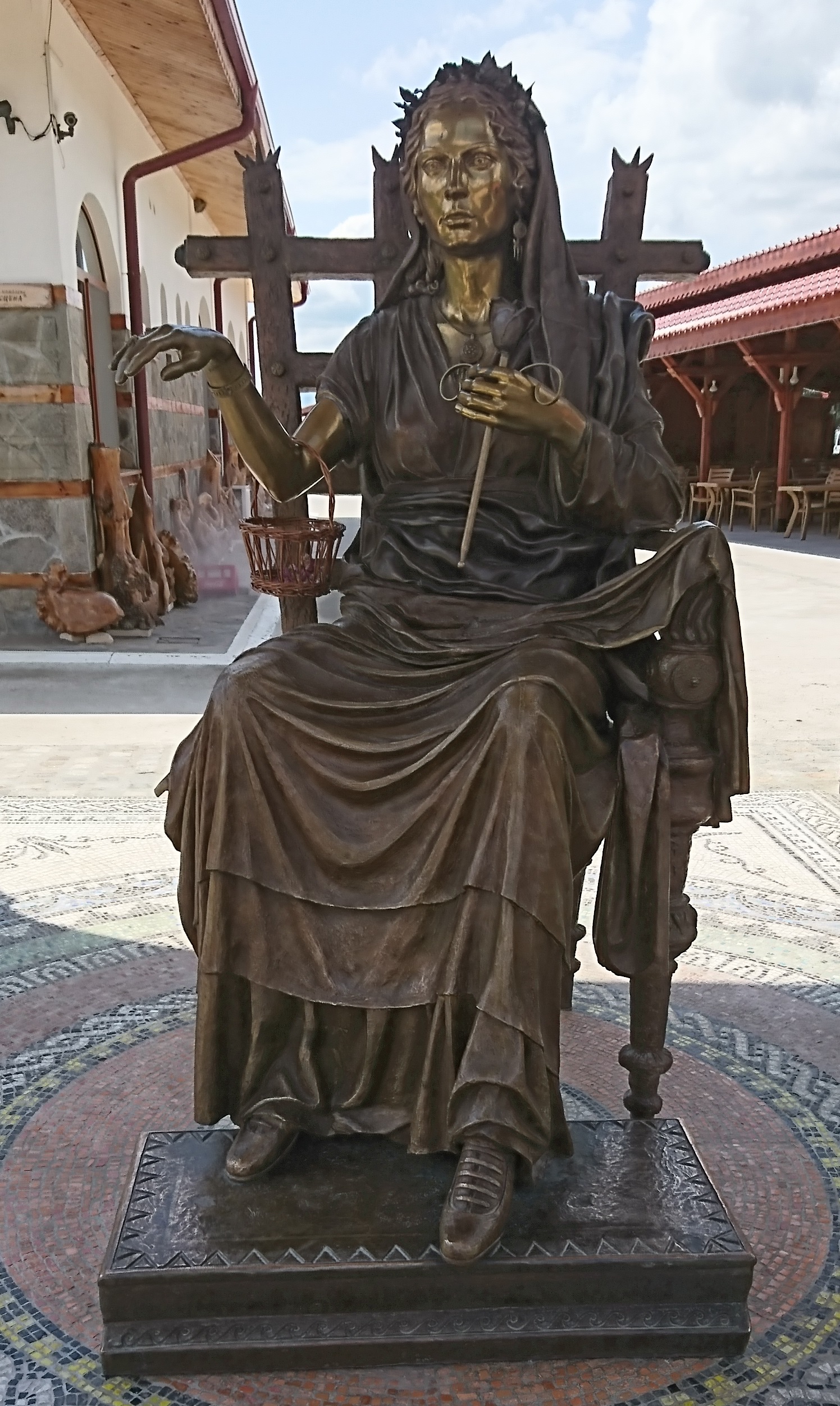
Seated gracefully by the entrance, the statue of Queen Berenice brings a regal presence to the grounds, likeness a visual tribute beside the Latin inscription that honours her legacy as wife of Seuthes III and queen of the ancient Thracian kingdom.
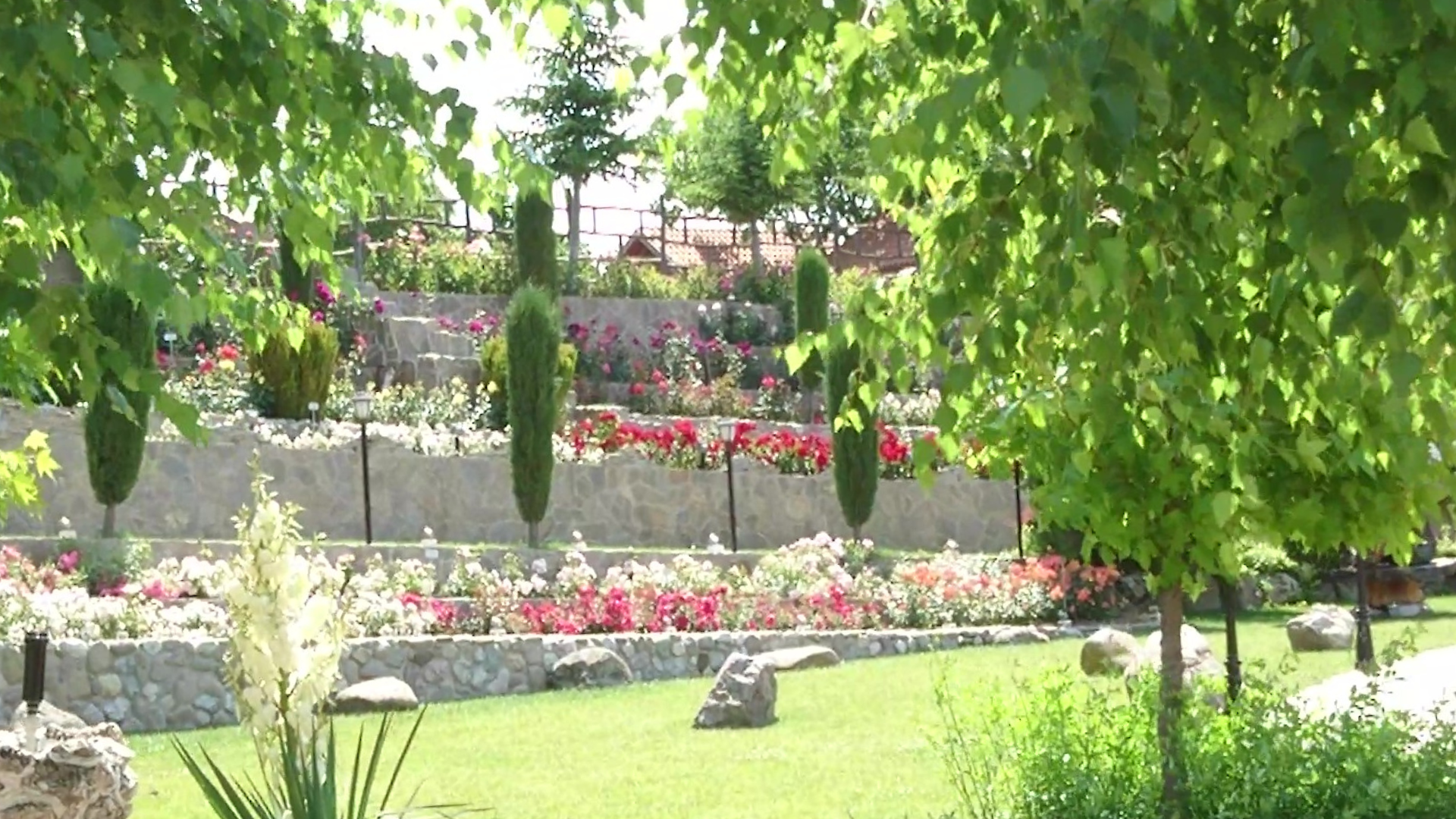
Rose flowers adorn the grounds everywhere you turn, their soft petals adding colour and softness to the landscape.
Human like statues are thoughtfully dotted throughout the gardens, each one offering a quiet moment of beauty and reflection amidst the blooms.
Roses bloom in abundance here, but they’re far more than a feast for the eyes, they’re at the heart of Bulgaria’s cultural and economic heritage. The Bulgarian oil yielding rose, Rosa Damascena is considered a national symbol, and the Rose Valley is world renowned for its centuries old rose growing tradition.
This region alone is responsible for producing nearly half of the world’s rose oil, a highly prized ingredient in perfumery and skincare. But what’s truly astounding is the sheer effort required: it takes between 3,000 to 5,000 kilograms of rose petals to distil just one kilogram of rose oil. That’s an entire field of blooms for a single small bottle.
The picking season runs from May through June, with the harvest happening early each morning when the flowers are most fragrant. And if you happen to visit during the first weekend of June, you’ll be swept up in the joy of the Festival of Roses, celebrated in the nearby township of Kazanlak. It’s a tradition steeped in beauty, with locals dressing in vibrant traditional costumes gather roses at sunrise, accompanied by folk dancers, singers, and musicians who bring the fields to life with music and celebration.
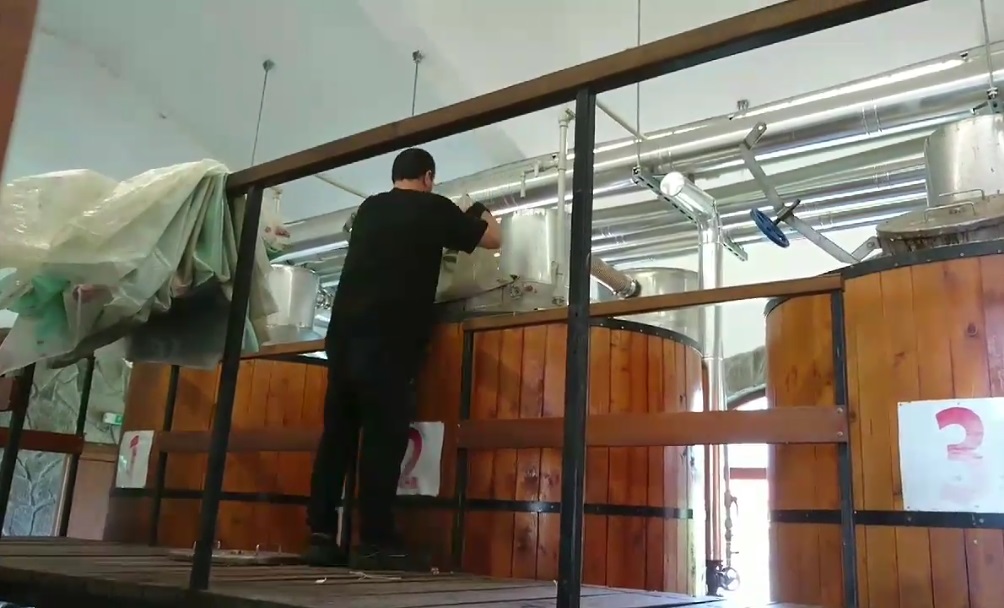
The first part of the Damascena complex we visited was the rose distillery, and what an experience it was! The moment we stepped inside, a wave of warm rose scented steam greeted us. It was both overwhelming and enchanting. Seeing the distillation process up close, and watching the sacks of rose petals being added to the giant vats, affixed to stainless steel piping, was genuinely impressive. It gave me an even deeper appreciation for the craft, and the incredible labour of love behind each drop of rose oil.
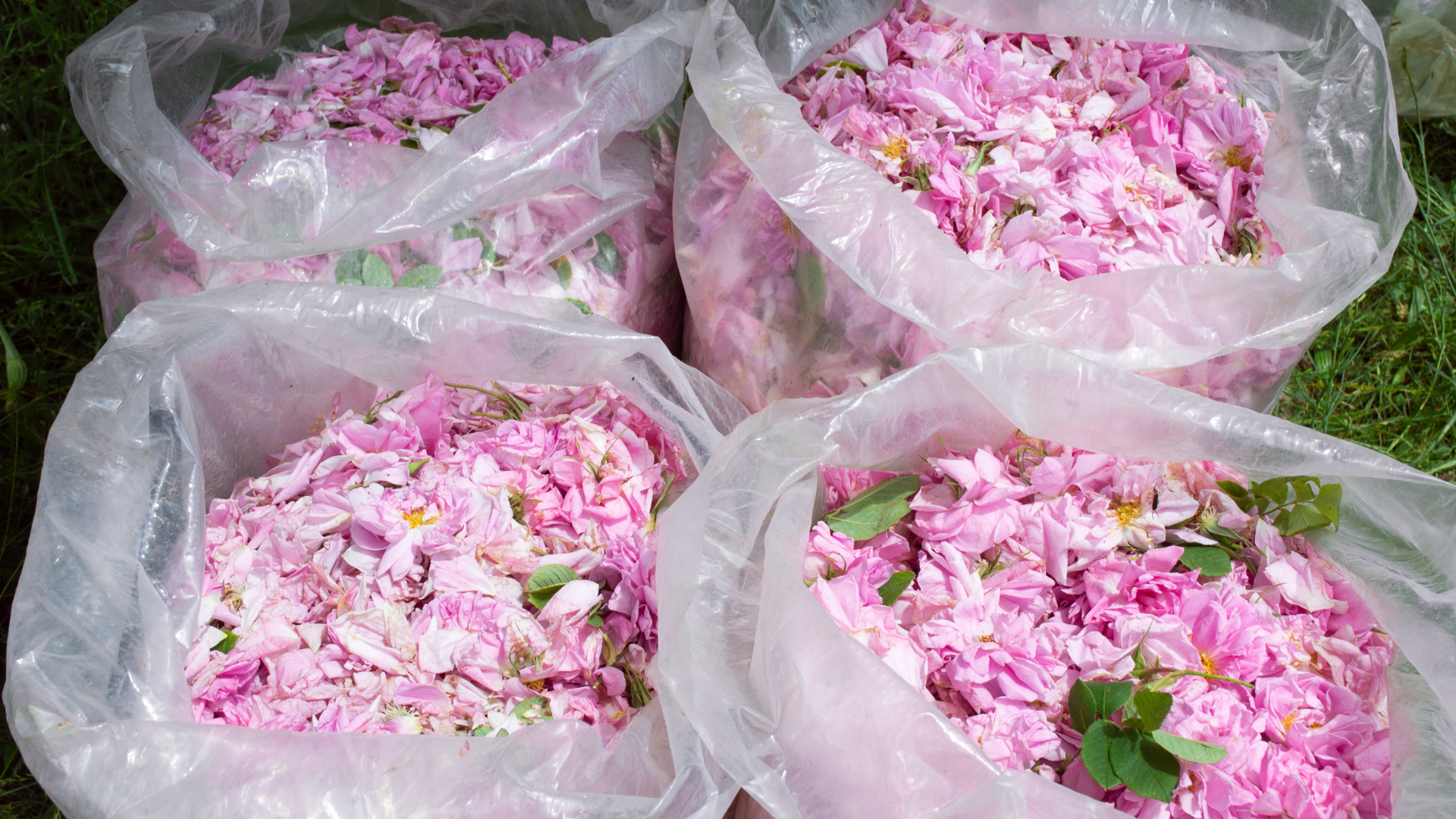
More sacks of rose petals waited nearby, piled gently by the distillery vats, each one filled with thousands of hand picked blooms, ready to begin the fragrant transformation into rose oil.
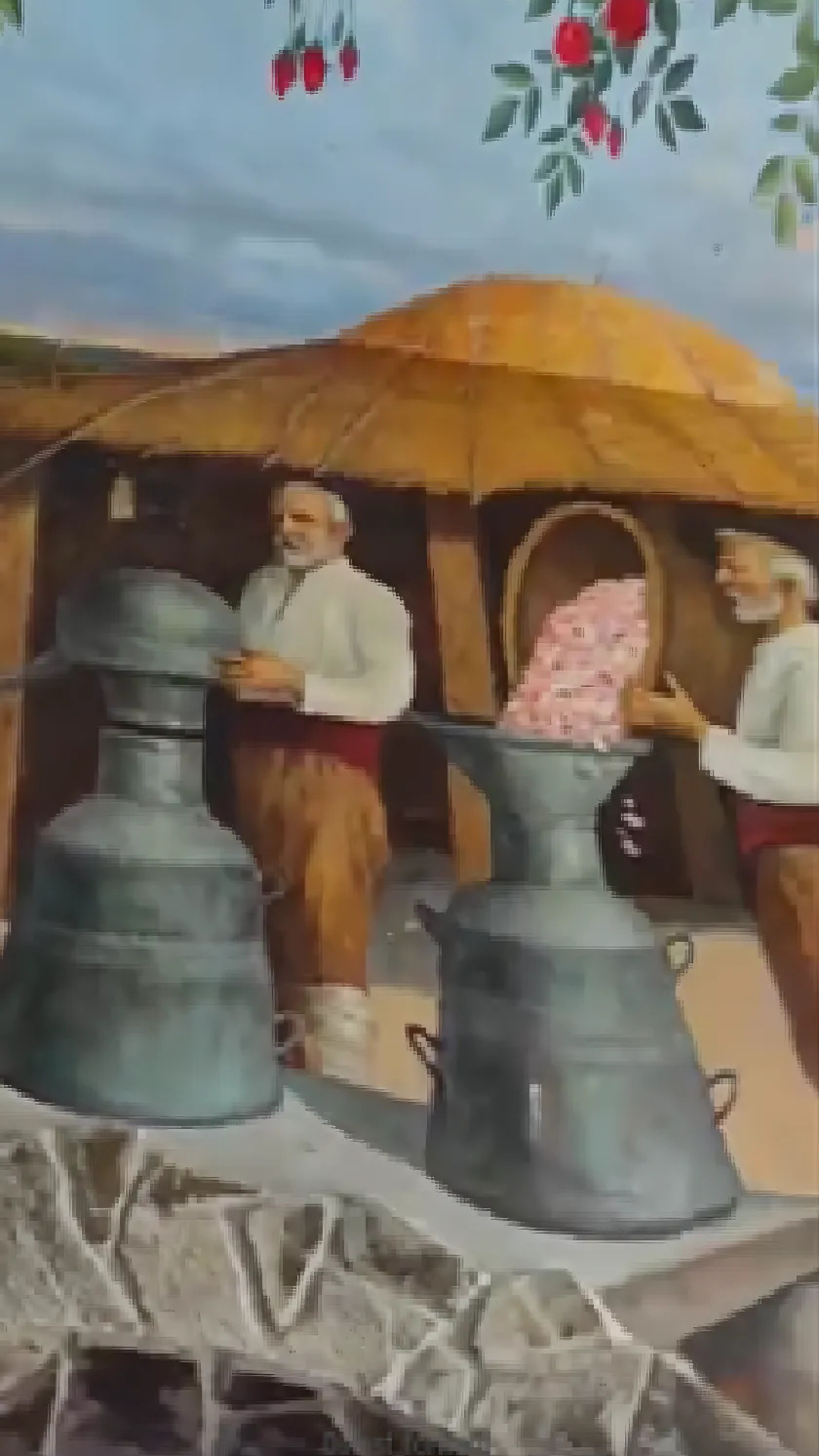
As we wandered through the distillation area, we were greeted by colourful murals painted along the walls, depicting how the process was carried out in earlier times.
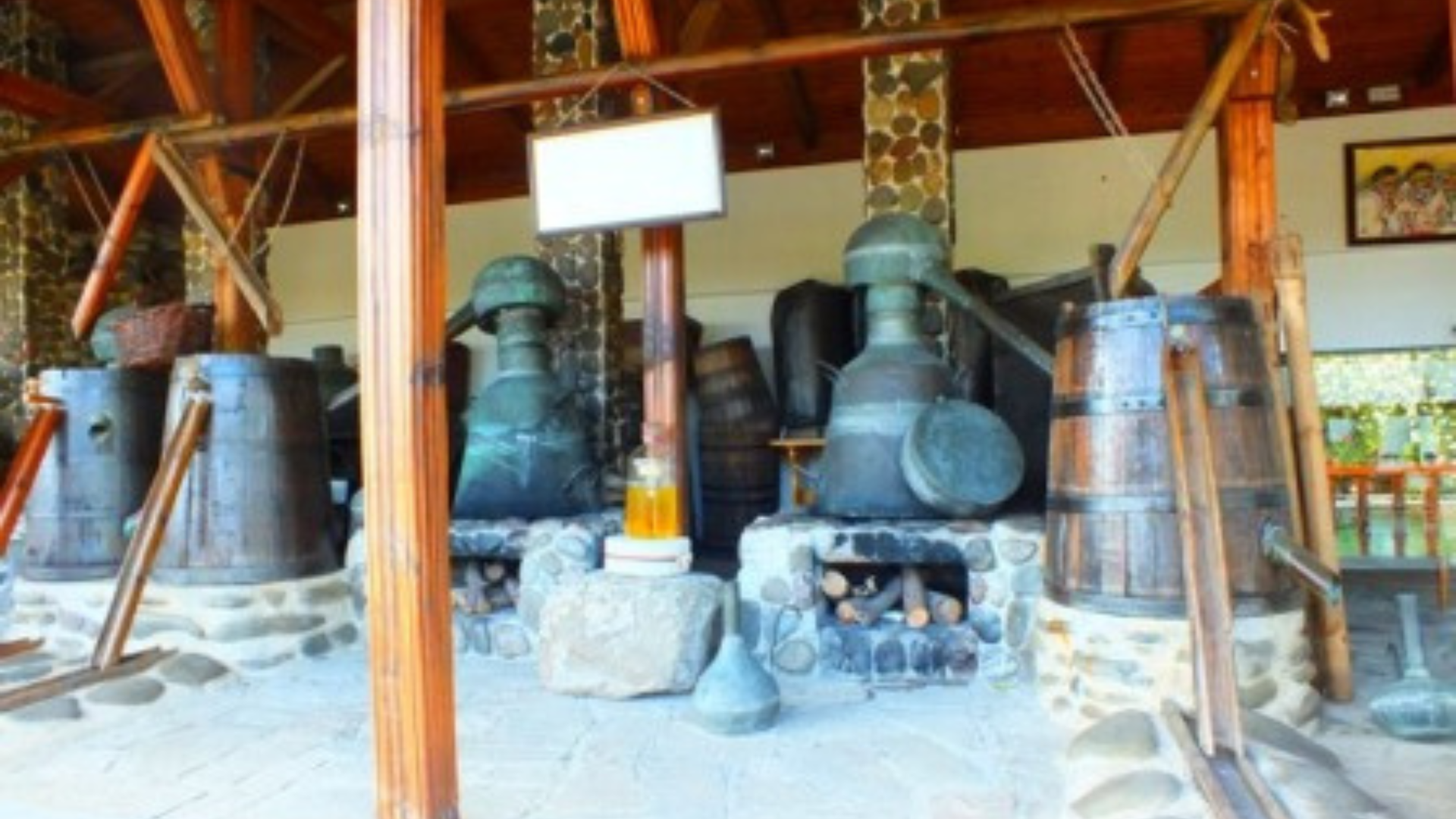
Alongside these illustrations were old tools once used in the trade, reminders of the skill, patience, and reverence for the craft that has been passed down through generations.
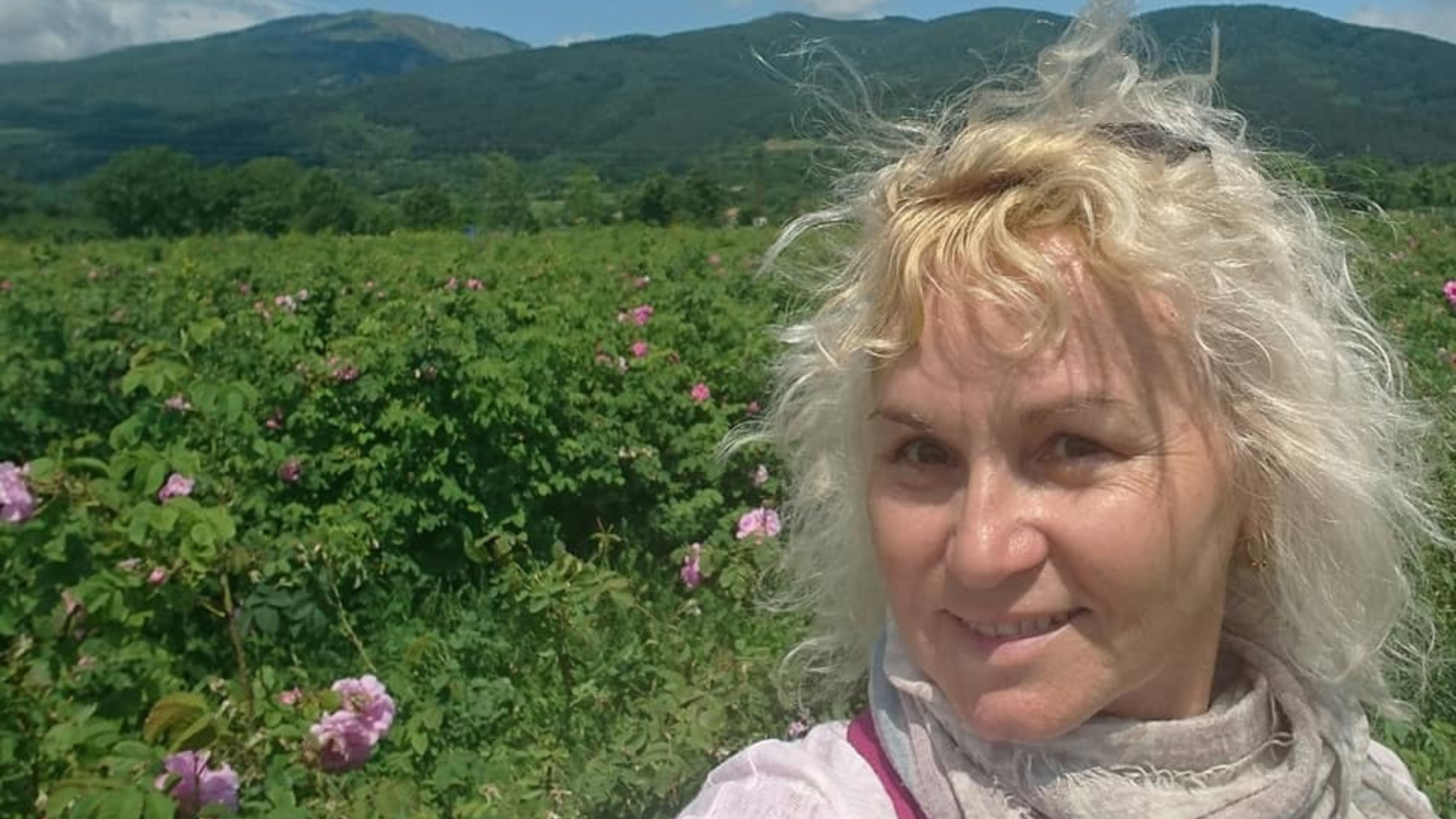
Now, generally, someone is paid to pick the roses, but I couldn’t resist the opportunity to take part myself. I chose to pay and took home a heavenly basket of freshly picked Damascus Roses, carefully packed into a box like a fragrant treasure chest. The experience of plucking the blooms, one by one, and breathing in their exquisitely scented aroma under the warmth of the early summer sun… it was absolutely divine. A simple, soul nourishing pleasure.
Witnessing part of the distillation process in action, knowing it was organic and steeped in tradition, made it all the more enjoyable. There’s something magical about seeing nature’s essence being extracted in such a time honoured way.
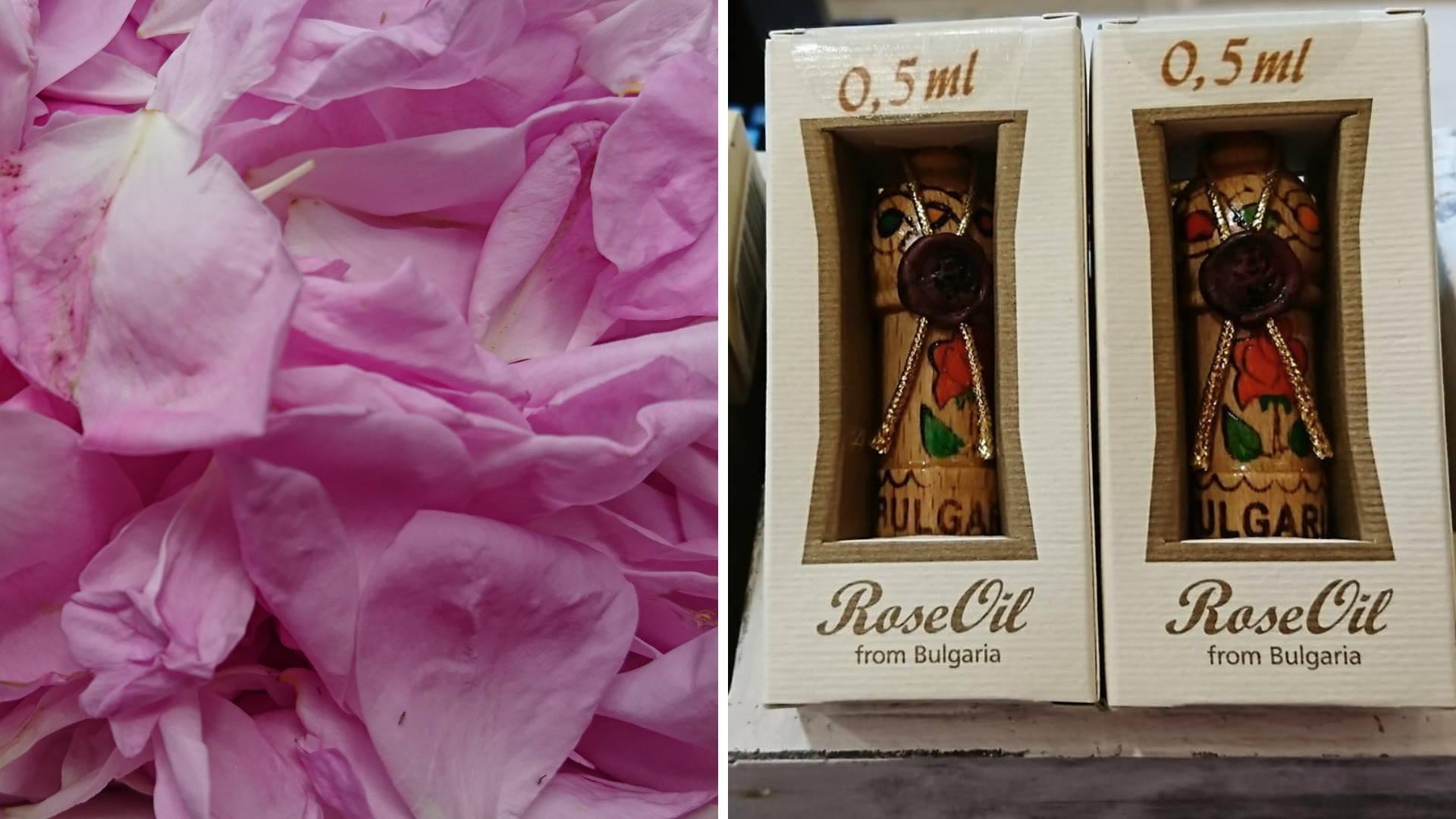
We eventually made our way into the Damascena shop, where shelves were lined with natural rose-based products, from cosmetics to culinary rose delights. I certainly didn’t leave empty handed! I picked up two small bottles of their divine rose essential oil, each one a fragrant memory in a bottle, along with my box of freshly hand picked rose petals to take home.
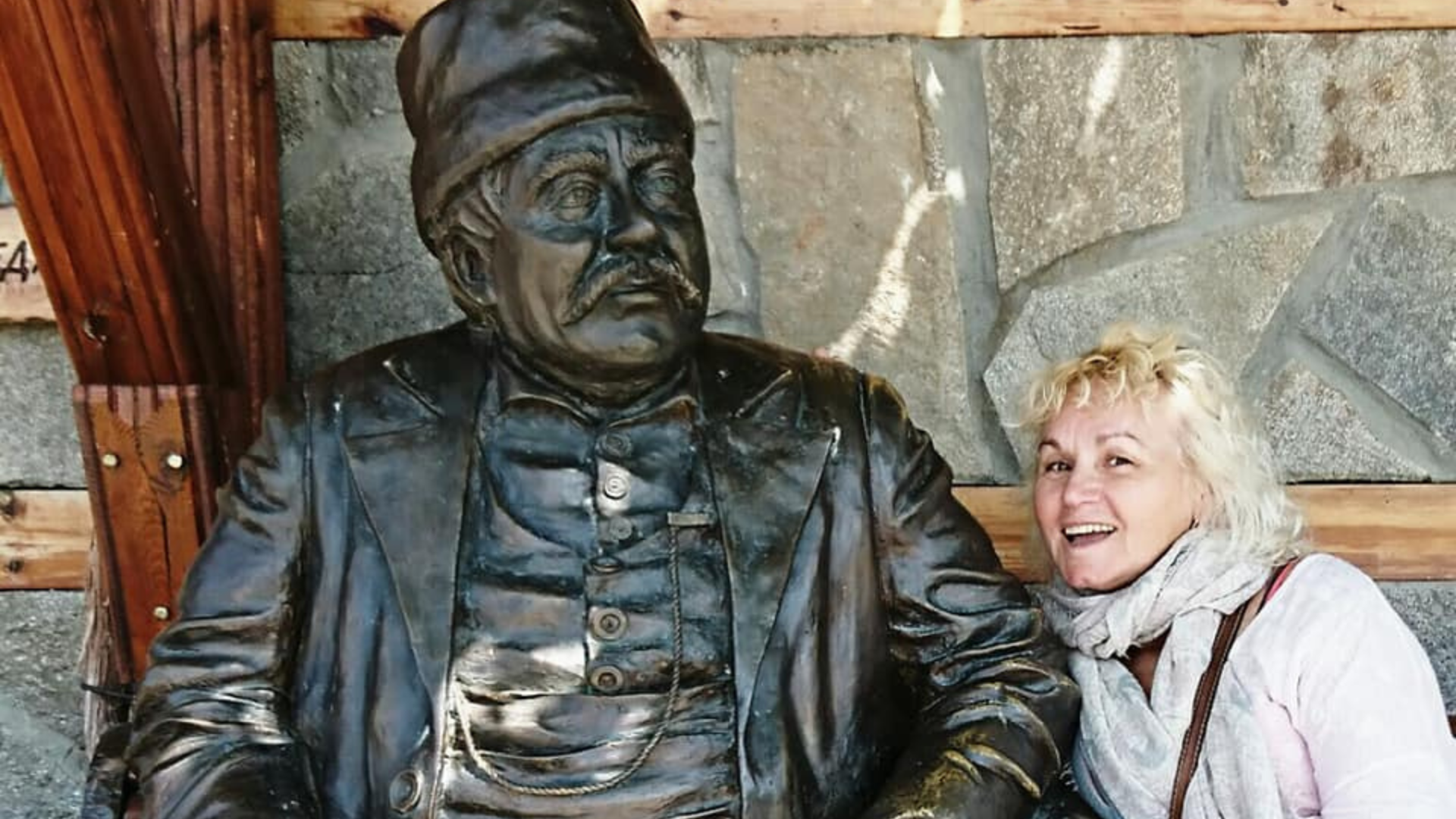
Seated beside the iconic Bay Ganyo, well, his bronze likeness, I couldn’t help but smile at the moment. Captured in the heart of Damascena, this larger than life statue of Bulgaria’s most cherished fictional character was too good not to sit beside. Bay Ganyo, created by Bulgarian writer Aleko Konstantinov, is a symbol of both satire and national identity. With his calming expression and unmistakable presence, he made the perfect (and surprisingly comfortable) companion for a quick chat and a photo. In many ways, this moment felt like a quiet nod to Bulgaria’s blend of humour, history, and cultural pride, just the sort of memorable moments that makes travel feel delightfully surprising.
For those planning a visit, there’s also a restaurant onsite, offering visitors a place to pause and enjoy the beautiful surroundings whilst sampling some of the locally produced products. However, in true unplanned and spontaneous style, my friend and I left the Damascena Ethnographic complex with the idea of stopping briefly in the township of Kazanlak for lunch. But the lure, and a few glowing recommendations, were nudging us further. The charming and charismatic city of Plovdiv was calling, and so we set off, westward, on the two hour drive towards one of Bulgaria’s oldest and most captivating cities.
Retracing a short distance, back to the intersection and following the road signs, our road trip continued 75 kilometres west, bringing us to Plovdiv. With its rich tapestry of history and expansive public parks, the city offered a captivating experience, both atmospheric and enriching.
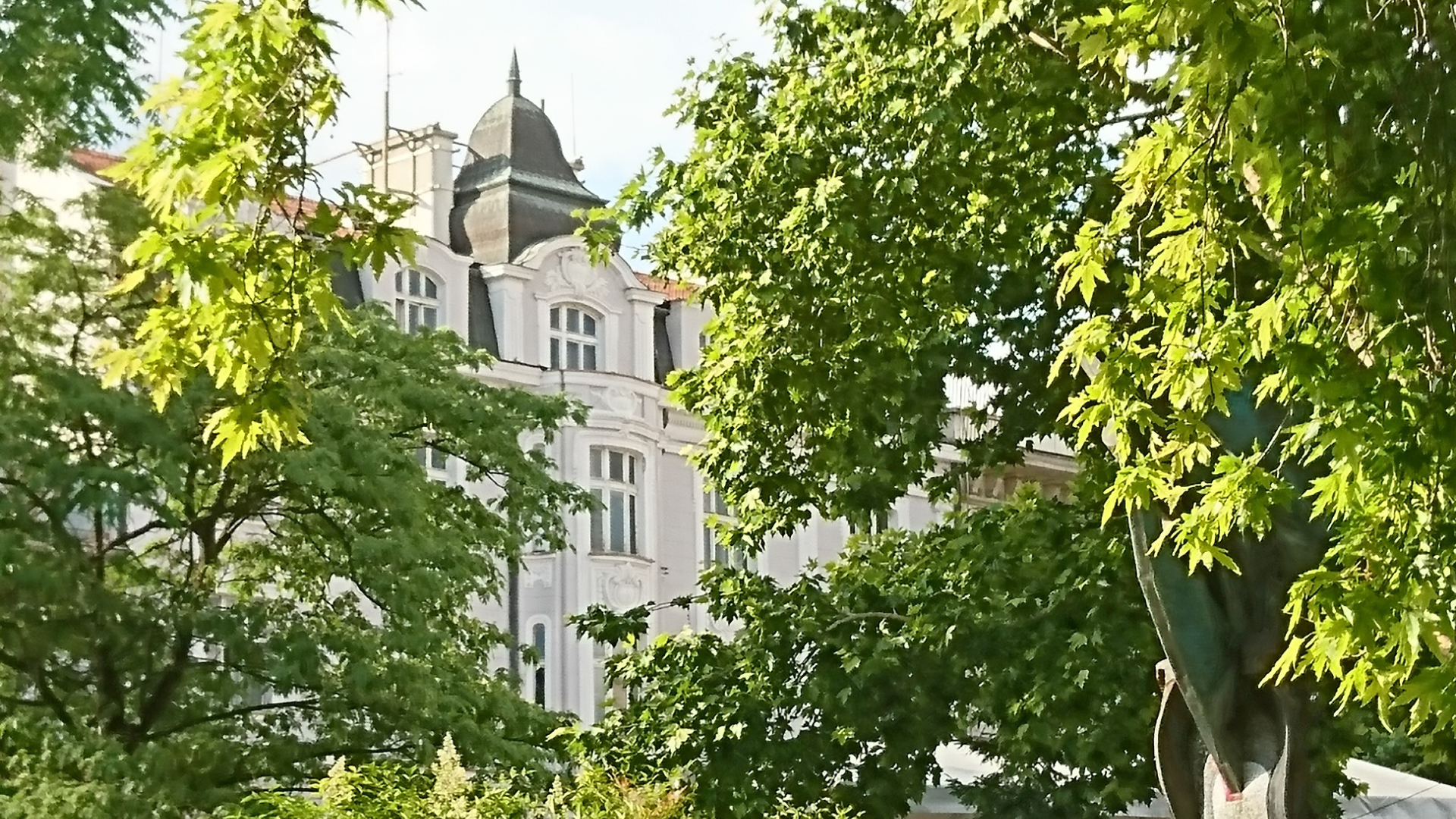
Plovdiv is the second largest city in Bulgaria and was named the European Capital of Culture in 2019. Situated in the western part of the Upper Thracian Valley, it holds a deeply layered past, earning it a reputation as one of the oldest continuously inhabited cities in Europe.
Positioned approx. 145 km from the country's capital Sofia, or around a 1.5-to-2-hour drive. And, a slightly longer short drive to the Black Sea coast and cities like Burgas and Varna.
Learning more about the country's history, we discovered that modern day Plovdiv is literally built atop layers of ancient towns and civilisations, similarly to the country’s capital. Archaeological evidence reveals habitation dating back to the Stone Age, along with Bronze and Iron Age artefacts.
Around 400 BC, a Thracians population, native to this region, founded the city under the name Eumolpius. In 342 BC, Eumolpius was also conquered by Philip II of Macedonia, father of Alexander the Great, who renamed it Philippopolis and fortified the town.
Fast forward to the year 100, under Roman rule, it became a flourishing economic, cultural, and political centre, then known as Trimontium. By 395, when the Roman Empire split, the township became part of the Eastern Roman (Byzantine) Empire. Over the next few centuries, waves of Huns and Goths raided the region. And, by the 6th century, Slavic tribes had settled and renamed it Paldin. It was also during the Slavic period, particularly from the 6th to the 11th centuries, the settlement gradually transitioned from a fortified town (Paldin) into what we would more clearly define as a city. This shift wasn’t marked by a single event, but rather a culmination of population growth, urban development, and its continuing strategic and administrative significance.
In 815, the Bulgarian ruler Khan Krum reclaimed the city as part of the Bulgarian Empire. Yet in 971, the Byzantines from Constantinople took control, absorbing it fully by 1018 into the Byzantine Empire.
Following the city’s capture by the Ottomans in 1396, the city was renamed Philibe, a name derived from its classical roots. This name remained in official use throughout the Ottoman period, though among the local Bulgarian population, Plovdiv quietly endured. The period of Ottoman rule, also marked a long period of decline, with Plovdiv losing much of its earlier prominence. It wasn't until the late 19th century, during Bulgaria’s National Revival and growing push for independence, that Plovdiv re-emerged in popular and national use. Following the city’s liberation in 1878 under the Treaty of San Stefano, and later the unification of Bulgaria, Plovdiv was officially reinstated as the city's name. From that point onward, it has remained known as Plovdiv, a nod to its enduring cultural identity and historical resilience.
With Bulgaria having gained full independence in 1908, though its stability was soon tested. After siding with the losing factions in World War I, the country lost territory and endured political unrest. The Zveno military coup in 1923 and again in 1934 saw political parties banned, reducing the monarchy’s power. But in 1935, Tsar Boris III reclaimed control in a counter coup, holding elections in 1938.
During World War II, Bulgaria initially remained neutral, but alliances shifted. Though it never sent troops to fight against the Allies, it allowed German forces to pass through its territory.
In 1944, when the Soviets entered Bulgaria, this ushered in nearly 45 years of communist rule, lasting until 1989. Stability finally returned by the early 2000s, with Bulgaria joining NATO in 2004, and the European Union in 2007, all while maintaining its national currency, the Bulgarian Lev.
With such a tumultuous past, one shaped by friend and foe alike it is only in more recent decades that the charming city of Plovdiv has re-emerged as an economic, cultural, and political hub. Every empire that touched it either enriched its legacy or built upon what came before.
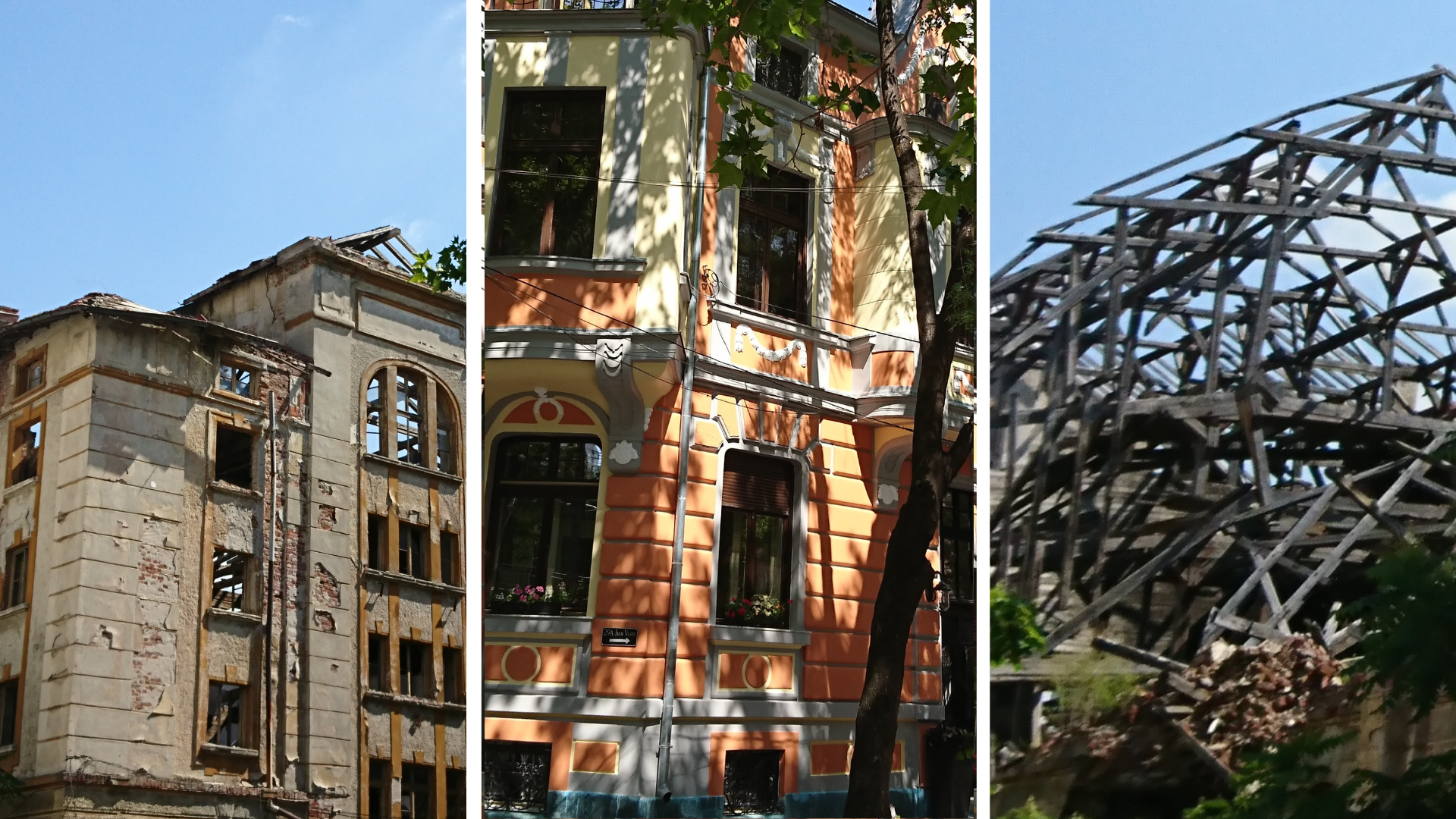
Admiring the blend of buildings, with some beautifully restored, some still in ruin, and some needing some love, before walking through the beautiful and lush Tsar Simeon’s Garden and spotting small groups of men playing cards under the shade of the leafy giant trees, before reaching the Old Town.
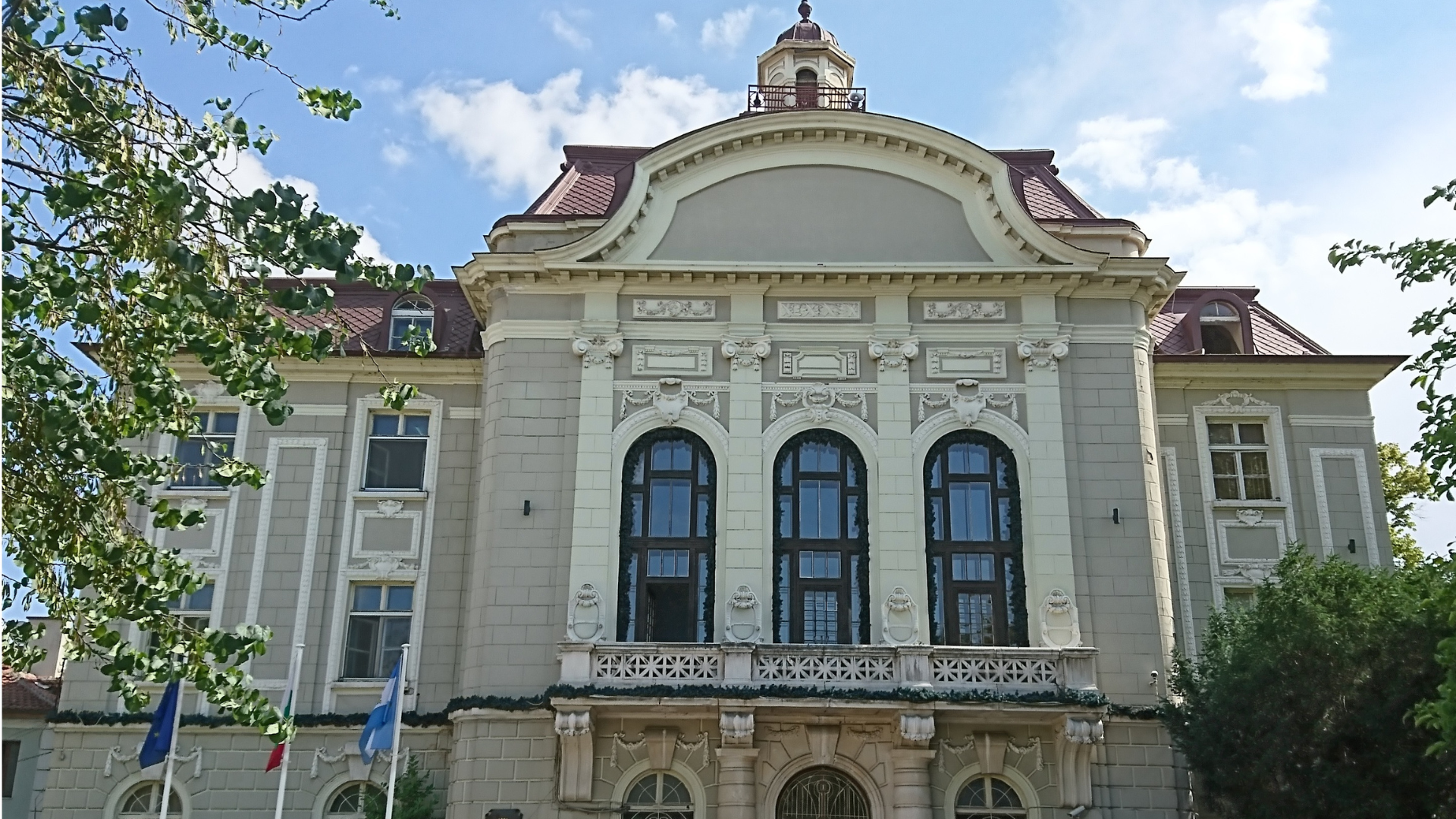
As we wandered toward the Old Town, we passed by the elegant and formerly known building of the Chamber of Districts, constructed between 1912 and 1914, during a time when Plovdiv was asserting itself as a key administrative and cultural centre. In 1959, it was renamed the Municipality of Plovdiv, continuing its legacy as a seat of local governance. Standing before it with its dignified facade, it quietly bridges the administrative ambitions of a bygone era with the ongoing pulse of the modern city.
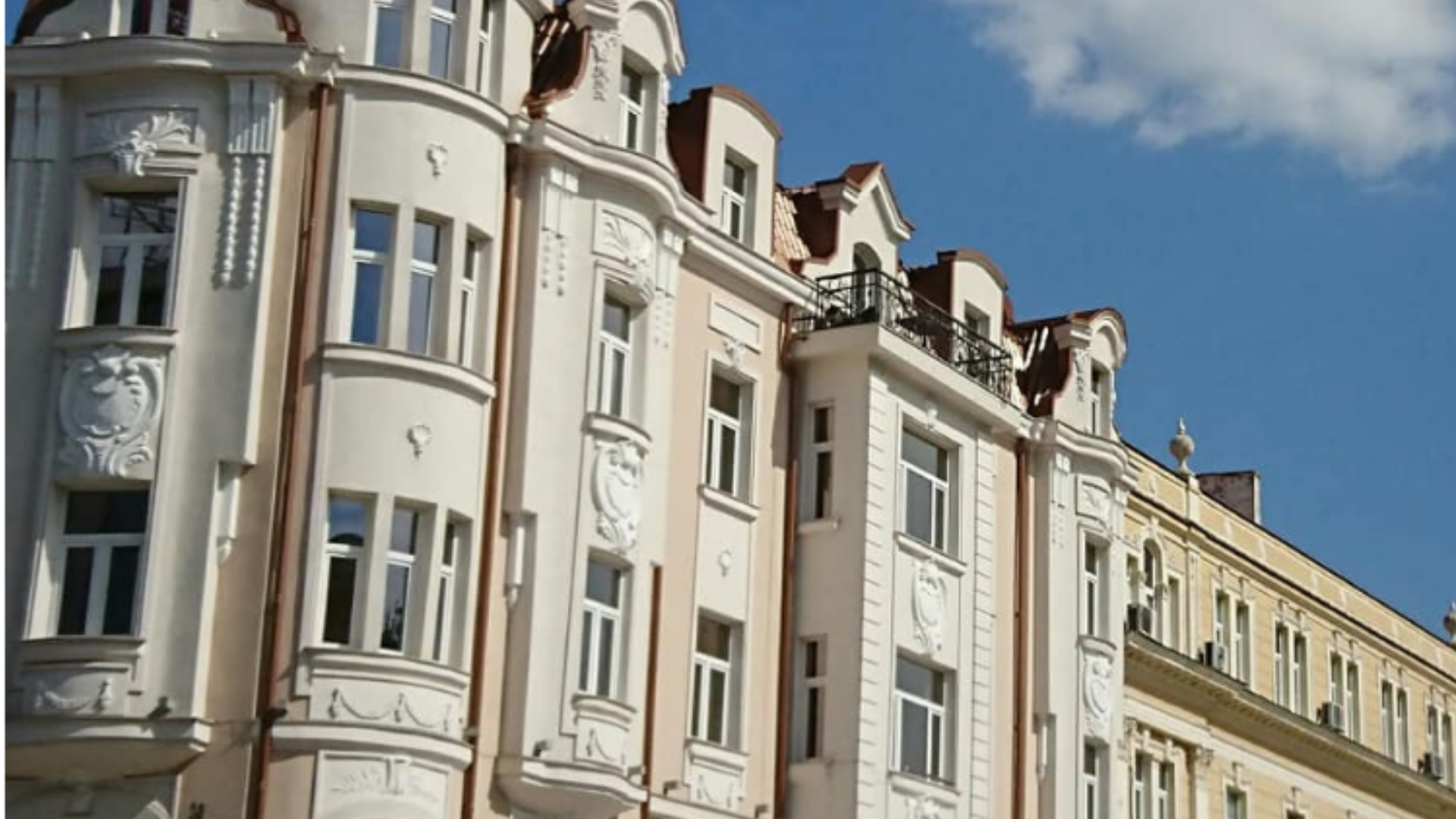
As we wandered down Knyaz Alexander I Street, Plovdiv’s grand pedestrian boulevard, I found myself frequently looking up, not just to admire the blue sky, but the architectural elegance that lined our path. This central boulevard is a living showcase of early 20th century design, where buildings from the Art Deco and Vienna Secession periods still stand with grace. What particularly caught my eye were the tall, narrow windows, minimal eaves, and stepped cornices, all classic Art Deco signatures that gave each façade a distinctive feel and vertical elegance. These features, coupled with ornate balconies and decorative reliefs, reveal the city's embrace of European architectural movements during the 1920s and ’30s.
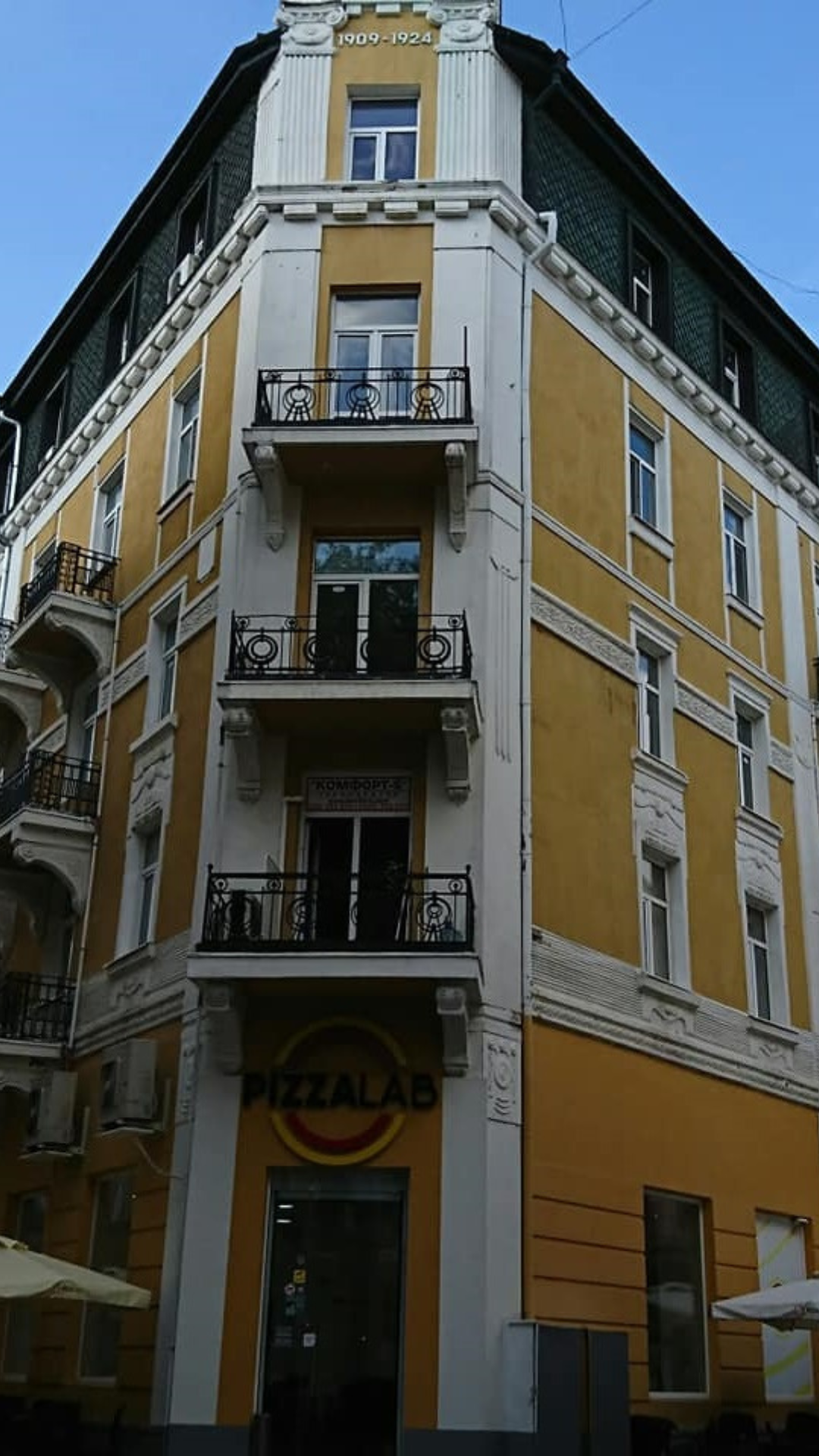
The corner buildings, particularly those built between 1909 and 1924, stand with quiet grandeur, their clean lines and decorative flourishes whispering stories of a cultured past.
Many of the buildings here are the legacy of local architect Kamen Petkov, whose vision helped shape much of modern Plovdiv.
Some buildings have been lovingly restored, their colours and curves revived, while others still wear their age in weathered dignity, but all contribute to the street’s charming atmosphere.
Either way, it’s a street made for wandering, where the history and beauty of this street lies in its blend; a tapestry of historical detail, softened by time and brought to life by those who still walk its length.
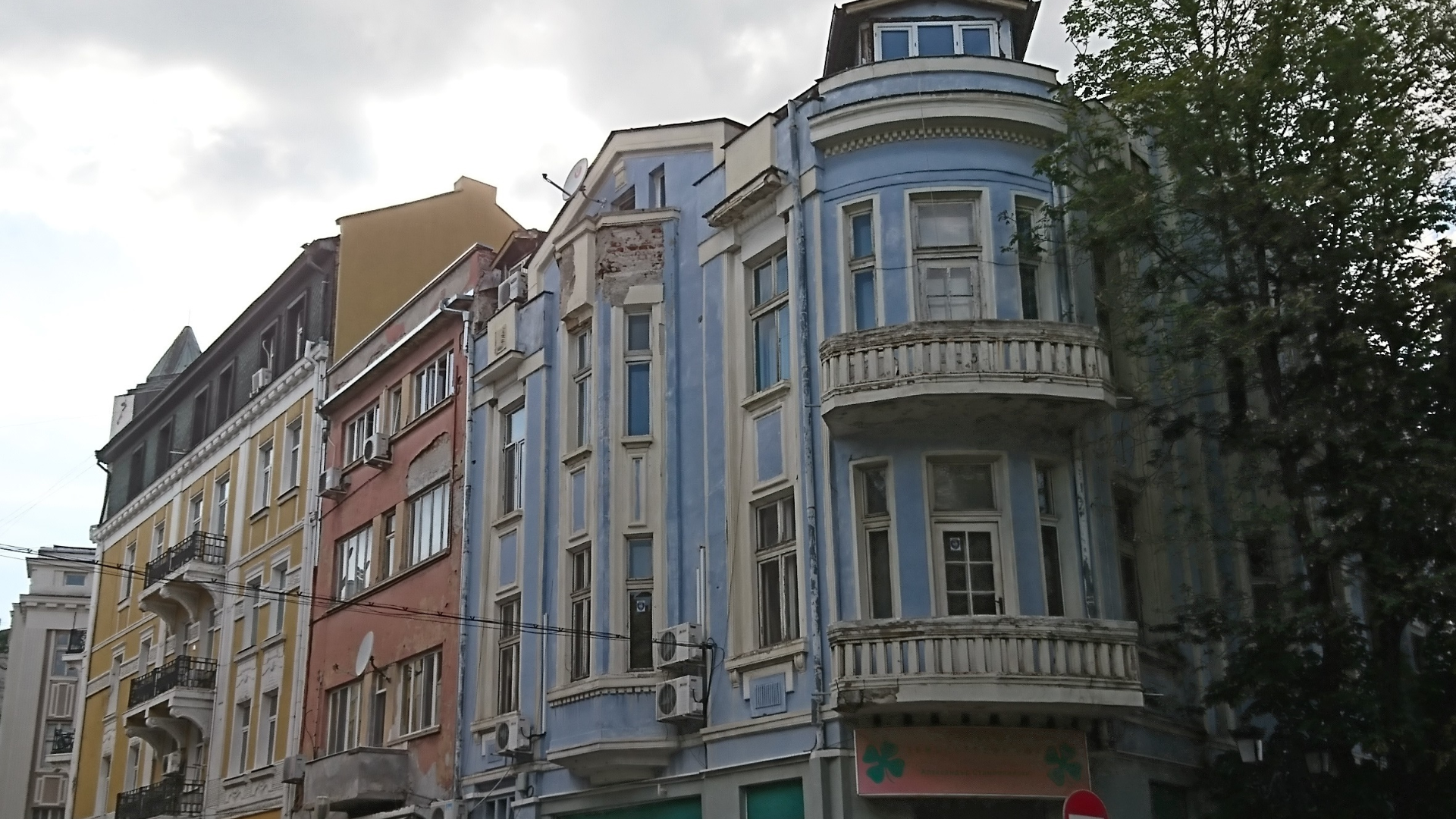
Turning into Metropolit Panaret Street, the architecture shifted subtly, yet beautifully. The grandeur of the main boulevard gave way to a quieter charm of narrow streets lined with more modest yet equally character filled buildings.
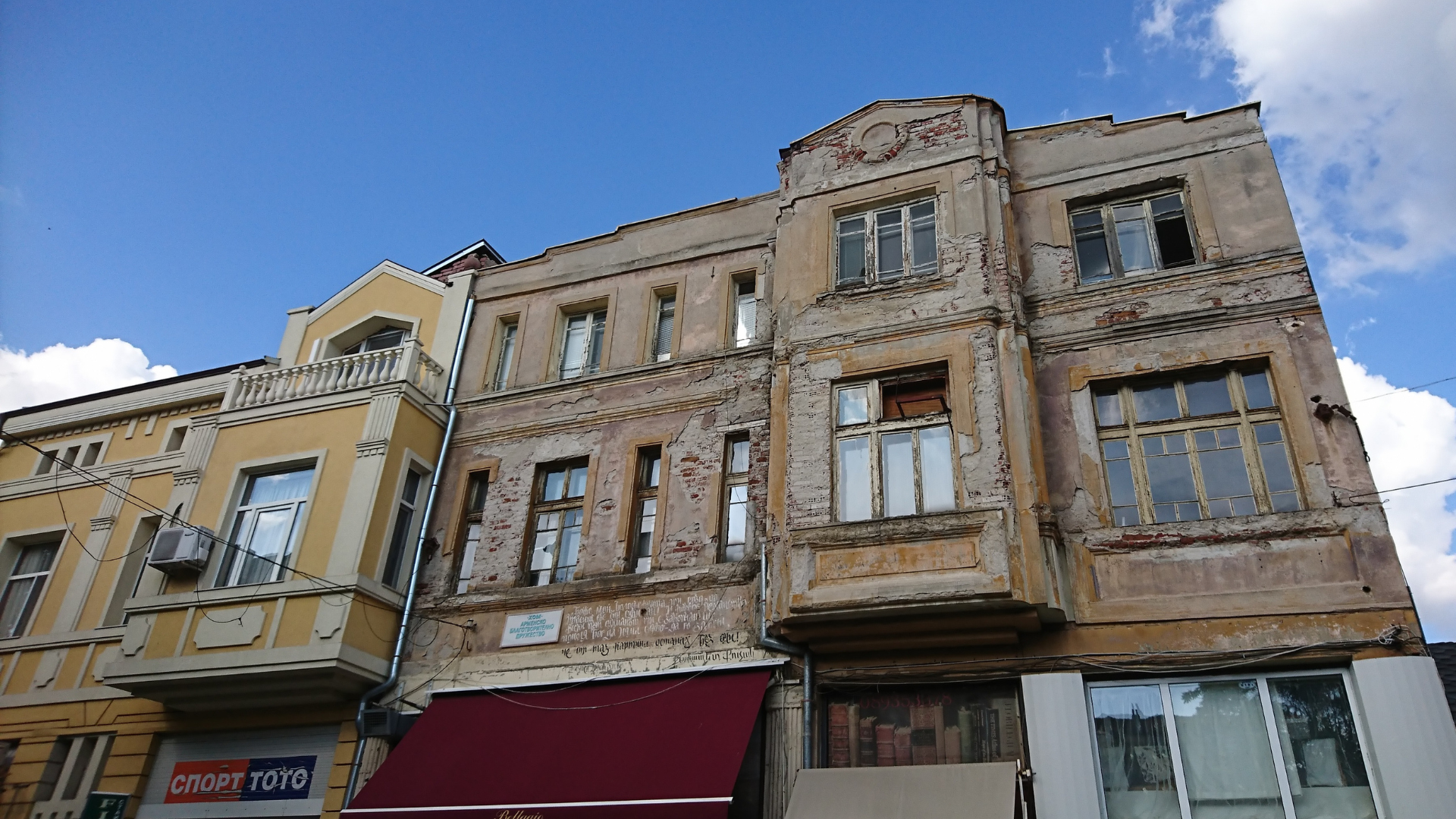
Here, early 20th century façades stood side to side with traces of Revival-style townhouses, their overhanging upper floors whispering stories of the city's layered past. Faded paintwork, and ornate ironwork balconies, added a lived in richness that made the street feel timeless. It was less polished than Knyaz Alexander I, but in many ways, even more reminiscent and a gentle reminder that beauty doesn’t always shout; sometimes it simply invites you in to look a little closer.
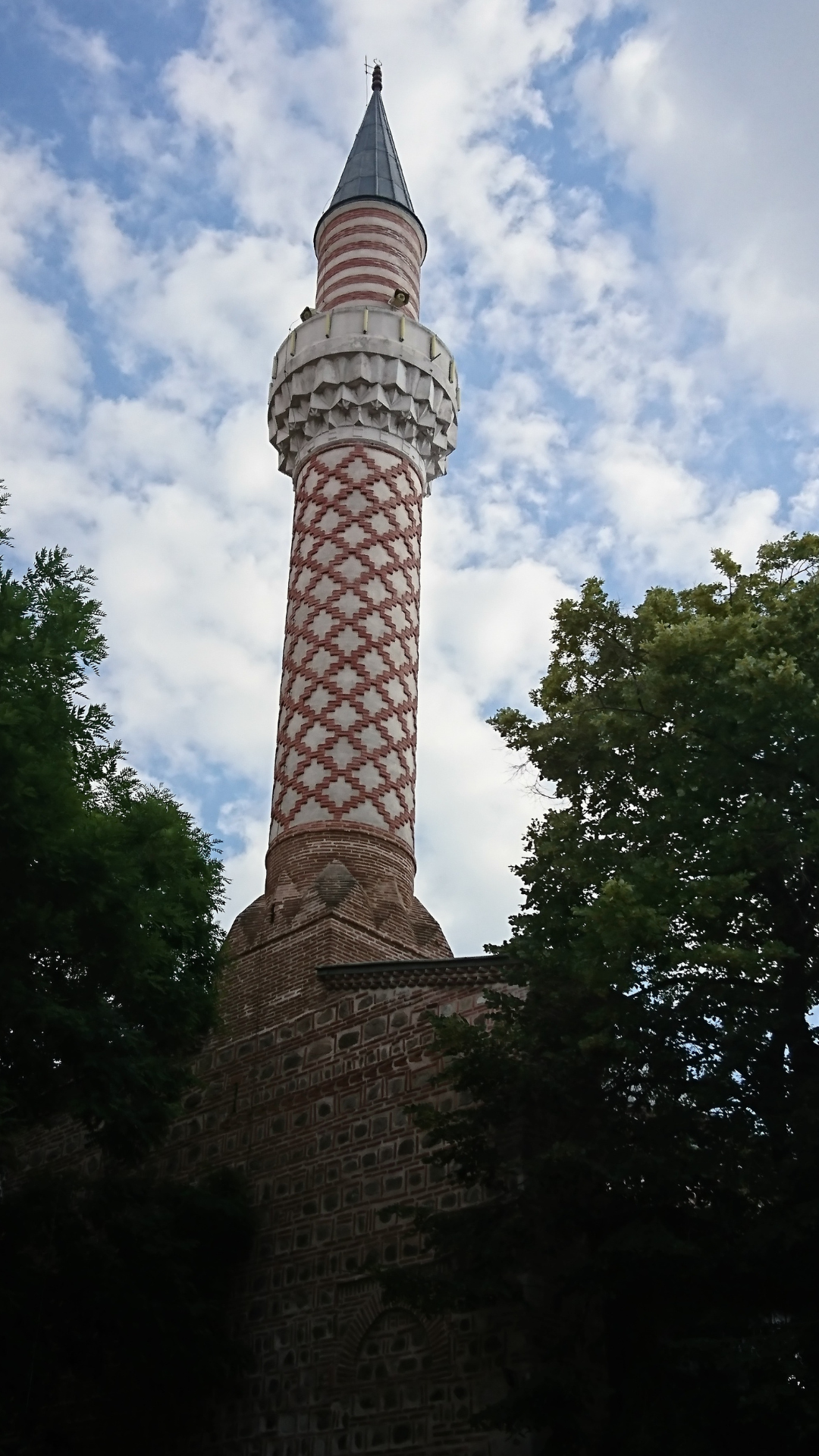
Seeing the minaret rising amidst the trees, I made my way to Dzhumaya Mosque, located in Plovdiv’s central square, Dzhumaya Square (Джумая площад).
The Dzhumaya Mosque (also spelled Cumaya or Jumaya), stands as one of the oldest and most significant Ottoman era buildings in Bulgaria. Its name, Dzhumaya, translates to “Friday,” referring to the Muslim day of communal prayer.
Built in the mid 14th century, shortly after the Ottoman conquest of Plovdiv in 1364, the mosque marks the transformation of the city into an important administrative and cultural centre under Ottoman rule.
The mosque was constructed on the site of a former Christian cathedral dedicated to Saint Petka, reflecting the shifting religious and political tides of the time. It was rebuilt in its current form under Sultan Murad II around 1420, making it one of the oldest surviving examples of Ottoman religious architecture in the Balkans.
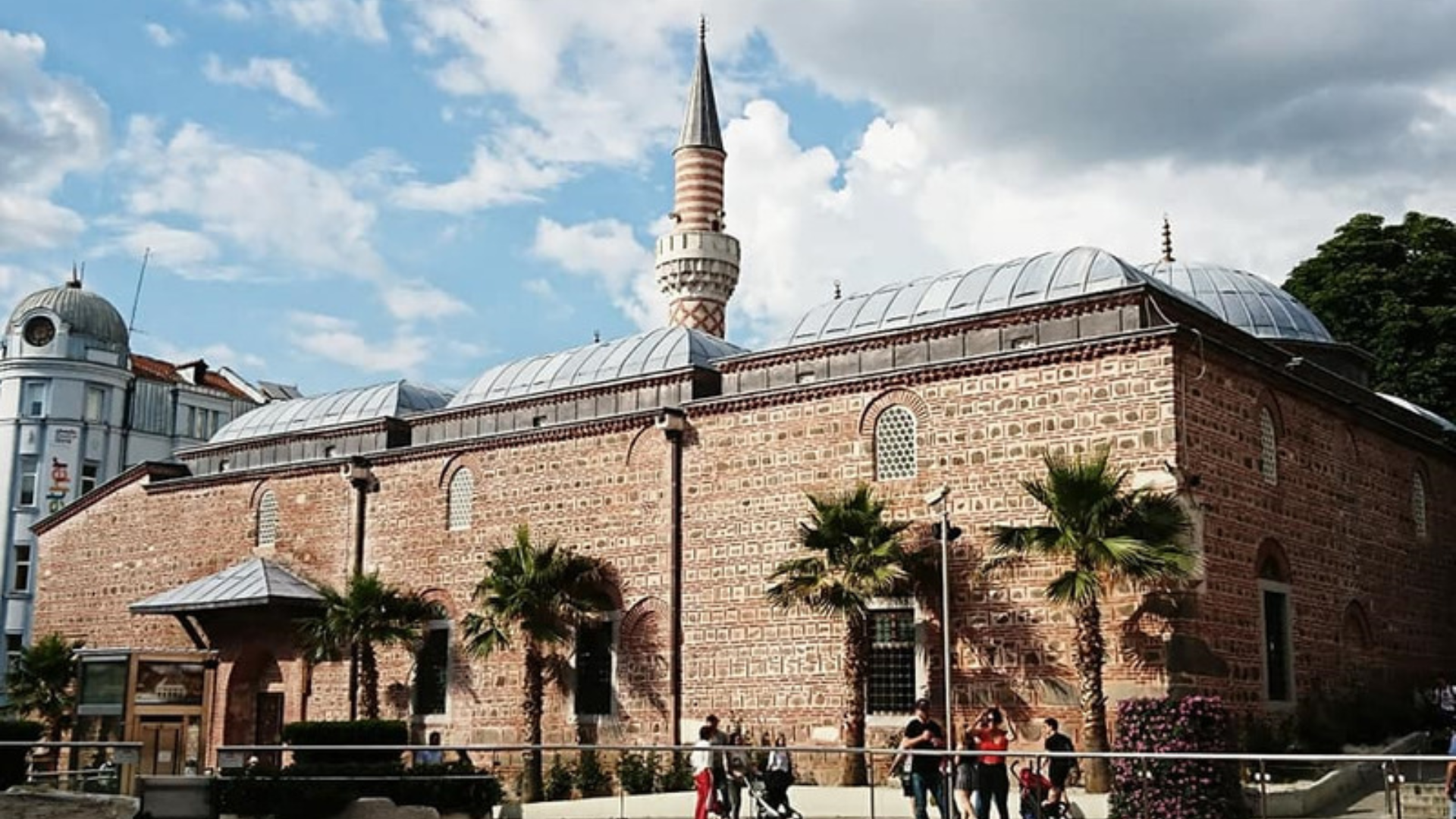
What sets the Dzhumaya Mosque apart is its impressive size and unique architectural style, constructed with alternating layers of red brick and white stone. Featuring nine domes each covered in lead, and resting on four massive pillars, a spacious prayer hall, and a single elegant minaret that rises above the surrounding rooftops. Inside, delicate floral and geometric patterns painted on the walls and ceilings lend a peaceful, sacred atmosphere.
Today, it remains an active place of worship and a key historical monument, quietly nestled in Dzhumaya Square, where the flow of modern Plovdiv echoes around its centuries old walls.
Standing before the Dzhumaya Mosque, with its quiet grace and centuries old presence, I was struck not only by its history but also by what lay just beside it.
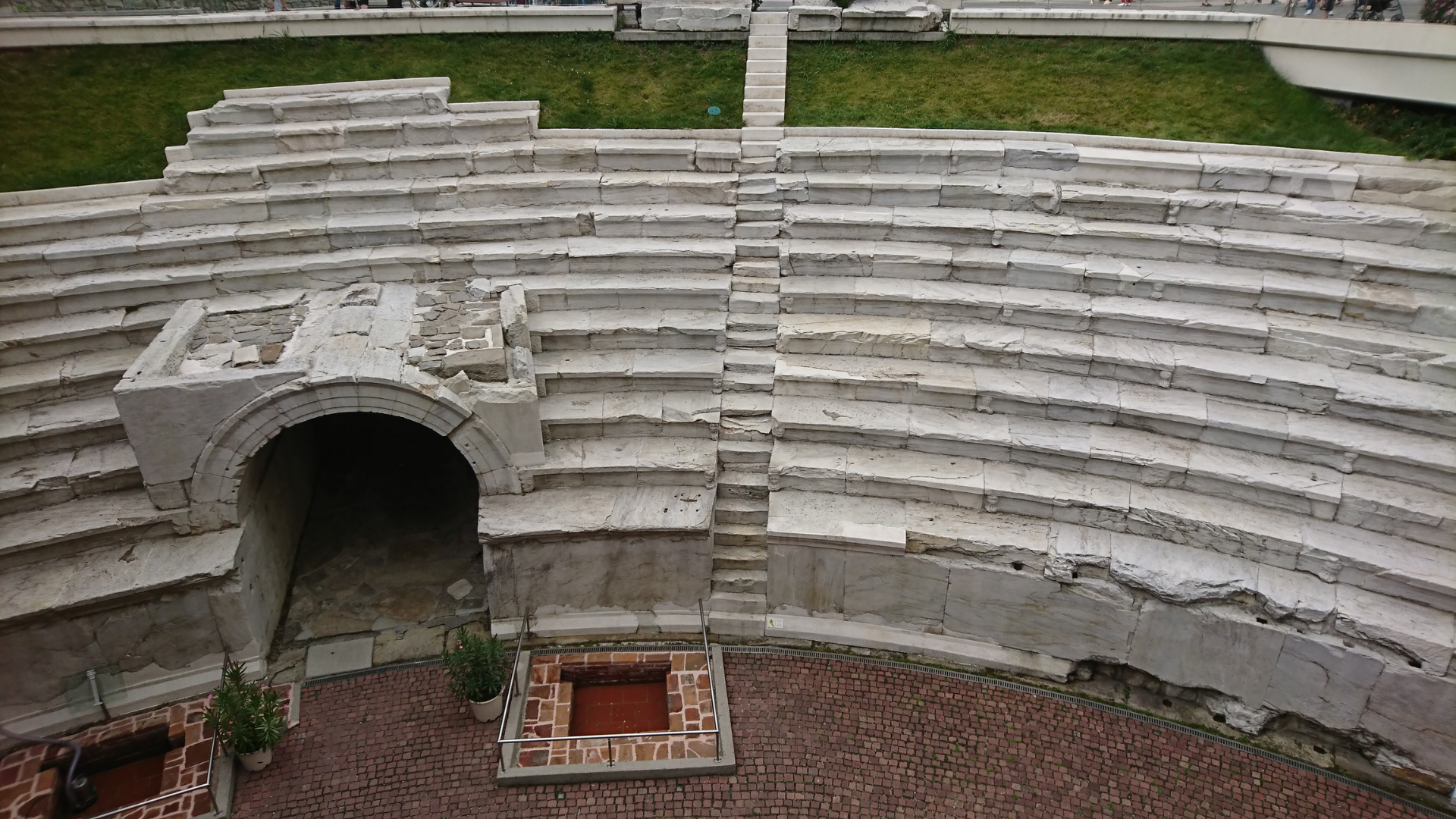
Adjacent to the mosque, tucked into the heart of the pedestrian zone, is one of Plovdiv’s greatest treasures, the Ancient Roman Stadium.
Built during the rule of Emperor Hadrian in the 2nd century, when the city was known as Philippopolis, the stadium is one of the most remarkable landmarks of Roman-era Bulgaria. The stadium itself, with fourteen tiers of curved white marble seating, once held up to 30,000 spectators, who gathered for athletic contests and grand public events, now lies mostly beneath the modern city, running under Knyaz Alexander I Boulevard.
A carefully excavated section, including one of the arched tunnels once used by competitors to enter the arena is still visible from street level. This well-preserved fraction of the antiquity structure is slowly being revealed, layer by layer. With efforts steadily underway to unearth more. A preliminary architectural and archaeological project, launched in 2008, is gradually revealing the stadium’s scale as part of the future Underground Museum of Philippopolis.
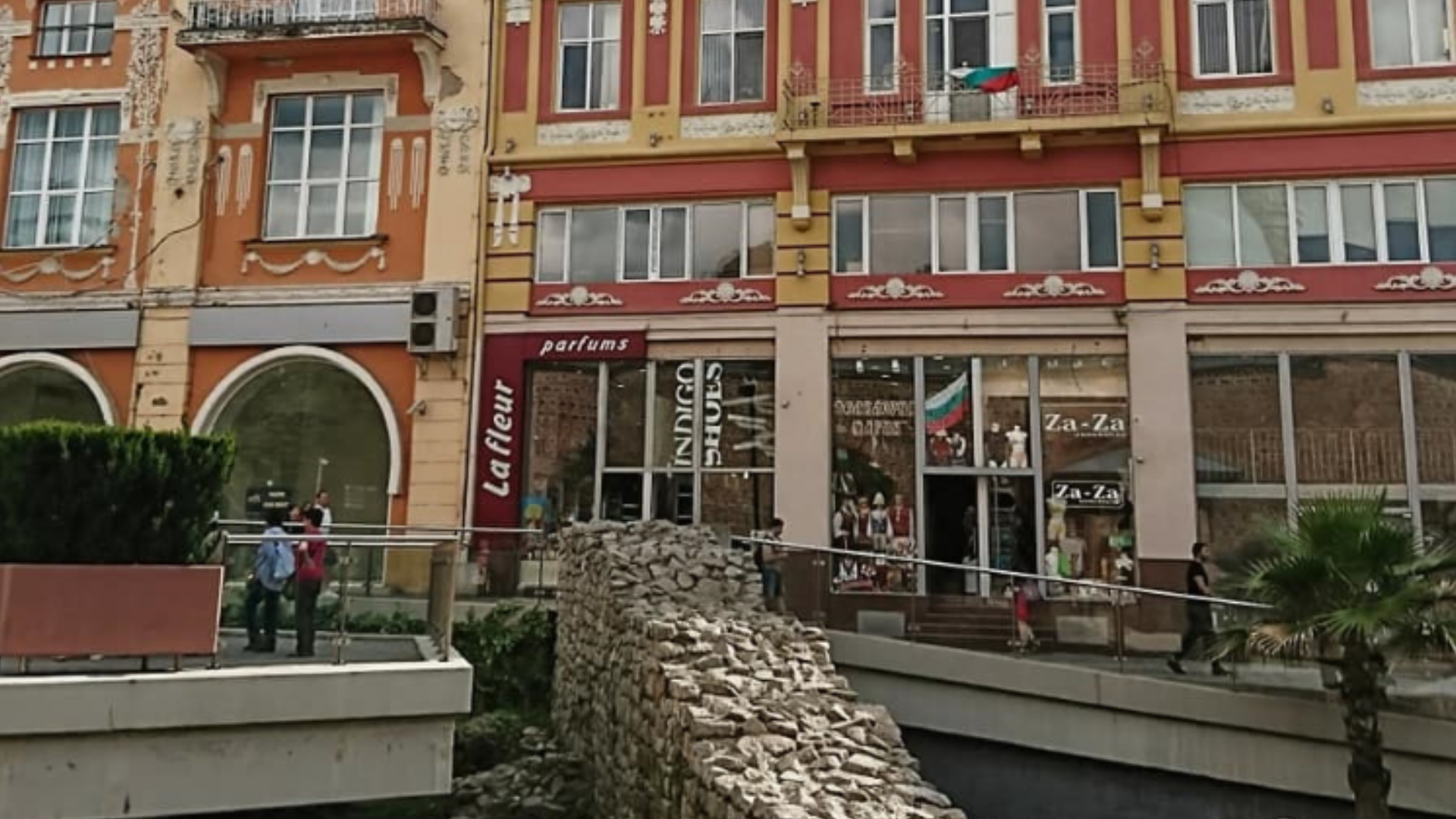
Surrounded by cobblestoned walkways and a stretch of 150 year old, beautifully restored and colourfully painted residences, this area blends Ottoman, Revival-era, and Roman legacies into a shared space.
Walking here, among Roman stonework and Ottoman arches, past cafes and galleries, you’re reminded of just how many civilisations have called this place home, and how gracefully Plovdiv carries them all. For those sipping a coffee in a close by café, it’s a rare experience to glance down into Roman ruins, and a powerful reminder that Plovdiv is not just a city built on history, but one still uncovering it.
With the late afternoon light softening into early evening, we found a quiet spot to enjoy a bite to eat, and a well earned pause after a day steeped in history and beauty. The atmosphere was unhurried, as if even the city itself was relaxed. Reluctantly, we left the comfort of the café and made our way back to the car, thinking our visit was drawing to a close.
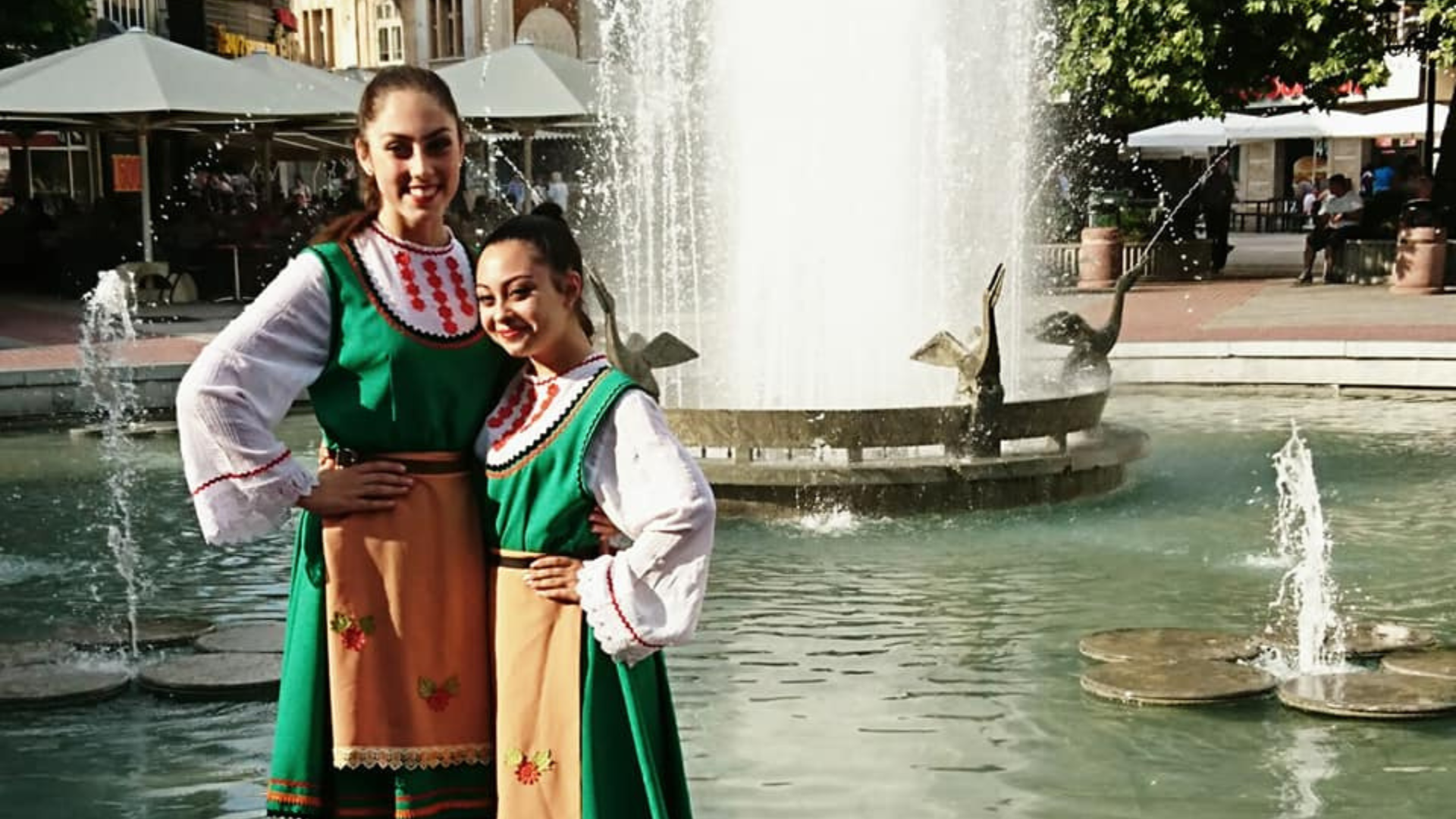
But Plovdiv had one last gift to offer. Near the Fountain of the Municipality of Plovdiv, a small stage had been set, and a group of local school children had gathered nearby, dressed in vibrant traditional costumes.
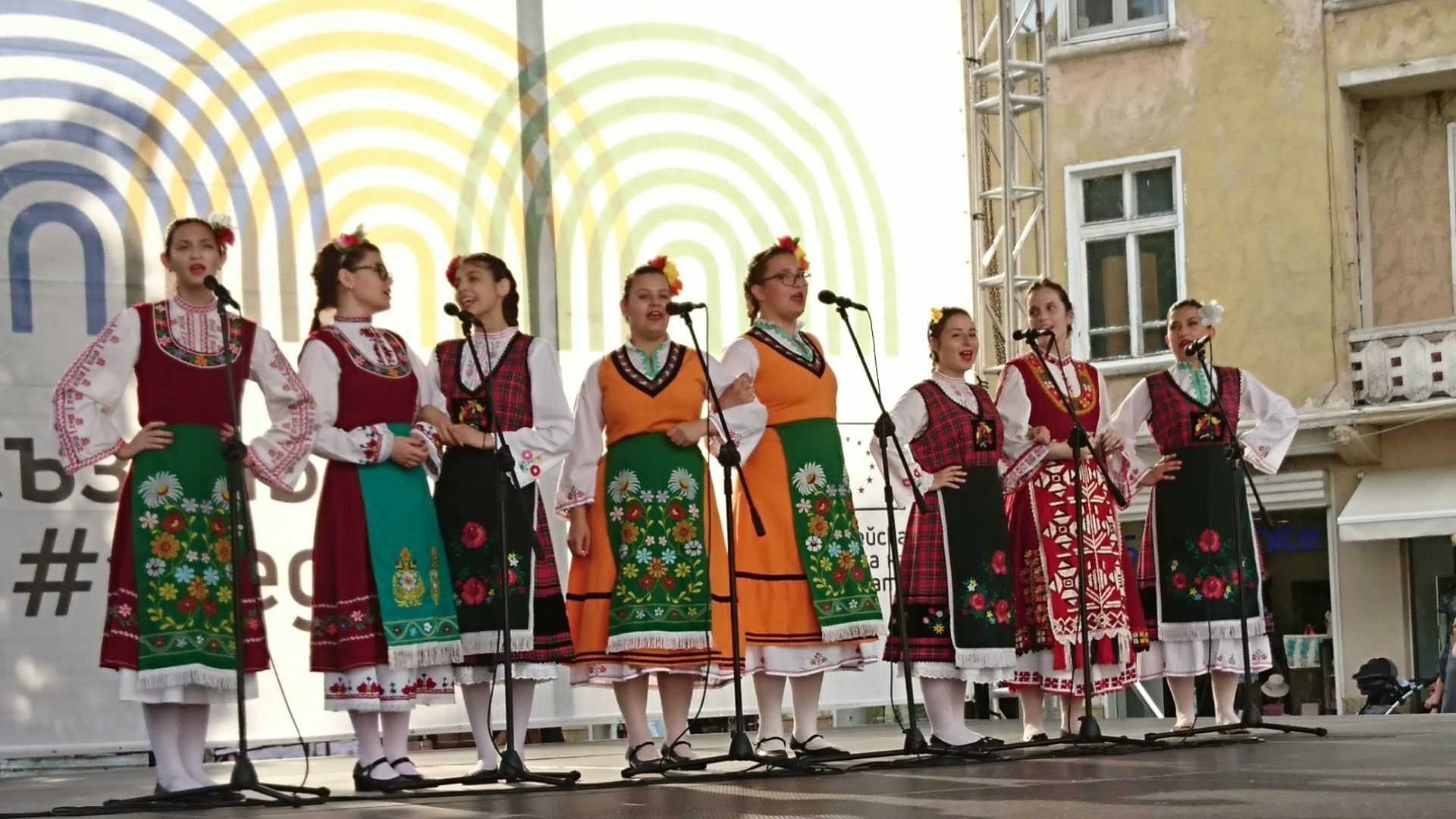
Their youthful energy and bright smiles filled the air as they rehearsed songs and dance steps in preparation for an evening of folk performance. It was a heartwarming and unexpected surprise, a beautiful reminder that while Plovdiv proudly wears its centuries of history, its soul continues to thrive through the rhythm, colour, and joy of its younger generation.
Leaving Plovdiv behind, we turned west, then south-west, beginning the four and a half hour drive back to Blagoevgrad. As the day slipped into night and the sun dipped behind the mountain ranges, the light softened into a dusky glow. My friend behind the wheel, the gentle hum of the road beneath us, while her dog, our sweet companion for the day was curled up contentedly in the back seat. I found myself deep in thought, reflecting on what had been a truly memorable and wonder-filled day. The layers of history, the beauty of rose fields and Roman stone, the voices of children preparing to sing under the stars, all of it tucked into the folds of memory like petals in a journal.
And of course, one memory remains especially close to my heart, standing amongst fragrant rows of Bulgarian roses, carefully picking my own blooms, breathing in their sweet scent. A highlight not just of the day, but of the entire journey.
Though Sofia had been left behind, its planetary energy had slightly softened. Still within those same latitudinal lines, in the Rose Valley and in Plovdiv, the echoes of that earlier intensity remained, but with a gentler flow. The influence stirred by a strong Mars line and the penetrating interest of Pluto had mellowed into a more reflective flow: not a push to uncover, but a quiet desire to connect more deeply with place and meaning. Jupiter’s lingering warmth continued to bring joy and lightness to the day, in laughter, in beauty, and in the unexpected delight of simply being where I was. The same planetary parans, now more subtle, still moved with me: Venus and Mars blending appreciation with presence; Saturn and Neptune grounding imagination into form; and the tender pull of Moon and Neptune heightening my sensitivity to the land, the history, and the stillness between moments.
Somewhere in the distance, the lights of Blagoevgrad awaited, but my heart lingered just a little longer, comforted in rose-scented memories.
As this second Soul Travel chapter, Experiencing the Heart of Bulgaria’s Rose Valley, gently draws to a close, I find myself carrying the essence of this land with me, a blend of soft petals, ancient stone, and quiet moments that continue to linger.
Bulgaria offers more than breathtaking scenery and storied ruins; in the Rose Valley, it reveals itself not through grand displays, but in quiet, lingering moments, the morning scent of roses in bloom, and the timeless charm nestled among Skobelevo's fragrant fields. The living history in Plovdiv’s presence, and the joy of friends gathering to play cards in the shaded parks, the day moved without urgency. Each place asked not to be ticked off a list, but to be felt, to be experienced as memory in the making. These are the gifts that stay with you.
My connection to this valley, its people, and its deep, unfolding beauty has quietly taken root. And though this day came to an end, the journey through Bulgaria’s spirit, and the stories written in its landscapes, continues to open.
See you soon,
Consider signing up to receive new Soul Travel blogs, travel reflections, and astrocartography insights as new destinations are shared.

✨ If this story resonated with you, you are warmly invited to continue the journey in a way that feels aligned with you.
✨ Explore personalised insights through consultations
✨Begin with ‘The Journey’ Orientation
✨Listen to Destined Places podcast stories
✨Save and share Soul Travel inspiration on Pinterest