Gortyn, Crete | Where Legal Wisdom is Carved in Stone
Tucked away in Crete’s southern Messara Plain lies Gortyn, also spelt Gortyna or Gortys, where human habitation dates back to the end of the Neolithic period. Its roots trace into the ancient Minoan era, with archaeological remains of early residential housing found near the nearby village of Mitropolis. By the 7th c. BC, temples dedicated to Apollo and Athena were being constructed, marking Gortyn as a site of growing religious and civic importance.
Over time, as the island's power dynamics shifted, Gortyn rose to prominence. In the 3rd c. BC, it defeated the neighbouring city of Phaistos in a local conflict, asserting dominance over the wider Messara region and establishing itself as a powerful Cretan city state. Later, in the 1st c. BC, it was named the Roman capital of Crete and Cyrenaica, overshadowing the once dominant Minoan capital of Knossos and evolving into an even greater centre of influence.
As ever, the Cretan landscape appears shaped not only by nature, but also by the enduring imprint of empire.
One doesn’t simply arrive in Gortyn, you approach it. Travelling southwest from Heraklion, Crete’s modern day capital, and passing just beyond the quiet village of Agioi Deka, the landscape begins to change. Here, a small stretch of asphalt road, number 97, cuts through the remains of an ancient city that once commanded vast attention, quietly dividing its eastern and western reaches.
On one side, the ruins of the church of St. Titus, a modest Roman Odeon, and the remnants of civic life, including the uniquely important inscribed stone tablets, now within an enclosure being protected from the elements. On the other, scattered across the fields, fragments of colonnades and temple ruins emerge, whispering of centuries gone by. These are the remains of an ancient city with an unbroken history spanning more than 6,000 years, a place that bore witness to the tides of empire, to the rhythms of faith and trade, and to the ever shifting identity of Crete itself.
From its origins in the late Neolithic period, through Minoan settlement and Roman imperial power, Gortyn was never merely a village, it was a centre of authority, culture, and connection. Its reach extended far beyond the olive groves strewn across the hills and quiet Messara Plain of southern Crete. Across the Libyan Sea, Gortyn maintained enduring administrative and cultural ties with Cyrenaica, the Roman province in what is now modern day Libya, anchoring the ancient city state firmly within the broader Mediterranean world. Closer to home, along Crete’s southwestern coastline, Lissos, with its sheltered harbour and renowned healing sanctuaries, served as one of Gortyn’s maritime outpost, a place where sacred tradition met everyday life, and where pilgrims, merchants, and Roman officials arrived with the rhythm of the tides.
From the ticket office, I learn that the western side of the road, being home to the Church of St. Titus, the small Roman Odeon, and traces of the city’s former civic core, including the rare inscribed stone tablets, an enclosed part of the official archaeological site and requires an entrance fee. In contrast, the eastern side of the road archaeological site is open to wander freely, with no ticket required, allowing you to roam at your leisure through the scattered remains of ruined temples, the Praetorium, Roman baths, and other traces of this ancient city site.
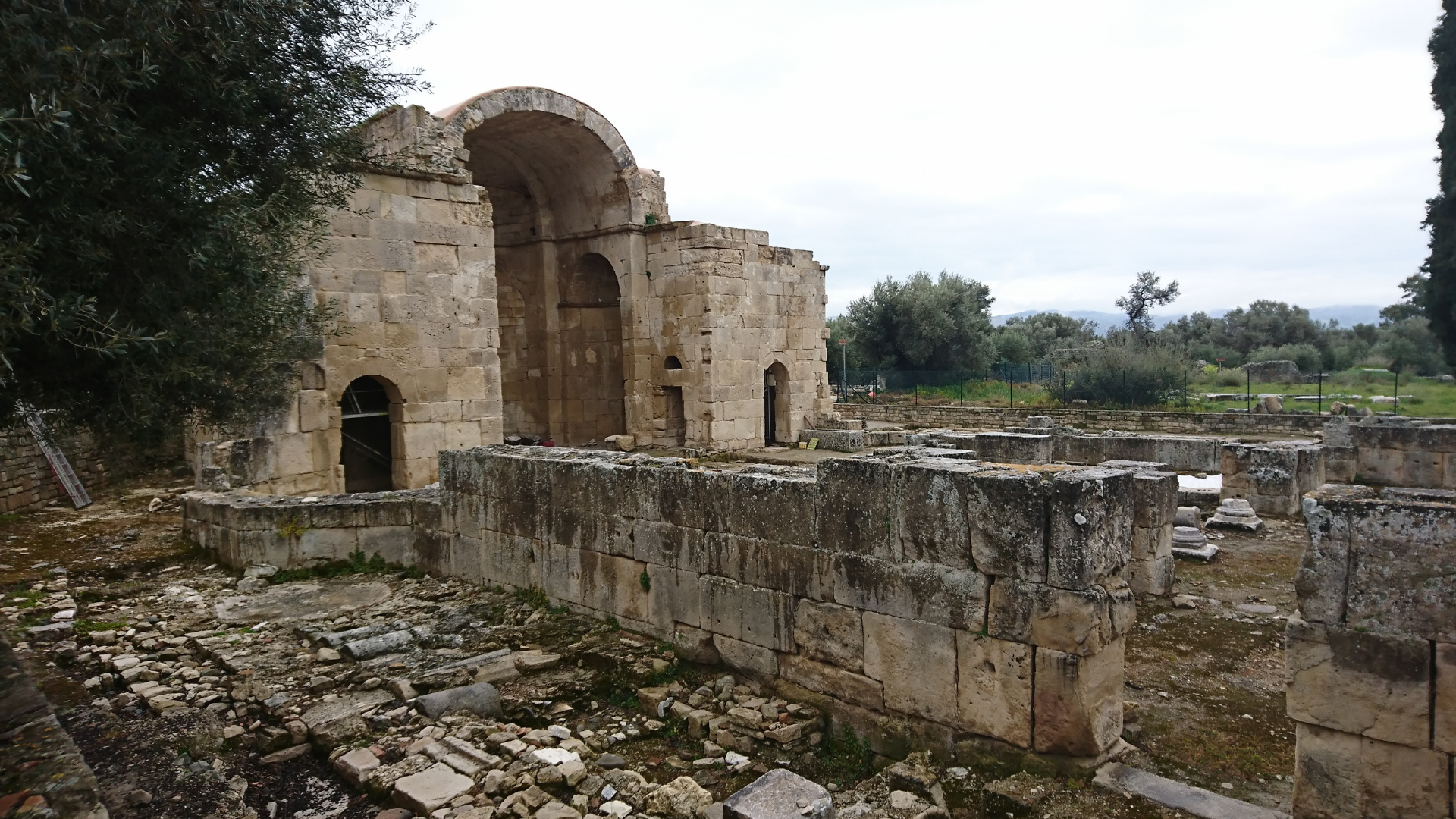
From the entrance, it’s only a short walk to the enclosed western side, where the first ruin you see is the 6th c. Byzantine Church of Agios Titus, named in honour of the disciple of the Apostle Paul and the first bishop of Crete. It was here in Gortyn that Titus preached the Christian faith, making this the first city state on the island to adopt Christianity. He would go on to become the island’s patron saint, with two temples dedicated to him, their ruins still visible today.
After being brought under Byzantine control in 330 AD, Gortyn remained the ecclesiastical and administrative centre of Crete for nearly five centuries. At its height, it boasted the island’s largest population and retained a position of significant influence. However, its decline began in 796, when a devastating earthquake left much of the city in ruins. The final blow came in 824 AD, when the Saracens invaded and the capital of Crete was moved to Candia (al-Khandaq), known today as Heraklion, signalling the end of Gortyn’s long standing prominence and at the time, condemning it to historical obscurity.
The Church of St. Titus was constructed during the reign of Emperor Justinian. While definitive evidence remains elusive, it’s widely believed that the church was built atop an earlier pagan temple, a common architectural practice in Crete and across Greece, symbolising the shift from the worship of the Pantheon gods to the spread of Christianity. The church was reopened to the public in 2019 following restoration, with the most striking feature of the structure today being its high domed apse and the adjoining chapels on either side, standing solemnly amid the quiet ruins.
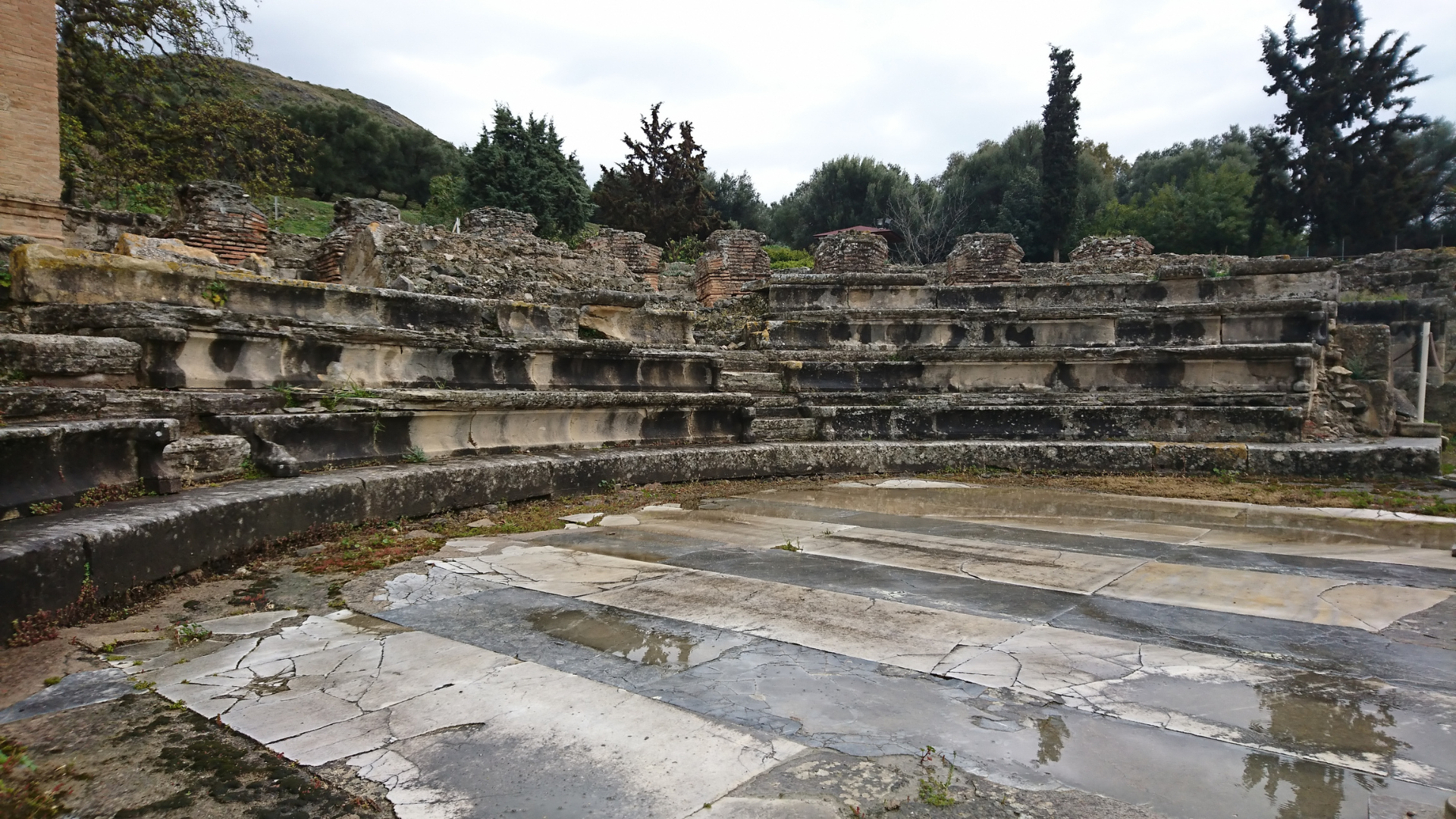
Walking a short distance from the ruins of the church, the atmosphere shifts again, from solemnity to the echoes of performance. Nestled within the same western precinct of ancient Gortyn lie the remains of the Roman Odeon, a smaller yet significant structure that once brought music, poetry, and public address to life.
Built what was likely in the 1st or early 2nd c. AD under the reign of either Emperor Trajan or Hadrian, the Odeon was a cultural gathering space, more intimate than a grand amphitheatre, yet no less considered in its design. Unlike larger venues designed for gladiatorial contests or theatrical dramas, Odeon’s were constructed with acoustics in mind, their purpose centred on clarity of voice, storytelling, and musical performance. In Gortyn, its placement is particularly significant. Positioned directly in front of the great stone wall inscribed with the Gortyn Law Code.
Three rows of seating still remain, offering a tangible sense of how the audience would have encircled the stage. The curved formation of these marble benches wasn’t just aesthetic. Roman architects understood that sound needed guidance, and the semi-circular cavea, coupled with stone materials and the precise geometry of the structure, enhanced vocal projection, allowing words and melodies to travel unamplified through the space.
Though weathered by time, the Odeon whispers of Gortyn’s civic pride, a place where ideas, laws, and art were shared publicly. Here, in this modest yet masterfully constructed space, voices once carried with purpose, echoing the cultural richness of a city deeply woven into the fabric of Crete’s past.
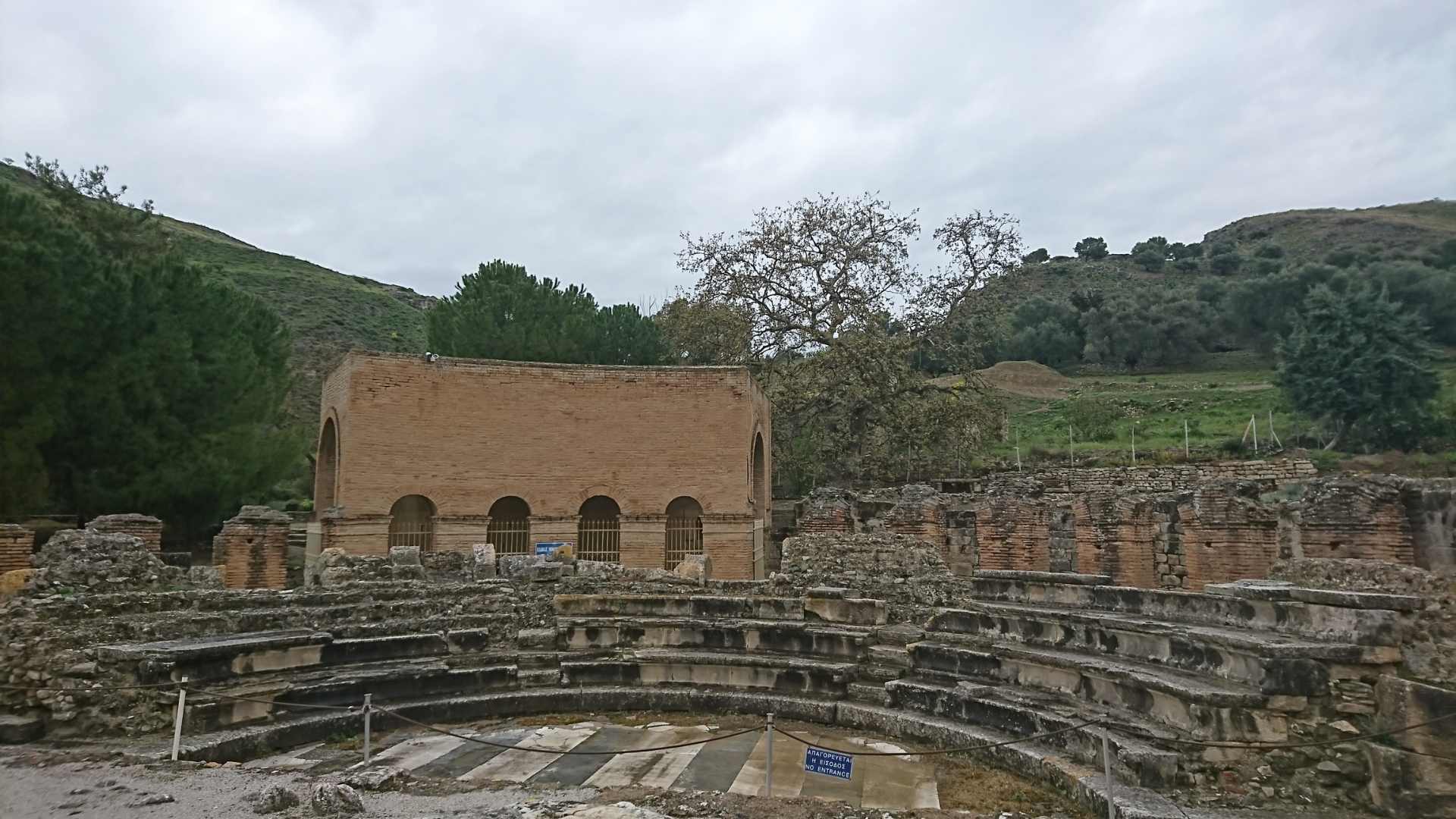
To the back of the Roman Odeon stands the most important archaeological find in the ancient city state of Gortyn, now housed within a red brick structure to protect it from the elements.
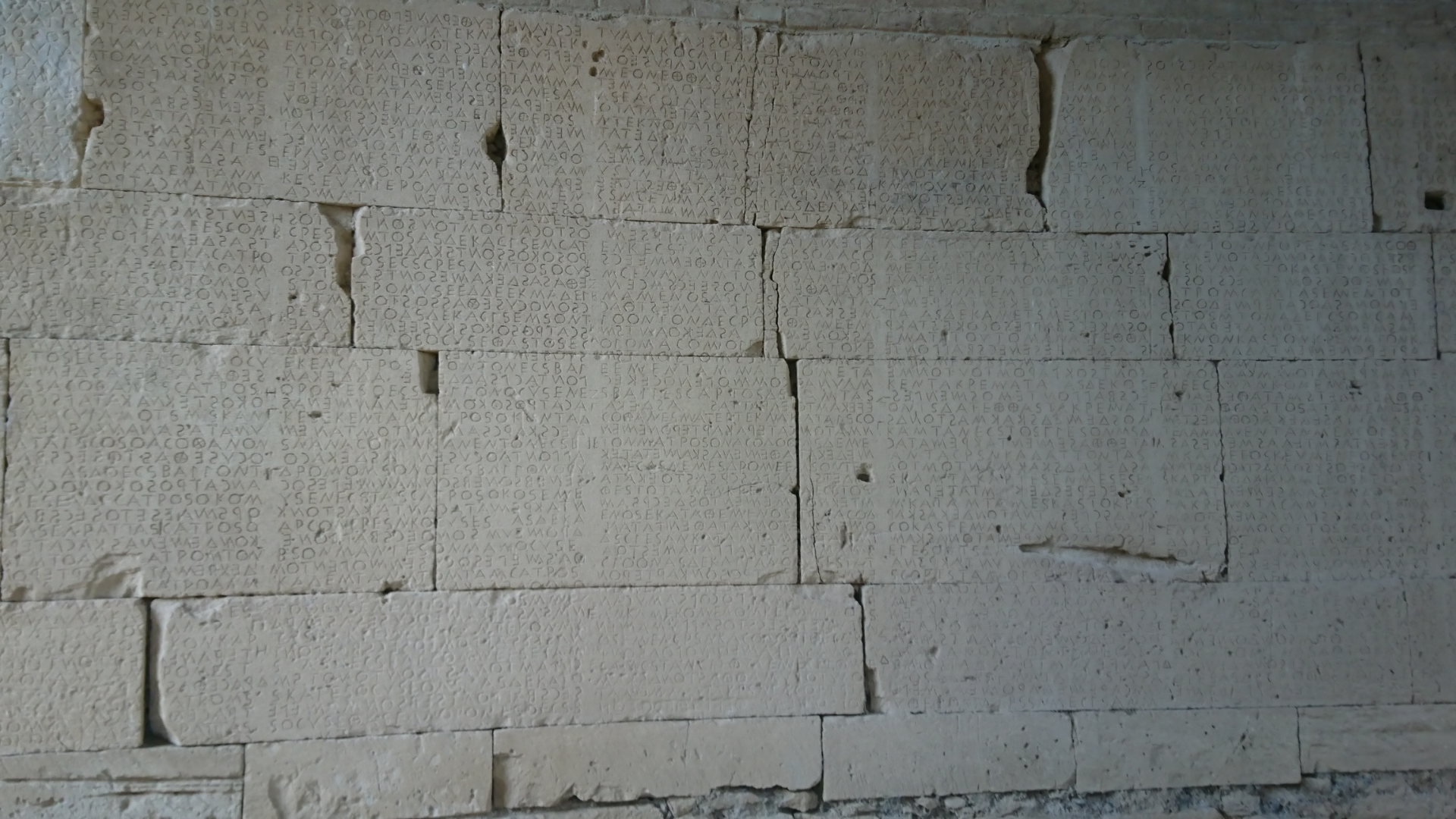
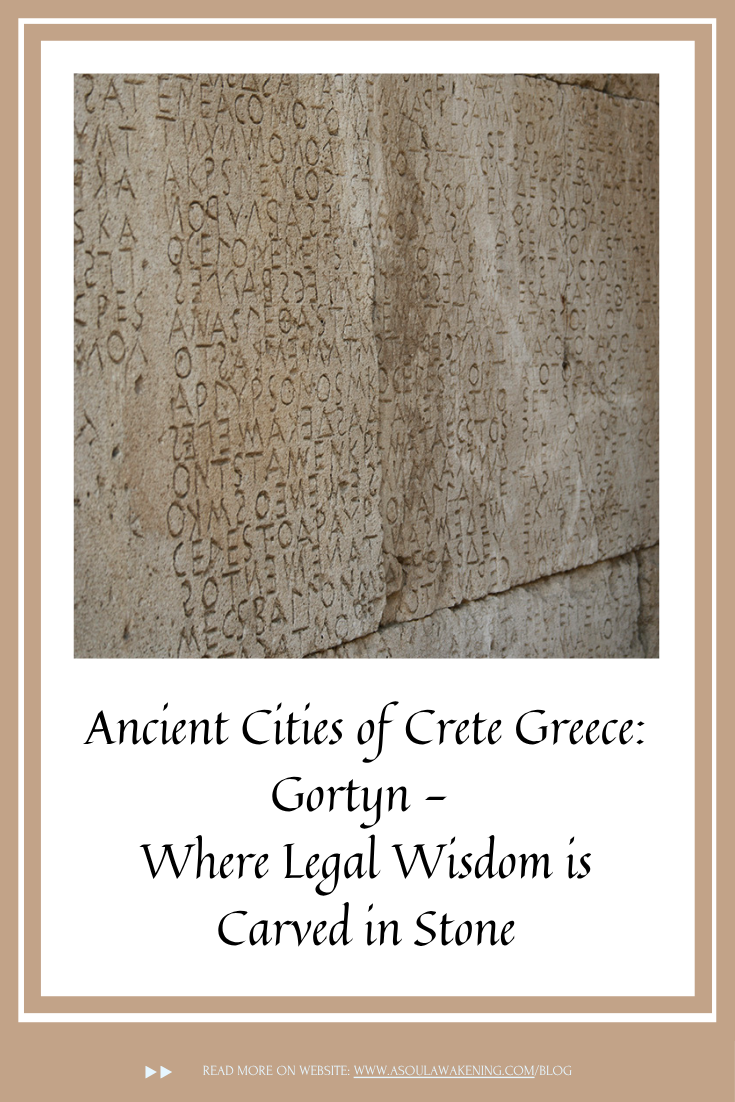
These are the hand carved stone tablets, today known as the Gortyn Law Code. This extensive legal inscription, written not on parchment or etched in clay, but preserved in stone and still anchored to the landscape that once upheld these laws, marks the beginning of Gortyn’s modern archaeological story.
The discovery of the Law Code began not in a grand temple or formal excavation, but rather by chance. In 1857, two French travellers, Perrot and Thenon, came across a fragment of inscribed stone embedded in the wall of a watermill in the nearby village of Agioi Deka. Another fragment was found within the walls of a local house. These finds sparked immediate interest, as scholars began to realise that the inscriptions related to ancient laws, rules about adoption, inheritance, and social order.
It wasn’t until 1884, while Crete was still under Turkish rule, that Italian archaeologist Federico Halbherr arrived in the area and made a truly pivotal observation. The nearby river tributary, once feeding a local water mill, had altered its course. Where water had previously flowed, over a portion of an ancient wall. Until then submerged and concealed, now stood exposed. Along this weathered surface, Halbherr noticed multiple rows of small, deliberate letters. Realising the potential significance of the find, he sought and obtained permission from the local landowners, though under the watchful constraints of the Ottoman authorities. When he finally returned, and was legally permitted to continue his work, Halbherr's excavation revealed a semicircular wall composed of twelve massive stone slabs, each inscribed with precise lettering, 605 lines of law, carved in stone, and preserved across centuries.
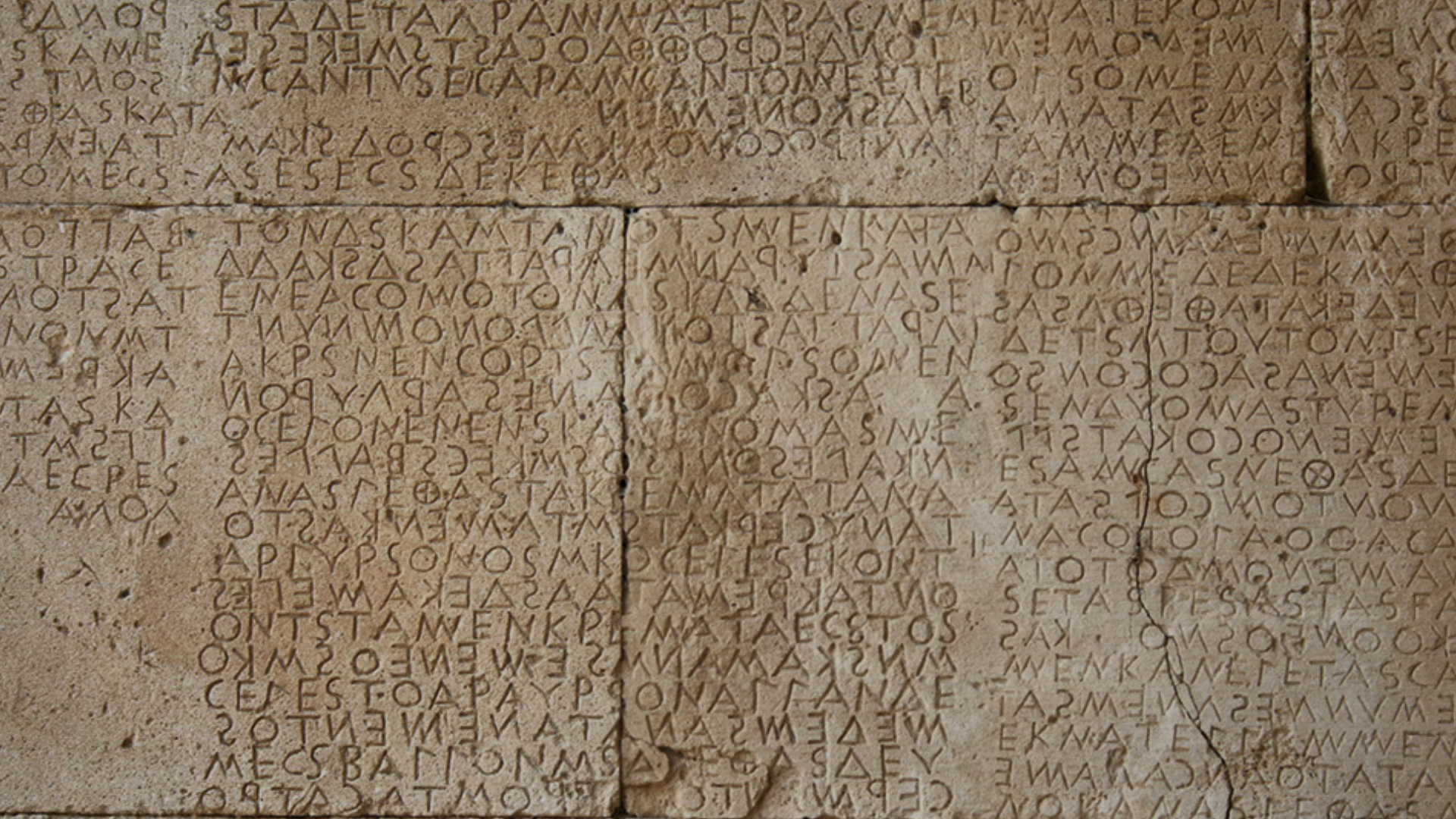
These carefully carved laws, created in the first half of the 5th c. BC, were written in boustrophedon, an early Greek style where the script alternates direction from one line to the next.
The Code regulated many civic matters, including family law, divorce, inheritance, and the adoption of children; property rights, and even the rights of women, offering one of the earliest and most complete legal texts of the ancient Greek world.
The positioning of these stone carved laws, adjoining the Roman Odeon, presents a striking juxtaposition: performance and regulation, the voice of song beside the voice of law. Together, they offer a deeply human representation of an ancient society, where justice was carved in stone, and entertainment played out in the open air.
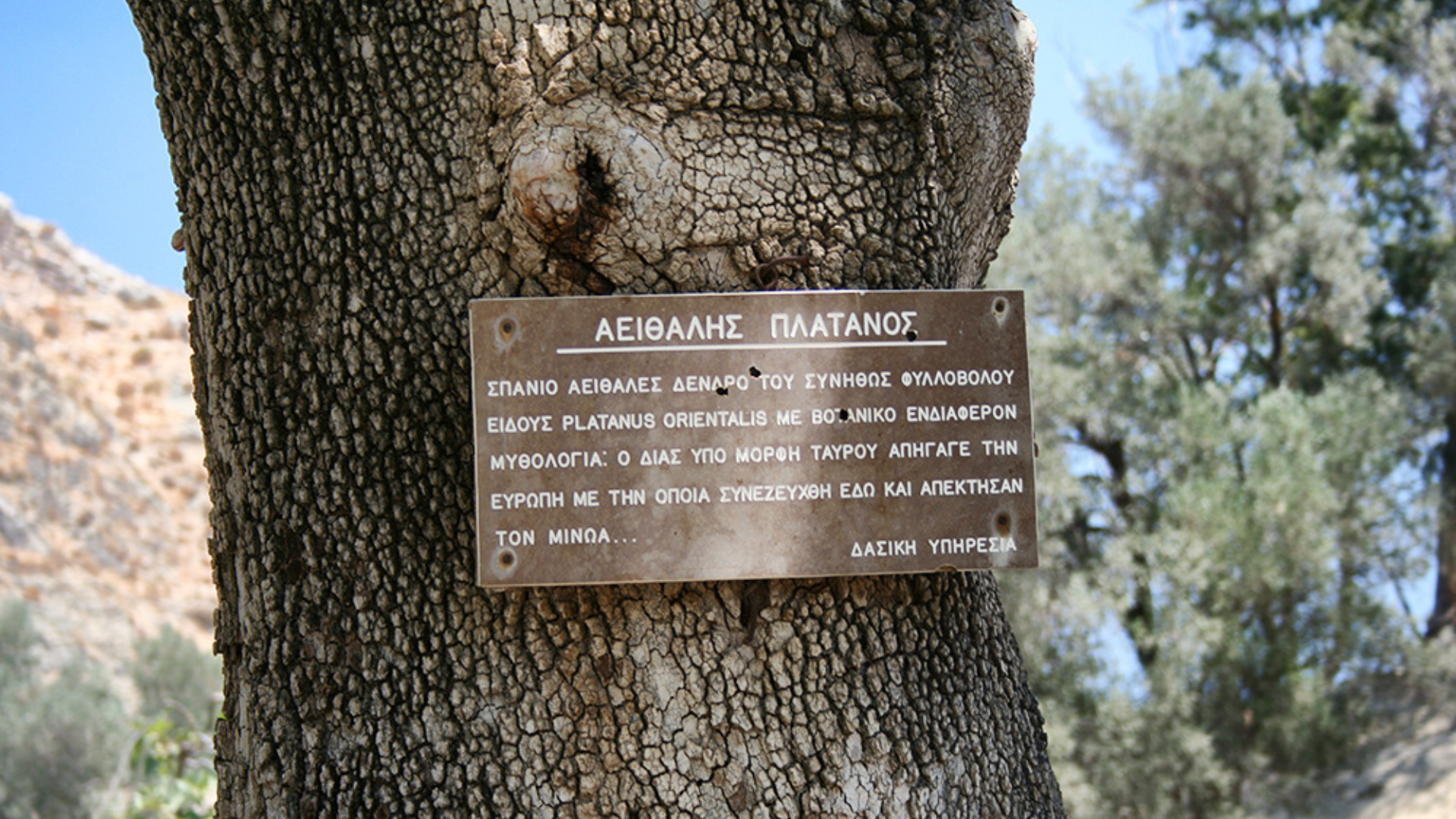
At the back of the Odeon, just beyond the Gortyn Law Code inscriptions, stands a distinctive evergreen plane tree, no ordinary tree, but one steeped in myth. According to ancient tradition, it was beneath the shade of this very tree, near the banks of the Lethaios River, that Zeus and the Phoenician princess Europa came together.
The legend tells us that Zeus, having taken the form of a majestic white bull, carried Europa across the sea from Phoenicia to Crete. Upon reaching Gortyn, he revealed his divine form, and it was here, under the embrace of the plane tree, that their union gave rise to three sons: Minos, Rhadamanthus, and Sarpedon, each destined to become powerful figures in Greek mythology and Minoan rule.
It’s said that this particular plane tree has never shed its leaves since that fateful encounter, remaining evergreen as a sign of divine blessing. Whether myth or miracle, the story was powerful enough to shape belief across centuries. Coins bearing images of Europa and Minos (and in some accounts, Zeus himself) have been unearthed here, further anchoring the tale in the city’s soil. Even today, the tree draws quiet reverence. Some believe its leaves hold magical properties, particularly aiding women in conceiving sons, in homage to Europa's legacy as the mother of Minoan kings.
Europa’s influence, however, stretches far beyond the Cretan landscape. From this mythic beginning, her name would echo through history, bestowed upon an entire continent: Europe. A fitting tribute to a woman whose journey bridged worlds and shaped civilisations.
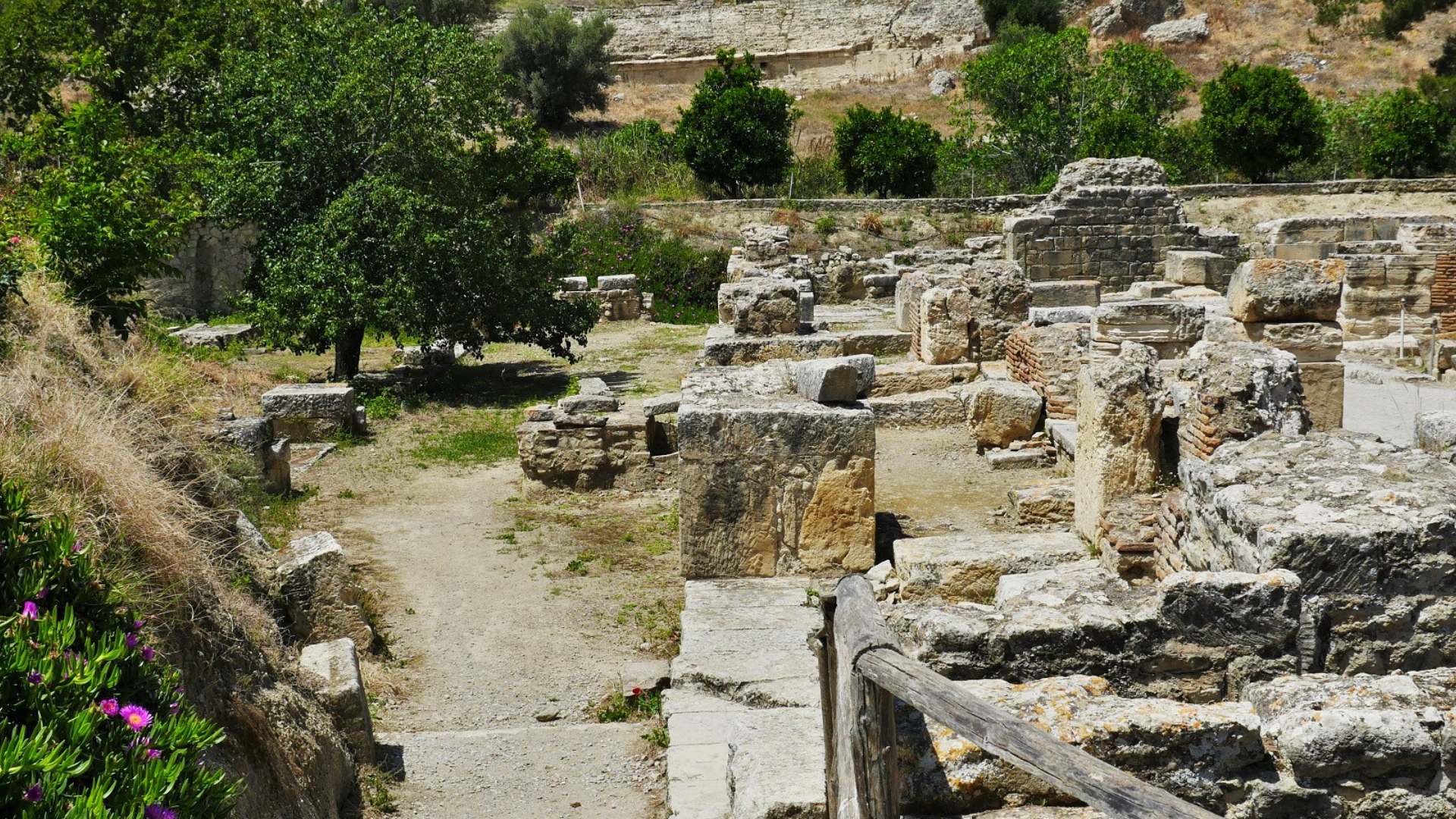
As I made my way out from the western side of ancient Gortyn, I paused to admire the backdrop, what appeared to be a long stone formation stretching across a section of the southern ridge. At first glance, I wondered if I was looking at the remains of an ancient city wall, much like those enclosing the older quarters of Chania, Rethymno, or Heraklion. But unlike these Cretan well fortified cities, archaeological evidence shows that Gortyn did not have a continuous outer wall enclosing the entire settlement.
Instead, the layered stonework in the photo is more likely to have been part of a terracing system or perhaps a retaining structure, not a fortification. While Gortyn’s Acropolis was fortified with a polygonal wall and corner towers following the Dorian invasion around 1100 BC, these defensive measures seem to have been limited to specific strategic areas rather than enclosing the entire city. So, my initial curiosity turned into a reflection on how Gortyn’s development differed from its contemporaries.
As you transition from the western section of ancient Gortyn, where the famed Gortyn Law Code reside, toward the eastern expanse, the sheer scale of the city begins to unfold. While the western area may appear modest, the entire archaeological site spans approximately 400 hectares, making it the largest in Crete and among the most extensive in Greece. This vast area reflects Gortyn's significance during Roman times, when it accommodated an estimated 35,000 to 40,000 inhabitants, along with 5,000 mercenaries.
In addition to public buildings and temples, the city featured fountains, colonnades, workshops, schools, aqueducts and waterworks, baths, theatres, markets, and gymnasiums, all of which contributed to the city’s vibrant and well organised urban life.
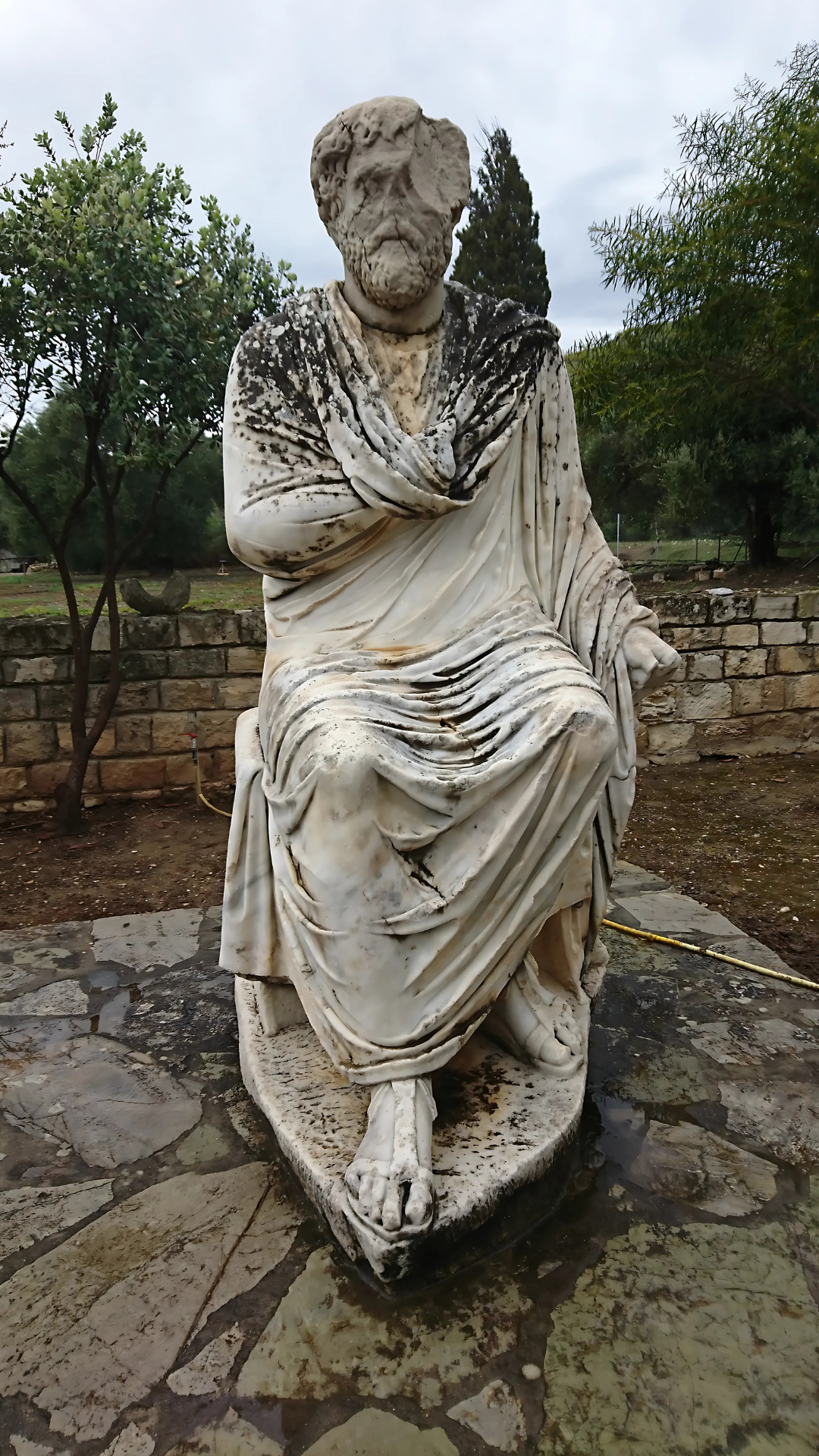
Before departing the western section, I visited the nearby sculpture exhibition, located just a short distance from the car park.
Among the notable pieces is the marble statue of Emperor Antoninus Pius. This statue, though weathered over time, still exudes the dignity befitting an emperor who reigned from 138 to 161 AD.
The marble used for this sculpture was sourced from the nearby Messara Labyrinth quarry, situated near the village of Ambelouzos.
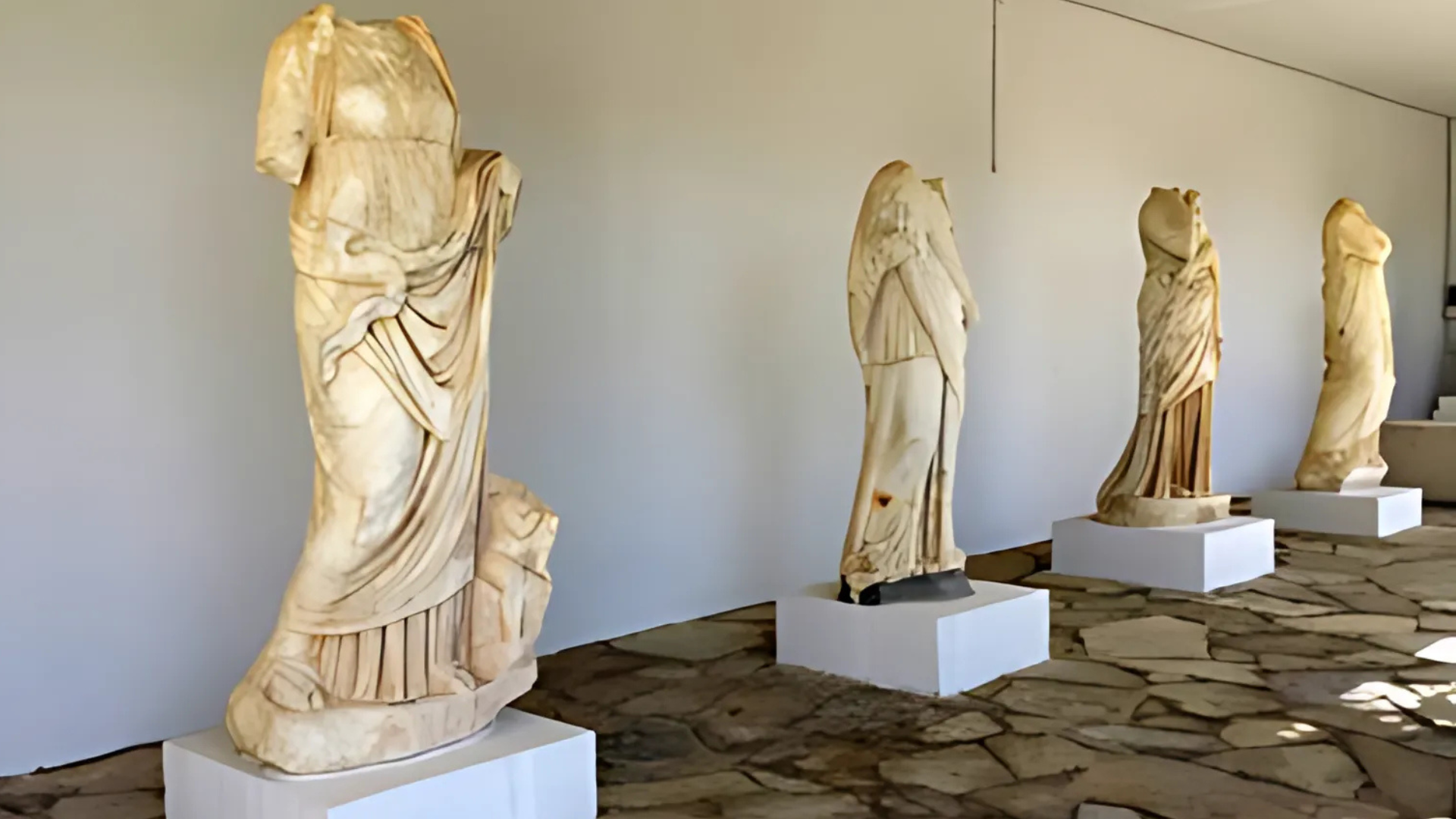
Standing nearby, a group of four headless statues quietly echo the grandeur that once defined the ancient city of Gortyn. Though time has claimed their finer details, missing arms, absent heads, what remains is still striking. The graceful lines of their draped garments, the naturalistic folds carved into the marble, and the poise of their stance all suggest these were once statues of civic or imperial importance.
While their exact identities are now lost to time, such sculptures were typically created to honour Roman officials, local magistrates, or benefactors who held influence in the city. Yet in Gortyn, where layers of myth and empire intertwine, these figures don’t just speak of Roman authority. Their presence also echoes the older reverence for the divine, Zeus, Hera, and other gods and goddesses of the Greek pantheon, whose worship once infused this land.
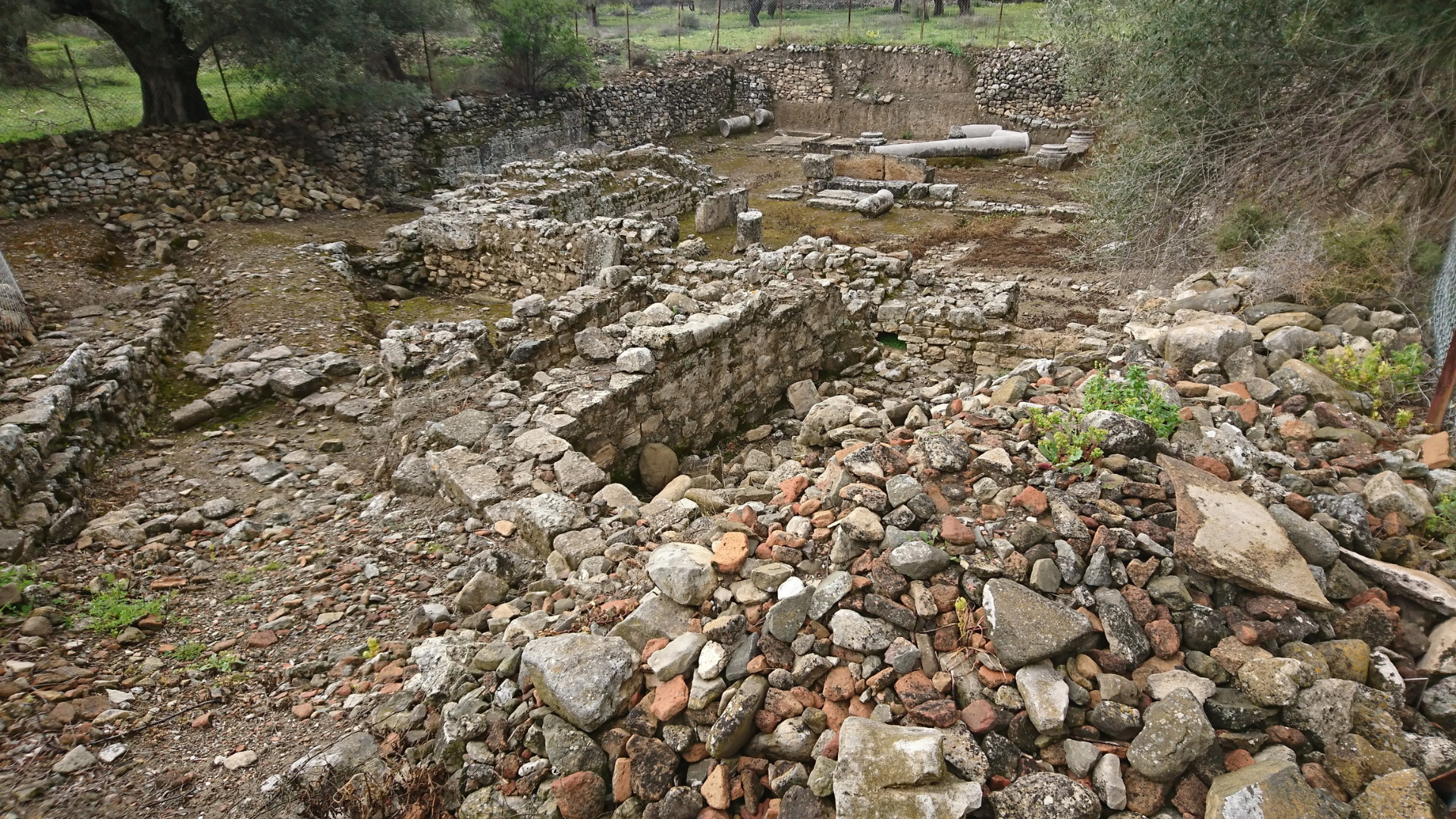
On the eastern side of the sealed road lies a more extensive section of the ancient city. As noted earlier, at the time of my visit, no ticket was needed to explore these ruins, which only added to the quiet wonder of wandering amongst the landscape scattered ruins. The structures here, though worn by time, begin to paint a fuller picture of just how vast and influential Gortyn once was.
The scale of scattered ruins hints at the city's former grandeur, a city not only of political importance but of impressive urban planning. Gortyn's infrastructure was remarkably advanced for its era. Water was brought in via aqueducts from the springs on the slopes of Mount Psiloritis, Crete’s highest peak. Once within the city, this water flowed through a network designed to supply 46 fountains, as well as numerous baths and laundries, serving its large population, particularly during the Roman period.
These advanced systems speak volumes of a city that understood comfort, public welfare, and the practicalities of large scale living as a Roman administrative centre in Crete that was both refined and resilient.
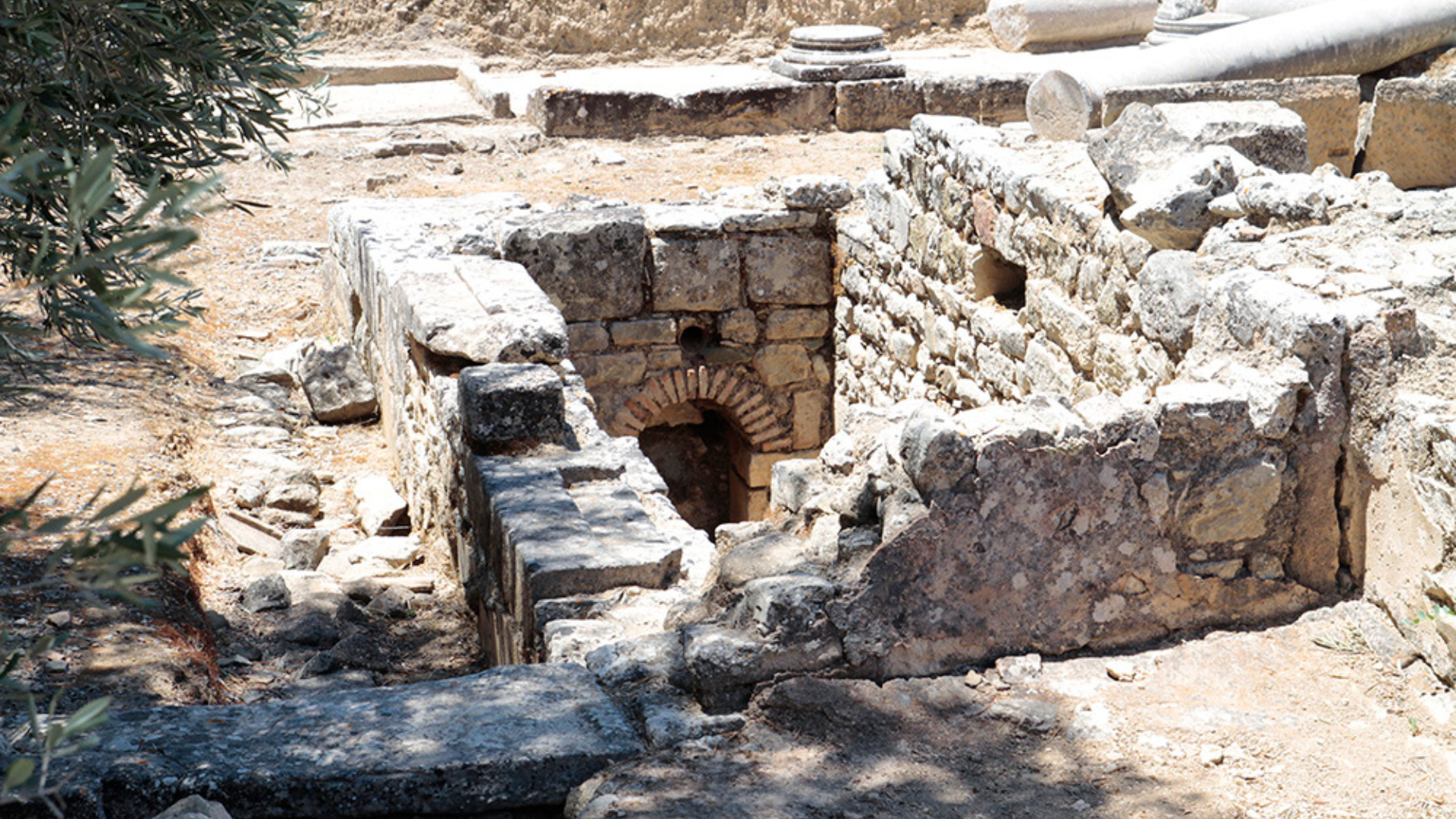
As Roman influence deepened across Crete, it fostered more than just political administration and trade. So too came the cultural and spiritual footprints of regions tied closely to the island, particularly North Africa. Ancient Gortyn, was uniquely positioned at this crossroads of influence.
One remarkable expression of this exchange can be found in the ruins of the Temple of the Egyptian Gods, unearthed in 1914 that still stand. It was the only known temple in Crete dedicated to Egyptian deities. The sanctuary’s presence in Gortyn attests to the popularity and influence of Egyptian cults in the Roman world, particularly during the period from 27 BC – 476 AD. Constructed sometime during this era, the sanctuary was dedicated to Isis, Serapis, and Anubis; three deities revered in Egypt. Their worship had spread widely throughout the Roman Empire, embraced by communities far beyond Egypt’s borders.
These deities were not strangers to adaptation. Serapis himself had been created by royal decree during the Ptolemaic era, a strategic fusion of Greek and Egyptian theology intended to unify diverse populations under one divine figure. By the Roman period, his image, often accompanied by Isis, the protective mother goddess, and Anubis, guardian of the underworld, had become familiar across cities where identities blended and boundaries softened.
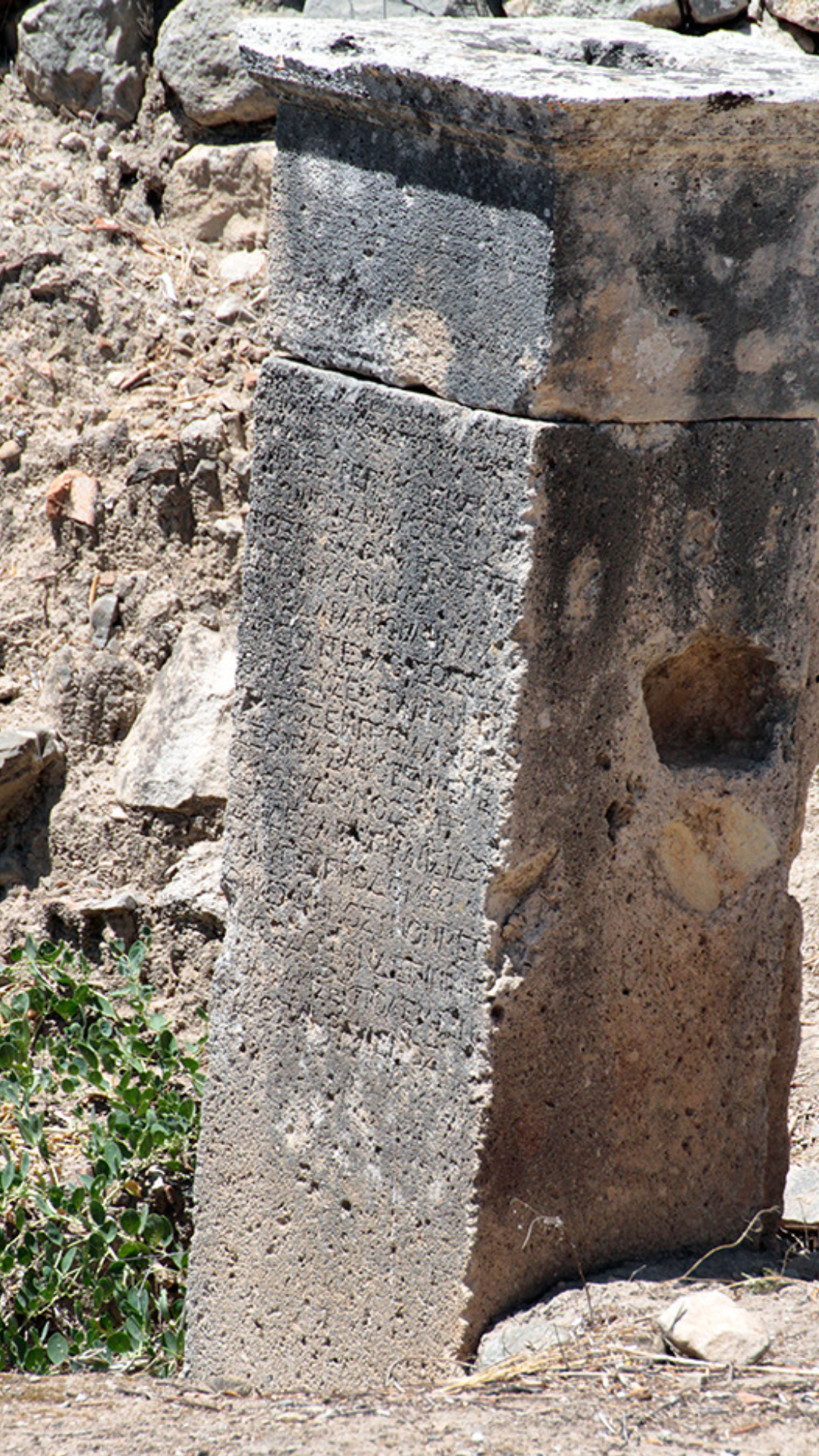
The temple’s inscription reveals that it was not commissioned by imperial authority, but rather through the devotion of a woman and her two sons; a deeply personal act of faith that offers a more intimate window into those who worshipped there.
Among the sanctuary’s most striking finds were four marble statues discovered near the podium within the cella (inner chamber). Three were identified as Isis, Serapis, and Anubis, the central figures in the Egyptian pantheon. The fourth, a larger than life female figure, is believed to represent Flavia Filyra, the donor herself, immortalised alongside the gods she venerated.
Through such modest yet meaningful gestures, foreign gods found new homes across the Roman world. Their presence in Gortyn reflects a spiritual kinship that travelled with merchants, soldiers, and settlers making their way from the Libyan coast to the island of Crete.
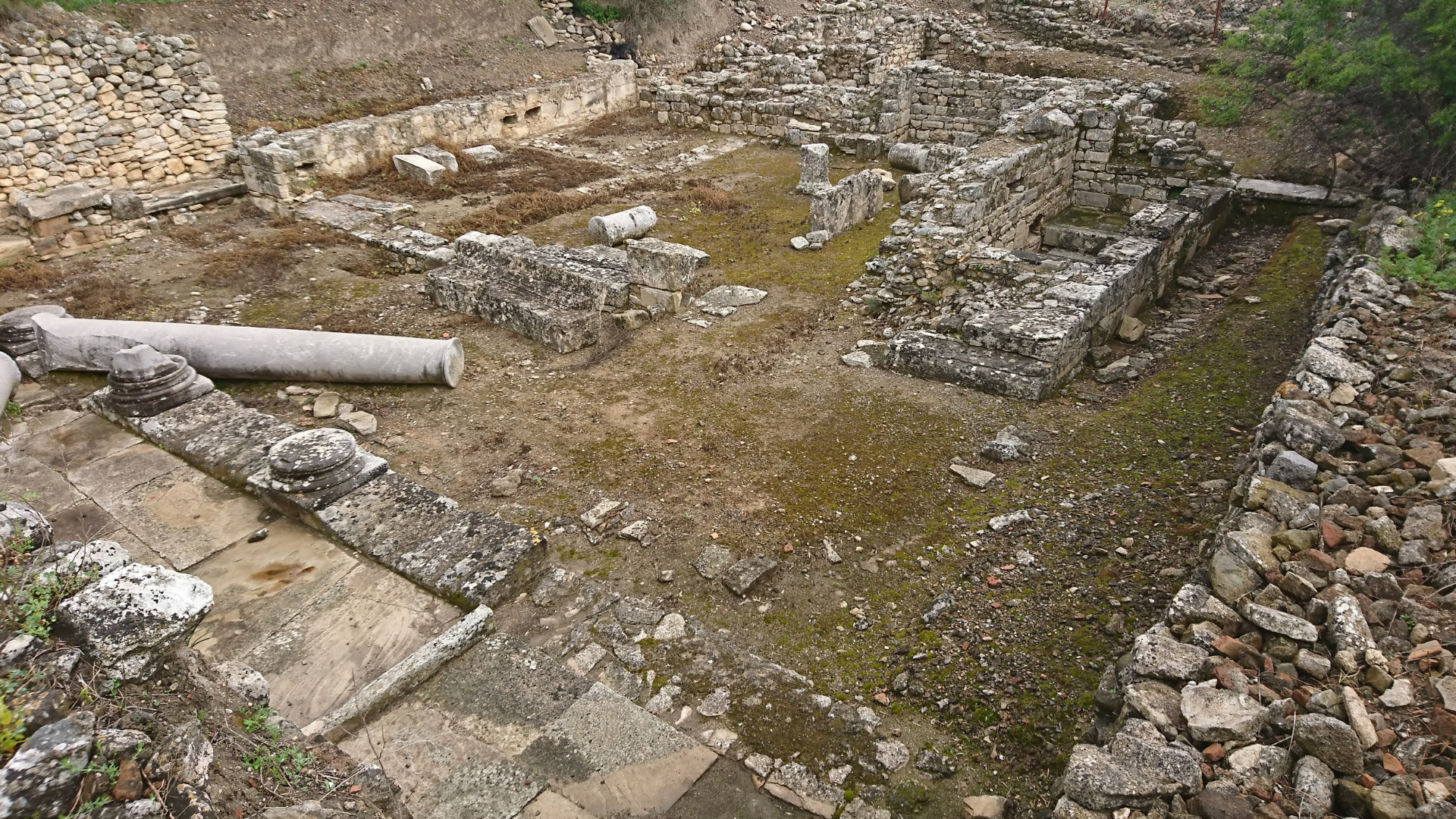
Architecturally, the sanctuary consisted of a temple and several auxiliary structures. The temple itself was modest in size, west-facing, and featured a podium within the cella designed to house deity statues. Excavations have revealed a stylobate; a raised platform, in front of the temple that once supported six Ionic columns, suggesting the presence of a portico or colonnaded entranceway.
Adjacent to the temple were features that added to its ritual complexity: a basin, a rectangular room with a staircase leading to an underground chamber or crypt, and a water cistern, architectural elements distinct from the more familiar Greco-Roman forms.
In Gortyn, their sanctuary remains a quiet but potent reminder of this shared spiritual tapestry, woven across sea and centuries. Though now weathered, its stones still whisper of prayers once offered under Roman skies, where African sands met Cretan soil in the name of the gods.
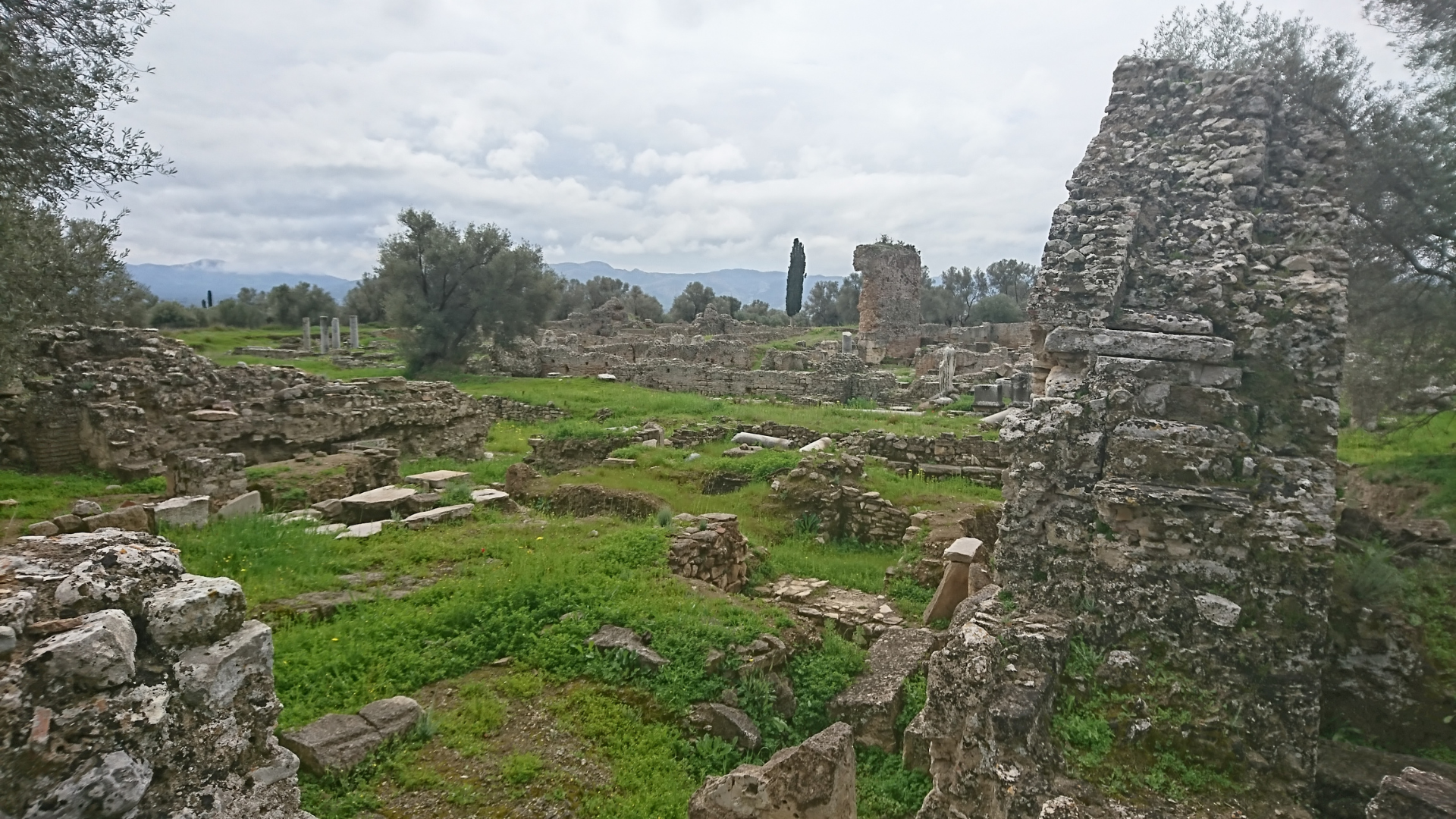
The sanctuary stands within the heart of Gortyn’s Roman era settlement, just a short walk from another ruined structure, the Praetorium. Built in the 1st c. AD and expanded in the centuries that followed, the Praetorium served as the seat of the Roman consul overseeing the joint province of Creta et Cyrenaica. Its grand scale and architectural sophistication reveal the level of prestige Gortyn held during the Roman period.
Divided into both administrative and private sections, the complex once included a basilica like church, private residence, Roman baths, a colonnaded courtyard, a temple dedicated to Augustus, judicial buildings, and more. Today, fragments of marble floors, column bases, and monuments still line its footprint, as silent witnesses to the rhythms of governance, ritual, and daily life.
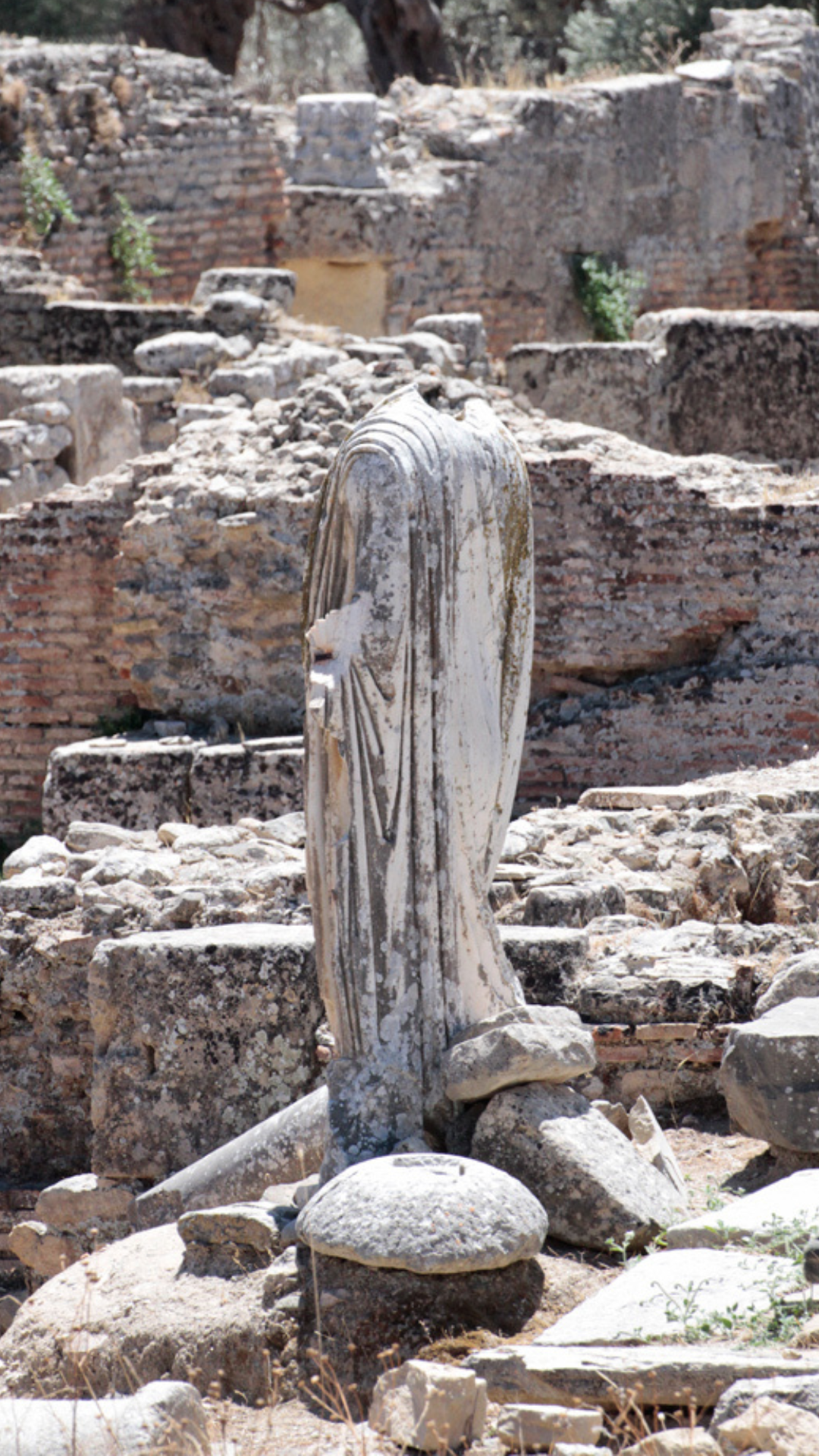
Among the remains stands a solitary, headless statue, its identity lost to time, yet still standing amidst the broken columns and fading grandeur. Perhaps once an honourable official, or a member of Gortyn’s elite, the figure now embodies the enigma of the ancient city’s layered past.
In a site where gods of distant lands found sanctuary and imperial rulers held court, even an anonymous statue feels part of the larger narrative, as a silent witness to centuries of cultural intersection, devotion, and authority.
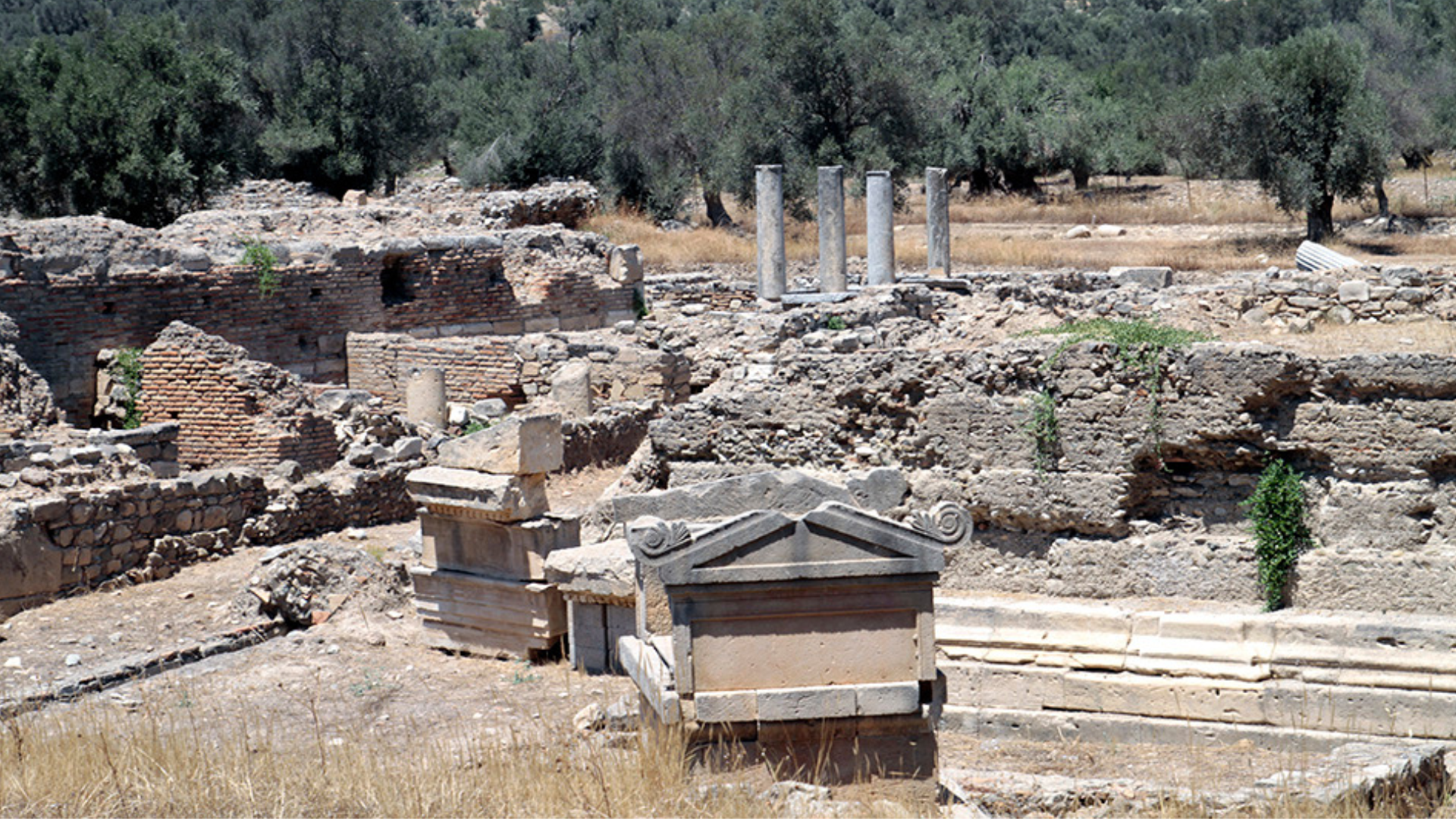
Wherever the Romans went, baths were sure to follow, and Gortyn was no exception. Positioned just a short distance from the Praetorium, the bath complex was ideally located for use by both officials and citizens alike.
The Roman baths (thermae) of Gortyn were an integral part of the ancient city's infrastructure. More than just practical facilities, they served as a social hub where individuals could relax, converse, and conduct business, a reflection of the communal rhythms that defined Roman cultural. Designed with characteristic Roman ingenuity, the bath complex featured a sequence of rooms arranged by temperature: the frigidarium offered a bracing cold plunge, the tepidarium a gentle warmth, and the caldarium, heated by an underfloor hypocaust system, an intense, steamy heat. Together, these distinct chambers created a progression of physical renewal and ritualised relaxation.
Beyond the bathing rooms, the complex also included changing areas, latrines, and likely spaces for exercise or massage, all part of a broader Roman philosophy that embraced the balance of body, mind, and social connection. Whether used by officials conducting informal business or locals enjoying their daily routine, the baths were central to the rhythm of daily life.
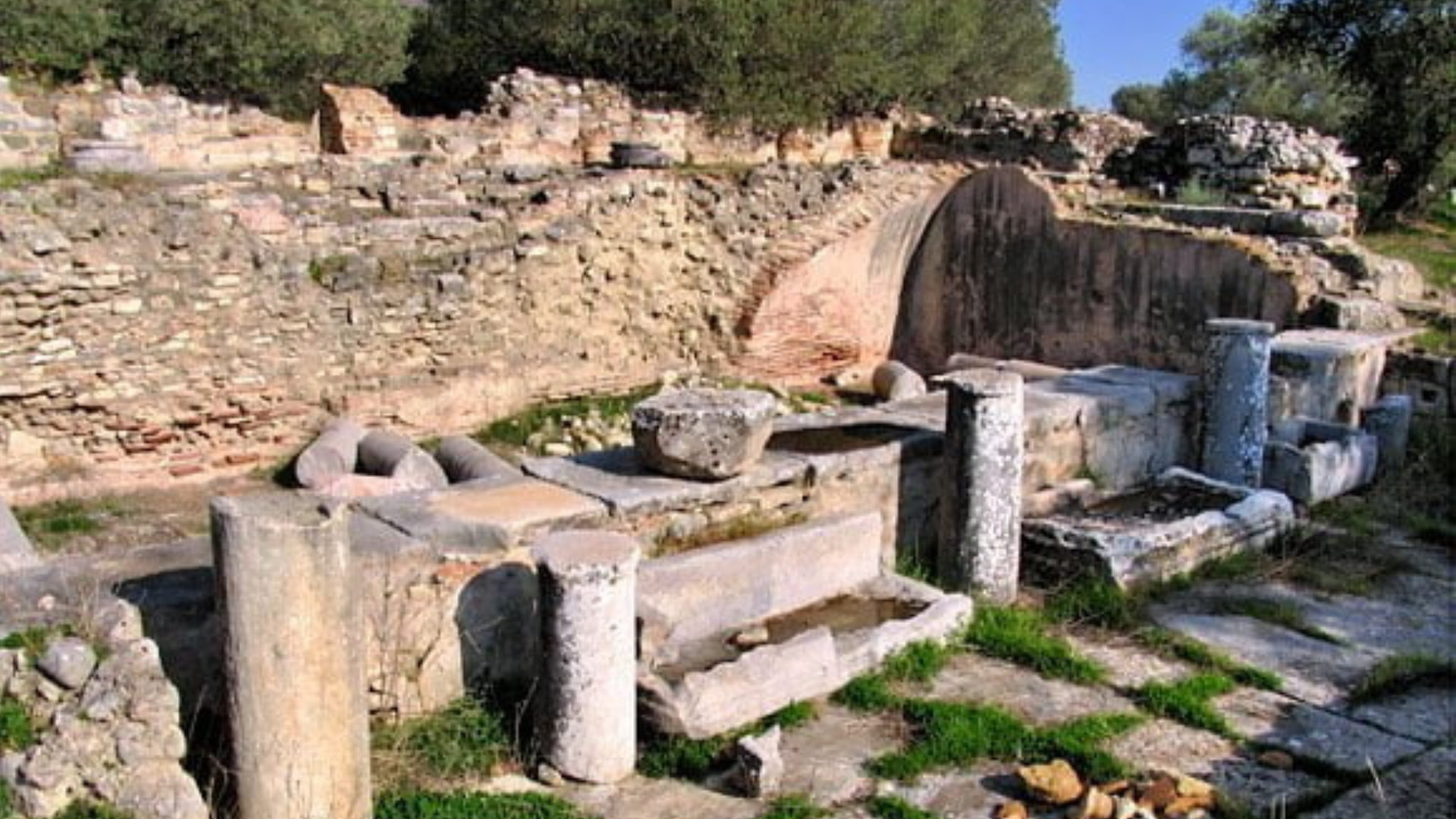
Located just behind the Praetorium ruins, is the Nymphaeum Fountain. This once elegant marble fountain was given its name from the Nymphs, the minor goddesses of springs, rivers, and natural water sources who were often honoured in such ornate water features.
Though smaller in scale compared to those found in larger Roman cities, Gortyn’s Nymphaeum offered both function and symbolism. Constructed in the 2nd c. AD, it included a cistern and an elaborately designed basin, serving as a public fountain and water source for the nearby administrative buildings.
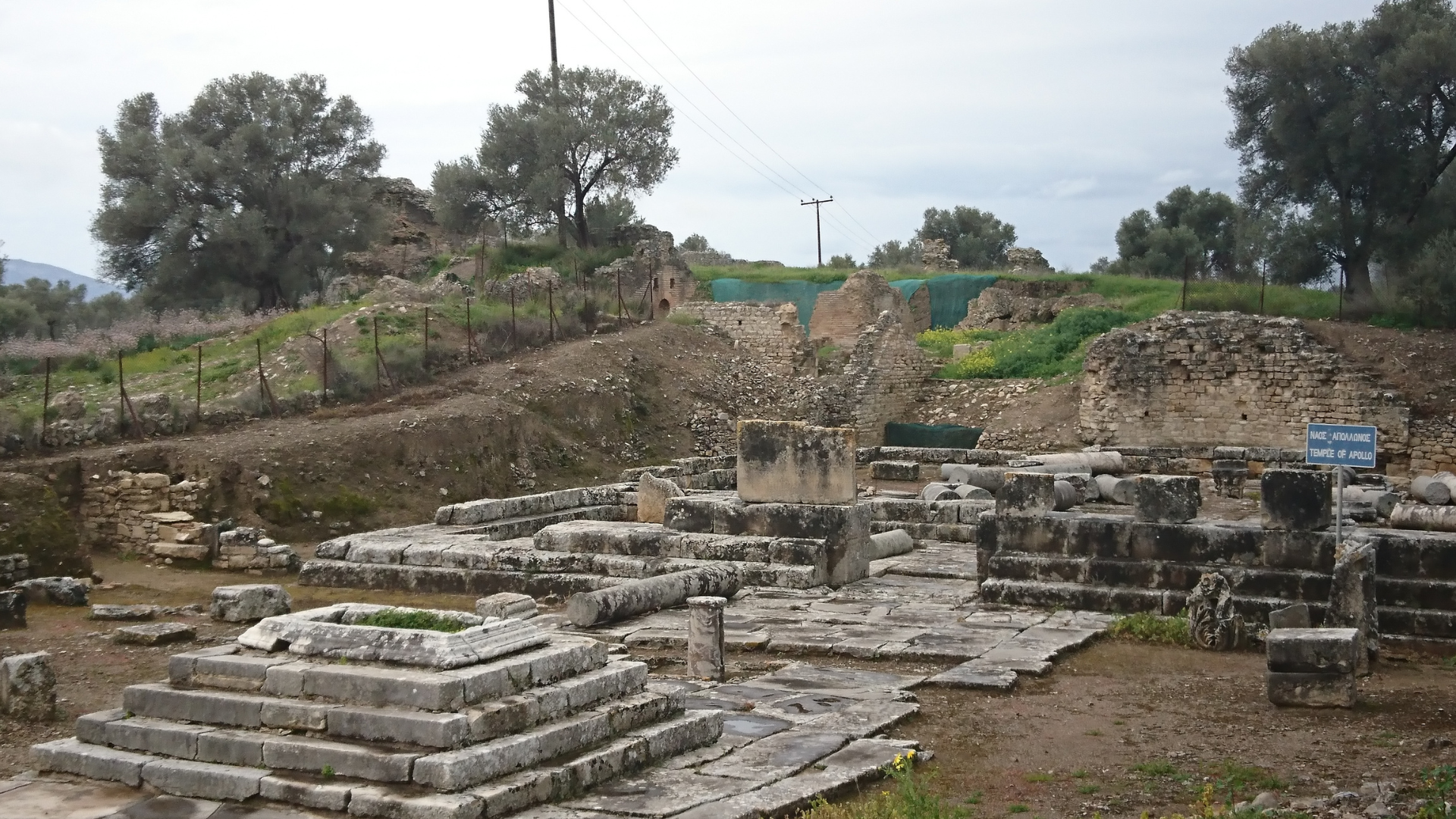
Leaving the ruins of Gortyn’s main administrative and cultural centre behind, I wandered further through the ancient city to reach the remains of what was once the grand Temple of Pythian Apollo, dedicated to the oracular god so powerfully revered at Delphi. This sacred site was uncovered in 1887 and is one of the oldest known temples on Crete, with origins stretching back to the 7th c. BC, during the Greek and later Roman eras.
By the 2nd to 3rd c. AD, the temple undergone modifications. reflecting the Roman architectural influence and the shifting spiritual landscape of the time. Though it was later converted into a Christian Basilica, it should not be confused with the nearby Basilica of Saint Titus, which stands in a different area of the site. The ruins of the original Apollo temple are still visible today, with the rectangular floor plan and the base of its main altar giving form to what was once the largest temple in ancient Gortyn.
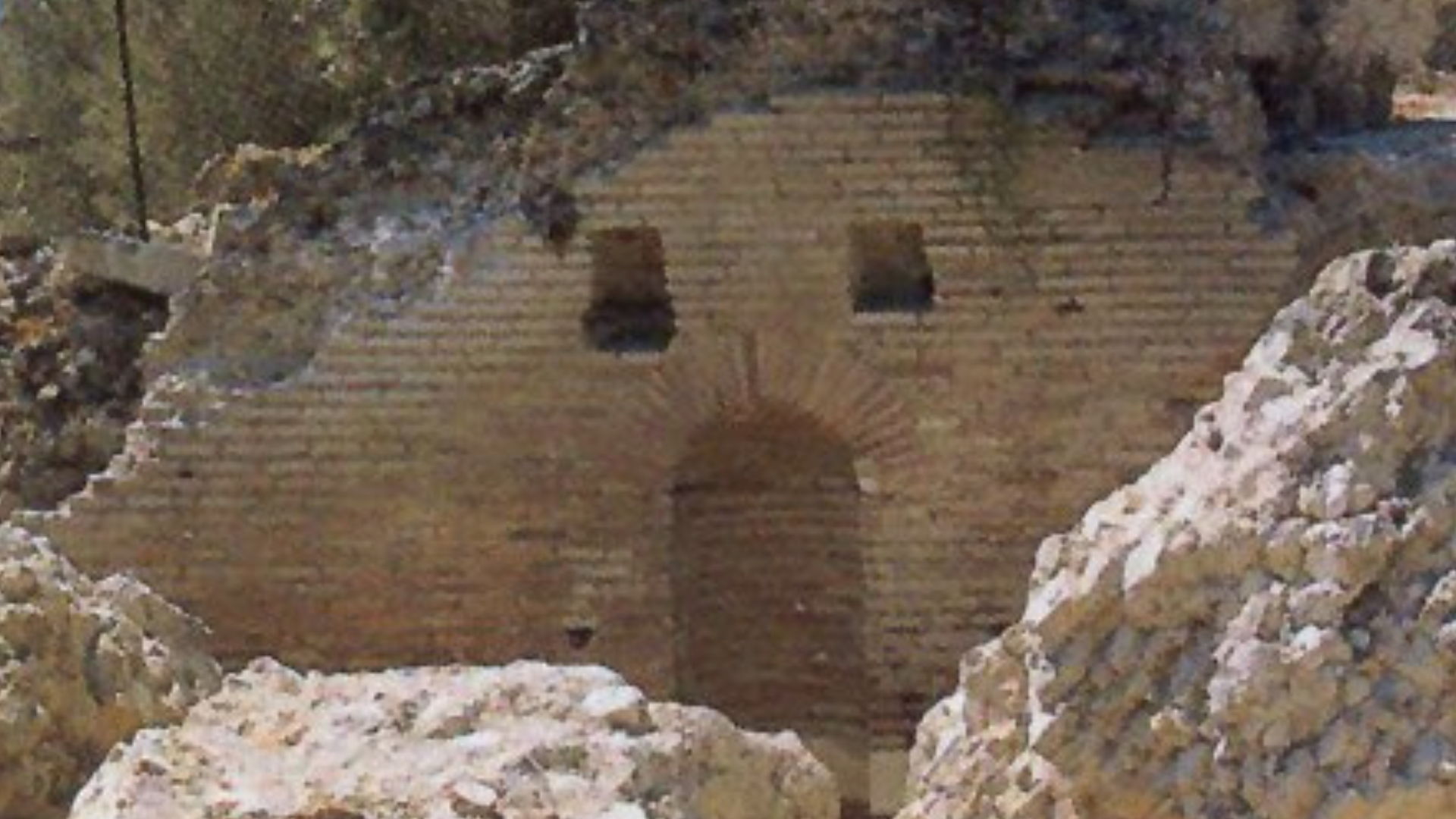
Close by to the temple lie the reminiscent ruins of the Pythion Theatre, where public games and events were held in honour of Apollo. Scattered about the surrounding area are ruins of a sophisticated waterworks system and the outlines of individual houses. Even in its present ruined state, there’s a quiet dignity to this place, where the echoes of prayers, performances, and daily life still seem to linger in the stones.
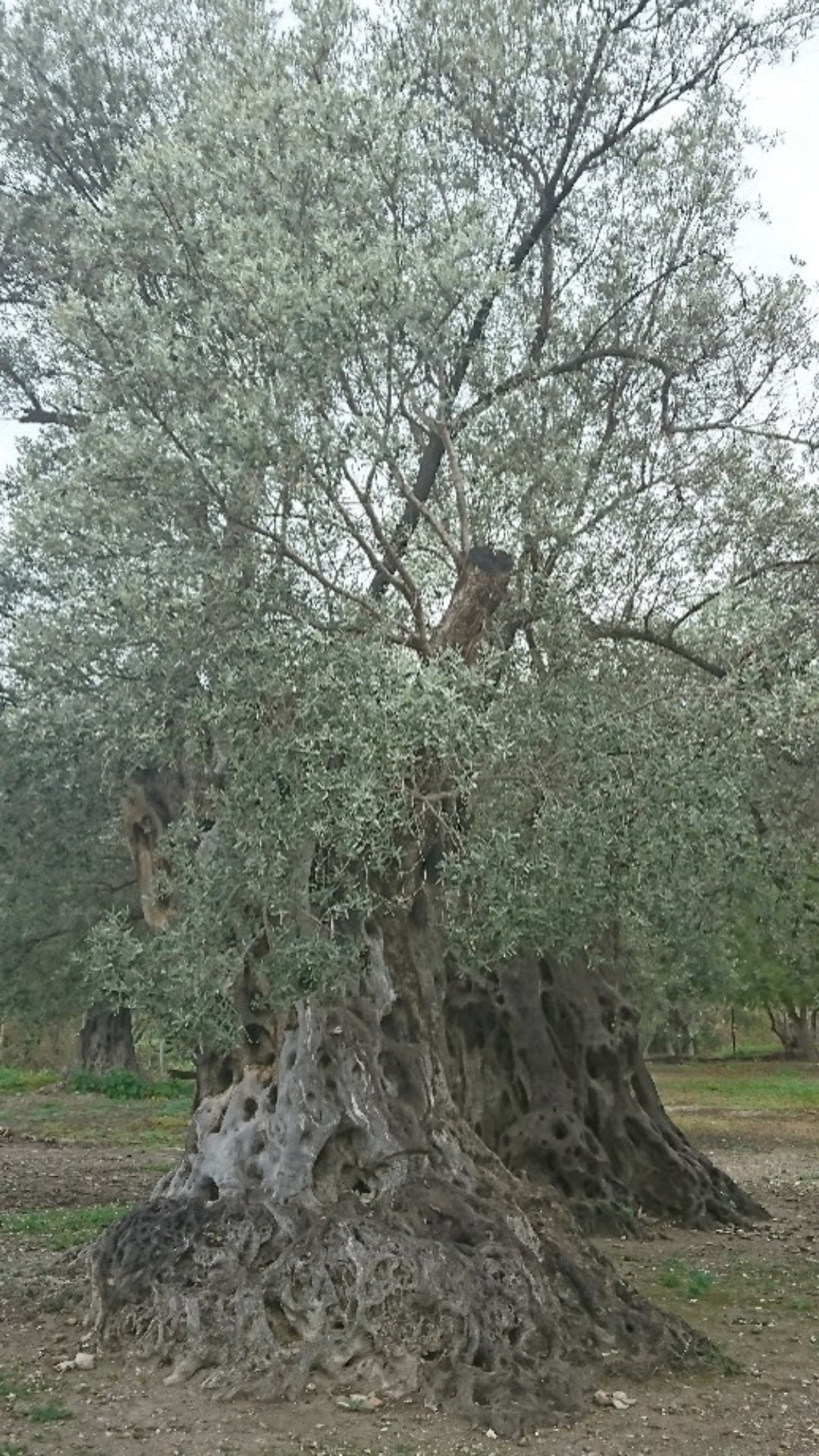
As my time among the ruins was enriching my knowledge of history and fascination of the ruins that have been left behind, I found myself lingering, however not in front of a monument or temple, but beneath the silent witnesses of time themselves: the olive trees.
Scattered throughout the southern part of the site, these monumental trees are not simply botanical features, they are living reminders. Twisted and immense, with trunks carved by centuries of wind, weather, and perhaps a little wisdom, these ancient olive trees have grown up through the very heart of ancient Gortyn. Among the scattered stones and columns, the olive grove quietly claims its own sacred space.
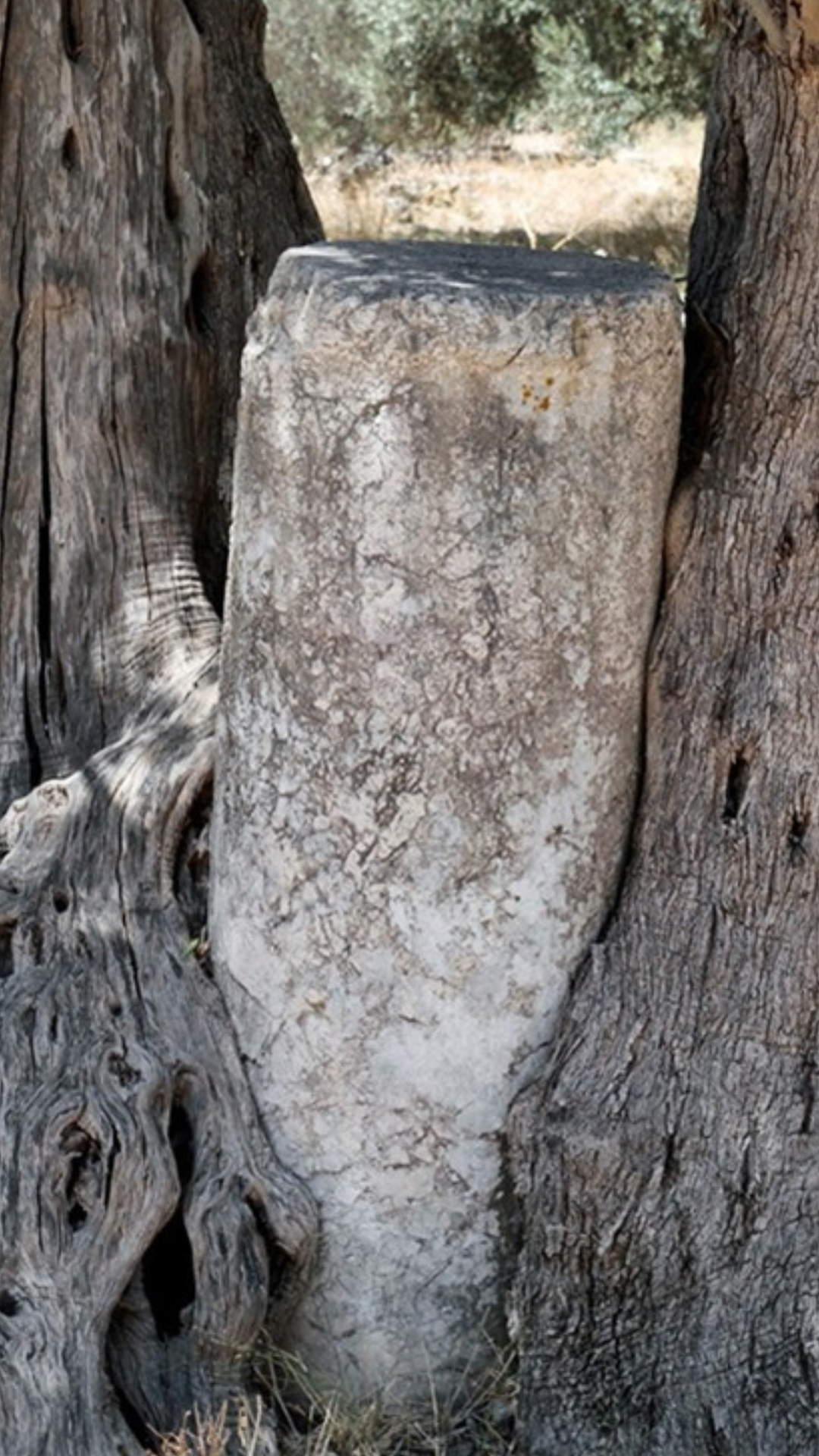
Nature and history entwine quite literally in places, as with one unforgettable tree in particular, with its trunk now cradling a Roman column, as though the olive three had slowly embraced the ruin, folding it into its bark. That very tree has been declared a natural monument, and it’s easy to see why.
It's not just its age, sixteen centuries, possibly more, but the way it stands as a testament to resilience, regeneration, and the passage of time in one of Crete’s most storied landscapes.
Wandering here, the lines between past and present blur. These trees, with their knotted grace and sculptural silhouettes, have seen empires rise and fall. And now they stand among the ruins, quietly outlasting them all.
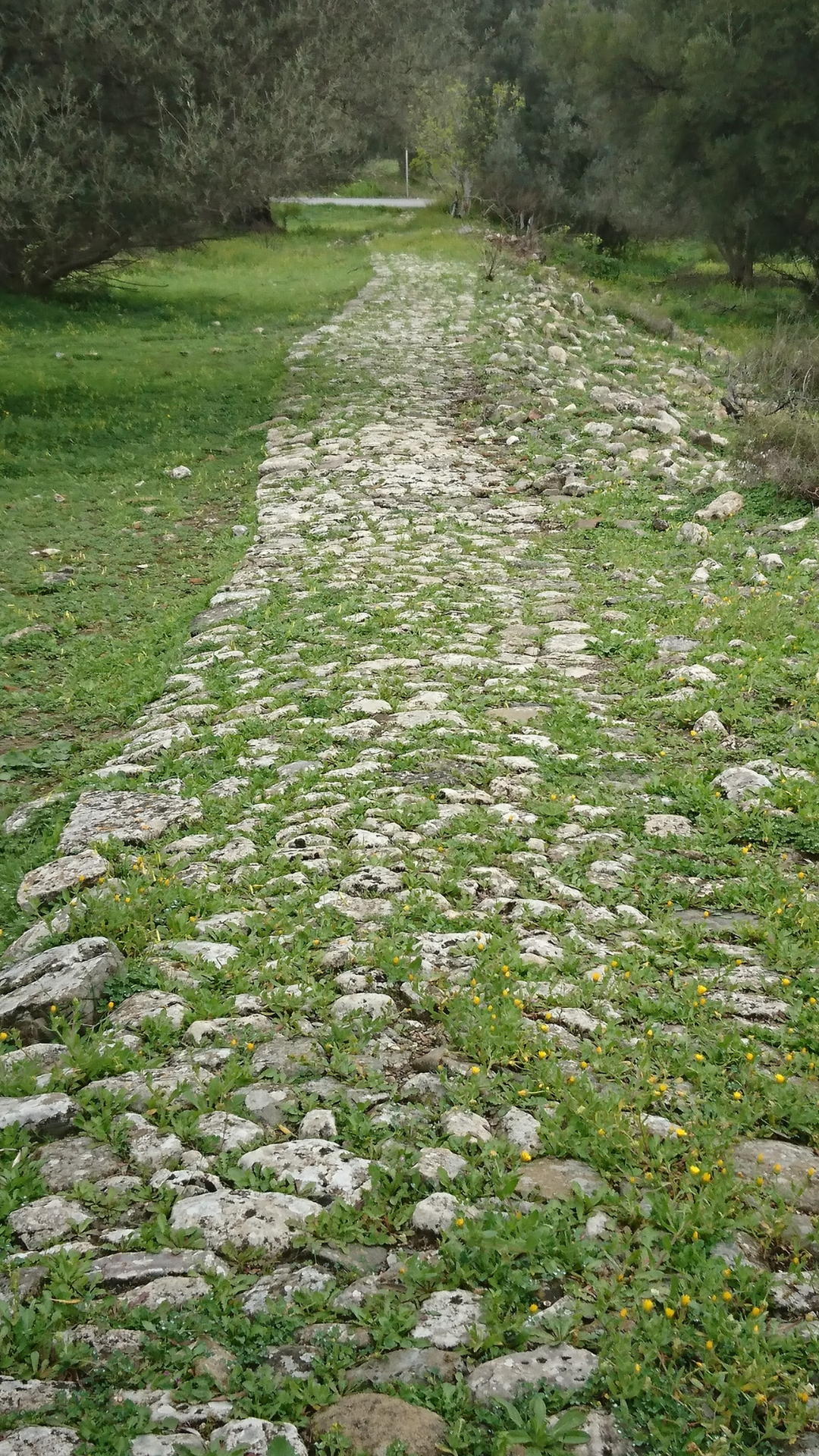
Following along the stone pathway past the olive groves, I made my way to the site of the Basilica of Saint Titus, located approx. 200 metres south of the main archaeological site of Gortyn, along the road to the village of Mitropolis.
Constructed in the 6th c. AD during the reign of Emperor Justinian I, the original basilica was built in the early Byzantine style. At the time, it was the largest basilica in Crete, serving as the metropolitan church of the Gortynians.
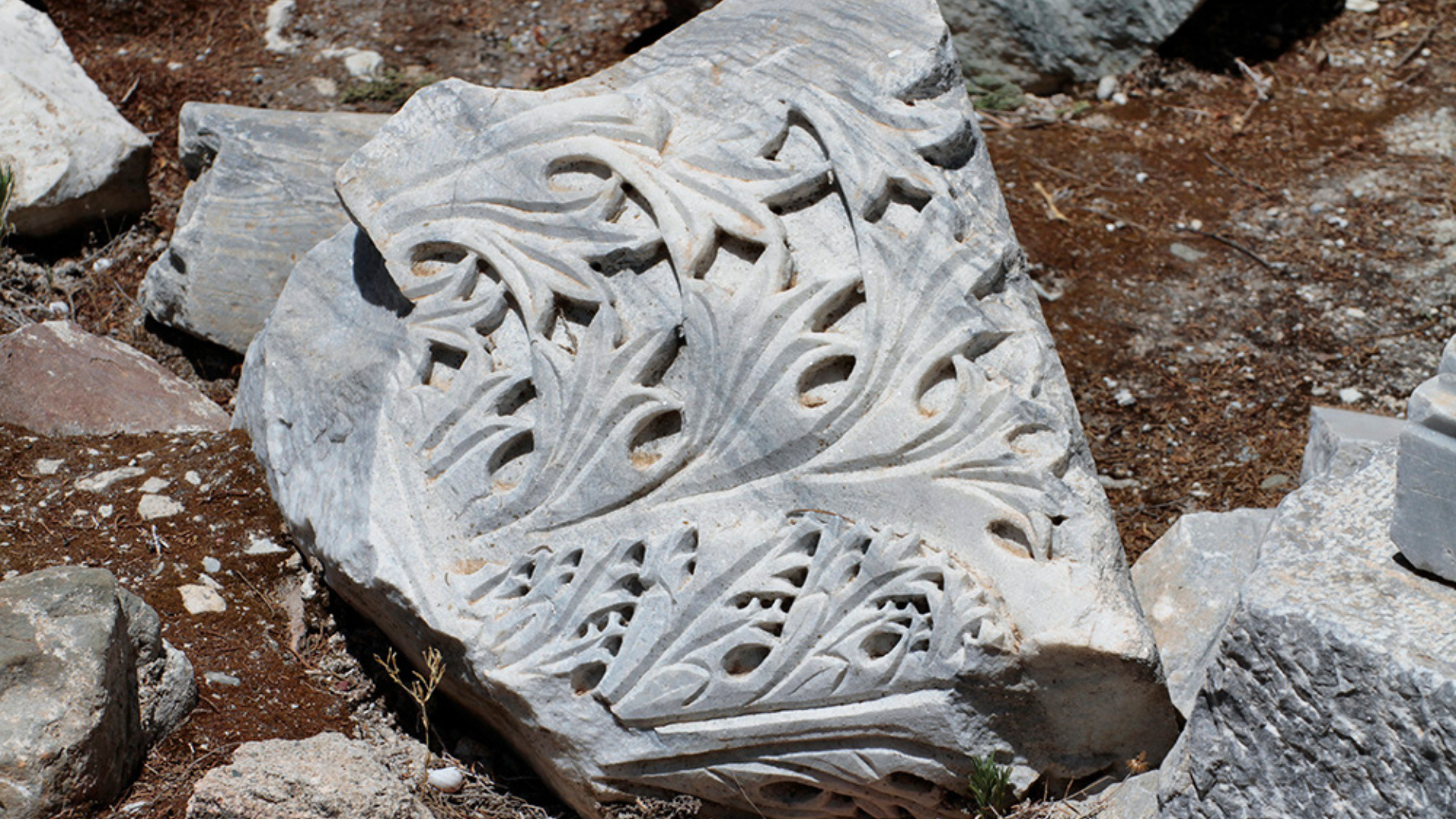
Now a quiet, open space scattered with weathered fragments, the basilica was destroyed by the earthquake of 670 AD. In its aftermath, a new church dedicated to Saint Titus was constructed, the ruins of which can still be seen today within the fenced enclosure across the road, accessible with an admission fee. A lasting testament to the deep spiritual and civic importance of this early Christian figure in Crete’s sacred landscape.
The site lingers in my thoughts long after I leave, as places rich in history tend to do. And so, curiosity leads me back.
I returned to ancient Gortyn after my initial visit, this time with a purpose, hoping to walk to the Acropolis, perched on the hill of Hagios Ioannis. Once a sacred site dedicated to the worship of the Goddess Athena in the 4th c. BC, the hill later became a Roman fortified stronghold, guarding the ancient city of Gortyn. From the aerial photographs shown to me by a museum official, it became clear that very little remained of either the original temple or the later defensive structures, just faint traces of what once held great significance.
My drive to Gortyn, however wasn’t lost; I happily spent time in the newly opened Archaeological Museum of Messara, and I’m so very glad I did.
The museum is a treasure trove of ancient Gortyn’s history, alongside artefacts from Phaistos and the Royal Villa of Agia Triada. More than twenty marble statues found in ancient Gortyn are on display, among them Apollo, Hygeia, Hera, Pan, and one of the remarkable sculptures from the Nymphaeum Fountain.
Learning that Gortyn had begun minting its own silver coins in the late 5th c. BC, I was particularly struck by the variety of coins unearthed here, many of which had originated from other ancient city sites across Crete. These small yet exquisite pieces bore handmade seals and the heads of deities from the Parthenon, each telling stories of trade, cultural exchange, and connectivity. Coins from as far west as Kyodina (modern-day Chania), Lissos in the southwest, Knossos to the north, and other locations in the east were found here, all once part of the intricate trade networks that linked the many thriving city states of ancient Crete.
As silver became scarce, larger bronze coins were minted during the Roman period, stamped with the profiles of emperors. Various forms of pottery, from tableware to amphorae for storing olive oil and wine, lined the exhibits, along with delicate grave features, including a small sarcophagus for a child, each piece telling its own poignant story. I unknowingly lingered until closing time, immersed in the artistry and ingenuity of a civilisation that continues to speak across the ages.
My afternoon in the museum offered more than shelter from the midday sun, it enriched my understanding of Gortyn’s enduring legacy. As I stepped back outside, the ancient city no longer felt like a series of scattered ruins, but a living narrative, stitched together by stone, coin, and memory.
Wandering the ancient site of Gortyn feels less like ticking off sights on a tourist’s map and more like entering into quiet conversation with an ancient world that hasn't finished speaking. Time doesn’t stand still here. It stirs beneath your feet in the red earth, in broken clay fragments scattered between olive trees, in the memory of paths once trodden by those who lived beneath this same sun.
Much of the site ruins remain untouched, and still, much lies hidden, just beneath the surface. Gortyn, doesn’t give up its stories all at once. It invites you to roam, to wonder, to wait.
The is a living archaeological site. Excavations continue each year, with archaeologists gradually unearthing more of Gortyn’s vast past. Recent discoveries, like the silver coin from Knossos depicting the Minotaur and the fabled Labyrinth, are reminders that myth and memory still stir beneath the surface. These tangible links to Minoan mythology help connect Gortyn within Crete’s broader cultural and spiritual story.
As you leave the archaeological site of ancient Gortyn, and having spent time visiting the Archaeological Museum of Messara, both offer a natural transition to other historical wonders. Heading westward, the road leads to the Palace Phaistos and the nearby Royal Villa Agia Triada, both sites are worth exploring if time allows. But for me, Gortyn lingers. It’s a place that asks for time, for stillness, and for open senses. And when you allow that, it gives something unexpected in return.
This visit forms part of my Soul Travel - Greece and Her Islands | Mystic Paths series, sharing personal accounts that blend historical places with my own astrocartography insights. My planetary placements in Crete continue to open channels of understanding, stirring inspiration not solely through people, but through place itself, that’s often revealed through the land, in silence, and in the spirit of memory.
The energy of my Pluto placement here was slightly less impactful, given the 150km distance from Chania where it resonates more strongly. Yet the ever present Mars and North Node placements urge me to grow, and evolve along this destined path. Nothing is by chance when the North Node is involved, it’s a fated path, and for me, a reminder that inspiration isn’t always found through the path you choose that day. Sometimes, it’s revealed through the kindness of a stranger who helps align you with exactly what you seek to learn.
See you soon,
Consider signing up to receive new Soul Travel blogs, travel reflections, and astrocartography insights as new destinations are shared.

✨ If this story resonated with you, you are warmly invited to continue the journey in a way that feels aligned with you.

✨ Explore personalised insights through consultations
✨Begin with ‘The Journey’ Orientation
✨Listen to Destined Places podcast stories
✨Save and share Soul Travel inspiration on Pinterest