Stob’s Pyramids and a Path of Stillness
My first journey in Bulgaria is coming to a close, and on this final day, my friend and I decided to make a short drive, one last stop to imprint the landscape in my memory. We headed towards the semi deserted village of Stob, home to roughly 600 inhabitants, quietly tucked away in the foothills of the Rila Mountain and not far from the Rila Monastery.
Stob, though small in scale, is a place steeped in history. First mentioned in 1378 in Bulgarian medieval charters, and has long been a quiet observer of the region’s changing fortunes. During the Ottoman period, the village remained active thanks to its strategic position on the routes threading through the mountains. Today, time moves slowly here, with nature reclaiming much of the surrounding land.
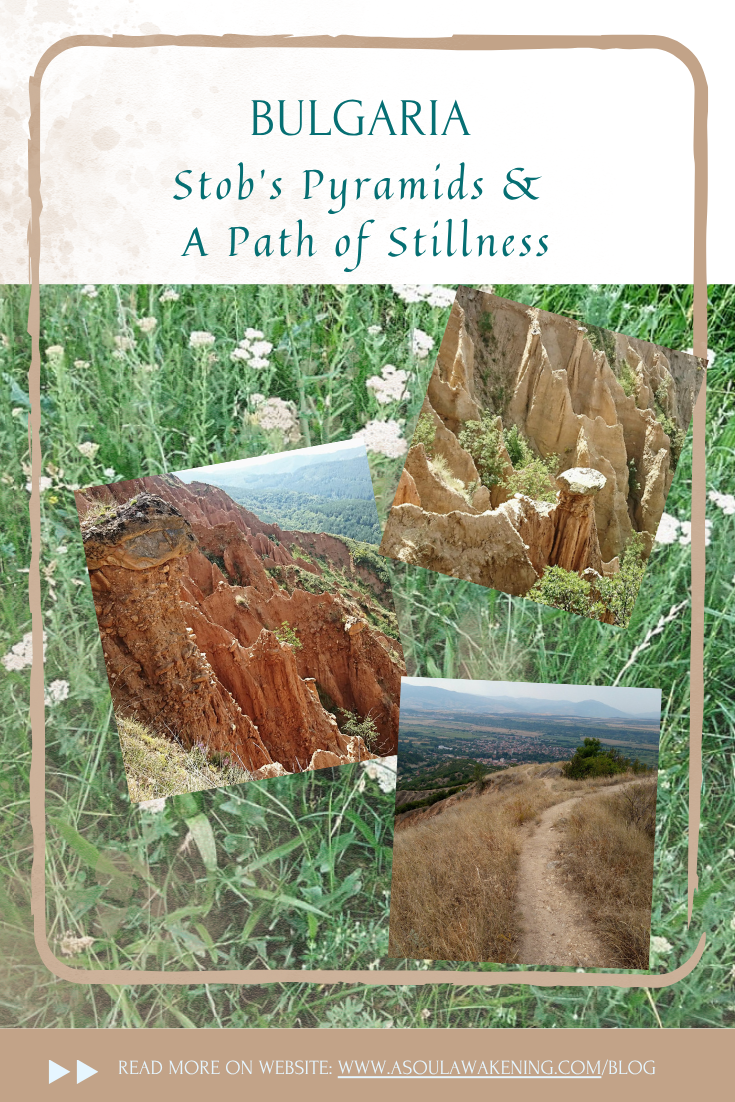
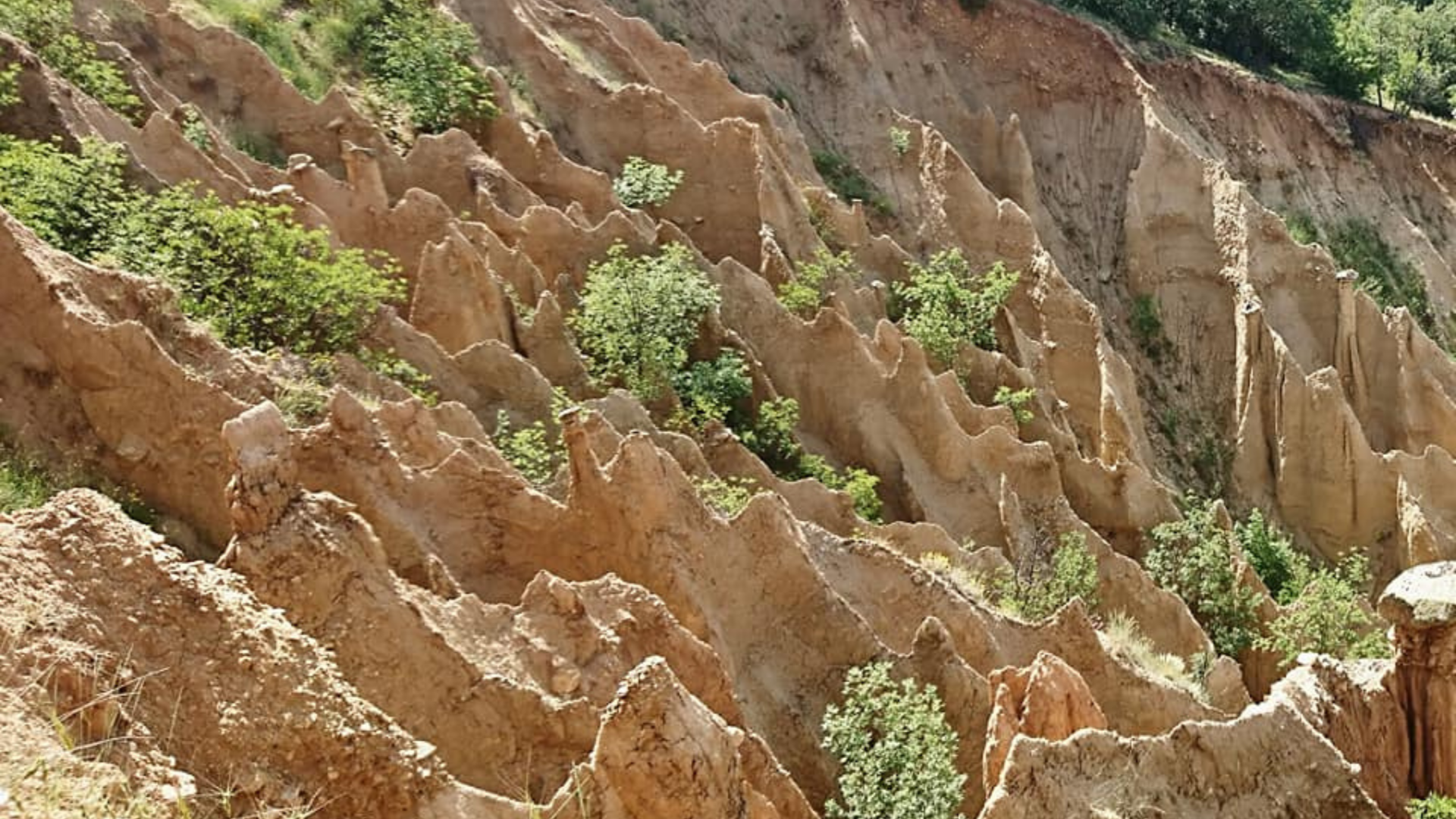
The village is best known for the Stob Earth Pyramids (BG: Стобски пирамиди), a striking natural phenomenon shaped by millennia of snowmelt, wind, and rain. These formations, also called hoodoos, rise 30–40 metres high and wear cloaks of rusty browns, ochres, deep reds and sun baked yellow. They stand in quiet formation, earth’s own little sentinels, weathered and watchful.
Leaving from Blagoevgrad, the drive to Stob took less than half an hour. The morning sun greeted us warmly, as we began the 1½ hour return walk.
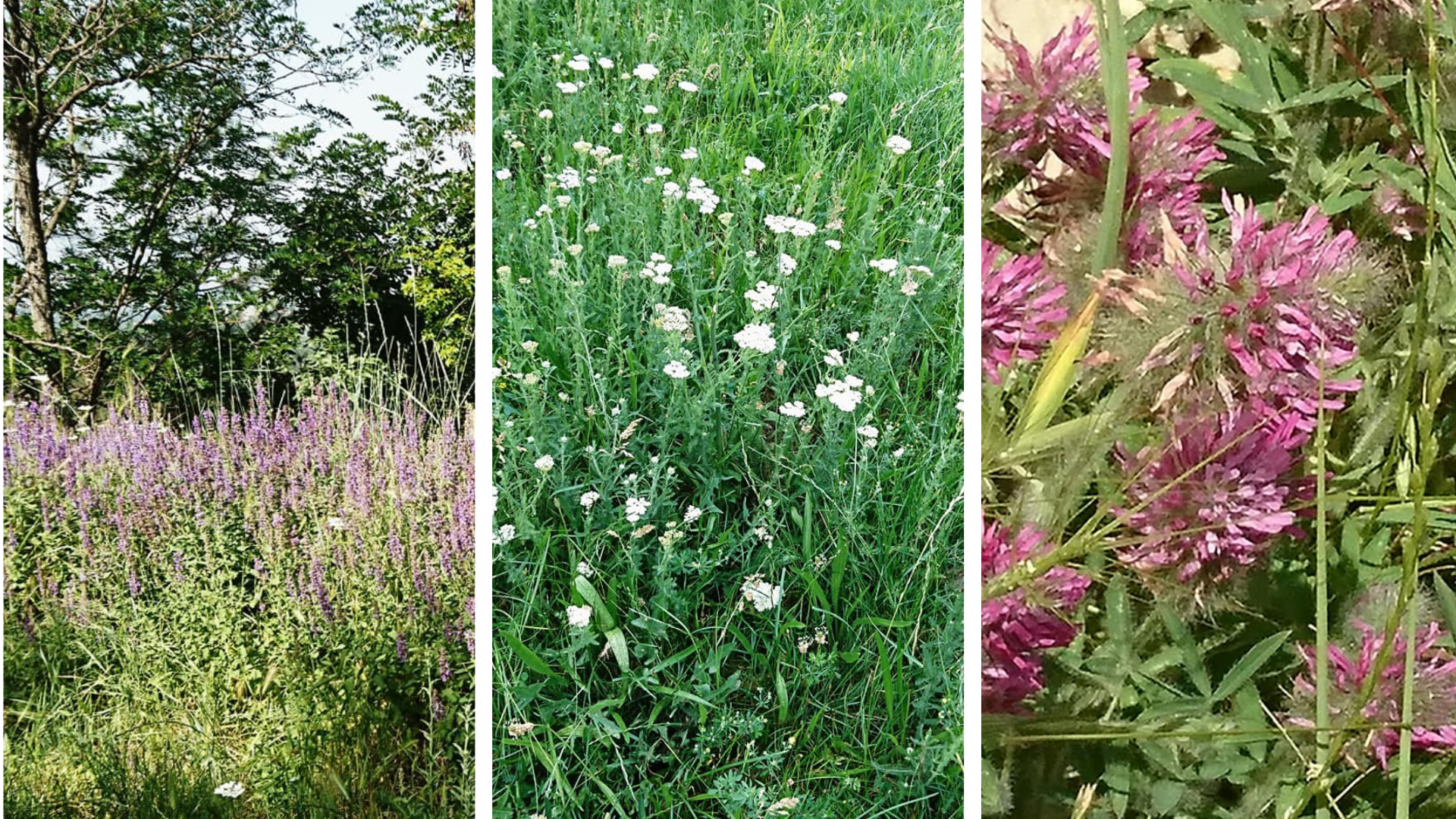
Pops, of brightly coloured wildflowers scattered along the path blending into the natural landscape, like nature’s own confetti.
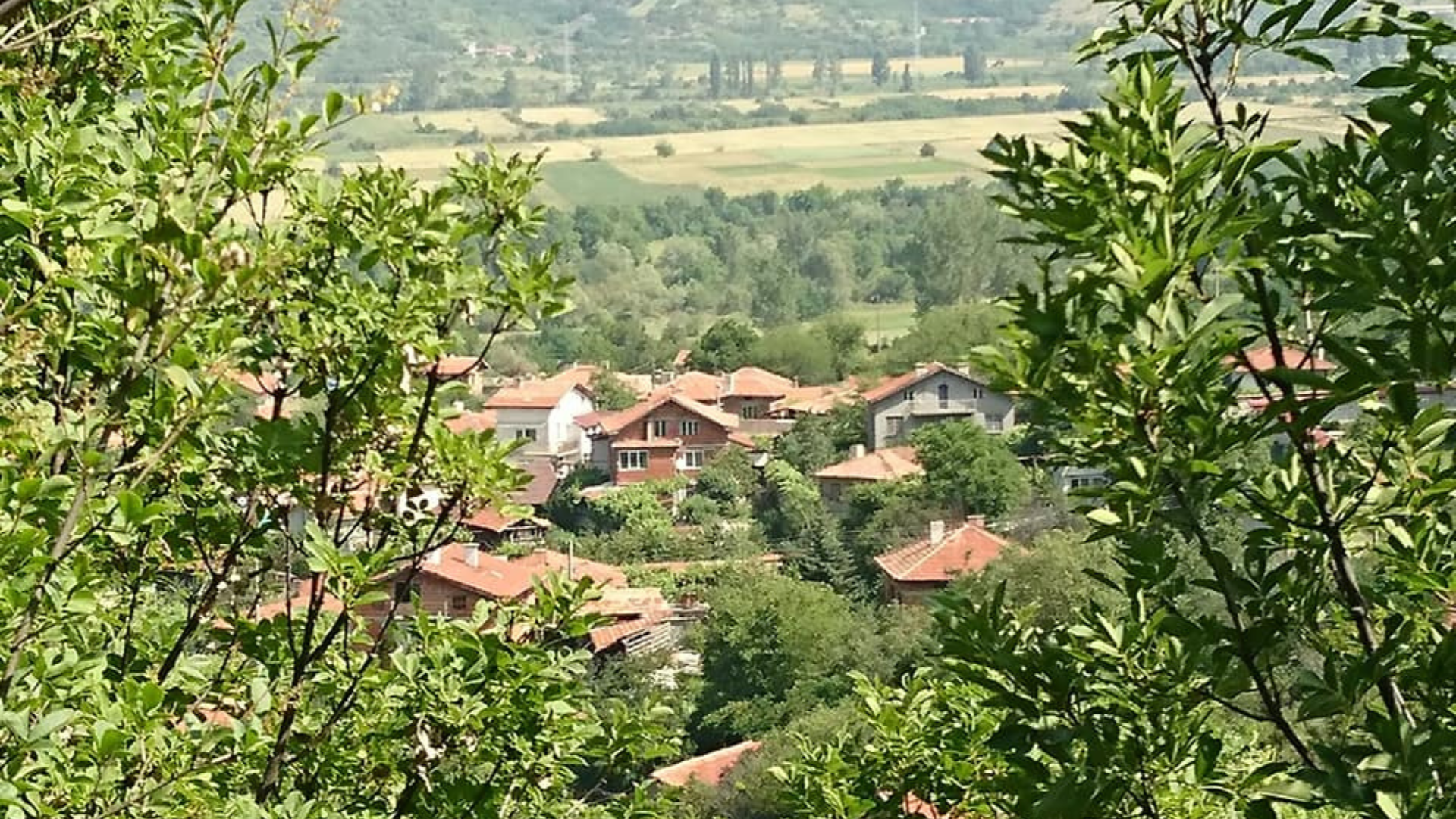
The path climbs at a gently, steady pace, and looking back, the view of the valley unfolds both lush and wide, with the terracotta roofed houses of Stob nestled gently in the distance, as if the village itself were resting.
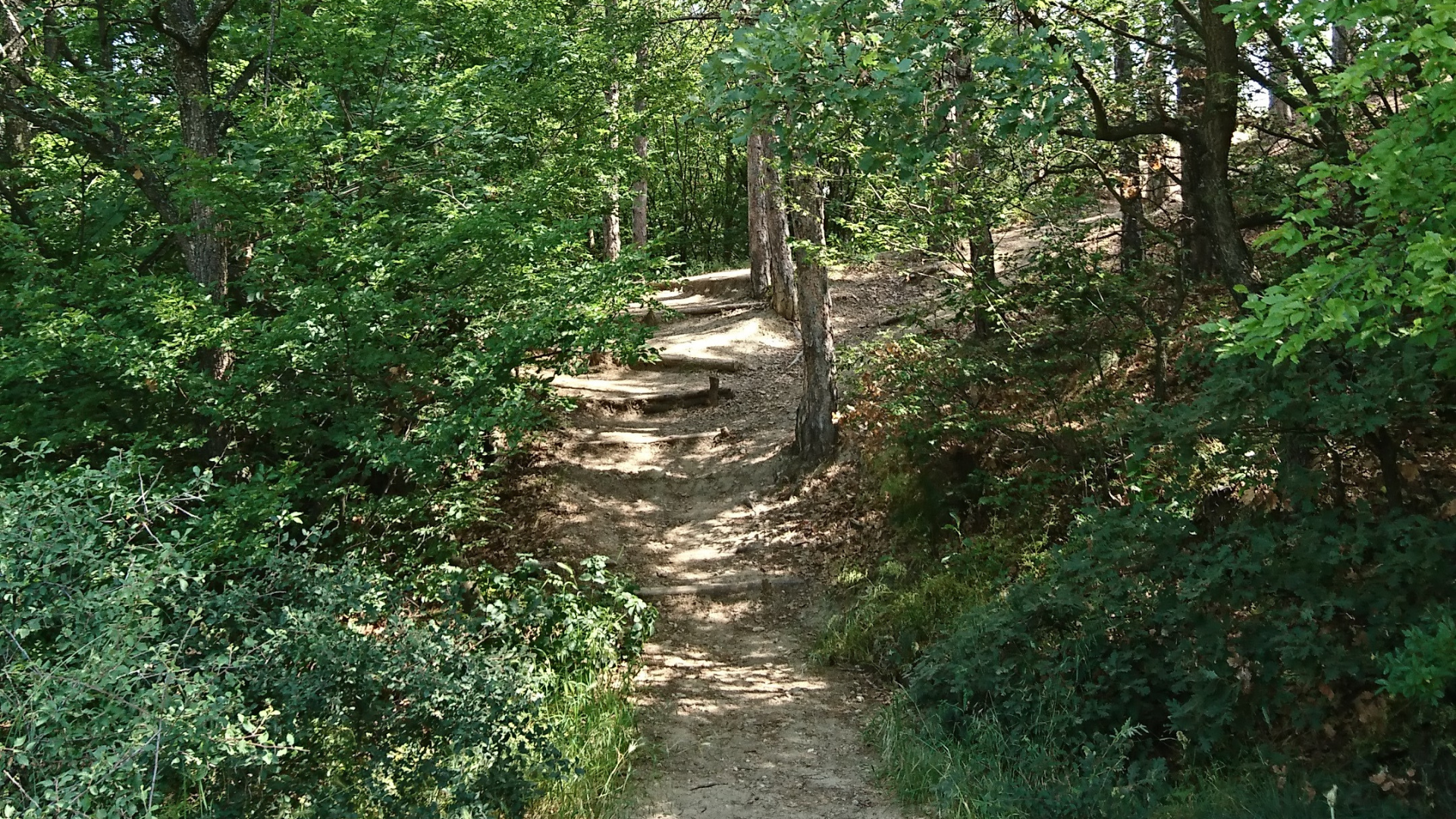
As we ascended further, the path led us through a lower woodland path, where the coolness of trees offered a momentary pause.
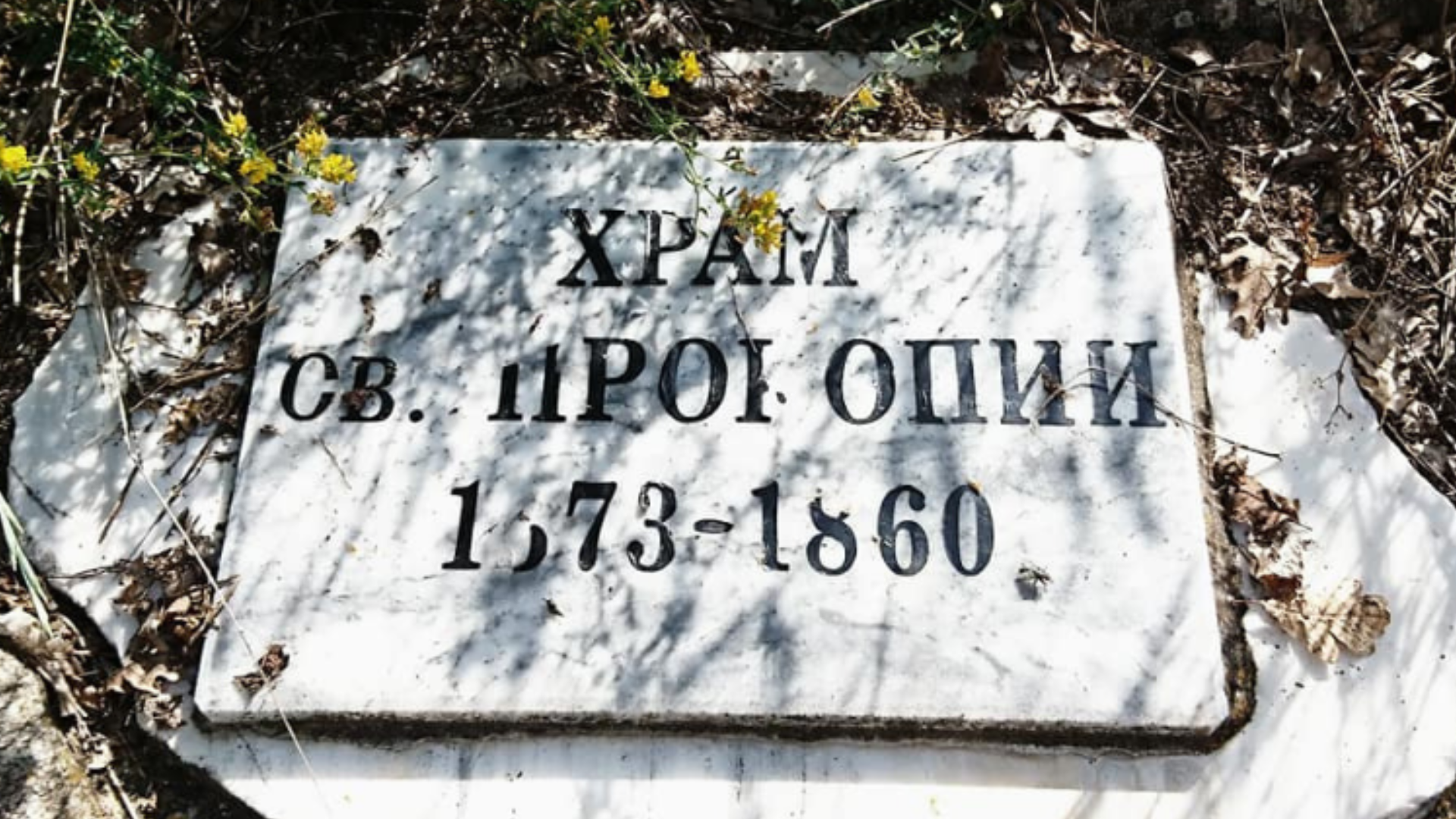
Shortly after, we reached a hillside, once the sacred ground of the original St. Procopius Church, first built in 1373, as marked by a weathered stone still preserved from the site.
This area is locally known as Tsŭrkvishte (BG: Църквище), meaning “Church,” and it holds deep historical significance. The original medieval church stood here for centuries until it was destroyed during the long period of Ottoman rule. At that time, it was illegal for Orthodox Christian places of worship to stand higher than the homes and mosques of the Turkish occupants in the valley below.
But the story of Stob’s church didn’t end on this hillside. In 1860, with official permission granted by the sultan, the villagers rebuilt the church near the entrance to the walking path. It’s said the old church was dismantled stone by stone, each block carried by hand down to the valley where the new church now stands. Today, that structure of the St. Procopius Orthodox Church in the village houses a carved stone cross on its northern wall bearing both dates, 1373 and 1860, a quiet but enduring symbol of faith, resilience, and devotion.
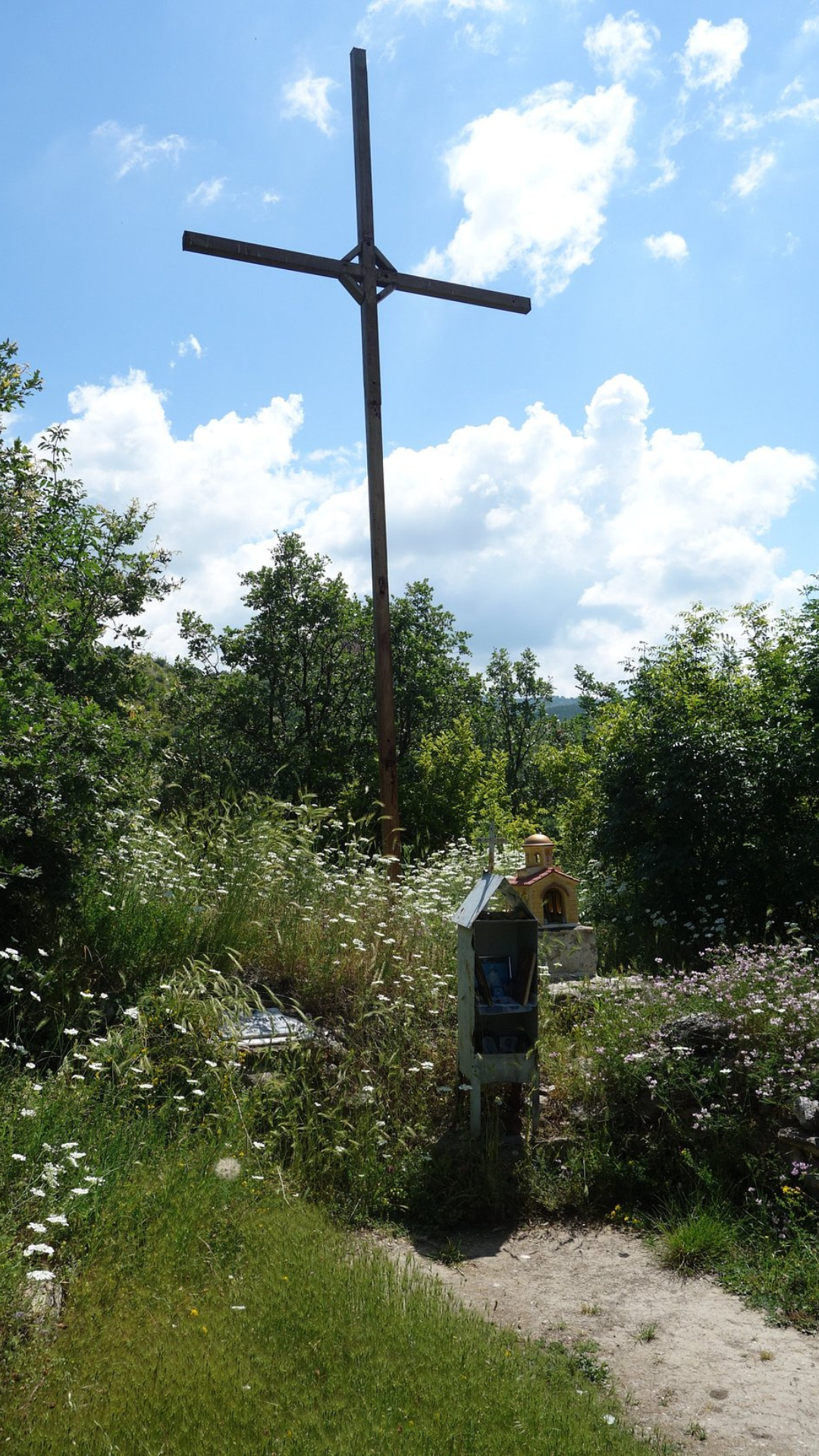
Pops of wildflowers were scattered around us as we stood before the remnants left behind: the stone inscription, a tall wooden cross, and two modest commemorative markers, as traces of the church’s original presence.
St. Procopius is known as the patron saint of beekeepers and newlyweds. A local tale recalls the first child baptised in the newly built church, having lived to be one hundred. Perhaps a quiet blessing from the saint himself.
Though the physical structure no longer remains on this hill, the atmosphere is unmistakably, still, reverent, and gently enduring. A space not defined by grandeur, but by memory. The kind of place where history doesn’t echo... it stands softly beneath your feet.
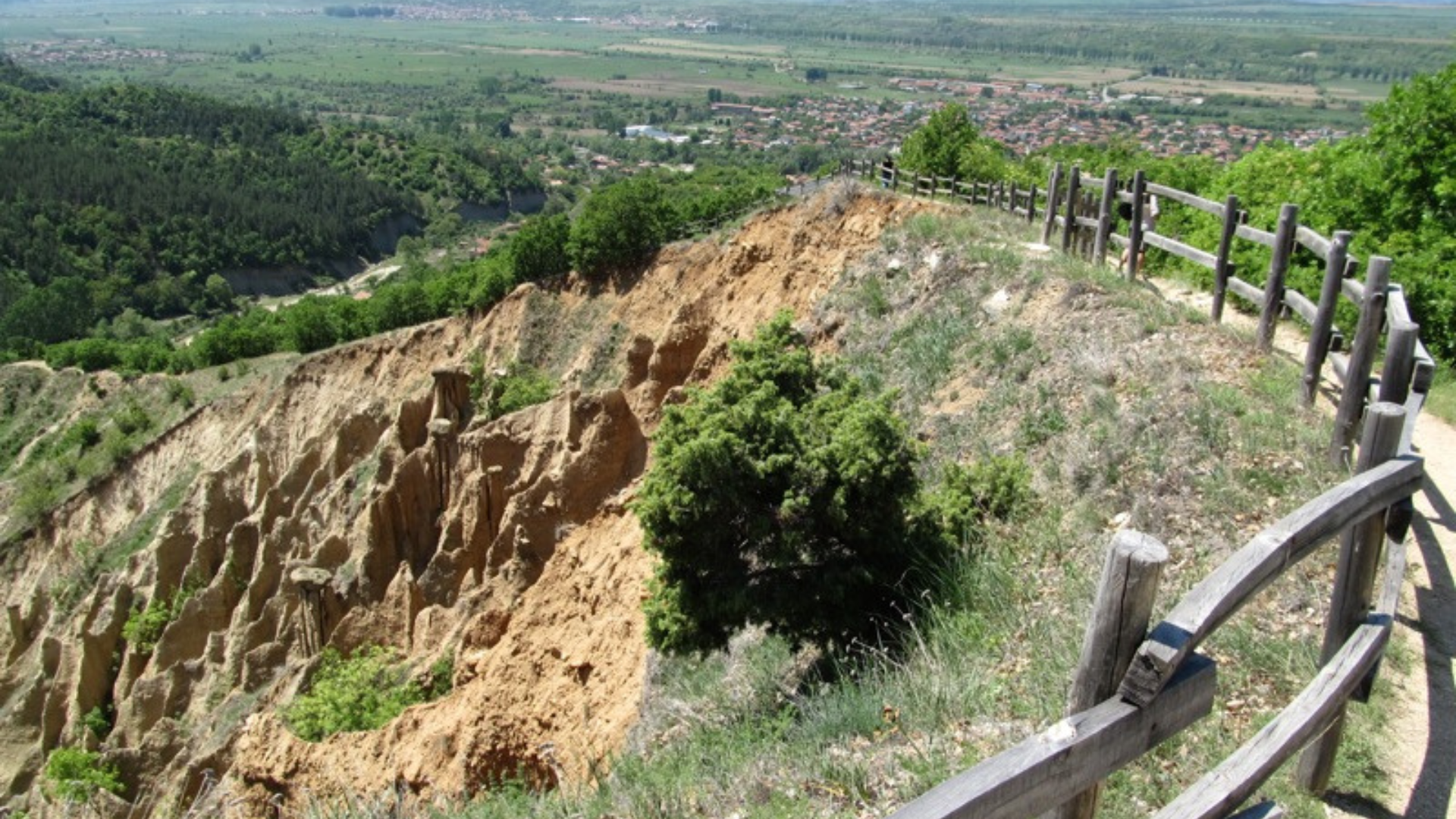
With the sun now high in the morning sky and the woodland path behind us, the air had turned noticeably warmer. The valley opened out before us, and only a simple wooden railing stood between us and the crumbling drop of the Stob Earth Pyramids.
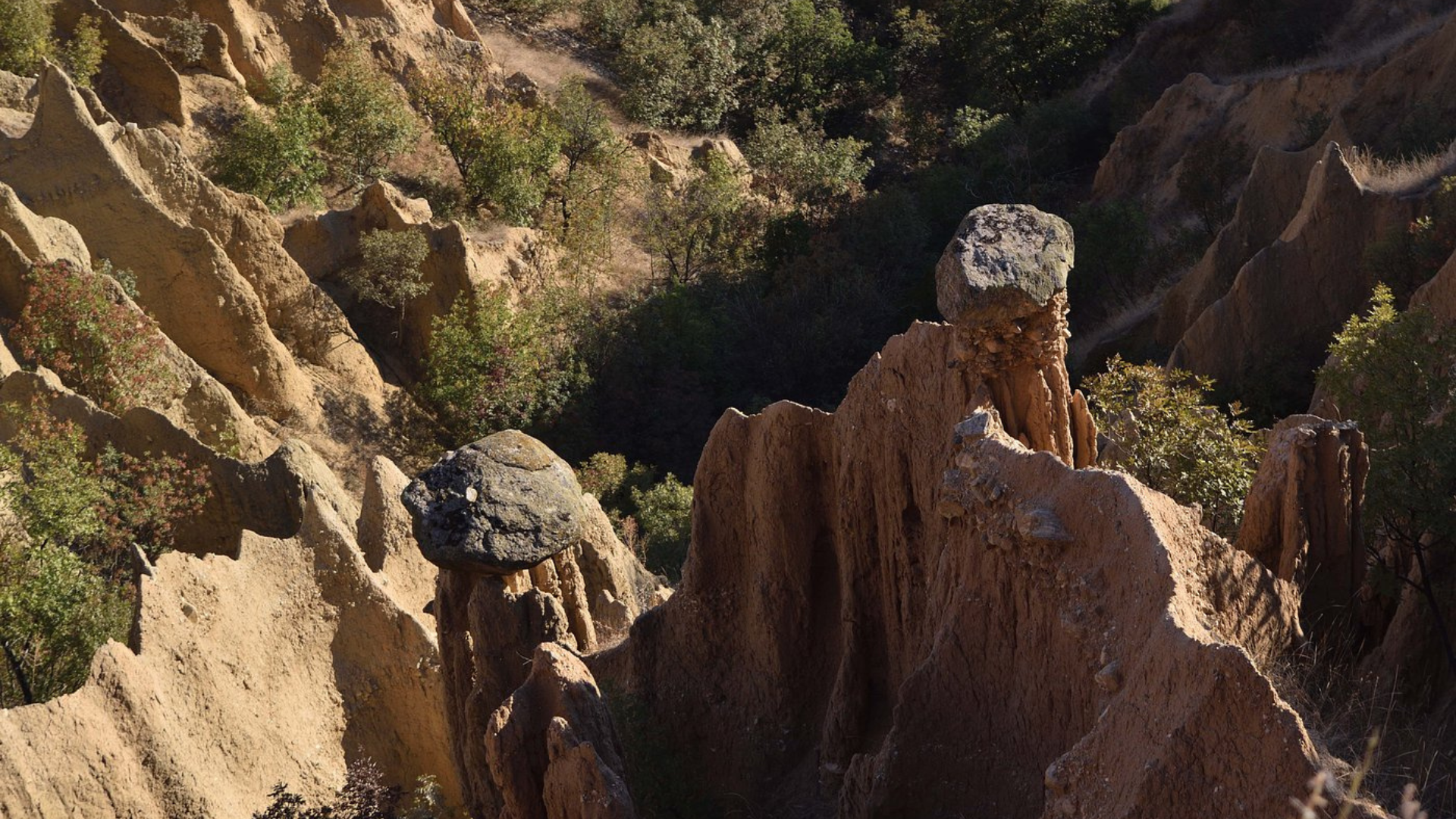
Their colours glowed under the light: some a deep, burnt orange, others a soft, pale yellow, like ochre pulled from the earth itself. These dramatic formations rise on average between 7 and 12 metres, with their base thickness ranging from 30 to 40 metres. Most take on pointed shapes topped with curious “mushroom like” caps, a result of differential erosion.
But local legend gives them more soulful origins.
One tale speaks of two lovers from a nearby village who wished to marry, despite the bride’s mother opposing the union. Her disapproval was so fierce, she turned the couple, and all their wedding guests, into stone.
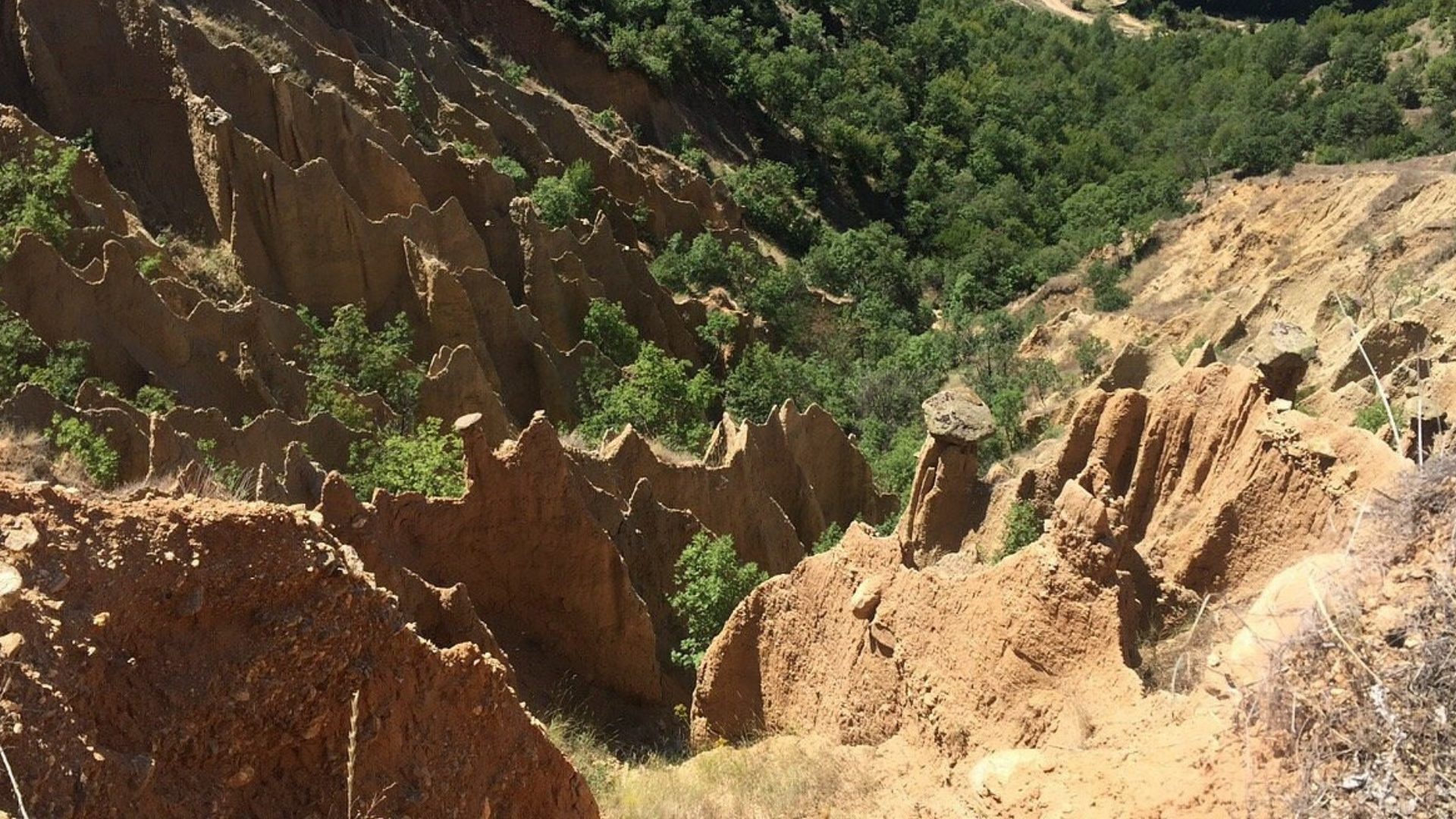
Another legend recalls a tragic end for a pair of lovers who, unable to bear their families’ disapproval, leapt to their deaths from the rocks. One of the formations, now known as “The Bride”, is said to mark the spot.
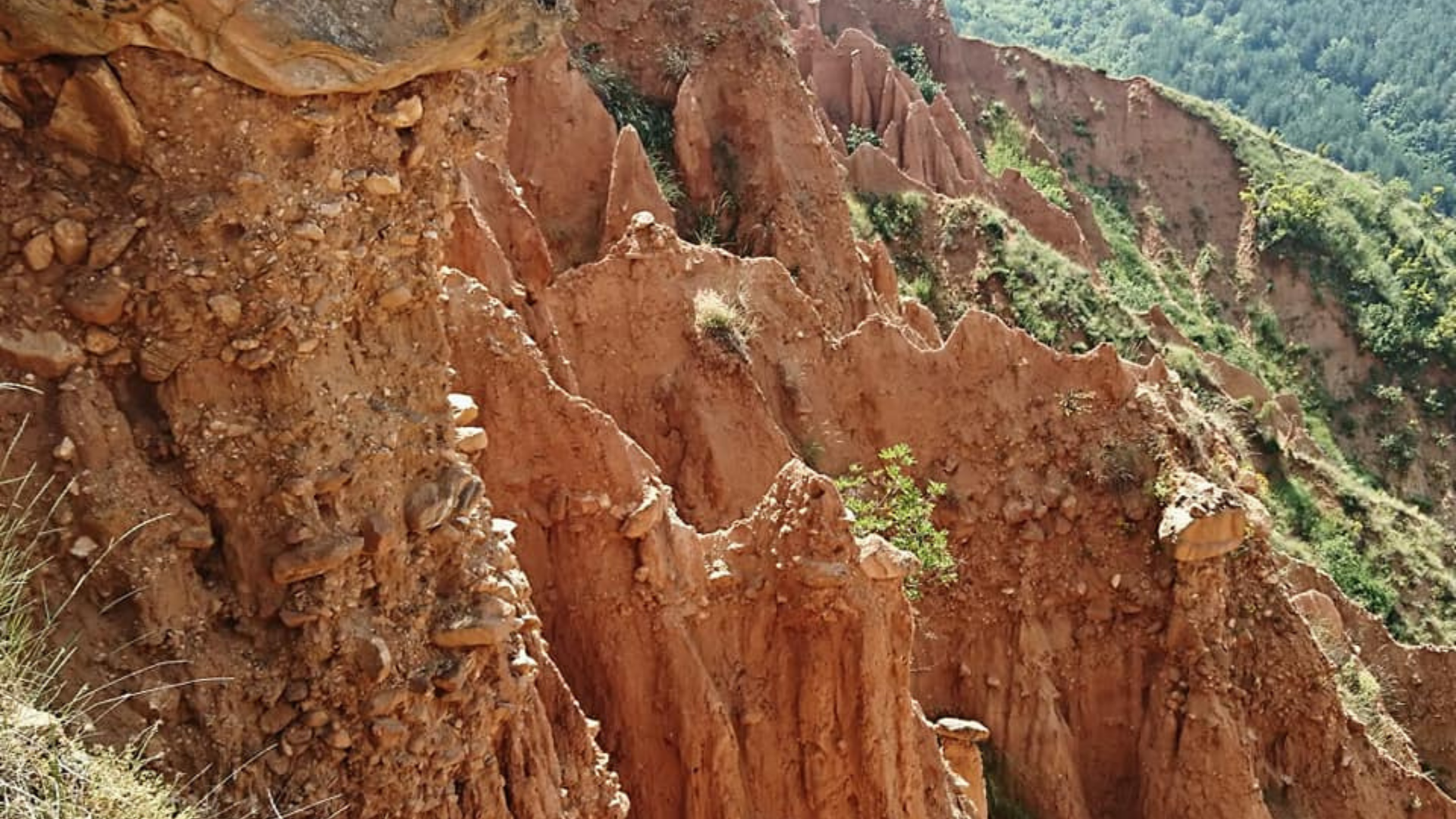
As we walked further along the path and climbed slightly higher, the slope offered a quieter scattering of pyramids, smaller in number but more distinct in shape.
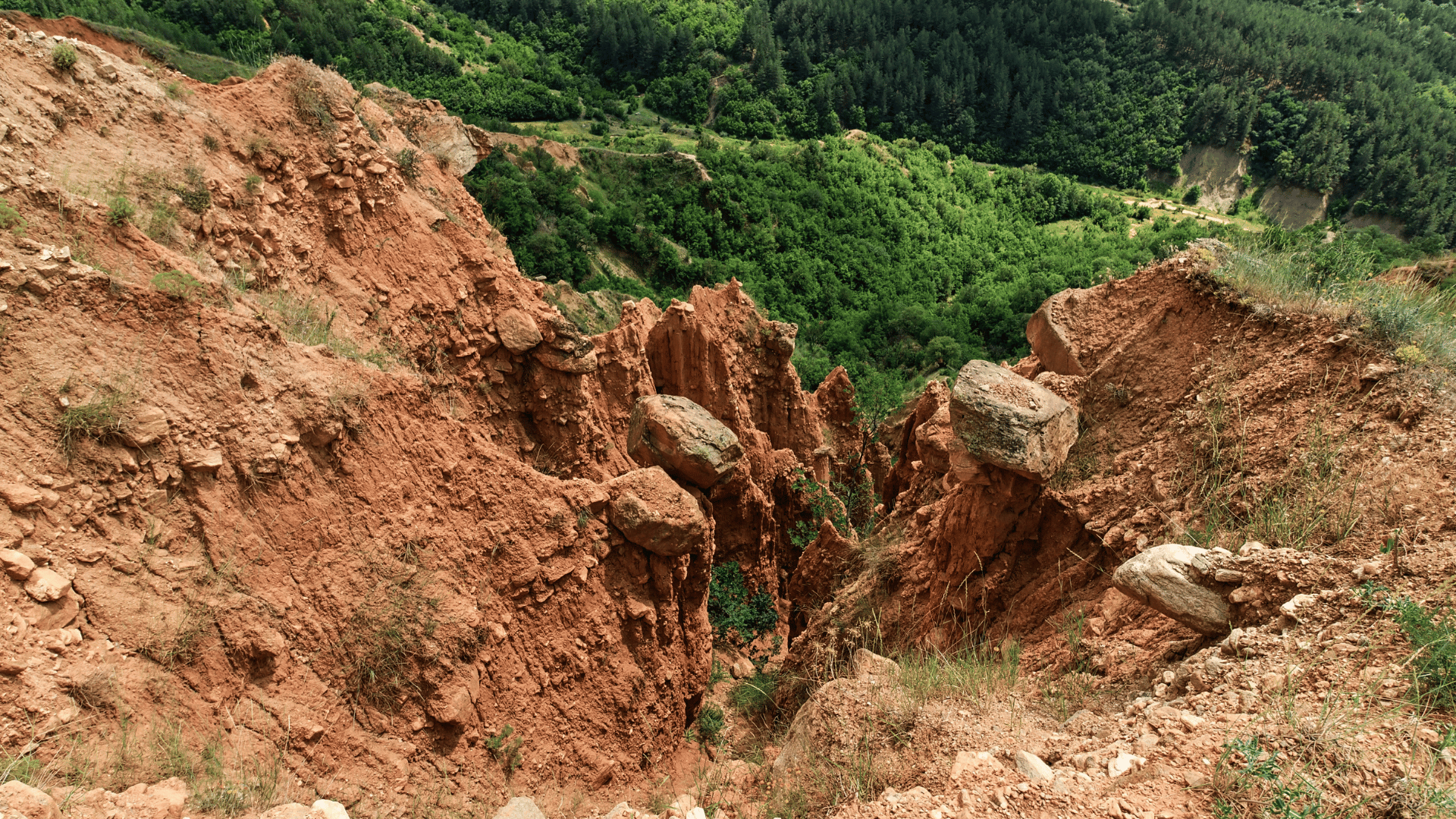
Their burnt orange tones stand in striking contrast to the vivid green of the lower hillsides that roll gently beneath the mountain range. Together, the colours shift across the spectrum, from pale yellows to deep red-browns, a natural mosaic shaped by time, weather, and whispered folklore.
The Stob Earth Pyramids were officially declared a protected natural site in 1964, and later, in 1993, recognised as a natural landmark of national importance. a well deserved honour for such a quietly powerful place shaped by time and held together by story.
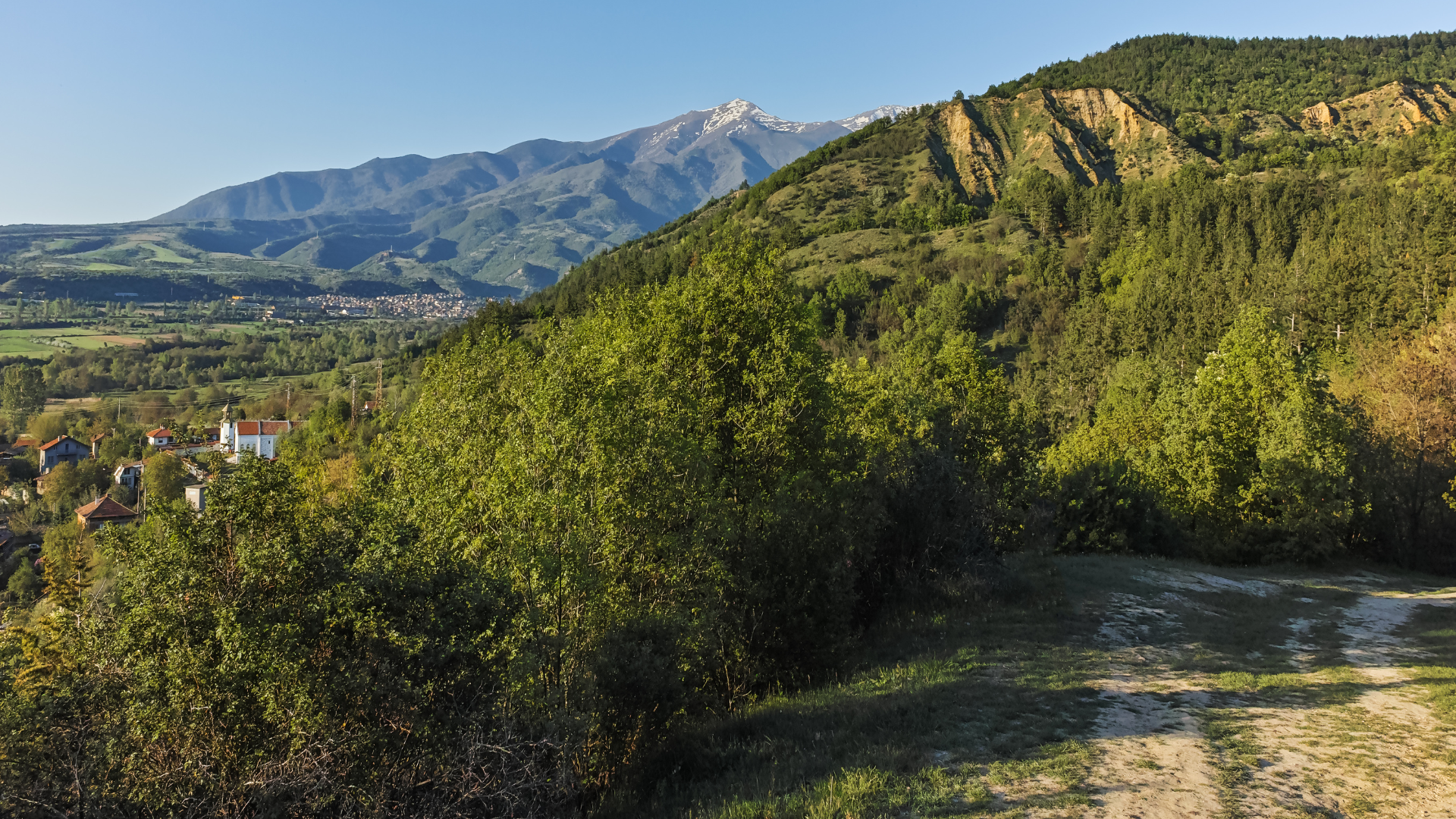
Retracing our steps back down the path, pausing again to take in the sweeping views across the valley below.
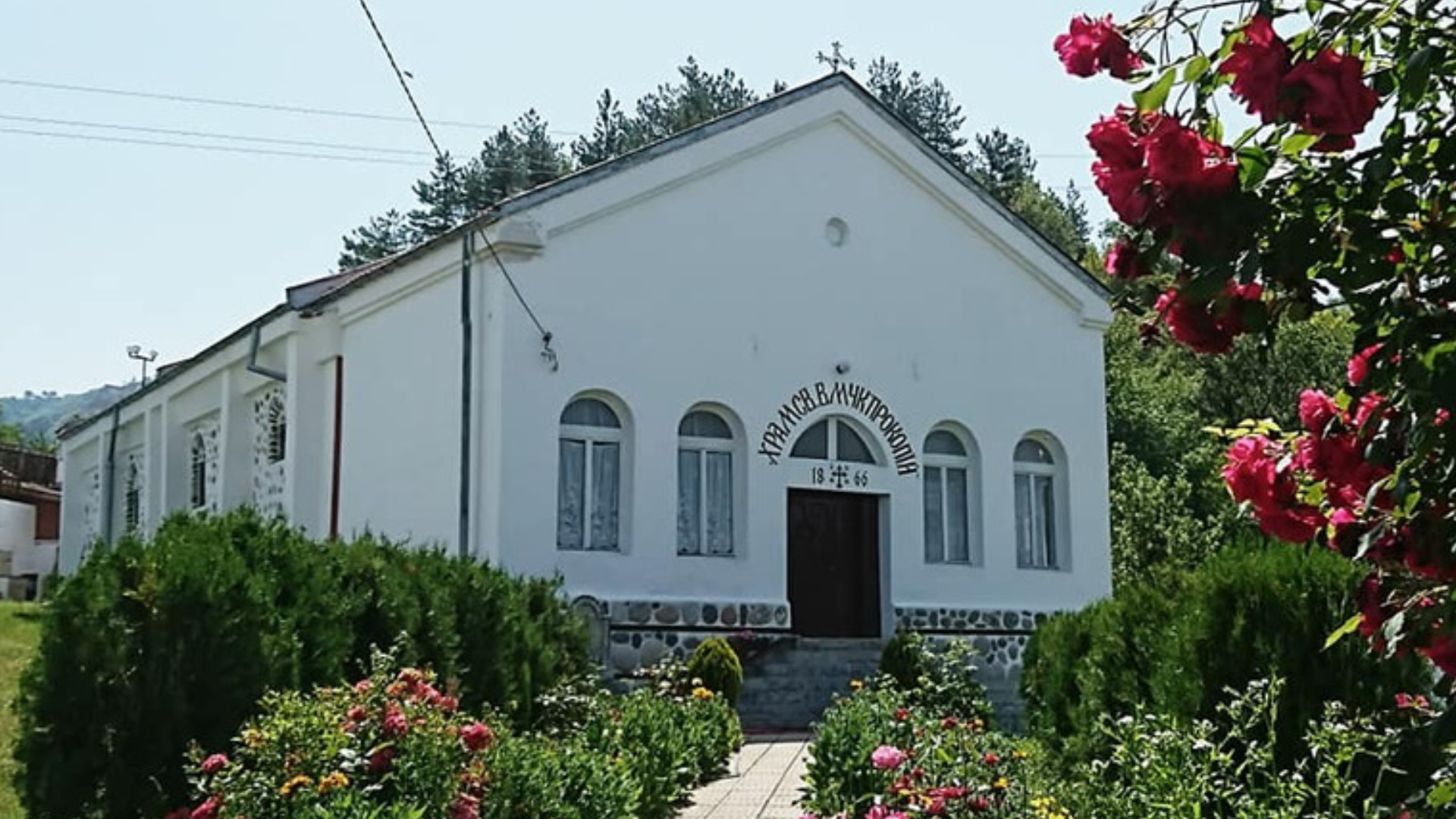
Returning to the car, we realised almost serendipitously, that the 19th-century St. Procopius Church, built from the very stones we had just visited on the hillside, stood right where we had parked, just down from the entrance to the path. The past and present, once again, meeting us where we least expected it.
Driving back through the village of Stob, life moved slowly. We noticed several doorways adorned with large black ribbon bows, an old local tradition, as I later learned, to honour the recently deceased. The ribbons remain on the doors for 30 to 40 days, a symbol of mourning and a respectful gesture for the soul’s smooth passage into the afterlife.
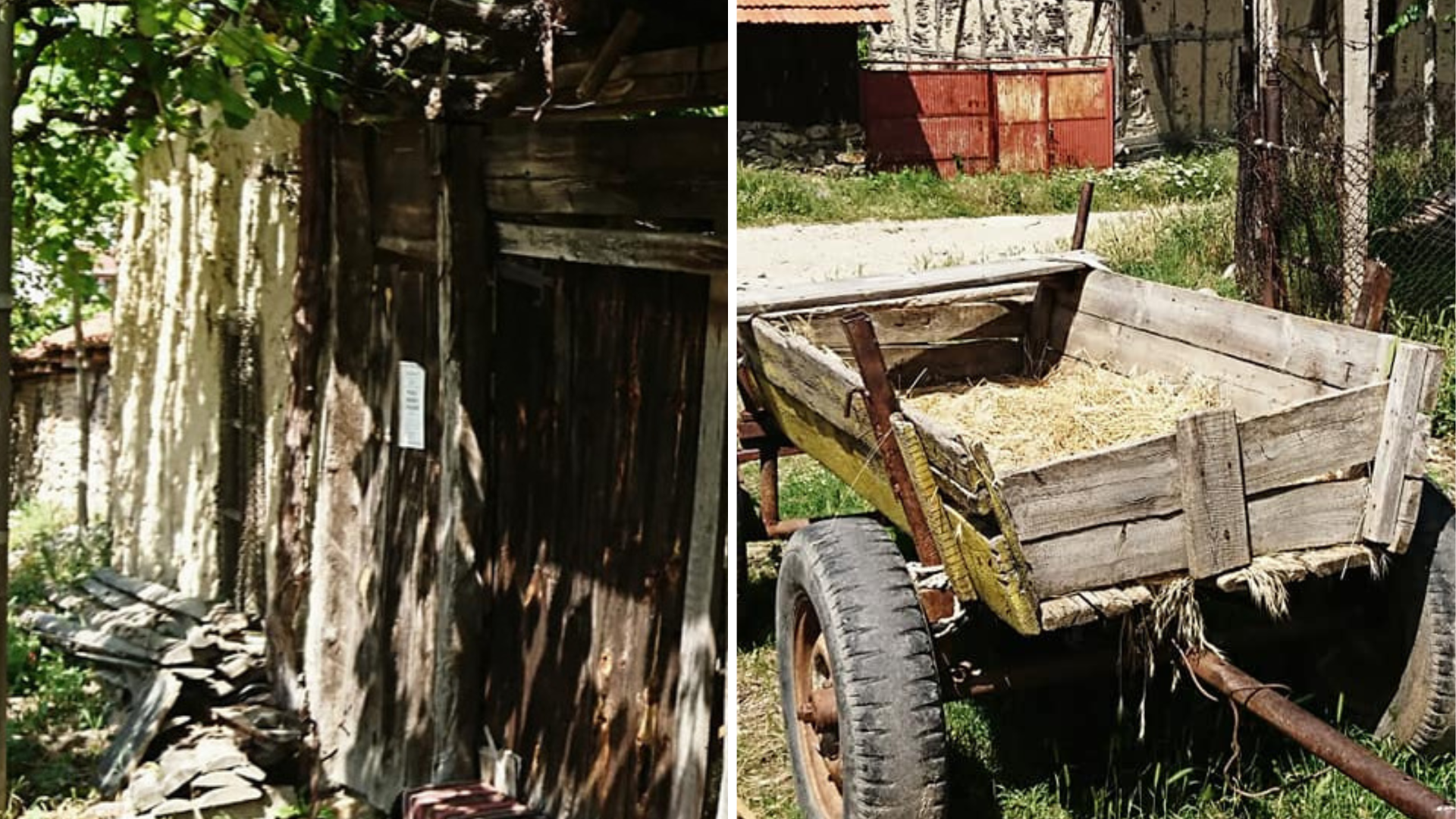
Just before rejoining the road that connects Kochevinovo and Rila, we passed a man in a horse drawn cart, making his way towards Stob with a small harvest from his morning’s work. And in that quiet moment, mountains behind us, the path now walked, and the weight of history still echoing gently, the soul of this place lingered. Earthy, enduring, and entirely its own.
Back on the road to Kochevinovo, a hand-painted sign caught our eye: the Junkshop “Shedyovar” (Masterpiece), an invitation too curious to pass by. We pulled over and met the friendly owners, or perhaps more fittingly, the museum creators, who welcomed us into their collection with quiet pride.

Inside, we stepped into a time capsule of Bulgaria’s material and spiritual culture, an eclectic treasure trove of leftovers from the communist era. One wall was lined with a striking display of old televisions and radios, each with its own story, a voice once heard in living rooms now long quiet.
The museum itself, as described on a typed English note, is “a space to store and show to those interested a part of the material and spiritual culture of the Bulgarians from near and remote past.” Housed in a humble shed tucked away in the countryside, this collection offers a vivid glimpse into everyday life as it once was.
JUNKSHOP “SHEDYOVAR” (MASTERPIECE)
The collection has been gathered to store and show to those interested a part of the material and spiritual culture of the Bulgarians from near and remote past. Emblematic and giving meaning to the life in previous decades and being more and more rear today, these objects help us getting to know the world we are coming from.
In our humble exposition one can find agricultural tools, folk-style objects, national costumes, machines, motorcycles and cars that will take you to the time of your fathers and ancestors.
Those who have no past have no future!
Have a nice time seeing our shop!
God save Bulgaria! /and our exhibition as well …
We are open for opinions and advices, as well donations in cash and objects.
As their sign so perfectly put it:
“Those who have no past have no future!”
And here, in the dusty stillness of this unexpected collection, the past wasn’t forgotten, it was carefully preserved, piece by piece.
Returning to Blagoevgrad, we continue onto Bachinovo Park. The park is located a short drive just outside the city and provides a relaxing and charming location to enjoy lunch; under the shade of the large leafy trees that stand along the Blagoevgraska Bistritsa River.
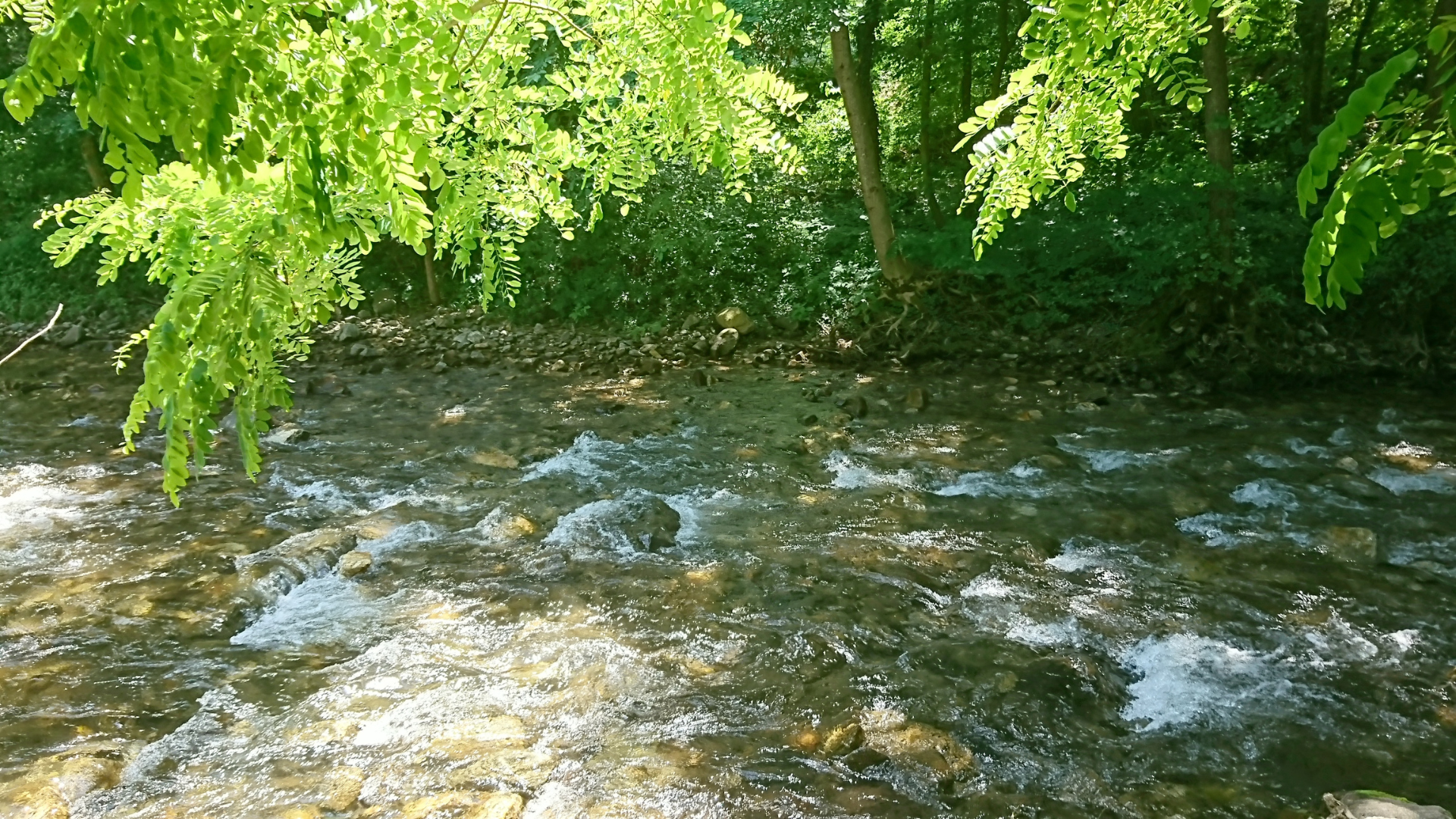
This is the fourth Soul Travel blog journeying through Bulgaria, and it’s time for me to return home. I’m filled with quiet delight and gratitude for all that this journey has offered.
From the architectural grandeur of Sofia and the quirks of its public transport, to the unhurried moments beneath leafy trees, the richness of the rose-scented countryside, and the unexpected detour into Plovdiv, where antiquity blends effortlessly with modern cityscapes. From the depth of the country’s religious wonders, to the stillness found in forgotten hillsides, and the green spaces that stretch quietly in between, this land, steeped in history and shaped by a resilient past, leaves its mark in quiet, enduring ways, offering more than meets the eye.
My time in Blagoevgrad, in particular, invited a softer kind of discovery. (I share more about the planetary placements that shaped this part of my journey [here].) It was a place of slow, reflection, and gentle beauty, woven together with traditions that whisper through the mountains and echo in the stories told over stone and soil.
See you soon,
Consider signing up to receive new Soul Travel blogs, travel reflections, and astrocartography insights as new destinations are shared.

✨ If this story resonated with you, you are warmly invited to continue the journey in a way that feels aligned with you.
✨ Explore personalised insights through consultations
✨Begin with ‘The Journey’ Orientation
✨Listen to Destined Places podcast stories
✨Save and share Soul Travel inspiration on Pinterest